Singapore
Retirement Planning Template for Singapore
Project your CPF LIFE payouts, SRS withdrawals, and investment income against estimated retirement expenses - all in one Google Sheet.
In Depth
CPF LIFE, the SRS Option, and Planning for Healthcare
Singapore's CPF LIFE scheme is a national annuity paying monthly income from age 65, with the amount tied to the Retirement Account balance set aside at 55. For members turning 55 in 2026 the Basic Retirement Sum is SGD 110,200, the Full Retirement Sum is SGD 220,400, and the Enhanced Retirement Sum is SGD 440,800. That top figure has been four times the Basic Retirement Sum since 2025, which lifted the ceiling on voluntary top-ups considerably. Payouts scale with the sum set aside and with the plan chosen, and CPF's Monthly Payout Estimator returns a figure for a specific balance rather than a generic range.
The Supplementary Retirement Scheme is the main tax-advantaged route beyond CPF. Citizens and permanent residents can contribute up to SGD 15,300 a year with immediate tax relief, and foreigners up to SGD 35,700. Withdrawals from the scheme's withdrawal age are taxed on only 50% of the amount and can be spread over ten years. That age is the statutory retirement age in force at the time of the first contribution, which is 62 or 63 for most existing contributors and 64 for anyone starting from 1 July 2026. SRS balances can be invested in stocks, bonds, and unit trusts, which brings both a wider return range and market risk that CPF's guaranteed rates do not carry.
Healthcare costs in retirement tend to be the expense category that grows fastest. MediShield Life provides basic coverage, but premiums increase with age and the policy has claim limits. Integrated Shield Plans offer broader protection and come with rising premiums of their own. MediSave helps cover some of these costs, subject to withdrawal limits and the Basic Healthcare Sum cap. A projection that lets healthcare spending climb over time, rather than holding it flat, lands closer to what households actually see.
Singapore
Retirement Planning in Singapore: Key Factors
Singapore's retirement system is built around CPF, supplemented by personal savings and investments. How those pieces fit together is what a projection has to capture.
CPF LIFE provides a baseline retirement income
CPF LIFE is a national annuity scheme paying monthly income from age 65. The payout depends on the Retirement Account balance set aside at 55. For members turning 55 in 2026 the Basic Retirement Sum is SGD 110,200, the Full Retirement Sum is SGD 220,400, and the Enhanced Retirement Sum is SGD 440,800, which has been four times the Basic Retirement Sum since 2025. Payouts scale with the sum set aside, and the CPF Monthly Payout Estimator returns a figure for a specific balance and plan.
SRS provides tax-advantaged supplementary savings
The Supplementary Retirement Scheme lets citizens and permanent residents contribute up to SGD 15,300 a year with tax relief, and foreigners up to SGD 35,700. Withdrawals from the scheme's withdrawal age are taxed on 50% of the amount, spread across up to ten years. That age is the statutory retirement age in force when the first contribution was made, so it is 62 or 63 for most existing contributors and 64 for first contributions made from 1 July 2026. SRS money can be invested in stocks, bonds, and unit trusts rather than left in cash.
Healthcare costs in retirement need careful planning
MediShield Life provides basic health insurance, though premiums rise with age and claim limits apply. Integrated Shield Plans offer additional coverage with premiums of their own that also climb with age. MediSave can be used for premiums and certain treatments, subject to withdrawal limits and the Basic Healthcare Sum cap. Out-of-pocket healthcare expenses generally increase in later years.
Property can be part of the retirement strategy
Some Singaporeans downsize their HDB or private property in retirement and use the proceeds to supplement income. The Lease Buyback Scheme lets eligible elderly HDB owners sell part of their remaining lease back to HDB, and the Silver Housing Bonus pays a cash bonus for right-sizing. Property is a significant asset, though leaning on it as the main source of retirement income carries exposure to market timing and to future housing needs.
Get the Template
Getting Started
Setting Up for Singapore Retirement With CPF
Enter current retirement savings
The starting point is current balances: CPF Ordinary, Special or Retirement, and MediSave accounts, SRS balance, investment portfolios earmarked for retirement, cash savings, and any other long-term assets.
Enter CPF, SRS, and voluntary savings
Ongoing inflows cover CPF contributions, which come automatically from salary, plus SRS contributions and any additional retirement savings or investments. Employer CPF contributions belong here too for a complete inflow picture.
Estimate CPF LIFE payouts
The CPF Monthly Payout Estimator on the CPF website projects monthly payouts from current balances and planned contributions. That figure goes in as retirement income starting from the payout age you plan on.
Project retirement expenses
Monthly retirement spending covers housing, which is maintenance and conservancy charges once a mortgage is cleared, along with healthcare and insurance premiums, food, utilities, transport, and leisure. Some categories shrink in retirement while healthcare tends to grow.
Run different scenarios
Duplicating the sheet lets you test different stopping ages and spending levels side by side. Stopping at 62, 65, or 68 changes both the accumulation period and, where CPF LIFE payouts are deferred past 65, the payout amount itself. Seeing the spread makes the tradeoffs concrete.
See It In Action
What the template looks like
Browse through the template to see the dashboard, the entry sheets, and the summaries it produces, all adaptable to your local financial setup.
- Built-in currency selector
- Calculations update automatically
- Visual summaries of your numbers
- No setup required
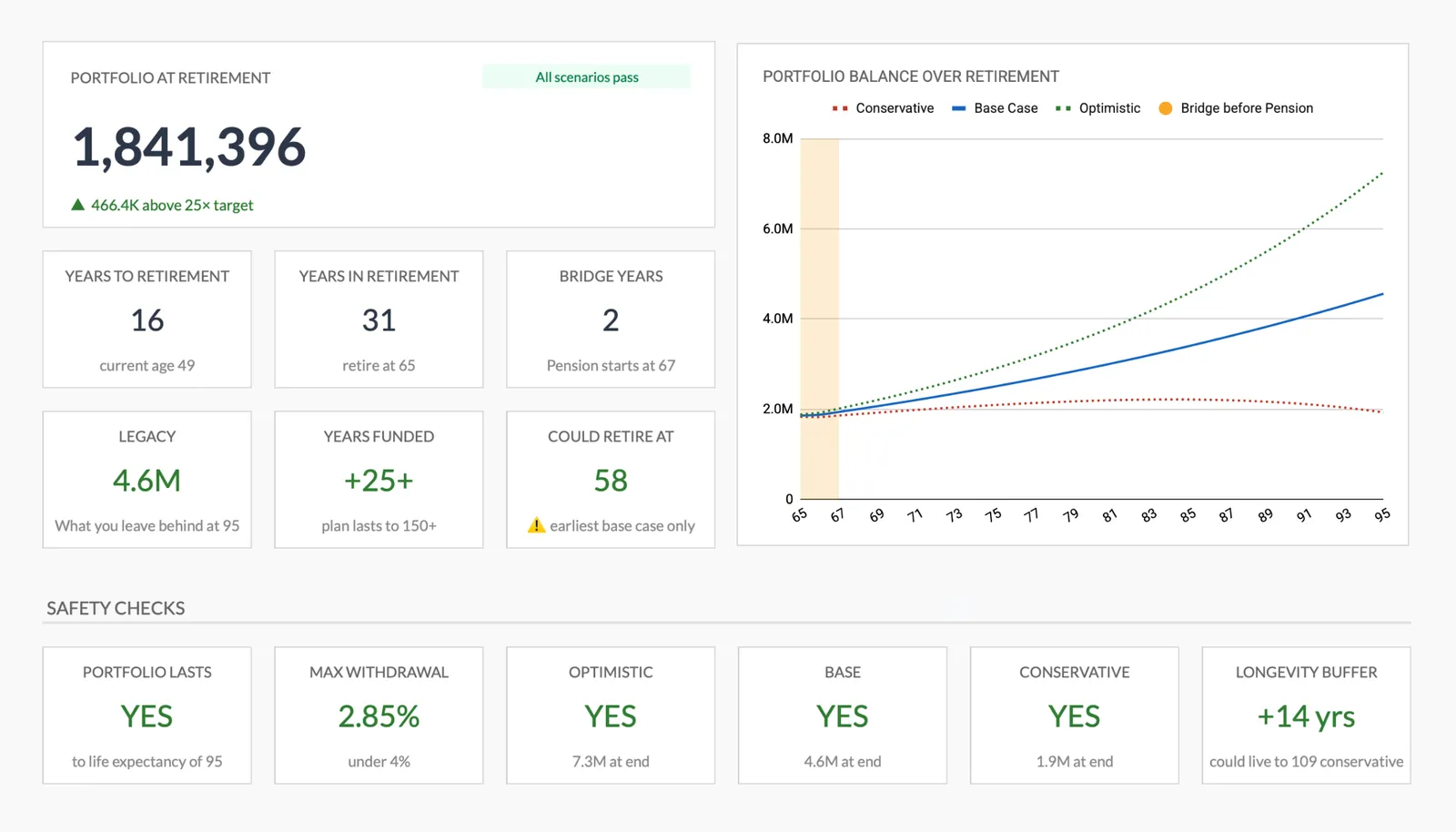
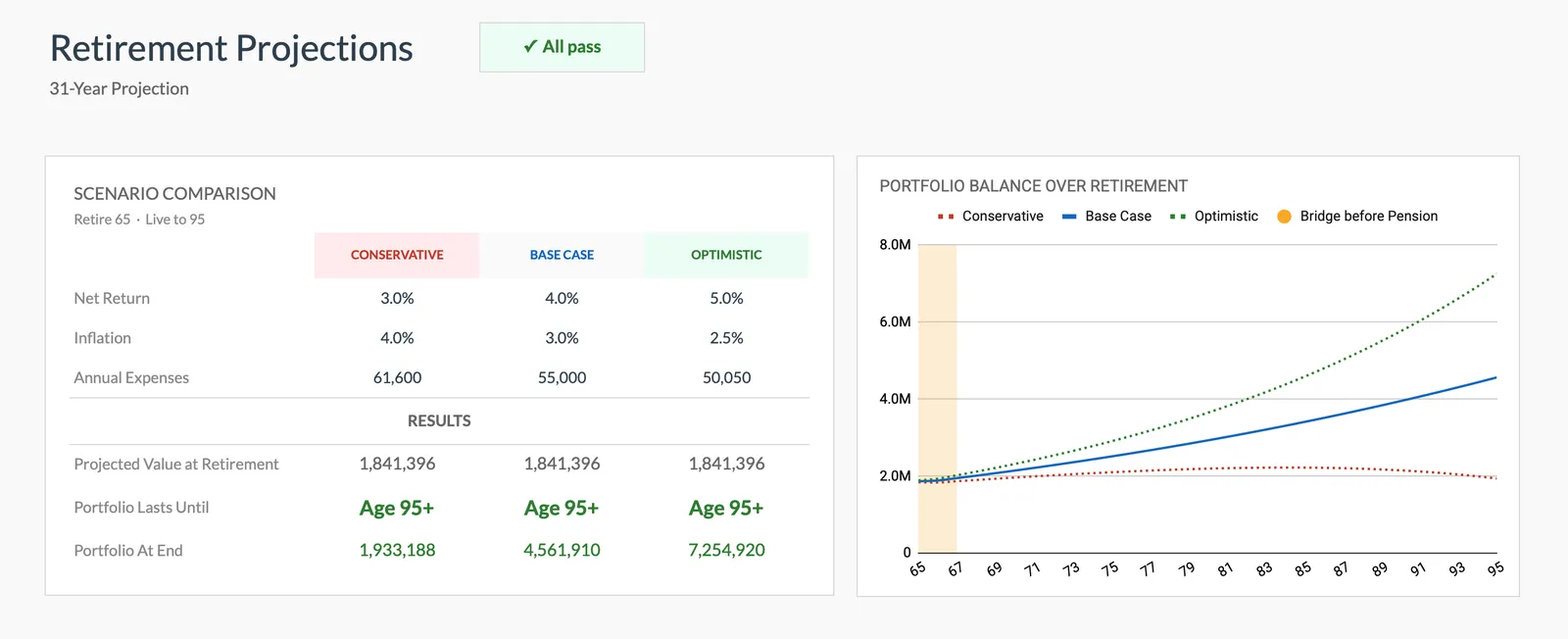
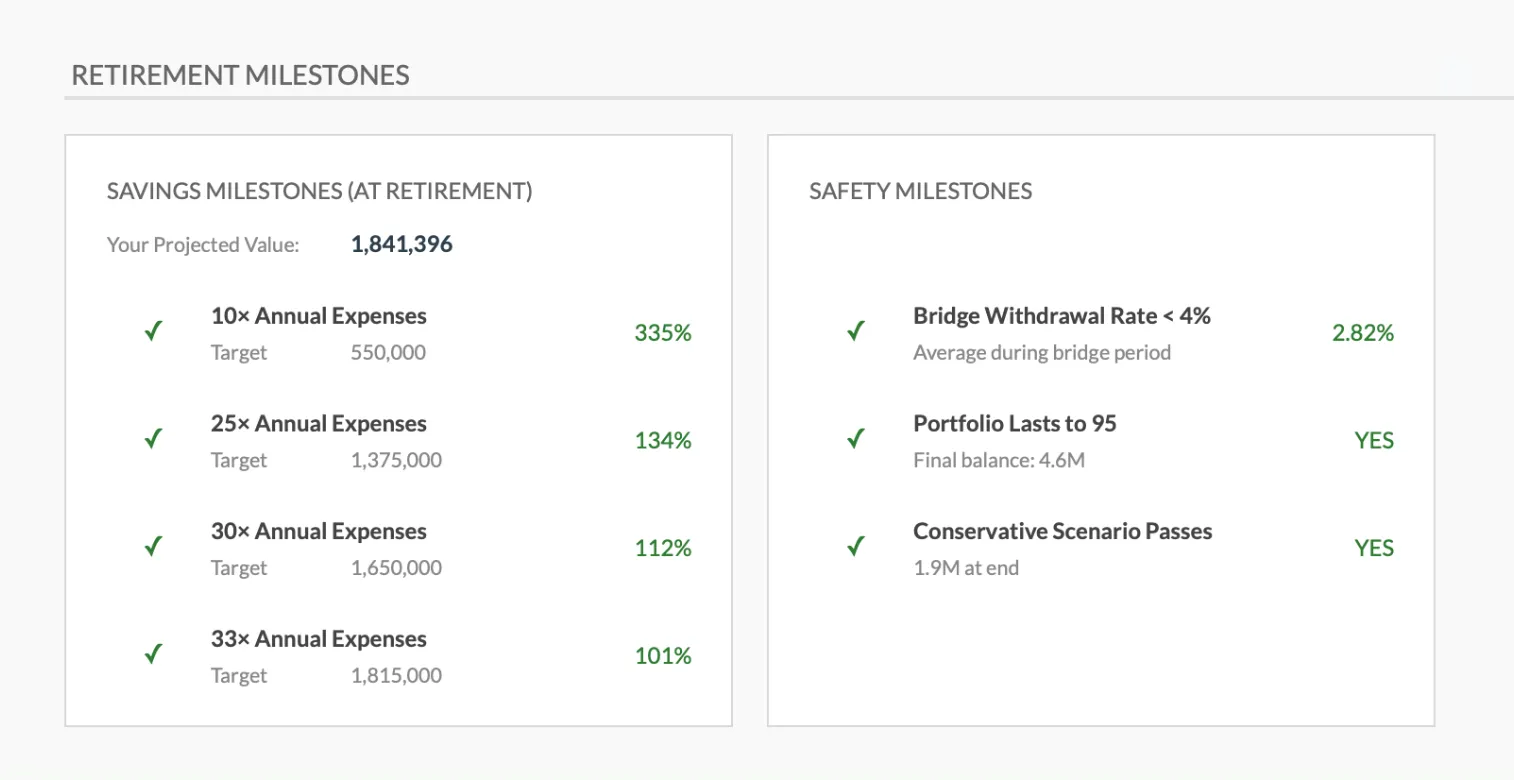
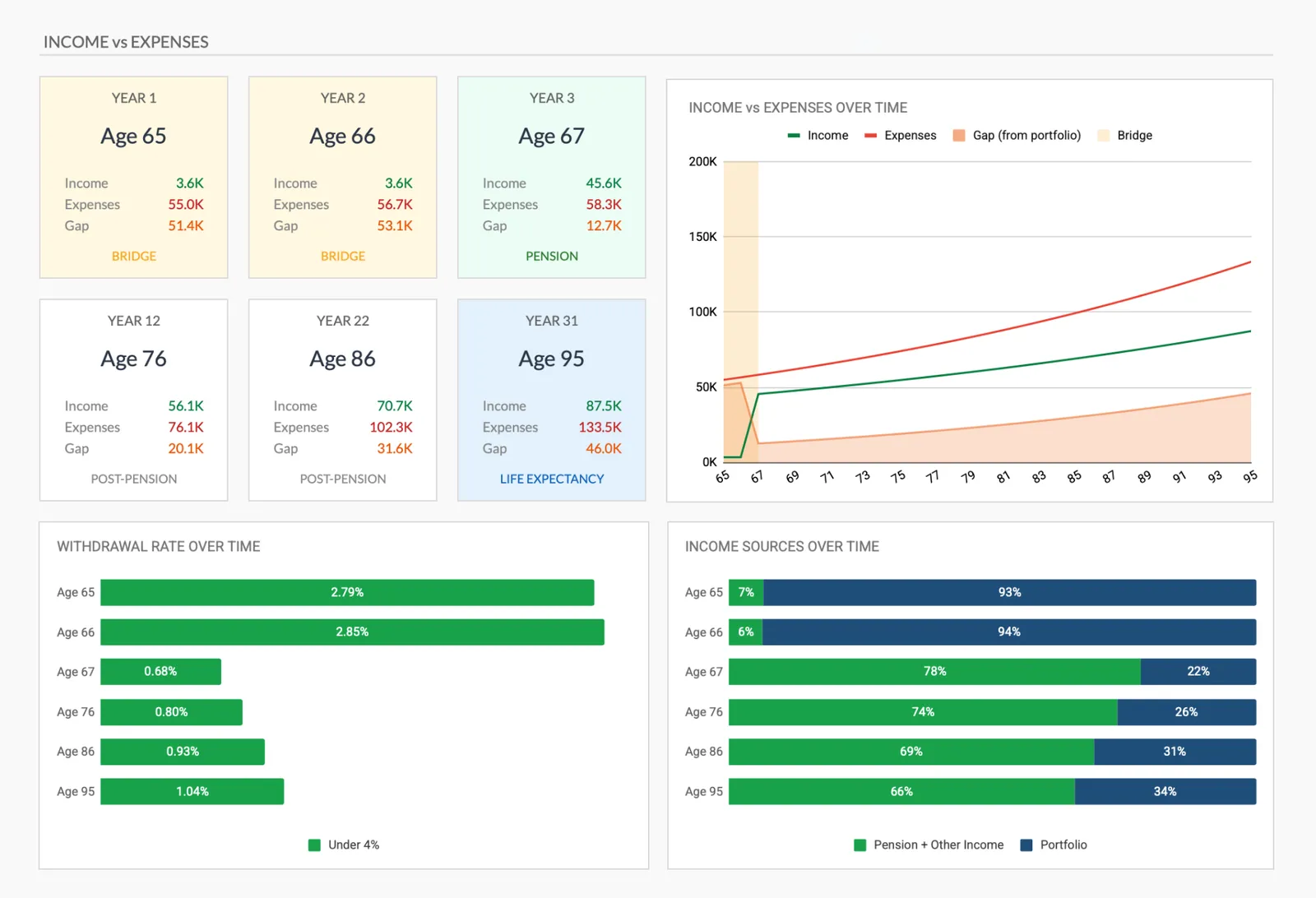
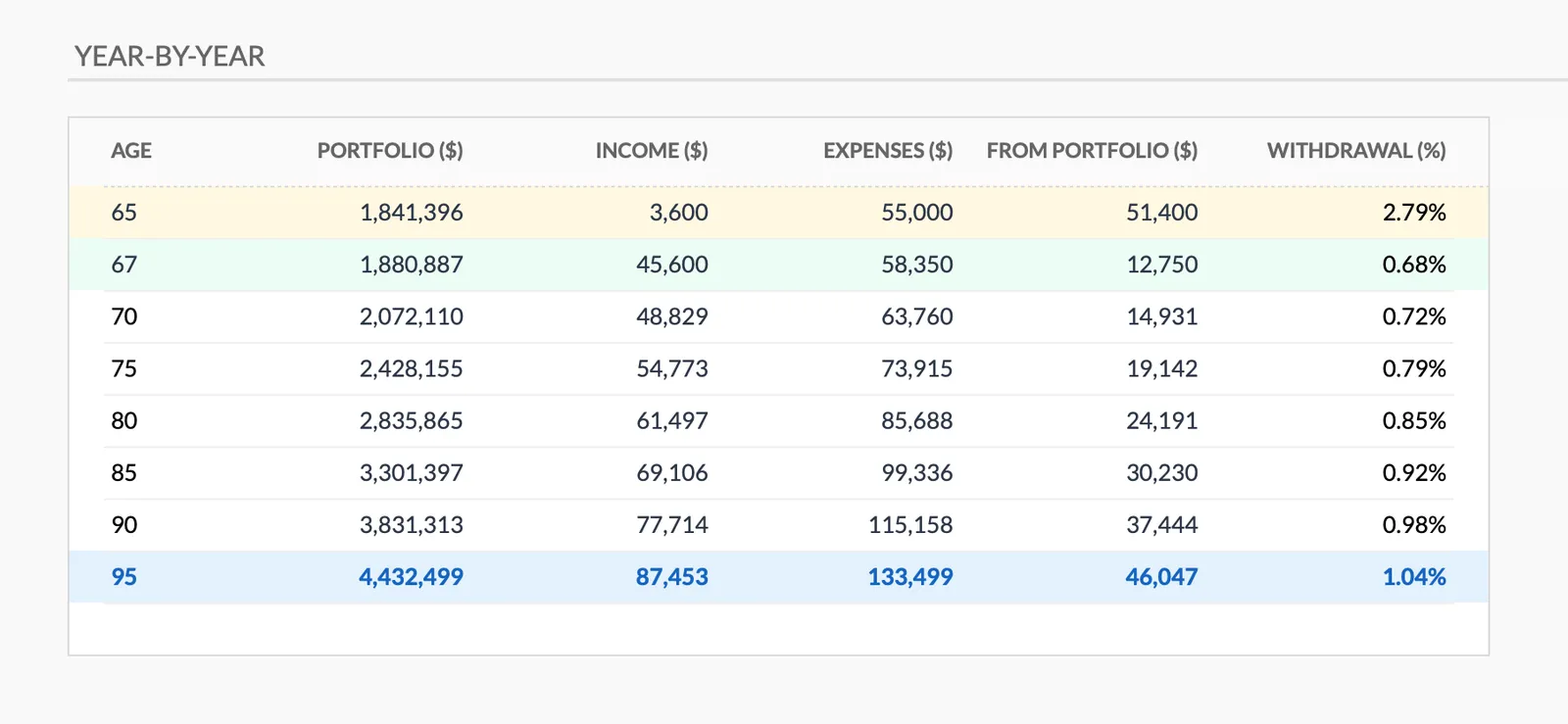
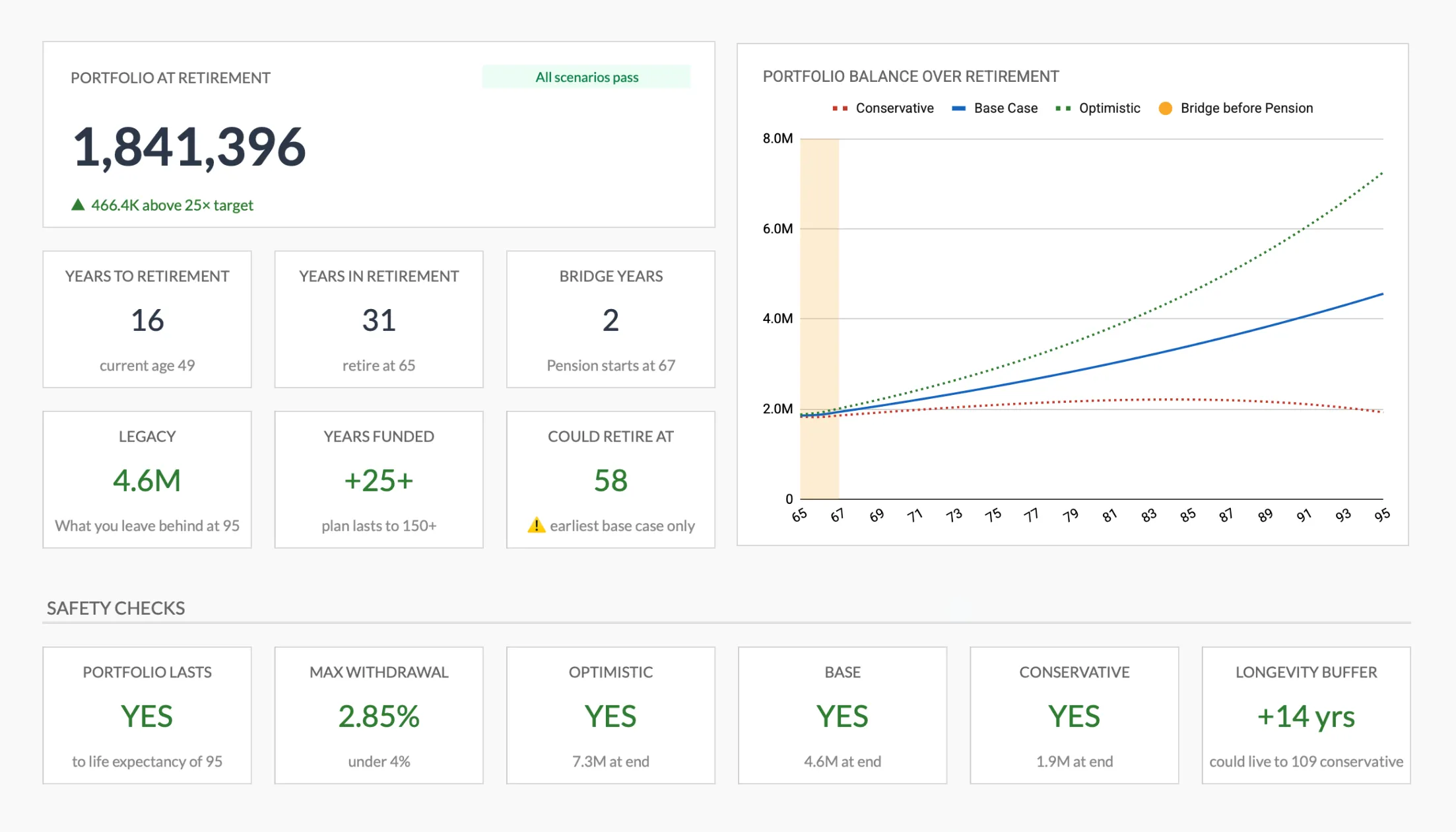
Complete retirement overview with projections
Project your retirement savings growth
Track progress toward retirement goals
Plan your retirement income against expenses
Detailed year-by-year retirement projection
Common Questions
Retirement Planning Template for Singapore - FAQ
When can I access my CPF savings?
At 55, CPF creates a Retirement Account funded from Special and Ordinary Account savings, and since January 2025 the Special Account closes at that point. Savings above the Full Retirement Sum, which is SGD 220,400 for members turning 55 in 2026, can be withdrawn. CPF LIFE payouts begin at 65 and can be deferred to 70 for a higher amount. MediSave has its own withdrawal rules tied to healthcare expenses.
How much do I need to retire in Singapore?
This varies widely with lifestyle. Some published estimates put basic retirement expenses with a paid-off HDB flat around SGD 1,500 to SGD 2,500 a month, while a more comfortable lifestyle is often modelled at SGD 3,000 to SGD 5,000. The template is where your own expected expenses replace those generic ranges.
Is CPF LIFE enough for retirement?
For households with modest expenses and a paid-off home, CPF LIFE payouts may cover essentials. Beyond that, the gap between the payout and the spending level you have projected is the figure that matters, and SRS, investment income, and other savings are the usual ways people close it.
Should I top up my CPF for retirement?
Cash top-ups earn CPF's guaranteed rate, currently 4% on Special and Retirement Account savings, and attract tax relief of up to SGD 8,000 a year for top-ups to your own accounts plus SGD 8,000 for family members. The tradeoff is that the money is locked in until the retirement withdrawal rules allow access, so it trades flexibility for a guaranteed return. Which side of that tradeoff suits a given household depends on its wider position.
How do I account for inflation?
Singapore's long-run inflation has averaged roughly 2% to 3% a year, though recent readings have been lower. Projections commonly use a figure in that range. At 3%, an expense of SGD 3,000 a month today works out near SGD 5,400 a month in 20 years. Running the projection in inflation-adjusted terms keeps the numbers comparable.
Can't find the answer you're looking for? Contact our team
Explore More
Free Tools for Singapore
Ready to get started?
Download instantly and start managing your finances, or contact us to design a custom template package for your needs.
Tax rules, rates, and contribution limits change, and official publications can themselves lag behind the law in force. We review these figures on a best-effort basis against sources we consider authoritative, but we cannot guarantee they are current, complete, or that better sources do not exist, and nothing here is tax, legal, or financial advice. For decisions, the relevant government authority is the reference.