Philippines
Retirement Planning Template for the Philippines
Line up your SSS or GSIS pension estimate, Pag-IBIG MP2 savings, personal investments, and expected retirement costs in one Google Sheets template.
In Depth
SSS Pension, Overseas Filipinos, and the Retirement Equation
The SSS pension forms the foundation of retirement income for most Filipino workers, but monthly amounts are modest relative to living costs. A member who contributed consistently across a full career might see a pension in the range of PHP 8,000 to PHP 18,000 a month depending on contribution history and years of coverage, and SSS began phasing in a three-year increase of 10% for retirement and disability pensioners in September 2025. Even at the upper end, that covers basic expenses in provincial areas more readily than in Metro Manila, where costs are substantially higher.
Overseas Filipino Workers face a particular set of retirement planning challenges. Many earn well during their working years abroad yet build no pension entitlement in the host country, and gaps in SSS contributions while overseas reduce the eventual Philippine pension. The OFW contribution program, mandatory for land-based OFWs since 2019 under the Social Security Act of 2018, exists to close that gap, though coverage in practice is uneven. The move from foreign earnings back to Philippine-based retirement income is the part of the picture most often left unmodelled.
Under the Labor Code the retirement age is generally 60 for optional retirement and 65 for compulsory retirement, while SSS pension claims can begin at 60 for a member with at least 120 monthly contributions who has stopped working. Healthcare is the other moving part: PhilHealth coverage helps but does not cover everything, and private health insurance grows more expensive with age. Setting the pension timeline and the healthcare trajectory side by side gives a clearer view of what retirement in the Philippines actually costs.
Philippines
Retirement Planning in the Philippines: Key Factors
Retirement in the Philippines usually draws on an SSS or GSIS pension, personal savings, and often family support. Seeing how those pieces sit together is what makes a plan legible.
SSS pension provides a baseline but has limits
The SSS monthly pension depends on years of contributions and the average monthly salary credit. At least 120 monthly contributions qualify a member for a pension from age 60 if they have stopped working, or from 65 regardless of employment. SSS began a three-year pension increase in September 2025, raising retirement and disability pensions by 10% and survivor pensions by 5% without a matching rise in contributions. Even after that, the maximum SSS pension stays modest against Metro Manila living costs, so most plans treat it as one income line rather than the whole picture.
Pag-IBIG MP2 is a voluntary savings option with tax-free dividends
The Modified Pag-IBIG 2 (MP2) savings program is voluntary and pays tax-free dividends, with a minimum of PHP 500 per remittance. Pag-IBIG declared a rate of 7.12% for 2025, in line with the roughly 7% range of the preceding few years. Savings run to a five-year maturity that can be rolled into a new account. Rates are declared annually out of the fund's income rather than fixed in advance.
Healthcare costs are a major retirement concern
PhilHealth provides a layer of coverage, but many retirees still meet significant out-of-pocket costs for medications, specialists, and private treatment. Healthcare spending tends to rise with age, which makes it one of the largest variable expenses in retirement and one of the harder ones to estimate in advance.
Family dynamics influence retirement planning
In Philippine households, children often support aging parents and retirees may continue supporting younger relatives. These two-way flows are part of the retirement picture. Some people model partial family support alongside personal savings rather than assuming either one carries the whole load.
Get the Template
Getting Started
Adapting the Retirement Planner for Philippine SSS and Pag-IBIG
Enter current retirement savings
List all retirement-related balances: SSS contribution history from the My.SSS portal, Pag-IBIG regular and MP2 savings, bank savings and time deposits, mutual funds or UITFs, stocks, and any other long-term holdings.
Enter SSS, Pag-IBIG, and personal savings
Enter SSS contributions taken from salary, voluntary Pag-IBIG MP2 contributions, and any other regular saving or investing. These figures drive the growth projections in the template.
Estimate SSS pension benefits
Use the SSS pension calculator or your own contribution history to estimate the monthly pension at retirement age, then enter it as retirement income. Government employees can estimate GSIS benefits in the same line instead.
Project retirement expenses
Estimate monthly costs in retirement covering housing, food, healthcare and medications, utilities, transportation, and any family support expected to continue. Some categories fall away with age while healthcare typically climbs.
Run different scenarios
Test retiring at 60 against 65, different spending levels, and different savings rates. The template shows how each change moves the outcome across a 20 to 30 year horizon, including how small differences in the monthly amount compound.
See It In Action
What the template looks like
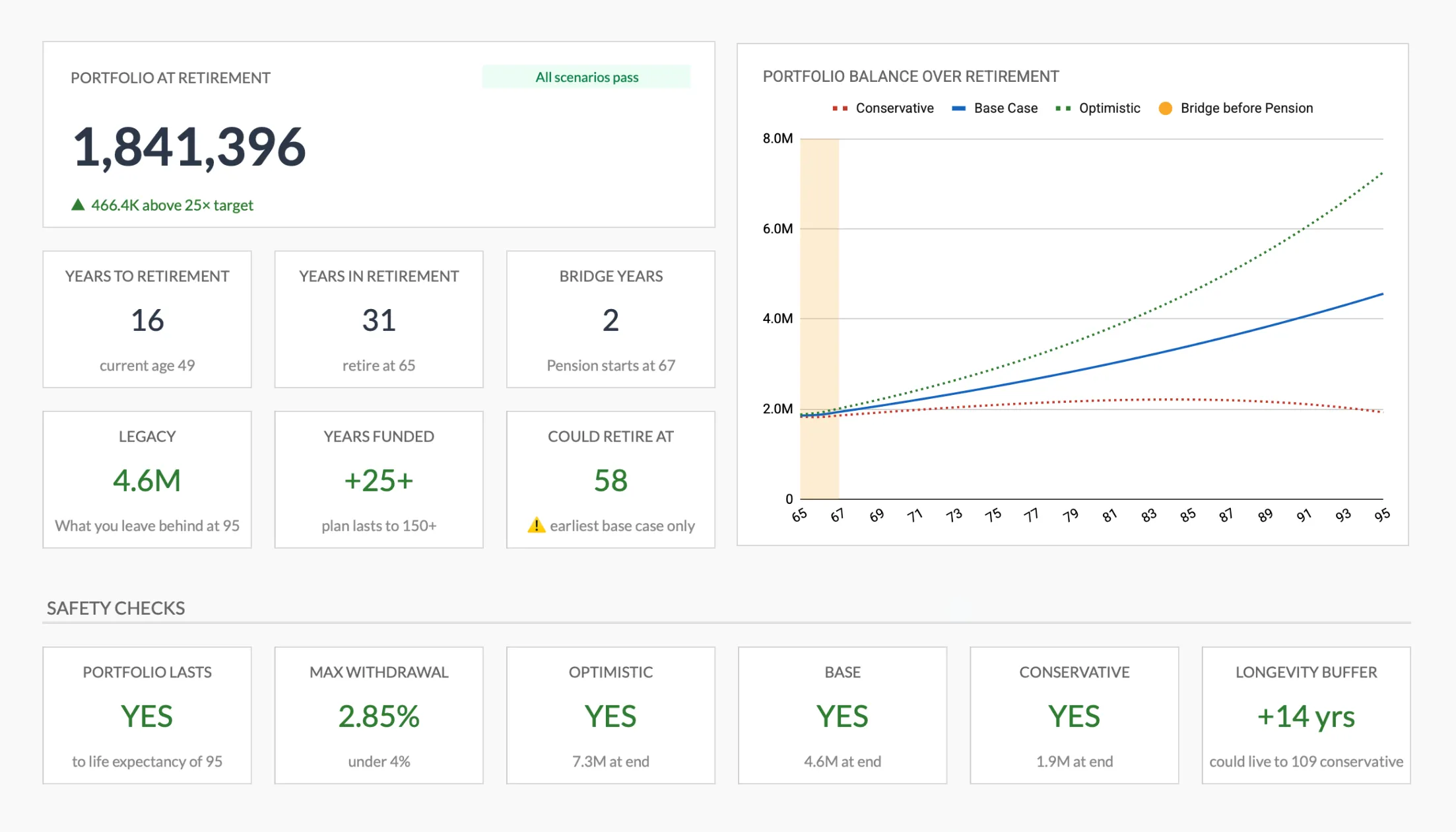
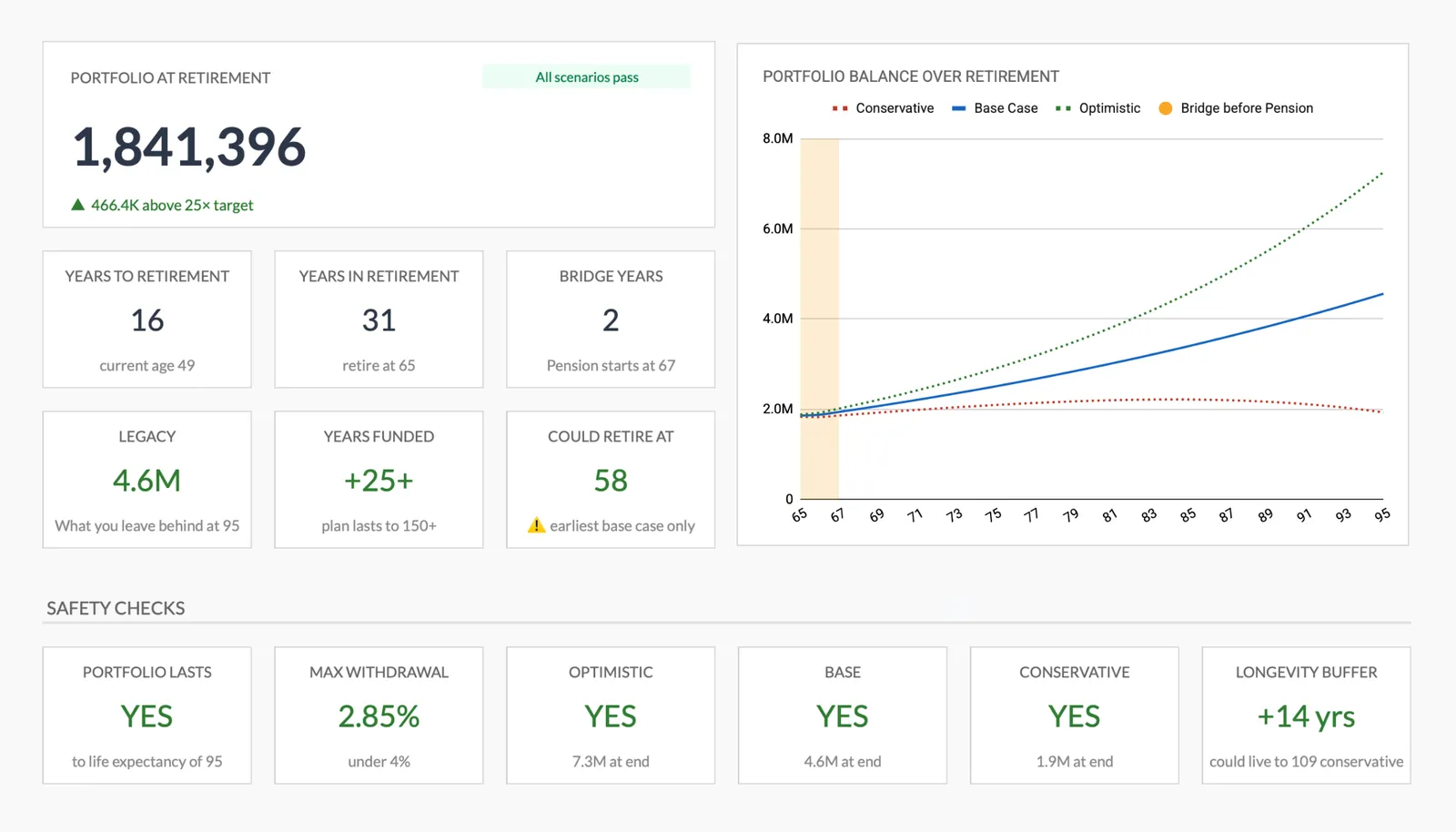
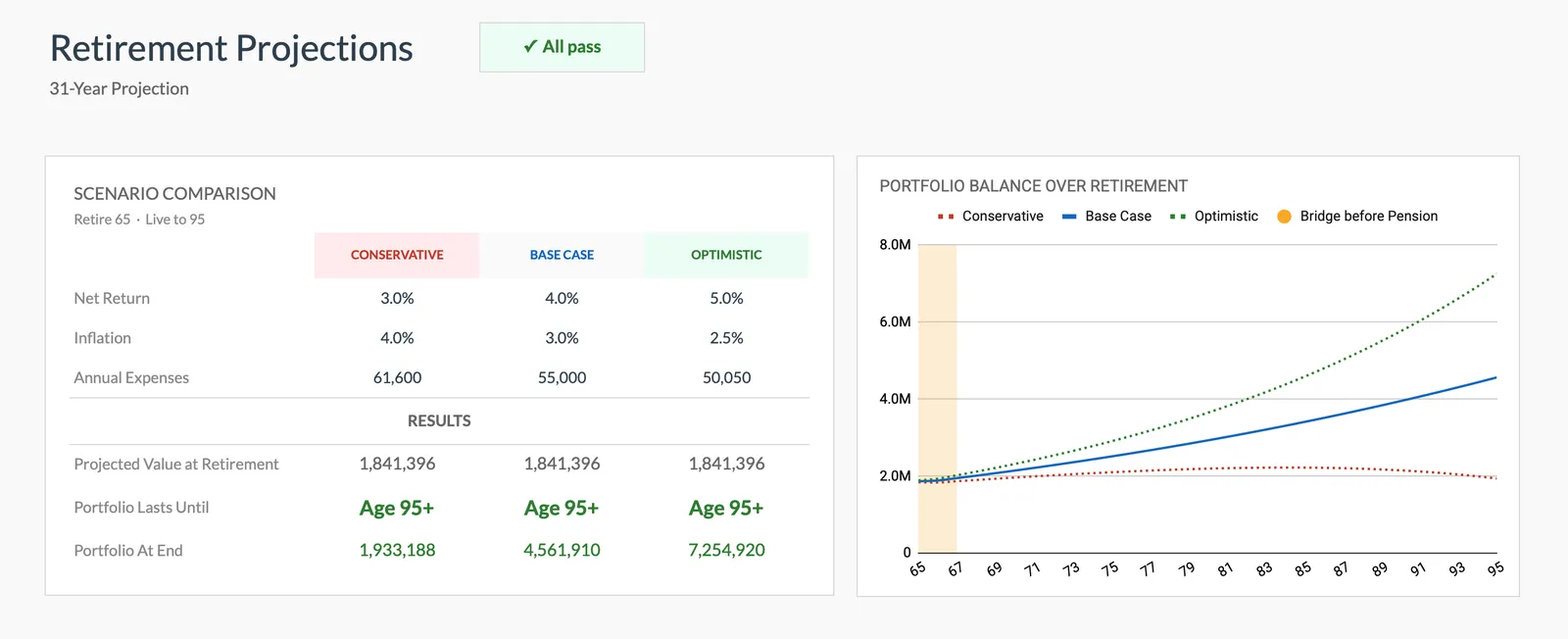
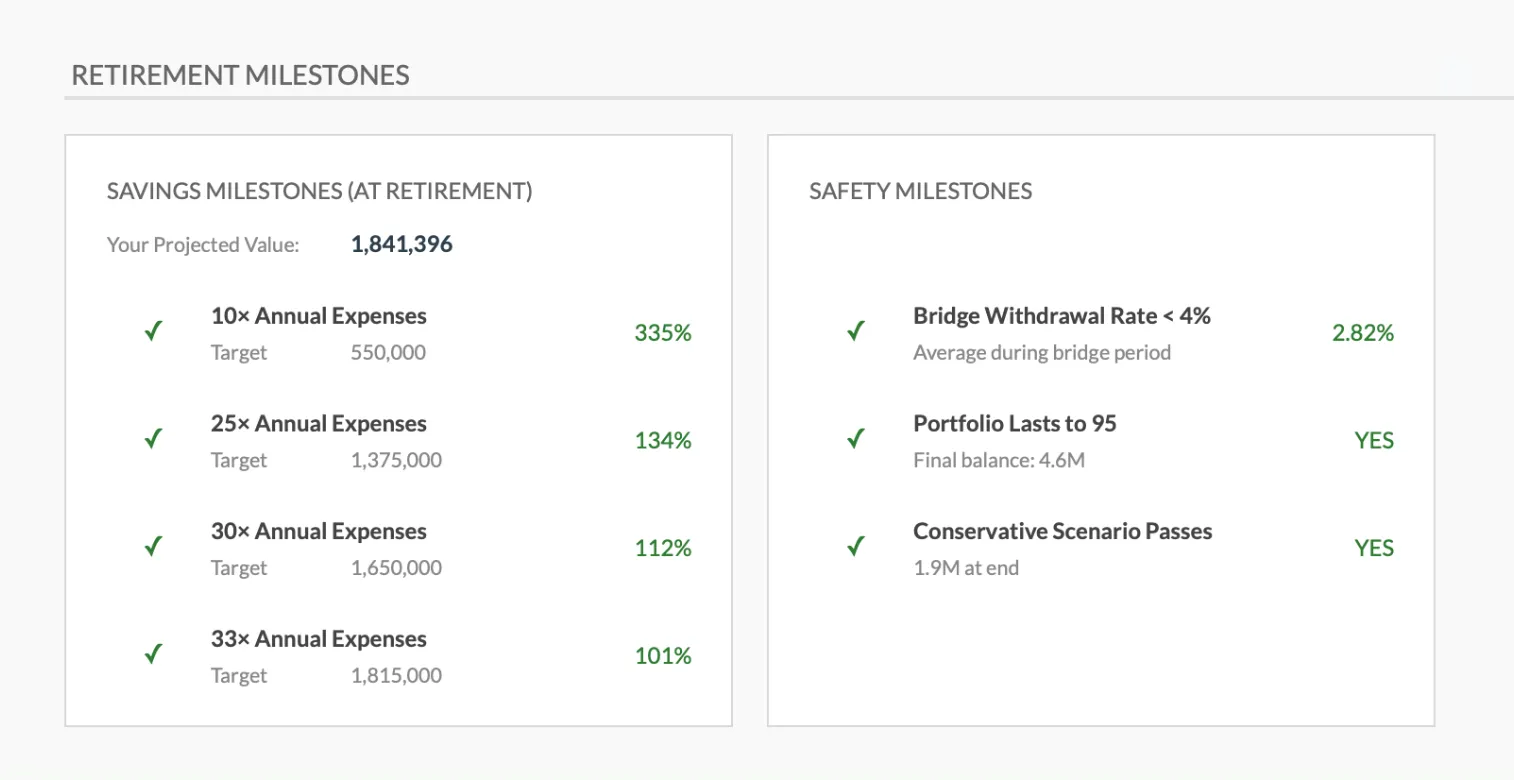
Browse through the template to see the dashboard, the entry sheets, and the summaries it produces, all adaptable to your local financial setup.
- Built-in currency selector
- Calculations update automatically
- Visual summaries of your numbers
- No setup required
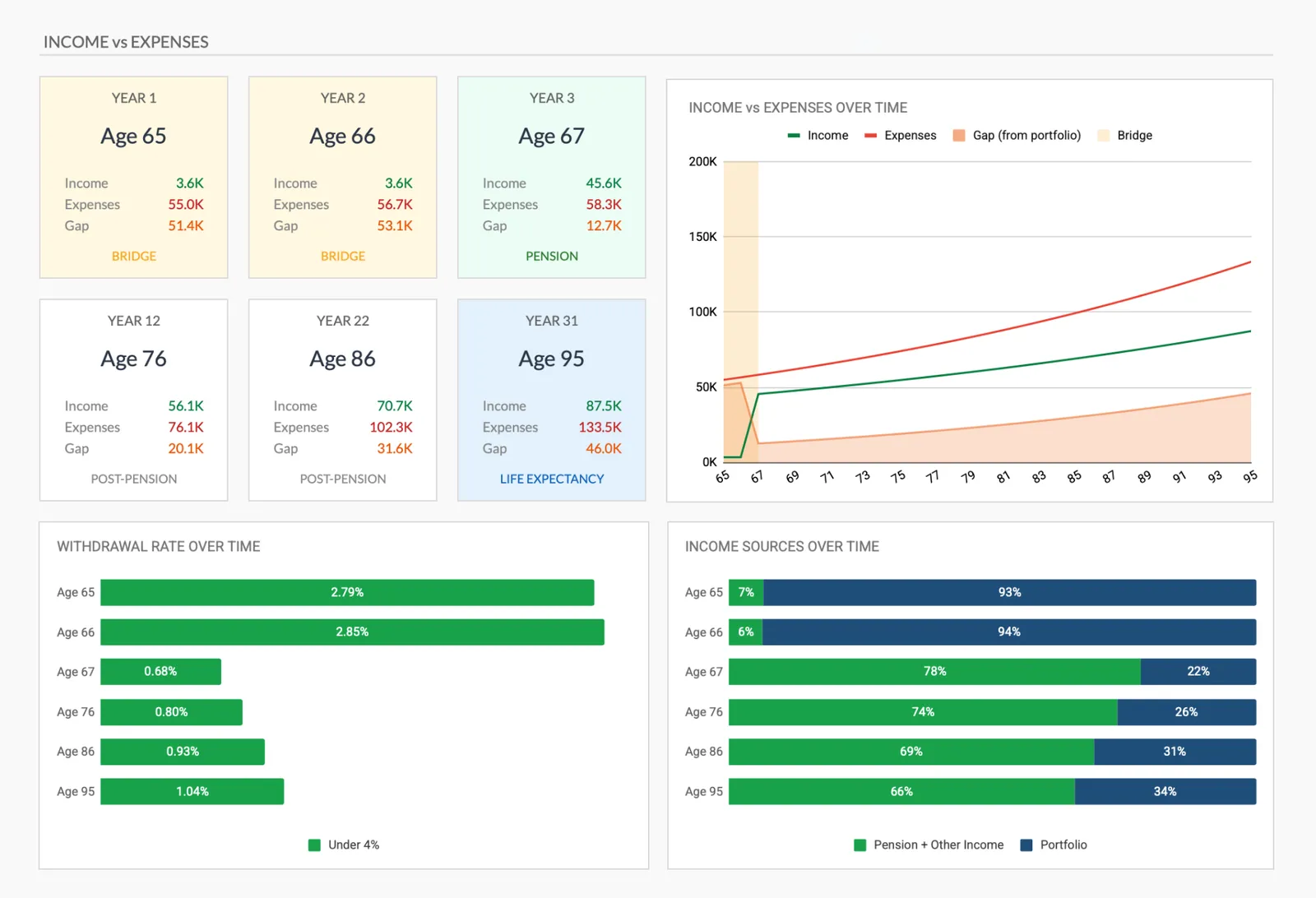
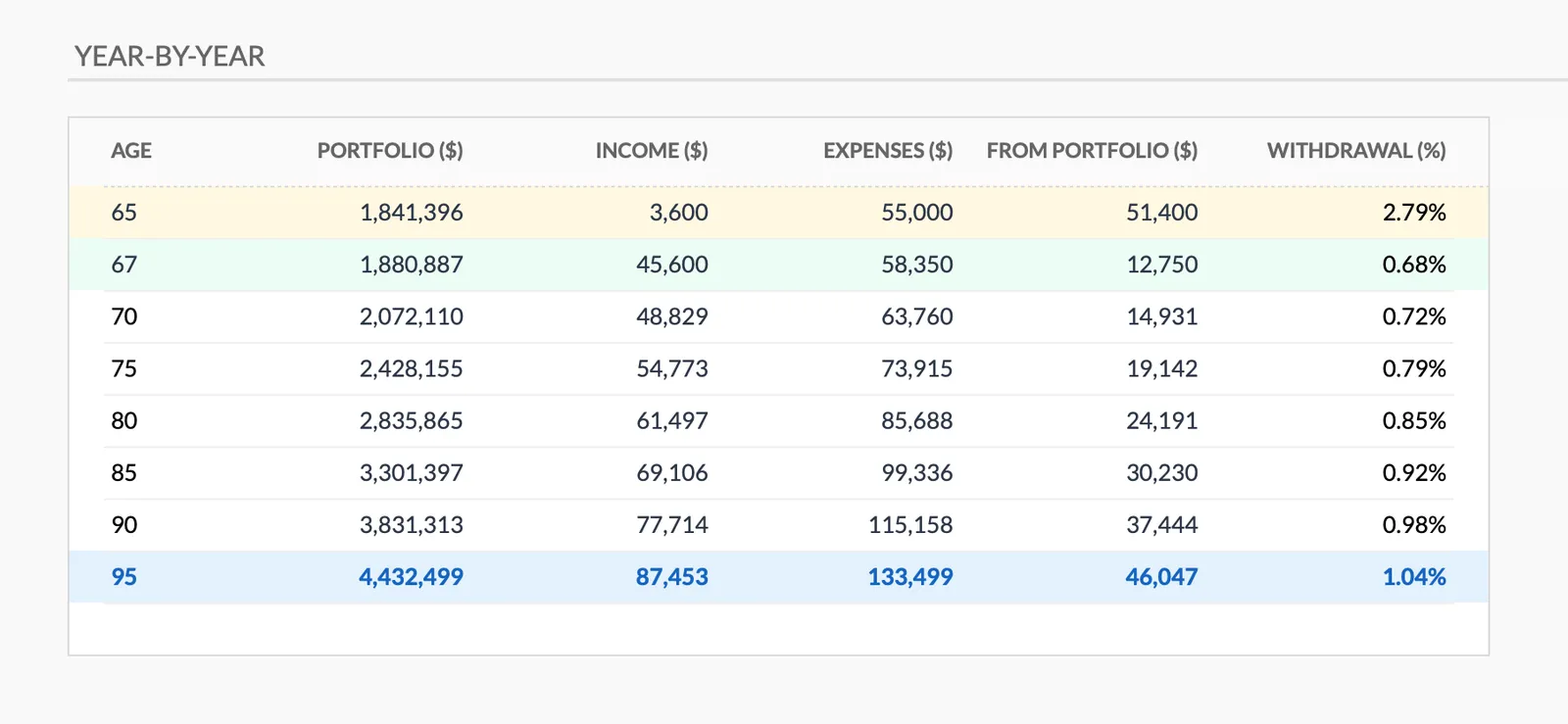
Complete retirement overview with projections
Project your retirement savings growth
Track progress toward retirement goals
Plan your retirement income against expenses
Detailed year-by-year retirement projection
Common Questions
Retirement Planning Template for the Philippines - FAQ
How much do I need to retire in the Philippines?
This varies widely by location and lifestyle. As a rough illustration, a modest provincial retirement is commonly discussed in the range of PHP 20,000 to PHP 30,000 a month, while Metro Manila figures quoted are often PHP 50,000 to PHP 80,000 or more. The template calculates from your own expected expenses rather than any national average.
Is SSS pension enough for retirement?
That depends entirely on expected costs. The maximum monthly SSS pension is capped, and increases are occasional rather than automatic: the three-year program that began in September 2025 lifted retirement pensions by 10%. Some people treat the pension as a base and layer Pag-IBIG MP2, personal savings, and investments on top of it.
When can I start receiving SSS pension?
SSS retirement benefits can be claimed at 60 by a member who has stopped working, or at 65 regardless of employment status. At least 120 monthly contributions, meaning 10 years, are needed to qualify for a monthly pension. Fewer contributions result in a lump sum instead.
How does Pag-IBIG MP2 fit into a retirement plan?
MP2 pays tax-free dividends declared once a year out of the fund's income, at 7.12% for 2025 and around 7% in the preceding few years. It is backed by the Pag-IBIG Fund and runs on a five-year maturity. Some people use it for the conservative portion of their retirement savings, though how it fits depends on the rest of the portfolio and how soon the money is needed.
How do I account for inflation in the Philippines?
Philippine inflation has been volatile. The Bangko Sentral ng Pilipinas targets a 2% to 4% band, and headline inflation ran above that band through the first half of 2026. Over 20 to 30 years even a mid-single-digit rate erodes purchasing power substantially. Using real returns, meaning nominal returns minus inflation, keeps projections closer to reality: at 4% inflation, PHP 30,000 a month today is roughly PHP 80,000 in 25 years.
Can't find the answer you're looking for? Contact our team
Explore More
Free Tools for the Philippines
Ready to get started?
Download instantly and start managing your finances, or contact us to design a custom template package for your needs.
Tax rules, rates, and contribution limits change, and official publications can themselves lag behind the law in force. We review these figures on a best-effort basis against sources we consider authoritative, but we cannot guarantee they are current, complete, or that better sources do not exist, and nothing here is tax, legal, or financial advice. For decisions, the relevant government authority is the reference.