Singapore
Net Worth Tracker for Singapore
Combine your CPF Ordinary, Special, and MediSave accounts with property equity, SRS, investments, and loans - one spreadsheet, one net worth number.
In Depth
CPF Balances, HDB Equity, and What Counts as Accessible
CPF balances are often the single largest asset for working Singaporeans, growing with every salary credit through mandatory contributions of 37% of wages for those aged 55 and below. The Ordinary Account earns 2.5% a year, the Special, MediSave and Retirement Accounts earn 4% under a floor extended through the end of 2026, and an extra 1% applies to the first SGD 60,000 of combined balances. Since January 2025 the Special Account has closed for members aged 55 and above, so a tracker set up for an older member lists the Retirement Account in its place. Including every CPF account gives the complete picture, and a separate line for what sits outside CPF shows what is actually reachable.
HDB or private property equity is the other major component. Recent resale transaction data from the HDB portal or URA gives a grounded estimate of market value, and subtracting the outstanding mortgage leaves the equity position. For many Singaporeans, CPF and property equity together make up the vast majority of net worth, which is a useful thing to see plainly given that both are relatively illiquid.
Investment portfolios held through platforms like Syfe, Endowus, or StashAway, along with direct SGX holdings and REITs, add diversification beyond CPF and property. Because Singapore does not tax capital gains for individuals, the full market value of these investments carries no hidden future tax liability. Tracking them at current value rather than cost basis is what makes the trend line reflect real progress.
Singapore
Net Worth in Singapore: What to Track
Singaporeans typically hold wealth across CPF accounts, property, and investments. A net worth tracker brings all of these into one view.
CPF is often the largest asset for many Singaporeans
Mandatory contributions run to 37% of wages for employees aged 55 and below, counting both employer and employee shares, so CPF balances build steadily over a career. The Ordinary Account earns 2.5% a year while the Special, MediSave and Retirement Accounts earn 4%, a floor extended through the end of 2026, with an extra 1% on the first SGD 60,000 of combined balances. Since January 2025 the Special Account has been closed for members aged 55 and above, so those members hold an Ordinary Account, MediSave and a Retirement Account instead. Including CPF gives a complete picture, though the funds carry withdrawal restrictions.
Property equity is a major wealth component
Whether HDB or private property, real estate is often the largest single asset for Singaporeans. Equity is market value less the outstanding mortgage, and recent transactions on the HDB or URA portals give a grounded value estimate. Property in Singapore has appreciated over long stretches, though past performance varies by location and property type.
Investment portfolios add diversification
Stocks (SGX and international), REITs, robo-advisors (Syfe, Endowus, StashAway), and unit trusts contribute to net worth. Singapore's lack of capital gains tax for individuals means the full value of investment gains is yours. Current market value is the figure that keeps the total accurate.
Outstanding loans are the primary liabilities
HDB loans, bank mortgages, car loans, renovation loans, and education loans form the liability side. The HDB concessionary loan rate is 2.6%, pegged at 0.1 percentage points above the CPF Ordinary Account rate of 2.5%, while bank mortgage rates move with the market. Tracking declining balances alongside growing assets is what shows the real direction of travel.
Get the Template
Getting Started
Adapting the Net Worth Tracker for Singapore CPF and Beyond
List all assets with current balances
Enter bank savings, CPF Ordinary Account, CPF Special Account or Retirement Account, CPF MediSave, SRS balance, investment portfolios, property market value, insurance cash value, and any other assets.
Record all outstanding loans and debts
The liability side covers the outstanding HDB loan or bank mortgage, car loan, renovation loan, education loan, credit card balances, and anything else owed. A complete list is what makes the net worth figure meaningful.
Set the display currency to SGD
The currency dropdown on the Dashboard switches every money label to SGD at once. It relabels rather than converts, so the underlying figures stay as entered.
Refresh CPF and investment balances regularly
Monthly updates suit most people. CPF balances appear on the CPF website, investment values on your brokerage or robo-advisor, and property estimates can be revisited periodically. The template recalculates net worth from whatever is entered.
Track the trend over time
A single snapshot says less than a trajectory. Whether an HDB loan is coming down or investments are building up, the direction of change is what the chart shows.
See It In Action
What the template looks like
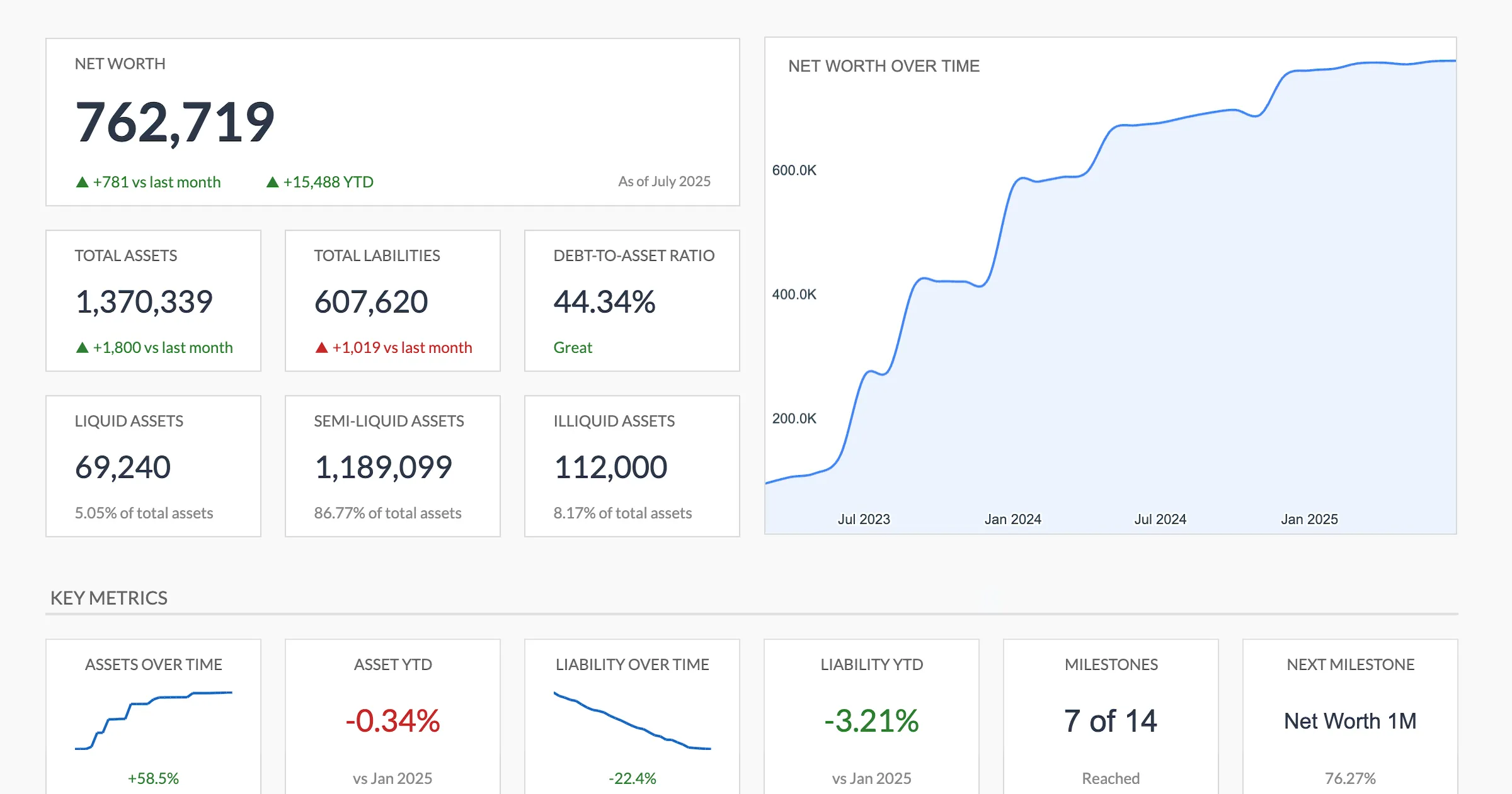
Browse through the template to see the dashboard, the entry sheets, and the summaries it produces, all adaptable to your local financial setup.
- Built-in currency selector
- Calculations update automatically
- Visual summaries of your numbers
- No setup required
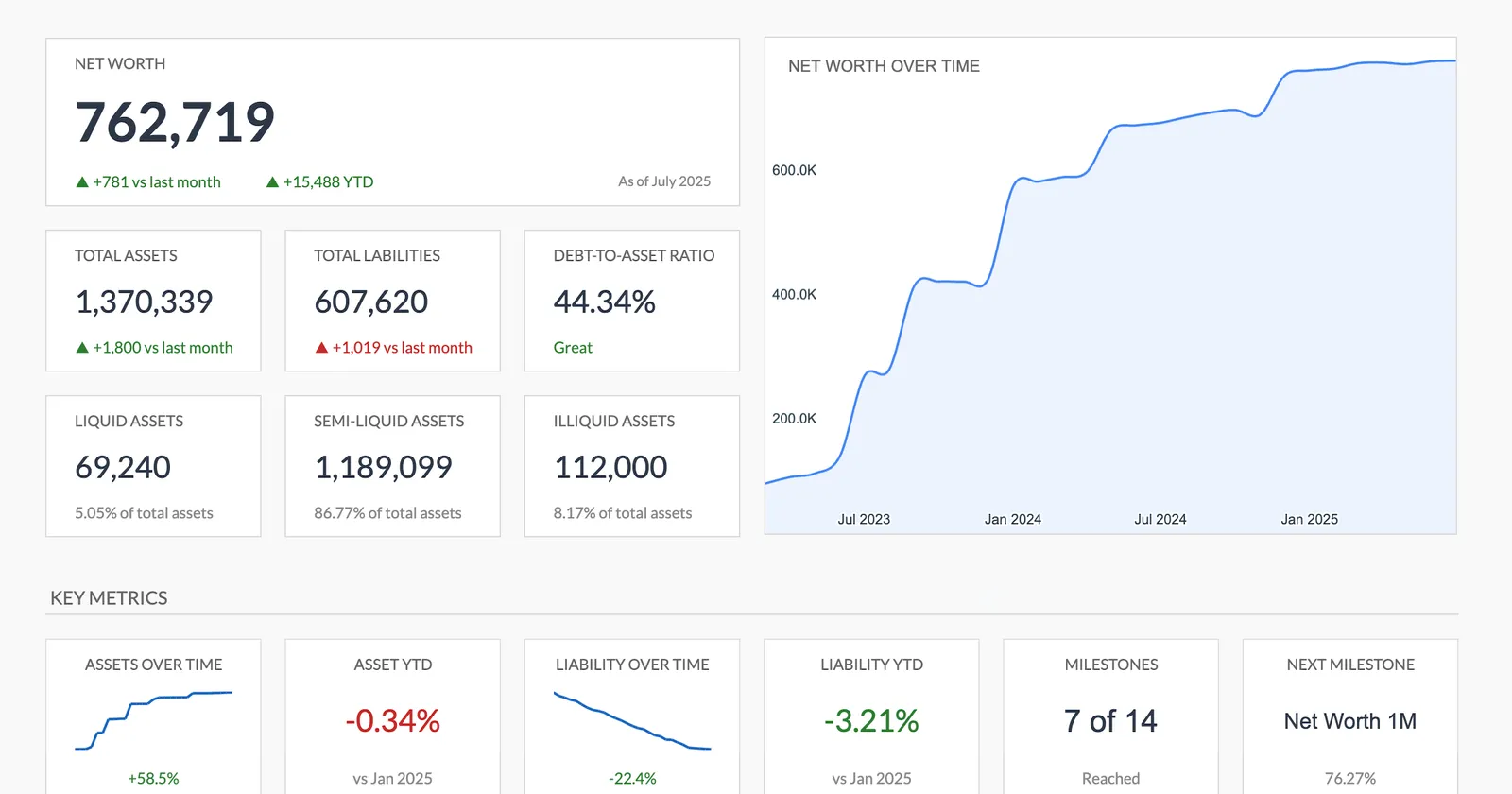
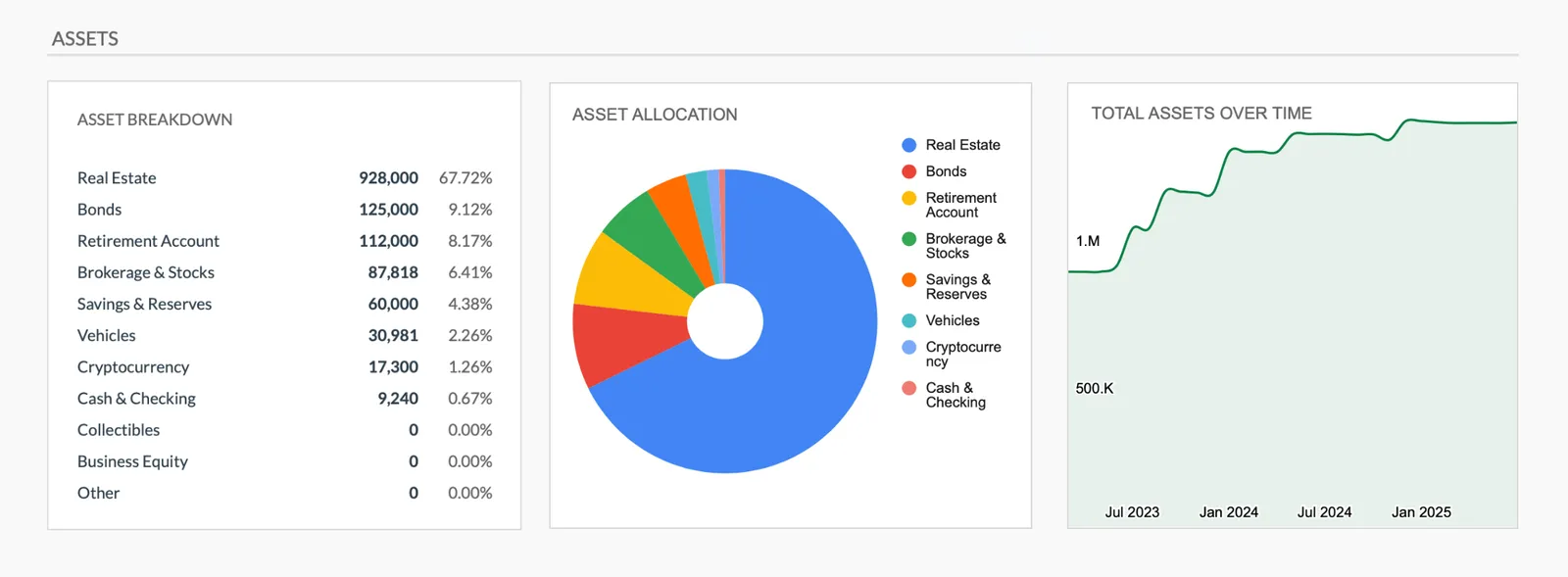
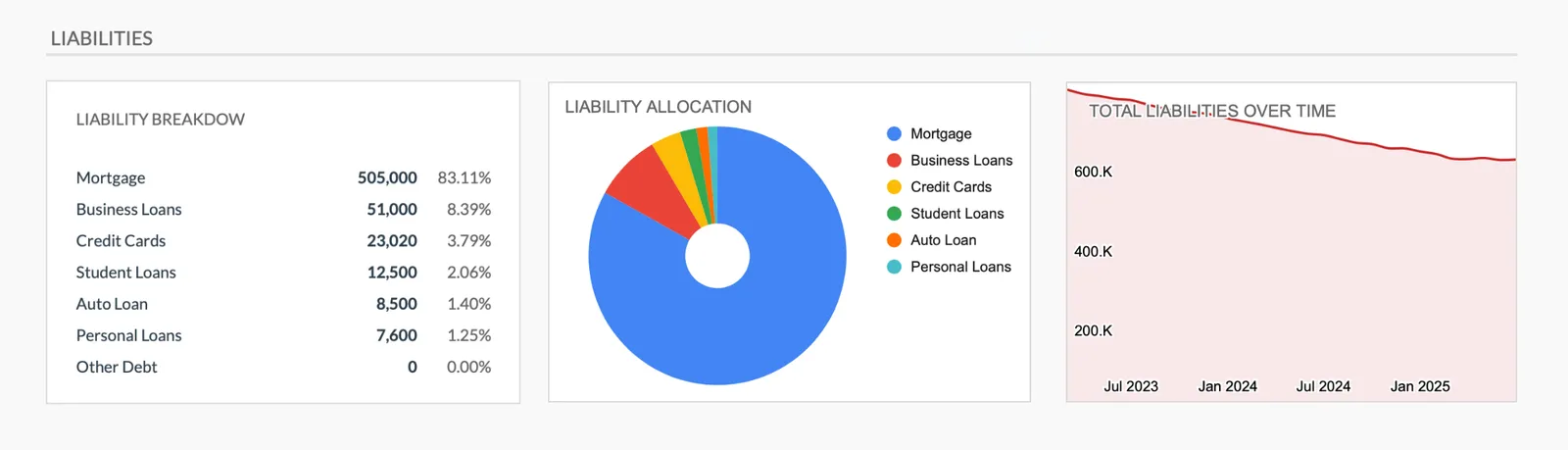

Track your net worth over time with charts
Breakdown of all your assets
Track all debts and liabilities
Key financial health indicators
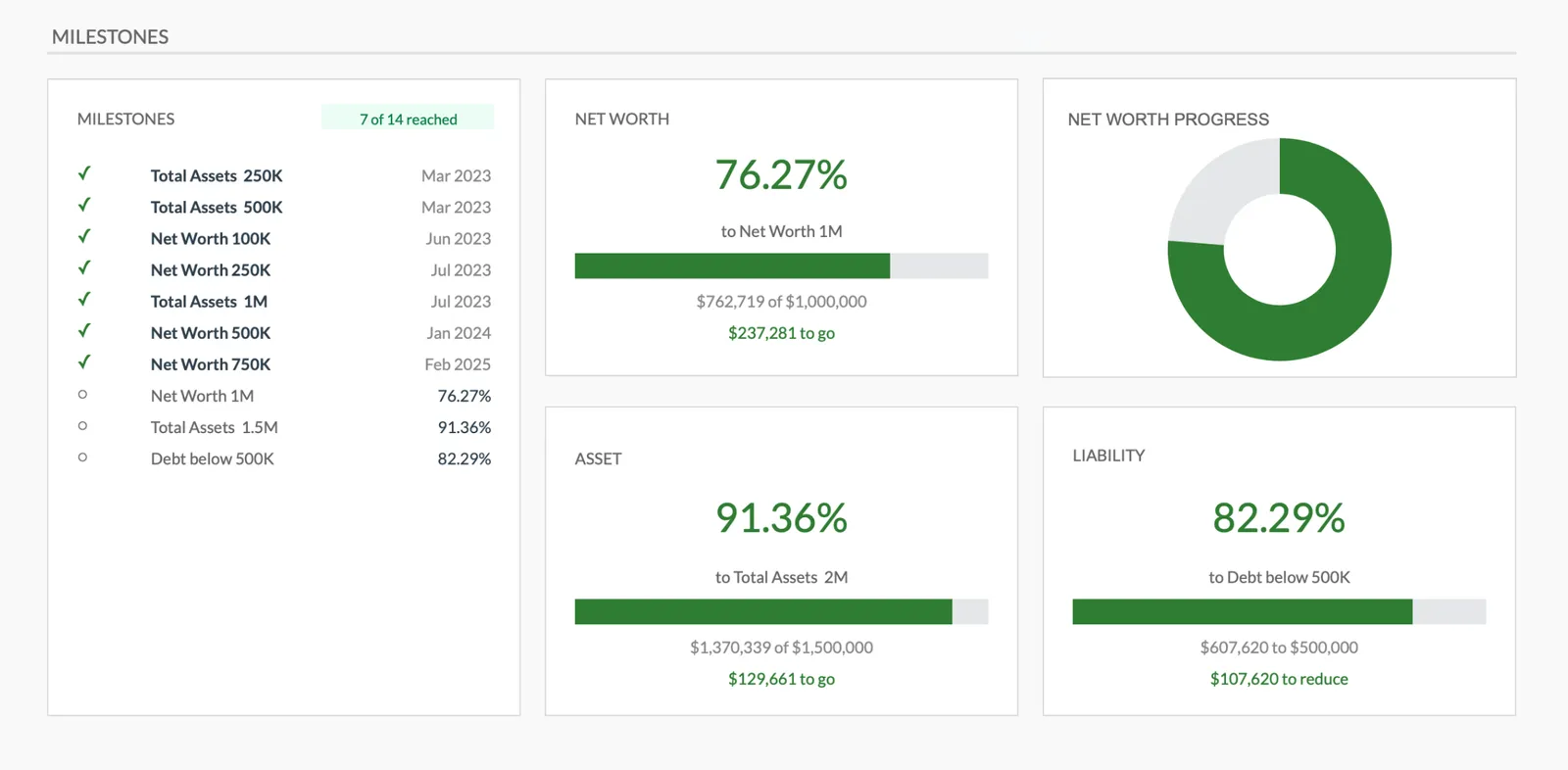
Set and celebrate net worth milestones
Common Questions
Net Worth Tracker for Singapore - FAQ
Should I include CPF in my net worth?
CPF is your money even with withdrawal restrictions, so including it gives the complete picture. Some people also track a separate "liquid net worth" figure that excludes CPF and property, to see what is immediately accessible.
How do I value my HDB flat?
Recent resale transactions for similar flats in the same area are listed on the HDB Resale Flat Prices portal. Some people take a figure below the highest comparable sale so the total is not flattered. Subtracting the outstanding mortgage gives the equity position.
Should I include my car?
Cars depreciate rapidly in Singapore because of the COE system. Where a car is included, current market value rather than purchase price reflects reality. Some people leave vehicles out entirely since they are depreciating assets. Either approach works as long as it stays consistent across snapshots.
What about insurance policies with cash value?
Endowment plans and whole life policies with surrender values can be included as assets. The current surrender value from the insurer is the figure that reflects today, not the projected maturity value. Term life insurance has no cash value, so it does not appear on the asset side.
What's a practical update cadence for Singapore net worth?
Monthly is the most common cadence. CPF updates after each salary credit, and investment values change daily. Quarterly works too if monthly feels excessive. Consistency matters more than frequency.
Can't find the answer you're looking for? Contact our team
Explore More
Free Tools for Singapore
Ready to get started?
Download instantly and start managing your finances, or contact us to design a custom template package for your needs.
Tax rules, rates, and contribution limits change, and official publications can themselves lag behind the law in force. We review these figures on a best-effort basis against sources we consider authoritative, but we cannot guarantee they are current, complete, or that better sources do not exist, and nothing here is tax, legal, or financial advice. For decisions, the relevant government authority is the reference.