India
Monthly Budget Template for India
Log your income in INR, plan your tax-saving investments and rent alongside everyday expenses, all in a Google Sheets template you own.
In Depth
Old Regime vs. New Regime, Section 80C, and the INR 50,000 NPS Edge
The choice between India's old and new tax regimes shapes how a budget works in practice. For the 2026-27 financial year the new regime, which is the default, starts at nil up to INR 4 lakh and climbs through 5, 10, 15, 20 and 25 per cent to a top rate of 30 per cent above INR 24 lakh, with a INR 75,000 standard deduction and a Section 87A rebate of up to INR 60,000 leaving salaried income up to about INR 12.75 lakh untaxed. Budget 2026 left those slabs where they were. The old regime charges higher headline rates but allows Section 80C relief of up to INR 1.5 lakh across PPF, ELSS, EPF and life insurance, the HRA exemption, the extra INR 50,000 for NPS, and home loan interest relief. Which one comes out ahead depends entirely on how many of those an individual can actually claim. Full slab detail sits with the Income Tax Department. One thing changed underneath all of this on 1 April 2026, when the Income-tax Act, 2025 replaced the 1961 Act: the reliefs survived with the same limits under new numbers, so Section 80C became Section 123 read with Schedule XV and the additional NPS deduction became Section 124(3). Payroll declarations and older guides still circulate the 1961 numbering, and both sets of labels describe the same money.
EPF contributions at 12 per cent of basic pay plus dearness allowance from the employee, matched by 12 per cent from the employer with 8.33 per cent of that diverted to the pension scheme, mean a meaningful slice of income never reaches the bank account. On INR 8 lakh of basic pay that is INR 96,000 a year from each side. EPFO declared 8.25 per cent interest for 2025-26. The credited salary, after EPF, professional tax and TDS, is therefore the only figure a budget can start from. PPF at 7.1 per cent with full EEE status and NPS with its extra INR 50,000 deduction supplement EPF in different ways, each with its own lock-in and withdrawal rules.
Indian expense patterns have a rhythm that generic budgets miss. Festival spending in October and November, school fee cycles in April and October, and the familiar March rush to finish tax-saving investments all create predictable peaks. Spreading a INR 1.5 lakh Section 80C target across twelve monthly SIPs of roughly INR 12,500 is one way people handle the last of those. For renters under the old regime, the HRA exemption can take another INR 1 lakh to INR 2 lakh off taxable income, which is where keeping rent receipts and filing declarations on time earns its administrative cost.
India
Budgeting in India: What's Different
India's financial landscape has several features that shape how budgeting works. Knowing them makes it easier to set up a template that reflects an actual financial picture.
Income tax slabs determine your effective tax rate
India runs two tax regimes: the old regime with deductions and exemptions, and the new regime with lower rates but far fewer deductions [1]. The new regime is the default. For the 2026-27 financial year its slabs are nil up to INR 4 lakh, 5% to INR 8 lakh, 10% to INR 12 lakh, 15% to INR 16 lakh, 20% to INR 20 lakh, 25% to INR 24 lakh and 30% above that, plus 4% health and education cess. A standard deduction of INR 75,000 and a Section 87A rebate of up to INR 60,000 leave salaried income up to roughly INR 12.75 lakh with no tax to pay. Budget 2026 left these slabs unchanged from 2025-26. Which regime works out better depends on how many deductions a person can claim, so many people compare both each financial year.
Section 80C and other deductions affect take-home pay
Under the old regime, PPF, ELSS, life insurance premiums and EPF contributions qualify for deductions up to INR 1.5 lakh under Section 80C [1], and NPS adds a further INR 50,000 under Section 80CCD(1B). Neither is available in the new regime. Since the Income-tax Act, 2025 came into force on 1 April 2026, the same reliefs carry new numbers: Section 80C is now Section 123 read with Schedule XV, and the extra NPS deduction is Section 124(3). The limits themselves did not change. Where these investments are being made, treating them as planned monthly outgoings rather than a year-end scramble is one way to fit them into a budget.
EPF and NPS reduce your in-hand salary
Employees contribute 12% of basic pay plus dearness allowance to EPF, and employers add a matching 12%, of which 8.33% goes to the Employees Pension Scheme and 3.67% to the EPF account [2]. EPFO declared 8.25% interest for the 2025-26 financial year. National Pension System contributions come out of pay in the same way. Because all of this leaves before the salary is credited, the credited figure is the one a budget can actually work from.
Indian expense patterns differ from Western templates
Generic budget templates often miss categories relevant to Indian life, such as domestic help salary, festival expenses at Diwali, Eid and Pongal, gold purchases, family obligations, out-of-pocket medical costs and education fees. Renaming categories to match those realities is what turns a generic sheet into a usable one.
HRA exemption can significantly reduce taxable income
Under the old regime, the House Rent Allowance exemption is available to salaried individuals paying rent. The exempt amount is the lowest of three figures: actual HRA received, 50% of basic salary in metro cities or 40% elsewhere, or rent paid minus 10% of basic salary. For someone earning INR 10 lakh with substantial rent, that can cut taxable income by INR 1 lakh to INR 2 lakh, which is why rent receipts and landlord declarations get tracked so carefully. The exemption does not exist in the new regime.
PPF rates and NPS provide distinct saving pathways
The Public Provident Fund has paid 7.1% since July 2024, with a 15-year lock-in, a INR 1.5 lakh annual deposit cap and full EEE tax status. The National Pension System carries its own INR 50,000 deduction under Section 80CCD(1B), one of the few reliefs sitting above the INR 1.5 lakh Section 80C ceiling. That INR 50,000 is itself a cap, so contributing more to NPS does not deduct more under that head. Employer NPS contributions are handled separately under Section 80CCD(2), deductible up to 14% of salary, and unlike the other two this one survives in the new regime.
Get the Template
Getting Started
Getting Started With Your Indian Budget in INR
Switch the currency to INR
There is a currency dropdown at the top of the dashboard. Switching it to INR relabels every money field; the calculations stay exactly the same, since only the display changes.
Enter your in-hand salary as income
Use the credited salary, meaning the amount that reaches the bank account after EPF, professional tax, TDS and anything else withheld. HRA or other allowances paid separately can go in as their own income lines.
Customize expense categories for Indian life
Categories can be renamed to match actual spending: rent, groceries, domestic help, electricity and water, mobile and broadband, EMIs on home, car and personal loans, medical costs, and festival or family obligations. Anything that does not apply can be deleted.
Add tax-saving investments as a budget category
Monthly SIPs into ELSS, PPF deposits and NPS contributions can sit in their own budget category. A full INR 1.5 lakh Section 80C target spread across twelve months works out at roughly INR 12,500 a month, which some people find easier to plan for than a lump sum in March.
Account for seasonal and annual expenses
Indian financial life has distinct seasonal patterns: festival spending in October and November, insurance renewals, school fees in April and October, and the March rush to complete tax-saving investments. Entering these in the months they land is where a twelve-month view helps.
See It In Action
What the template looks like
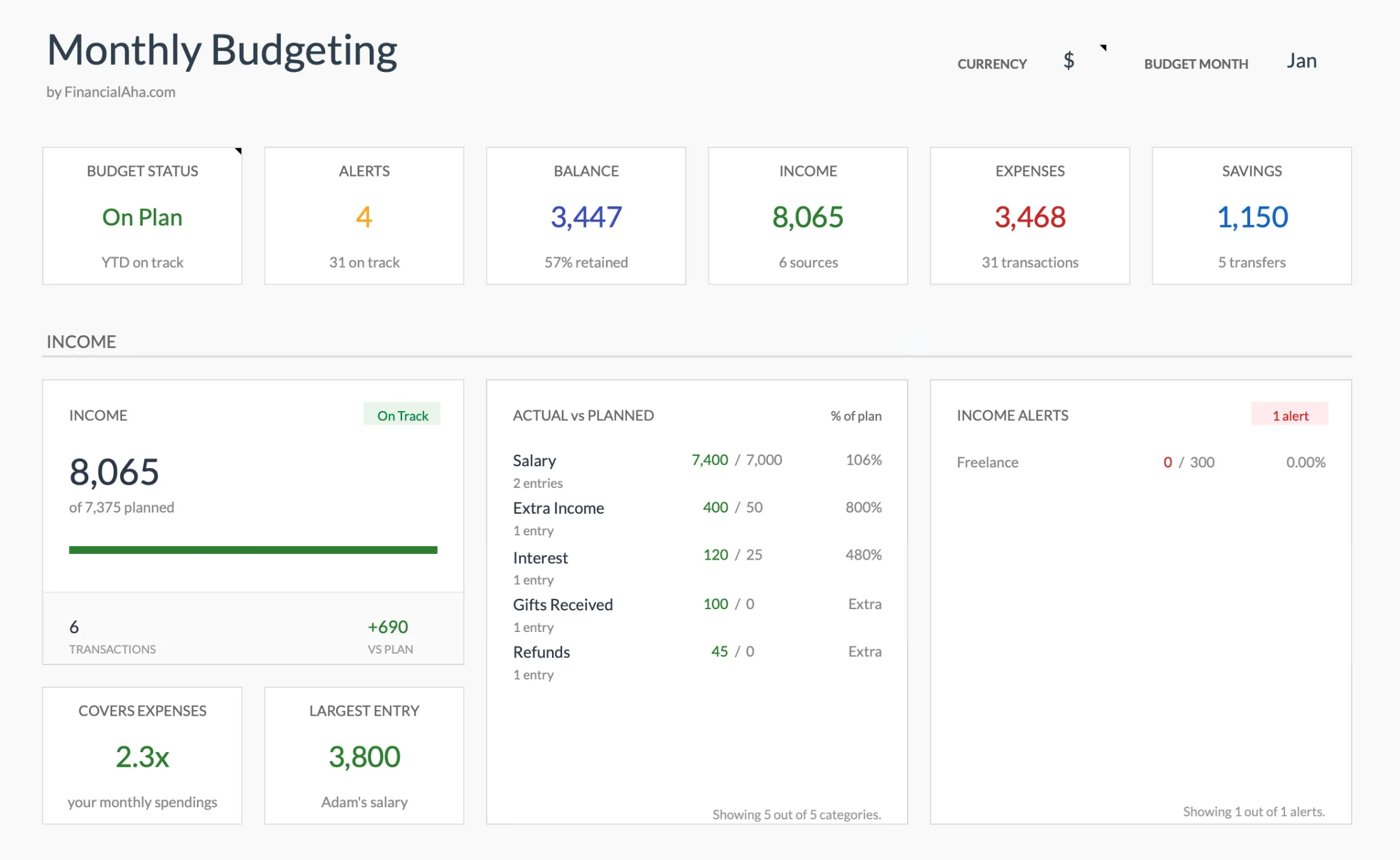
Browse through the template to see the dashboard, the entry sheets, and the summaries it produces, all adaptable to your local financial setup.
- Built-in currency selector
- Calculations update automatically
- Visual summaries of your numbers
- No setup required
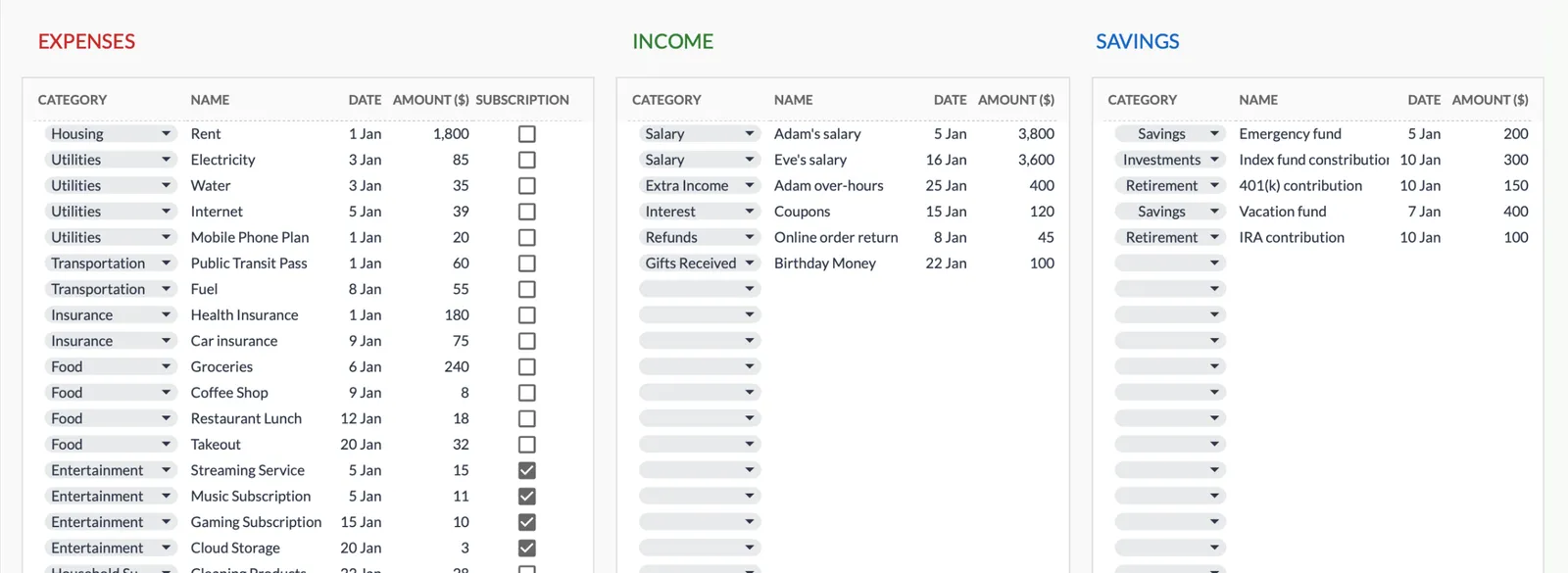
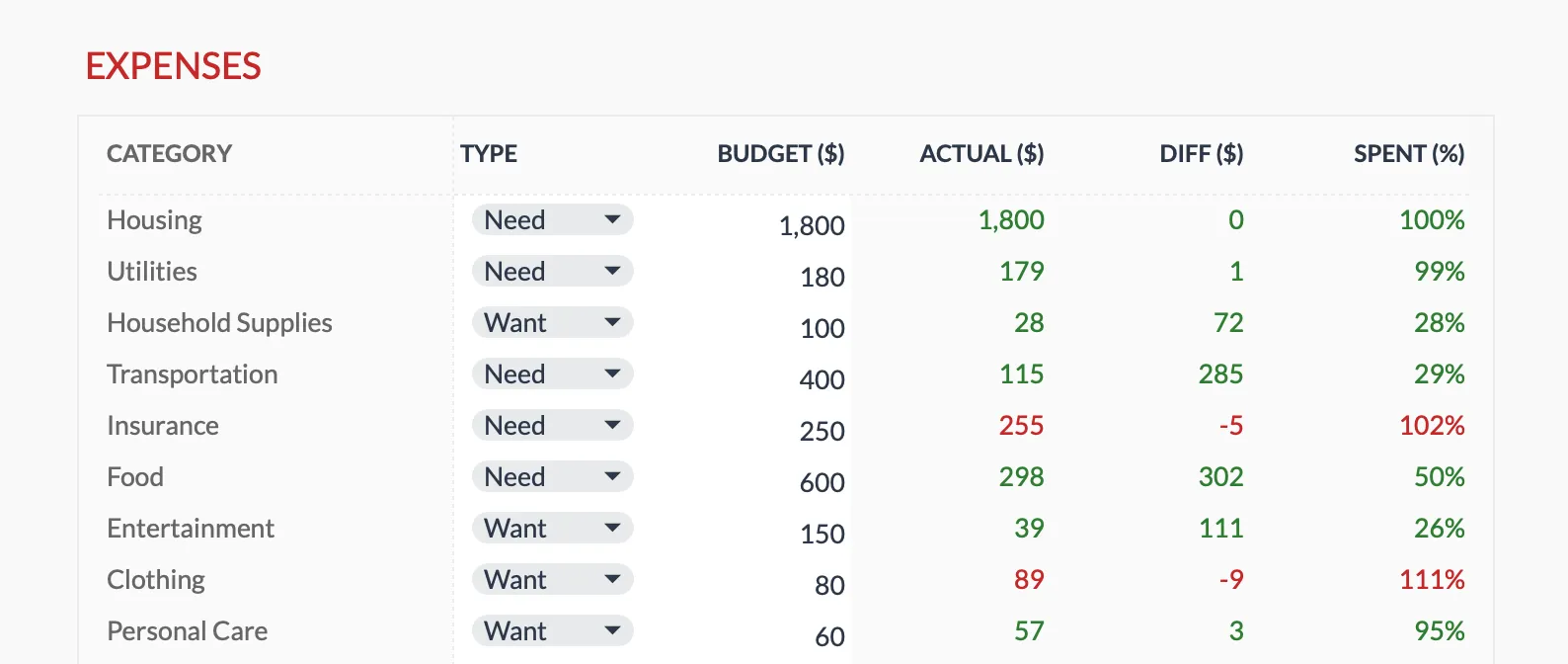
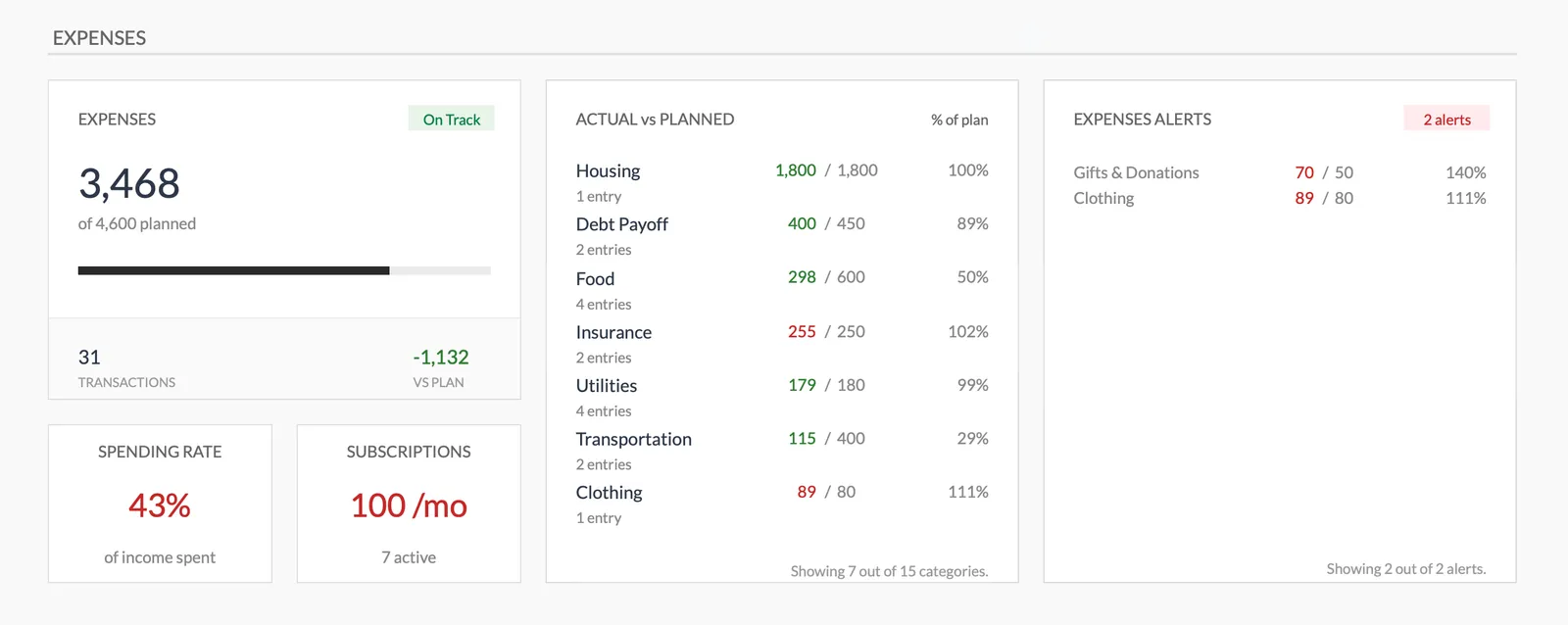
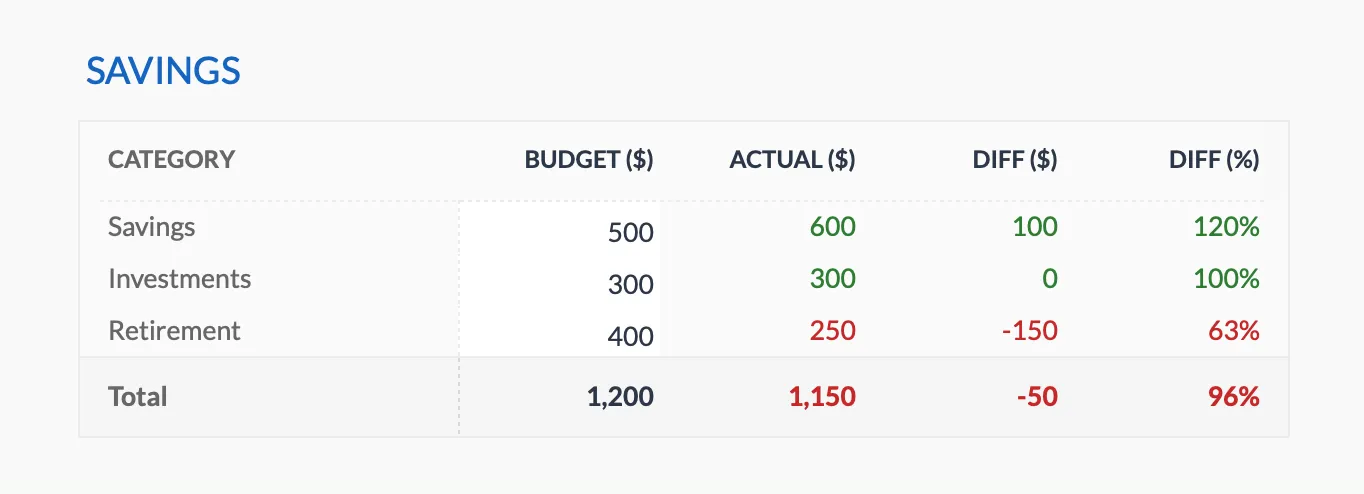
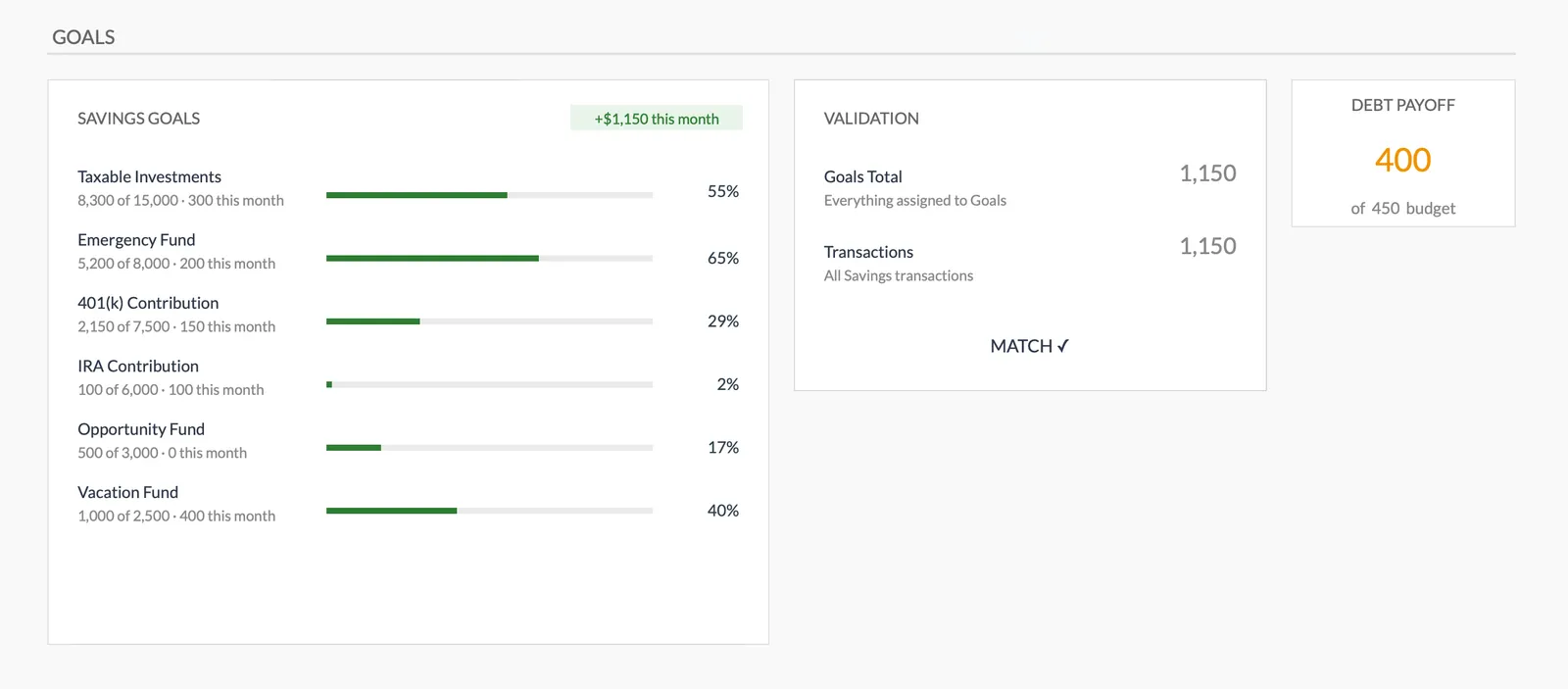
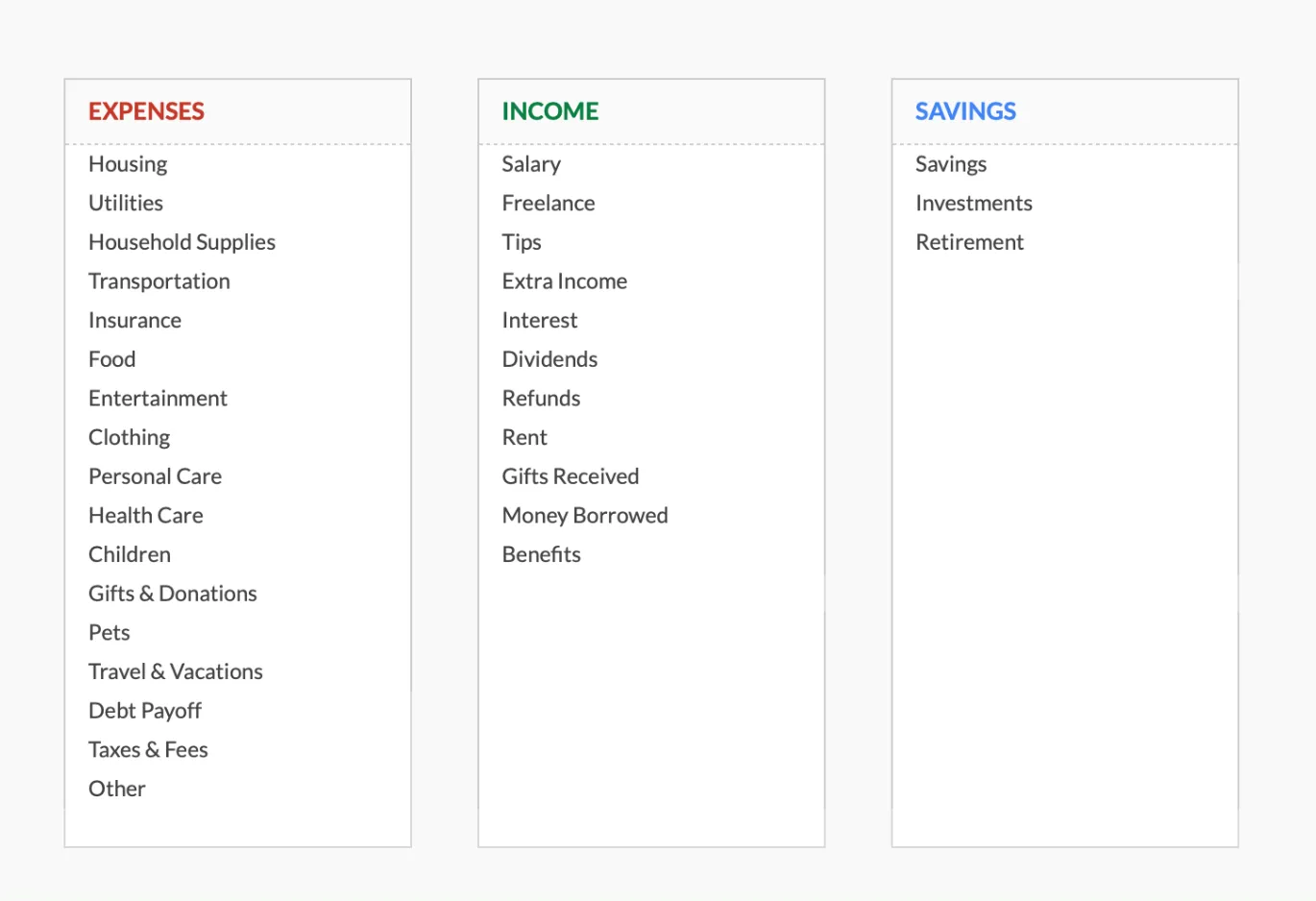
Dashboard with income, expenses, and savings at a glance
Log transactions with automatic categorization
Set targets per category and track actual spending
Visual breakdown of where your money goes
Track savings goals alongside your budget
Monitor progress toward financial goals
Fully customizable expense, income, and savings categories
Sources
Common Questions
Monthly Budget Template for India - FAQ
Does this template use Indian rupees?
Yes. The currency dropdown in the header switches the display to INR or any other currency. The math applies in any currency, so the formulas work the same regardless of what is shown.
Can I track Section 80C investments?
Yes, as a budget category for tax-saving investments covering ELSS SIPs, PPF, NPS and the rest. The template does not compute the deduction itself. Where EPF contributions already absorb part of the INR 1.5 lakh limit, only the voluntary remainder needs a line of its own.
How do I handle variable income like bonuses or freelance work?
Bonuses and freelance payments can go in as separate line items in the months they arrive. Freelance income also brings GST obligations above the registration threshold and advance tax instalments due in June, September, December and March, so some people keep a budget line for those instalments.
Can I track EMIs in this template?
Yes. Each EMI on a home, car or personal loan, or a credit card conversion, can be its own category. That makes total debt obligations visible at a glance and shows when specific loans finish.
Is there an India-specific version of this template?
The template is the same one used worldwide, designed to be fully customizable. This page explains how to adapt it for Indian finances. Categories can be renamed, formatting adjusted, and the whole thing set up to match a particular situation.
How does this compare to Indian budgeting apps like Walnut or Money Manager?
Apps of that kind read SMS alerts to categorize transactions automatically. This template needs manual entry, offers more customization, costs a one-time fee rather than ongoing data access, and keeps the numbers in your own Google Drive. The tradeoff is automation against control and privacy.
Can't find the answer you're looking for? Contact our team
Ready to get started?
Download instantly and start managing your finances, or contact us to design a custom template package for your needs.
Tax rules, rates, and contribution limits change, and official publications can themselves lag behind the law in force. We review these figures on a best-effort basis against sources we consider authoritative, but we cannot guarantee they are current, complete, or that better sources do not exist, and nothing here is tax, legal, or financial advice. For decisions, the relevant government authority is the reference.