Annual Tax Planner
Annual Tax Planner for Expats
Track income across countries and currencies, convert it into one reporting currency, and keep the records that foreign earned income exclusion and credit claims rest on.
In Depth
Filing from Abroad - US Tax Obligations for Expats
The United States is one of the few countries that taxes citizens on worldwide income regardless of where they live. For Americans abroad, this means filing a US tax return every year even if all income is earned in another country. The Foreign Earned Income Exclusion allows qualifying expats to exclude a significant amount of earned income from US taxes, but the exclusion has limits and does not cover investment income, rental income, or self-employment tax.
Foreign bank account reporting adds a compliance layer that many expats discover only after they have been living abroad for some time. FBAR filing is required when the aggregate value of all foreign financial accounts exceeds $10,000 at any point during the year. FATCA adds additional reporting requirements through Form 8938 for higher asset thresholds. The penalties for non-compliance with these reporting obligations can be severe, making organized tracking of foreign account balances throughout the year especially important.
The interaction between foreign tax credits and the Foreign Earned Income Exclusion creates a planning decision that affects many expats. Taxes paid to a foreign government can offset US tax liability through the foreign tax credit, but this credit cannot be applied to income already excluded under the FEIE. Some expats in high-tax countries find the foreign tax credit more beneficial than the exclusion, while those in low-tax countries tend to benefit more from the FEIE. Having clear records of both income and foreign taxes paid makes this comparison possible.
The Challenge
Why Expats Need Dedicated Tax Planning
US citizens and residents owe taxes on worldwide income regardless of where they live. Filing from abroad adds exclusions, credits, and reporting requirements that domestic filers never encounter.
Worldwide income is taxable
Unlike most countries, the US taxes citizens on global income. Salary earned abroad, foreign investments, and local bank interest are all reportable - even if taxed locally.
Foreign earned income exclusion has requirements
The FEIE can exclude over $120K of foreign earnings, but qualifying requires meeting either the bona fide residence or physical presence test. Tracking days outside the US matters.
Foreign tax credits prevent double taxation
Taxes paid to foreign governments can offset US tax liability. But the credit has limitations and requires organized documentation of foreign taxes paid.
FBAR and FATCA reporting carry penalties
Foreign bank accounts exceeding thresholds require separate reporting. Penalties for non-filing are severe. Tracking account balances throughout the year prevents missed filings.
Ready to take control of your expat finances?
What You Get
Tax Planning Features for Expat Filing
Multi-currency income tracker
Track income in local currency and converted to USD. See total worldwide income for US reporting.
Exchange rates tracked year-round
A dedicated Exchange Rates sheet holds the rate for each currency, and every income row carries the rate used and its converted amount.
Running tax estimate
Watch the estimated liability update as income and deductions land - gross tax, deduction benefits, payments made, and balance remaining.
Document checklist
Fourteen documents are listed, foreign income statements, exchange rate records, and foreign bank statements among them. Each has a done box, and the dashboard shows the percentage gathered.
Estimated payment tracker
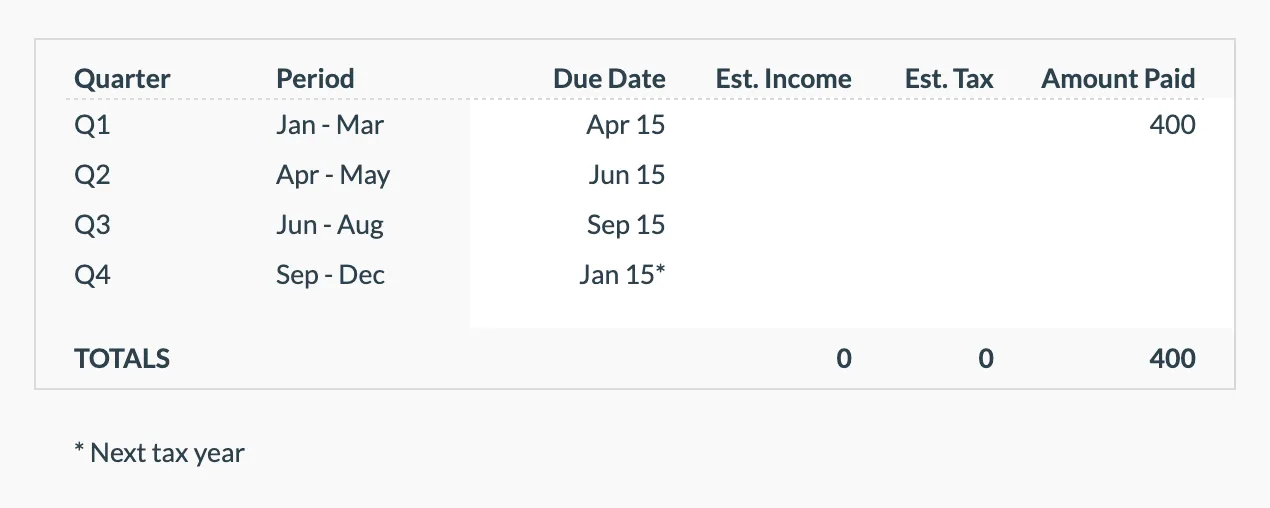
The four quarters take your own estimated income, estimated tax, and amount paid. Any credit you claim is entered on the dashboard as a single figure that reduces the tax due.
Year-end filing summary
Consolidated view of worldwide income, deductions, and payments - the reference for preparing your return or briefing your preparer. FEIE and foreign tax credit claims themselves happen on the return.
See It In Action
What the template looks like
Browse through the template to see how it handles income tracking, deductions, quarterly payments, and tax projections.
- Tax overview dashboard
- Income source tracking
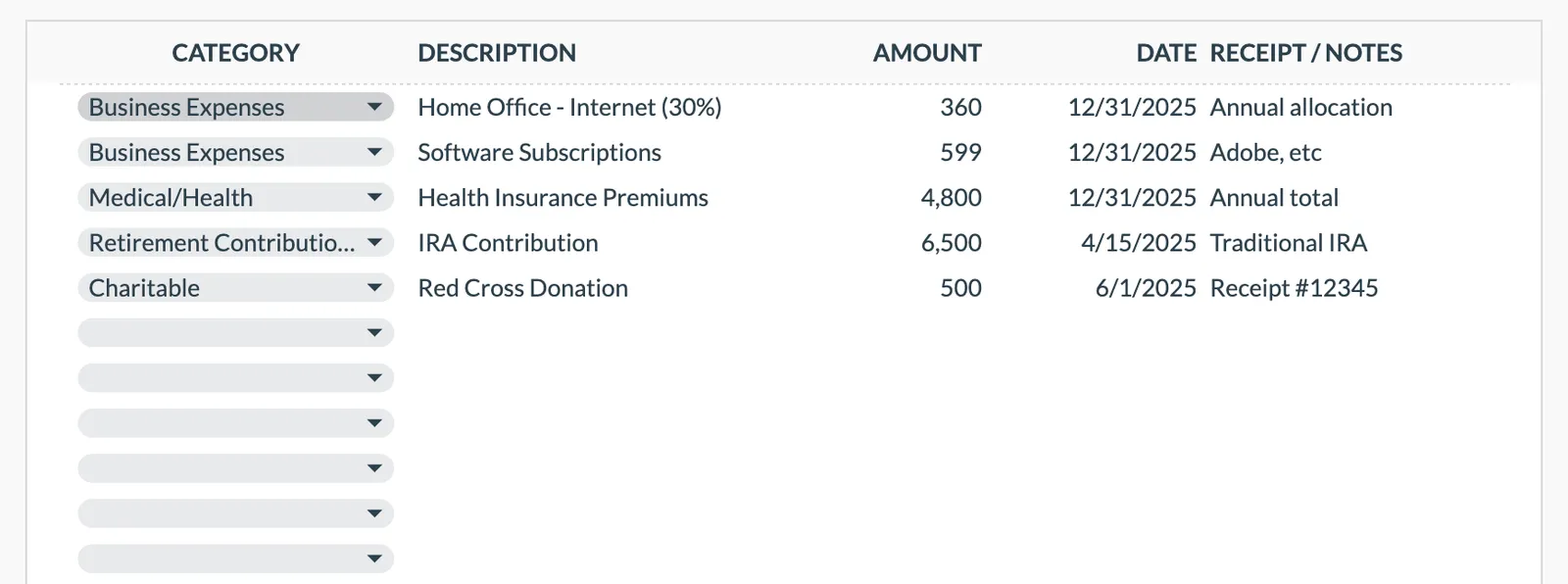
- Deduction organization
- Quarterly payment planning
- Tax projection estimates
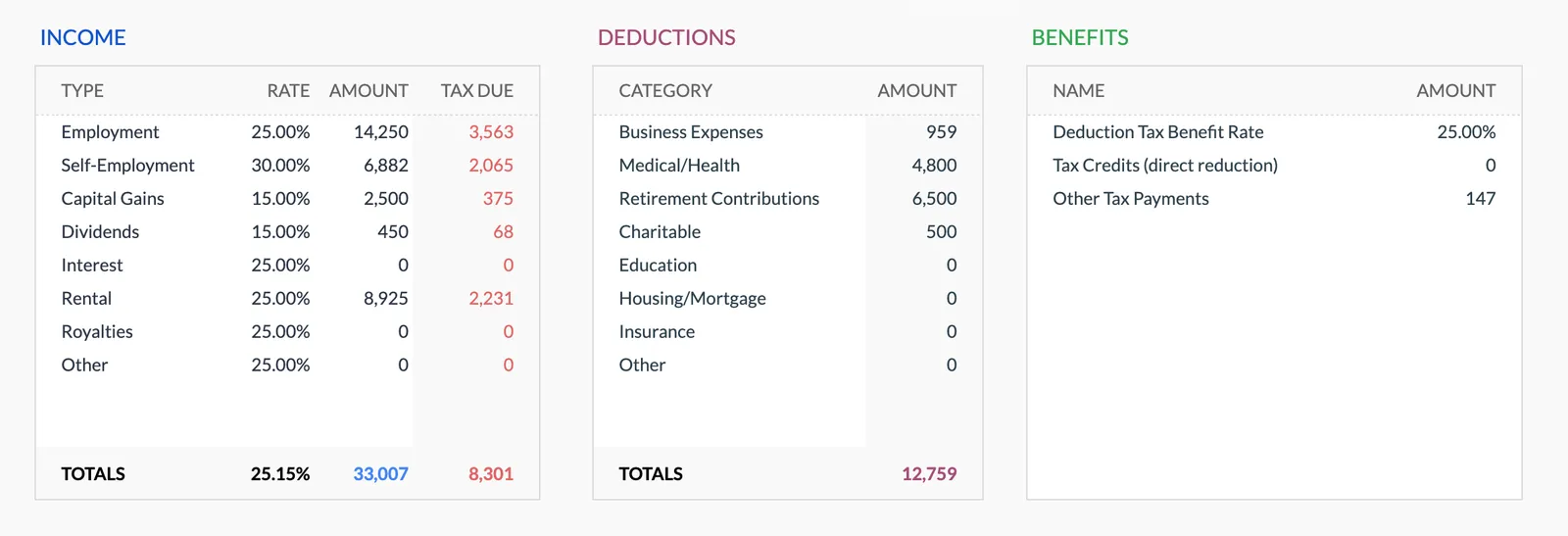
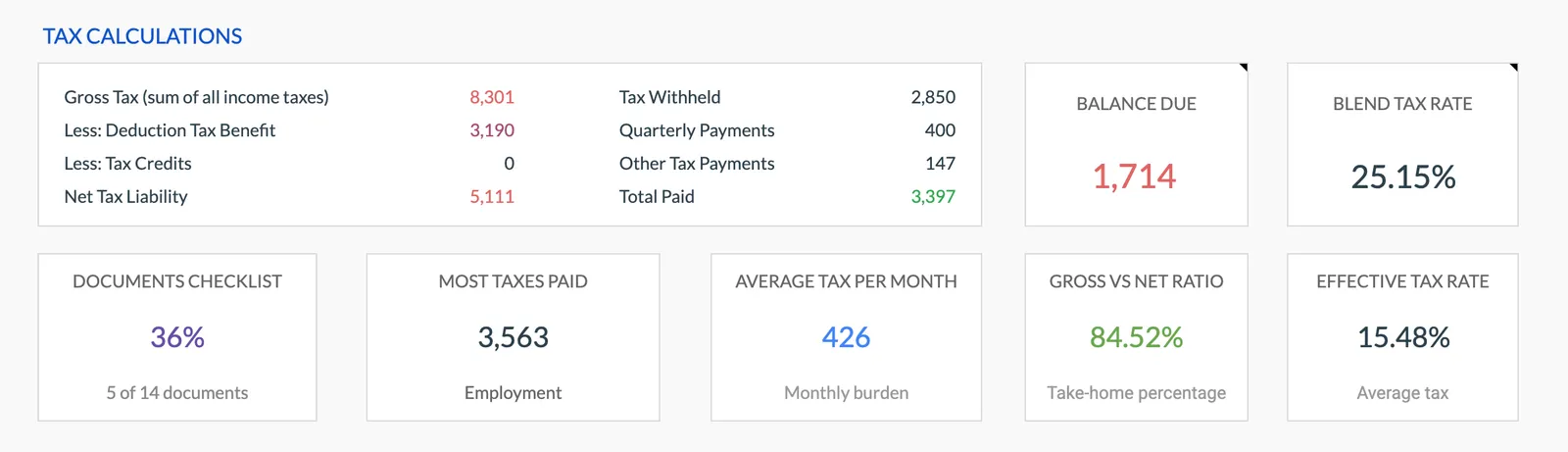
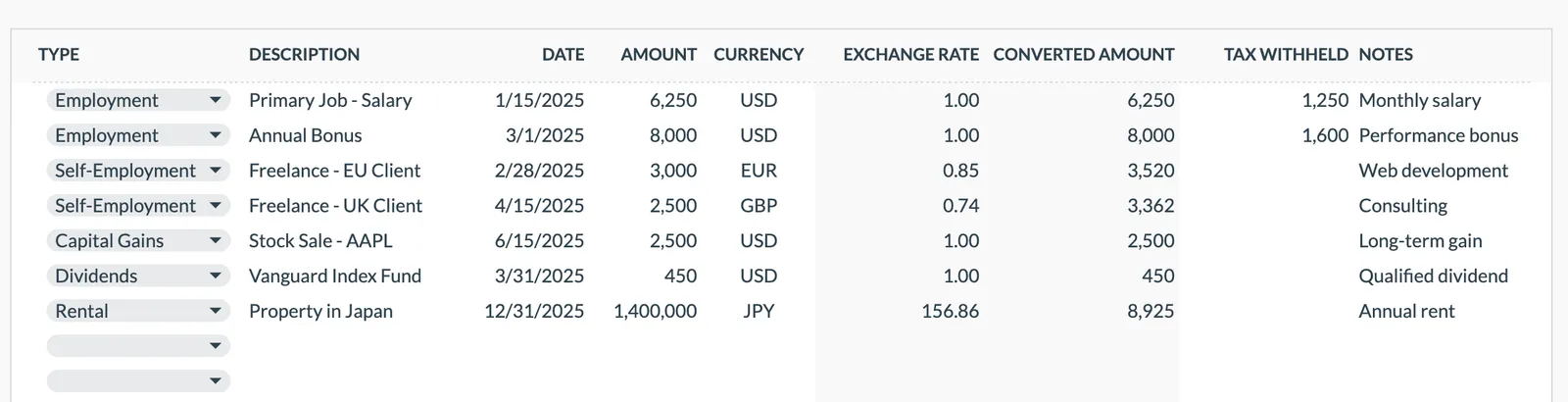
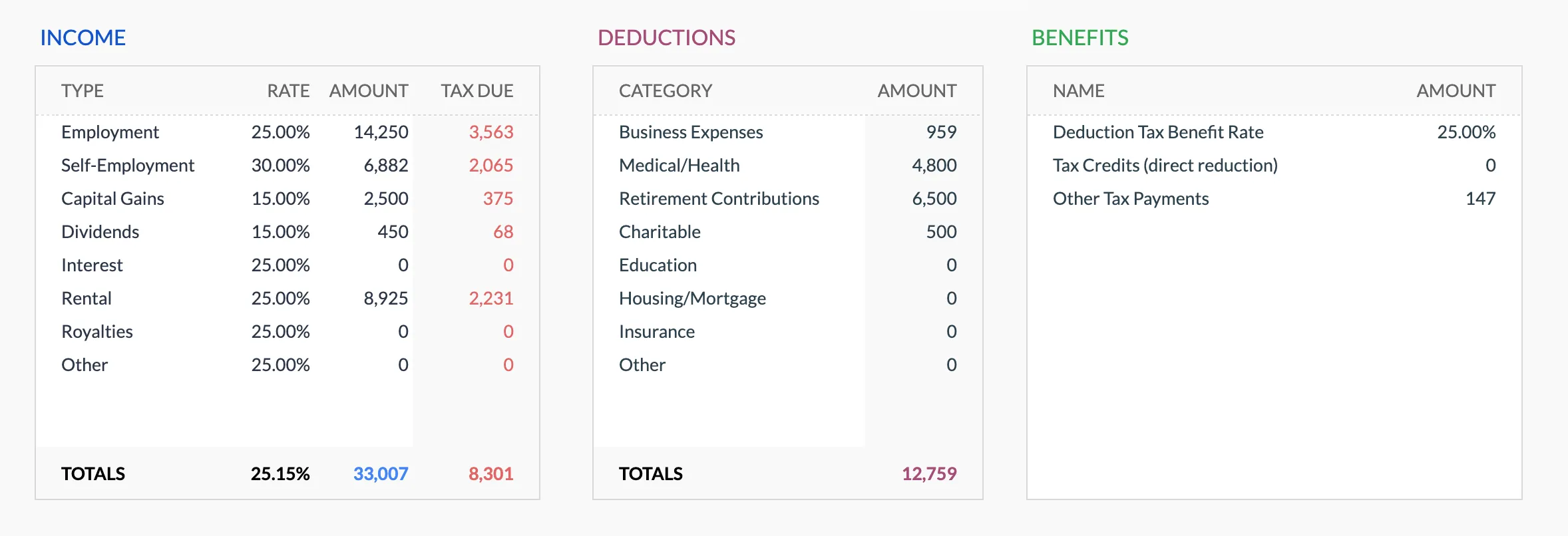
Annual tax overview with key figures
Detailed tax breakdown and projections
Track all income sources for tax purposes
Organize and track tax deductions
Plan and track quarterly estimated tax payments
Getting Started
Start Your Expat Tax Planning Process
Set up income sources by country
Enter each income source with its currency and the exchange rate used, naming the country in the description. Converted totals then read consistently in USD.
Keep your own count of days abroad
The physical presence test requires 330 days outside the US in a 12-month period. There is no built-in day tracker - a simple list of travel dates kept alongside the planner verifies qualification.
Record foreign taxes paid
Log taxes paid abroad as payment entries, noting the country in the description. Organized records support the foreign tax credit claim your return makes.
Watch foreign account balances yourself
FBAR and FATCA thresholds turn on peak balances, which the planner does not track - keeping a note of each account's high point during the year shows whether reporting is triggered.
Compile for filing
The summary organizes income, deductions, and payments for your US return - the underlying records for whichever exclusions and credits the return claims.
Common Questions
Tax Planner for Expats- FAQ
Do I still need to file US taxes if I live abroad?
US citizens and permanent residents must file regardless of where they live. The filing requirement is based on citizenship, not residence.
Can I use both the FEIE and foreign tax credit?
You can use both, but not on the same income. The FEIE excludes qualifying earned income. Foreign tax credits apply to income not excluded by the FEIE.
What is the FBAR threshold?
If the aggregate value of all foreign financial accounts exceeds $10,000 at any point during the year, FBAR filing is required. A note of each account's peak balance - kept alongside the planner - shows whether that line is crossed.
Does this handle local tax obligations?
The template focuses on US tax planning for expats. You can add sections for local tax tracking, but the primary structure addresses US filing requirements.
What about foreign investment income?
Interest, dividends, and capital gains from foreign investments are reportable on your US return. Track them in the income section with appropriate categorization.
Is the filing deadline different for expats?
Expats get an automatic 2-month extension to June 15, with the option to extend further to October 15. However, any tax owed is still due by April 15.
Can't find the answer you're looking for? Contact our team
Start tax planning as an expat
One-time purchase. No subscription. Your financial data stays in your Google Drive.