Debt-to-Income Calculator Modèle Essentials
Calculate your debt-to-income ratio by listing monthly debts and income. Commonly used when evaluating mortgage or loan qualification thresholds.
Ce qui est inclus
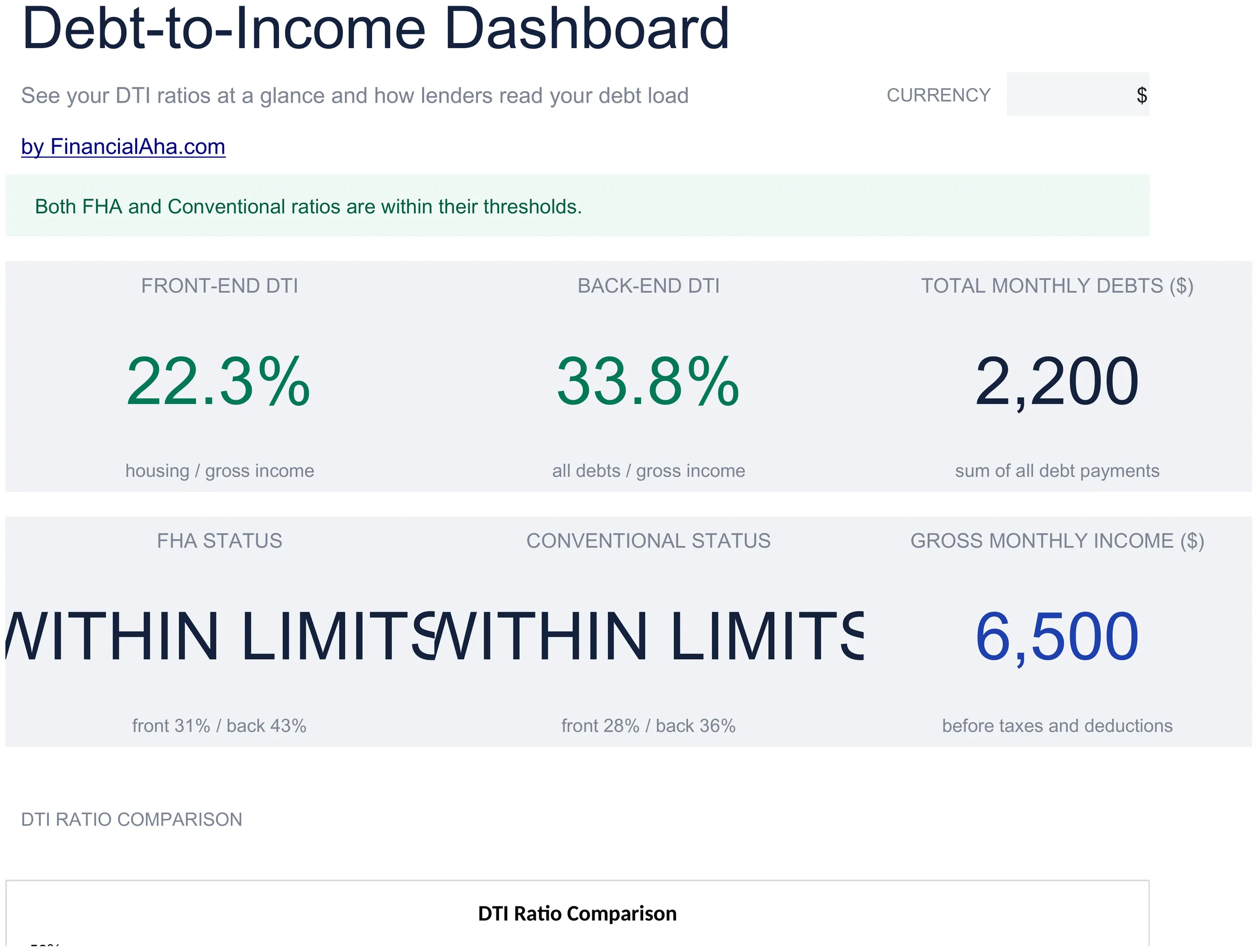
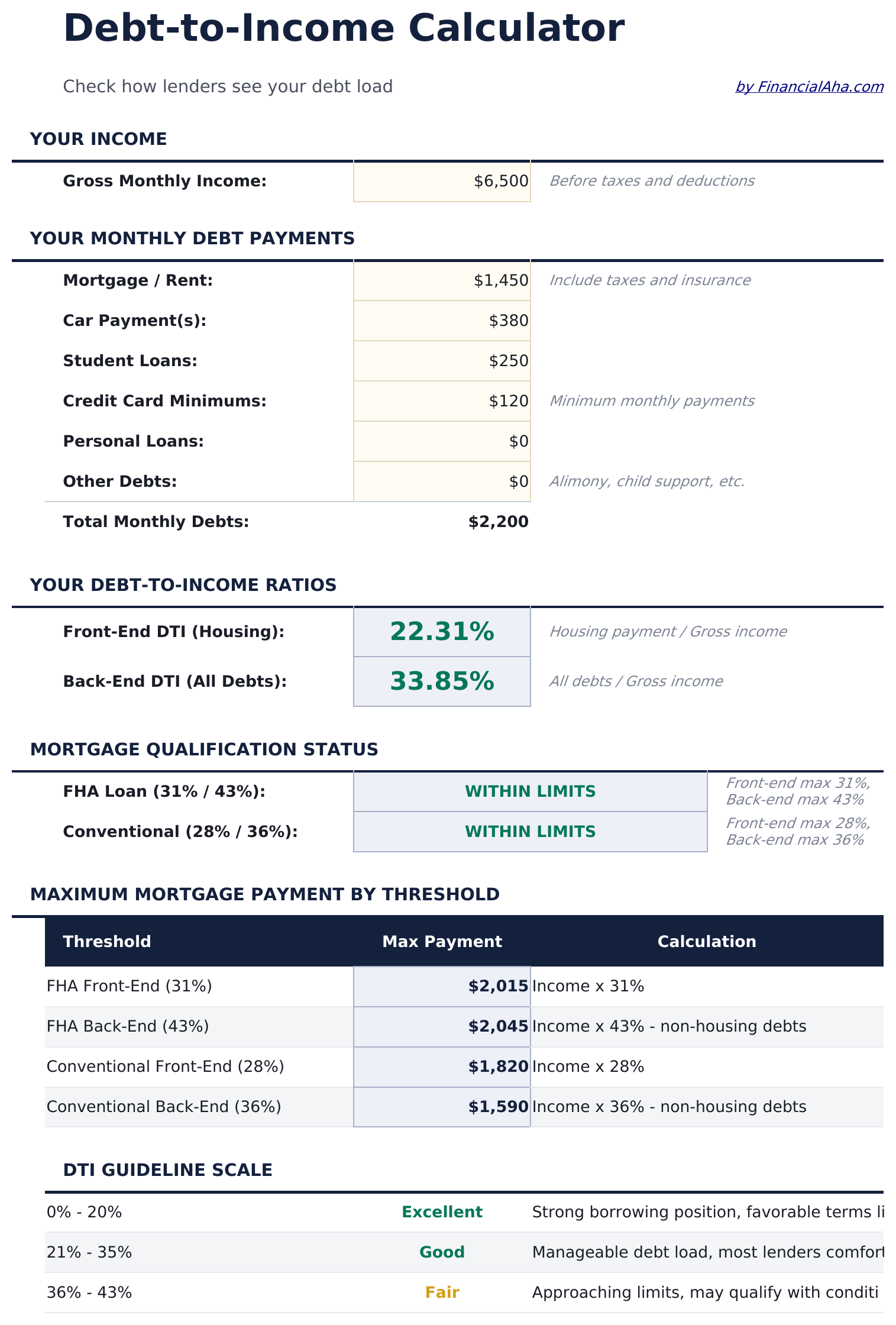
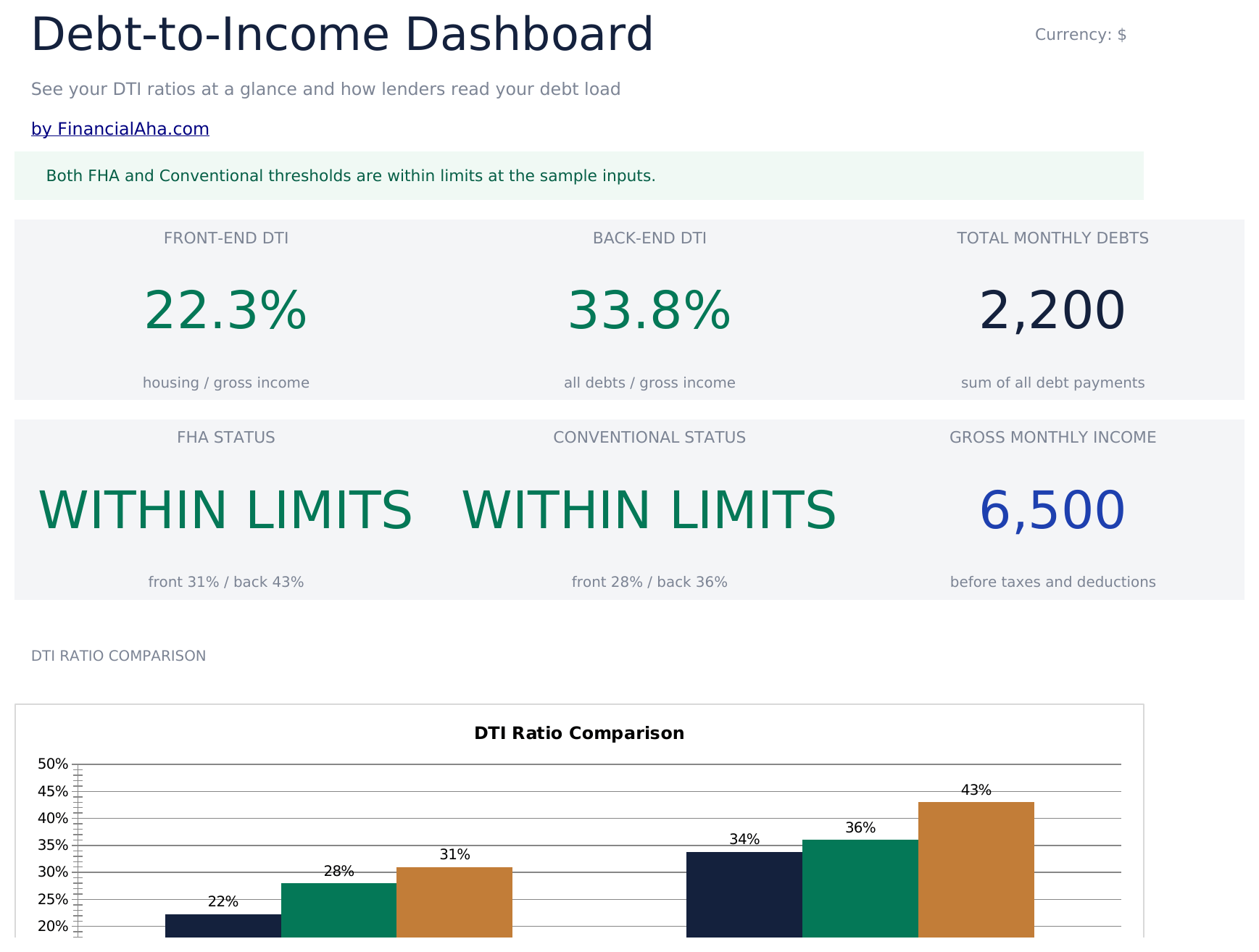
- Calculator with DTI ratio output displaying front-end and back-end percentages based on your entries
- Monthly debt entry section for mortgage, car payments, student loans, credit cards, and other obligations
- Gross income input fields for salary, wages, rental income, and other sources of monthly earnings
- Front-end and back-end ratio display with common lender threshold reference values for comparison
- Color-coded result indicators that flag whether your DTI ratio falls within typical qualification ranges
- Works in Microsoft Excel, Google Sheets, and LibreOffice Calc with no setup required
Aperçu
Découvrez le contenu de ce modèle

Comment utiliser ce modèle Debt-to-Income Calculator
Enter monthly debts
List all monthly debt payments - mortgage, car loan, student loans, credit cards, and any other obligations.
Enter gross income
Add all sources of monthly gross income including salary, wages, rental income, and other earnings before taxes.
Read your DTI ratio
The calculator displays your front-end and back-end debt-to-income ratios as percentages. Lower is generally preferable.
Compare to thresholds
Reference values for common lender thresholds are shown alongside your ratio so you can see how your DTI compares.
Créés par Claude AI. Perfectionnés par nos soins.
Nous utilisons Claude AI pour rédiger chaque modèle, après une recherche approfondie. Puis notre équipe prend le relais. Nous affinons la mise en page, testons chaque formule en conditions réelles, corrigeons les cas limites et peaufinons le design jusqu'à obtenir un résultat que nous utiliserions nous-mêmes. L'IA nous amène à 80 %. Les 20 % restants, c'est du jugement humain.
Questions fréquentes
What is front-end vs back-end DTI?
Front-end includes only housing costs (mortgage, taxes, insurance). Back-end includes all monthly debt obligations. Lenders typically look at both ratios.
What DTI ratio do lenders prefer?
Common thresholds are 28% front-end and 36% back-end, though requirements vary by lender and loan type. The template shows these reference values for comparison.
Do I use gross or net income?
Debt-to-income ratios use gross (pre-tax) income. Enter your monthly earnings before any deductions or withholdings.
What debts should I include?
Include minimum monthly payments for mortgages, car loans, student loans, credit cards, personal loans, and any other recurring debt obligations.
Comment ouvrir ce fichier dans Google Sheets ?
Importez le fichier .xlsx dans Google Drive, puis ouvrez-le avec Google Sheets. Toutes les formules et la mise en forme seront conservées.
Plus de modèles Essentials Debt Management
Debt Payoff Calculator
Compare snowball and avalanche payoff strategies side by side. Enter multiple debts and see projected payoff timelines and total interest for each method.
$12Credit Card Payoff
Calculate how long it takes to pay off credit card debt at various payment amounts. See the impact of paying more than the minimum each month.
$12Debt Snowball
Plan debt payoff using the snowball method - pay off smallest balances first. Track progress as each debt is eliminated and payments roll into the next.
$12Balance Transfer Calculator
Compare the cost of keeping current credit card debt versus transferring to a lower-rate card. Factor in transfer fees, promotional rates, and payoff timelines.
$12Vous recherchez des modèles de tableurs premium ?
Nos modèles payants incluent des tableaux de bord multi-feuilles avancés, des graphiques Excel natifs et des mises à jour régulières.
Privé et sécurisé
Vos données financières restent sur votre appareil. Nous ne les voyons jamais.
En savoir plus →