Debt-to-Income Calculator Essentials-Vorlage
Calculate your debt-to-income ratio by listing monthly debts and income. Commonly used when evaluating mortgage or loan qualification thresholds.
Was enthalten ist
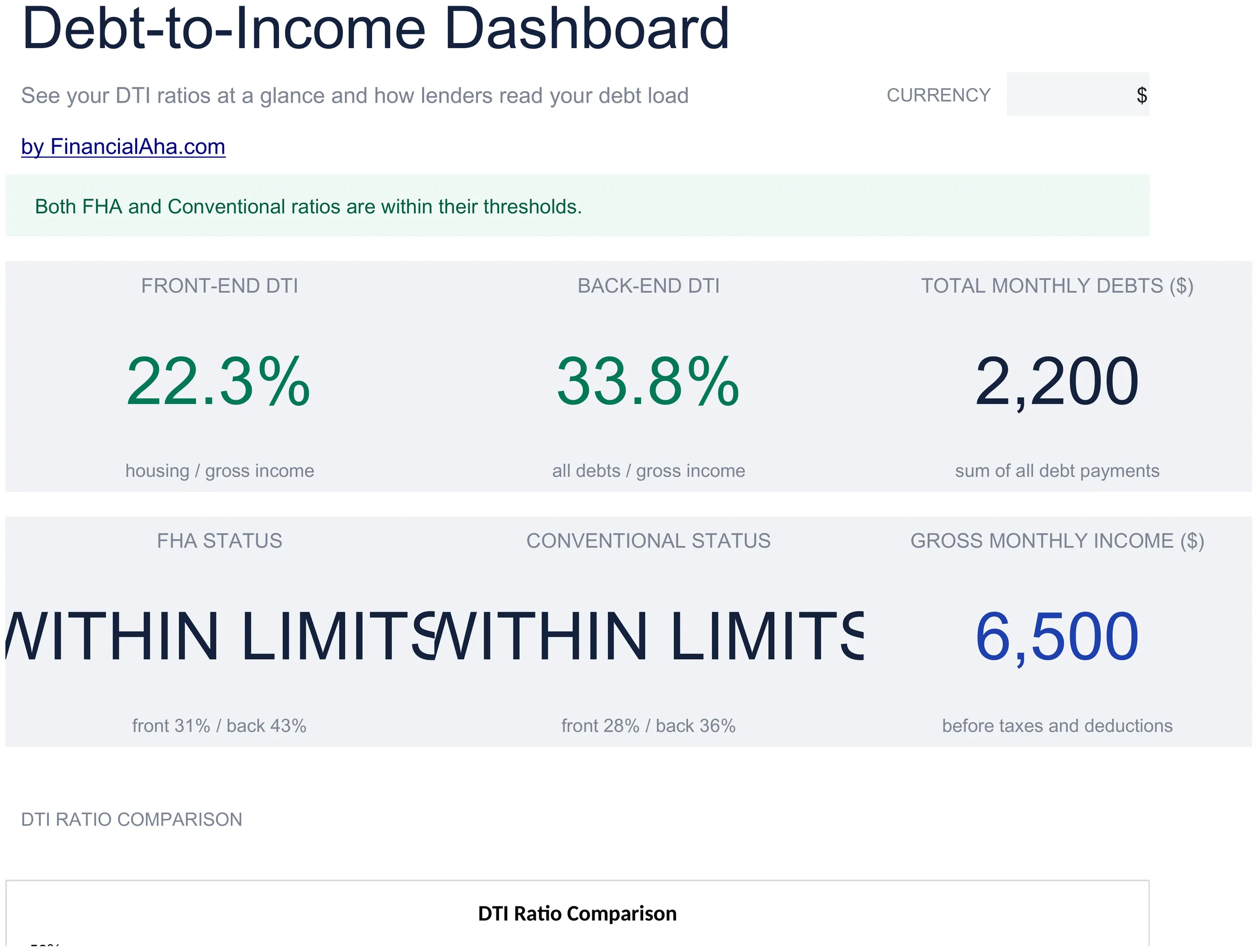
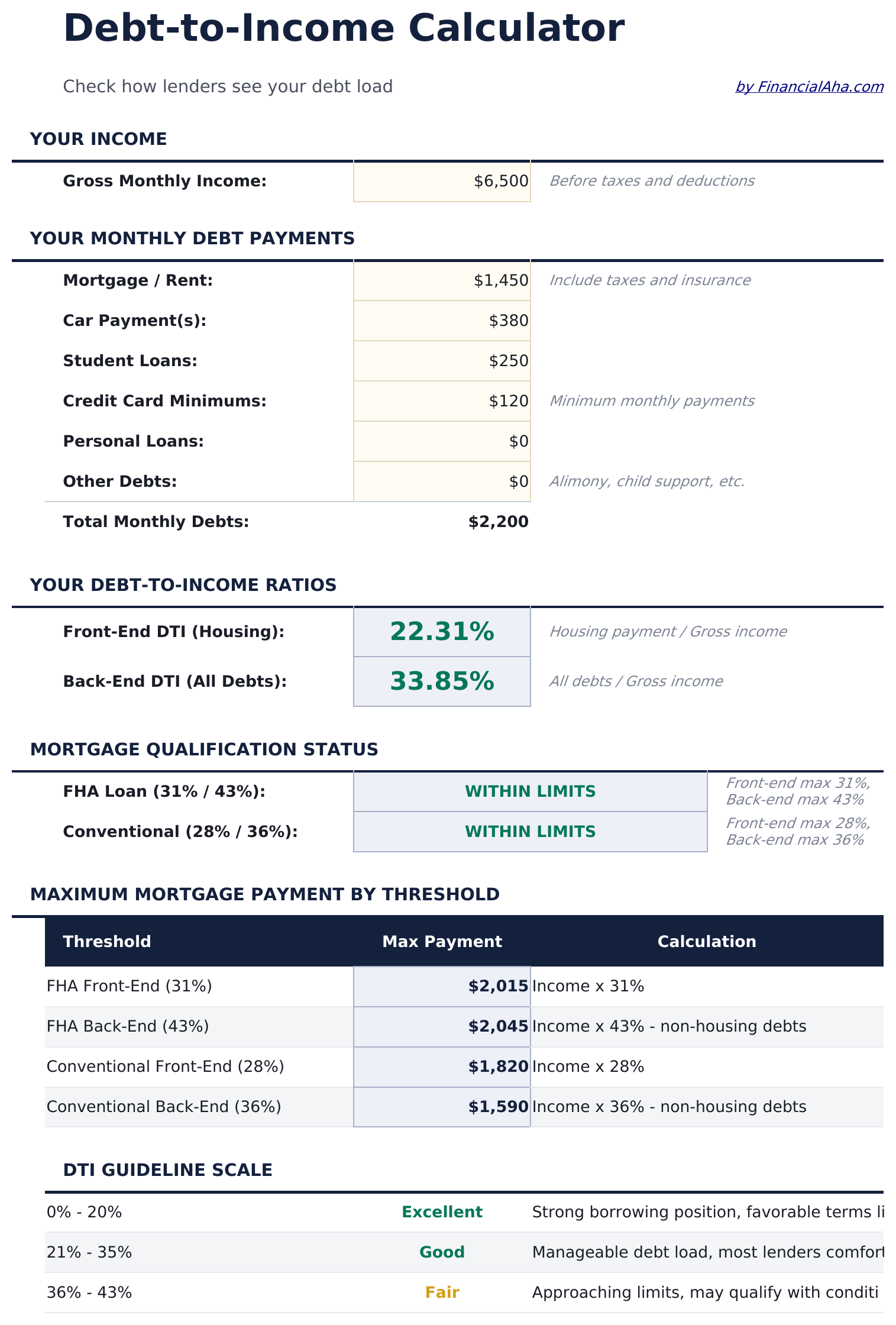
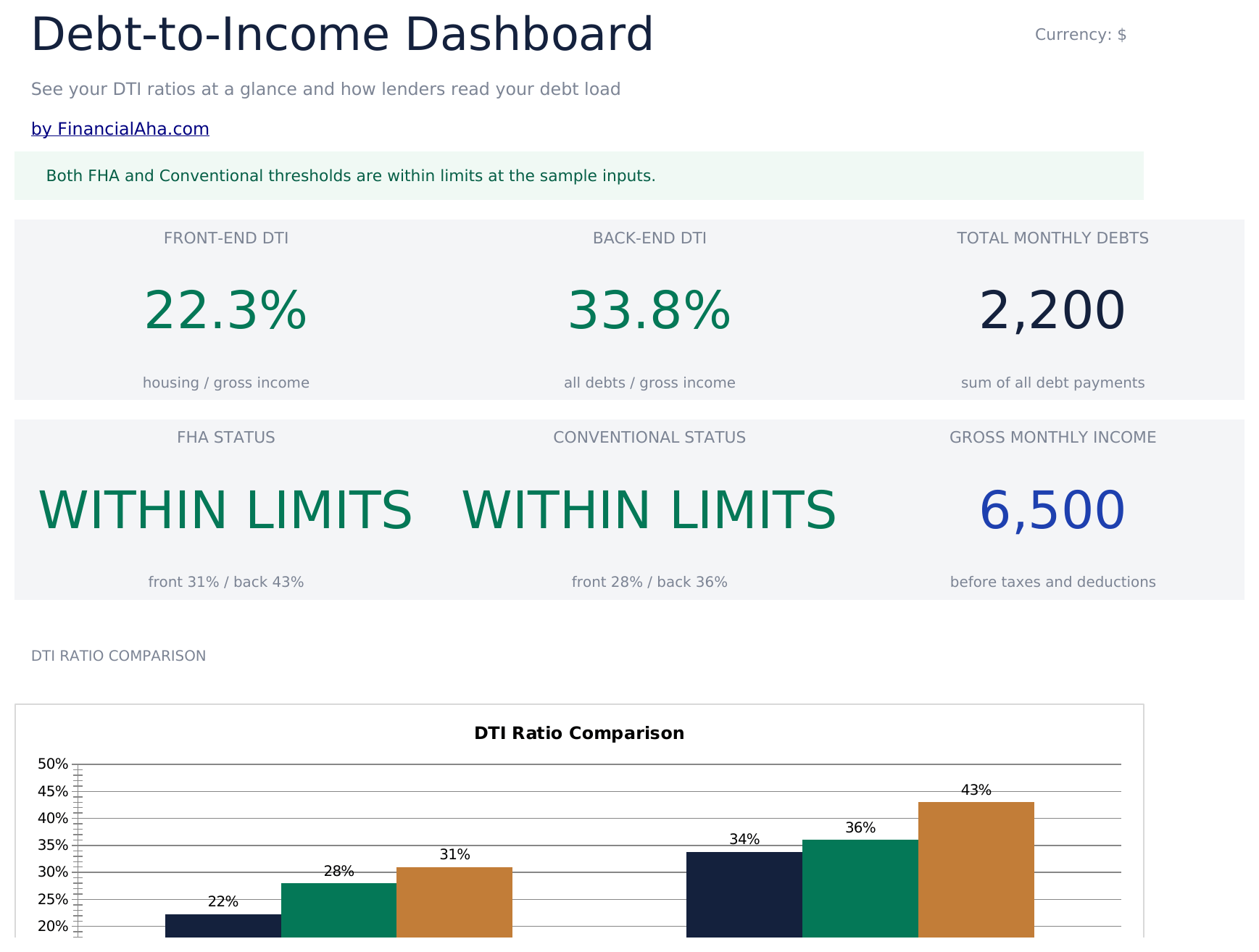
- Calculator with DTI ratio output displaying front-end and back-end percentages based on your entries
- Monthly debt entry section for mortgage, car payments, student loans, credit cards, and other obligations
- Gross income input fields for salary, wages, rental income, and other sources of monthly earnings
- Front-end and back-end ratio display with common lender threshold reference values for comparison
- Color-coded result indicators that flag whether your DTI ratio falls within typical qualification ranges
- Works in Microsoft Excel, Google Sheets, and LibreOffice Calc with no setup required
Vorschau
Sehen Sie, was in dieser Vorlage enthalten ist

So verwenden Sie diese Debt-to-Income Calculator-Vorlage
Enter monthly debts
List all monthly debt payments - mortgage, car loan, student loans, credit cards, and any other obligations.
Enter gross income
Add all sources of monthly gross income including salary, wages, rental income, and other earnings before taxes.
Read your DTI ratio
The calculator displays your front-end and back-end debt-to-income ratios as percentages. Lower is generally preferable.
Compare to thresholds
Reference values for common lender thresholds are shown alongside your ratio so you can see how your DTI compares.
Erstellt von Claude AI. Verfeinert von uns.
Wir verwenden Claude AI, um jede Vorlage nach gründlicher Recherche zu entwerfen. Dann greift unser Team ein. Wir verfeinern das Layout, testen jede Formel auf Herz und Nieren, beheben Grenzfälle und polieren das Design, bis es sich anfühlt wie etwas, das wir selbst verwenden würden. Die KI bringt uns 80 % ans Ziel. Die letzten 20 % sind rein menschliches Urteilsvermögen.
Häufig gestellte Fragen
What is front-end vs back-end DTI?
Front-end includes only housing costs (mortgage, taxes, insurance). Back-end includes all monthly debt obligations. Lenders typically look at both ratios.
What DTI ratio do lenders prefer?
Common thresholds are 28% front-end and 36% back-end, though requirements vary by lender and loan type. The template shows these reference values for comparison.
Do I use gross or net income?
Debt-to-income ratios use gross (pre-tax) income. Enter your monthly earnings before any deductions or withholdings.
What debts should I include?
Include minimum monthly payments for mortgages, car loans, student loans, credit cards, personal loans, and any other recurring debt obligations.
Wie öffne ich diese Vorlage in Google Sheets?
Laden Sie die .xlsx-Datei auf Google Drive hoch und öffnen Sie sie mit Google Sheets. Alle Formeln und Formatierungen bleiben erhalten.
Weitere Essentials-Vorlagen: Debt Management
Debt Payoff Calculator
Compare snowball and avalanche payoff strategies side by side. Enter multiple debts and see projected payoff timelines and total interest for each method.
$12Credit Card Payoff
Calculate how long it takes to pay off credit card debt at various payment amounts. See the impact of paying more than the minimum each month.
$12Debt Snowball
Plan debt payoff using the snowball method - pay off smallest balances first. Track progress as each debt is eliminated and payments roll into the next.
$12Balance Transfer Calculator
Compare the cost of keeping current credit card debt versus transferring to a lower-rate card. Factor in transfer fees, promotional rates, and payoff timelines.
$12Auf der Suche nach Premium-Tabellenvorlagen?
Unsere kostenpflichtigen Vorlagen umfassen erweiterte mehrseitige Dashboards, native Excel-Diagramme und laufende Aktualisierungen.