Retirement Planning Template
Retirement Planning Template for Expats
One retirement planning template you set up around a life across borders, where the state pension start age is a field rather than a fixed assumption and pensions from every country you worked in go in as one combined monthly figure.
In Depth
Cross-Border Retirement - Currency, Healthcare, and Tax Treaties
Retiring abroad introduces financial variables that do not exist in domestic retirement planning. Currency exchange rates affect the purchasing power of savings held in one currency but spent in another. A retiree drawing from US dollar accounts while living in a country with a strengthening local currency watches their effective income decline without any change in their actual withdrawals. Some expat retirees hold assets in multiple currencies to reduce this exposure, while others accept the risk in exchange for simplicity.
Healthcare planning for expat retirees requires research specific to each destination country. Some countries offer affordable national health systems that cover residents, while others require private insurance that can be costly - especially at older ages. Medicare does not cover medical care outside the United States, which means expat retirees either forgo that benefit or maintain a US address and return for significant medical needs. The healthcare cost difference between countries can be substantial enough to affect the overall retirement budget by tens of thousands of dollars annually.
Tax treaty provisions between the US and the destination country determine how retirement income is taxed - and these provisions vary significantly by country and income type. Social Security may be taxable only in the US, only in the residence country, or in both depending on the treaty. Pension income, IRA withdrawals, and investment gains may each be treated differently. Working with a cross-border tax professional is common for expat retirees, and having organized records of all income sources by type makes those consultations more productive and less expensive.
The Challenge
Why Expat Retirement Planning Requires a Different Approach
Retiring abroad, or retiring after a career that spanned countries, creates planning challenges that domestic retirement models do not address. Multiple pension systems, currencies, and tax jurisdictions all need to be coordinated.
Pension systems may not follow you
Social Security, local pensions, employer plans in different countries - some follow you abroad, others do not. Knowing what you can access from where is the first planning step.
Currency risk spans decades
Retirement income in one currency and spending in another creates long-term exchange rate exposure. A favorable rate today may be unfavorable in 15 years.
Healthcare varies dramatically by country
National health systems, private insurance, Medicare (only in the US) - healthcare access and cost in retirement depends heavily on where you live.
Tax treaties and obligations create complexity
Retirement income may be taxed in your citizenship country, residence country, or both. Treaties prevent some double taxation but require deliberate planning.
Ready to take control of your expat finances?
What You Get
Retirement Planning Tools for Expats Abroad
Pension income from any country
Total monthly pension income is one combined figure, so entitlements from every country you worked in are added together before they go in. Anything paying from day one goes into the separate other income field.
One currency throughout
Every figure is entered and reported in a single currency, and there is no exchange rate field. Income earned in another currency is converted at a rate you choose before it goes in.
A state pension start age you set
The start age is an input, noted in the sheet as varying by country between 60 and 70. The years between your retirement age and that age are counted as a bridge period and shaded on the charts.
Expenses for the place you will live
Total annual expenses is one figure for your first year of retirement, healthcare and housing included. There is no cost table by country, so the figure reflects wherever you plan to be.
What-if cards on your own numbers
Twelve cards recalculate from your inputs, among them expenses 10% higher or lower, no pension, a 50% pension cut and a 20% market drop. Comparing two countries means running the projection once per set of figures.
Long-term sustainability analysis
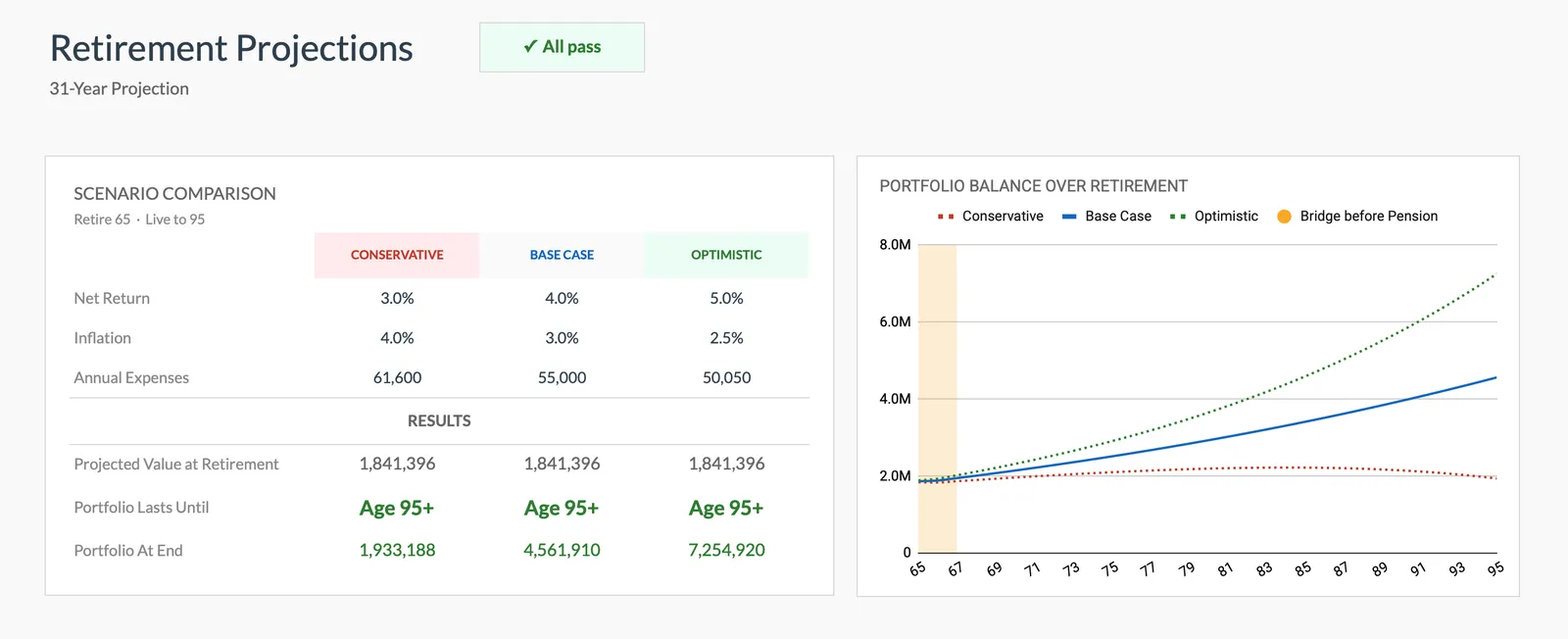
Conservative, base and optimistic columns run different net returns and inflation rates side by side, each reporting whether the portfolio lasts to your life expectancy and what is left at the end.
See It In Action
What the template looks like
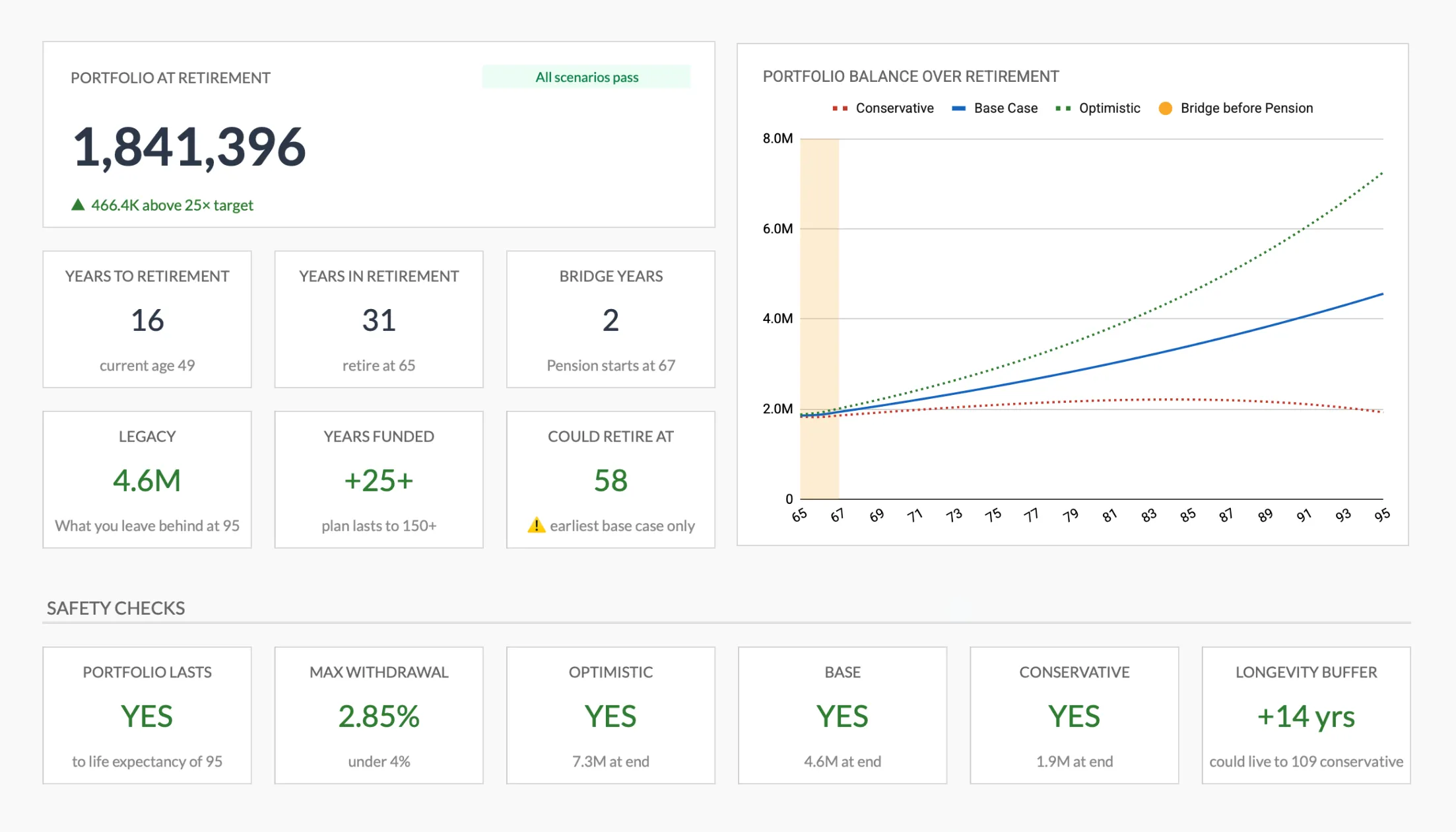
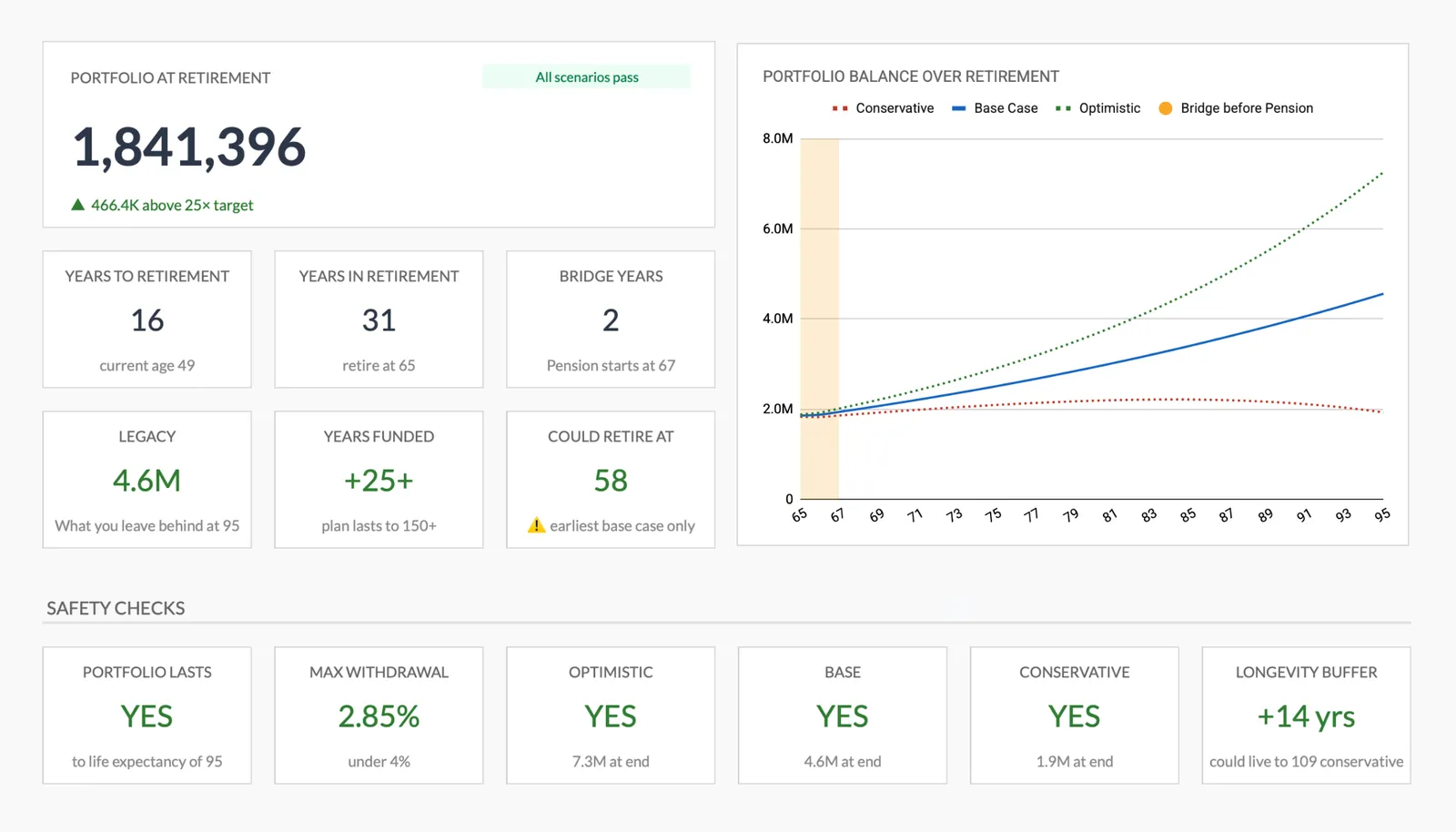
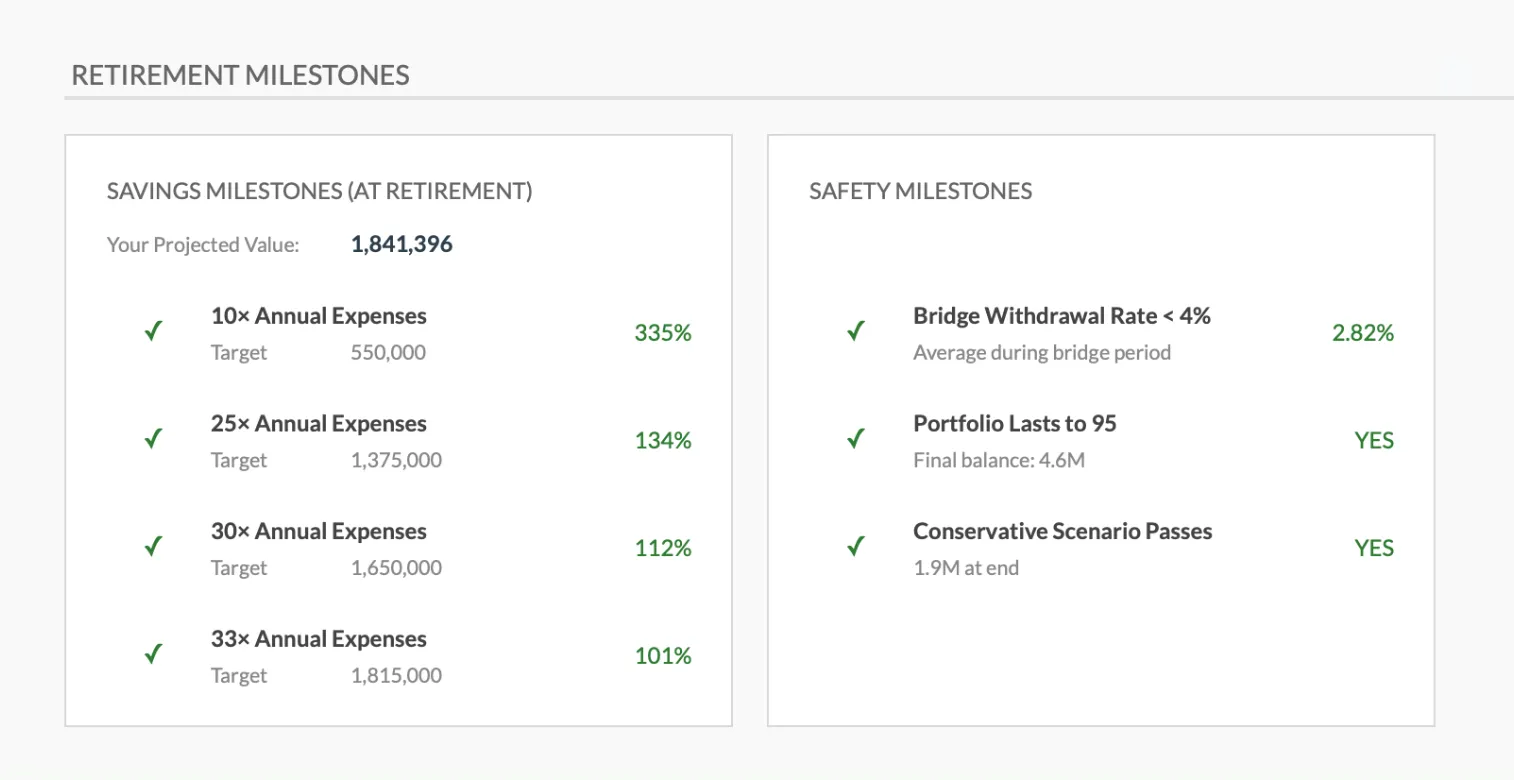
Browse through the template to see how it handles retirement projections, milestone tracking, and income planning.
- Retirement overview dashboard
- Savings growth projections
- Retirement milestone tracking
- Income vs expenses analysis
- Year-by-year projection
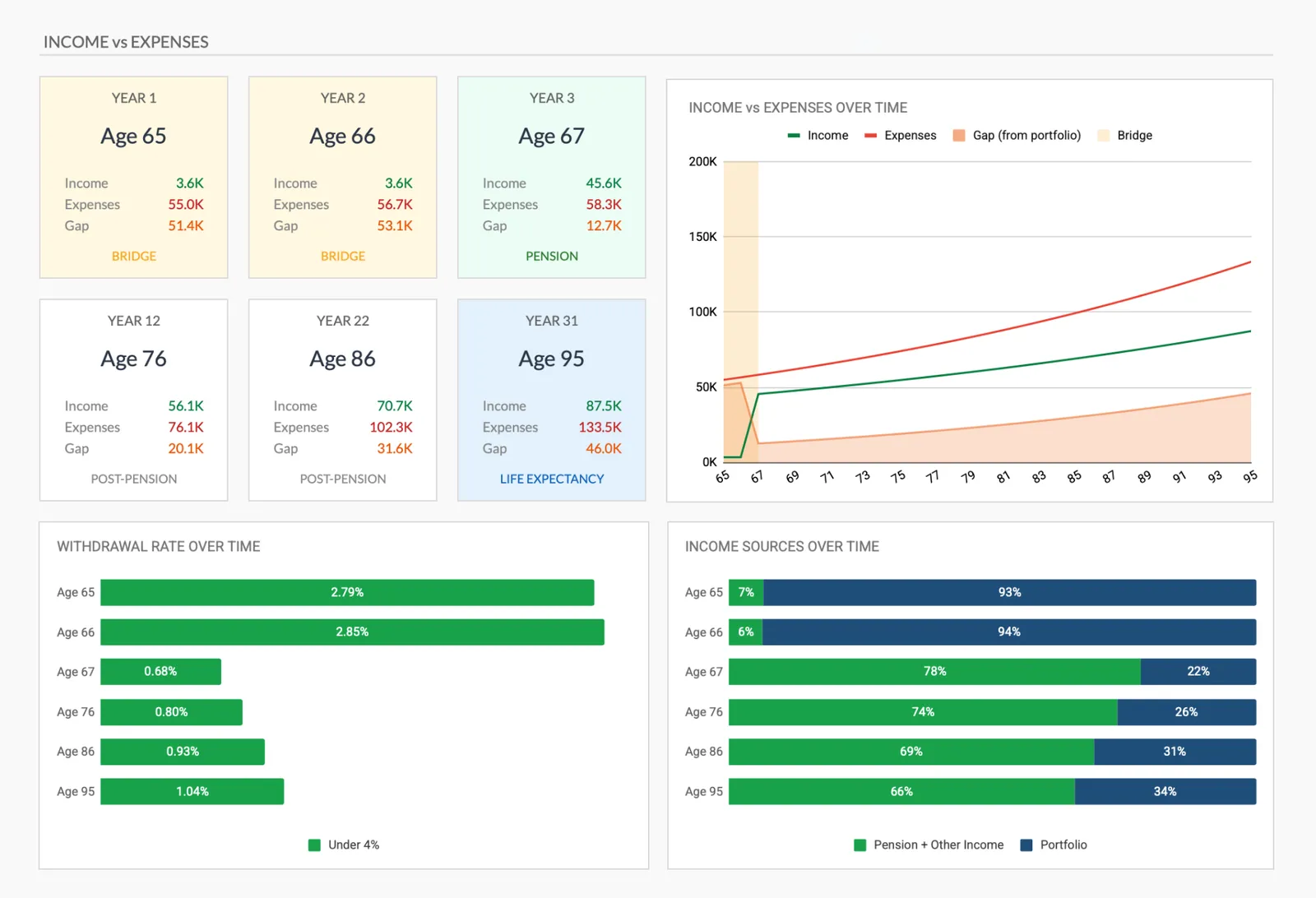
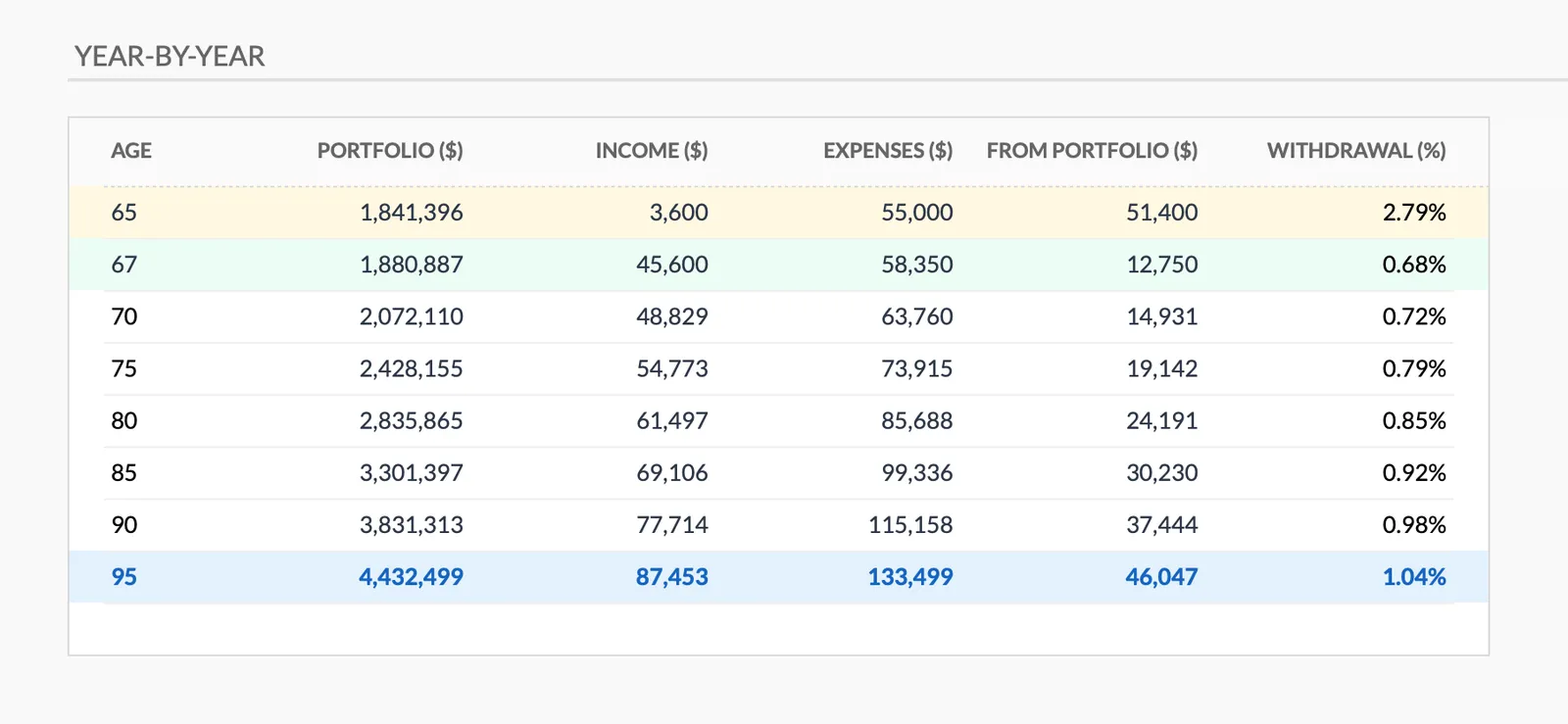
Complete retirement overview with projections
Project your retirement savings growth
Track progress toward retirement goals
Plan your retirement income against expenses
Detailed year-by-year retirement projection
Getting Started
Start Planning Retirement from Abroad
Total up your income before entering it
List every pension and income source with its country and currency, convert them all to one currency, then enter the combined monthly pension figure and the combined other income figure.
Estimate expenses in your retirement location
Research living costs in your planned retirement country and enter the annual total in the same currency as everything else. The inflation rate you set grows it each year.
Handle exchange rates outside the sheet
There is no exchange rate input. A weaker or stronger currency shows up by converting at a different rate and reading the projection again, or by adjusting the expense figure.
Plan healthcare coverage
Work out what you can access where you plan to live and what it costs, then fold premiums and expected out-of-pocket spending into the total annual expenses figure.
Compare location options
Each location is its own run. Change the expense figure, the pension figure and the pension start age, then compare the projected value at retirement and the end balance from each.
Common Questions
Retirement Planning for Expats- FAQ
Can I collect US Social Security while living abroad?
US citizens can generally receive Social Security payments abroad. Some countries have restrictions. Check the specific rules for your planned retirement country.
What about foreign pensions?
Many countries have totalization agreements that recognize contributions across borders. Once you know what each country will pay, the amounts are added together into the single monthly pension figure the template takes.
How do I handle healthcare planning abroad?
Research the healthcare system in your target country. Some offer national health coverage to residents, others require private insurance. Medicare does not cover care outside the US.
Will I owe taxes in multiple countries?
Possibly. Tax treaties between countries determine where retirement income is taxed. The template has no tax logic at all, and its return fields are labeled net of tax, so the tax assumption sits inside the numbers you enter.
What if I split time between two countries?
Expenses go in as a single annual figure, so a split year means blending the two locations into one number, or running the projection once per location to see the range. Tax residency rules often depend on how many days you spend in each country.
Should I convert all assets to one currency?
Not necessarily. Holding assets in the currency you will spend them in reduces exchange rate risk. The template does not track currency exposure, since savings go in as one balance in one currency, so that side of it sits outside the sheet.
Can't find the answer you're looking for? Contact our team
Start retirement planning as an expat
One-time purchase. No subscription. Your financial data stays in your Google Drive.