UAE
Monthly Budget Template for the UAE
Track your income in AED, manage your tax-free salary, housing allowances, and everyday expenses - all in a Google Sheets template you own.
In Depth
Zero Income Tax, 5% VAT, and the Real Cost Structure of the UAE
The UAE levies no personal income tax: nothing on salaries, nothing on bonuses, and nothing on investment income. There is no PAYE, no capital gains tax, and no social security withholding for expatriate employees, so gross pay and take-home pay are close to identical. That simplicity can mask how much of the package the cost structure absorbs. Housing dominates most household budgets in Dubai and Abu Dhabi, and the DEWA bill carries a Dubai housing fee of 5% of annual rental value on top of electricity and water, billed across twelve monthly instalments.
VAT has applied at 5% since January 2018, among the lowest headline rates anywhere. The relief is narrower than newcomers often assume: certain healthcare and education services, exports, bare land, local passenger transport and some financial services sit outside the standard rate, while ordinary groceries do not. Prices are displayed inclusive of VAT, so the tax is real but largely invisible in day-to-day spending. Corporate tax at 9% on profits above AED 375,000 has applied for financial years beginning on or after 1 June 2023, and it reaches individuals only where they carry on a business with turnover above AED 1 million.
Remittances and transfers home are a major budget category for many UAE residents and frequently go unrecorded. Money sent to family, mortgage payments on property abroad, and top-ups to home-country investment accounts are all real outflows that a budget can surface. Long-term residency routes add a second savings dimension: the Golden Visa property pathway is set at AED 2 million of UAE real estate, so a household aiming at that figure is running a capital target alongside its monthly one.
UAE
Budgeting in the UAE: What's Different
The UAE's financial system has unusual features, including no income tax on salaries, employer-provided benefits, and a largely expatriate workforce, and all of them shape how budgeting works.
No income tax means gross salary is close to net salary
The UAE does not levy personal income tax [1]. There is no PAYE withholding, so the salary package is broadly what lands in the account. Two small deductions can still appear: the federal unemployment insurance premium, compulsory since 1 January 2023 at AED 5 or AED 10 a month depending on the salary band, and any contribution to an employer savings scheme. Citizens of countries that tax worldwide income, the US among them, may still have filing obligations at home.
VAT at 5% applies to most purchases
VAT has applied at 5% on most goods and services since January 2018 [2]. Ordinary groceries are standard rated in the UAE rather than zero rated, which catches out people arriving from countries where basic food is relieved. The zero-rated and exempt categories are narrower: certain healthcare and education services, exports, local passenger transport, bare land, and some financial services. Because VAT is already inside displayed prices, it does not need a separate budget line.
Housing is typically the largest expense
Rent in Dubai and Abu Dhabi takes up a large share of most budgets. Many employers provide a housing allowance, and while annual or quarterly cheques are still common, monthly instalment options have become widely available. Ejari is Dubai's tenancy registration system rather than a payment method, so registering a contract does not by itself change the payment schedule. Whether rent comes from an allowance or from salary, recording the actual cost is what makes the real spending visible.
End-of-service gratuity is the main statutory savings mechanism
Instead of a pension, expatriate employees accrue end-of-service gratuity: 21 days of basic salary for each of the first five years of service and 30 days a year after that, with the total capped at two years' pay. Since 2023, employers have been able to opt into a supervised alternative end-of-service savings scheme in which the same entitlement is funded monthly into an invested account rather than accruing on the employer's books. Employers in the DIFC have used the DEWS scheme on that basis since 2020, and the ADGM operates a comparable arrangement.
The DEWA bill carries a housing fee as well as utilities
In Dubai a housing fee of 5% of annual rental value is collected through the DEWA bill, spread across twelve monthly instalments, so a DEWA bill is not purely utilities. Abu Dhabi applies a municipality fee to expatriate tenants through ADDC on a similar basis. Adding electricity, water, sewerage and the housing fee together, the monthly total commonly runs into several hundred dirhams and can pass AED 1,000 for a larger villa through the summer.
Long-term visa routes come with financial thresholds
The Golden Visa grants ten-year renewable residency to investors, entrepreneurs, specialised talent and several other categories. The property route is based on owning UAE real estate valued at AED 2 million or more, and the investment fund route on a comparable AED 2 million commitment, while other categories qualify on salary, professional standing or achievement rather than capital. A five-year Green Visa also exists for skilled employees, freelancers and investors, and it does not require an employer sponsor. Anyone working toward one of the capital thresholds is effectively running a savings target that a budget can be pointed at.
Get the Template
Getting Started
Getting Started With Your UAE Budget in AED
Switch the currency to AED
Pick AED from the currency list at the top of the dashboard. The calculations stay the same, and only the display currency changes.
Enter your full salary package
With no income tax on salaries, gross pay is effectively net pay. Enter the total credited to the account. If the employer splits the package into basic salary plus housing and transport allowances, entering those as separate income lines keeps the basic salary visible, since that is the figure gratuity is calculated from.
Customize expense categories for UAE life
Add categories for rent, DEWA (electricity, water and the housing fee), district cooling if the building uses it, mobile and internet, groceries, dining out, petrol, Salik road tolls, car insurance, school fees, and any health insurance top-ups.
Track remittances and savings transfers
Many UAE residents send money to family abroad or move savings to accounts in their home country. Adding a remittance category makes those outflows visible, so the budget shows the full picture of where income goes.
Plan for annual and one-off expenses
Visa renewal fees, medical insurance renewals, annual rent payments where rent is paid in one cheque, school fees for families, and flights home are common annual costs in the UAE. Spreading them across the year in the budget keeps the cash flow smoother.
See It In Action
What the template looks like
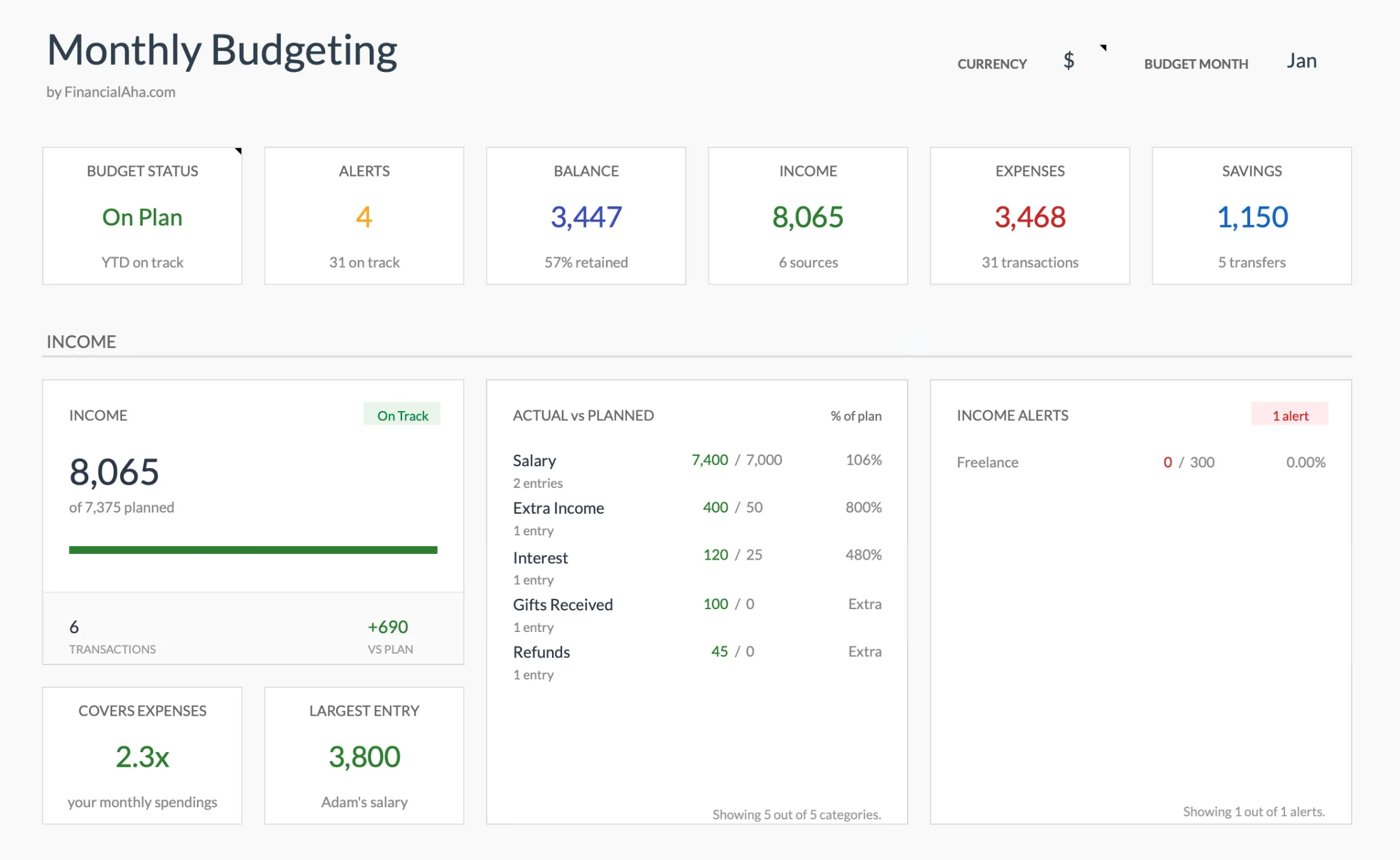
Browse through the template to see the dashboard, the entry sheets, and the summaries it produces, all adaptable to your local financial setup.
- Built-in currency selector
- Calculations update automatically
- Visual summaries of your numbers
- No setup required
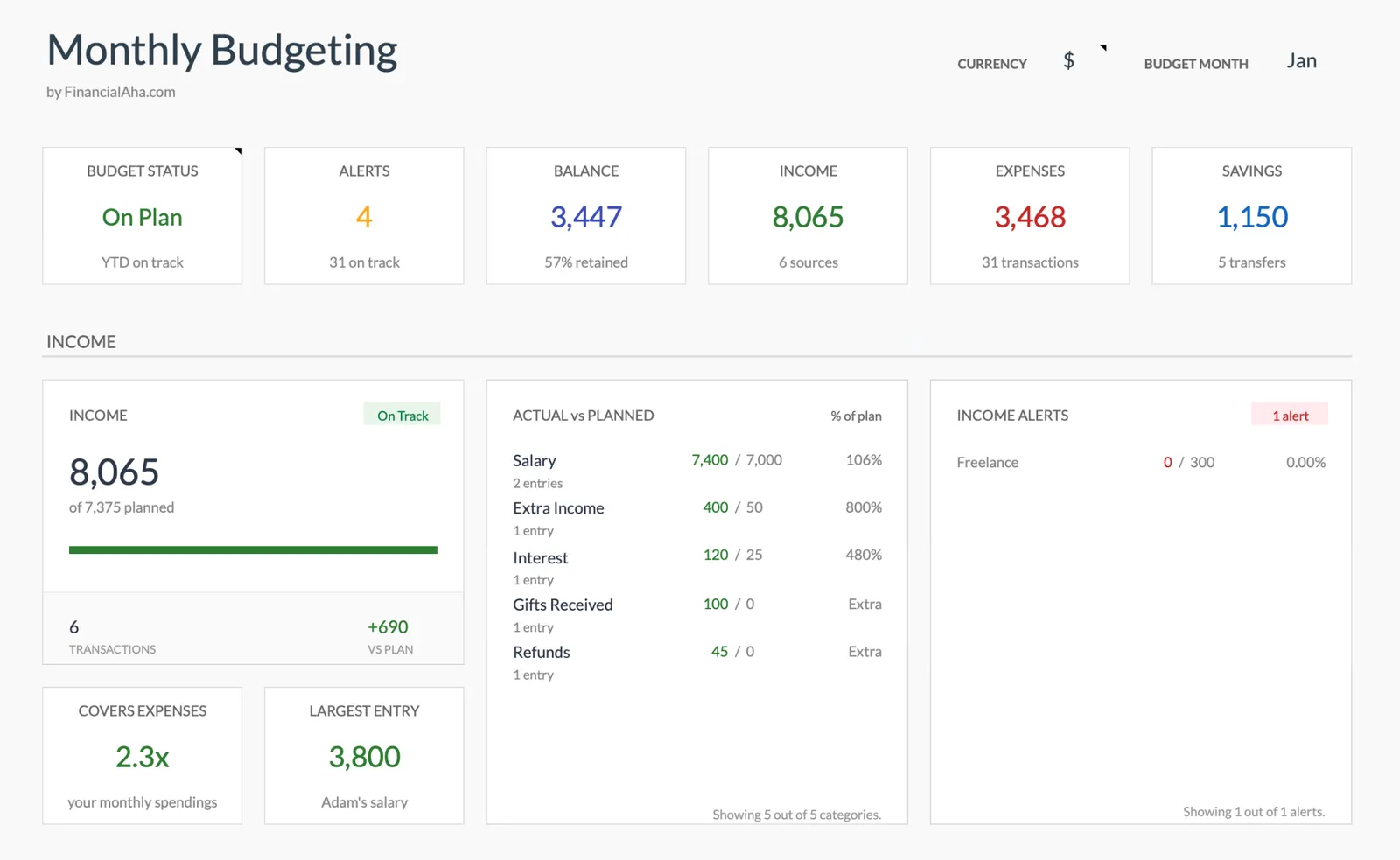
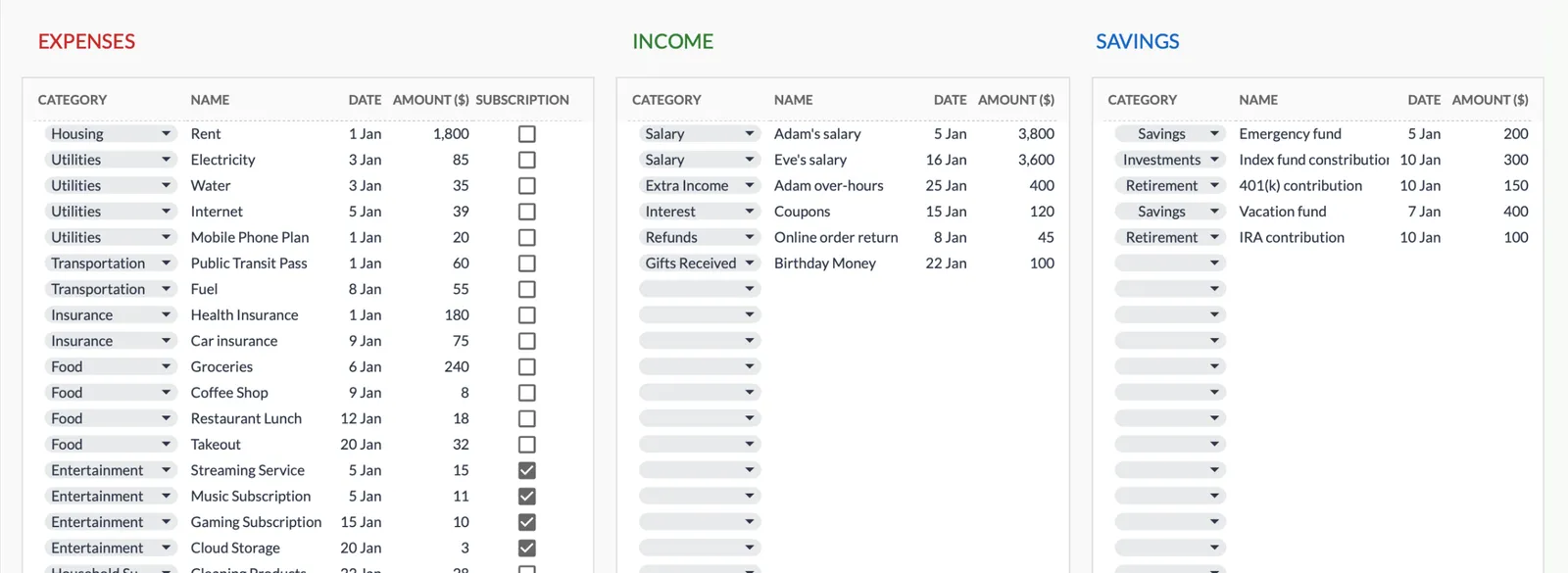
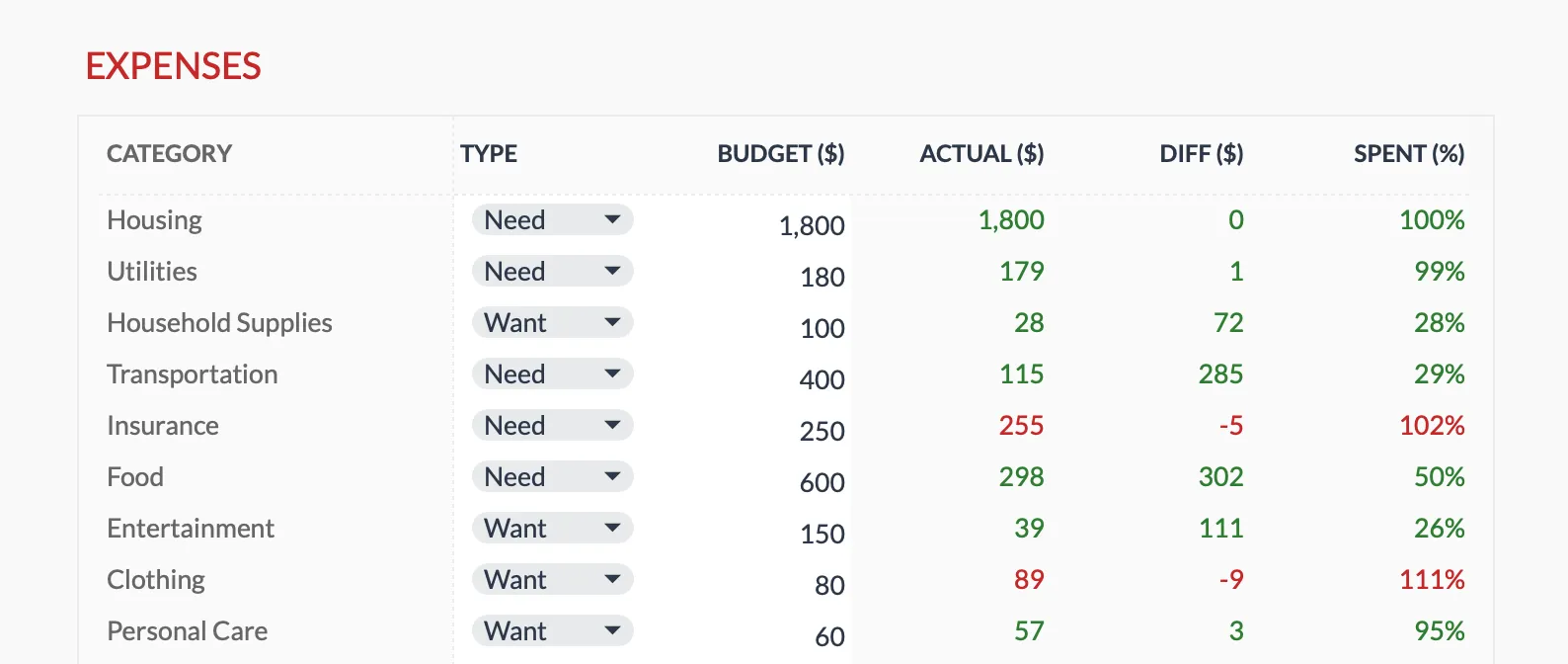
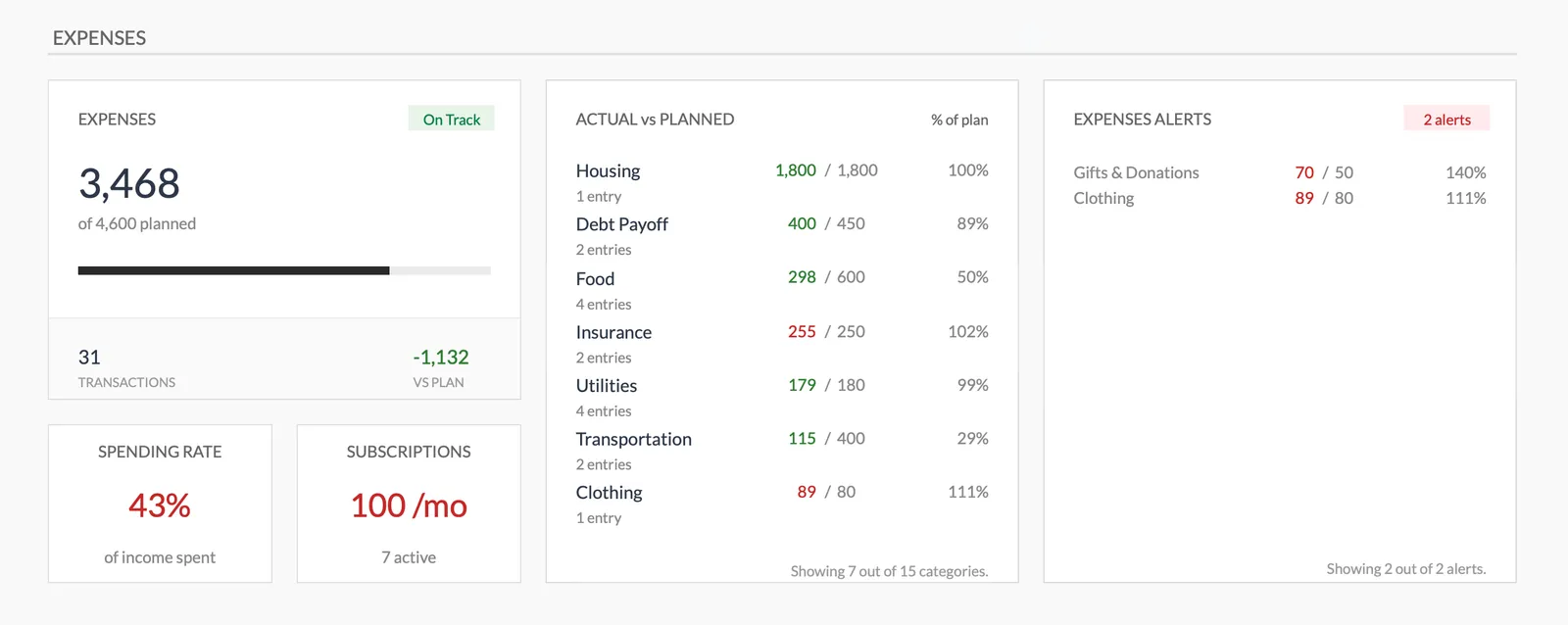
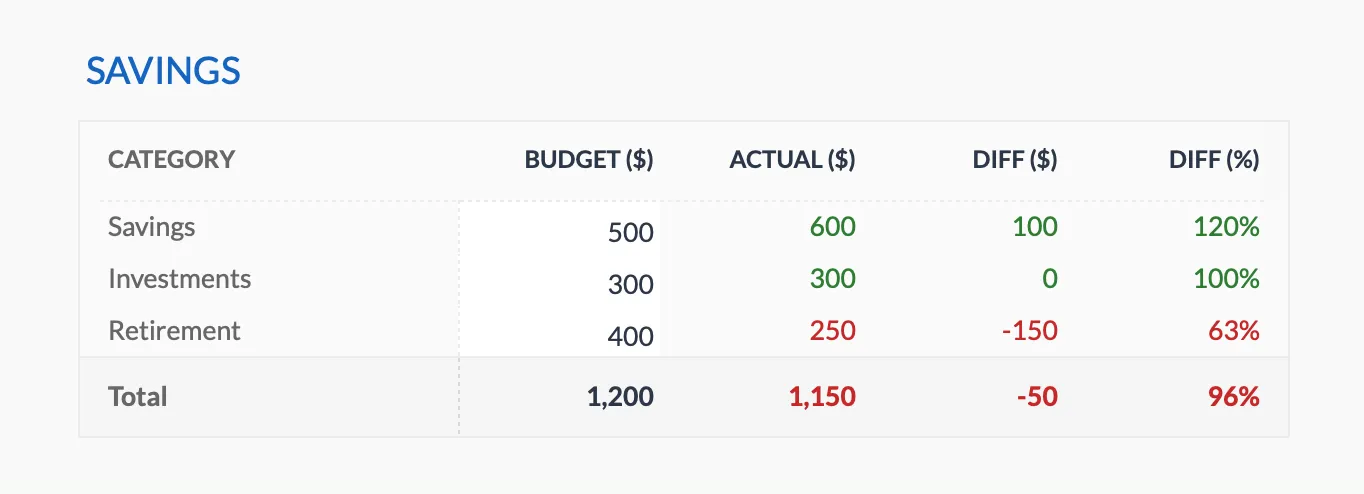
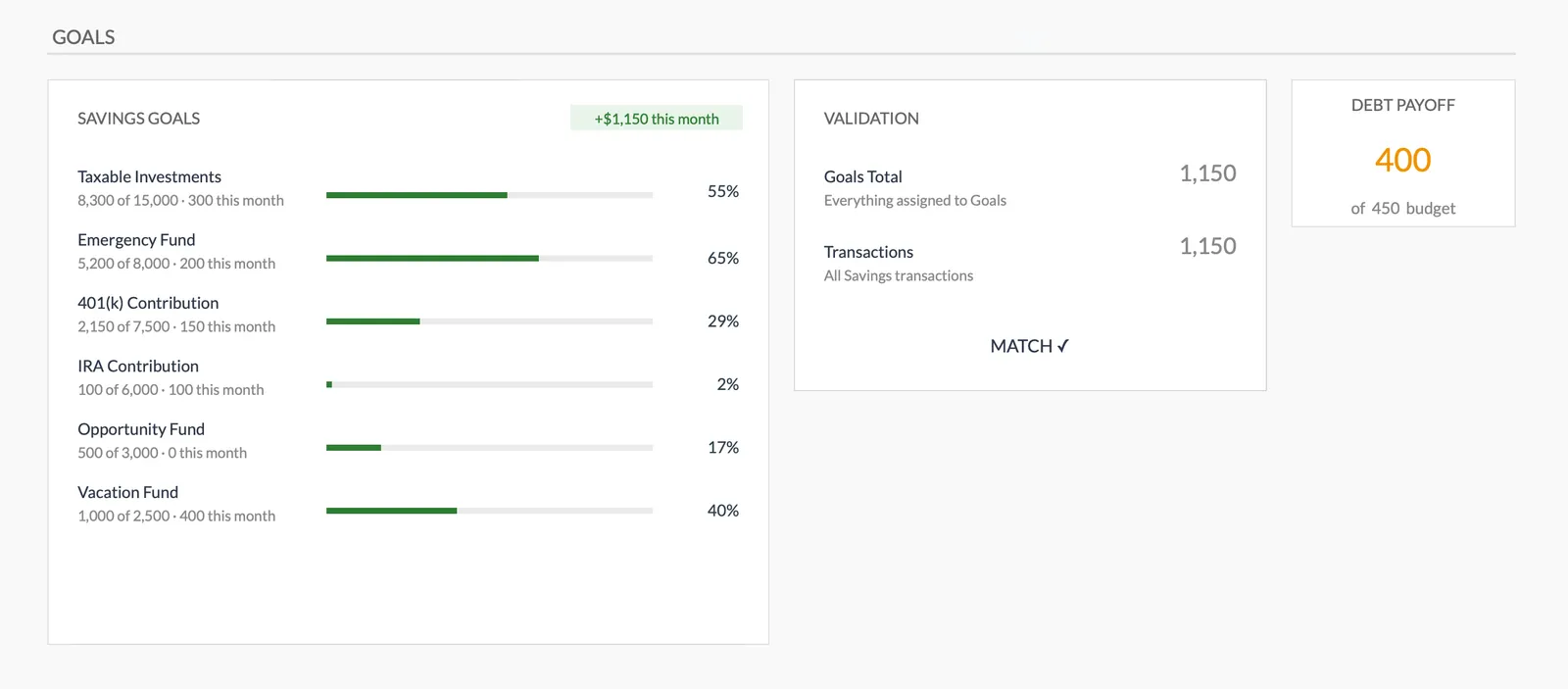
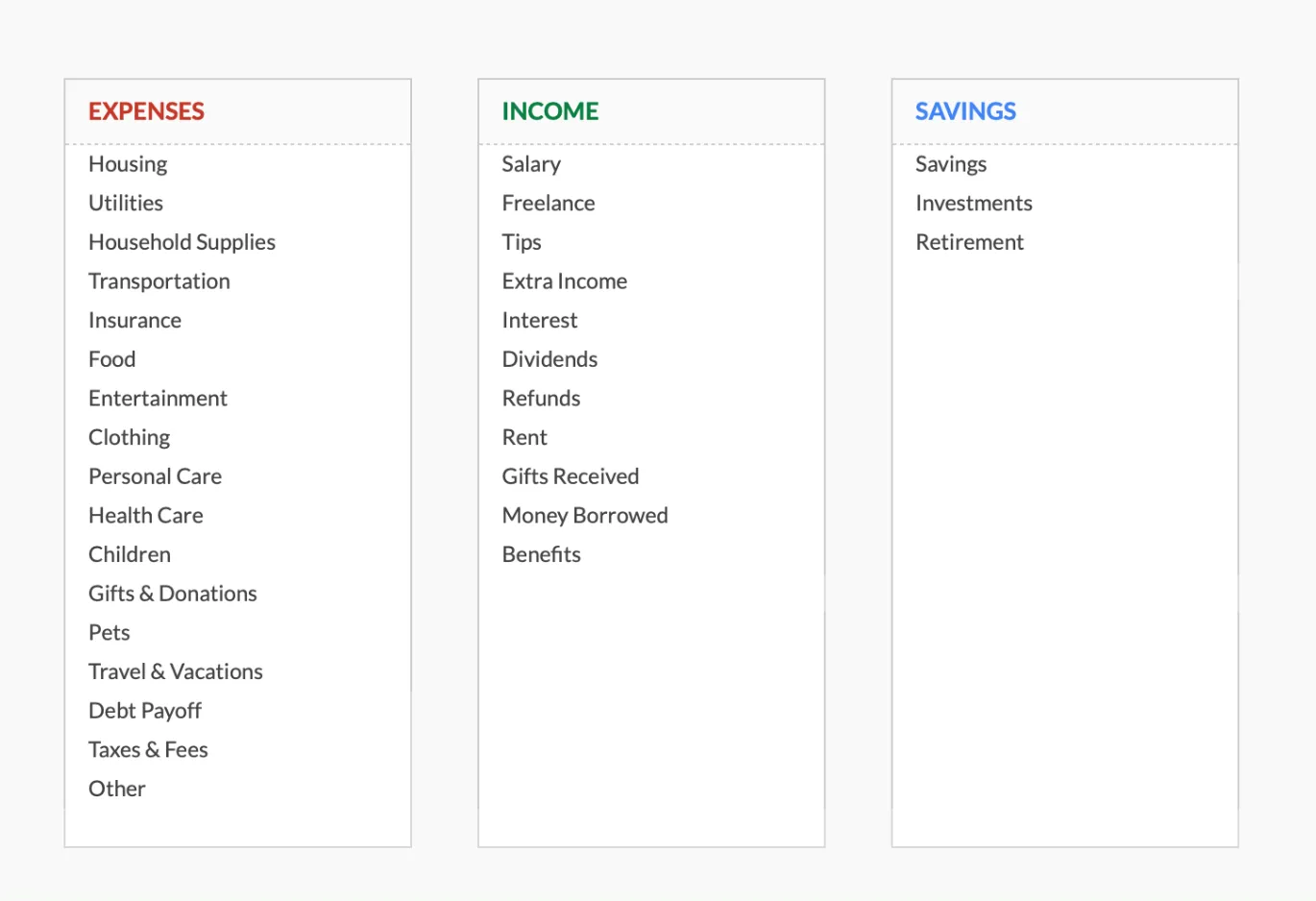
Dashboard with income, expenses, and savings at a glance
Log transactions with automatic categorization
Set targets per category and track actual spending
Visual breakdown of where your money goes
Track savings goals alongside your budget
Monitor progress toward financial goals
Fully customizable expense, income, and savings categories
Sources
Common Questions
Monthly Budget Template for the UAE - FAQ
Does this template use AED?
Yes - choose AED from the currency option in the header. The calculations are currency-neutral, so the math works the same regardless of the currency displayed.
Do I need to account for taxes?
The UAE has no personal income tax on salaries, and VAT at 5% is already inside the prices you pay. Business profits are a separate matter: a natural person carrying on business in the UAE falls within the 9% corporate tax regime once turnover passes AED 1 million in a calendar year, while employment wages and personal investment income are left out of that test. Citizens of countries that tax worldwide income may also have obligations at home, which a tax professional can confirm.
How do I budget for annual rent payments?
One approach is to divide the annual total by twelve and hold that amount as a monthly line, so the cheque dates land against money already set aside. Monthly instalment options have become more common with UAE landlords and agents, which removes the problem for some tenants. Ejari registration is a legal record of the tenancy rather than a payment plan.
Can I track savings and remittances?
Yes. Add categories for savings transfers to your home country, remittances to family, and local savings or investments. Tracking these outflows shows how much of the salary goes to living expenses, how much to savings, and how much to family support.
Is there a UAE-specific version of this template?
The template is the same worldwide and designed to be fully customizable. This page explains how to adapt it for UAE finances. The flexibility means you can rename categories and set it up to match your specific situation.
Can't find the answer you're looking for? Contact our team
Ready to get started?
Download instantly and start managing your finances, or contact us to design a custom template package for your needs.
Tax rules, rates, and contribution limits change, and official publications can themselves lag behind the law in force. We review these figures on a best-effort basis against sources we consider authoritative, but we cannot guarantee they are current, complete, or that better sources do not exist, and nothing here is tax, legal, or financial advice. For decisions, the relevant government authority is the reference.