
A family budget meeting is a short, scheduled sit-down where a household reviews income, spending, and goals together. Weekly 15-20 minute check-ins suit tight or new budgets; monthly 30-45 minute sessions suit stable ones. Keep it grounded in real numbers, use "we" instead of "you", and give everyone, including kids, an age-appropriate role.
Money conversations tend to happen either in crisis mode or not at all. Regular budget meetings change that by creating structured time to discuss finances when emotions aren’t running high.
Sample First Meeting Agenda
The first meeting runs longer than regular check-ins. Plan about 45 minutes.
Current state (15 min): What do you have (accounts, balances)? What do you owe (debts)? Combined net worth?
Monthly picture (10 min): What comes in (income)? What goes out (fixed expenses)? What’s left (discretionary)?
Goals (10 min): What do you want to achieve? What matters most right now? If the household is short on ideas, 5 financial goals worth considering is a useful prompt.
Next steps (10 min): What changes to make? When to meet again?
This establishes a baseline. Subsequent meetings build on it.
Regular Meeting Structure
A suggested agenda: wins (2-3 min), review spending against budget (5-10 min), upcoming expenses (5 min), savings goal progress (5 min), open questions (5 min), action items (2 min).
Frequency: Weekly (15-20 min) for new budgeters or tight budgets. Monthly (30-45 min) for stable situations. Some families combine monthly deep dives with brief weekly check-ins.
Setting the Right Tone
The key insight: when discussions are grounded in data, they stay practical instead of emotional. Having actual numbers in front of you shifts the conversation from “you spend too much” to “this category ran $200 over.”
- Use “we” language instead of “you”
- Focus on facts rather than blame
- Leave past mistakes in the past unless directly relevant
- Follow through on commitments - this builds trust for future meetings
Including Children
Bringing kids into money conversations works best when the involvement matches their age; age-appropriate money lessons go deeper on what lands at each stage.
Ages 5-8: Share that the family makes money choices together. Involve them in simple decisions like which cereal to buy.
Ages 9-12: Include in portions of meetings. Discuss savings goals they relate to - vacations, activities.
Ages 13-17: More substantial involvement. Discuss household expenses at a higher level. Include them in decisions affecting them (activity budgets, clothing).
Adult children at home: Full transparency about household budget.
Worth avoiding: specific salary amounts with younger children, financial anxieties that would burden them, conflicts between parents about money.
Handling Disagreements
Common friction points: different spending priorities, saver vs. spender dynamics, one person feeling controlled, hidden spending.
Resolution approaches:
- Compromise budgets: Each person gets a personal spending allocation with no questions asked
- Taking turns: Alternate who gets priority on discretionary decisions
- Define categories clearly: Agree on what counts as needs versus wants
If meetings consistently end in fights, that’s worth taking seriously. Fee-only financial planners or couples counseling with a financial focus are options worth considering.
Making Meetings Effective
Do: Come prepared with specific numbers. Celebrate progress. Take notes on decisions. Follow up on action items.
Don’t: Surprise your partner with concerning information. Use the meeting to criticize past spending. Skip meetings when things seem “fine” - small problems grow unnoticed.
Budget Meeting Tools
The Monthly Budget Template provides a structured view of spending categories that can serve as your agenda. The Financial Planning Template covers the longer horizon: its Goals tab holds eight household targets, from net worth and liquid money to debt-to-income ratio and average monthly savings, and the Summary marks each one as met or not yet.
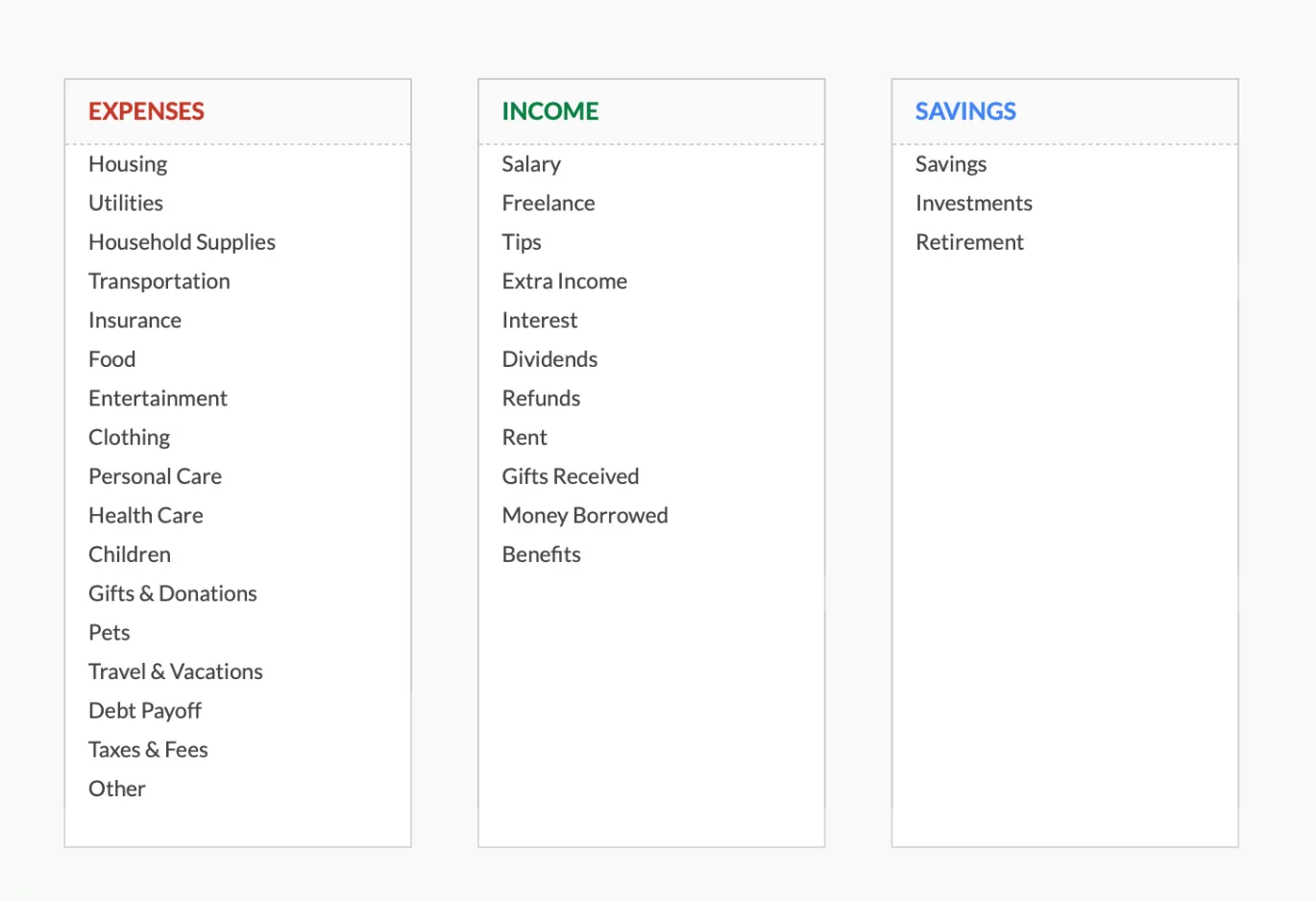
Working in a shared spreadsheet keeps everyone looking at the same numbers. If you are deciding between Google Sheets and Excel for a household, Google Sheets vs Excel for family budgeting weighs the shared-access trade-offs.
Maintaining the Habit
Set a regular time and treat it like any appointment. Keep meetings short - brief, frequent meetings beat long ones you’ll skip. Track progress visually; charts showing debt paydown or savings growth make meetings more satisfying.
Related
- Monthly Budget Template - A ready-made agenda of spending categories
- Financial Planning Template - Align on long-term goals
- Annual Budget Template - Year-long planning
- Google Sheets vs Excel for family budgeting - Pick the right shared spreadsheet
- How to build a savings goal tracker - Track goal progress between meetings
- Financial Minimalism: Budgeting with Less - Keeping the category list short enough to actually review
- Wedding Budget Planning: A Complete Guide - Planning a big shared expense together
Frequently asked questions
What if my partner doesn't want to participate?
Start by sharing information without asking for input. Keep it low-pressure and focus on shared goals you both care about.
How do we handle different income levels?
One approach is contributing to shared expenses proportionally to income rather than 50/50.
What if we find concerning spending?
Address it without blame. Focus on understanding and solutions rather than criticism.
Should we combine finances after marriage?
There's no single right answer. Discuss what works for your relationship and values.
Do budget meetings make sense for a household of one?
The same structure works solo. A monthly review of spending against plan and progress toward goals gives the meeting its value even without a second person to talk to.
What if only one person handles the money day to day?
Sharing the numbers still helps. One approach is having the person who manages the accounts walk the other through balances and upcoming bills so both stay informed.