
Money lessons land best when they match a child's stage. Ages 3-5 make money visible with a clear savings jar and simple two-item choices; ages 6-10 add a small allowance and a savings-goal chart; ages 11-13 manage a category budget of their own; and 14-18 run a first real budget built from a paycheck. The constant across every age is one skill - tracking numbers and making choices.
Kids start forming money habits earlier than most parents expect. The activities that stick aren’t lectures - they’re hands-on moments involving real numbers and real choices. The CFPB’s Money as You Grow program works on that basis, mapping money milestones to a child’s developmental stage and pairing each one with simple activities rather than talks.
Here’s an age-by-age breakdown focused on the concrete activities that build number sense and tracking skills.
Ages 3-5: Making Money Visible
At this age, money is invisible magic - tap a card and things appear. The first step is making the exchange concrete.
Activities that work:
- Clear jar savings. A transparent container beats a piggy bank. Kids see the pile grow physically.
- Two-item choices. Give a preschooler $2 at the store. They pick between two snacks. When the money’s gone, it’s gone.
- Coin sorting. Group pennies, nickels, dimes, quarters. Count totals together.
The lesson at this age is simple: we use money to get things, and we make choices.
Ages 6-10: Allowance and Saving Goals
This is when the effort-to-money connection clicks. Many families introduce an allowance here.
| Allowance Approach | How It Works |
|---|---|
| Chore-based | Tied to specific tasks - reinforces work-money link |
| Fixed weekly | Separate from chores - money is a learning tool |
| Hybrid | Base amount plus extra for tasks beyond basics |
The savings chart. A child who wants a $25 toy and gets $5/week is doing real math with real stakes. A simple chart on the fridge tracking progress toward the goal makes the numbers visual.
| Week | Saved This Week | Total Saved | Remaining |
|---|---|---|---|
| 1 | $5 | $5 | $20 |
| 2 | $5 | $10 | $15 |
| 3 | $5 | $15 | $10 |
| 4 | $5 | $20 | $5 |
| 5 | $5 | $25 | $0 - Goal! |
This is a child’s first spreadsheet - a tracking table with a target. The pride when they buy something with money they saved themselves becomes a reference point they carry forward.
Ages 11-13: Real Budget Responsibility
Middle schoolers can handle a category budget. Handing a twelve-year-old $65/month for entertainment and snacks teaches more than any conversation.
Practical tracking activity:
Give them a simple spending log - paper or a basic spreadsheet:
| Date | What | Amount | Remaining |
|---|---|---|---|
| Mar 1 | Budget start | - | $65.00 |
| Mar 3 | Movie ticket | $12.00 | $53.00 |
| Mar 7 | Snacks with friends | $8.50 | $44.50 |
When they blow the full amount in week one, they learn. That mistake at twelve costs very little and teaches very much.
This is also a good age for comparison shopping - showing kids the same item at two different stores introduces the idea that prices vary and research pays off.
Ages 14-18: First Paycheck, First Real Budget
The first pay stub is a powerful lesson. The gap between gross and net pay teaches more about taxes than any textbook. A paycheck calculator can turn that first stub into a concrete before-and-after, showing where each deduction goes. When the paycheck comes from a summer job, the summer job budget setup walks a parent through that first-paycheck math and a save/spend/share split week by week.
A teen’s percentage framework:
| Category | % of Income | Example ($500/mo) |
|---|---|---|
| Spending | 50% | $250 |
| Long-term savings | 20% | $100 |
| Short-term goals | 20% | $100 |
| Giving | 10% | $50 |
The exact percentages matter less than the habit of thinking in categories - that money has different jobs.
Setting Up a Teen’s First Budget in Google Sheets
A simple Google Sheet gives teens a real tool they can maintain themselves. Here’s a starter layout:
Tab 1: Monthly Budget
| Category | Planned | Actual | Difference |
|---|---|---|---|
| Spending money | $250 | $220 | +$30 |
| Savings (long-term) | $100 | $100 | $0 |
| Short-term goal: car fund | $100 | $100 | $0 |
| Giving | $50 | $25 | -$25 |
Tab 2: Expense Log
| Date | Description | Category | Amount |
|---|---|---|---|
| Mar 1 | Gas | Spending | $35.00 |
| Mar 3 | Lunch with friends | Spending | $14.50 |
| Mar 15 | Transfer to savings | Savings | $100.00 |
What makes this work for teens:
- They built it themselves (ownership matters)
- Simple
=SUM()formulas - their first real spreadsheet skill - One sheet they check weekly, not daily
- Visible progress toward their short-term goal
The Monthly Budget Template provides a more structured version for teens ready to level up from a DIY sheet.
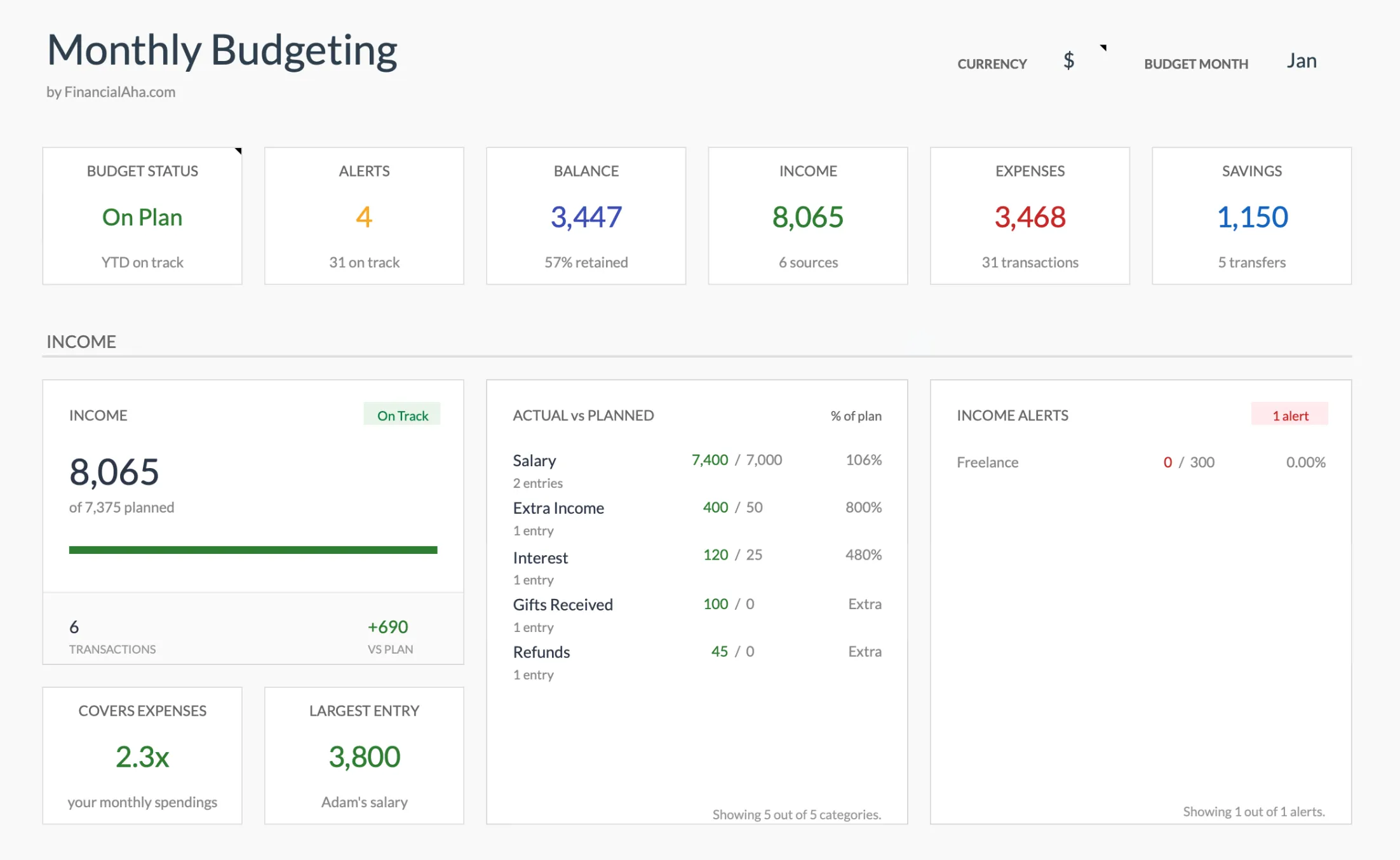 The Monthly Budget Template (Premium tier) tracks planned against actual for each category - the same planned-vs-actual habit a teen practices in a starter sheet, with the math already wired up.
What Ties It All Together
The thread across every age is the same: numbers, tracking, and choices. A preschooler’s coin jar is a savings tracker. A ten-year-old’s fridge chart is a goal planner. A teenager’s Google Sheet is a budget.
Each stage builds the same core skill - watching where money goes and deciding where it goes next.
The Monthly Expense Tracker keeps its category list on an editable Categories sheet, so an older kid practicing on a copy can cut it down to a handful of names they recognize. It reports one month at a time, and the Instructions sheet covers what to do when a new month starts.
Related
- Monthly Budget Template - Track family finances
- Monthly Expense Tracker - Simple category tracking, one month at a time
- How to Track Expenses in Google Sheets
- Budgeting for New Baby Costs
- Summer Camp Cost Calculator Spreadsheet - Where the kid-cost line lands each summer
- School Supplies Budget Spreadsheet (Per-Child Breakdown) - Handing an older kid their own supply-list budget
- How to Build a Budget That Actually Works
Frequently asked questions
How much allowance is typical for a child's age?
There is no standard figure, and families set them very differently. Some tie a small weekly amount loosely to a child's age; others use a flat rate and raise it as responsibilities grow. What tends to matter more than the number is that it is predictable enough for a child to plan around.
How do you teach kids about tap-to-pay and money they never see?
Digital money is the hardest part to make concrete, because nothing visibly leaves a jar. One approach some families use is to narrate the invisible step out loud at the register, or to move a matching amount out of a physical jar after a card tap, so the child still watches a total shrink.
Should kids be paid for good grades?
It is a genuine split. Some families connect effort to reward; others prefer to keep grades separate from money so the motivation stays internal. Neither view is settled.
What if my child spends all their allowance immediately?
That is often where the lesson lands. When the money is gone and the next allowance is days away, the trade-off becomes real in a way a conversation cannot match. A small mistake at seven or twelve costs very little.
Sources
- Money as You Grow: Help for parents and caregivers - Consumer Financial Protection Bureau
- Building Blocks to Help Youth Achieve Financial Capability - Consumer Financial Protection Bureau
About this article
Age-stage money milestones checked against the CFPB's Money as You Grow program and its Building Blocks financial-capability research. Product claims checked on 2026-09-10 against the shipped Monthly Budgeting Google Sheet (Summary, Budget Plan, Goals) and the Monthly Expense Tracker Google Sheet (Summary, Transactions, Categories, Instructions). Last reviewed September 2026.