
Small budget changes compound because money you save and then invest earns returns that go on to earn their own returns. At a 7% annual return, $100 saved every month grows to about $17,300 in 10 years and roughly $52,000 in 20; five modest cuts worth $235 a month reach about $122,000 over two decades. The lever is time, not the size of any single change.
A $5 daily coffee habit costs $150/month, or $1,800/year. Invested over 20 years at a 7% return, that’s about $78,000. Small numbers compound into life-changing amounts.
Track your progress: The Financial Planning Template projects your assets forward to a chosen end year from monthly income, expense and growth assumptions, so a lower expense figure redraws the whole curve. The Monthly Budget Template shows what each category planned against what it actually spent, and flags which charges are subscriptions.
The Math of Small Changes
Linear thinking: Save $100/month = $1,200/year
Compound thinking: Save $100/month, invest it, earn 7%/year:
- Year 1: $1,239
- Year 5: $7,159
- Year 10: $17,308
- Year 20: $52,093
The gap between the two lines is compounding: each year’s return is added to the balance, so the following year earns a return on a larger base. That only happens if the money is actually invested somewhere that earns a return, rather than sitting in a no-interest account where it keeps its face value but never multiplies. A 7% figure is a common long-run assumption for a diversified, stock-heavy portfolio after inflation, not a guaranteed rate, and real returns swing above and below it from one year to the next. The SEC’s compound interest calculator shows the same mechanics at whatever rate you enter, and our own compound interest calculator is embedded further down, where a starting amount grows at the rate, compounding frequency and number of years you set.
Daily Spending Adds Up
| Daily Expense | Monthly | Yearly | 10-Year Invested |
|---|---|---|---|
| $3 | $90 | $1,080 | $15,600 |
| $5 | $150 | $1,800 | $26,000 |
| $10 | $300 | $3,600 | $52,000 |
| $15 | $450 | $5,400 | $78,000 |
10-year figures assume 7% annual return
The point isn’t that you can’t have coffee or lunch out. It’s that awareness reveals the true cost - not just the daily amount, but what that money could become over time. Keep the expenses that genuinely add value. Question the ones that don’t.
Monthly Subscriptions
The average household carries 12+ active subscriptions totaling $200+ per month, many continuing from forgotten free trials.
| Subscription | Monthly | Yearly | 5-Year Total |
|---|---|---|---|
| Streaming (3 services) | $45 | $540 | $2,700 |
| Music | $11 | $132 | $660 |
| Cloud storage | $10 | $120 | $600 |
| News/magazines | $20 | $240 | $1,200 |
| Apps/software | $25 | $300 | $1,500 |
| Total | $111 | $1,332 | $6,660 |
Cutting even $30/month in unused services saves $360/year. Invested over 10 years at 7%, that becomes $5,200.
The Reverse Compound Effect
Going $50 over budget monthly seems insignificant. Over a year, that’s $600. On a credit card near the average rate of roughly 20% APR, the first year adds close to $60 in interest, since the balance builds $50 at a time rather than sitting at $600 from January. Five years of the same habit adds $3,000 in new principal, and with 20% compounding on it monthly the balance reaches roughly $5,100.
A $5,000 credit card balance at 20% APR with minimum payments of 1% of the balance plus interest takes close to 19 years to clear. Total paid runs past $12,300, more than double the original balance. The same math that builds wealth through investing destroys it through debt interest.
Where to Find Small Savings
| Category | Change | Monthly Savings |
|---|---|---|
| Food | Cook one more dinner home | $30-50 |
| Food | Pack lunch 2 more days/week | $40-60 |
| Food | Generic vs. brand groceries | $20-40 |
| Transport | Combine errands (less gas) | $15-30 |
| Transport | Carpool once/week | $30-50 |
| Utilities | Programmable thermostat | $10-25 |
| Utilities | LED bulbs, unplug electronics | $10-25 |
| Entertainment | Library vs. buying books | $15-30 |
| Entertainment | Rotate streaming services | $15-30 |
Time Is the Multiplier
Save $200/month at 7% return starting at different ages:
| Starting Age | Years Saving | Total Contributions | Value at 65 |
|---|---|---|---|
| 25 | 40 | $96,000 | $525,000 |
| 35 | 30 | $72,000 | $244,000 |
| 45 | 20 | $48,000 | $104,000 |
| 55 | 10 | $24,000 | $35,000 |
Starting at 25 means contributing only $24,000 more than starting at 35, but ending with $281,000 more.
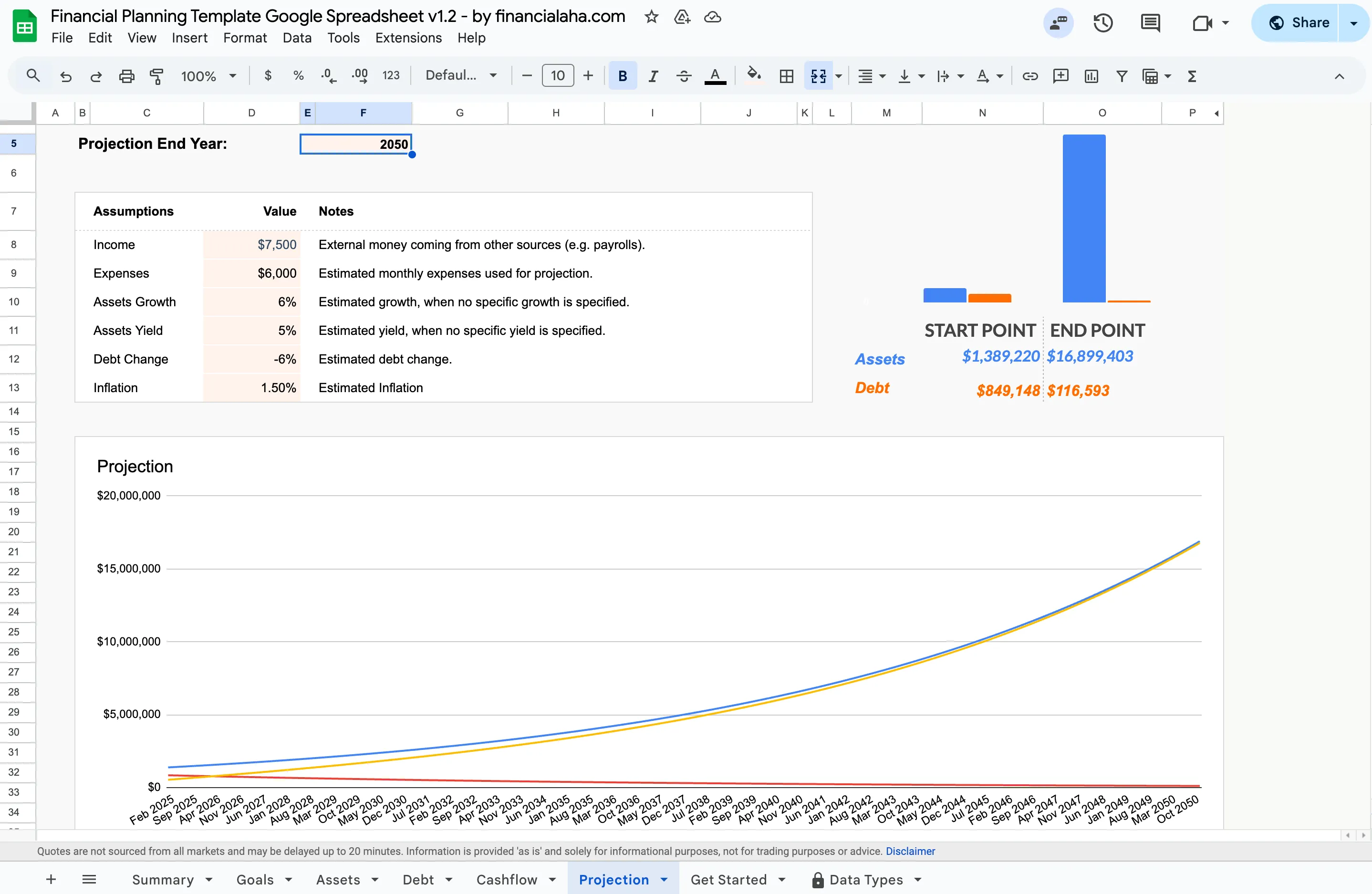
The Projection tab of the Financial Planning Template (Premium tier) draws the same upward curve from your own income, expenses, and growth rate, so you can see where a change today lands in twenty or thirty years.
Real Example: Five Small Changes
| Change | Monthly Savings |
|---|---|
| Make coffee at home | $120 |
| Pack lunch 3x/week | $45 |
| Cancel 2 unused subscriptions | $25 |
| Adjust thermostat 2 degrees | $15 |
| Library instead of buying | $30 |
| Total | $235 |
None of these changes is dramatic. Each requires minimal adjustment to daily life.
That $235/month invested at 7%:
- After 5 years: $16,800
- After 10 years: $40,700
- After 20 years: $122,400
Five small changes, six figures over two decades.
Run your own number
Set a starting amount, a return rate, a compounding frequency and a time horizon to see what compounding does to a lump sum:
For a step-by-step walk through the formula, the compound interest math guide breaks it down, and the savings calculator adds a fixed monthly deposit on top of a starting balance and shows how the two grow together.
Related
- Financial Planning Template - project compound growth over decades
- Monthly Budget Template - find the savings to redirect
- Compound Interest: The Math Behind Growth - the formula, worked step by step
- Savings Calculator: How Your Money Grows - a fixed monthly deposit toward a goal
- Track Subscriptions and Recurring Expenses - catch the small leaks first
Frequently asked questions
Isn't this just being cheap?
The compound effect isn't about deprivation - it's about intentionality. The idea is spending fully on what matters while trimming what doesn't.
Do small amounts really matter?
Small amounts matter enormously over time. $100 per month invested from age 25 to 65 at a 7% return works out to roughly $263,000.
Does the money need to be invested, or does a savings account work the same?
The growth in these examples comes from an assumed 7% annual return, which a standard checking or low-rate savings account will not match. Money left in a no-interest account keeps its face value but does not multiply. The figures here assume the saved amount is invested somewhere that earns a return over time.
Is a 7% return realistic?
7% is a common long-run assumption for a diversified, stock-heavy portfolio after inflation, not a guaranteed or fixed rate. Actual returns vary year to year and can be negative. The numbers here use 7% to show the mechanics of compounding, not to predict any specific outcome.
How do I stay motivated when progress is slow?
Focus on the behavior rather than obsessing over results. Graphing progress makes the curve visible, and exponential growth only becomes obvious later on.
What if I can't find any expenses to cut?
Tracking everything for a month is a common starting point. Most people are surprised by where money actually goes. Even $50 per month compounds to meaningful amounts over time.
Sources
- Compound Interest Calculator - U.S. Securities and Exchange Commission (Investor.gov)
- Consumer Credit - G.19 - Board of Governors of the Federal Reserve System
About this article
Compound-growth figures recomputed at a 7% annual return with monthly contributions. Credit card interest range checked against the Federal Reserve's G.19 consumer credit release. Template claims checked on 2026-09-10 against the shipped Financial Planning Google Sheet (Projection tab assumptions and end year) and the Monthly Budgeting Google Sheet (Budget Plan and Transactions tabs). Embedded calculator fields checked on 2026-09-10 against the site's compound interest and savings calculators. Last reviewed September 2026.