United Kingdom
Retirement Planning Template for the United Kingdom
Map out your retirement in a Google Sheets template you own, bringing together State Pension, workplace pension, SIPP, ISAs, and projected expenses.
In Depth
Pensions, the State, and the UK Retirement Landscape
The UK retirement system rests on three pillars: the State Pension, workplace pensions, and personal savings. The full new State Pension is £241.30 per week for the 2026-27 tax year, roughly £12,550 a year, and it requires 35 qualifying years of National Insurance contributions. Records can be checked at gov.uk, and gaps can sometimes be filled with voluntary Class 3 contributions, which cost £18.40 a week for 2026-27. For many retirees this provides a reliable baseline income, though on its own it rarely maintains pre-retirement living standards.
Pension freedoms introduced in 2015 transformed UK retirement planning. Before these changes, most people had to buy an annuity with their pension pot. Now anyone who has reached the normal minimum pension age, currently 55 and rising to 57 on 6 April 2028, can access a defined contribution pension in several ways: take up to 25% tax free and draw the rest flexibly, take the whole thing as cash with the balance taxed as income that year, or combine the two. This flexibility shifts the responsibility of making money last onto the individual. Running out of money in retirement is a real concern when there are no guardrails.
Pensions UK, formerly the Pensions and Lifetime Savings Association, publishes Retirement Living Standards that give reference points for retirement spending. For a single person outside London the figures are around £13,900 a year for a minimum standard, £32,700 for moderate, and £45,400 for comfortable; for a couple they are £22,500, £45,400, and £62,700. Each level carries stated assumptions about food, transport, leisure, and holidays, and none of them include rent or mortgage payments. Setting projected pension income, meaning State Pension plus workplace and personal pensions, against those levels turns an abstract target into a number that can be compared.
United Kingdom
Retirement Planning in the United Kingdom: Key Factors
UK retirement planning revolves around the State Pension, workplace pensions, and personal savings. Understanding how these fit together is essential for a realistic plan.
The State Pension provides a foundation
The full new State Pension is £241.30 a week for the 2026-27 tax year, which needs 35 qualifying years of National Insurance contributions. Your own record and forecast are available at gov.uk. Annualised, the full amount comes to roughly £12,550, so it sits close to the personal allowance and forms a baseline rather than a full replacement income.
Workplace pensions are the primary savings vehicle
Under auto-enrolment the minimum total contribution is 8% of qualifying earnings, the band from £6,240 to £50,270, made up of at least 3% from the employer with the rest from the employee. Over a career those contributions compound. The annual allowance for pension contributions is £60,000 for the 2026-27 tax year, or 100% of relevant earnings if that is lower, and relief is given at the contributor's marginal rate.
SIPPs offer more control and investment choice
A Self-Invested Personal Pension (SIPP) allows you to choose your own investments, often with lower fees than workplace pension default funds. Contributions receive the same tax relief as workplace pensions. Some people use a SIPP alongside their workplace pension to access a wider range of investment options.
Pension access rules have changed significantly
Since pension freedoms in 2015, a defined contribution pension can be accessed flexibly from age 55, a floor that rises to 57 on 6 April 2028. Up to 25% can be taken tax free, subject to a lump sum allowance, with the rest taxed as income at the marginal rate. The flexibility also shifts the job of making the money last from an insurer onto the individual, which is what makes a drawdown projection worth keeping.
Get the Template
Getting Started
Your First Steps With UK Retirement Planning
Enter current pension values
List all pension pots: workplace pension(s) from current and previous employers, any SIPP, and any defined benefit (final salary) pension entitlements. For defined benefit schemes, note the annual pension income rather than a fund value.
Check your State Pension forecast
Visit gov.uk/check-state-pension to see your projected weekly State Pension and qualifying years. Enter this into the template as future income starting from your State Pension age.
Add ISAs and other savings
ISAs, GIAs, and other savings supplement pension income. Enter current values and any regular contributions. These provide flexible, accessible income alongside pension withdrawals.
Estimate retirement spending
Project monthly retirement expenses. The Retirement Living Standards published by Pensions UK, formerly the PLSA, give reference points for a single person outside London: £13,900 a year for a minimum standard, £32,700 for moderate, and £45,400 for comfortable. The couple figures are £22,500, £45,400, and £62,700. All of these exclude rent and mortgage costs, so housing has to be added on top.
Run scenarios with different retirement ages
Test retiring at different ages to see how it affects the plan. Even a year or two difference changes both how long you save and how long the money needs to last. The template makes it easy to compare scenarios side by side.
See It In Action
What the template looks like
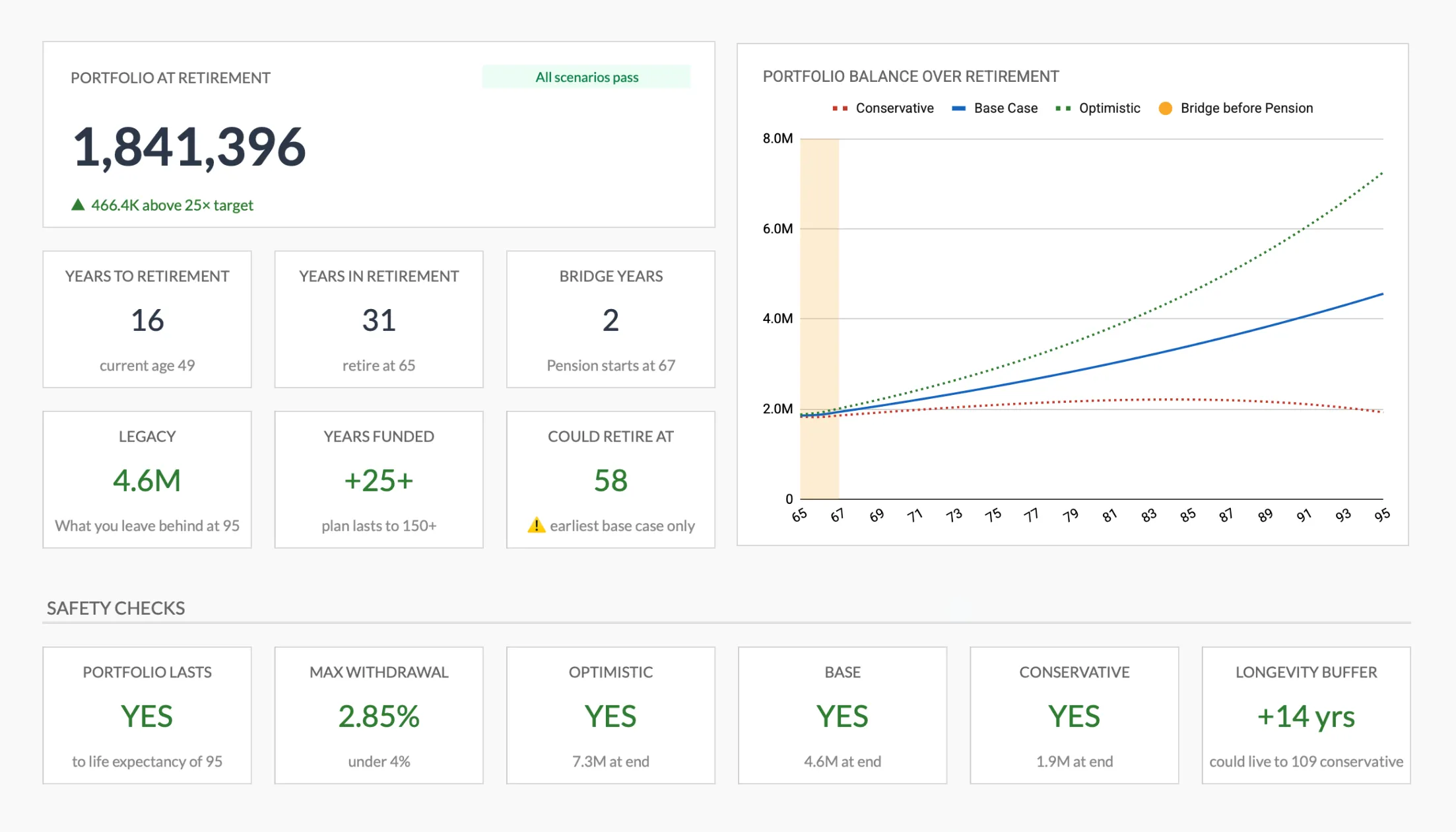
Browse through the template to see the dashboard, the entry sheets, and the summaries it produces, all adaptable to your local financial setup.
- Built-in currency selector
- Calculations update automatically
- Visual summaries of your numbers
- No setup required
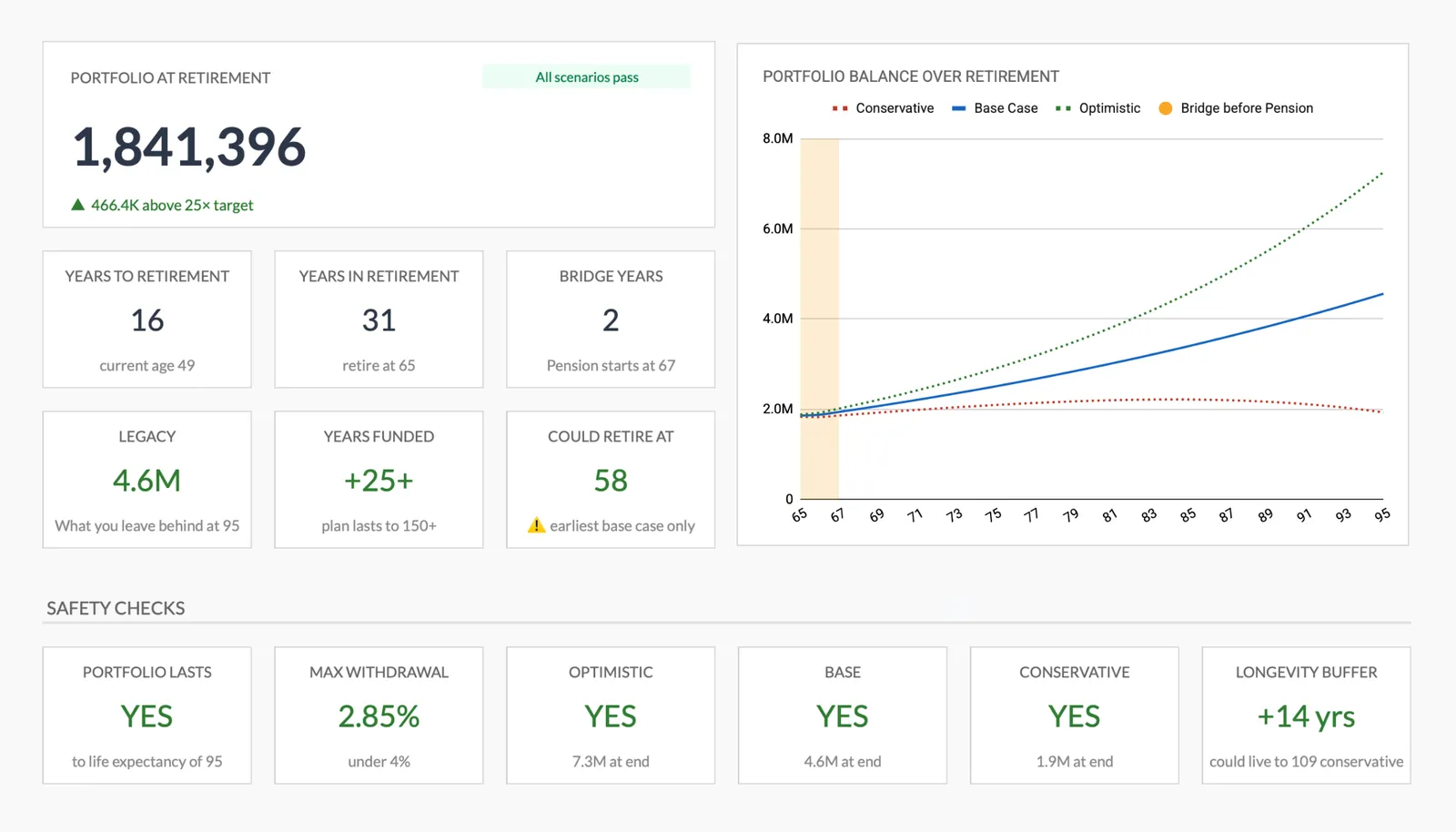
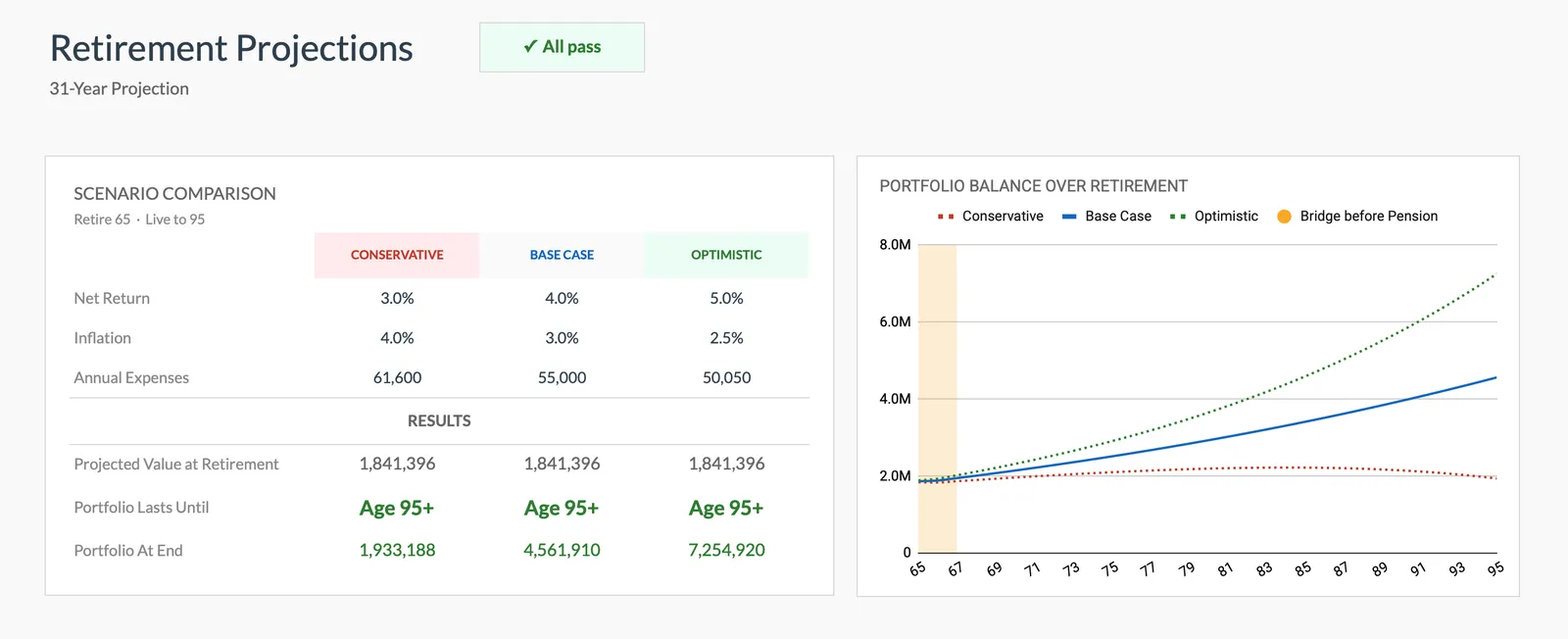
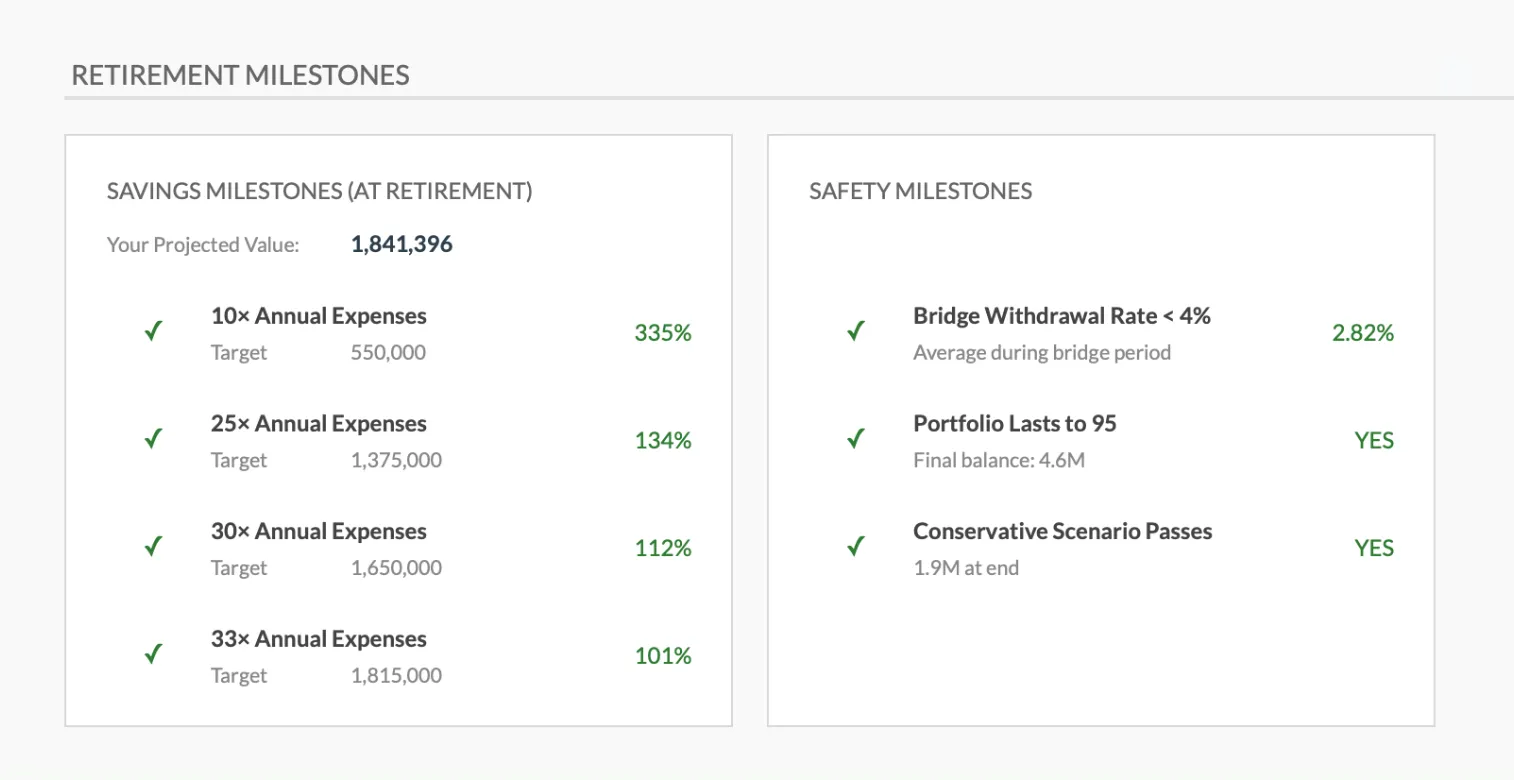
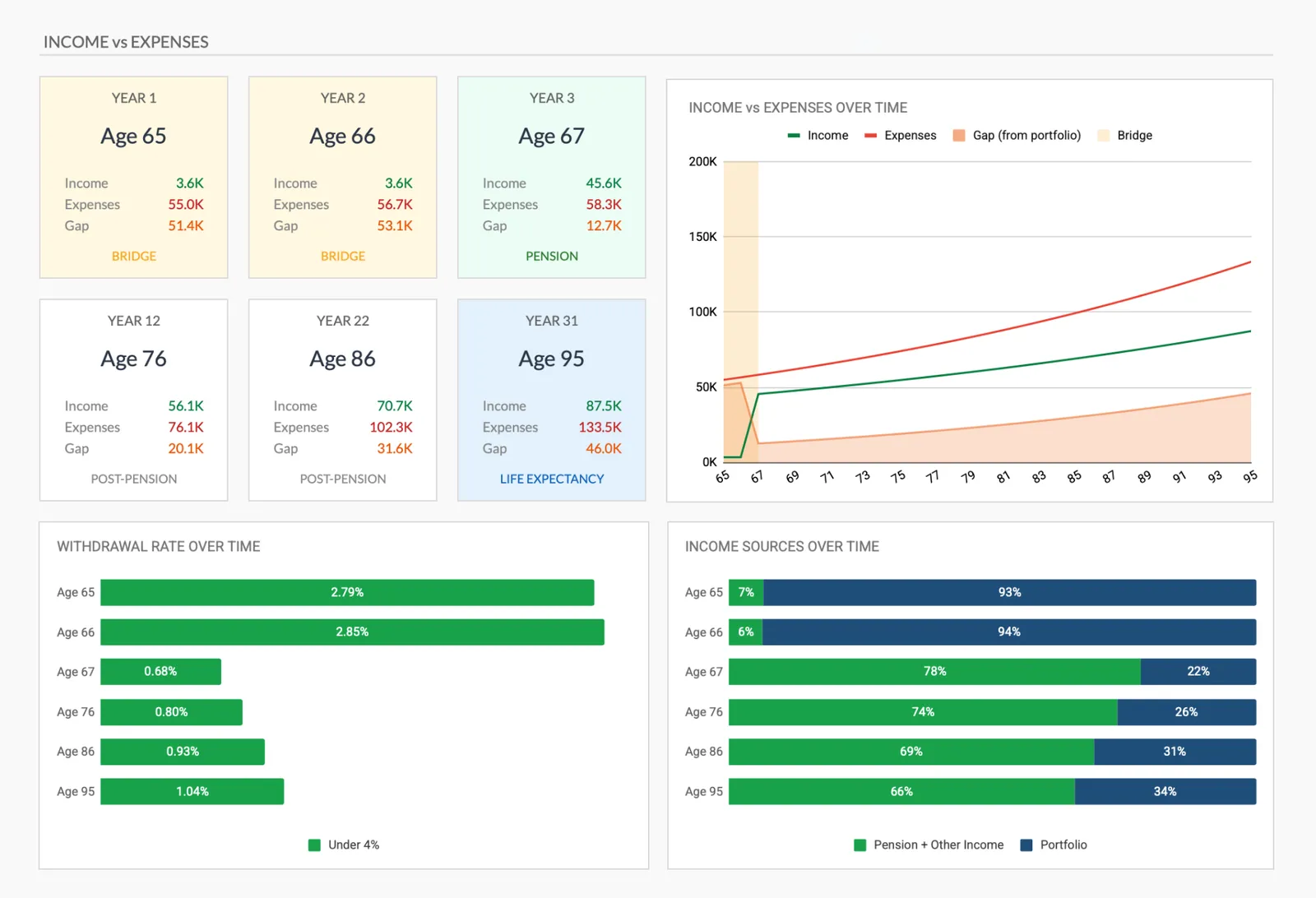
Complete retirement overview with projections
Project your retirement savings growth
Track progress toward retirement goals
Plan your retirement income against expenses
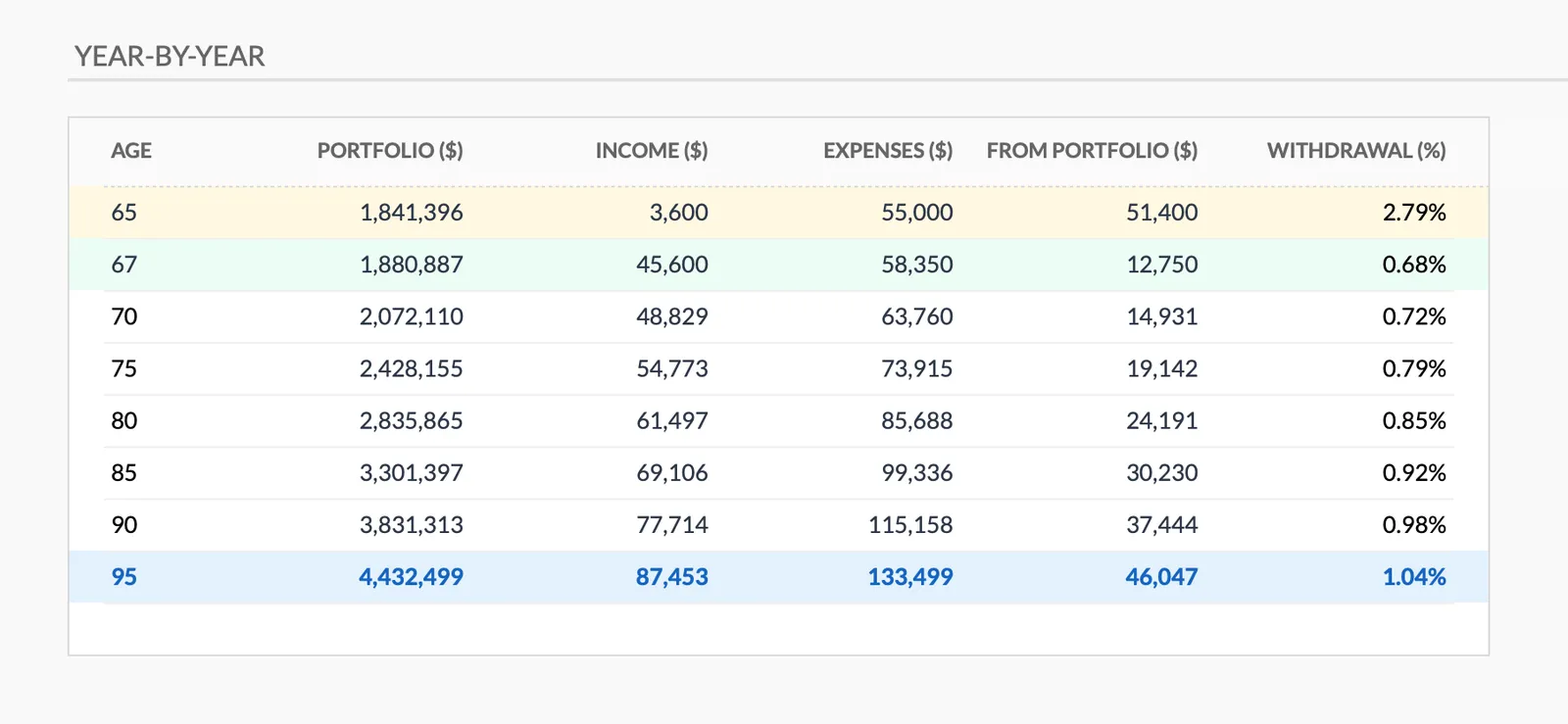
Detailed year-by-year retirement projection
Common Questions
Retirement Planning Template for the United Kingdom - FAQ
When can I access my pension?
The normal minimum pension age is 55, rising to 57 on 6 April 2028, which keeps it ten years below State Pension age. Up to 25% can be taken tax free and the rest is taxed as income. State Pension age itself is mid-transition: it is phasing up from 66 to 67 for people born between 6 April 1960 and 5 March 1961, and anyone born from 6 March 1961 onwards reaches it at 67. A further rise to 68 is legislated for the mid-2040s.
How much do I need to retire in the UK?
It depends on the lifestyle being planned for. The Retirement Living Standards put single-person spending at £13,900 a year for minimum, £32,700 for moderate, and £45,400 for comfortable, all excluding housing costs. The full new State Pension covers roughly £12,550 of that for the 2026-27 tax year, so the gap a private pension has to fill is the difference. These are reference points rather than targets, and the template works from your own spending figures instead.
Should I consolidate old workplace pensions?
That is a personal decision, and one where regulated advice is often required. Multiple small pots can be harder to track and charges vary between them, which is why some people consolidate into a SIPP. Others do not, because older schemes can carry guaranteed annuity rates, protected tax-free cash, or safeguarded benefits that are lost on transfer. What this template does is show all the pots in one place so the comparison is at least visible.
How do I handle the 25% tax-free lump sum?
You can take 25% of your pension tax-free, either as a single lump sum at retirement or in stages through drawdown. The template can model both approaches. Taking it in stages (known as uncrystallised funds pension lump sum or UFPLS) spreads the tax-free benefit over time.
Is the State Pension enough to live on?
The full new State Pension is £241.30 a week for the 2026-27 tax year, roughly £12,550 a year, which sits just below the £13,900 minimum standard published by Pensions UK and well below the moderate figure. It is designed as a foundation that workplace and personal pensions build on. The template shows the gap between State Pension income and your own projected retirement spending.
Can't find the answer you're looking for? Contact our team
Explore More
Free Tools for the United Kingdom
Ready to get started?
Download instantly and start managing your finances, or contact us to design a custom template package for your needs.
Tax rules, rates, and contribution limits change, and official publications can themselves lag behind the law in force. We review these figures on a best-effort basis against sources we consider authoritative, but we cannot guarantee they are current, complete, or that better sources do not exist, and nothing here is tax, legal, or financial advice. For decisions, the relevant government authority is the reference.