South Africa
Monthly Budget Template for South Africa
Track your income in ZAR, manage PAYE deductions, retirement annuity contributions, and everyday expenses, all in a Google Sheets template you own.
In Depth
PAYE Brackets, Retirement Deductions, and the Shape of South African Budgets
South Africa's seven income tax brackets range from 18% to 45%, with PAYE withheld monthly by employers. UIF contributions of 1% are deducted from pay and matched by the employer, while the Skills Development Levy is an employer cost rather than an employee deduction. For someone earning R500,000 in the 2026-27 tax year, tax after the primary rebate works out at roughly 20% of income before any retirement fund deduction. Contributions to retirement annuities and pension funds are deductible up to 27.5% of the greater of remuneration or taxable income, capped at R430,000 a year since 1 March 2026, which means a rand contributed costs less than a rand of after-tax spending.
Medical aid premiums are a recurring cost that many households carry, and the monthly amounts vary widely depending on the plan and number of dependants. Medical tax credits of R376 per month for each of the first two members and R254 for each additional member in the 2026-27 tax year offset part of the expense at assessment, but the full premium still has to fit inside the monthly budget. For households without medical aid, out-of-pocket healthcare costs can be substantial, so a dedicated category tends to be useful either way.
Property buyers face transfer duty running from 0% on properties up to R1,210,000 to 13% on amounts above R13,310,000 under the table in force from 1 April 2026, on top of bond registration fees and conveyancing costs. Electricity has become one of the less predictable ongoing items, with Eskom tariffs climbing and the backup systems installed during the load shedding years running into tens of thousands of rand. A budget that holds both the deduction opportunities and these cost realities gives a fuller picture.
South Africa
Budgeting in South Africa: What's Different
South Africa's financial landscape has features that shape how a budget is put together. Knowing what they are makes it easier to set up a template that fits an actual situation.
Progressive income tax affects take-home pay significantly
South Africa's personal income tax rates run from 18% to 45% across seven brackets. PAYE (Pay As You Earn) is deducted from salaries monthly by the employer, and UIF (Unemployment Insurance Fund) contributions of 1% come off as well, matched by a further 1% from the employer. Take-home pay after those deductions is the figure that lines up with what actually lands in the bank account.
Retirement annuity contributions offer tax benefits
Contributions to retirement annuities, pension funds, and provident funds are tax-deductible up to 27.5% of the greater of remuneration or taxable income. The annual cap rose from R350,000 to R430,000 with effect from 1 March 2026, the start of the 2026-27 tax year. Voluntary RA contributions paid out of take-home pay show up cleanly as their own budget category, since they reduce taxable income as well as the savings gap.
Medical aid and medical tax credits
Medical aid (health insurance) premiums are a significant monthly expense for many South Africans. Medical tax credits, which for the 2026-27 tax year are R376 a month for each of the first two members and R254 for each additional member, offset part of the cost at assessment. Some people find that comparing medical aid plans when annual increases are announced changes what they end up paying.
Electricity and utility costs add unpredictability
Electricity costs from Eskom or municipal providers have risen substantially in recent years. Load shedding eased considerably after 2025, but the inverters, batteries and solar panels bought during the worst of it were large capital expenses, and several of those systems still carry finance or maintenance costs. Water and property rates vary by municipality.
Transfer duty on property purchases is a significant upfront cost
When purchasing property in South Africa, transfer duty runs from 0% on properties up to R1,210,000 to 13% on the portion above R13,310,000 under the table in force from 1 April 2026. A property selling at R2,000,000, for example, attracts roughly R33,800 in transfer duty. Combined with conveyancing fees, bond registration costs, and other closing expenses, the upfront cost of buying goes well beyond the deposit, which is why it often sits as a separate line in a plan.
PAYE brackets create a layered tax structure
For the 2026-27 tax year South Africa's seven income tax brackets range from 18% on the first R245,100 of taxable income to 45% on income above R1,878,600. The primary rebate of R17,820 means no tax is payable below R99,000 for those under 65, with higher thresholds at 65 and 75. Knowing which bracket income falls into makes it easier to see the tax effect of a bonus, a salary increase, or a voluntary retirement annuity contribution that lowers taxable income.
Get the Template
Getting Started
Getting Started With Your South African Budget
Switch the currency to ZAR
Change the display currency to ZAR using the dropdown at the top of the dashboard. The calculations stay the same, only the display changes.
Enter your after-tax take-home pay
This is the amount that actually reaches the bank account after PAYE, UIF, and any pension fund deductions. A payslip shows the breakdown, and the "net pay" or "amount due to you" line is the one that matches.
Customize expense categories for South African life
Add categories that reflect local expenses: rent or bond (mortgage) repayment, municipal rates, electricity (prepaid or post-paid), water, medical aid, car insurance, vehicle finance, petrol, groceries, domestic worker salary, security services, school fees, and DSTV or streaming subscriptions.
Add retirement annuity contributions if applicable
Voluntary RA contributions, separate from an employer pension fund, can go in as their own budget category. Monthly debit orders for RAs are common, and giving them a line keeps them visible in the spending plan.
Plan for South African seasonal expenses
Annual items include car licence renewals, insurance premium increases (usually in January), school fee increases, medical aid adjustments, and higher electricity usage in winter months (June to August). Giving them a place in the plan is where a budget tends to earn its keep.
See It In Action
What the template looks like
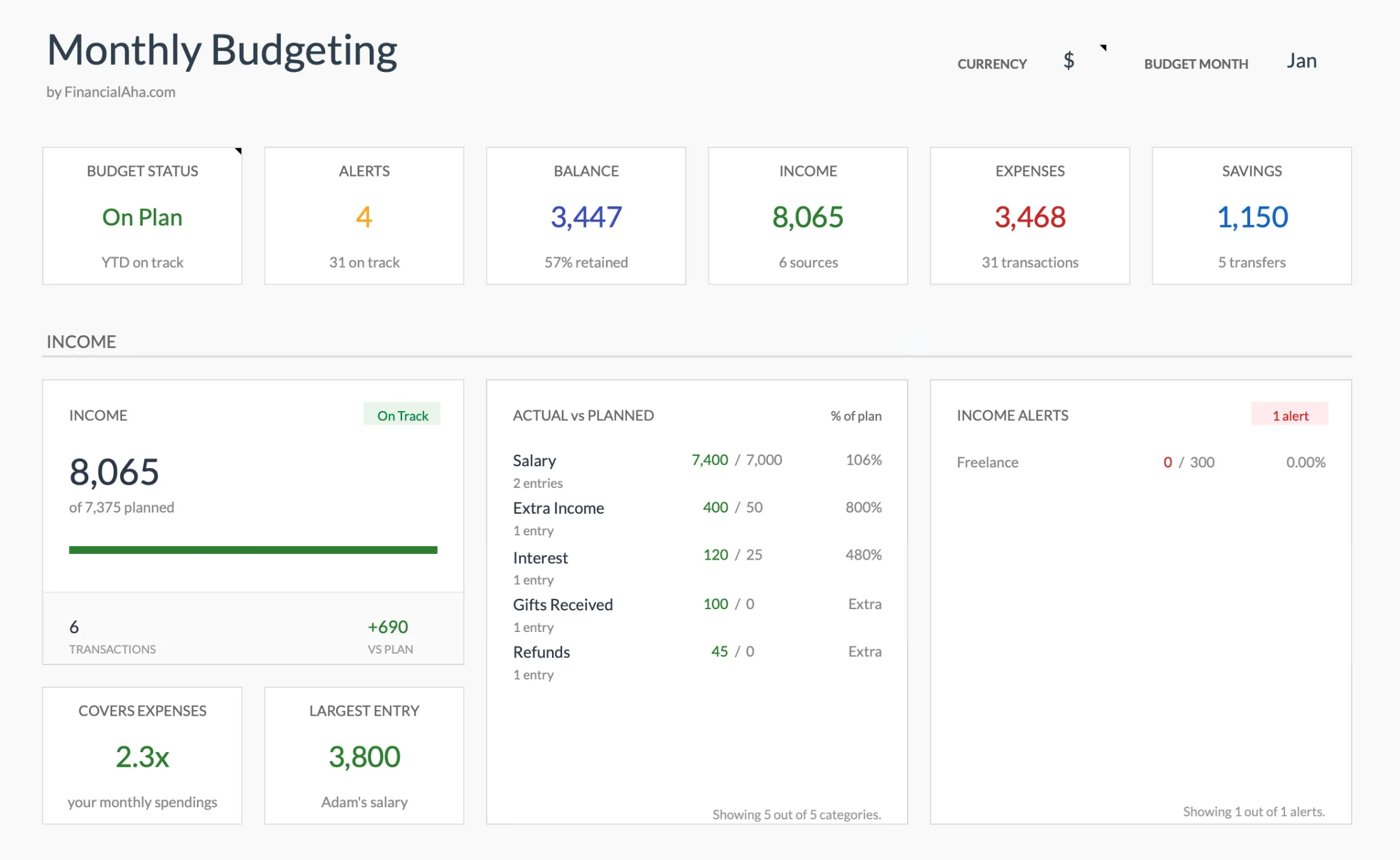
Browse through the template to see the dashboard, the entry sheets, and the summaries it produces, all adaptable to your local financial setup.
- Built-in currency selector
- Calculations update automatically
- Visual summaries of your numbers
- No setup required
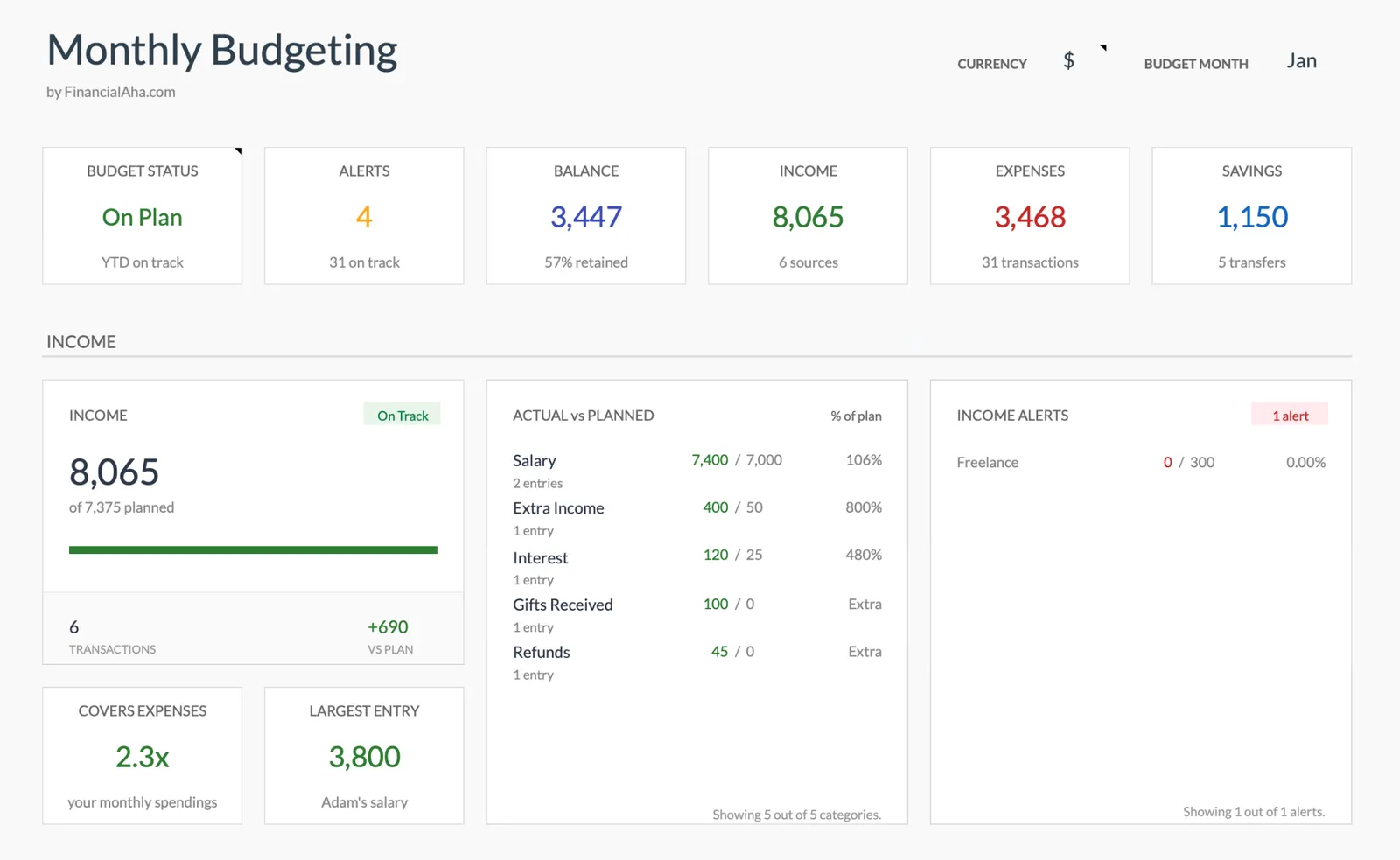
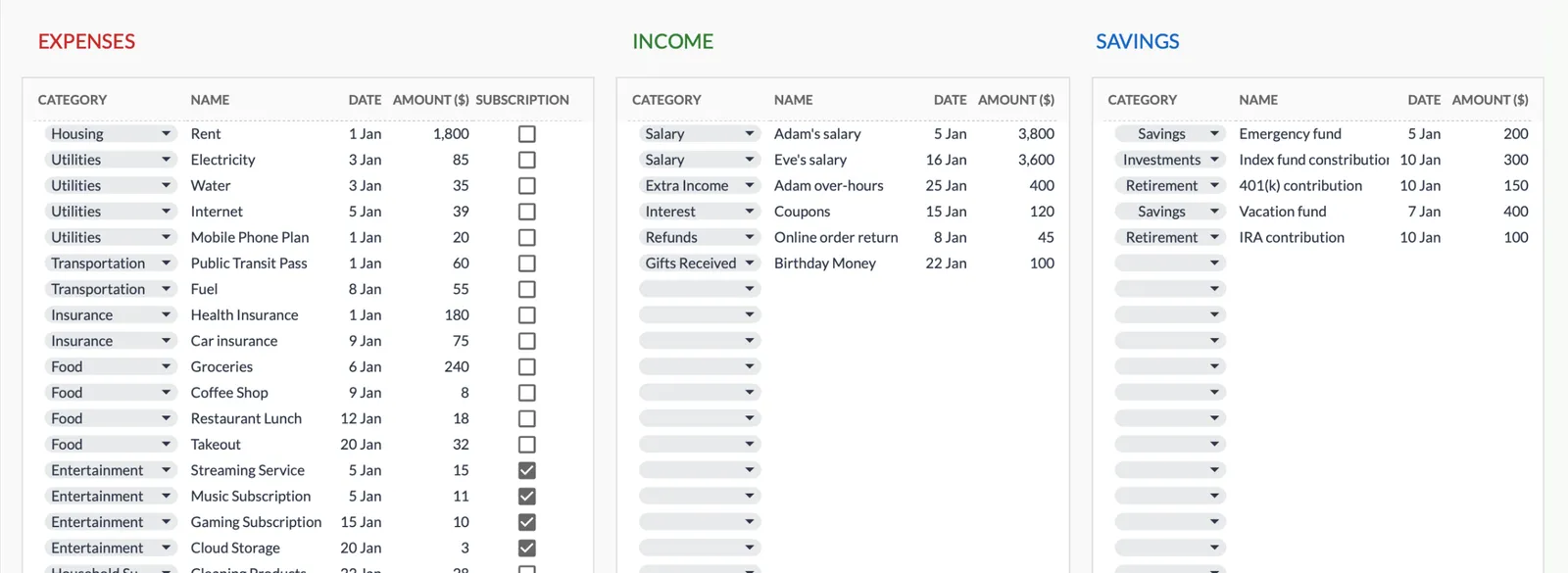
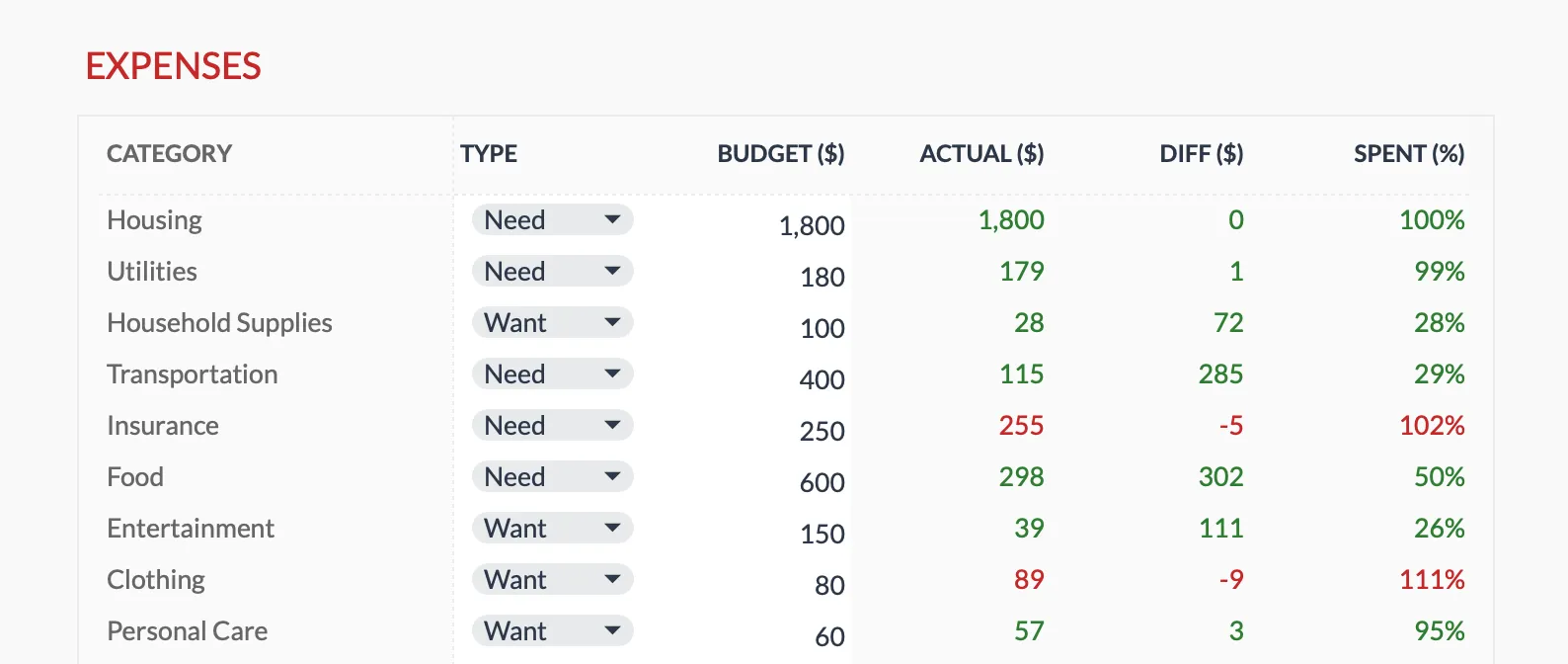
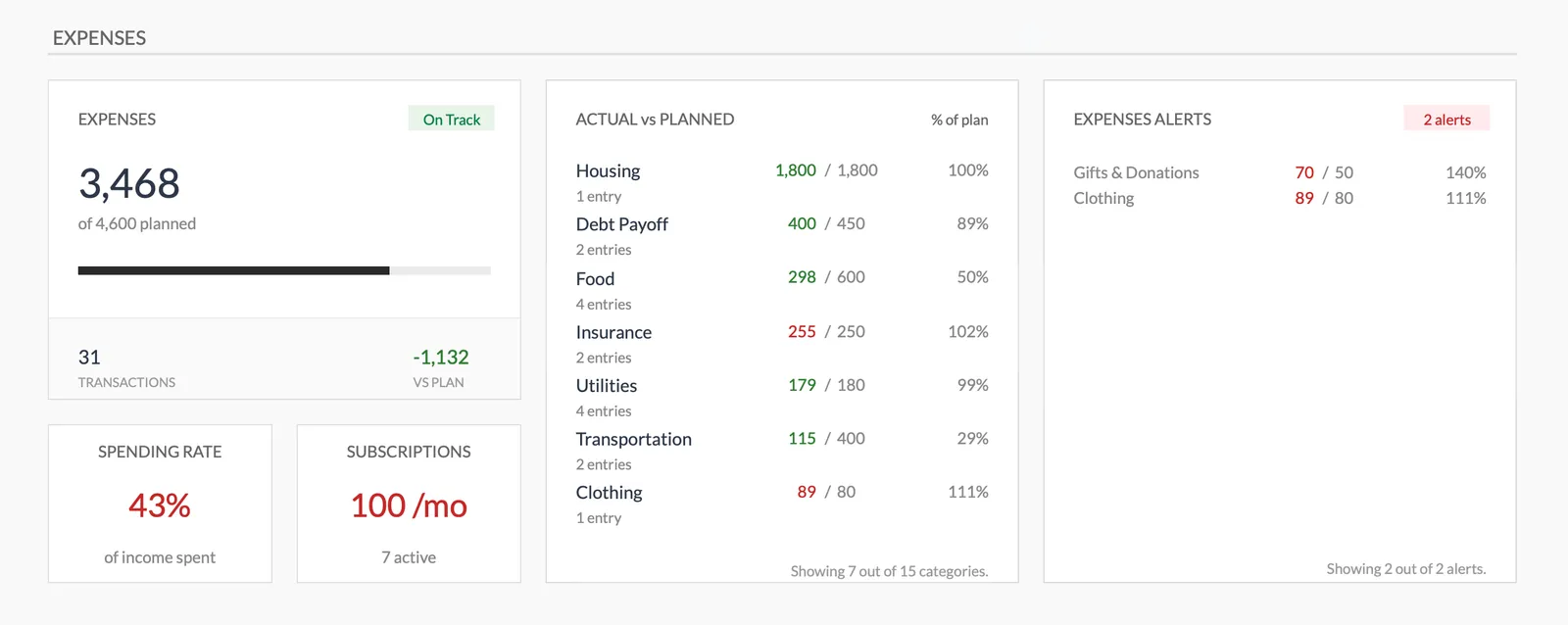
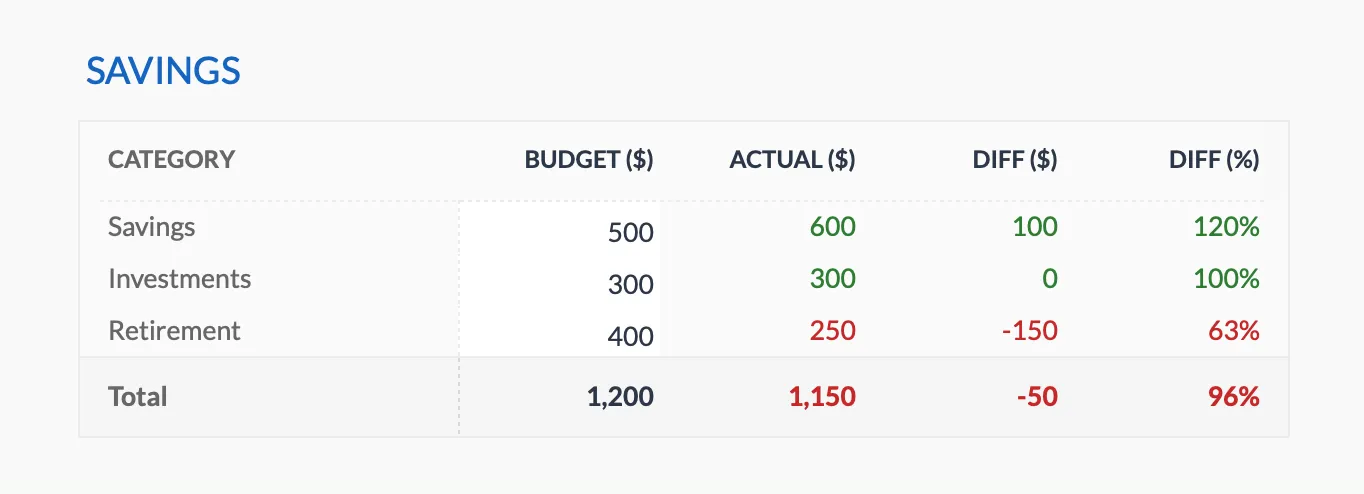
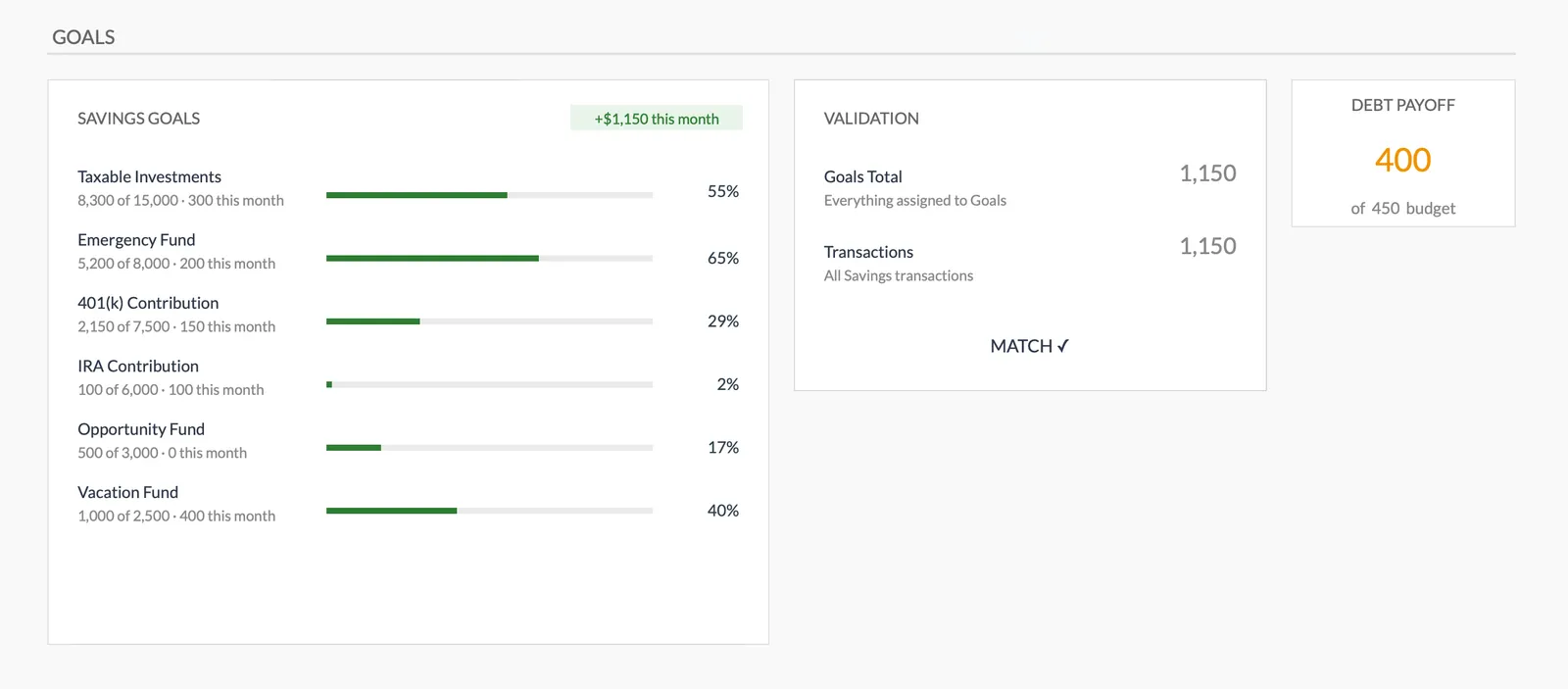
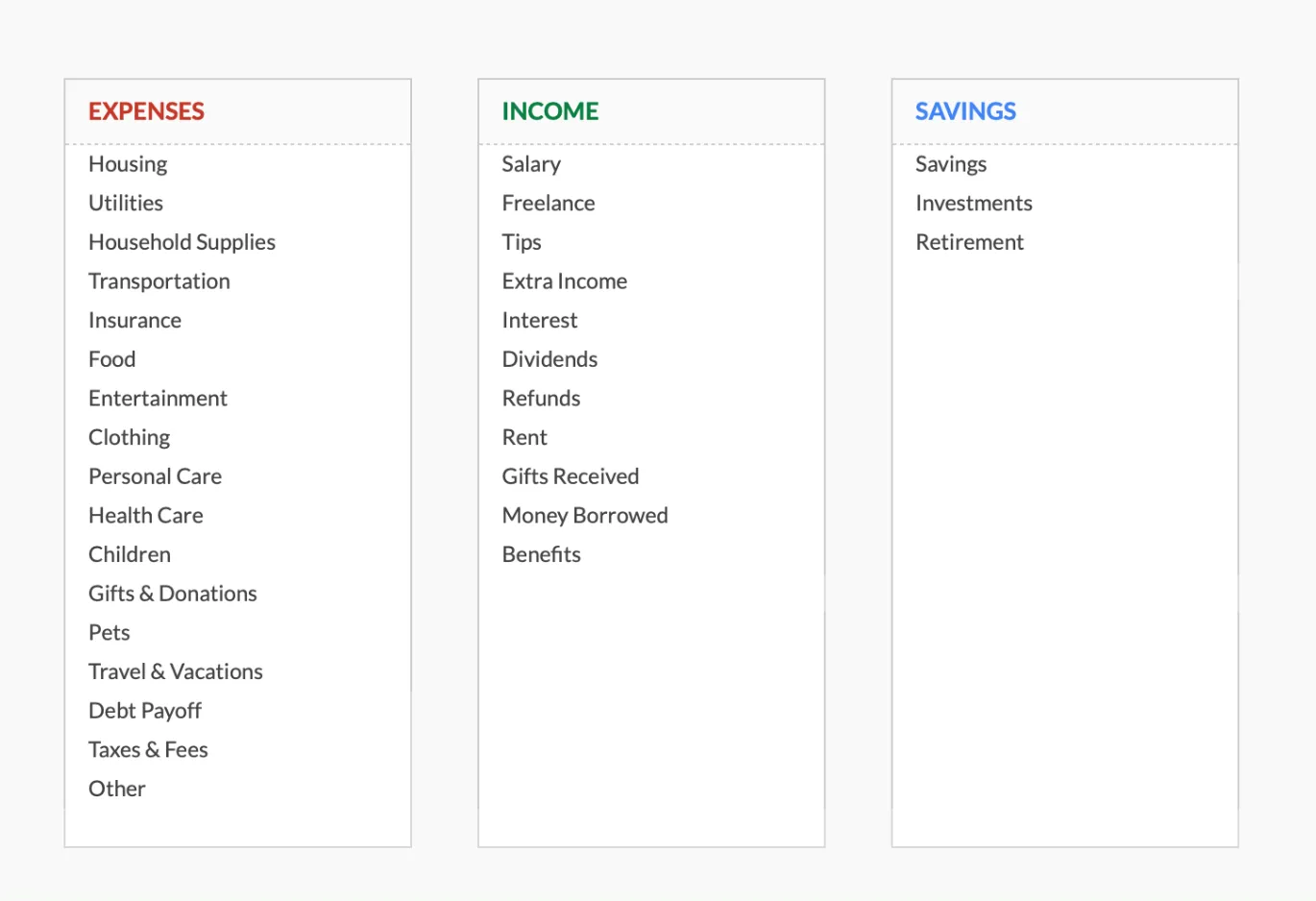
Dashboard with income, expenses, and savings at a glance
Log transactions with automatic categorization
Set targets per category and track actual spending
Visual breakdown of where your money goes
Track savings goals alongside your budget
Monitor progress toward financial goals
Fully customizable expense, income, and savings categories
Common Questions
Monthly Budget Template for South Africa - FAQ
Does this template use South African rand?
Yes, pick ZAR or R from the currency option in the header. The formulas work the same in any denomination, so only the display symbol changes.
Can I track retirement annuity contributions?
Yes. Add a category for RA contributions. If an employer already deducts pension fund contributions from salary, those don't need a line item, since net pay already reflects them. Only voluntary contributions that come out of take-home pay need tracking.
How do I handle medical aid in my budget?
If medical aid premiums are deducted from salary before payment, they're already accounted for in net pay. If they're paid directly, medical aid works as its own expense category. Medical tax credits offset part of the cost at assessment, so the budgeted figure and the eventual net cost differ.
Can I budget in USD and ZAR?
The template works in one currency at a time. Most South African users set ZAR as the primary currency and convert any income or expenses in other currencies when entering them. The currency option changes the display symbol, not the calculation.
Is there a South Africa-specific version?
The template is the same worldwide and is designed to be customizable. This page explains how to adapt it for South African finances. Categories can be renamed, formatting adjusted, and the layout set up to match a specific situation.
How does this compare to South African apps like 22seven or Moneysmart?
Apps like 22seven connect to bank accounts for automated categorization. This template uses manual entry, offers more customization, costs a one-time fee rather than ongoing data sharing, and keeps the numbers in your own Google Drive. The tradeoff is convenience against control and privacy.
Can't find the answer you're looking for? Contact our team
Ready to get started?
Download instantly and start managing your finances, or contact us to design a custom template package for your needs.
Tax rules, rates, and contribution limits change, and official publications can themselves lag behind the law in force. We review these figures on a best-effort basis against sources we consider authoritative, but we cannot guarantee they are current, complete, or that better sources do not exist, and nothing here is tax, legal, or financial advice. For decisions, the relevant government authority is the reference.