Singapore
Monthly Budget Template for Singapore
Track your income in SGD, manage CPF contributions, and everyday expenses - all in a Google Sheets template you own.
In Depth
CPF Rates, GST, and the True Shape of a Singapore Budget
Singapore's CPF system channels a combined 37% of wages into retirement, housing, and healthcare savings for employees aged 55 and below, split as 20% from the employee and 17% from the employer. The employee share means take-home pay is roughly 80% of gross up to the Ordinary Wage ceiling, which reached SGD 8,000 a month in January 2026. Rates step down with age: for 2026 the combined figure is 34% above 55 to 60, 25% above 60 to 65, 16.5% above 65 to 70, and 12.5% above 70. Because the gap between gross and net changes over a career, budgeting from the credited amount rather than the headline salary keeps planned and actual spending capacity aligned.
The absence of capital gains tax is one of Singapore's distinctive financial features, since investment profits from stocks, bonds, and property sales are not taxed for individuals who are not treated as traders. Combined with no estate duty and relatively low income tax rates, more of each dollar earned and invested stays in the household. Income tax itself is assessed annually rather than withheld monthly, so the bill arrives as a single figure after the Notice of Assessment, usually around April or May.
GST at 9% applies to most goods and services, adding a layer to everyday spending that accumulates quietly. For property buyers, stamp duties create substantial upfront costs. Buyer's Stamp Duty alone runs from 1% to 6% of the purchase price, and Additional Buyer's Stamp Duty adds 20% for citizens buying a second residential property. Those one-off expenses are large enough that some people give them their own planning category. A budget built on Singapore's specific tax and levy structure, rather than generic assumptions, produces a picture that matches what actually leaves the account.
Singapore
Budgeting in Singapore: What's Different
Singapore's financial system has distinct features that shape how budgeting works. Knowing what they are makes it easier to set up a template that matches your actual financial life.
CPF contributions significantly reduce take-home pay
For employees aged 55 and below, Central Provident Fund contributions take 20% of wages as the employee share, with the employer adding another 17% on top [1]. Contributions on monthly wages apply only up to the Ordinary Wage ceiling, which reached SGD 8,000 in January 2026 as the last step of a phased increase. Below that ceiling, take-home pay is roughly 80% of gross. Above it, the deduction stops growing, so the effective percentage falls. The amount actually credited to a bank account is what a budget tends to work from.
Income tax rates are low but still worth understanding
Singapore's resident income tax rates range from 0% to 24%, with the top marginal rate applying to chargeable income above SGD 1 million since the 2024 year of assessment. The first SGD 20,000 of chargeable income is untaxed. For most residents the effective rate is low compared with other developed countries. Tax is assessed annually rather than withheld monthly, so the annual bill lands as a single amount.
No capital gains tax simplifies investment tracking
Singapore does not impose capital gains tax on individuals [2]. Gains from stocks, property, and other assets are not taxed, though gains from activity that IRAS treats as trading can be assessed as income. For budgeting purposes, investment returns generally do not create a separate tax liability, which is a simpler picture than in many other countries.
GST at 9% applies to most goods and services
Singapore's Goods and Services Tax rose to 9% in January 2024, up from 7% previously [2]. It applies to most purchases and is typically included in displayed prices, so the GST-inclusive amount is what you pay at the register. The GST Voucher scheme provides offsets for lower-income and middle-income households, which reduces the effective impact for those who qualify.
Property stamp duties add significant upfront costs
Buyer's Stamp Duty on residential property runs from 1% to 6% depending on the purchase price, and Additional Buyer's Stamp Duty adds 20% for Singapore citizens buying a second residential property, with higher rates for permanent residents and foreigners. These one-off costs are substantial and sit outside the ongoing mortgage. Seller's Stamp Duty also applies to sales within the holding period set by the current rules.
Singapore's cost of living requires careful tracking
Housing (HDB or private), food (hawker centres to restaurants), transport (COE and car costs, or public transit), and education can vary dramatically based on lifestyle choices. Singapore ranks among the world's most expensive cities, though costs depend heavily on personal choices around housing type and lifestyle.
Get the Template
Getting Started
Your First Steps With a Singapore Budget
Switch the currency to SGD
The display currency can be changed to SGD using the dropdown on the dashboard. It relabels the money fields only, so the calculations and the numbers themselves stay exactly as they are.
Enter your after-CPF take-home pay
The credited salary is the amount that reaches your bank account after CPF deductions. On SGD 6,000 gross, which sits under the SGD 8,000 Ordinary Wage ceiling that applies from 2026, the 20% employee contribution leaves roughly SGD 4,800.
Customize expense categories for Singapore
Categories relevant to Singapore life include HDB mortgage or rental, utilities (SP Group), mobile and broadband, hawker and food court meals against restaurant dining, public transport (SimplyGo), insurance premiums, and car-related expenses such as loan, insurance, road tax, petrol, and parking.
Plan for the annual income tax bill
Unlike countries that withhold tax monthly, Singapore assesses income tax annually, with payment typically falling due after the Notice of Assessment arrives around April or May. Some people set aside a monthly amount against the expected bill so it does not arrive as a lump sum. IRAS publishes an estimated tax calculator for reference.
Track voluntary CPF top-ups if applicable
Cash top-ups to your own Retirement Account or MediSave attract tax relief of up to SGD 8,000 a calendar year, with a further SGD 8,000 available for top-ups to family members, so SGD 16,000 in total. Anyone making these contributions can track them as a budget category to watch the running total against the cap.
See It In Action
What the template looks like
Browse through the template to see the dashboard, the entry sheets, and the summaries it produces, all adaptable to your local financial setup.
- Built-in currency selector
- Calculations update automatically
- Visual summaries of your numbers
- No setup required
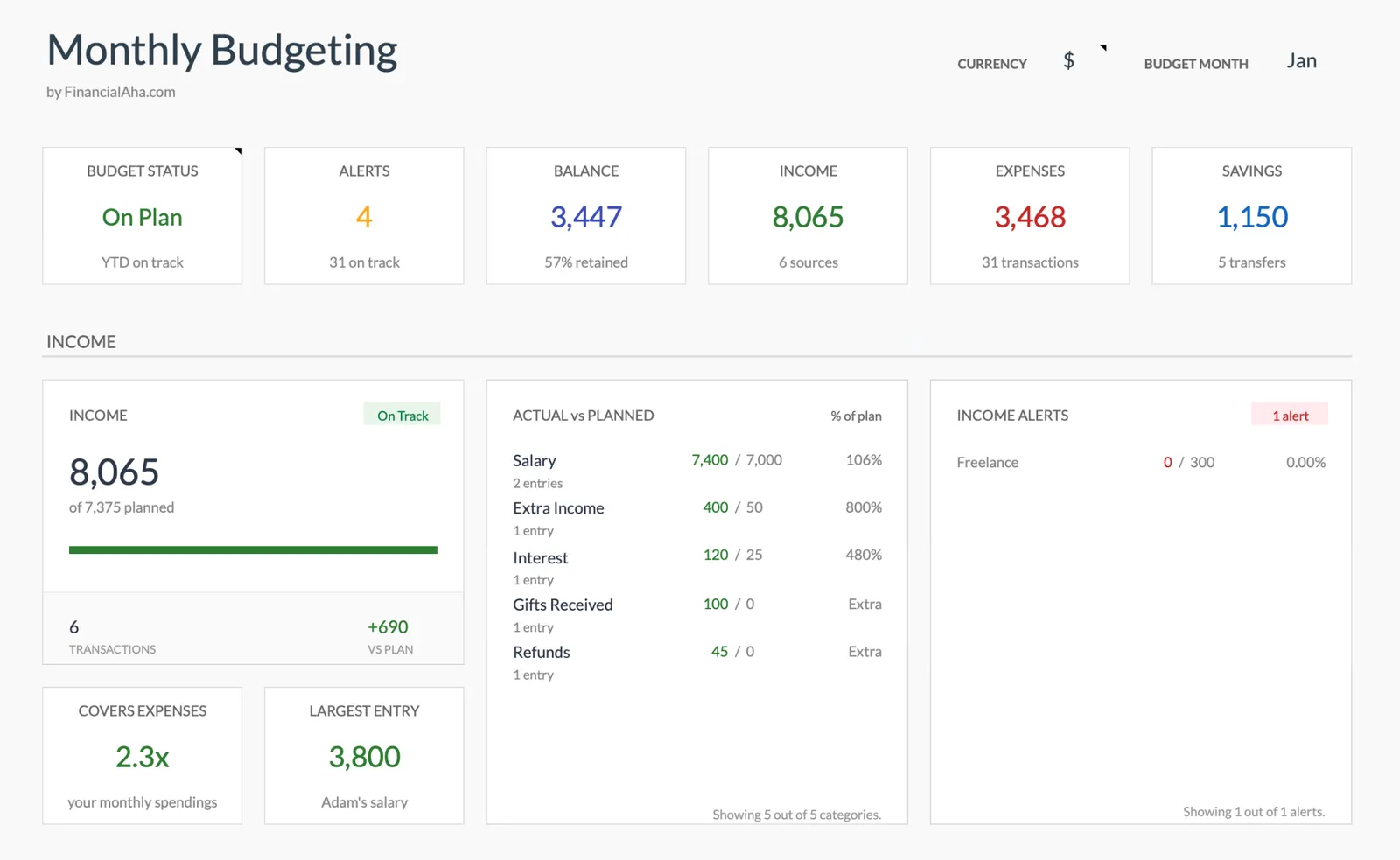
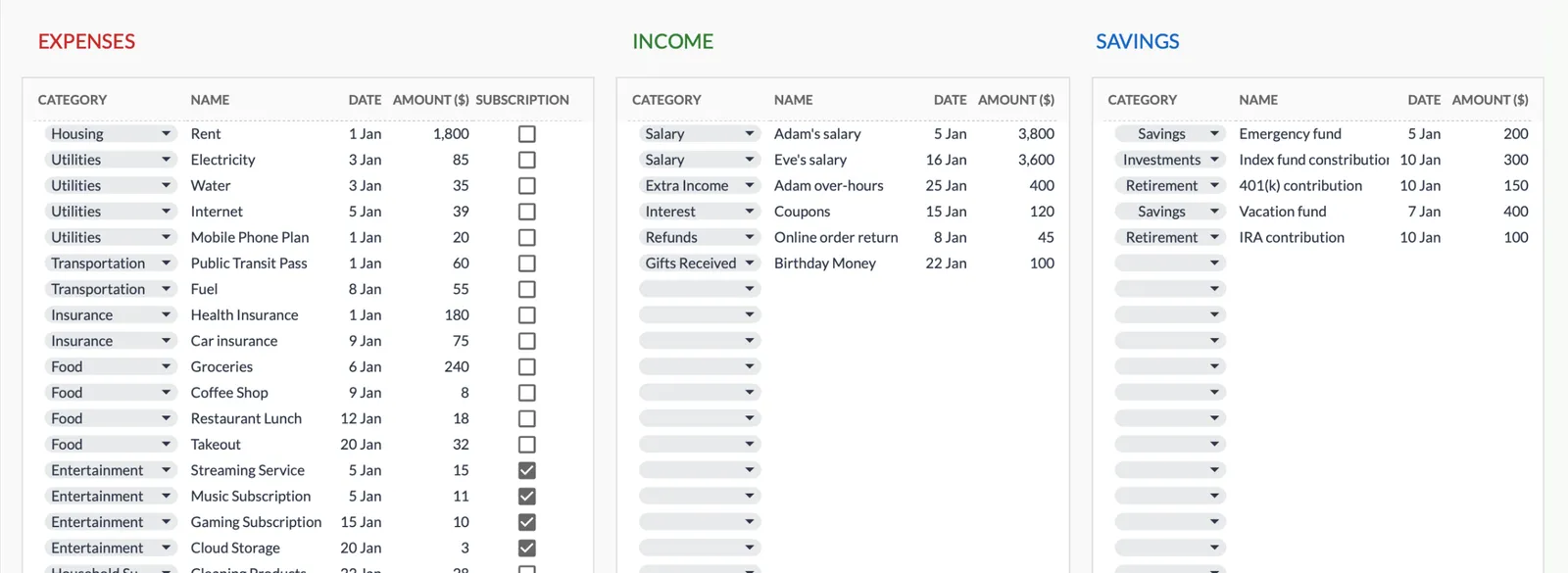
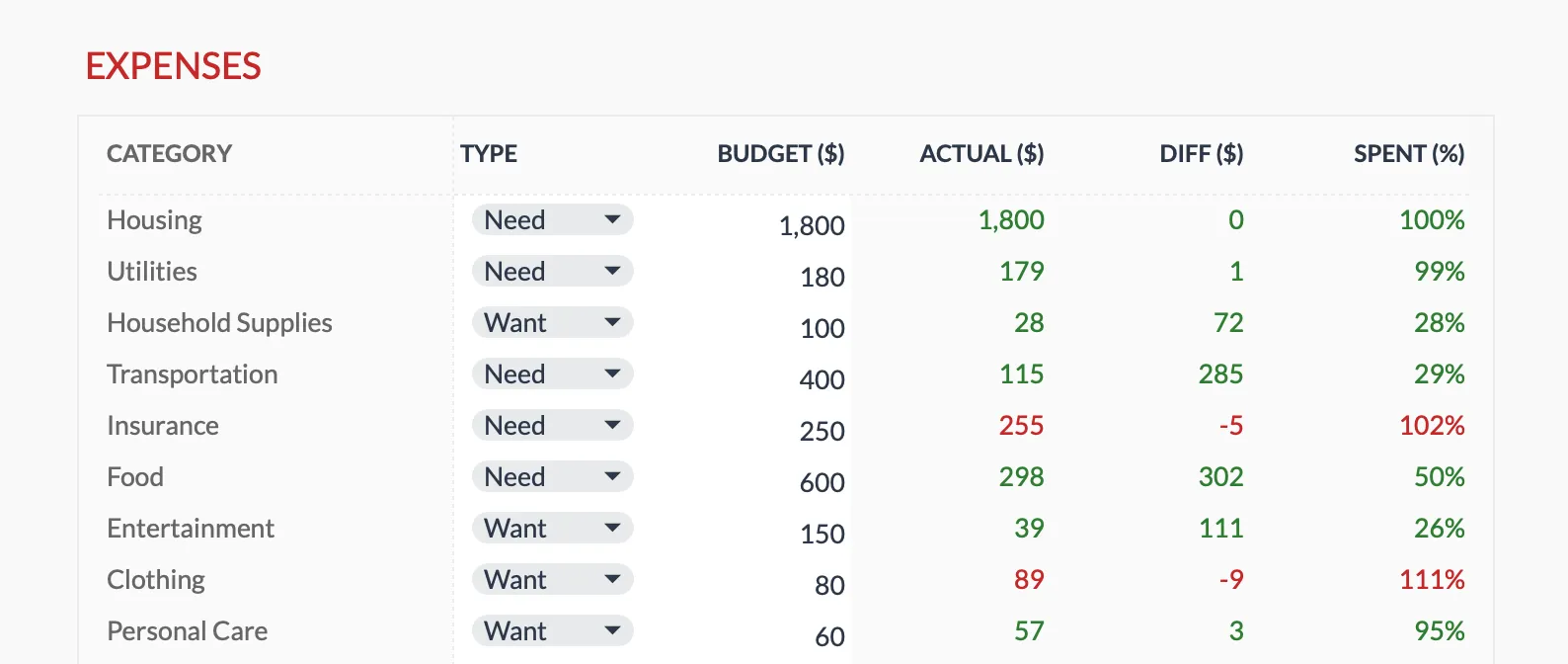
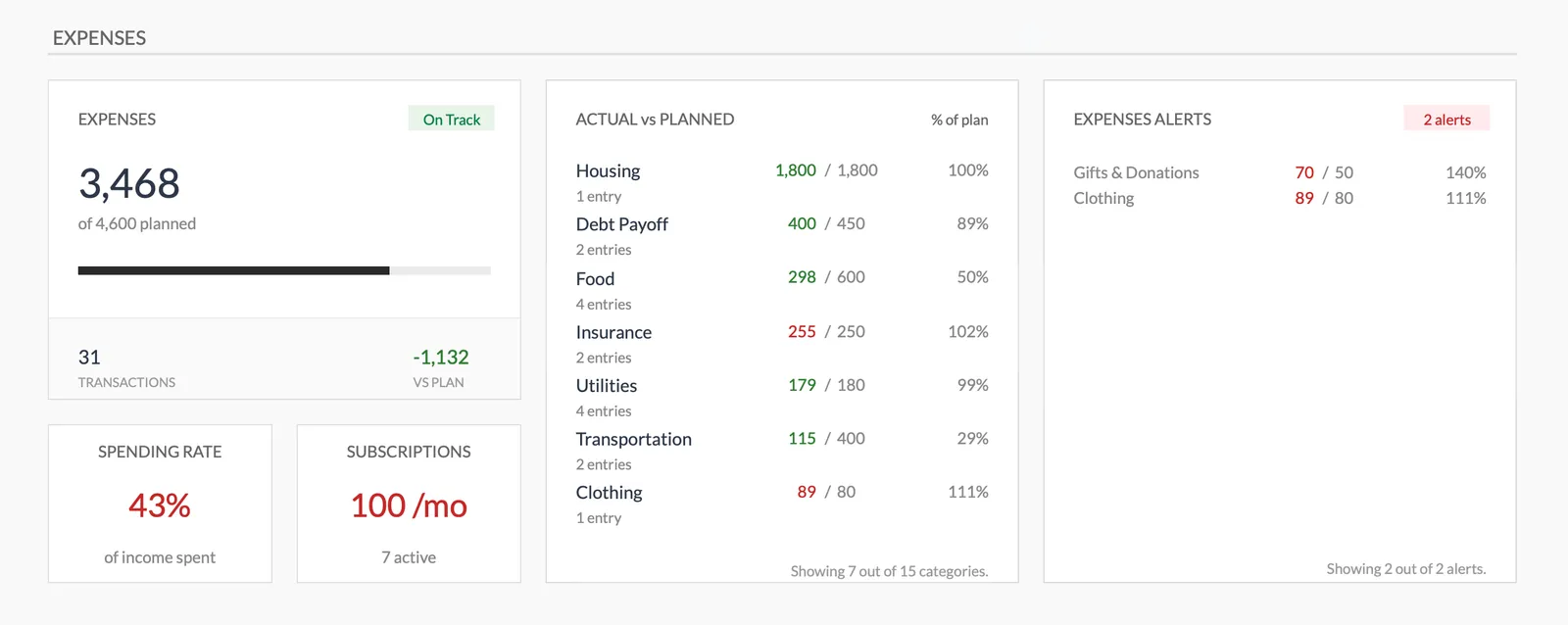
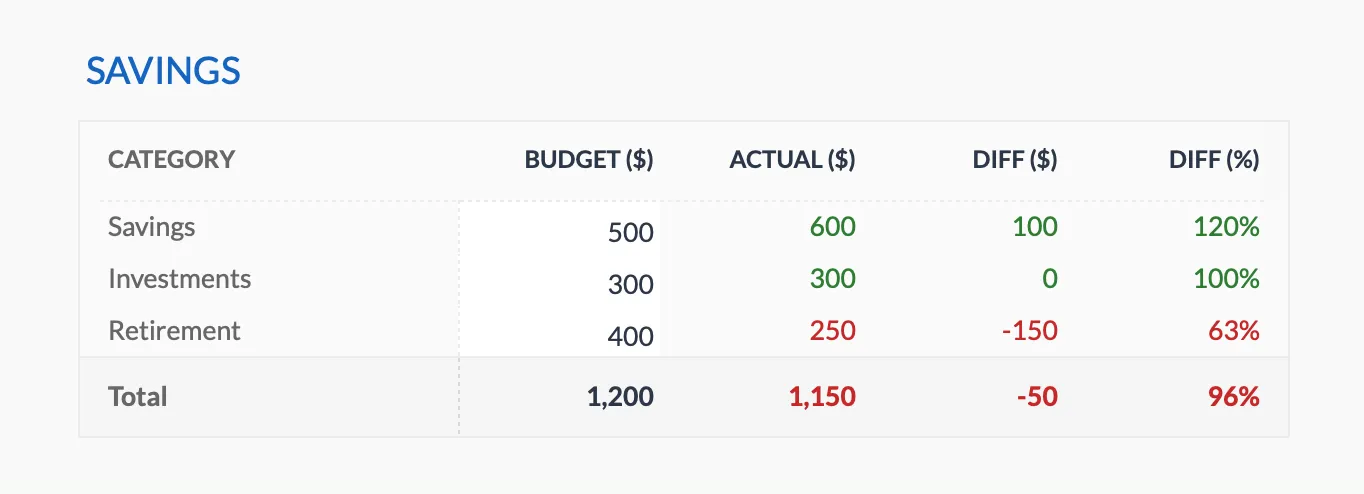
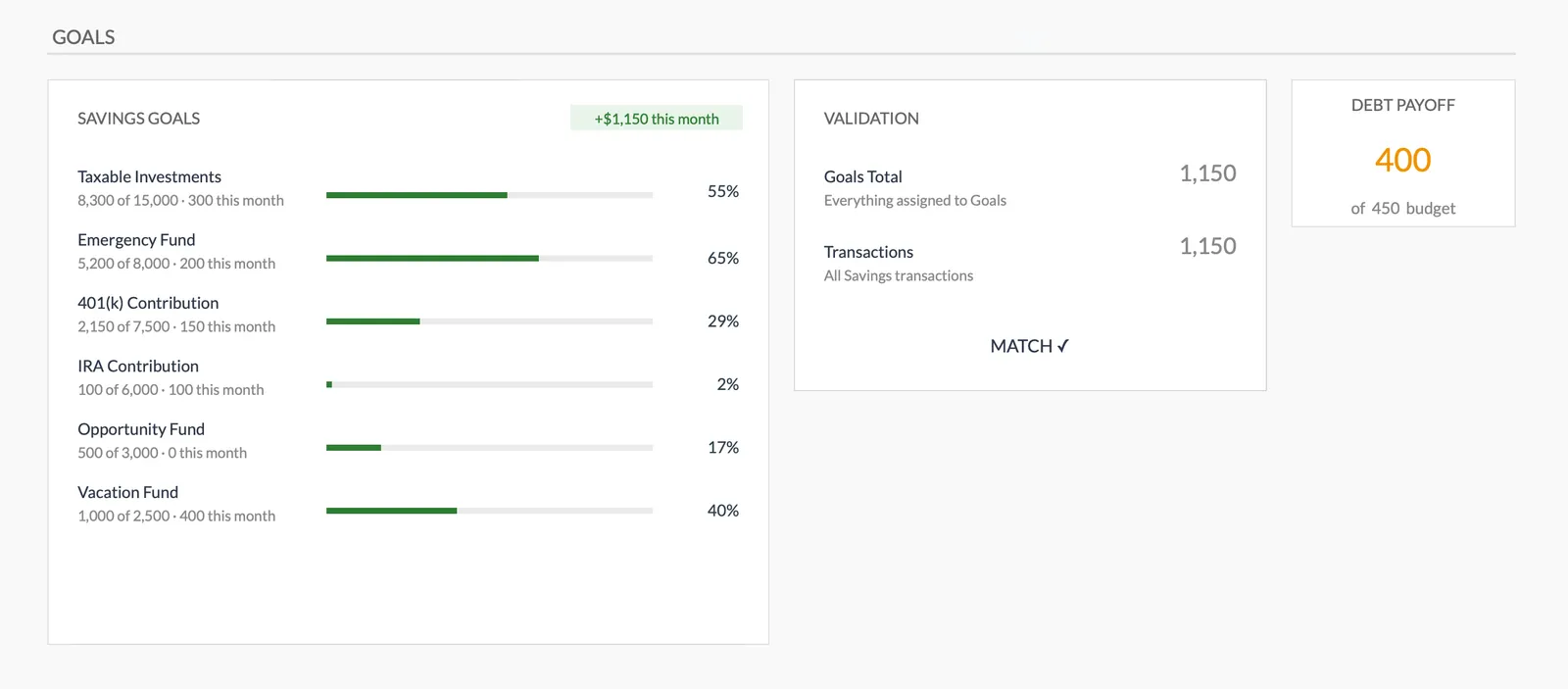
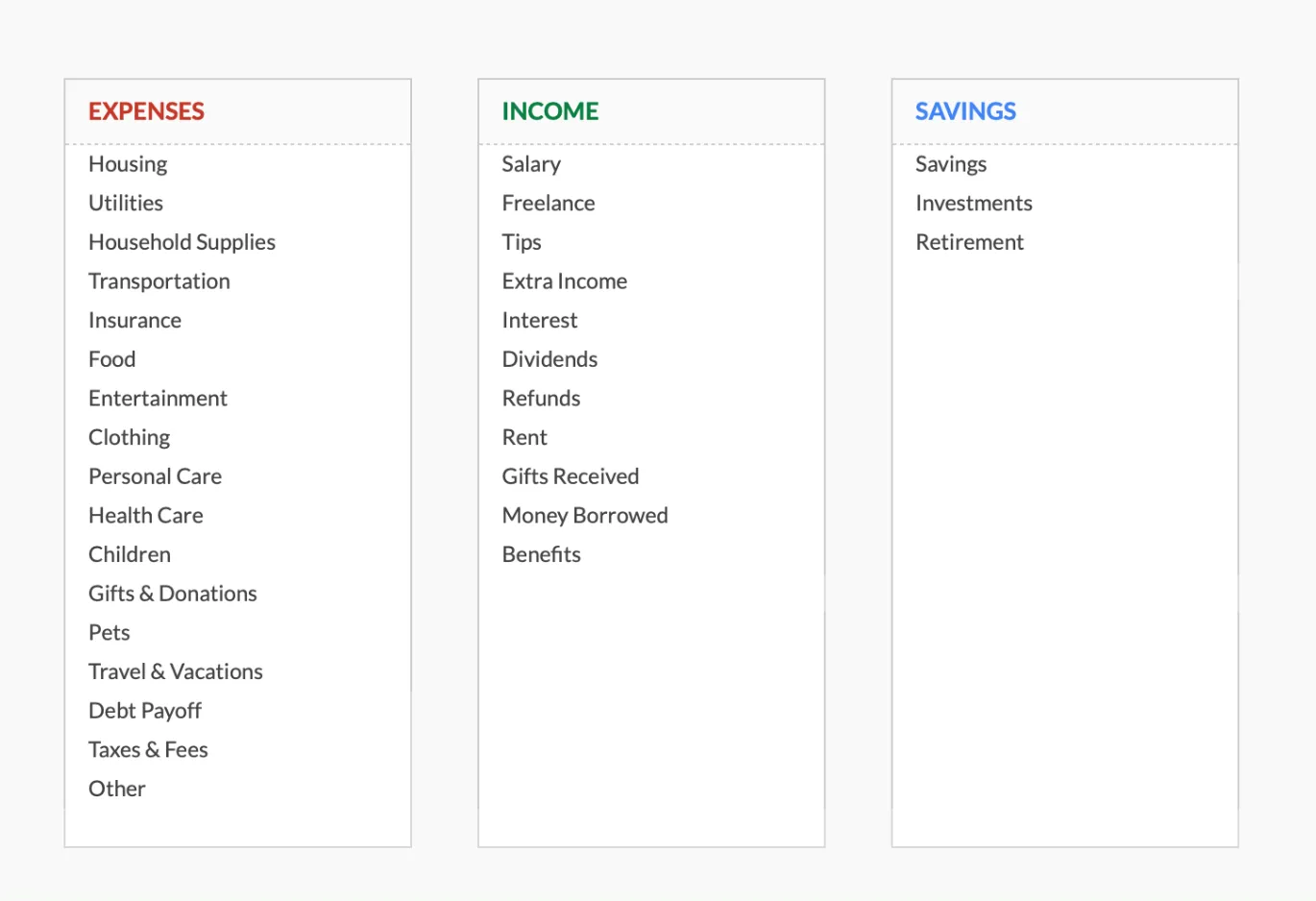
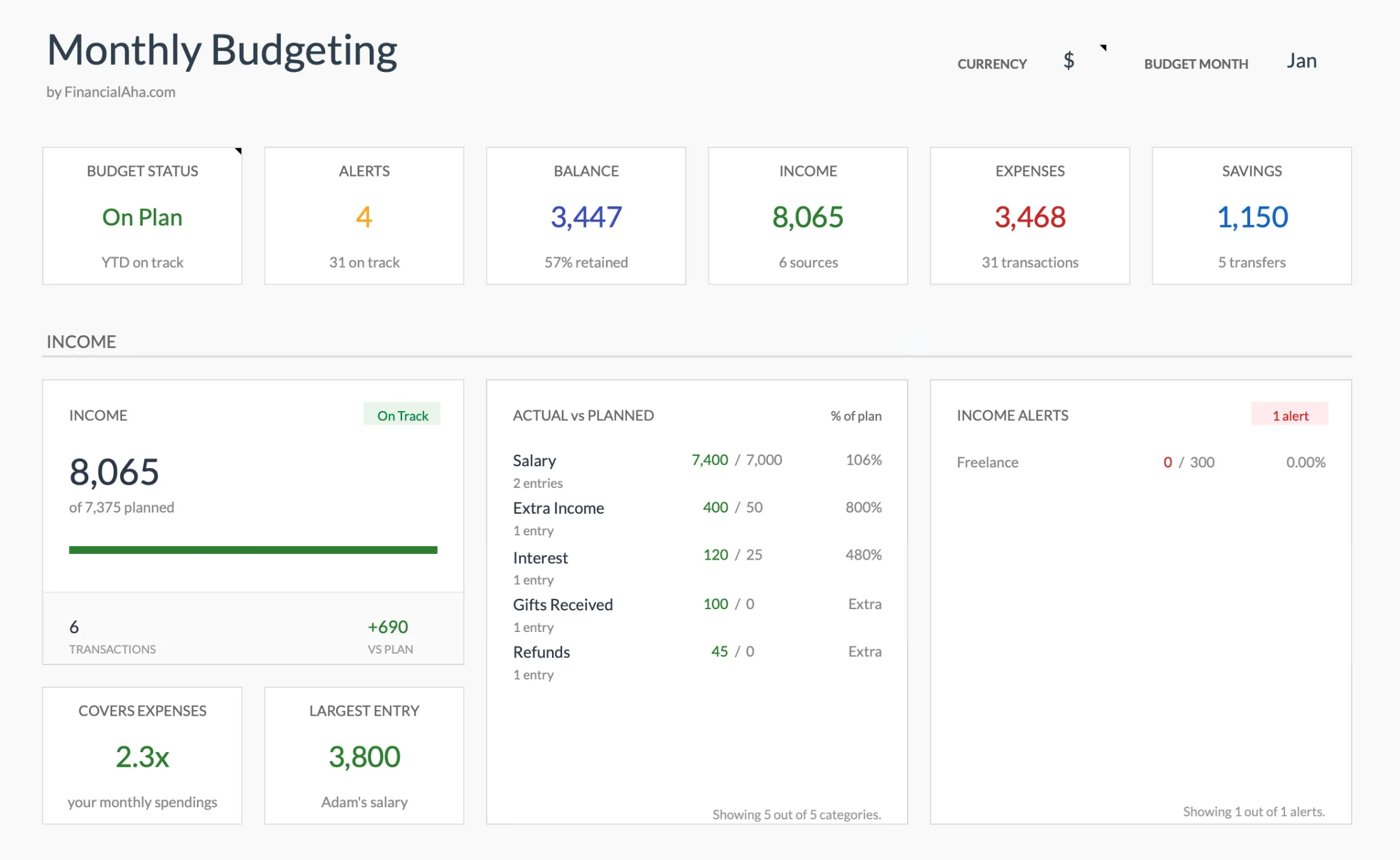
Dashboard with income, expenses, and savings at a glance
Log transactions with automatic categorization
Set targets per category and track actual spending
Visual breakdown of where your money goes
Track savings goals alongside your budget
Monitor progress toward financial goals
Fully customizable expense, income, and savings categories
Sources
Common Questions
Monthly Budget Template for Singapore - FAQ
Does this template use Singapore dollars?
Yes. The currency dropdown in the header switches the labels to SGD. It relabels rather than converts, and the formulas work the same in any denomination, so the math does not change.
Should I track CPF contributions in my budget?
CPF comes out before take-home pay, so it does not need a budget line of its own when the income figure is the credited salary. Voluntary CPF top-ups are different, since they come out of disposable income, and some people give those a separate category.
How do I budget for annual income tax?
One approach is to divide the expected annual tax bill by 12 and hold that amount aside each month. Singapore also allows GIRO instalments for tax payment, which spreads the bill across the year. IRAS publishes an estimated tax figure based on income level.
Can I track SRS contributions?
Yes. Supplementary Retirement Scheme contributions, capped at SGD 15,300 a year for citizens and permanent residents and SGD 35,700 for foreigners, qualify for tax relief. SRS works as a budget category for anyone contributing regularly.
Is there a Singapore-specific version?
The template is the same worldwide and is designed to be customizable. This page explains how to adapt it for Singapore. Google Sheets lets you rename categories and set up the budget to match your own situation.
How does this compare to Singapore budgeting apps like Seedly or DBS NAV Planner?
Apps like Seedly and DBS NAV Planner connect to your bank accounts for automated tracking. This template requires manual entry but offers more customization, costs a one-time fee, and keeps your data in your own Google Drive rather than shared with a financial institution.
Can't find the answer you're looking for? Contact our team
Ready to get started?
Download instantly and start managing your finances, or contact us to design a custom template package for your needs.
Tax rules, rates, and contribution limits change, and official publications can themselves lag behind the law in force. We review these figures on a best-effort basis against sources we consider authoritative, but we cannot guarantee they are current, complete, or that better sources do not exist, and nothing here is tax, legal, or financial advice. For decisions, the relevant government authority is the reference.