Netherlands
Retirement Planning Template for the Netherlands
Combine your AOW entitlement, occupational pension projections, personal savings, and estimated retirement spending in one Google Sheet.
In Depth
AOW, the Three-Pillar System, and Dutch Pension Funds
The Dutch retirement system is built on three pillars, and how they interact is central to planning. The first pillar is the AOW (Algemene Ouderdomswet), a flat-rate state pension paid to all residents who have lived or worked in the Netherlands, with a higher rate for people living alone than for each partner in a couple. The amount is indexed twice a year alongside the minimum wage and is published by the SVB. The benefit is reduced by 2% for each year of residency missed between age 15 and the AOW age, so for people who arrive in the Netherlands later in life the reduction can be significant.
The second pillar consists of occupational pensions managed by large pension funds like ABP (government employees), PFZW (healthcare), and PMT (metal and engineering). These funds collectively manage hundreds of billions of euros and determine retirement benefits based on career-average earnings in most modern schemes. The transition from defined benefit to defined contribution arrangements has been a major theme in Dutch pension reform, and the Wet toekomst pensioenen (Future of Pensions Act) is reshaping how benefits are calculated and communicated to participants.
The third pillar covers individual retirement savings, including lijfrente annuity products and blocked bank savings that carry tax-deductible contributions within an annual allowance known as the jaarruimte. This pillar matters most for self-employed workers (zzp'ers), who do not participate in second-pillar pension funds. The AOW age has been rising in step with life expectancy and stands at 67 for 2026, with further increases possible for later cohorts. Mapping all three pillars together, state pension plus employer pension plus personal savings, shows whether the combined income meets expected retirement spending.
Healthcare costs in Dutch retirement deserve specific attention. The basic health insurance system (basisverzekering) continues into retirement, and the eigen risico, EUR 385 for 2026 with a proposed rise to EUR 455 in 2027, along with supplementary insurance premiums, becomes more relevant as healthcare usage typically increases with age. The zorgtoeslag may partially offset premiums for lower-income retirees, but out-of-pocket costs for dental care, physiotherapy and long-term care can add up in ways that are easy to underestimate during working years.
Netherlands
Retirement Planning in the Netherlands: Key Factors
The Dutch pension system is built on three pillars: AOW (state pension), occupational pensions, and personal savings. Together, they aim to replace a significant portion of pre-retirement income.
AOW provides a universal baseline
The AOW (Algemene Ouderdomswet) state pension goes to everyone who has lived or worked in the Netherlands. It is a flat-rate benefit set at a higher level for people living alone than for each partner in a couple, indexed twice a year in line with the minimum wage; the SVB publishes the amounts currently in payment. Each year of residency between age 15 and AOW age builds 2% of the full entitlement, so gaps in residency reduce the pension proportionally.
Occupational pensions are substantial but complex
Most Dutch employees participate in an occupational pension (second pillar) through their employer's pension fund. The Netherlands is moving to a new pension system under the Wet toekomst pensioenen, which shifts schemes from defined benefit to defined contribution, and funds have until 1 January 2028 to complete the switch. Many of the large funds have already moved. Mijnpensioenoverzicht.nl shows projected pension income across every fund you have contributed to.
The pension gap may need personal savings to fill
The combined AOW and occupational pension may not fully replace pre-retirement income, especially for higher earners or those with career gaps. The "pensioengat" (pension gap) is the difference between desired retirement income and what the first two pillars provide. Personal savings, investments, and annuities can help bridge this gap.
Retirement age is linked to life expectancy
The AOW age is 67 for 2026 and is linked to life expectancy, so it can rise in later years. Occupational pension ages vary but are often aligned with the AOW age. For anyone stopping work earlier, the period before AOW starts has to be covered from other savings or from a bridging pension (overbruggingspensioen).
Get the Template
Getting Started
Making the Retirement Planner Work for Dutch Pensions
Enter current retirement savings
List personal savings earmarked for retirement, investment accounts, any lijfrente (annuity) products, and estimated values of occupational pension accrual. Check mijnpensioenoverzicht.nl for a complete overview of your pension rights.
Note pension top-ups and personal savings
Enter additional pension contributions (if making voluntary top-ups), personal savings rate, and investment contributions. Occupational pension contributions from your salary are automatic - note the amount from your payslip.
Estimate combined retirement income
Add projected AOW pension, occupational pension income (from mijnpensioenoverzicht.nl), and any other expected income. This gives your baseline retirement income before personal savings withdrawals.
Project retirement expenses
Estimate monthly costs - housing (if mortgage is paid off, just gemeentelijke belastingen and maintenance), health insurance (which increases for retirees), food, utilities, transport, and leisure. Consider that some expenses decrease while healthcare costs tend to increase.
Identify and plan for the pension gap
Compare projected retirement income with projected expenses. If there's a shortfall, the template helps you calculate how much additional savings is needed and whether adjustments to your current savings rate could close the gap.
See It In Action
What the template looks like
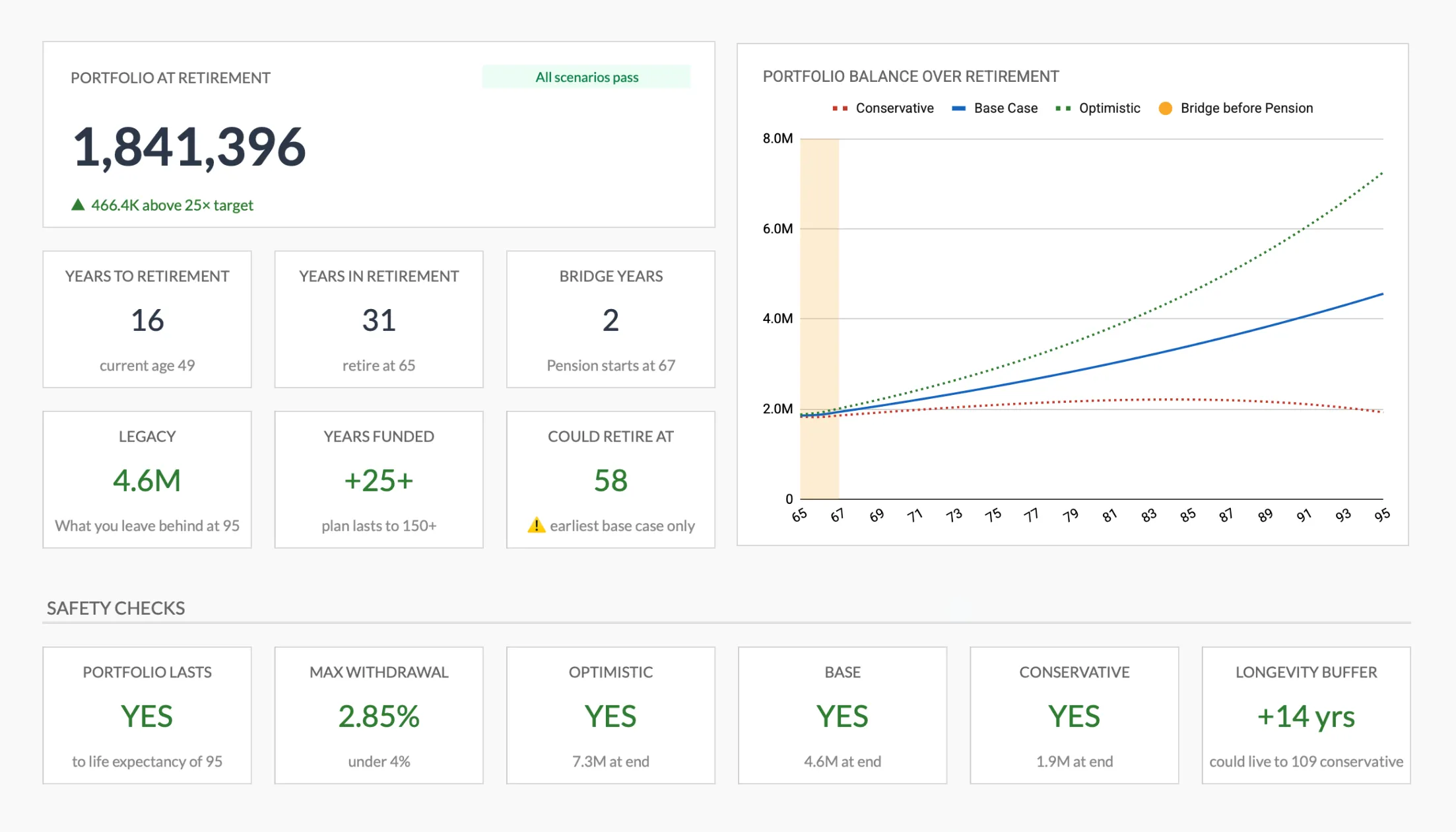
Browse through the template to see the dashboard, the entry sheets, and the summaries it produces, all adaptable to your local financial setup.
- Built-in currency selector
- Calculations update automatically
- Visual summaries of your numbers
- No setup required
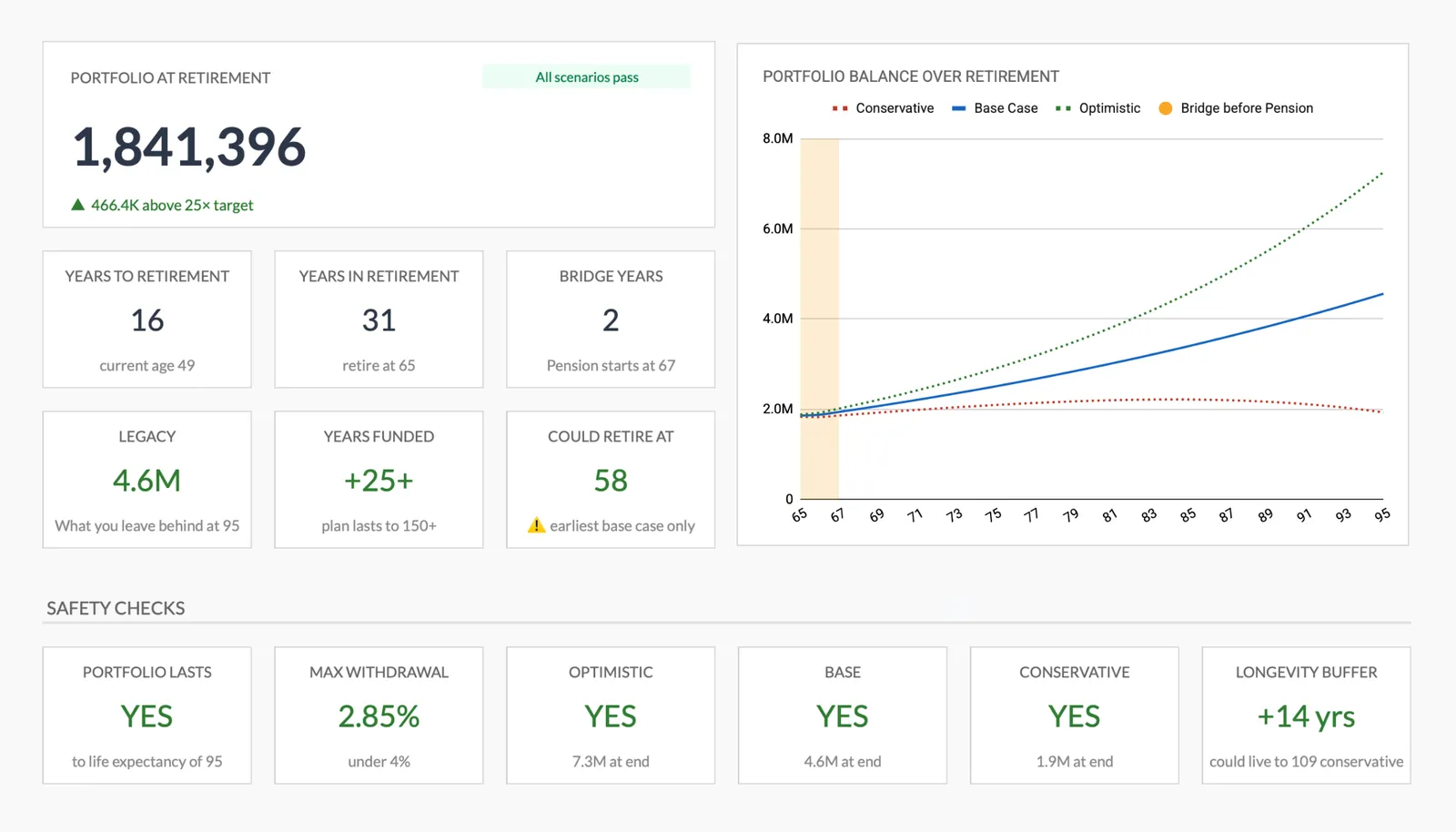
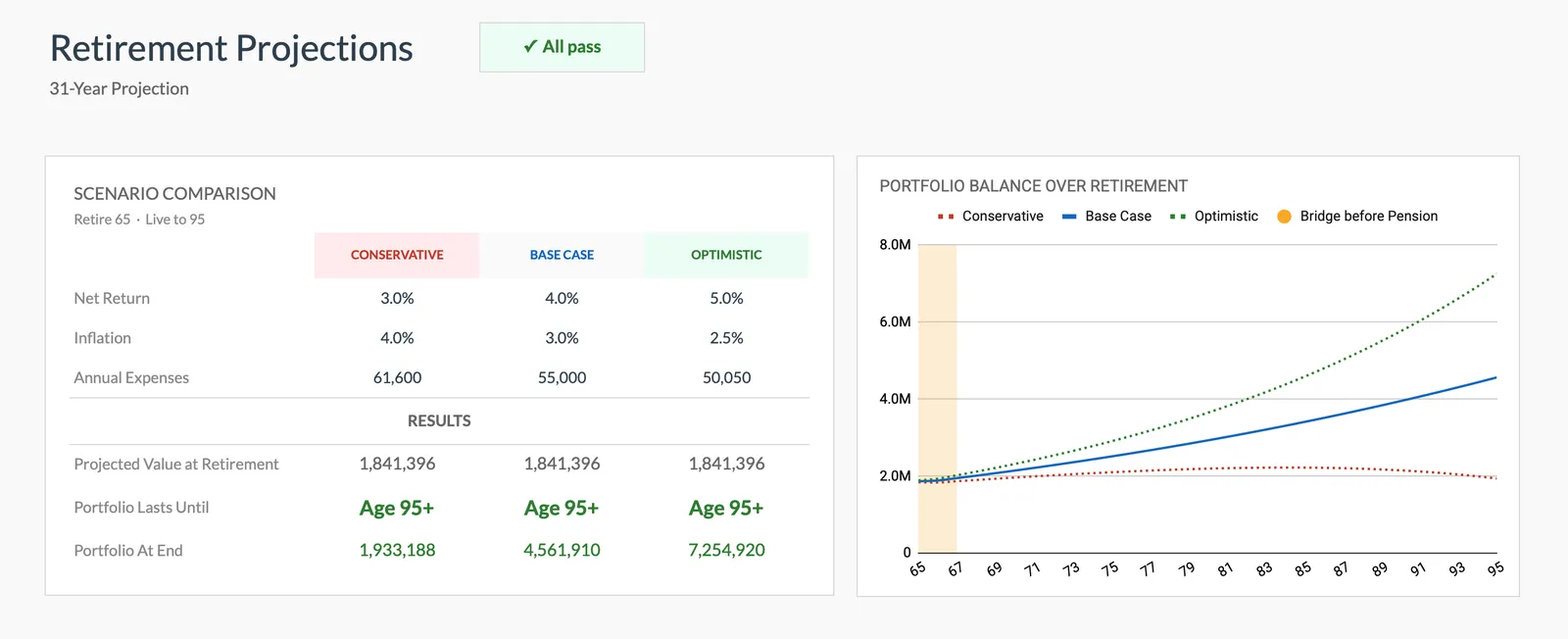
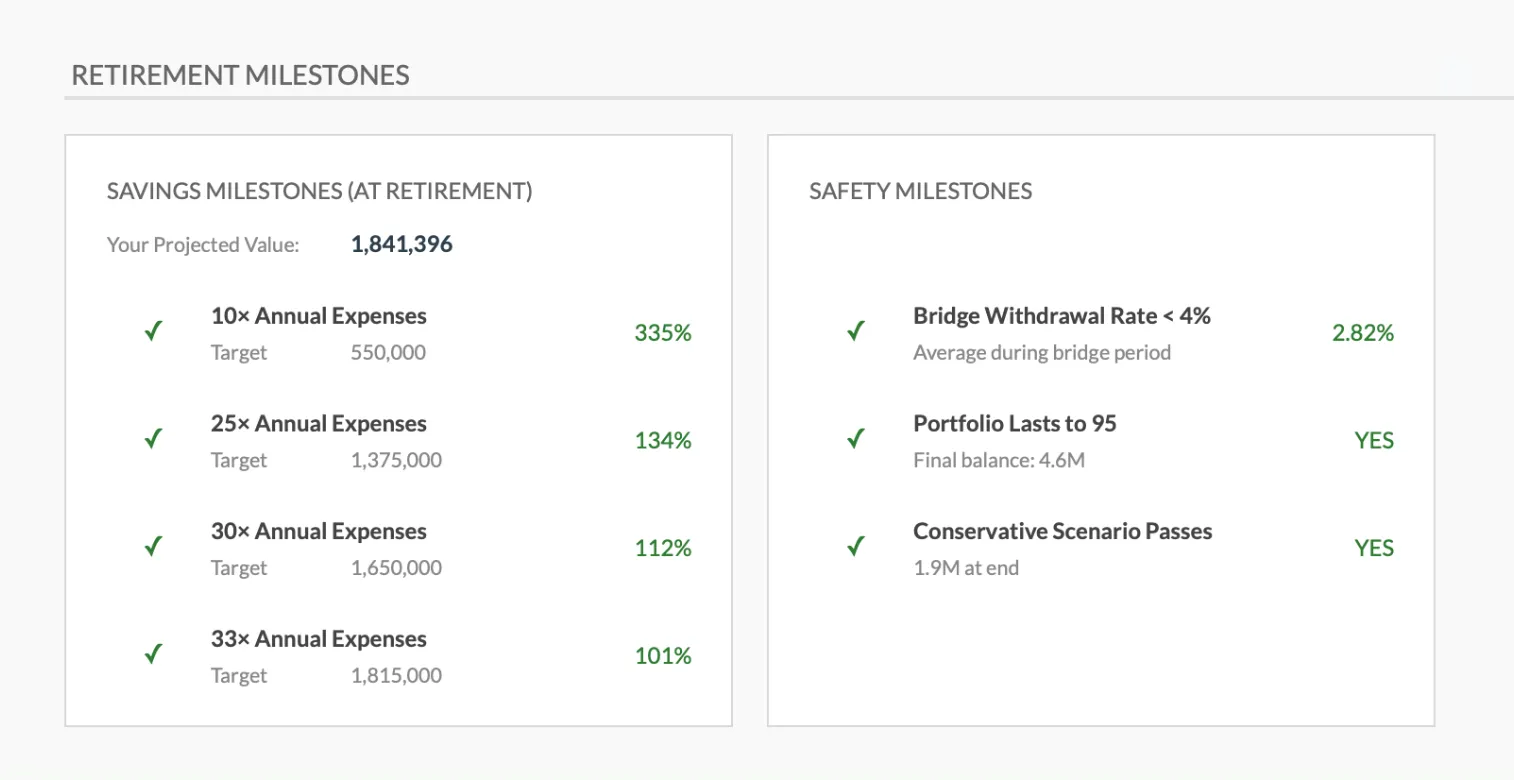
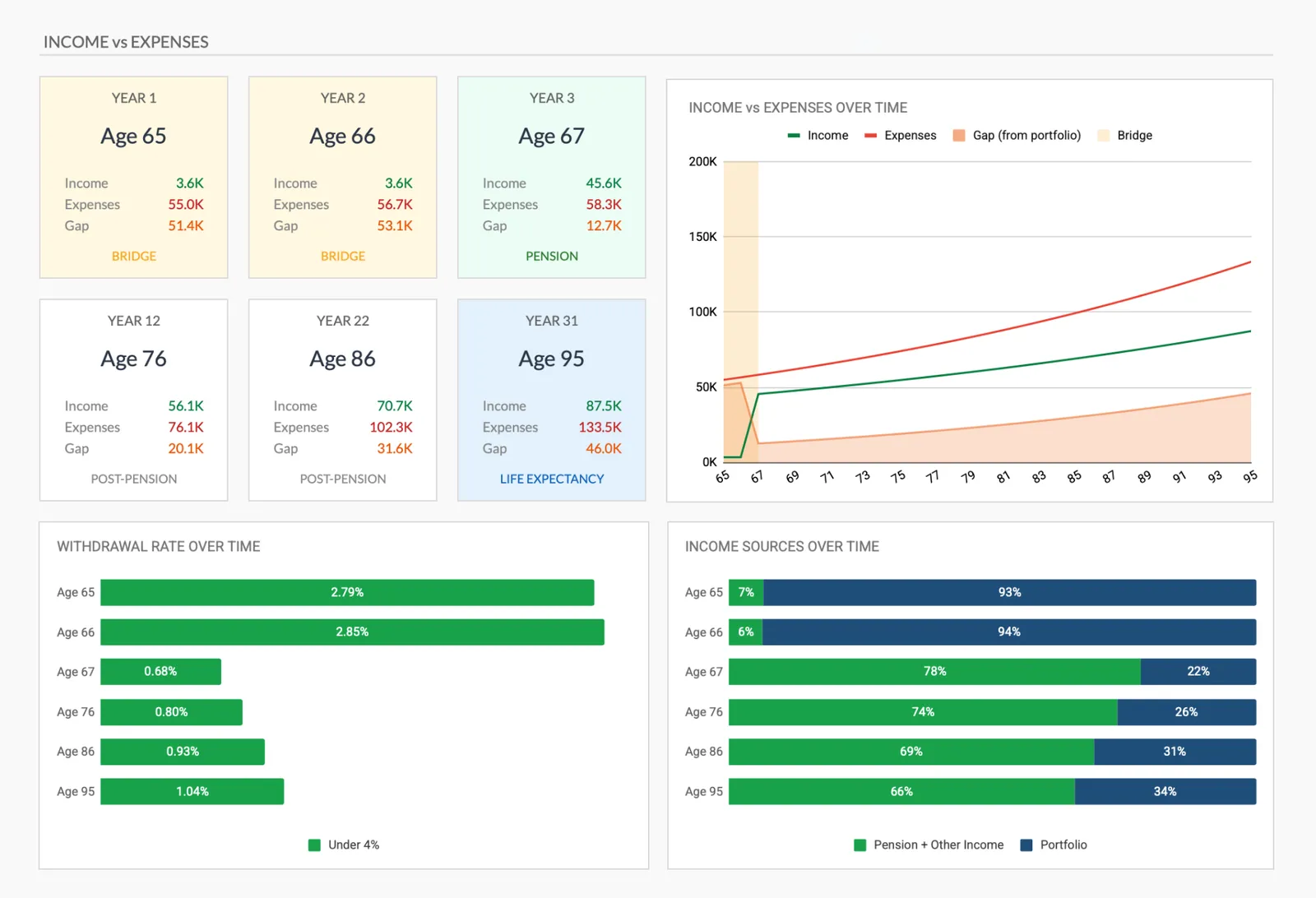
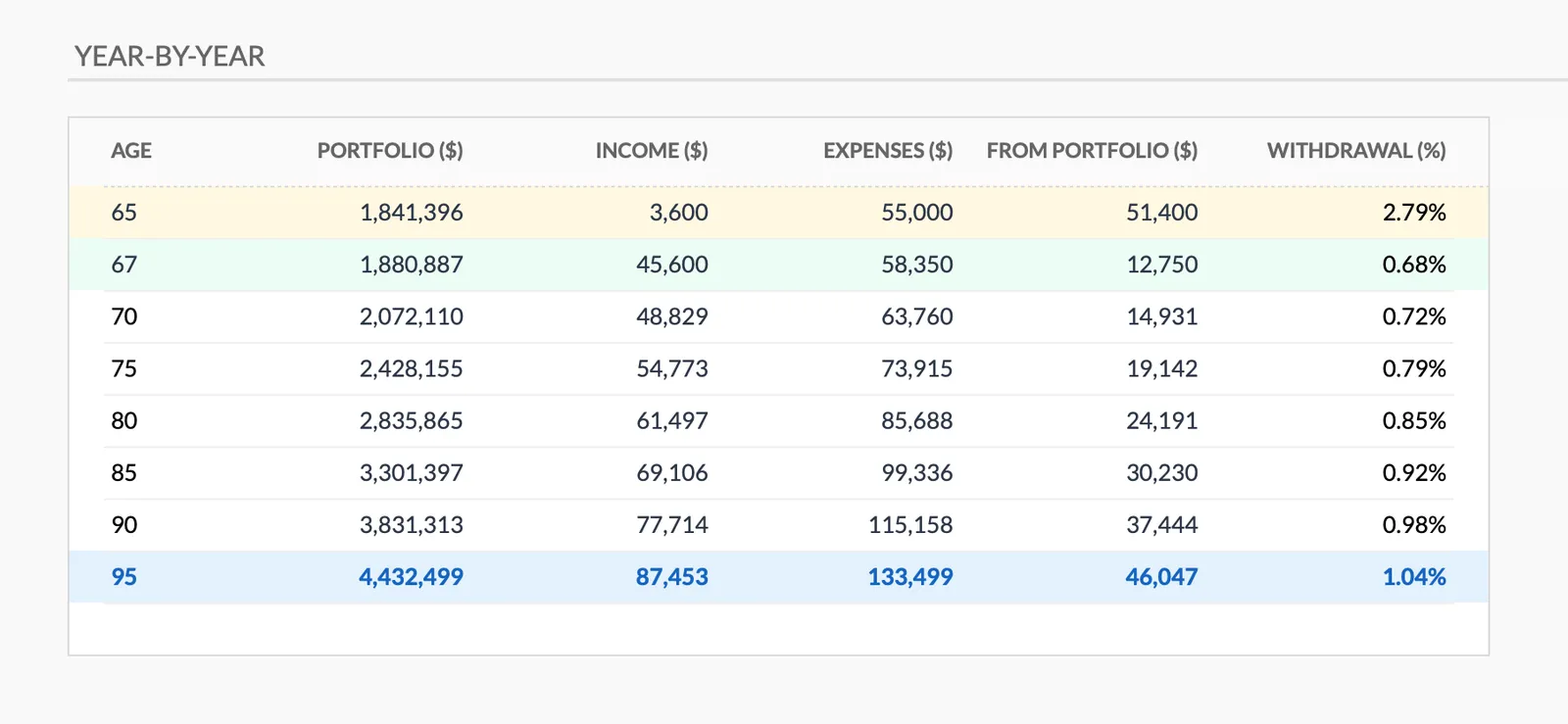
Complete retirement overview with projections
Project your retirement savings growth
Track progress toward retirement goals
Plan your retirement income against expenses
Detailed year-by-year retirement projection
Common Questions
Retirement Planning Template for the Netherlands - FAQ
When can I receive AOW?
The AOW age is 67 for 2026. It is linked to life expectancy and is reviewed each year, so it can rise for later cohorts. You build up 2% of the full AOW pension for each year you live or work in the Netherlands between age 15 and AOW age, which means people who arrived later receive a proportionally reduced AOW.
How much will my occupational pension pay?
Check mijnpensioenoverzicht.nl for projections from all pension funds you've contributed to. The amount depends on years of service, salary, and the specific pension arrangement. With the new pension system taking effect, projections may show ranges rather than fixed amounts.
What if I worked in multiple countries?
Your Dutch AOW and occupational pension cover your working years in the Netherlands. Pensions from other EU/EEA countries are coordinated under EU regulations. Non-EU pensions depend on bilateral agreements. A complete retirement plan accounts for all pension entitlements across countries.
Is the 30% ruling relevant for retirement planning?
The expat ruling is temporary, up to 60 months, and only affects income during employment. It does not directly change pension accrual or AOW entitlement. The tax-free share is 30% for the 2026 tax year and falls to 27% from 2027. Some people use the higher net income during the ruling period to put more aside, and the point where the ruling ends is a natural moment to revisit the plan.
How do I bridge the gap between early retirement and AOW age?
If you retire before AOW age 67, you need income to cover the gap. Options include using personal savings, some pension funds offer a bridging pension (overbruggingspensioen), or drawing on investments. The cost of this bridge period is a key factor in deciding your retirement age.
Can't find the answer you're looking for? Contact our team
Explore More
Free Tools for the Netherlands
Ready to get started?
Download instantly and start managing your finances, or contact us to design a custom template package for your needs.
Tax rules, rates, and contribution limits change, and official publications can themselves lag behind the law in force. We review these figures on a best-effort basis against sources we consider authoritative, but we cannot guarantee they are current, complete, or that better sources do not exist, and nothing here is tax, legal, or financial advice. For decisions, the relevant government authority is the reference.