Netherlands
Net Worth Tracker for the Netherlands
Bring together your Dutch pension accrual, spaarrekening savings, property equity, ETF portfolios, and any debts into one net worth overview.
In Depth
Box 3 Wealth Tax, Pension Reserves, and Dutch Property Values
The Dutch Box 3 system applies a levy on savings and investments based on a deemed return rather than actual gains. Under the transitional rules the tax authority separates savings, other investments and debts, each with its own fictional return: for 2026 those are 1.28%, 6.00% and 2.70%, taxed at a flat 36% above the personal allowance. After a series of Supreme Court rulings a counter-evidence rule lets taxpayers whose real return was lower report that instead, and a system based on actual returns is targeted for 2028. Until then the deemed figures, particularly the 6.00% on non-savings assets, can outrun what a portfolio really earned, which makes Box 3 a meaningful factor when assessing real net worth growth.
Pension reserves in the Netherlands are among the largest in the world relative to GDP, and for most Dutch residents the value accumulated in employer pension funds is a substantial portion of total wealth. These funds are not directly accessible until retirement, and the eventual benefit depends on the fund's performance and on the type of scheme. Under the Wet toekomst pensioenen, schemes are moving to defined contribution arrangements, with funds required to complete the switch by 1 January 2028. Including an estimated pension value in a net worth overview gives a more complete picture, though that wealth is illiquid and subject to fund-specific rules.
Property ownership is common in the Netherlands, and the WOZ-waarde (municipal property valuation) provides an official reference point updated annually. Market values can differ significantly from WOZ assessments, particularly in competitive urban markets, so pairing recent comparable sale prices with the WOZ value gives a more grounded estimate. The hypotheekrenteaftrek still reduces the cost of homeownership, but the deduction is now capped at the basic rate, 37.56% for the 2026 tax year, which trims the benefit for higher earners over the long run.
Netherlands
Net Worth in the Netherlands: What to Track
Dutch residents typically build wealth through the three-pillar pension system, property, and personal savings. A net worth tracker brings all of these into one view.
Pension accrual is often a hidden large asset
The Netherlands has a strong occupational pension system (second pillar). Your pension fund builds up a significant value over your career, though it's not always easy to see. Check mijnpensioenoverzicht.nl for your accumulated pension rights. While you can't access this capital directly, including an estimated present value gives a more complete net worth picture.
Property equity is a major wealth component
Dutch housing prices have risen substantially, especially in the Randstad. Your equity (market value minus remaining mortgage, or restschuld) can be a large portion of net worth. WOZ-waarde (municipal valuation) provides a reference, but market value based on recent comparable sales may be more accurate.
Box 3 affects how savings and investments are taxed
Under Box 3 the Dutch government taxes savings and investments on a deemed return rather than actual returns, calculated on the value held on 1 January. For 2026 the deemed returns are 1.28% on bank deposits, 6.00% on other assets and 2.70% on debts, taxed at a flat 36% above a tax-free allowance of EUR 59,357 per person, or EUR 118,714 for tax partners. Knowing that assets above that allowance are in scope is relevant to how net worth is viewed and managed.
Mortgage debt is the primary liability for most Dutch residents
Dutch mortgages can be up to 100% of the property value. With typical 30-year terms, the outstanding balance decreases slowly in the early years. Tracking the declining mortgage alongside growing assets shows real net worth progress. Mortgage interest is tax-deductible (hypotheekrenteaftrek), which affects the true cost of the debt.
Get the Template
Getting Started
Tailoring the Net Worth Tracker for the Netherlands
List all assets with current balances
Enter bank savings, investment accounts, pension value estimate (from mijnpensioenoverzicht.nl), property market value, and any other assets. For expats, include assets held in your home country.
Enter mortgage, DUO loan, and other debts
Include mortgage outstanding, student loan (DUO), personal loans, credit card balances, and any other debts. Be thorough for an accurate calculation.
Set the display to EUR
Pick EUR from the currency dropdown in the header. Once set, all values display consistently in euros.
Keep numbers current with periodic updates
Monthly updates work well for bank accounts and investments. Property values and pension estimates can be updated annually. The template calculates net worth automatically as you enter new balances.
Track the trend over time
With Dutch mortgages being paid down and pensions building up, net worth typically grows over a career. Seeing this trajectory provides perspective, especially in the early years when the mortgage dominates the picture.
See It In Action
What the template looks like
Browse through the template to see the dashboard, the entry sheets, and the summaries it produces, all adaptable to your local financial setup.
- Built-in currency selector
- Calculations update automatically
- Visual summaries of your numbers
- No setup required
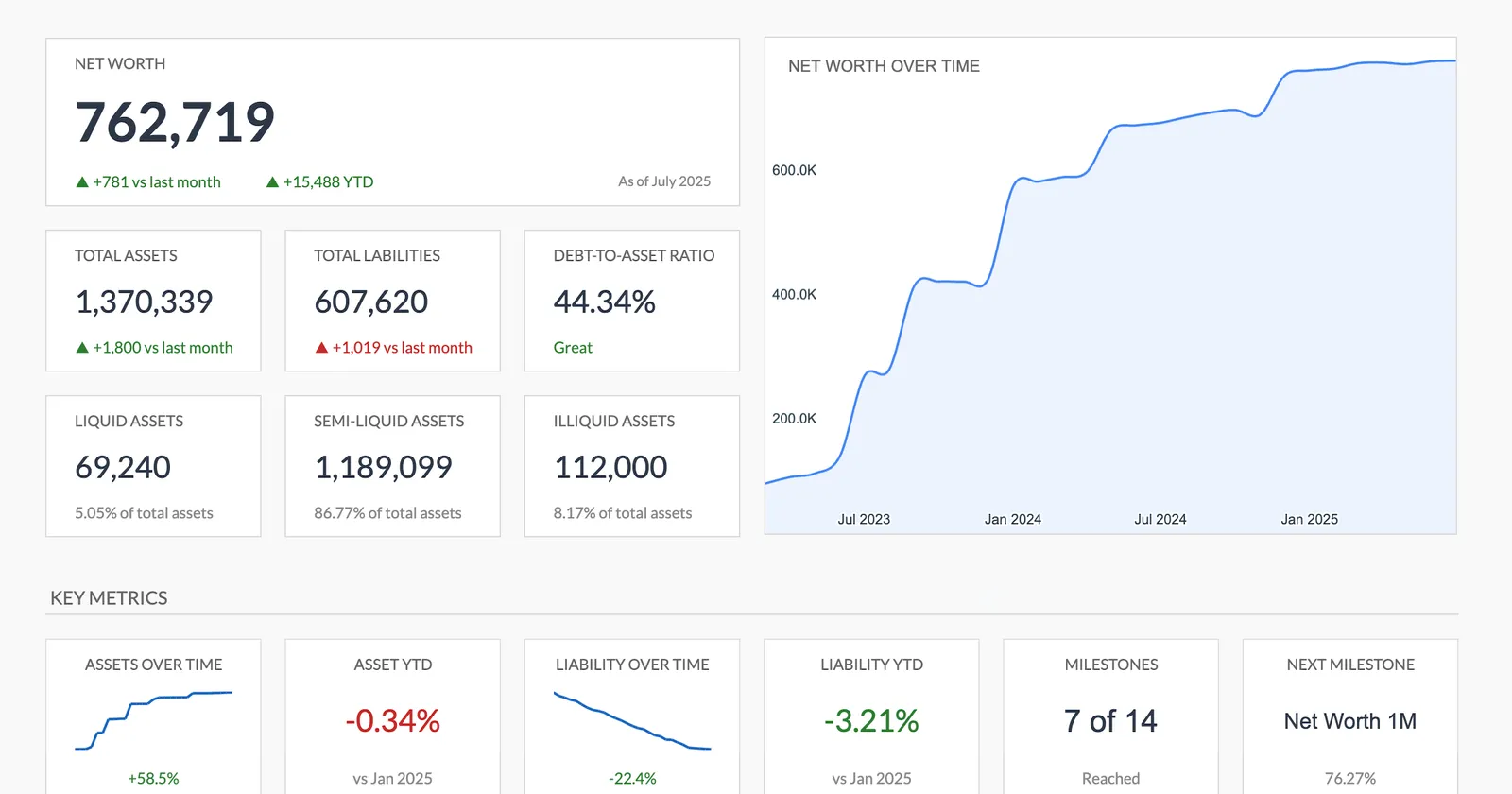
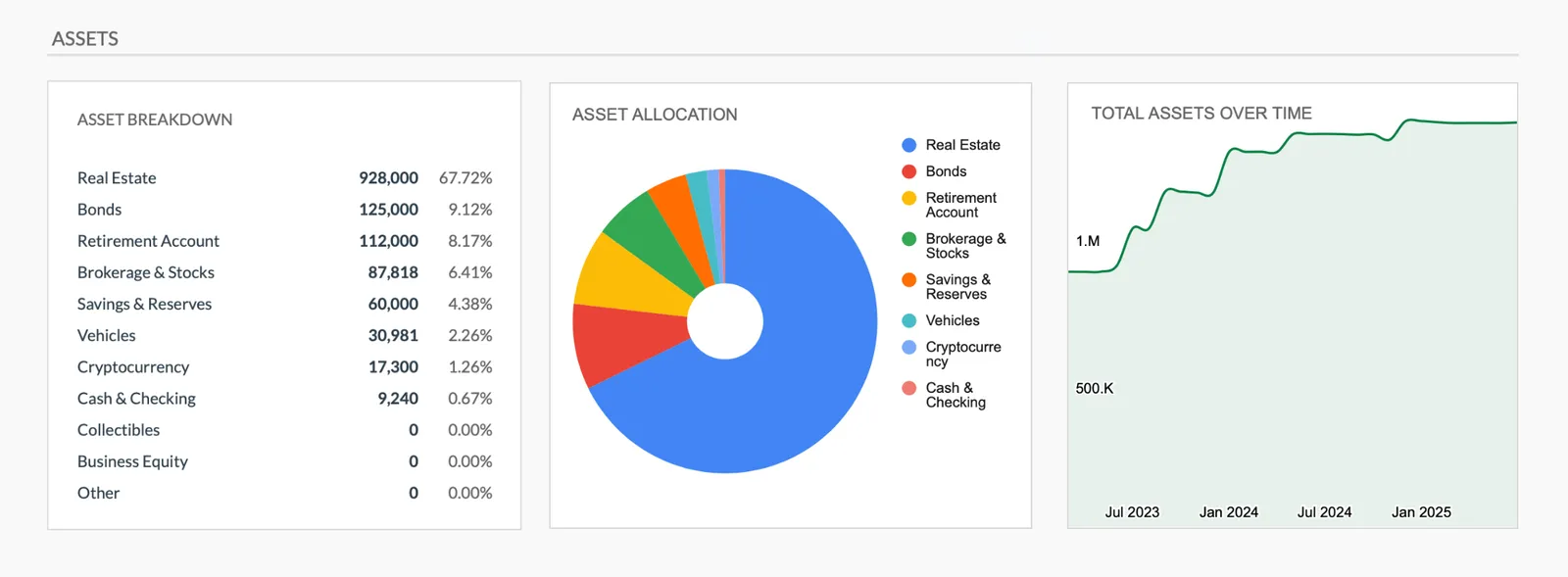
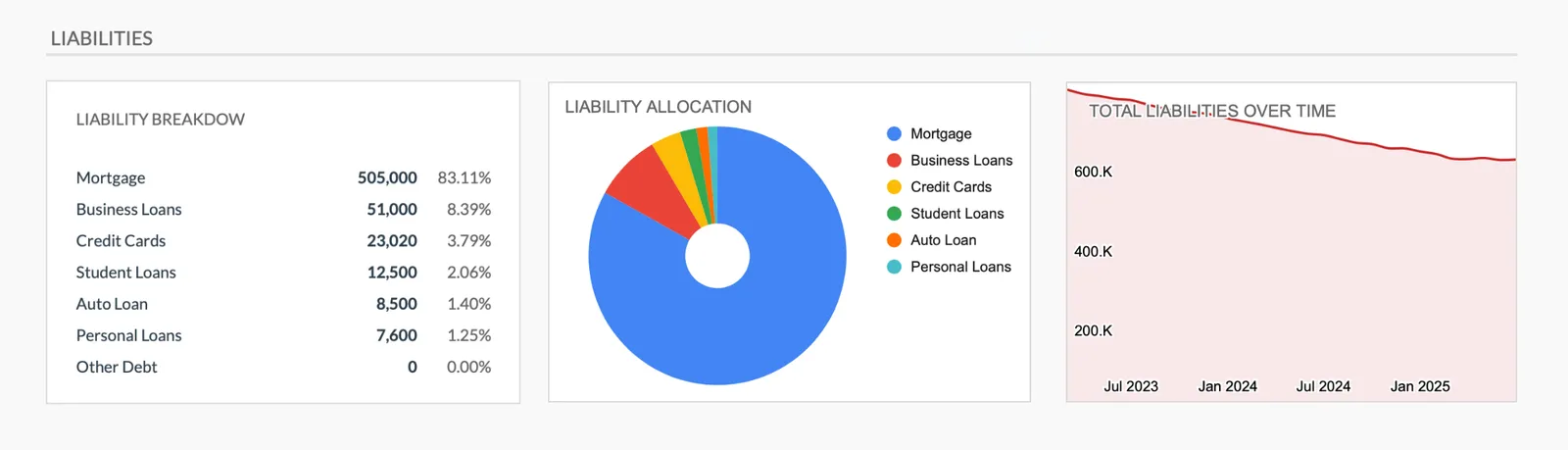

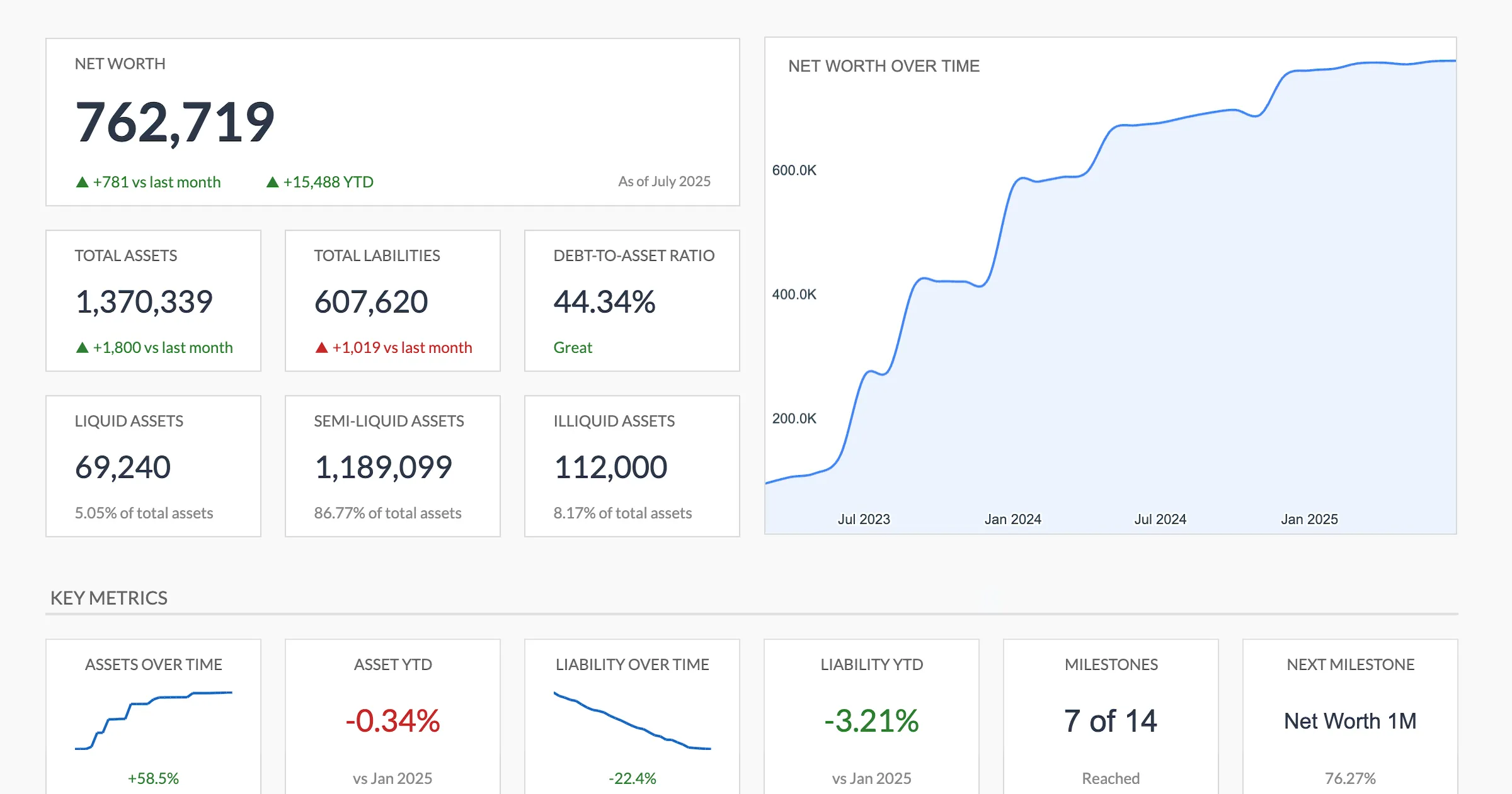
Track your net worth over time with charts
Breakdown of all your assets
Track all debts and liabilities
Key financial health indicators
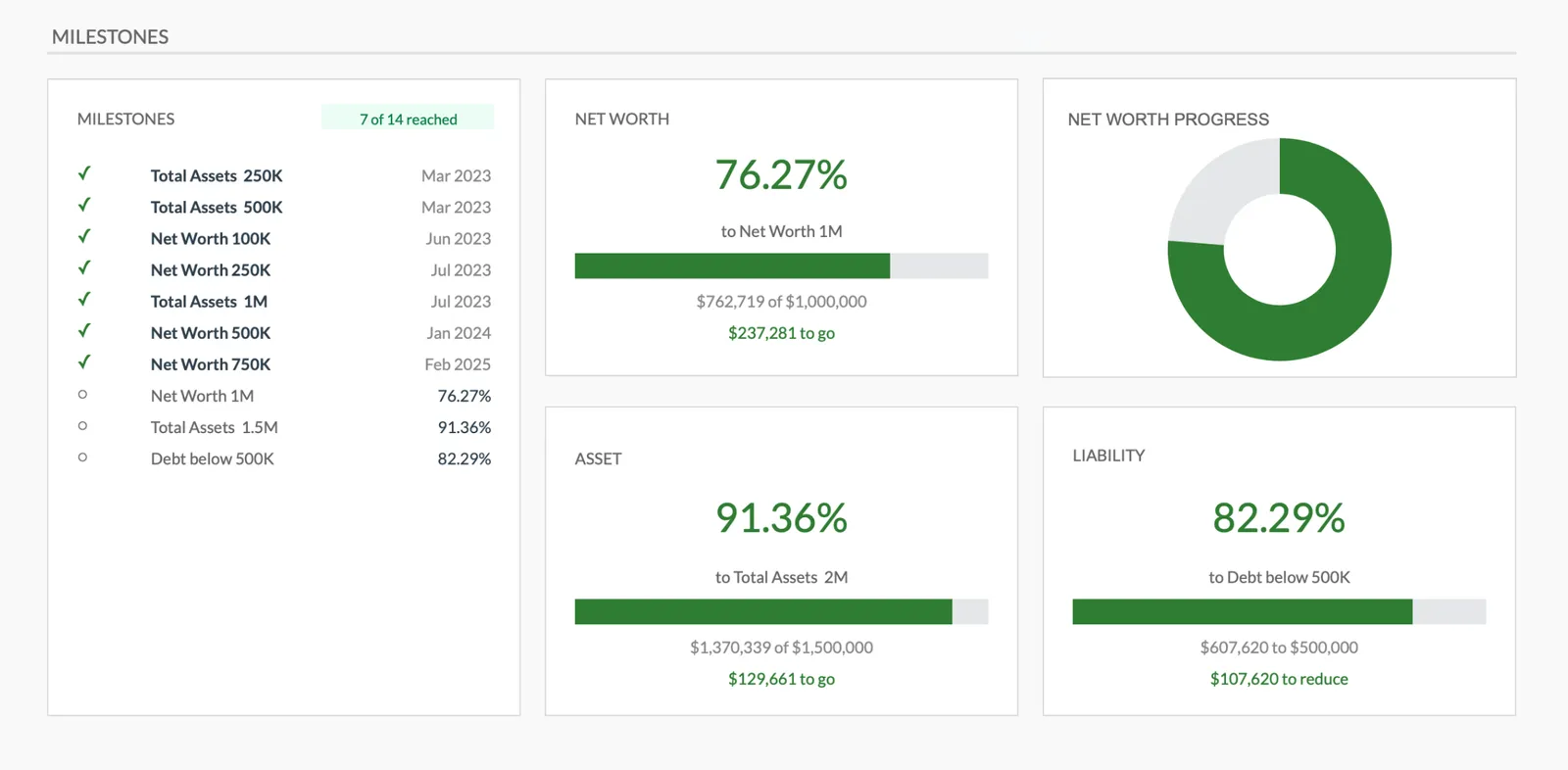
Set and celebrate net worth milestones
Common Questions
Net Worth Tracker for the Netherlands - FAQ
Should I include my pension in net worth?
It's your choice. Pension accrual represents future income rather than accessible capital, so some people exclude it. Others include an estimated present value for a complete picture. Check mijnpensioenoverzicht.nl for your accumulated rights and decide which approach suits you.
Should I use the WOZ-waarde or market value for net worth?
The WOZ-waarde (municipal valuation) is updated annually and provides a baseline. For a more current estimate, check recent sales of comparable properties on Funda or Kadaster. Subtract your remaining mortgage for your equity position.
How does Box 3 affect my net worth tracking?
Box 3 taxes savings and investments on deemed returns. That does not change actual net worth, but it is worth knowing that assets above the tax-free allowance, EUR 59,357 per person for 2026, are taxed annually. The charge is based on the value held on 1 January, so a year-end snapshot is what matters for tax purposes.
Should I include my DUO student loan?
Including it as a liability gives an honest net worth figure. DUO loans have relatively favourable terms, with low interest and income-dependent repayment, but they are still debt. Since 2021 mortgage lenders assess DUO debt on the actual monthly repayment amount rather than a flat percentage of the original loan, so it does reduce borrowing capacity, just by less than it once did.
How frequently should I update net worth in the Netherlands?
Monthly for bank accounts and investments. Quarterly or annually for property value and pension. Consistency matters more than frequency - pick a schedule and maintain it.
Can't find the answer you're looking for? Contact our team
Explore More
Free Tools for the Netherlands
Ready to get started?
Download instantly and start managing your finances, or contact us to design a custom template package for your needs.
Tax rules, rates, and contribution limits change, and official publications can themselves lag behind the law in force. We review these figures on a best-effort basis against sources we consider authoritative, but we cannot guarantee they are current, complete, or that better sources do not exist, and nothing here is tax, legal, or financial advice. For decisions, the relevant government authority is the reference. Last reviewed: August 2026.