Netherlands
Monthly Budget Template for the Netherlands
Track your income in EUR, manage Dutch tax deductions, and everyday expenses - all in a Google Sheets template you own.
In Depth
Box 1, Box 3, and the Layered Reality of Dutch Finances
The Dutch tax system organizes income into three boxes, each with distinct rules. For the 2026 tax year Box 1 covers employment income and is taxed at a combined 35.75% on the first EUR 38,883 (8.10% income tax plus 27.65% national insurance), 37.56% up to EUR 78,426, and 49.50% above that. Box 2 applies to substantial shareholders with 5% or more ownership, at 24.5% on the first EUR 68,843 and 31% above. Box 3 taxes savings and investments on a fictional deemed return rather than actual gains, at a flat 36%. For most employees Box 1 dominates, and because volksverzekeringen are folded into the first bracket, the gap between bruto and netto salary is substantial.
The expat ruling lets qualifying incoming employees receive part of gross salary as a tax-free allowance for up to 60 months. That can add hundreds of euros a month compared with a colleague in the same role without the ruling. The benefit has been narrowed repeatedly: partial non-resident status ended in 2025, the tax-free amount is capped at the WNT norm of EUR 262,000, and the share falls from 30% for the 2026 tax year to 27% from 2027. Because taxable income jumps once the ruling ends, that transition is a point where budgets usually need revisiting.
Two features of Dutch homeownership shape financial planning distinctly. The hypotheekrenteaftrek lets homeowners deduct mortgage interest from Box 1 income, though the deduction is now capped at the basic rate, 37.56% for the 2026 tax year, rather than the top rate. Meanwhile the Box 3 charge applies whether or not an asset performed: for 2026 the deemed return on bank deposits is 1.28% while other assets are deemed to return 6.00%, so a portfolio that underperforms can still be taxed as though it had not, subject to the counter-evidence rule for lower actual returns. One force reduces the cost of borrowing while the other taxes held wealth, and the interaction goes some way to explaining why many Dutch residents put money toward mortgage repayment or investments rather than large cash balances.
Netherlands
Budgeting in the Netherlands: What's Different
The Dutch financial system has distinct features, from the box tax system to mandatory health insurance, and they shape how a budget is put together. Knowing which ones apply to you makes the template easier to set up.
The box system taxes different income types separately
The Netherlands taxes income in three "boxes". Box 1 covers employment income and, for the 2026 tax year, runs in three brackets: 8.10% income tax plus 27.65% national insurance on the first EUR 38,883, then 37.56% up to EUR 78,426, then 49.50% above that [1]. Box 2 covers substantial shareholdings and Box 3 taxes savings and investments on a deemed return. For most employees Box 1 is the part that matters, because the employer withholds tax (loonheffing) before the salary arrives.
The expat ruling benefits qualifying incoming workers
Employees recruited from abroad may qualify for the expat ruling, which makes part of gross salary tax-free for up to 60 months [2]. The tax-free share is 30% for the 2026 tax year and drops to 27% from 2027, and it is capped at the WNT norm of EUR 262,000, so at most EUR 78,600 a year is untaxed. Take-home pay is noticeably higher for those who qualify, so budgeting from the actual net figure rather than a gross salary keeps the picture accurate.
Mandatory health insurance is a fixed monthly cost
Everyone living in the Netherlands must have basic health insurance (basisverzekering). The average premium for 2026 is around EUR 159 a month, on top of a mandatory deductible (eigen risico) of EUR 385 a year, which the cabinet has proposed raising to EUR 455 in 2027. The zorgtoeslag (healthcare allowance) subsidises premiums for lower incomes. This is a predictable fixed cost, which makes it straightforward to plan around.
Dutch expense patterns have unique characteristics
Cycling culture reduces transport costs for many, but housing in Amsterdam, Utrecht and Rotterdam in particular is expensive. Energy costs fluctuate seasonally, and groceries are relatively affordable compared with other Western European countries. Some people find a budget that reflects these Dutch patterns easier to work with than a generic European layout.
Hypotheekrenteaftrek reduces the cost of homeownership
Mortgage interest (hypotheekrente) on a main residence is deductible in Box 1, which reduces the effective cost of homeownership. The deduction has been capped at the basic rate rather than the top rate, and for the 2026 tax year that cap is 37.56%. For loans taken out from 2013 onwards the deduction applies only to annuity or linear mortgages that repay in full within 360 months, not to interest-only loans. For renters, the huurtoeslag (rent allowance) can offset some housing costs at lower incomes.
Vermogensrendementsheffing taxes wealth, not just income
Under Box 3 the Dutch tax system levies a charge on savings and investments based on a deemed return rather than actual gains [1]. For 2026 the deemed returns are 1.28% on bank deposits, 6.00% on other assets and 2.70% on debts, taxed at a flat 36% above a tax-free allowance of EUR 59,357 per person (EUR 118,714 for tax partners). Following Supreme Court rulings, a counter-evidence rule lets taxpayers whose actual return was lower declare that instead, and a system based on actual returns is targeted for 2028. Where the deemed return runs ahead of what an asset actually earned, the charge can outweigh the return, which is worth understanding when deciding where to hold money.
Get the Template
Getting Started
Configuring the Budget Template for Dutch Finances
Set the currency to EUR
Select EUR from the currency picker at the top of the dashboard. The calculations stay the same - only the display changes.
Enter your netto salary
Use your net monthly salary - the amount credited after loonheffing (wage tax and social contributions). Your payslip shows this as "netto loon" or "uitbetaald bedrag." Include holiday allowance (vakantiegeld) in the month it arrives, or spread it across 12 months.
Customize expense categories for Dutch life
Add categories for rent or mortgage, health insurance (zorgverzekering), utilities (gas, electricity, water), internet and mobile, groceries, OV-chipkaart or car expenses, dining out, and any other regular expenses. Dutch-specific items like gemeentelijke belastingen (municipal taxes) and waterschapsbelasting (water authority tax) are annual costs worth budgeting for monthly.
Account for vakantiegeld (holiday allowance)
Most Dutch employers pay 8% holiday allowance as a lump sum in May or June. This is a significant amount - some people budget it for holidays, others spread it across the year mentally. Decide your approach and reflect it in the template.
Plan for Dutch annual expenses
Several expenses come annually: gemeentebelasting, waterschapsbelasting, health insurance deductible (if used), car road tax (motorrijtuigenbelasting), and insurance renewals. Dividing these by 12 and setting aside monthly avoids lump-sum surprises.
See It In Action
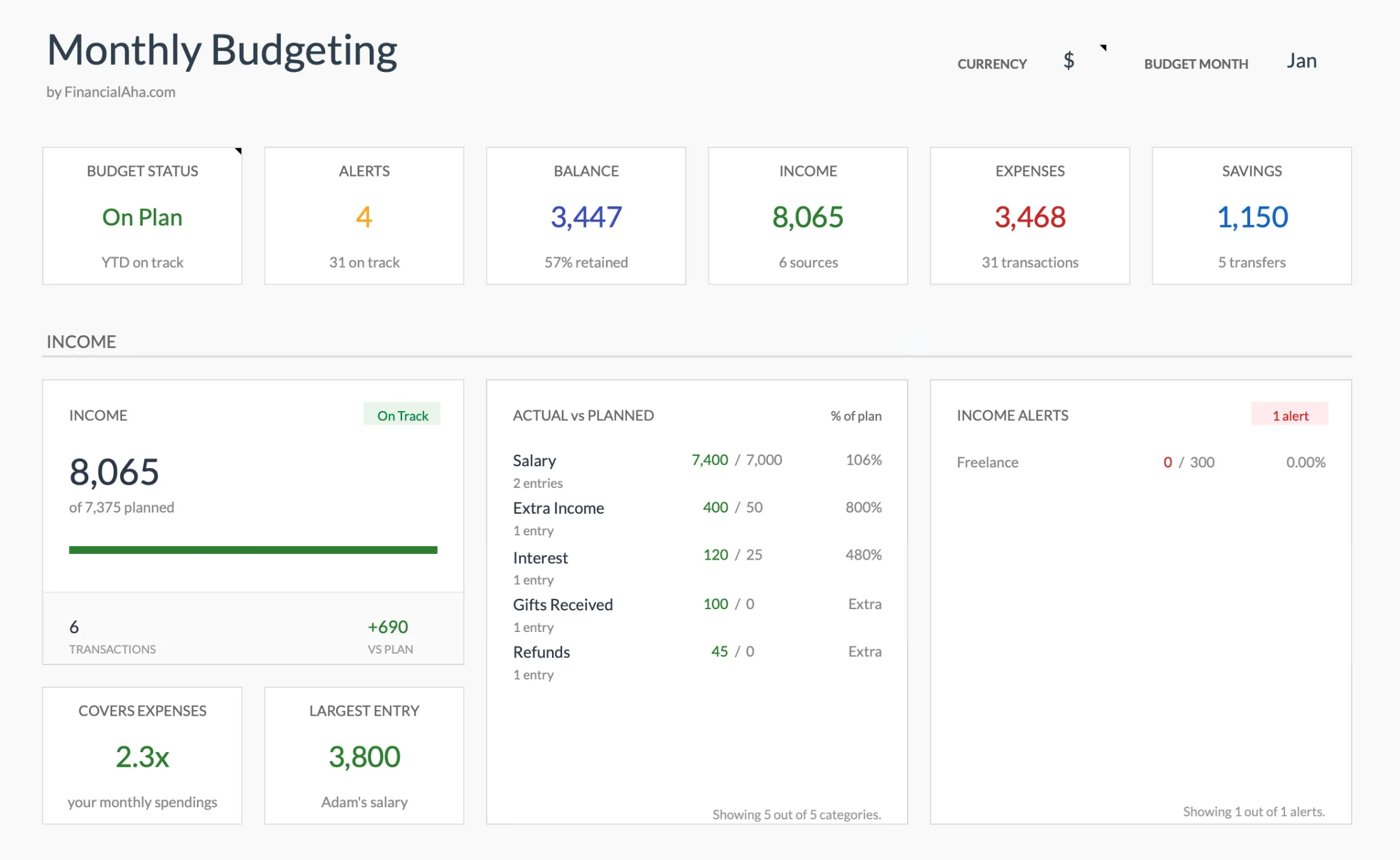
What the template looks like
Browse through the template to see the dashboard, the entry sheets, and the summaries it produces, all adaptable to your local financial setup.
- Built-in currency selector
- Calculations update automatically
- Visual summaries of your numbers
- No setup required
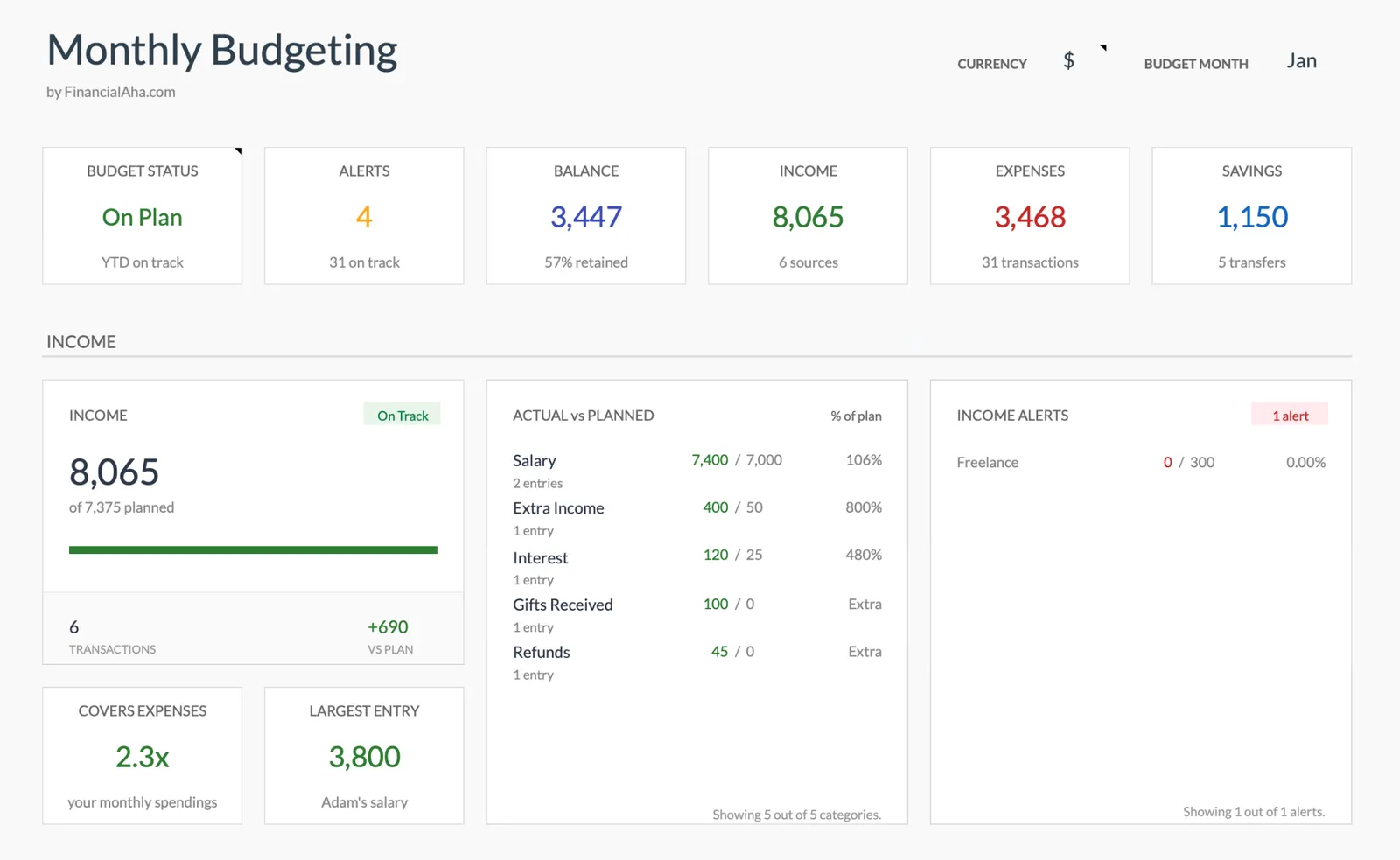
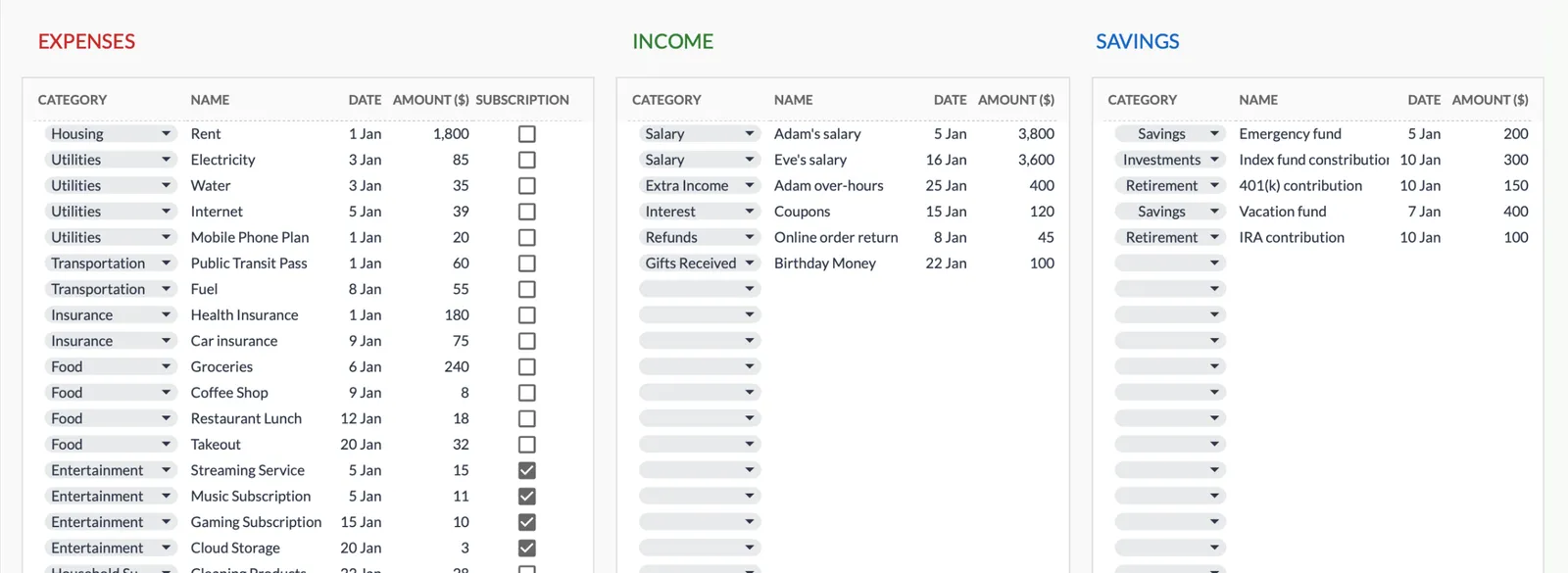
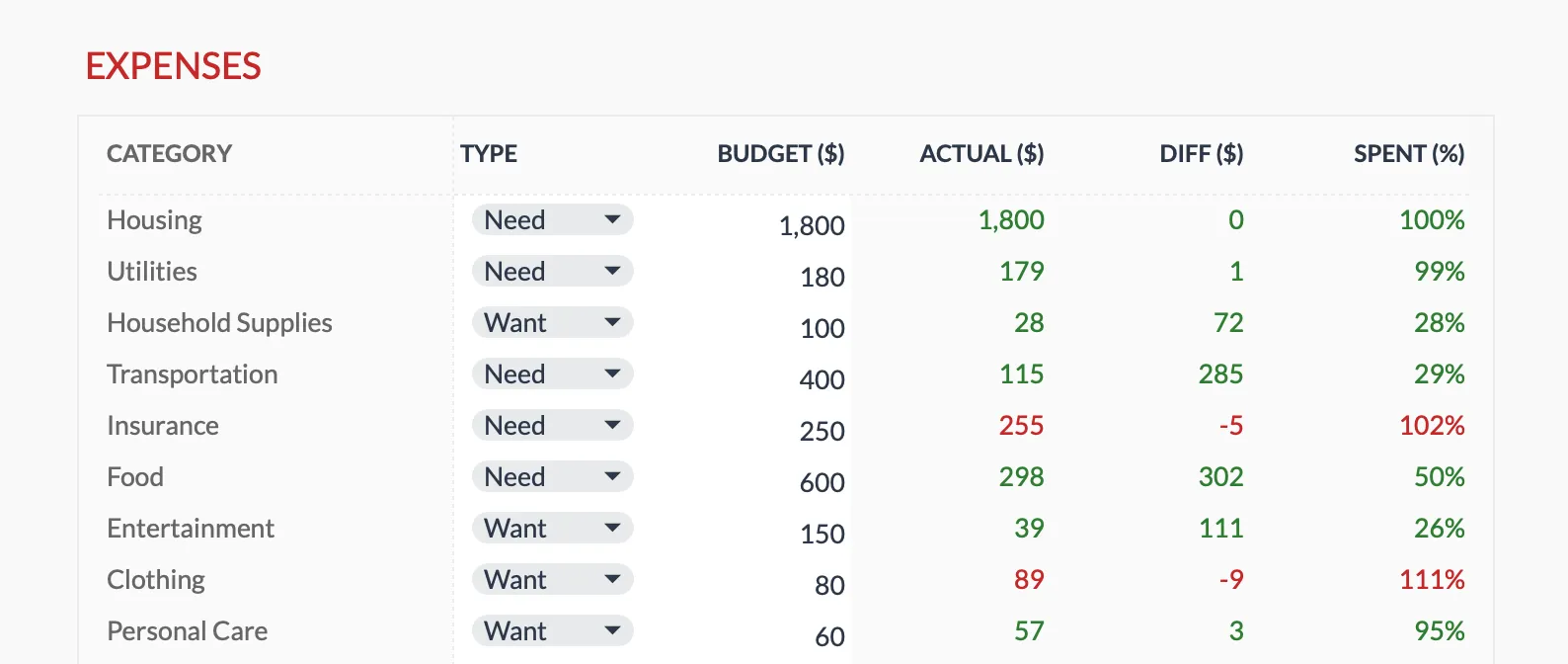
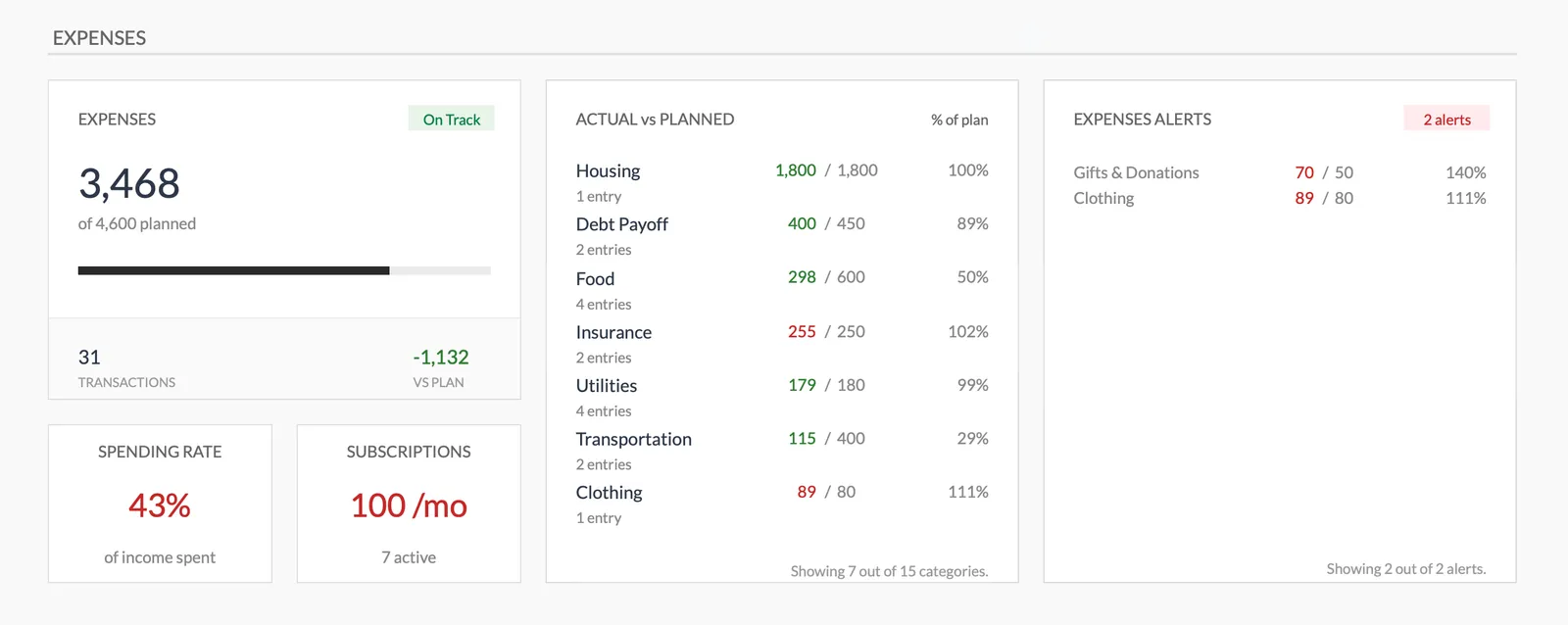
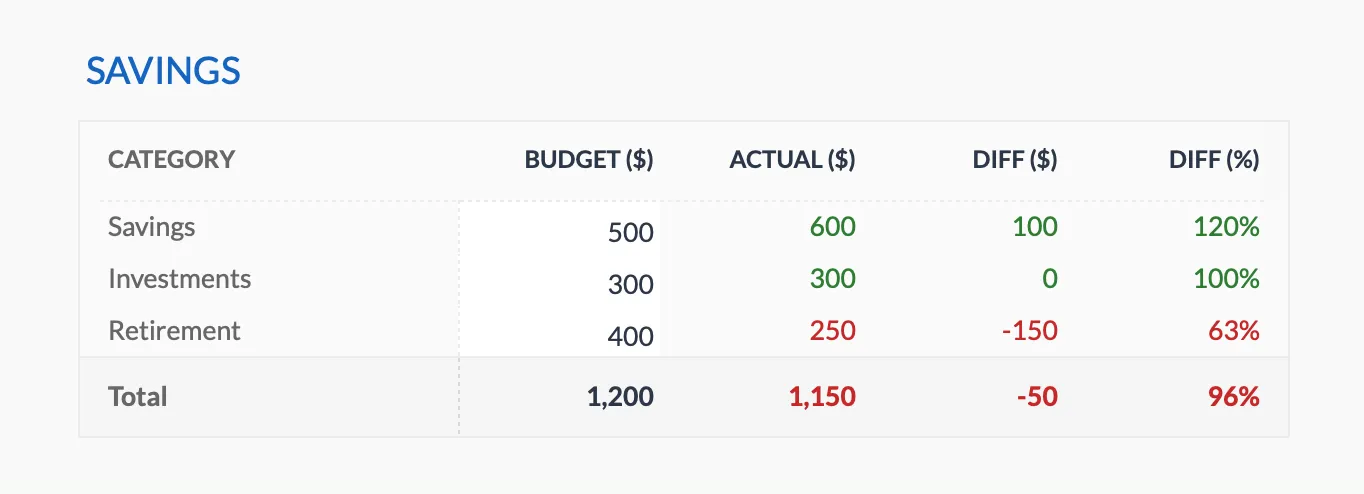
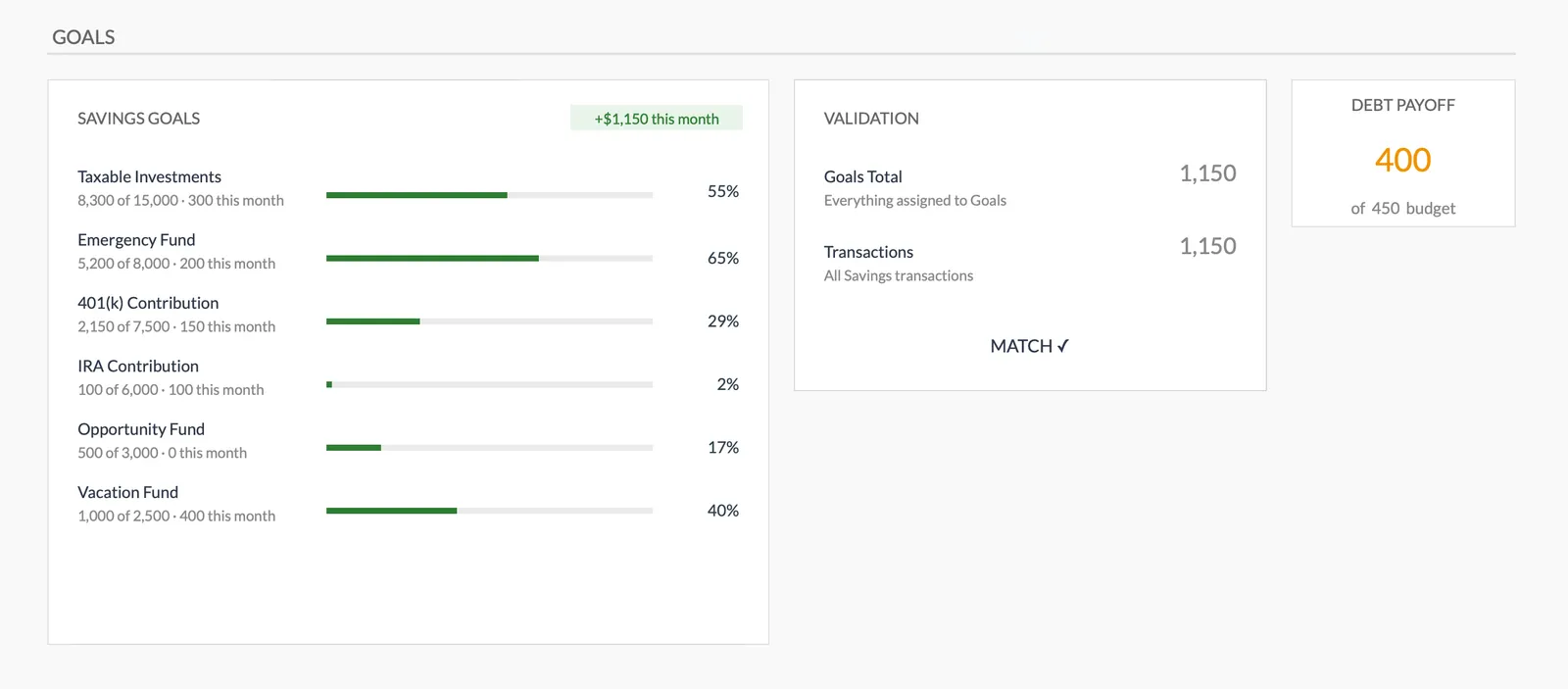
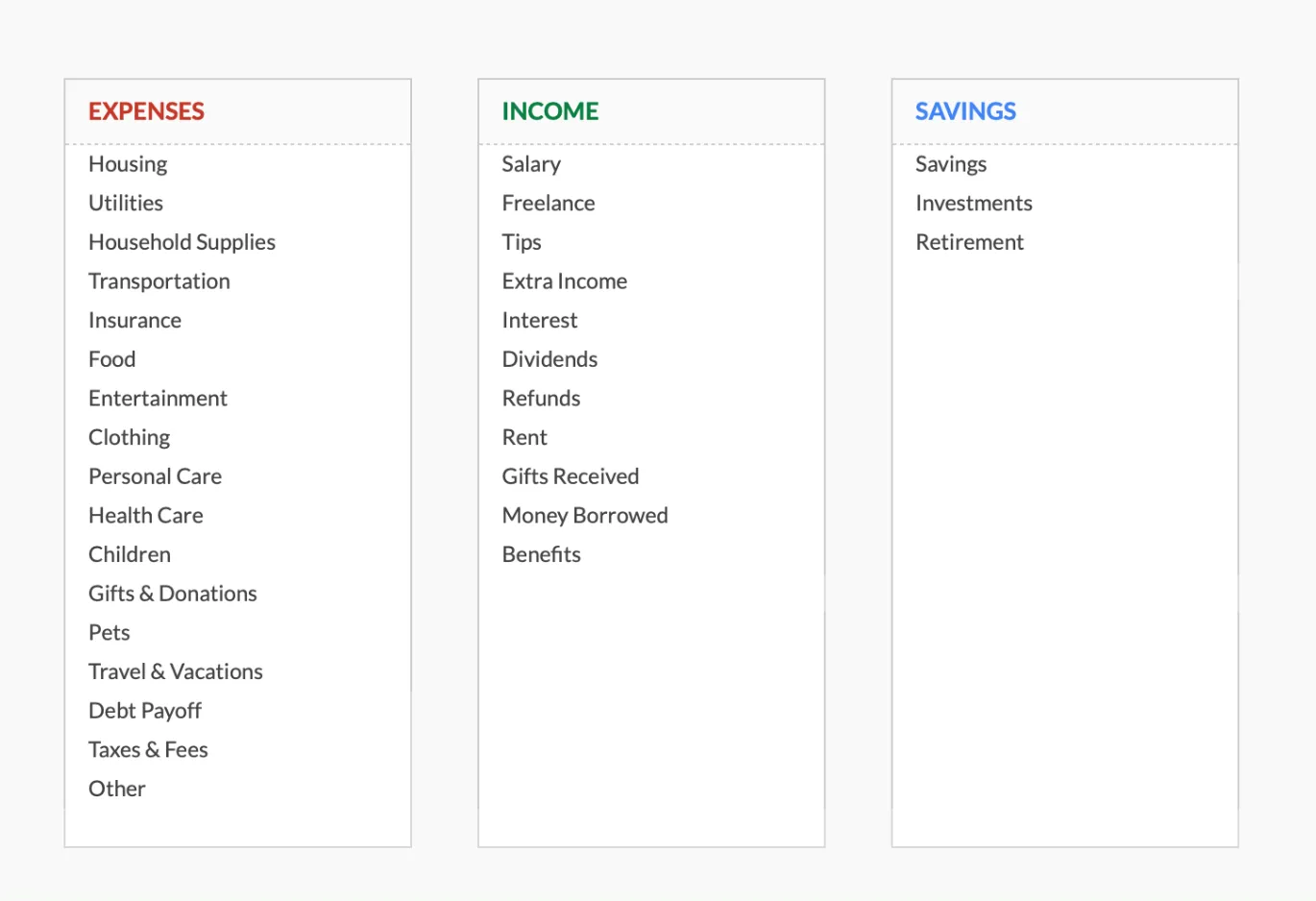
Dashboard with income, expenses, and savings at a glance
Log transactions with automatic categorization
Set targets per category and track actual spending
Visual breakdown of where your money goes
Track savings goals alongside your budget
Monitor progress toward financial goals
Fully customizable expense, income, and savings categories
Sources
Common Questions
Monthly Budget Template for the Netherlands - FAQ
Does this template use euros?
Yes - select EUR from the currency picker in the header. The math applies in any currency, so the formulas don't change regardless of the display setting.
How do I budget with the 30% ruling?
With the expat ruling, net salary is higher because part of the gross is paid as a tax-free allowance. Entering the actual net pay as income keeps the budget accurate. The ruling lasts up to 60 months and the tax-free share falls from 30% to 27% from 2027, so the eventual drop in take-home pay is something some people plan around in advance.
Should I include zorgtoeslag in my income?
If you receive healthcare allowance (zorgtoeslag), you can add it as a separate income line. It helps offset health insurance premiums. Note that zorgtoeslag is income-dependent and reassessed annually, so the amount may change.
How do I handle vakantiegeld?
Holiday allowance, usually paid in May, is typically 8% of gross salary. It can go in as extra income in May, or be divided by 12 and added monthly. Either approach works, and picking one before the year starts keeps the monthly figures comparable.
Is there a Netherlands-specific version?
The template is the same worldwide - designed to be customizable. This page explains how to adapt it for Dutch finances. The flexibility of Google Sheets means you can rename categories and set up the budget to match your specific situation.
How does this compare to Dutch budgeting apps?
Dutch banking and budgeting apps connect to bank accounts through PSD2 and categorise transactions automatically. This template needs manual entry, but it offers more customisation, costs a one-time fee, and keeps the data in your own Google Drive. The tradeoff is convenience against control and privacy.
Can't find the answer you're looking for? Contact our team
Explore More
Free Tools for the Netherlands
Ready to get started?
Download instantly and start managing your finances, or contact us to design a custom template package for your needs.
Tax rules, rates, and contribution limits change, and official publications can themselves lag behind the law in force. We review these figures on a best-effort basis against sources we consider authoritative, but we cannot guarantee they are current, complete, or that better sources do not exist, and nothing here is tax, legal, or financial advice. For decisions, the relevant government authority is the reference.