Hong Kong
Retirement Planning Template for Hong Kong
Project your MPF payout, personal investment income, and other savings against estimated retirement expenses in Hong Kong - in a Google Sheet you own.
In Depth
MPF Limitations, No State Pension, and Rising Healthcare Costs
Hong Kong does not have a state pension in the traditional sense. There is no equivalent of Social Security or a government-funded retirement benefit tied to years of work. The closest mechanism is the Mandatory Provident Fund (MPF), but this is a defined-contribution scheme - meaning the payout depends entirely on how much was contributed and how the investments performed, not on a guaranteed formula. For anyone who started working before the MPF's launch in 2000, there may be a gap in accumulated retirement savings that the scheme was never designed to fill.
The MPF's mandatory contributions are capped at HKD 1,500/month from each side (employee and employer), based on a maximum relevant income of HKD 30,000. For higher earners, this cap means mandatory MPF contributions represent a shrinking percentage of actual income. Tax-Deductible Voluntary Contributions (TVC) allow additional savings of up to HKD 60,000 a year against a salaries tax deduction shared with qualifying deferred annuity premiums, and some employers run ORSO schemes (Occupational Retirement Schemes Ordinance) with different benefit terms. One further change worth knowing: since 1 May 2025 employers can no longer offset severance and long service payments against accrued MPF benefits, so balances built up from that date stay intact when employment ends. Which schemes apply, and what balance they project to at retirement, is where a projection usually starts.
Healthcare is one of the less predictable costs in retirement planning for Hong Kong. The public hospital system, managed by the Hospital Authority, provides care at heavily subsidized rates - but waiting times for specialist and elective services can stretch to months or years. Private healthcare costs are significant and tend to rise faster than general inflation. Medical insurance premiums increase steeply with age, and coverage gaps or exclusions become more common for older policyholders. Treating healthcare as a separate, growing line item rather than a fixed number is one way to keep a projection closer to reality.
The Old Age Allowance (colloquially known as "fruit money") and the Old Age Living Allowance provide modest government support for residents aged 65 and above, subject to residency requirements and, for the Old Age Living Allowance, a means test on income and assets. The Old Age Allowance pays the smaller of the two amounts and is not means-tested. Both rates are adjusted each February in line with price movements, and the current figures sit on the Social Welfare Department's Social Security Allowance pages. Neither payment is designed to fund a full retirement, so for most people the combination of MPF, personal savings, and investment income forms the core of retirement funding in Hong Kong.
Hong Kong
Retirement Planning in Hong Kong: Key Factors
Hong Kong's retirement planning centres on MPF, supplemented by personal savings and investments. There is no comprehensive public pension, so the numbers rest largely on what an individual has accumulated.
MPF is a capped, defined-contribution foundation
Mandatory contributions are capped at HKD 1,500/month per side, so what accumulates over a career is bounded by that cap plus investment returns rather than by salary. A worker at the cap for 40 years might end up with a balance in the low millions of HKD depending on returns, which is one input into a Hong Kong retirement rather than the whole answer.
No universal public pension
Hong Kong does not have a contributory state pension. The Old Age Living Allowance (OALA) pays a means-tested monthly amount to qualifying residents aged 65 and above, and the non-means-tested Old Age Allowance pays a smaller amount; both rates are revised each February and are published by the Social Welfare Department. Neither is designed to replace a working income, which is why personal savings alongside MPF carry most of the weight in projections.
Hong Kong's high cost of living extends into retirement
Rent, healthcare, and daily expenses in Hong Kong remain high in retirement. Unless you own your home outright, housing costs alone can consume a large portion of retirement income. Some retirees relocate to lower-cost areas (Mainland China, Southeast Asia) to make savings last longer.
Tax advantages make wealth accumulation easier
Hong Kong's low tax rates, zero capital gains tax, and no dividend tax mean more of a working income stays available for retirement savings. The pressure point tends not to be the tax burden but the high cost of living during working years, set against a retirement that may run for decades.
Get the Template
Getting Started
Setting Up for Hong Kong Retirement With MPF
Enter current retirement savings
List all retirement-related assets: MPF balance (check with your scheme trustee), voluntary MPF contributions (TVC), investment portfolios, bank savings, property equity, and any other long-term savings.
Enter MPF, TVC, and investment contributions
Enter MPF contributions (mandatory and voluntary), additional investment contributions, and regular savings amounts. This drives the growth projections in the template.
Estimate retirement expenses
Project monthly costs - housing (rent or mortgage, management fees), healthcare (medical insurance, out-of-pocket costs), food, utilities, transport, and leisure. Consider whether you plan to stay in Hong Kong or relocate, as this dramatically affects cost projections.
Factor in the OALA if eligible
If you expect to qualify for the Old Age Living Allowance, include it as retirement income. The asset and income limits for the higher-rate OALA are worth understanding, as exceeding them affects eligibility.
Run different scenarios
Test retiring at different ages, in Hong Kong vs. elsewhere, and with different spending levels. The gap between an MPF balance alone and a projected cost of living can be wide, and seeing the numbers side by side is where the template does its work.
See It In Action
What the template looks like
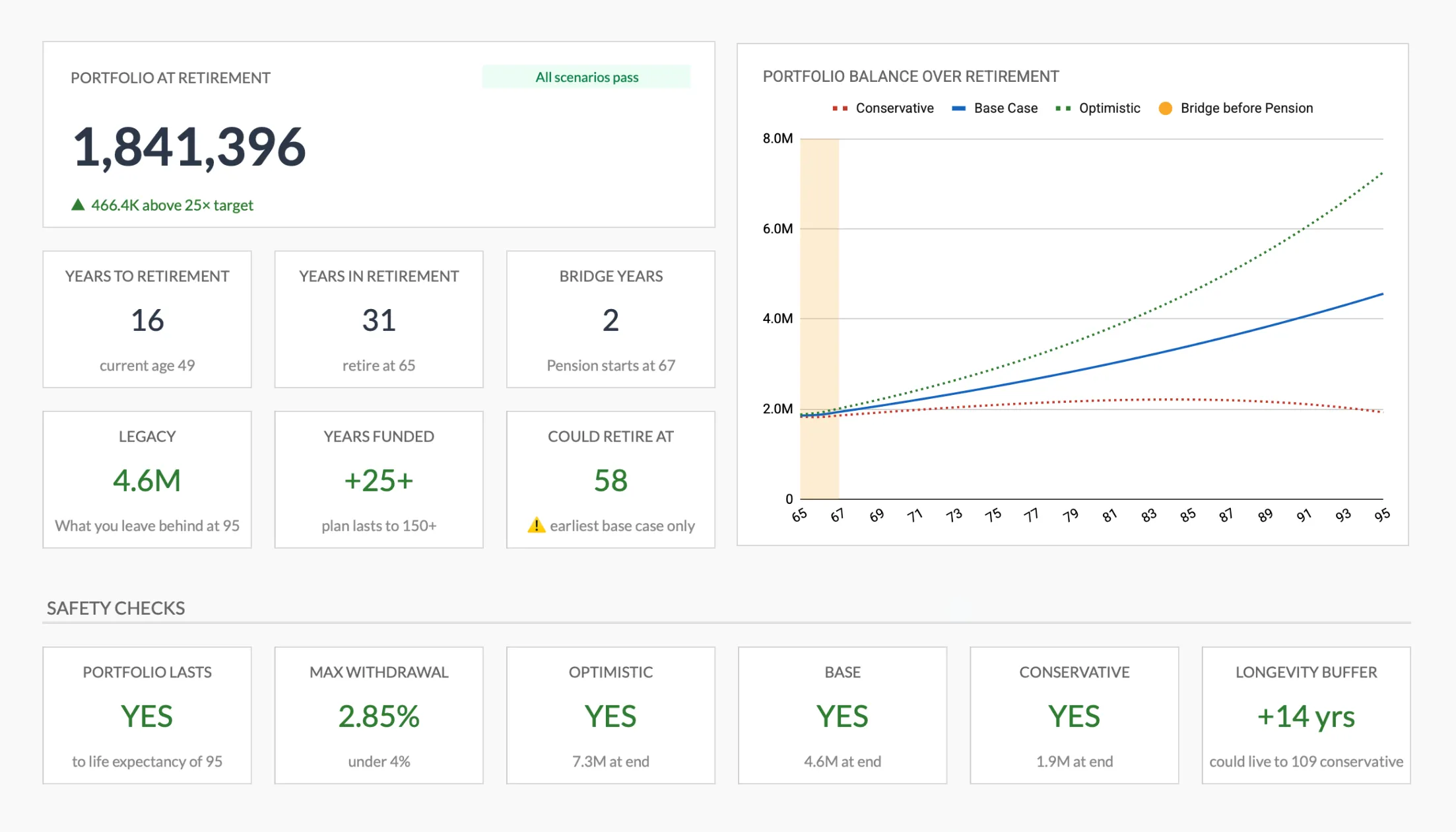
Browse through the template to see the dashboard, the entry sheets, and the summaries it produces, all adaptable to your local financial setup.
- Built-in currency selector
- Calculations update automatically
- Visual summaries of your numbers
- No setup required
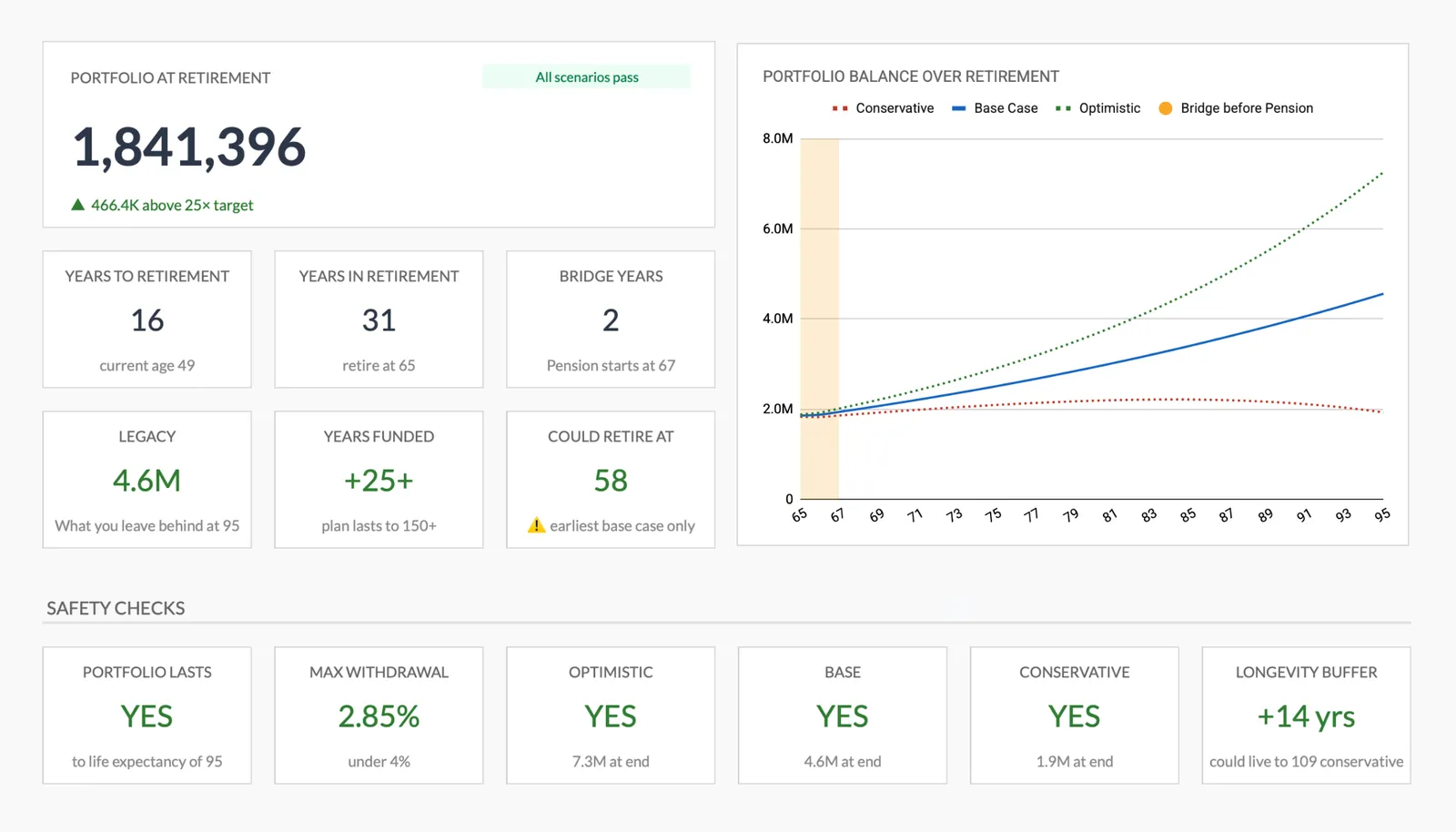
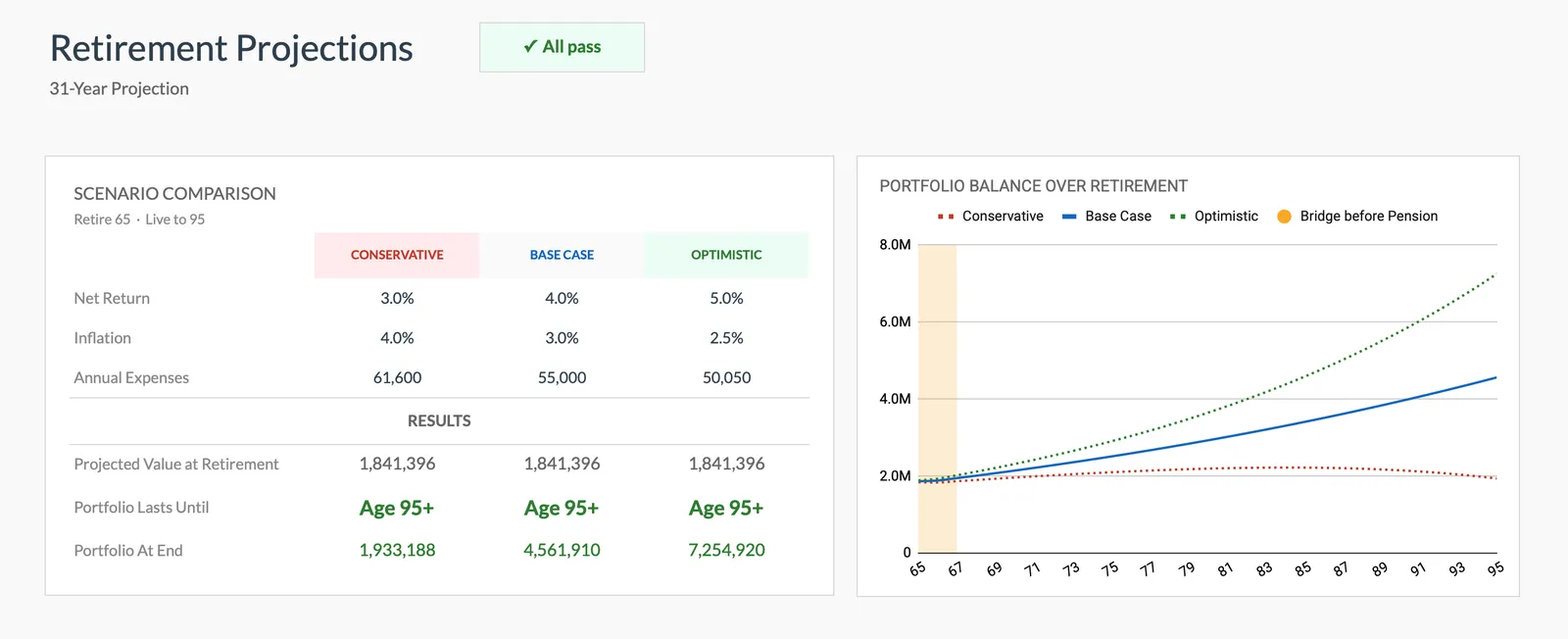
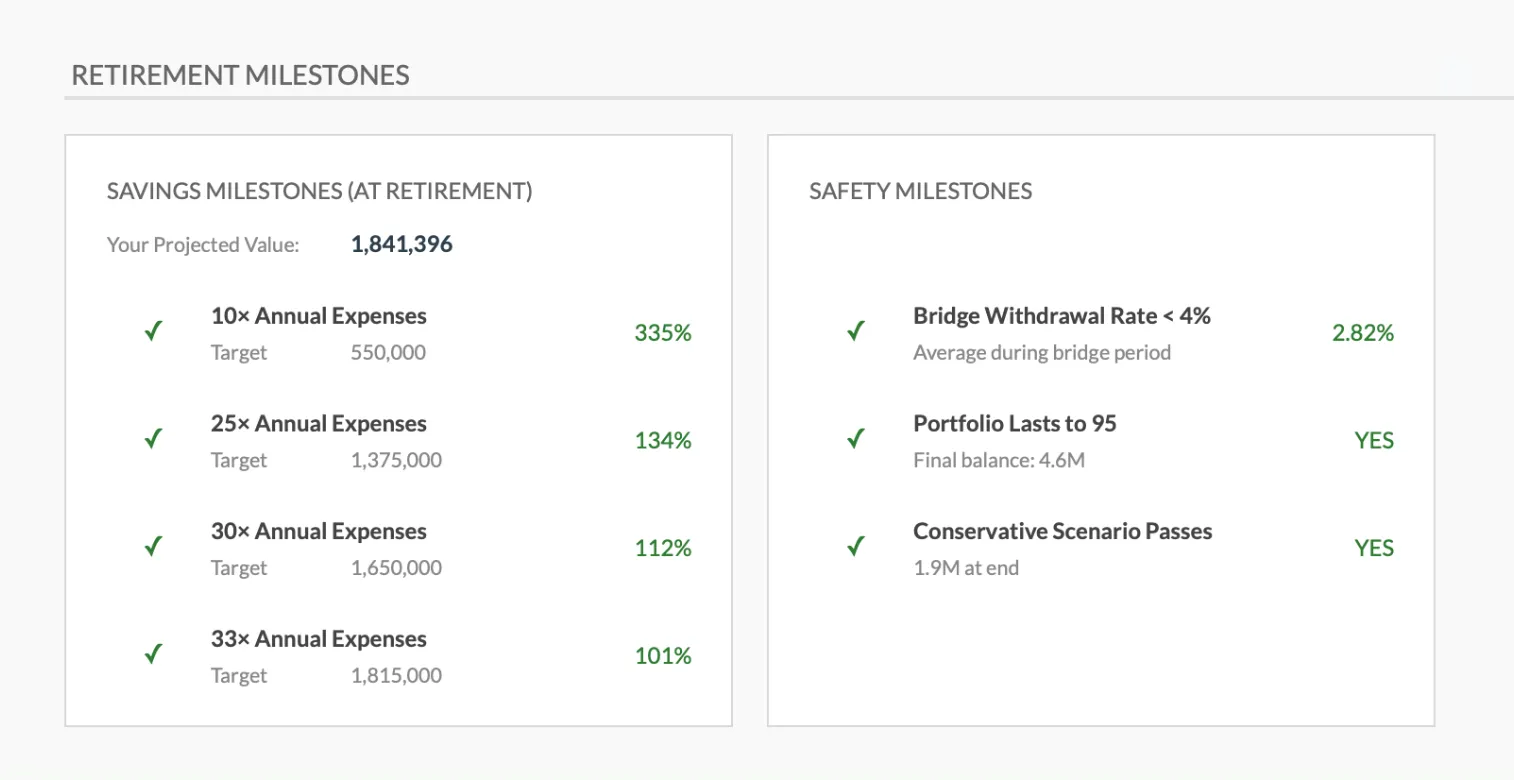
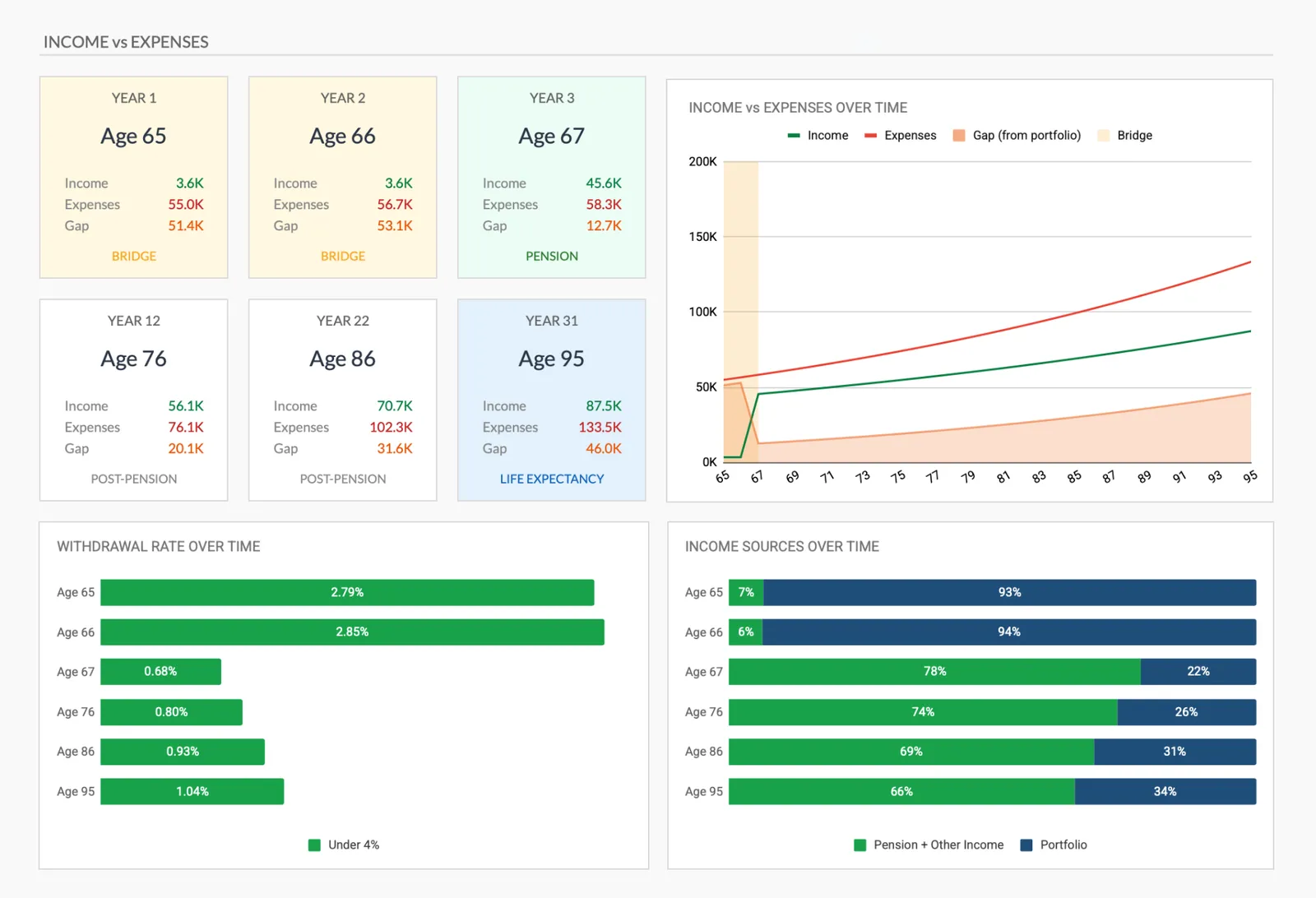
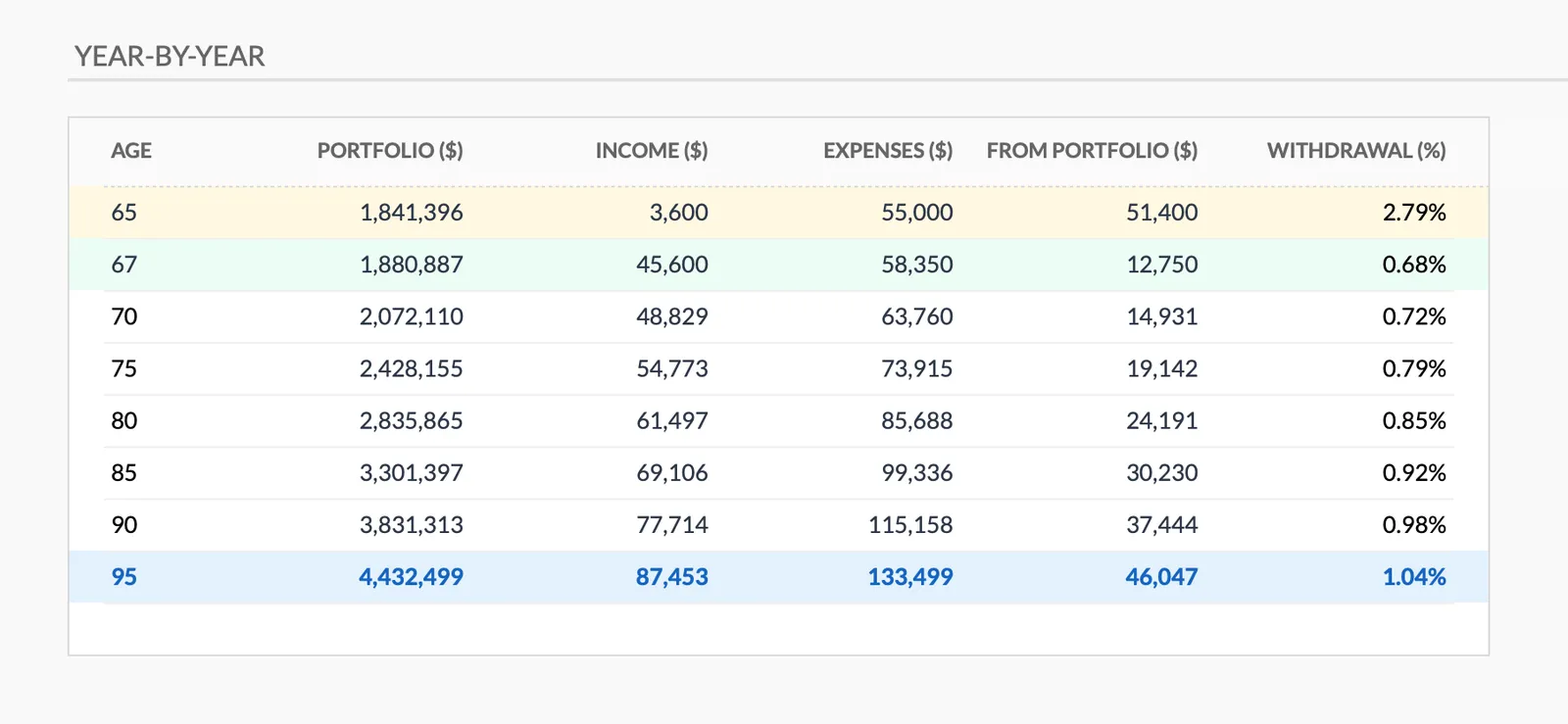
Complete retirement overview with projections
Project your retirement savings growth
Track progress toward retirement goals
Plan your retirement income against expenses
Detailed year-by-year retirement projection
Common Questions
Retirement Planning Template for Hong Kong - FAQ
When can I access my MPF?
MPF can generally be withdrawn at age 65, or at 60 if you declare early retirement. Other qualifying events include permanent departure from Hong Kong, total incapacity, death, and small balance claims (under HKD 5,000 with no intention to become employed). The funds are paid as a lump sum.
How much do I need to retire in Hong Kong?
Estimates vary widely. A basic retirement might need HKD 10,000-15,000/month; a comfortable one could require HKD 25,000-40,000/month or more. Over 25 years of retirement, even HKD 20,000/month totals HKD 6 million before inflation. The template helps you calculate based on your specific expected expenses.
Is MPF enough for retirement?
The capped contributions and the relatively short history of the scheme, which began in December 2000, mean accumulated balances are often modest relative to Hong Kong's cost of living. Most projections therefore show MPF covering part of a retirement rather than all of it, with personal savings and investments making up the rest.
How do voluntary MPF contributions work?
Tax-Deductible Voluntary Contributions (TVC) carry a salaries tax deduction, shared with qualifying deferred annuity premiums, of up to HKD 60,000 a year. Whether that deduction is worth much depends on the rate actually paid, and TVC money is locked to the same age 65 rules as mandatory contributions, so it sits alongside scheme fees and performance as one factor among several.
How do I account for healthcare costs in retirement?
Hong Kong's public healthcare system is affordable but can involve long wait times. Private healthcare and insurance costs increase significantly with age. Budget for rising medical insurance premiums and out-of-pocket expenses. Some people set aside a specific healthcare reserve alongside their general retirement fund.
Can't find the answer you're looking for? Contact our team
Explore More
Free Tools for Hong Kong
Ready to get started?
Download instantly and start managing your finances, or contact us to design a custom template package for your needs.
Tax rules, rates, and contribution limits change, and official publications can themselves lag behind the law in force. We review these figures on a best-effort basis against sources we consider authoritative, but we cannot guarantee they are current, complete, or that better sources do not exist, and nothing here is tax, legal, or financial advice. For decisions, the relevant government authority is the reference.