
Budget burnout is the exhaustion that builds when a budget is too strict or too detailed to keep up, and it usually ends in abandonment. The common signs are avoiding the spreadsheet, spite spending, and feeling over budget every month. The way out is fewer categories, less frequent tracking, and automating the fixed costs, so the system becomes one you can actually maintain.
Budgeting shouldn’t feel like punishment. If tracking every dollar creates stress, guilt, and eventual abandonment, something needs to change.
Simple alternative: The Monthly Expense Tracker logs what you spend without any budget targets to keep up with.
Budget burnout is real. Here’s how to recognize it and simplify.
What Is Budget Burnout
It’s that exhaustion and frustration that comes from overly restrictive or complicated budgeting. The kind that leads you to abandon financial tracking altogether.
Money stress is common to begin with. The Federal Reserve found that 72% of U.S. adults were at least doing okay financially at the end of 2023, which still leaves more than one in four who were not. A budget meant to relieve that pressure can quietly become another source of it.
The pattern tends to look like this:
Start budgeting with enthusiasm. Track everything meticulously. Feel restricted and stressed. Slip up, feel guilty. Give up entirely. Repeat months later.
Sound familiar? You’re not alone.
Warning Signs
Burnout shows up in different ways - behavior changes, emotional shifts, and practical breakdowns. Recognizing these patterns early helps you adjust before complete abandonment.
Behavioral Signs
You avoid your budget. Maybe weeks go by without checking. Opening that spreadsheet triggers anxiety. Finding excuses not to log expenses becomes second nature.
Or you rebel against it. Spite spending shows up (“I earned this”). You hide purchases from yourself. Refuse to categorize certain expenses.
Or you’re constantly over budget. Every month feels like failure. Guilt becomes your primary budgeting emotion. You’ve stopped believing it works.
Emotional Signs
Stress and anxiety. Every purchase triggers worry about budget impact.
Guilt and shame. Normal spending feels wrong or shameful.
Resentment. The budget feels like an enemy rather than a tool.
Hopelessness. That feeling you’ll never get finances “right.”
Practical Signs
The system’s too complex to maintain. You’re spending more than 30 minutes weekly on budgeting. Tracking dozens of categories. Managing multiple systems.
Or expectations are unrealistic. Perfectly balanced budget every month. No room for enjoyment. Impossible savings targets.
Common Causes
Understanding why burnout happens helps prevent it. Most cases trace back to a few predictable sources.
Over-categorization is a common culprit. 50 categories means 50 things to track, and few people need this level of detail. The granularity creates more work without proportional insight, which is why organizing spending into a handful of broad categories tends to hold up longer.
Too-tight budgets cause problems too. Zero flexibility leads to constant “failure” because real life doesn’t follow exact plans. Building in some breathing room prevents the guilt cycle.
Perfection mindset sets people up for disappointment. Expecting perfect adherence every month guarantees falling short, which triggers abandonment rather than adjustment.
Sometimes it’s simply a wrong method fit. The budgeting approach doesn’t match your personality or lifestyle, creating friction that compounds over time.
And when there’s no reward for effort, when it’s all restriction with no acknowledgment of progress or enjoyment, motivation fades quickly.
Simplification Strategies
Multiple approaches can reduce the friction that leads to burnout. The right one depends on what’s causing your stress.
Reduce categories. Before (overwhelming): Groceries, Produce, Meat, Dairy, Snacks, Beverages, Household items, Personal care. After (simple): Groceries & Household. If two categories always move together, combine them. You lose some granularity but gain sustainability.
Track less often. Daily expense logging wears people down. Try weekly expense batching for 15 minutes instead. Or move to monthly review only, focusing on totals rather than details. Less frequency often means more consistency.
Automate what works. Put fixed expenses on auto-pay - rent, mortgage, bills, savings transfers on payday. Then track only variable expenses that actually need attention, like dining and entertainment. Automation removes decisions and reduces the manual tracking burden.
Use broader buckets. A three-category budget covers most needs: Fixed (non-negotiable bills), Flexible (variable needs like groceries and gas), Fun (discretionary spending). That’s it. Simpler works better than detailed for many people.
Consider the anti-budget approach. Skip tracking spending entirely. The pay-yourself-first method works this way: automate savings on payday, auto-pay fixed bills, spend the rest freely. If your savings goal is met, you’re succeeding - regardless of how you categorize individual purchases.
Choosing the Right Method
Different personalities need different approaches. What works for a detail-oriented spreadsheet enthusiast fails for someone who dreads looking at numbers.
For detail-oriented people, traditional category budgeting can work well. Just keep categories to 10-15 max and include a 10% “buffer” category. The structure provides the control they want without overwhelming complexity.
For people who hate tracking, the anti-budget approach fits better. Pay yourself first. Track savings only. Check bank balance weekly. That’s the entire system - no categories, no spreadsheets, no guilt.
For variable income, a percentage-based approach adapts naturally. Save X% first, spend the rest. When income changes, spending automatically adjusts. No recalculating category amounts each month.
For recovering perfectionists, “good enough” budgeting offers relief. Target 80% accuracy instead of 100%. Celebrate being close rather than requiring perfection. Progress matters more than precision.
Rebuilding After Burnout
If you’ve already burned out, jumping back into the same system won’t work. A different approach helps reset your relationship with budgeting.
First, take a break. Seriously. A month off from budgeting won’t destroy your finances. Keep auto-saving if it’s set up, but skip tracking anything else. Notice what happens - often less than you fear.
After the break, reflect on what failed. What caused the stress? Which aspects actually provided value? What could you happily never do again? This reflection shapes what comes next.
When rebuilding, choose one thing. Don’t rebuild the whole system at once. Start with one metric - maybe monthly spending total, or savings amount, or a single problem category. Master that before adding more.
Add complexity gradually and only when it’s needed. If one metric is working and you want more insight, add another. But resist the urge to recreate the complex system that burned you out. Less is often more.
Sustainable Budgeting Habits
Building habits that last requires designing for sustainability from the start. A few principles help.
Time-boxed sessions prevent budgeting from taking over your life. One approach is budgeting for 15-30 minutes weekly - when time’s up, stop. This constraint forces efficiency and prevents the spiral of endless optimization.
Monthly reviews work better than daily tracking for most people. Daily tracking is unsustainable and creates anxiety. Monthly gives you enough information to make decisions without the constant mental overhead.
Progress matters more than perfection. Over budget by $50? That’s information, not failure. Adjust and move on. Treating variances as data rather than moral failings changes the entire emotional experience.
Built-in flexibility removes guilt. Include a “buffer” or “miscellaneous” category that’s explicitly OK to use. The goal is accurate tracking, not punishment for living your life.
Regular breaks prove the system works. Take a month off periodically. If your finances survive (they probably will), you don’t need intensive tracking. If problems emerge, you’ve learned something valuable.
Signs Your System Is Working
You know your system works when you look at your budget without dread. When reviews take less than 30 minutes monthly. When you feel informed, not controlled. When you’re making progress toward goals. When you can enjoy spending within budget.
The real test is simple: could you maintain this system for 5 years? If yes, it’s sustainable. If no, worth simplifying further. Most budgeting failures happen within the first few months - a system that survives a year has proven itself.
Simple Templates
Templates designed with simplicity in mind can help prevent burnout from the start.
The Monthly Expense Tracker ships with 17 expense categories, 11 income categories and 3 savings categories, and the Categories sheet lets you rename rows or delete them, so the list can be collapsed into the few broad buckets you want to see. Entry is one row per transaction with category, name, date and amount, and the Summary adds it all up on its own. Nothing to budget against, which suits people who want a low-effort system or are recovering from overly complex ones.
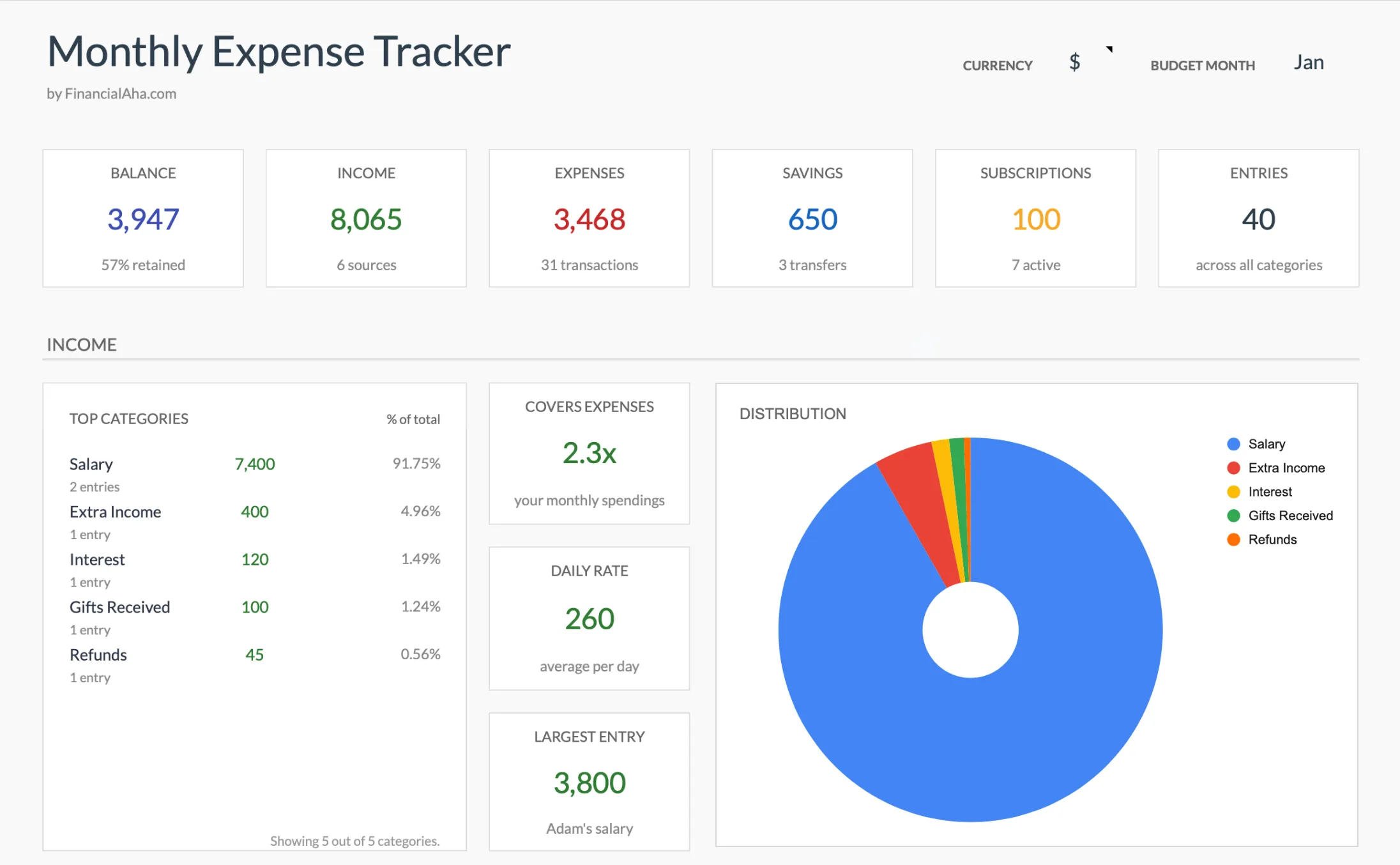 The Monthly Expense Tracker (Premium) rolls entries up into a single summary so a monthly review stays a totals-level glance, not a line-by-line audit.
The Monthly Budget Template adds a Budget Plan sheet, where each category carries a planned amount next to the actual, the difference and the percent spent, over that same editable category list. Good for those wanting more structure without the overwhelm of enterprise-level tracking.
Related
- Monthly Expense Tracker - Simple, sustainable tracking
- Monthly Budget Template - More structure when ready
- Pay Yourself First Budgeting Method
- Expense Categories: How to Organize Your Budget
- How to Build a Budget That Actually Works - Rebuilding around a method you can maintain
- Budget Templates for Visual Thinkers - When a chart-first view is easier to keep up with than rows
Budget burnout signals that an approach needs adjustment, not that you’ve failed. The budget that lasts is usually the one that’s simple enough to maintain: fewer categories, automated fixed costs, and a system treated as a tool rather than a rulebook. If tracking every dollar makes the whole thing miserable, tracking less is a legitimate option, and financial health doesn’t require suffering.
To rebuild with less friction, the Monthly Expense Tracker is the lighter of the two, a transaction log with no targets to set that rolls up into month totals, and the pay-yourself-first method shows how to keep a system running with almost no tracking at all. Burnout is also a common cue that it is time to switch budget templates to something that fits how you actually work.
Frequently asked questions
Isn't detailed tracking better?
Not if you won't do it. A simple system you maintain beats a complex one you abandon. The best budget is the one you actually use.
How will I know where my money goes?
You'll still know - just with broader categories. The extra granularity rarely provides proportional insight.
Won't I overspend without strict tracking?
Many people find they naturally moderate when savings are automated. Strict tracking often triggers rebellion spending, making the problem worse.
What if I need detailed data for a goal?
One approach is to temporarily add detail for a specific purpose, like tracking food spending for a month, then simplify again once you have the insight you needed.
Is it OK to not budget?
Some people do fine without a traditional budget: they automate savings and spend the rest. It tends to work best when detailed tracking causes more stress than it prevents.
How simple is too simple?
If you're meeting savings goals and not accumulating debt, your system is working. Simplicity isn't a problem if you're achieving your goals.
Should I track net worth if I don't budget?
Net worth tracking is often easier than budgeting and provides a valuable high-level view. Worth considering even if you skip detailed expense tracking.
What if my partner wants detailed budgeting?
Some people find compromise works - maybe they track the detail while you engage at summary level. Finding an approach that works for both matters most.
Sources
About this article
Template sheets, categories and outputs checked on 2026-09-10 against the shipped Monthly Expense Tracker (Summary, Transactions, Categories) and Monthly Budgeting (Summary, Budget Plan, Categories) Google Sheets. The financial well-being figure is checked against the Federal Reserve's Survey of Household Economics and Decisionmaking. Last reviewed September 2026.