UAE
Retirement Planning Template for the UAE
Plan your post-UAE retirement in a spreadsheet you control: gratuity estimate, international investments, home country pension entitlements, and projected expenses.
In Depth
Tax-Free Years and the Retirement Destination Question
The UAE's tax-free salary environment creates a real wealth-building window, though the advantage only shows up if savings actually rise. With no income tax taking a slice of each payment, more of it is available to invest. The cost of living in Dubai and Abu Dhabi, and the lifestyle inflation that often follows a raise, can absorb the same amount just as quietly. A plan that puts a number on the gap between what is earned and what is kept is what makes the difference visible.
End-of-service gratuity pays a lump sum when employment ends, calculated at 21 days of basic salary a year for the first five years of service and 30 days a year after that, capped in total at two years' pay. Ten years of service on AED 15,000 of basic salary works out at roughly AED 127,500, a useful sum rather than a retirement fund. Employers in the DIFC have funded the same entitlement through the DEWS scheme since 2020, and since 2023 employers elsewhere in the UAE have been able to join a supervised alternative savings scheme that invests contributions monthly instead of leaving the liability on the books.
Most UAE residents expect to retire somewhere else, which brings a different currency, cost of living and healthcare system into the plan. Long-term visas have shifted the picture at the margin, with the Golden Visa running ten years and a five-year retirement visa open to residents aged 55 and over who meet a savings, income or property condition. For anyone leaving, the target expense figure needs to reflect the destination rather than current UAE costs, and movement between the dirham and the eventual retirement currency is one more variable in a long projection.
UAE
Retirement Planning in the UAE: Key Factors
Retirement planning in the UAE is unusual because most residents are expatriates who expect to relocate. The plan has to account for where retirement happens, not only how much is saved.
End-of-service gratuity is a lump sum, not a pension
Unlike a pension that pays ongoing income, the gratuity is a single payment at the end of employment. The formula is 21 days of basic salary a year for the first five years of service and 30 days a year after that, with the statutory total capped at two years' pay. Someone on AED 15,000 a month in basic salary with ten years of service accrues 255 days of basic pay, roughly AED 127,500. That is a useful sum rather than something built to fund a multi-decade retirement.
Most UAE residents expect to retire in another country
UAE residency runs through a visa rather than a permanent status, though long-term routes now exist: the ten-year Golden Visa, the five-year Green Visa for skilled employees and freelancers, and a five-year retirement visa for residents aged 55 and over who meet a savings, income or property condition. Even so, most expatriates plan on retiring elsewhere, which puts another country's cost of living, healthcare system and currency at the centre of the projection.
Tax-free income changes the arithmetic of saving
With no income tax on salaries, a larger share of gross pay is available to save or invest than in most jurisdictions. Whether that turns into retirement assets depends on what happens to the difference, since UAE living costs and lifestyle spending can absorb it. This is where tracking the actual savings rate, rather than the theoretical one, gives the more useful number.
Home country pension systems may still apply
Depending on nationality, there may be pension entitlements at home from earlier employment, or an option to keep making voluntary contributions from abroad. How the UAE years interact with a home country pension, if at all, is part of the same picture.
Get the Template
Getting Started
Planning UAE Retirement Across Borders
Enter current retirement savings
List everything: UAE bank savings, international investment accounts, estimated end-of-service gratuity or an employer savings scheme balance, home country pension entitlements, property equity in the UAE and at home, and any other long-term savings.
Add annual savings and investment amounts
Enter how much goes into savings and investments each year from the UAE salary. Include regular investment contributions, property loan payments that build equity, and any home country pension contributions still being paid.
Pick a retirement location and estimate its costs
The retirement location sets the cost of living. Housing, healthcare and daily expenses in the target country are the figures the expense projection needs, rather than current UAE costs.
Factor in currency considerations
Saving in AED while planning to retire into a different currency leaves purchasing power exposed to exchange rate movement. Some people spread savings across currencies to soften that exposure.
Run different scenarios
Test different retirement ages, locations and spending assumptions. Retiring at home versus in a third country, or stopping early versus working longer, each produces a different number worth looking at.
See It In Action
What the template looks like
Browse through the template to see the dashboard, the entry sheets, and the summaries it produces, all adaptable to your local financial setup.
- Built-in currency selector
- Calculations update automatically
- Visual summaries of your numbers
- No setup required
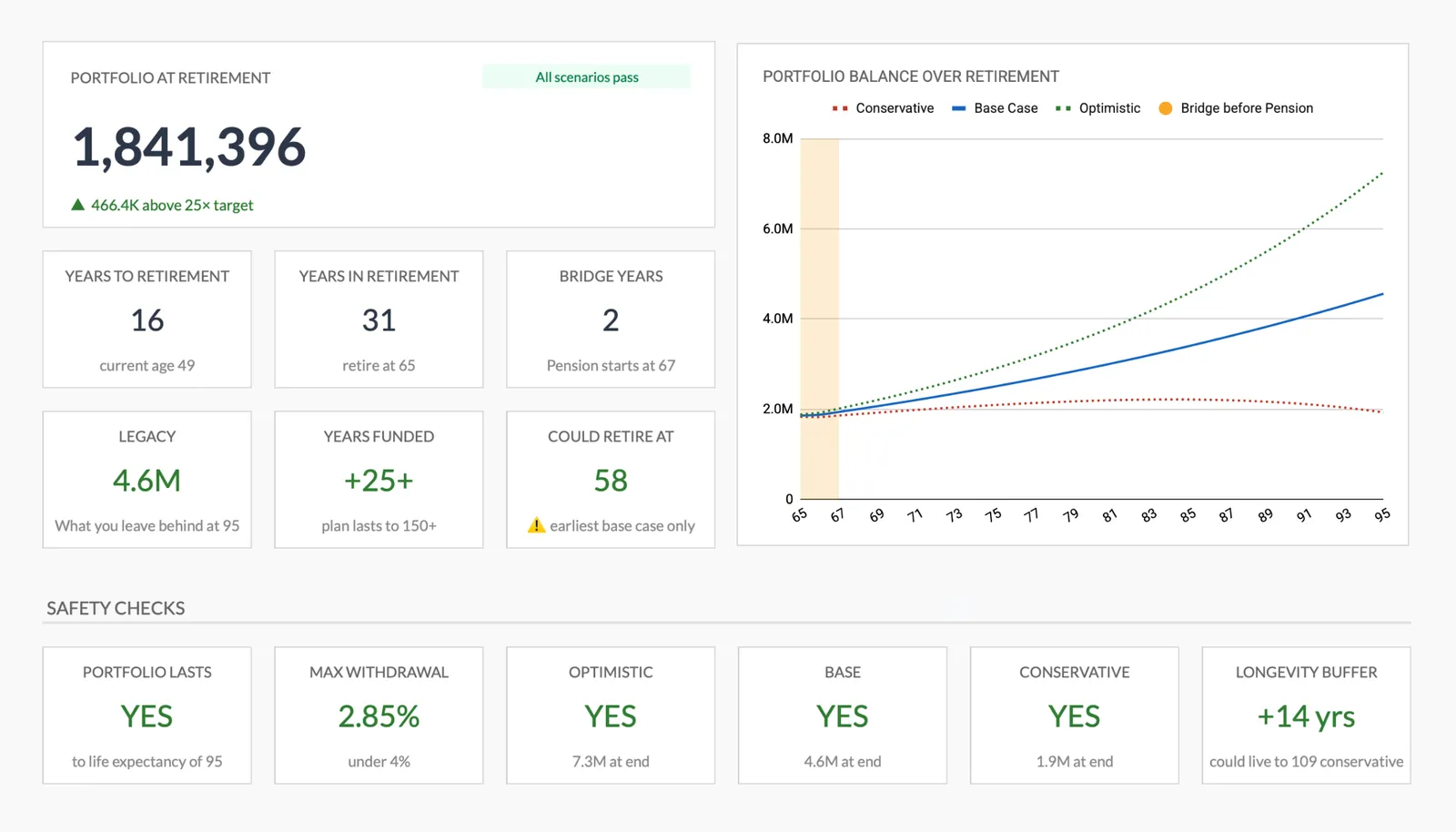
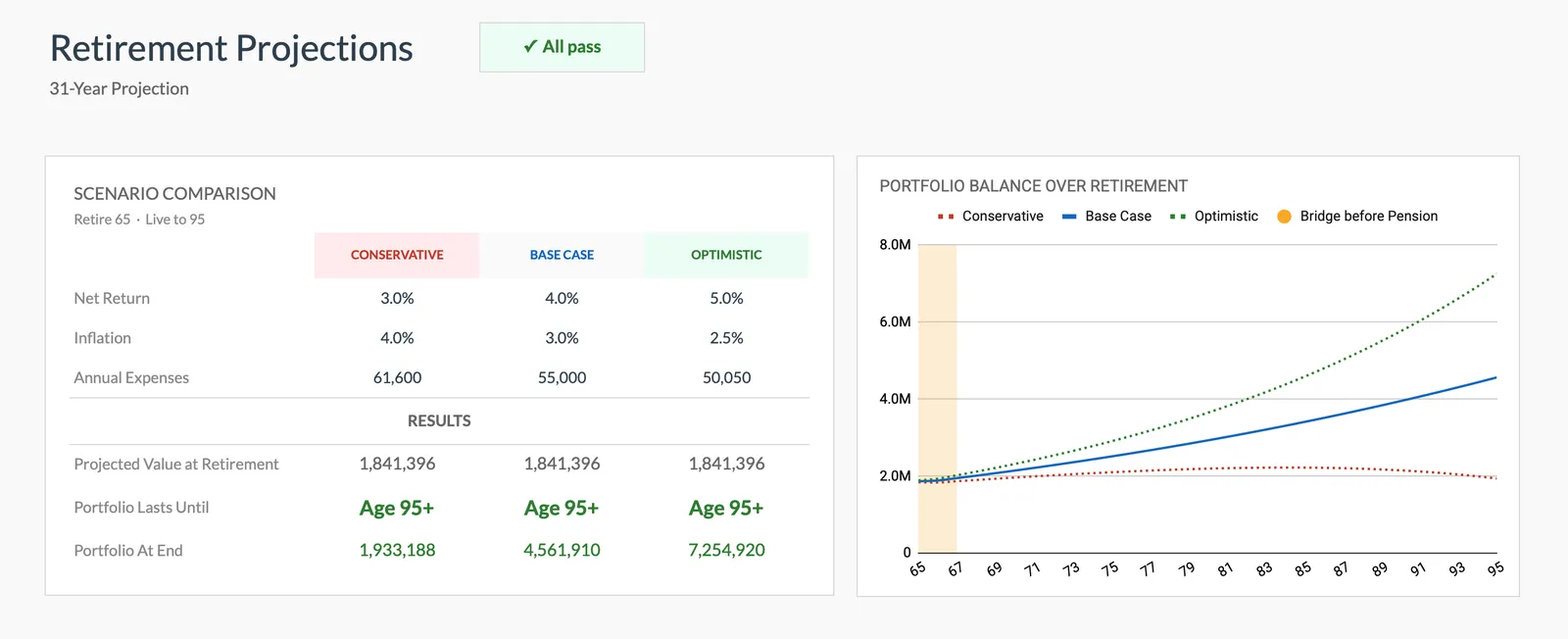
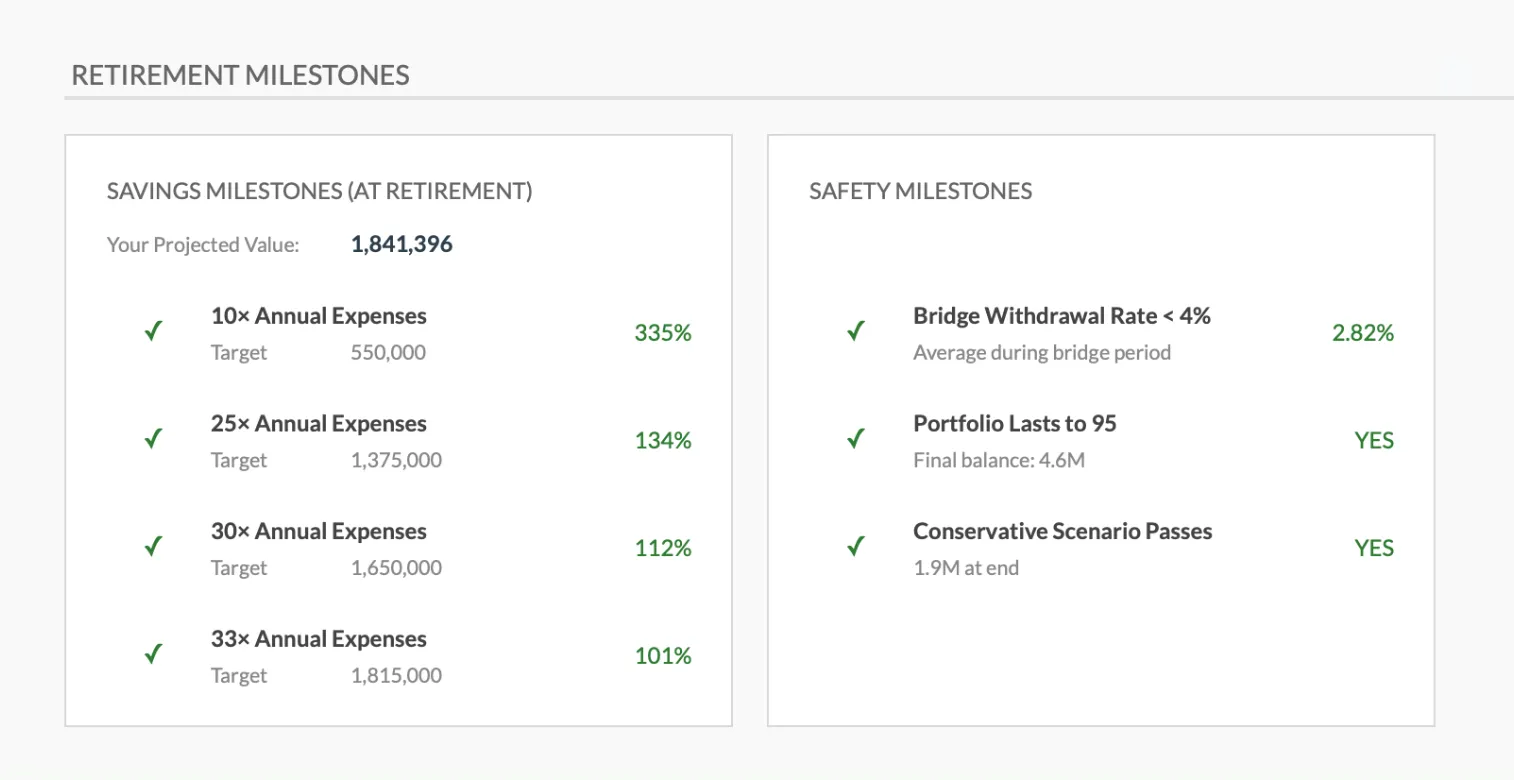
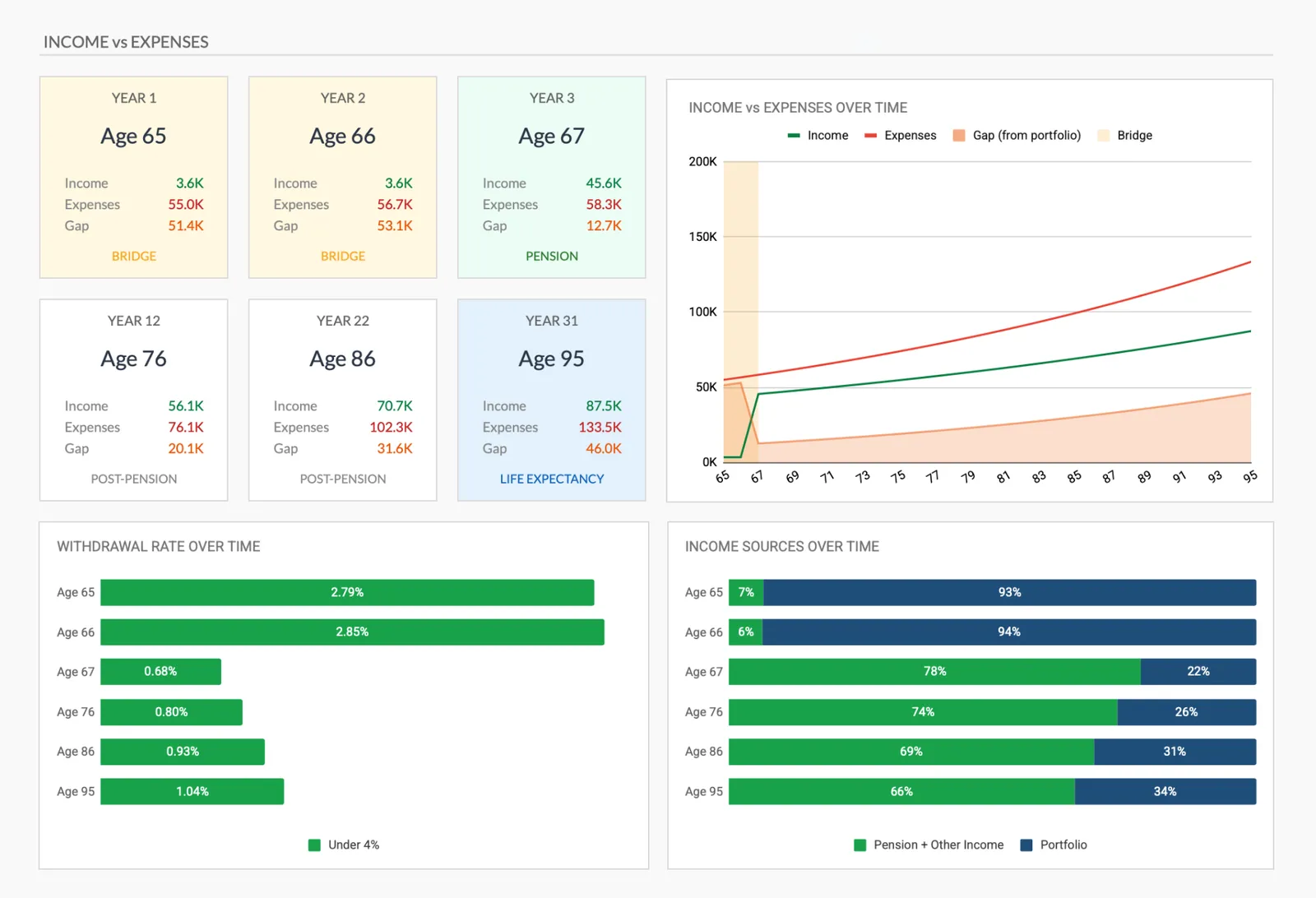
Complete retirement overview with projections
Project your retirement savings growth
Track progress toward retirement goals
Plan your retirement income against expenses
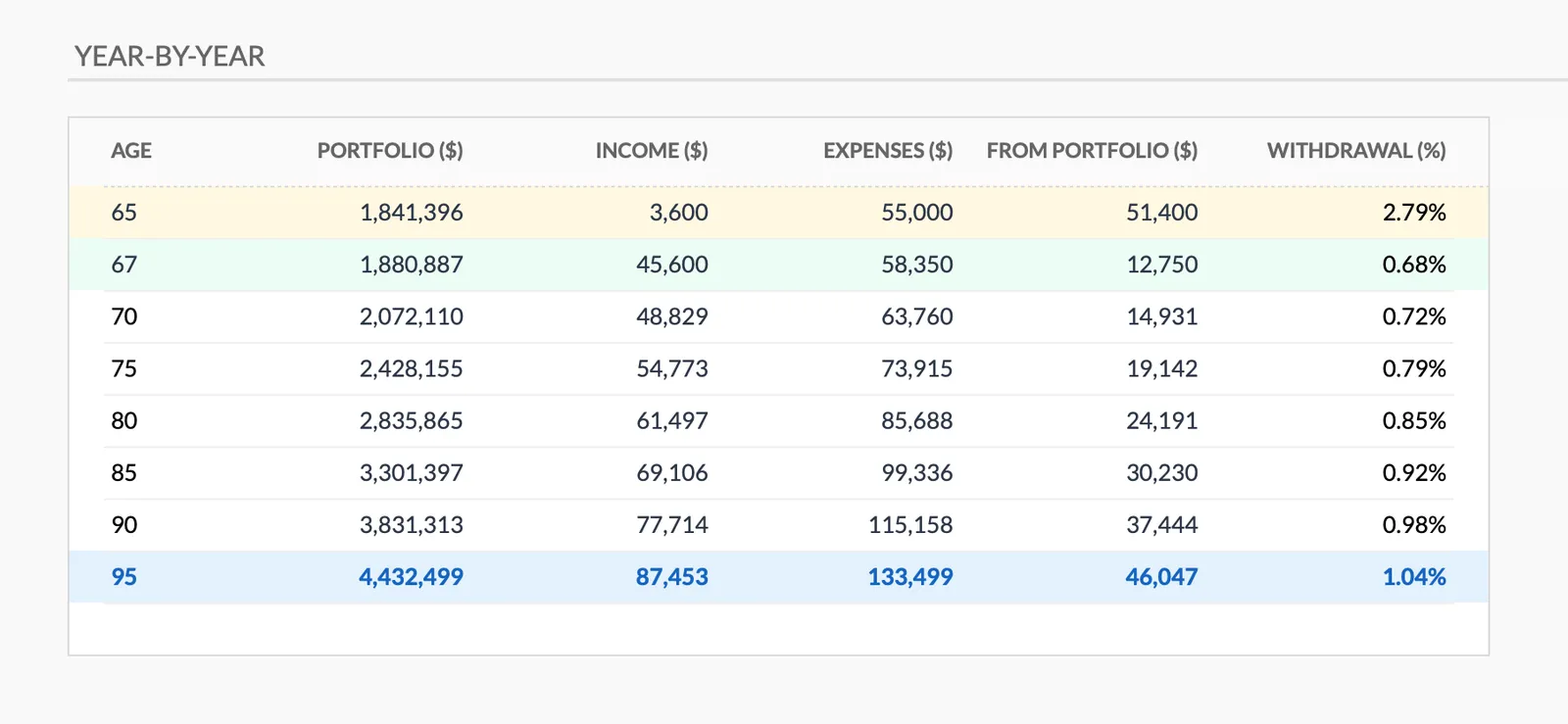
Detailed year-by-year retirement projection
Common Questions
Retirement Planning Template for the UAE - FAQ
How much do I need to retire from the UAE?
That depends on the retirement location and the intended lifestyle, since retiring in Southeast Asia and returning to London produce very different figures. One common rule of thumb multiplies estimated annual retirement expenses by 25, which corresponds to a 4% withdrawal rate. It was derived from US market history, so it works as a starting point for a projection rather than as a guarantee. The template runs the projection on whatever assumptions you enter.
Is the end-of-service gratuity enough for retirement?
It is usually a modest share of the total. Ten years of service at the statutory rate comes to about 8.5 months of basic salary, and the entitlement is capped at two years' pay however long the tenure runs. Set against a retirement spanning twenty or thirty years, the gratuity is one component rather than the plan.
How do I invest for retirement in the UAE?
Residents typically use some combination of international brokerage accounts, UAE-licensed investment platforms, property, and investments kept in their home country. Each differs in cost, in how the home country taxes it, and in how easily it travels if you leave. Which mix fits is a personal decision tied to risk tolerance and timeline. The template tracks whatever mix you end up with in one place.
What happens to my savings when I leave the UAE?
Gratuity or the savings scheme balance is paid out at the end of employment, and international brokerage accounts generally travel with you. UAE bank accounts are tied to residency, so many are closed or converted to a non-resident basis once a visa is cancelled, and payments attached to them stop. Confirming the bank's position and settling local loans before departure is part of what the transition involves.
Should I maintain my home country pension while in the UAE?
The rules vary by country. Some systems accept voluntary contributions from abroad, UK National Insurance among them, and contribution gaps can reduce a later entitlement. Others do not, and some treat overseas years differently again. Checking the specific rules of the relevant country is the only way to know whether the UAE years count.
Can't find the answer you're looking for? Contact our team
Explore More
Free Tools for the UAE
Ready to get started?
Download instantly and start managing your finances, or contact us to design a custom template package for your needs.
Tax rules, rates, and contribution limits change, and official publications can themselves lag behind the law in force. We review these figures on a best-effort basis against sources we consider authoritative, but we cannot guarantee they are current, complete, or that better sources do not exist, and nothing here is tax, legal, or financial advice. For decisions, the relevant government authority is the reference.