South Africa
Retirement Planning Template for South Africa
See how your retirement annuities, pension fund, TFSA, and other savings stack up against projected expenses, in a Google Sheets template you own.
In Depth
The Two-Pot System and What It Changes
South Africa's retirement landscape shifted meaningfully when the two-pot system took effect on 1 September 2024. New contributions are now split into a savings component of one third, accessible once per tax year with a R2,000 minimum, and a retirement component of two thirds that stays locked until retirement. Balances accrued before that date sit in a vested component under the older rules. The design creates emergency liquidity that did not previously exist, and every rand taken out of the savings component is a rand that stops compounding.
The SASSA older persons grant pays R2,400 a month from age 60 and R2,420 from age 75, both means-tested and well below typical household spending. That leaves private retirement savings through pension funds, provident funds, and retirement annuities carrying most of the weight. Contributions up to 27.5% of the greater of remuneration or taxable income are deductible, capped at R430,000 a year since 1 March 2026, so part of each contribution is money that would otherwise have gone to SARS.
Inflation assumptions matter more than almost any other input in a long-range projection. The Reserve Bank adopted a 3% inflation objective with a one point tolerance band in 2025, a lower anchor than the 3% to 6% range used before, and running numbers in real terms rather than nominal ones keeps a thirty-year projection legible. Regulation 28 permits up to 45% offshore exposure inside retirement funds, which is the framework within which any diversification away from the JSE happens.
South Africa
Retirement Planning in South Africa: Key Factors
South Africa's retirement landscape combines employer pension funds, personal retirement annuities, and limited state support. How these interact shapes any projection.
The state old-age grant is a modest safety net
The South African Social Security Agency (SASSA) pays an older persons grant of R2,400 a month for qualifying people aged 60 to 74, and R2,420 from age 75, according to gov.za. It is means-tested on both income and assets, and it sits well below typical household spending, so most retirement income in South Africa comes from private savings.
Retirement fund contributions are tax-deductible
Contributions to pension funds, provident funds, and retirement annuities are tax-deductible up to 27.5% of the greater of remuneration or taxable income. The annual cap rose from R350,000 to R430,000 with effect from 1 March 2026. In practice the deduction means part of each contribution is money that would otherwise have gone to SARS, which is one reason contribution levels are worth modelling rather than guessing.
The two-pot system changes how retirement savings work
Since 1 September 2024, new retirement fund contributions are split into a savings component (one third, with one withdrawal allowed per tax year, minimum R2,000) and a retirement component (two thirds, locked until retirement). Balances built up before that date remain in a vested component under the older rules. Projections built before September 2024 will not reflect this split.
Inflation and currency movements affect long-term planning
The South African Reserve Bank moved to a 3% inflation objective with a tolerance band of one percentage point either side in 2025, lower than the 3% to 6% range that framed the previous two decades. The rand has also lost ground against major currencies over long periods. Both points feed directly into which inflation assumption a long-range projection uses and how much offshore exposure a portfolio carries.
Get the Template
Getting Started
Setting Up for South African Retirement Planning
Enter current retirement savings
List all retirement-related balances: employer pension or provident fund (from your latest benefit statement), retirement annuity, tax-free savings account, unit trusts, and any other long-term savings earmarked for retirement.
Enter pension, RA, and TFSA contributions
Enter employer and employee pension fund contributions, RA debit orders, TFSA contributions, and any other regular savings. This drives growth projections in the template.
Estimate retirement expenses in today's rands
Project monthly retirement spending across housing (rates and maintenance once a bond is settled), medical aid, groceries, utilities, transport, and leisure. Many households find some categories shrink in retirement while medical costs move the other way.
Choose the assumptions the projection runs on
The template takes a growth rate and an inflation rate as inputs. Long-run JSE equity returns have historically run in double digits nominally, balanced funds lower, and the Reserve Bank now targets 3% inflation with a band of one point either side. Working in real terms, that is growth after inflation, keeps the projection readable when nominal figures look flattering.
Run different scenarios
Test different retirement ages (55, 60, 65), contribution levels, and return assumptions. South African law allows retirement annuity access from age 55, and comparing scenarios shows what each additional year of contributions and growth does to the outcome.
See It In Action
What the template looks like
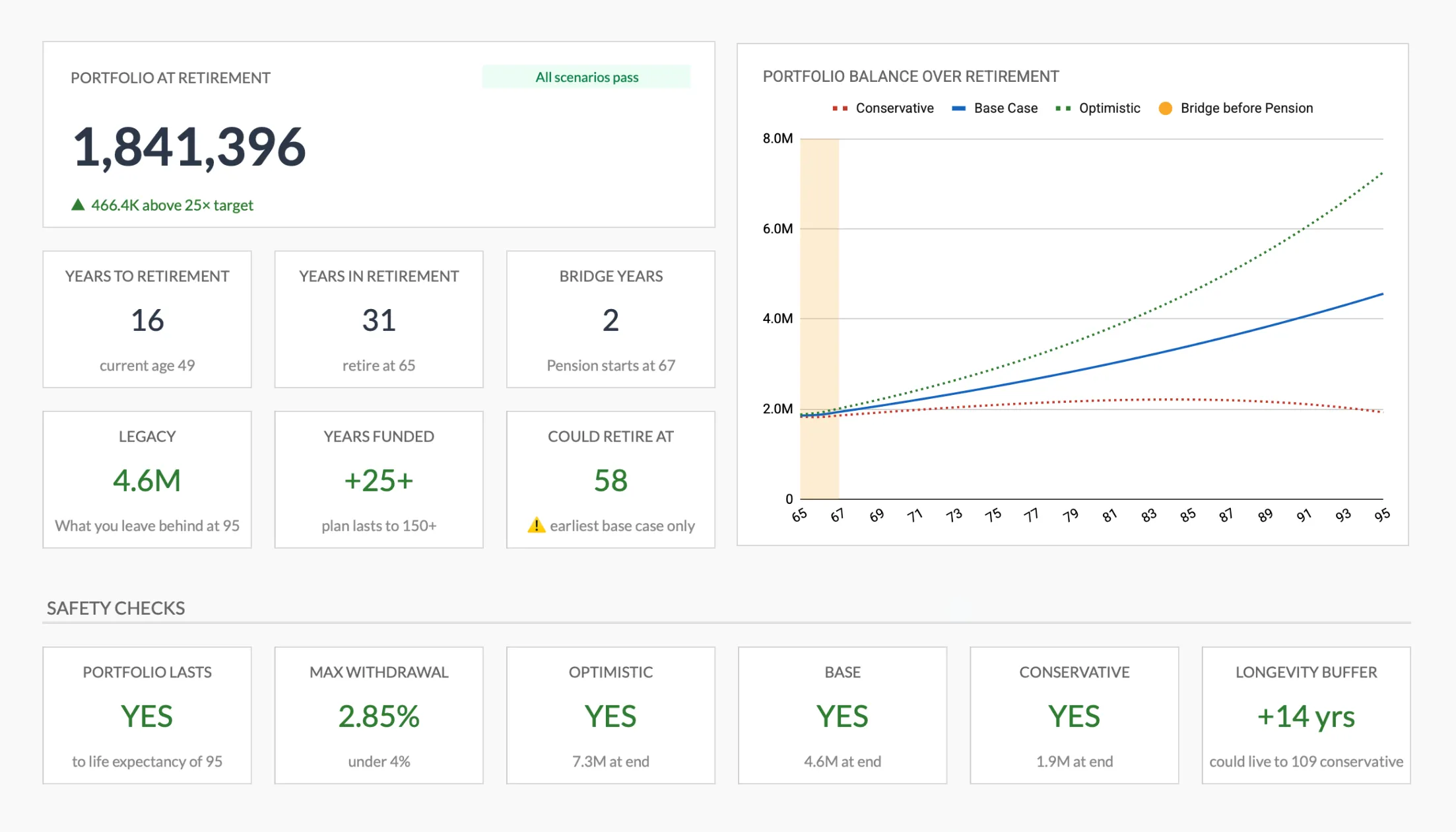
Browse through the template to see the dashboard, the entry sheets, and the summaries it produces, all adaptable to your local financial setup.
- Built-in currency selector
- Calculations update automatically
- Visual summaries of your numbers
- No setup required
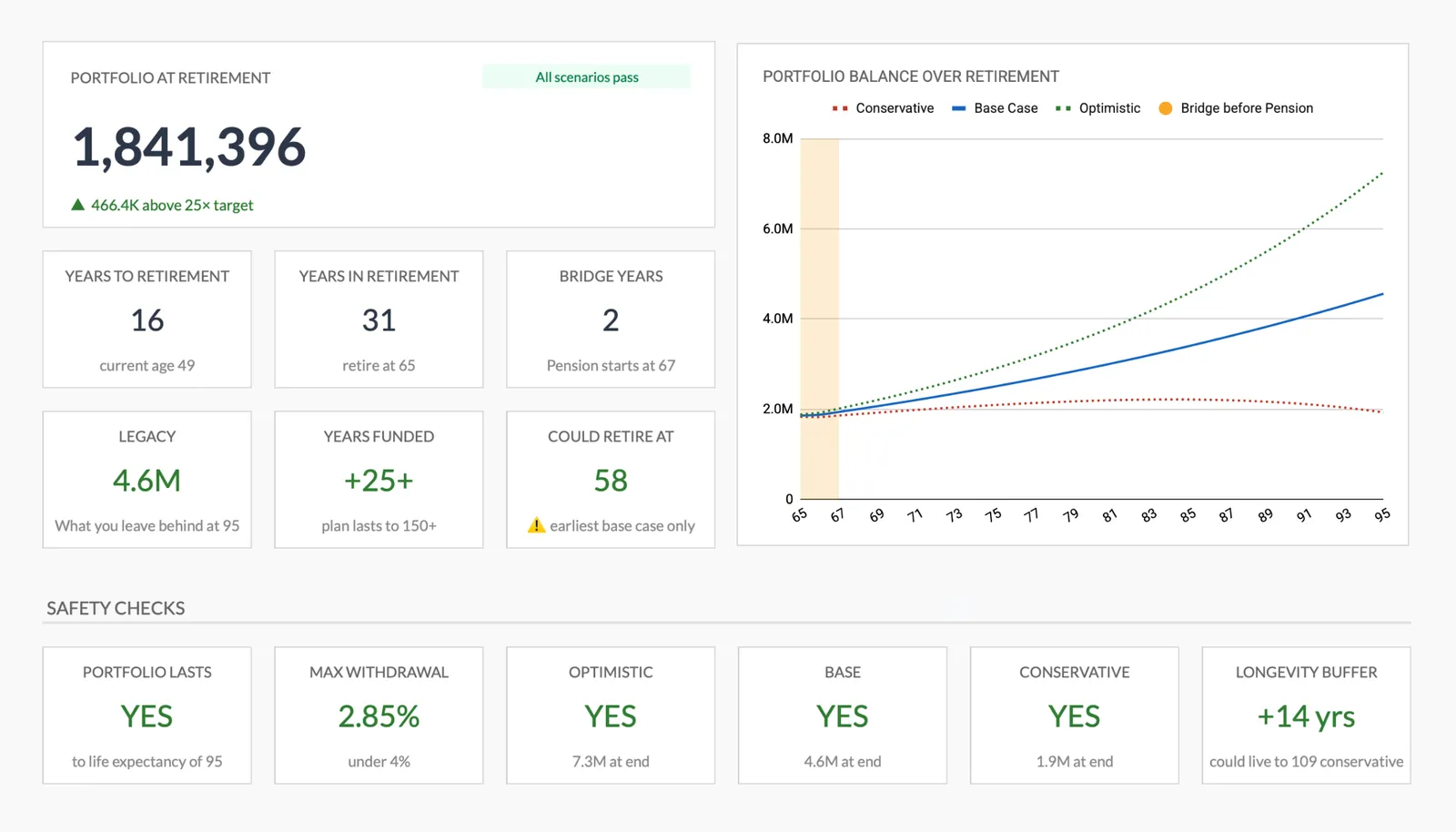
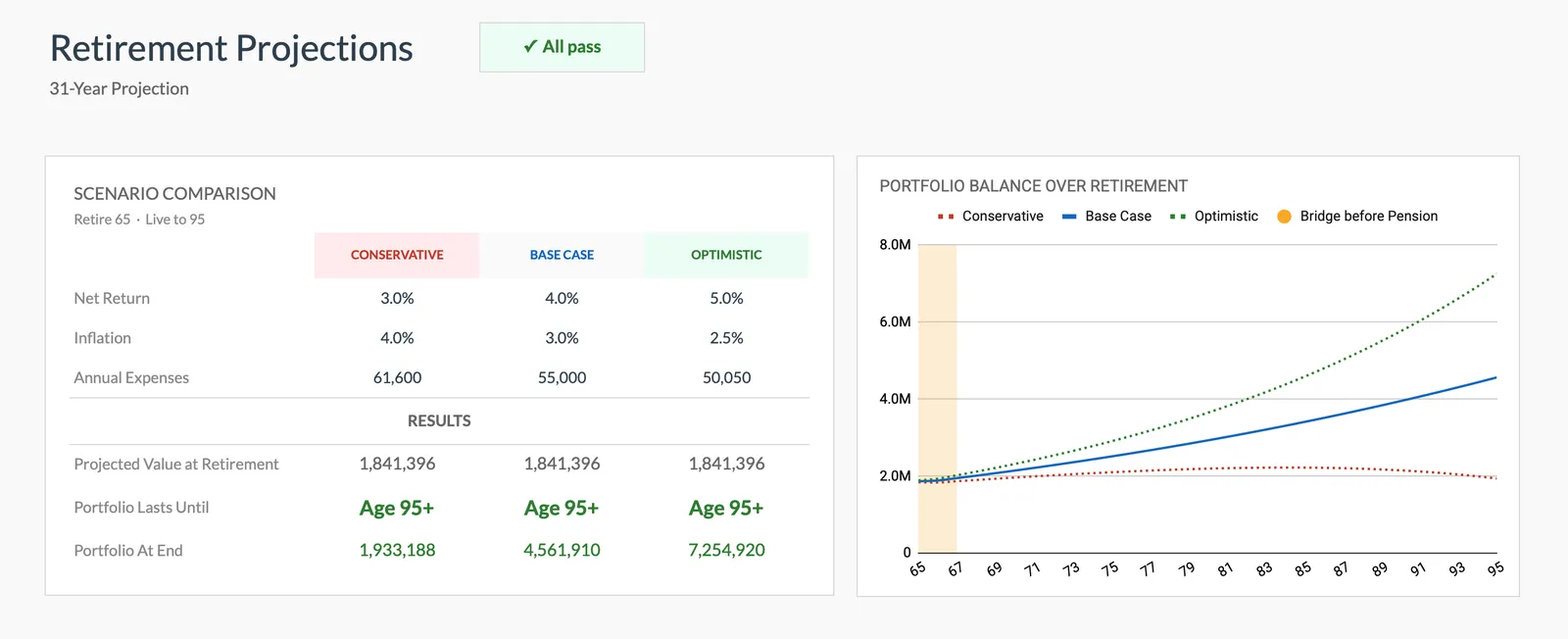
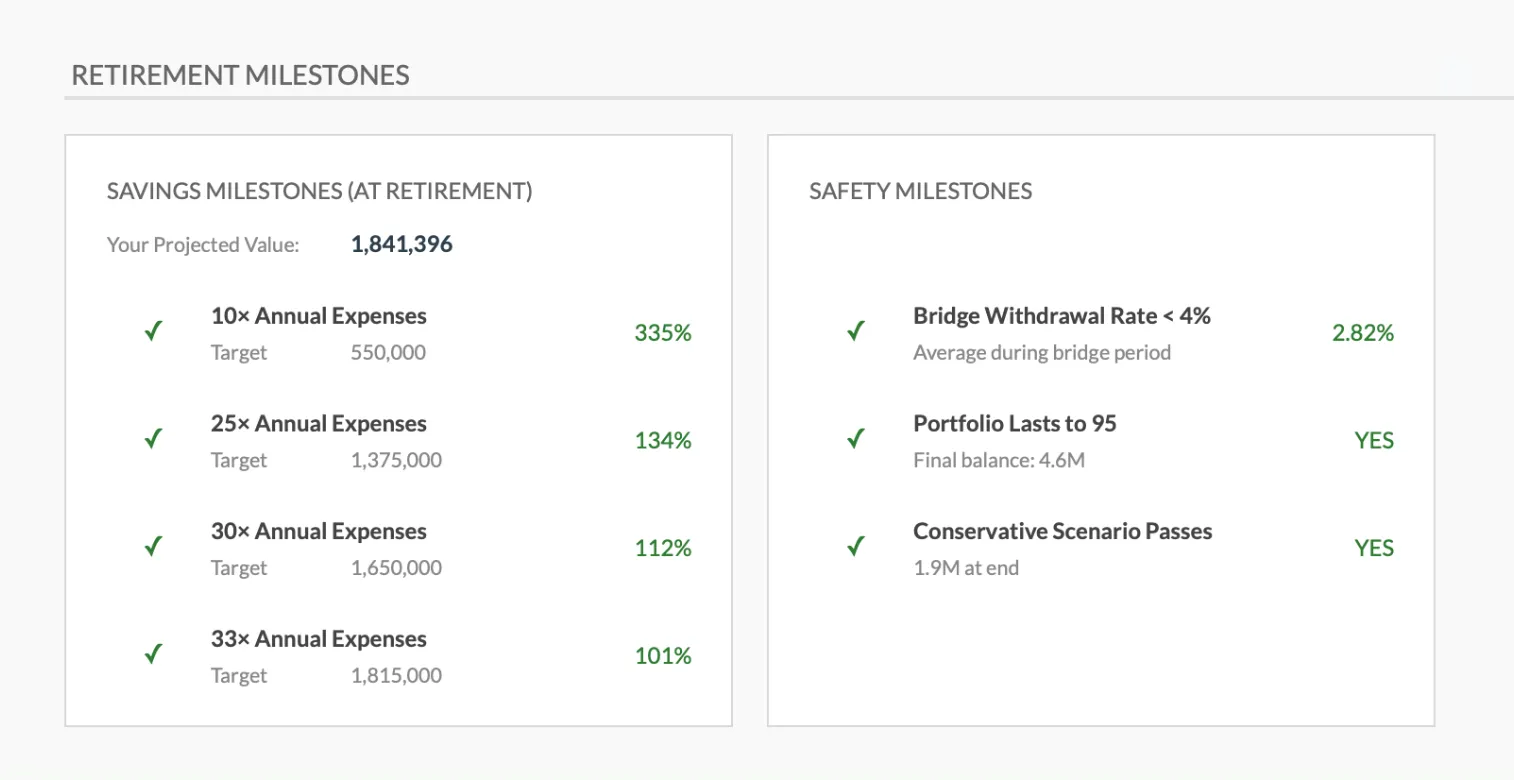
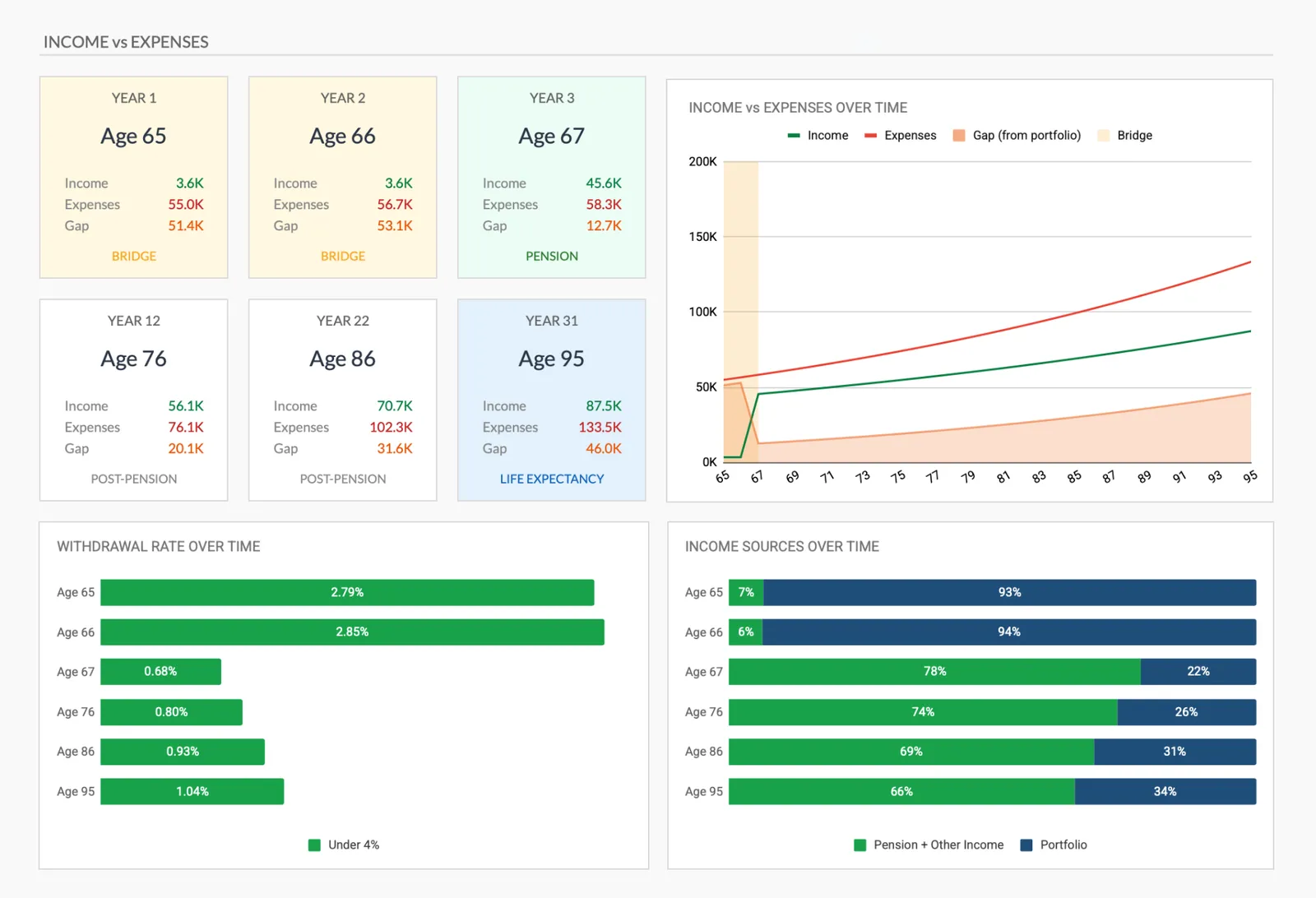
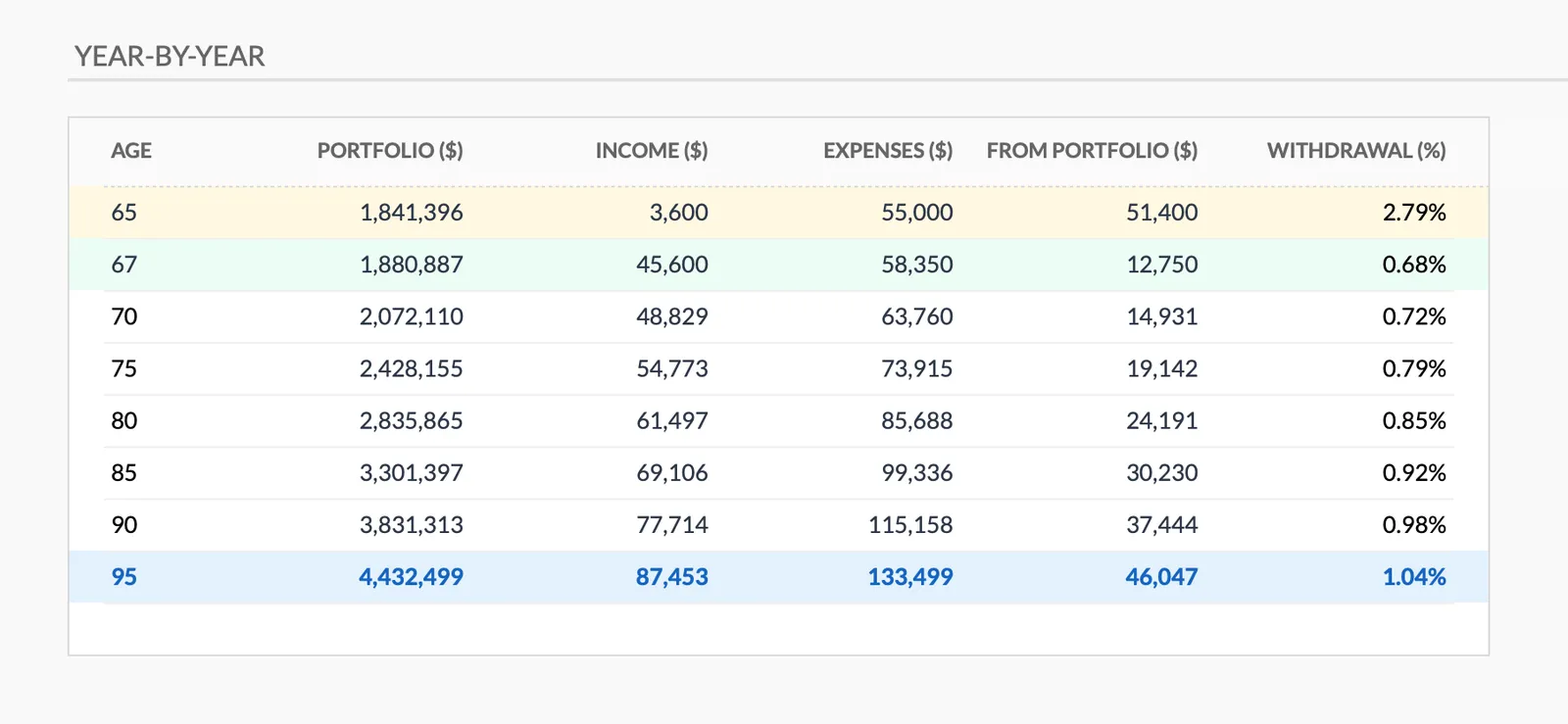
Complete retirement overview with projections
Project your retirement savings growth
Track progress toward retirement goals
Plan your retirement income against expenses
Detailed year-by-year retirement projection
Common Questions
Retirement Planning Template for South Africa - FAQ
How much do I need to retire in South Africa?
A widely quoted rule of thumb is a retirement income of around 75% of final salary, which at typical drawdown rates implies a lump sum of roughly 15 to 17 times the desired annual income. Rules of thumb are blunt, though. The template works from projected expenses instead, so the target reflects an actual spending estimate.
When can I access my retirement funds?
Retirement annuities can be accessed from age 55. Employer pension and provident funds become accessible when leaving employment, with preservation in a preservation fund as the alternative to taking cash. Under the two-pot system, one withdrawal per tax year from the savings component is allowed regardless of age.
What tax do I pay on retirement withdrawals?
At retirement, the first R550,000 of lump sums is taxed at 0% under a lifetime cumulative table, with amounts above that taxed at 18% to 36%. Using the funds to buy a living or life annuity instead means only the monthly income is taxed, at marginal rates. The tax treatment is one of the differences between the lump sum and annuity routes.
Living annuity vs. life annuity - what's the difference?
A living annuity lets the retiree set a drawdown rate between 2.5% and 17.5% of capital a year and carries the investment risk with them. A life annuity pays a guaranteed monthly amount for life, with the capital surrendered to the insurer. Living annuities offer flexibility and the possibility of depleting capital; life annuities remove that risk and the flexibility with it.
How does offshore exposure fit into a retirement plan?
Regulation 28 caps offshore exposure in retirement funds at 45% of assets, so pension funds and retirement annuities can hold a substantial offshore allocation within that limit. TFSA and discretionary investments have no such cap. The usual arguments made for it are rand depreciation risk and the concentration of the JSE, and how much to hold is a question for a licensed adviser.
How does the two-pot system affect my retirement planning?
One third of new contributions goes to an accessible savings component and two thirds to a locked retirement component. The savings component provides emergency liquidity, and money withdrawn from it stops compounding, which shows up in a long-range projection. Contribution figures in the template can be adjusted to compare a plan with regular savings withdrawals against one without.
Can't find the answer you're looking for? Contact our team
Explore More
Free Tools for South Africa
Ready to get started?
Download instantly and start managing your finances, or contact us to design a custom template package for your needs.
Tax rules, rates, and contribution limits change, and official publications can themselves lag behind the law in force. We review these figures on a best-effort basis against sources we consider authoritative, but we cannot guarantee they are current, complete, or that better sources do not exist, and nothing here is tax, legal, or financial advice. For decisions, the relevant government authority is the reference.