Australia
Annual Tax Planner for Australia
Organize your Australian tax picture, covering employment income, work deductions, super contributions, the Medicare levy and capital gains, in a Google Sheets template you own.
In Depth
Salary Sacrifice, Franking Credits, and the Australian Tax Landscape
Australian tax planning operates on a July-to-June financial year, which creates a natural planning rhythm. The end of financial year in June is when many people make last-minute super contributions or prepay deductible expenses. Having a year-round record of income and deductions means June 30 is less of a scramble and more of a final check against an already-organised picture.
Salary sacrifice into super is one of the most commonly used tax planning arrangements available to Australian employees. Contributions made this way are taxed at 15% inside the fund, against marginal rates that reach 45% plus the Medicare levy outside it. The limit is the concessional cap, $32,500 for the 2026-27 year, and employer contributions count toward it, so a running total of both employer and voluntary amounts is what keeps a cap breach from turning up at lodgment.
Franking credits are a uniquely Australian feature of the tax system. When Australian companies pay corporate tax on their profits, the tax credit flows through to shareholders. For someone in a lower tax bracket, these credits can exceed their personal tax liability, resulting in a refund of the excess. Tracking dividend income alongside the attached franking credits gives a more accurate picture of after-tax investment returns.
The 50% capital gains tax discount for assets held longer than 12 months creates a strong incentive for long-term holding. Selling shares or property just before the 12-month mark versus just after can mean a significant difference in the tax bill. Recording purchase dates alongside cost base information throughout the year makes these calculations straightforward when it is time to lodge the return.
Australia
Tax Planning in Australia: Key Considerations
Australia's tax system runs on a July-June financial year with self-assessment for many taxpayers. Understanding the main deductions and offsets helps you plan effectively.
Individual tax rates and the tax-free threshold
The first $18,200 of income is tax free. For the 2026-27 year the rates then step up: 15% from $18,201 to $45,000, 30% from $45,001 to $135,000, 37% from $135,001 to $190,000, and 45% above $190,000 (rate table). The 16% rate that applied in 2025-26 dropped to 15% on 1 July 2026, and a further cut to 14% is legislated for 1 July 2027. The Medicare levy adds 2% for most taxpayers. Knowing your marginal rate is what makes the value of a deduction calculable.
Work-related deductions can be significant
Work-related expenses that can be claimed include uniforms, tools, home office running costs, professional development, union fees and work-related travel. The revised fixed rate method for working from home is 70 cents per hour from the 2024-25 year onward, up from 67 cents, and it requires a record of the hours actually worked at home. The 80 cents per hour COVID shortcut method ended after 2021-22. Written evidence is needed for individual claims, although the long-standing exception for total work-related claims of $300 or less still applies. Logging expenses through the year is what makes a claim substantiable at lodgment.
Super contributions offer tax advantages
Salary-sacrificed super contributions are taxed at 15% inside the fund, within the concessional cap of $32,500 for 2026-27, rather than at your marginal rate. For someone on the 37% step that is a difference of 22 cents in the dollar on income tax, and a little more once the Medicare levy is counted. After-tax contributions give no upfront deduction but sit in a low-tax environment afterwards.
Capital gains tax and the 50% discount
Profits from selling assets (shares, property, crypto) held for more than 12 months receive a 50% CGT discount - only half the gain is added to taxable income. Assets held less than 12 months are taxed on the full gain. The main residence is exempt from CGT. Tracking purchase prices (cost base) throughout the year makes CGT calculations at tax time straightforward.
Get the Template
Getting Started
Making the Tax Planner Work for Australian Tax
Enter all income sources
List employment income (from the income statement your employer finalises through Single Touch Payroll and shows in myGov), interest and dividends including franking credits, rental income, capital gains, and any other assessable income. Use the gross figures.
Track work-related deductions year-round
Log deductible expenses as they occur: hours worked from home, work uniforms and laundry, professional subscriptions, self-education, work-related travel, and tools or equipment. Keep receipts, since the ATO expects written evidence for claims beyond the $300 total exception.
Monitor super contributions
Track concessional contributions, meaning employer plus salary sacrifice, against the $32,500 cap for 2026-27. Your super fund shows year-to-date contributions. Amounts above the cap are added back to assessable income and taxed at your marginal rate, with a 15% offset for the tax the fund already paid.
Record investment income and costs
For shares, track dividends received and franking credits attached. For rental properties, track rental income alongside deductible expenses (interest, repairs, depreciation, agent fees). For capital gains, record purchase and sale dates and prices.
Prepare for tax time in July-October
The Australian financial year ends 30 June, and returns are due by 31 October for self-lodgers, or later if you are registered with a tax agent before that date. Having the year's records already organised turns lodgment into a check rather than a search.
See It In Action
What the template looks like
Browse through the template to see the dashboard, the entry sheets, and the summaries it produces, all adaptable to your local financial setup.
- Built-in currency selector
- Calculations update automatically
- Visual summaries of your numbers
- No setup required
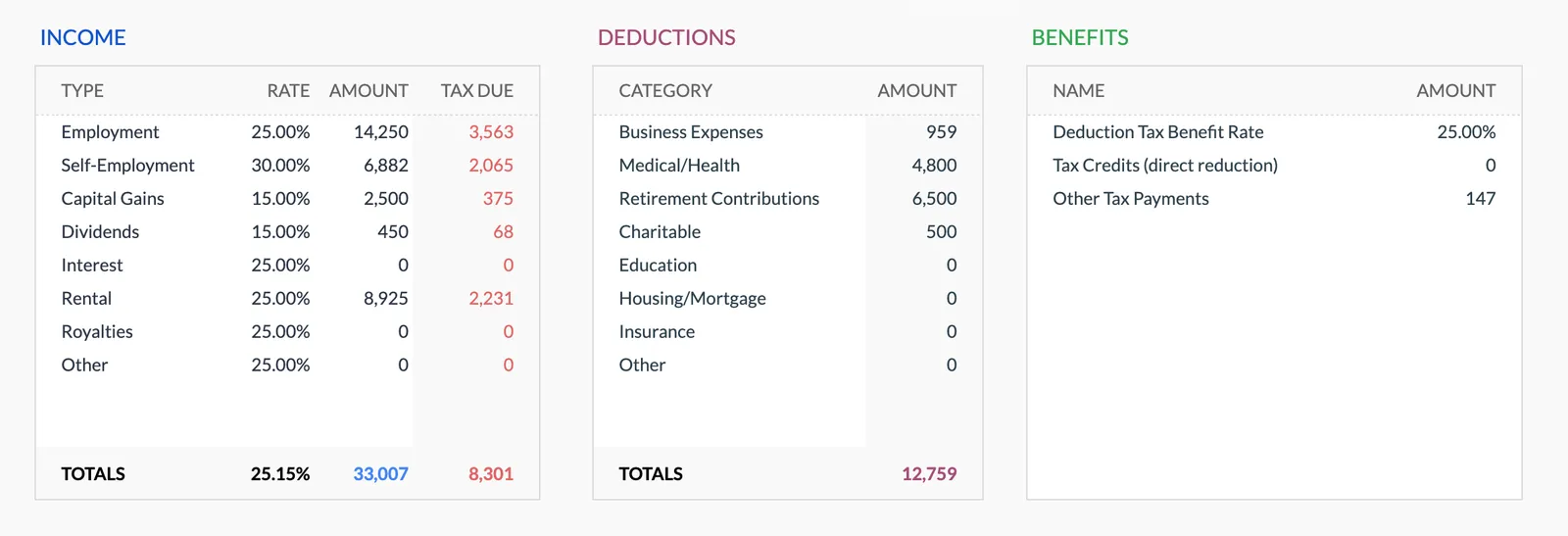
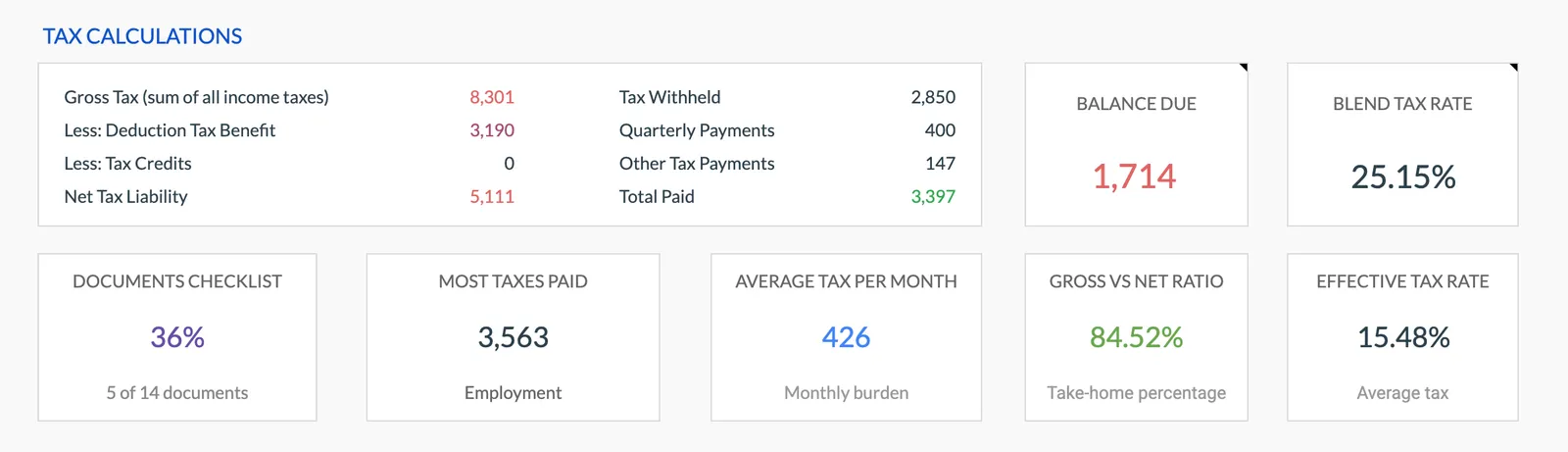
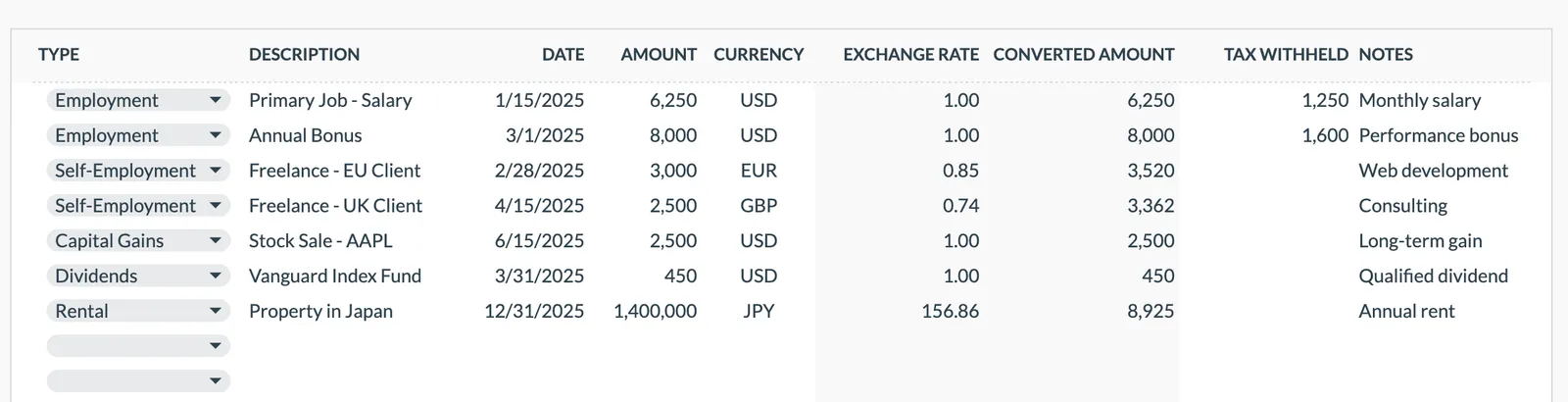
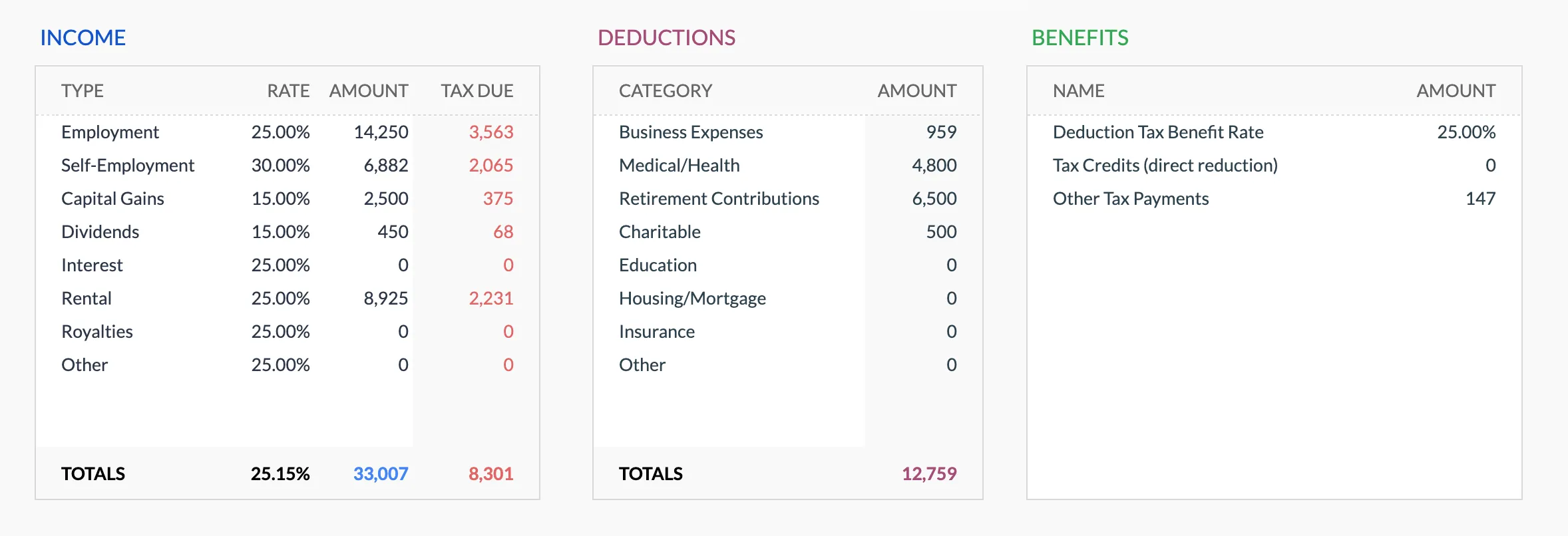
Annual tax overview with key figures
Detailed tax breakdown and projections
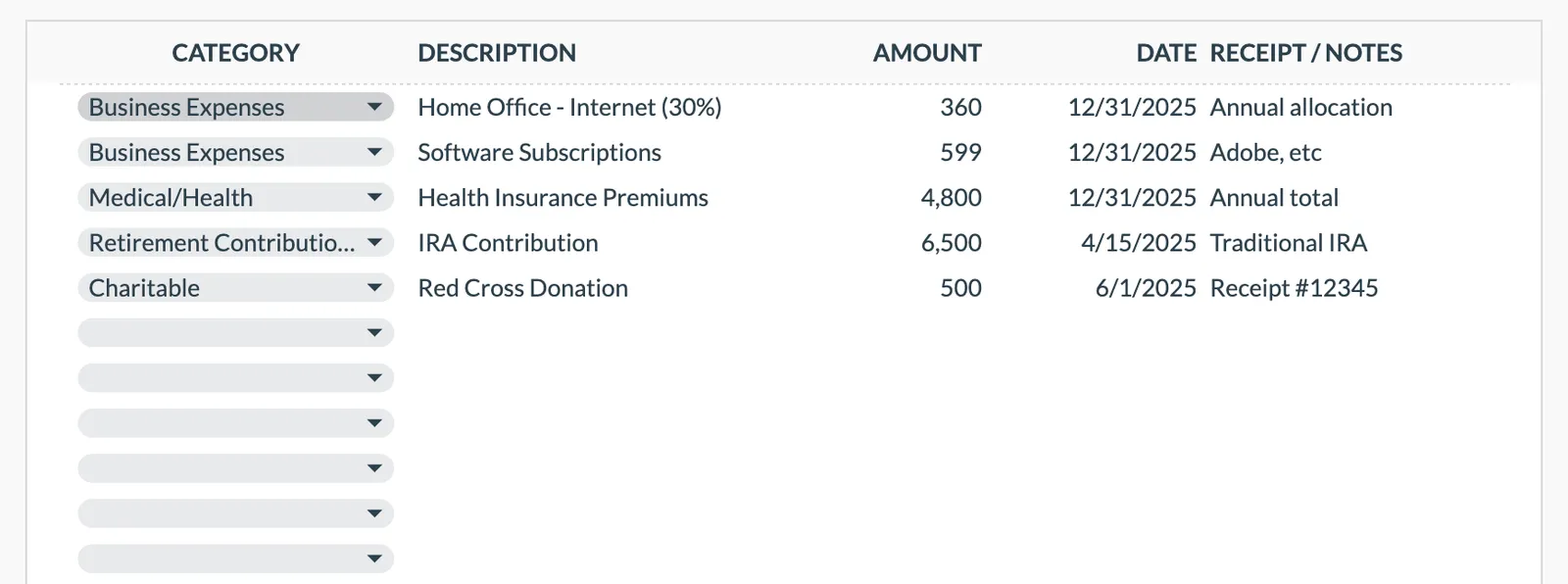
Track all income sources for tax purposes
Organize and track tax deductions
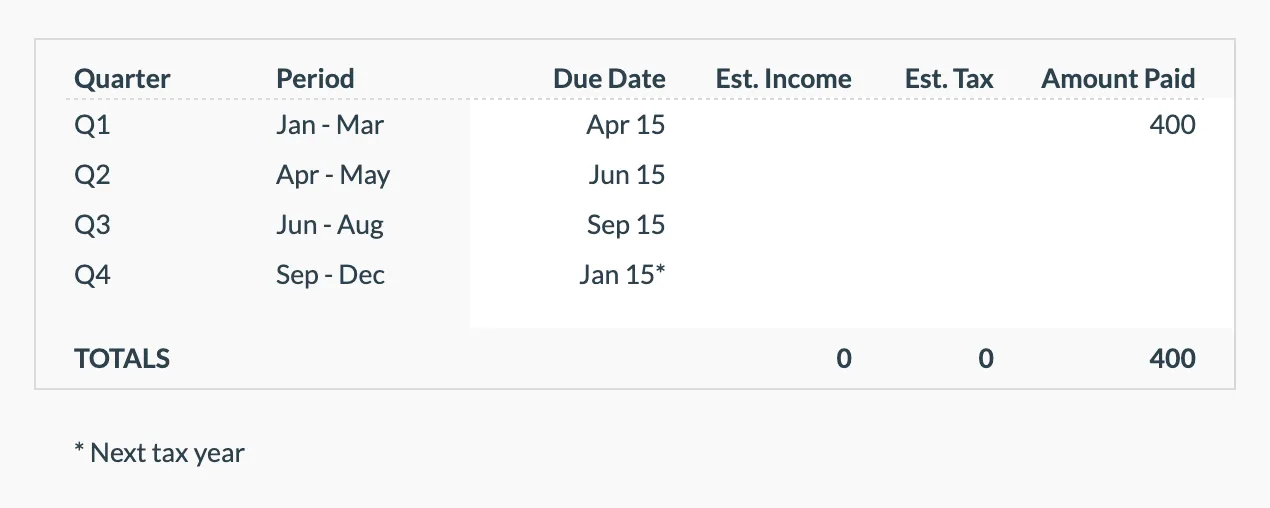
Plan and track quarterly estimated tax payments
Common Questions
Annual Tax Planner for Australia - FAQ
Does this replace lodging my return through myTax or a tax agent?
No. This template helps organize your tax information throughout the financial year. You still need to lodge your return through myTax (ATO online service) or a registered tax agent. The template makes that process easier by having everything in one place.
Does it calculate my tax refund?
The template organizes income and deductions but doesn't calculate the final tax bill. For estimates, use the ATO's online tax calculator or the free income tax calculator on this site.
How do I track franking credits?
When you receive a franked dividend, record both the dividend amount and the franking credit. Franking credits are added to your assessable income but also provide a tax offset dollar-for-dollar. If your credits exceed your tax bill, you may receive a refund of the excess.
Can I track negative gearing deductions?
Yes. Add your rental property income and all deductible expenses (interest, council rates, repairs, depreciation, insurance, property management fees). If expenses exceed income, the loss reduces your other taxable income - that's negative gearing.
When does the Australian financial year start?
July 1. The financial year runs July 1 to June 30. Tax returns for the completed year can be lodged from July 1, with the deadline of October 31 for self-lodgers. If you use a registered tax agent, you may have a later deadline.
Can't find the answer you're looking for? Contact our team
Explore More
Free Tools for Australia
Ready to get started?
Download instantly and start managing your finances, or contact us to design a custom template package for your needs.
Tax rules, rates, and contribution limits change, and official publications can themselves lag behind the law in force. We review these figures on a best-effort basis against sources we consider authoritative, but we cannot guarantee they are current, complete, or that better sources do not exist, and nothing here is tax, legal, or financial advice. For decisions, the relevant government authority is the reference.