
The lease-versus-buy answer turns on one thing: how long you keep the car. Hold it past the loan payoff and buying wins, often costing a little over half of serial leasing over ten years; swap cars every two or three years and leasing can come out ahead. On a $35,000 car, buying and keeping it runs about $31,800 over a decade against roughly $58,800 to lease continuously.
The lease vs. buy debate generates strong opinions, usually from people who’ve already made their choice and want to feel good about it. Lease fans love the lower payment. Buying fans love having no payment at all once the loan is done. Both are right - in their specific situations.
The actual answer depends on one thing: how long do you keep cars?
The Lease vs. Buy Calculator compares both options with your numbers. No signup required.
Two Different Ways to Pay for the Same Thing
When you buy a car, you’re paying for the whole vehicle - all of its depreciation, from new to eventual trade-in or scrapyard. You own the asset the entire time.
When you lease, you’re paying for just the depreciation during the lease term, plus interest (called “money factor” in lease jargon) and fees. At the end, you hand back the keys. No asset, but also no further obligation.
This fundamental difference is why short-term costs favor leasing and long-term costs favor buying.
Three Years In: Leasing Looks Good
Take a $35,000 car. Here’s where things stand after 36 months:
Buying (with a loan):
- $5,000 down, $30,000 financed at 6% over 60 months
- Monthly payment: $580
- Total paid so far: $5,000 down + $20,880 in payments = $25,880
- Car’s value: ~$21,000
- Remaining loan balance: ~$13,100
- Equity: ~$7,900
Leasing:
- $3,000 due at signing
- Monthly payment: $390
- Total spent: $3,000 + $14,040 = $17,040
- Equity: $0
The leaser spent $8,840 less in cash, and the buyer has about $7,900 of equity to show for that heavier outlay. Net it out and the buyer is roughly $940 behind at the three-year mark, having tied up noticeably more monthly cash flow to get there. Leasing’s early edge is real, though it is narrower than the raw payment gap makes it look, and it disappears the moment the loan is paid off.
Ten Years In: Buying Wins By a Mile
This is where the long game reveals itself.
The buyer pays off the loan at month 60. From month 61 on: no car payment. Just maintenance, insurance, and fuel. The car is worth maybe $8,000 at year ten, but those five years of zero payments add up to an enormous savings.
The leaser, meanwhile, has gone through three lease cycles and is twelve months into a fourth. That is four rounds of money due at signing and 120 monthly payments. Every month, every year, a payment.
| Buying (keep 10 years) | Leasing (every 3 years) | |
|---|---|---|
| Cash out over 10 years | $39,800 | ~$58,800 |
| Car value at end | ~$8,000 | $0 |
| Maintenance costs | Higher (aging car) | Lower (under warranty) |
| Net cost | ~$31,800 | ~$58,800 |
The buying column is the $5,000 down payment plus 60 payments of $580, and nothing more goes out after month 60. Net of a car still worth about $8,000, buying and keeping costs a little over half of what serial leasing costs, and the payment-free years from month 61 onward are the entire reason.
When Leasing Actually Makes Financial Sense
Despite the long-term cost disadvantage, leasing isn’t irrational. Some situations where the math works out:
You were going to trade in every three years anyway. If that’s your pattern, buying and selling every three years involves steep depreciation losses plus the hassle of negotiating trade-in values. Leasing streamlines the cycle you were already on.
Business use. The business-use portion of lease payments may be deductible, subject to an income inclusion amount for pricier vehicles, as set out in IRS Publication 463. That can change the effective cost considerably, though it is worth confirming with a tax professional rather than assuming.
Cash flow is tight but income is stable. Lease payments run 30-40% lower than loan payments on the same vehicle. If the monthly budget is the binding constraint, a lease puts you in more car for less monthly outlay.
Your needs might change. A three-year lease is a lower-commitment bet than a five-year loan if there’s a real chance you’ll need a different vehicle (growing family, job change, relocation).
The Costs That Sneak Up at Lease End
The monthly payment isn’t the whole story. Several charges can appear when you return the car, and the Federal Trade Commission’s guide to leasing a car spells most of them out:
Mileage overages. Handing back a car 3,000 miles past a 12,000 mile a year allowance, at $0.25 a mile, costs $750. Go over by 3,000 miles in each year of a three-year lease and the same rate produces a $2,250 bill. High-mileage drivers often underestimate this, and by the time the lease ends, it’s too late to drive less.
Wear and tear. Dents, stains, worn tires beyond “normal” wear - the definition of “normal” tends to be generous at signing and strict at return. Charges of several hundred to a few thousand dollars are not unusual.
Disposition fee. $350-$500 for the privilege of returning the car. Often waived if you lease another vehicle from the same brand.
Early termination. Getting out of a lease before it ends typically means paying all remaining lease payments at once. There’s rarely a clean exit.
The Hybrid Approach
Some people lease with the intention of buying the car at lease end if they like it. The residual value, the purchase price set at the beginning of the lease, is written into the contract.
If the car has held its value well (market value exceeds residual), buying it at the residual is a deal. If it hasn’t (market value is below residual), walk away. This optionality has value, though it doesn’t change the fundamentals: you’ve paid lease-rate interest on the whole arrangement.
Plugging In Your Numbers
The real question isn’t “which is cheaper in the abstract?” It’s “which costs less given how I actually use cars?” Someone who drives 8,000 miles a year and gets a new car every three years is in a different world from someone who drives 20,000 miles and keeps cars for a decade.
Enter the vehicle price and down payment, then the lease side (term in months, monthly payment, acquisition and disposition fees) and the buy side (loan term, interest rate, and what the car is worth at the end of the lease term). It returns a total for the lease, a net cost for buying after resale value, the gap between them, and a chart of what each has cost month by month.
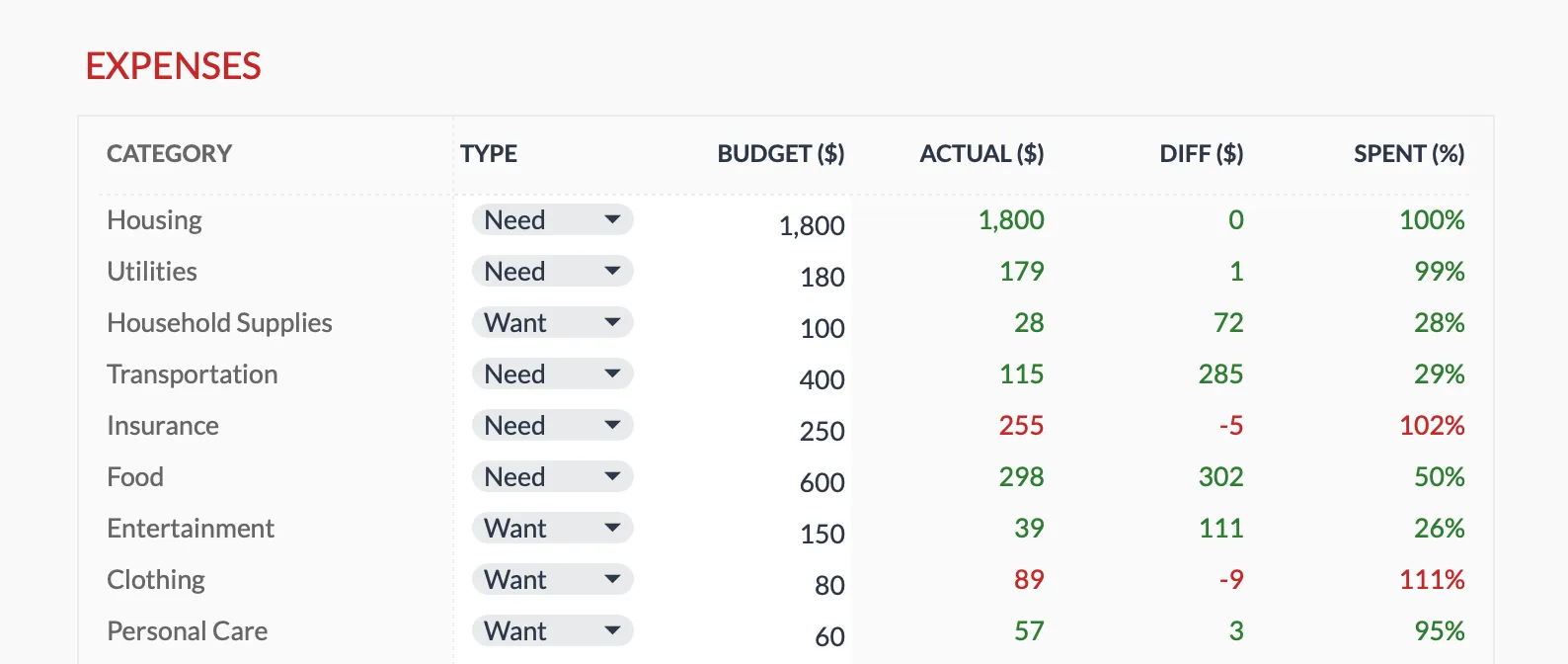
Whichever way the numbers land, the payment still has to fit the rest of the month. The Monthly Budget Template puts a car payment in the same view as housing, insurance, food, and the other lines that share your income.
More on Car Costs
- Car Affordability Calculator: What Can You Actually Spend? - Determine a car budget based on income and expenses before shopping
- Auto Loan Payoff Calculator - How extra payments can shorten an auto loan and reduce total interest
Related
Frequently asked questions
Is leasing always more expensive than buying?
Over 5+ years of driving the same car, buying is usually cheaper. But if you switch cars every 2-3 years anyway, leasing can cost less since you avoid the steepest depreciation and trade-in hassles.
What are mileage limits on a lease?
Standard leases allow 10,000-15,000 miles per year. Excess mileage charges are typically $0.15-$0.30 per mile. If you drive more than 15,000 miles annually, leasing becomes significantly more expensive.
Can I negotiate a lease?
Yes. The capitalized cost (essentially the car's price) is negotiable, just like a purchase. A lower cap cost means lower monthly payments.
What happens at the end of a lease?
Three options: return the car (and lease or buy a new one), purchase the car at the residual value stated in the lease, or sometimes transfer the lease to someone else.
What is the money factor on a lease?
The money factor is how lease interest is expressed. Multiply it by 2,400 for the rough equivalent APR, so a money factor of 0.00125 is about 3%. A lower money factor means less interest baked into the monthly payment, and like the price, it can be negotiable.
What happens if a leased car is totaled or stolen?
The insurer pays the car's market value, which can be less than the amount still owed on the lease. Gap coverage bridges that difference, and many leases include it, though it is worth checking the contract rather than assuming.
Sources
- Financing or Leasing a Car - Federal Trade Commission
- Publication 463, Travel, Gift, and Car Expenses - Internal Revenue Service
About this article
Loan and lease figures are illustrative, calculated with standard amortization at the stated rates and terms. Lease-end terms (mileage limits, disposition fees, wear-and-tear charges) checked against the Federal Trade Commission's consumer guidance on vehicle leasing. Calculator inputs and outputs checked on 2026-09-10 against the shipped Lease vs. Buy Calculator component. Monthly Budgeting claims checked on 2026-09-10 against the shipped Monthly Budgeting Google Sheet (Budget Plan tab). Last reviewed September 2026.