
An emergency fund covers 3 to 6 months of essential expenses, not income, which is roughly $8,550 to $17,100 on a $2,850 monthly budget. A high-yield savings account keeps that money liquid and FDIC-insured while paying around 4% APY, far above the 0.38% national average on ordinary savings. A simple spreadsheet then tracks each month's balance as a percentage of the target.
An emergency fund is the foundation of any financial plan. But two questions trip people up: how much to save, and how to track progress toward that number.
The calculation is straightforward. The tracking is where a spreadsheet earns its keep.
How Much: The Calculation
The standard range is 3 to 6 months of essential expenses, not income. Here’s how to figure that number:
| Monthly Expense | Amount |
|---|---|
| Housing (rent/mortgage) | $1,500 |
| Utilities | $200 |
| Groceries | $400 |
| Transportation | $300 |
| Insurance premiums | $250 |
| Minimum debt payments | $200 |
| Total essential expenses | $2,850 |
| Target | Calculation | Amount |
|---|---|---|
| 3 months | $2,850 x 3 | $8,550 |
| 4 months | $2,850 x 4 | $11,400 |
| 6 months | $2,850 x 6 | $17,100 |
Which target? Some people with stable dual incomes and low fixed costs lean toward 3 months. Those with variable income, single earners, or higher fixed obligations often aim for 6. There’s no universal right answer.
Rather than build the table by hand, run your own numbers below:
The Emergency Fund Calculator guide walks through the same calculation and explains which factors push the target toward 3 months or toward 6.
Where to Keep It
The money needs to be liquid, safe, and ideally earning something while it sits. High-yield savings accounts (HYSAs) check all three boxes.
| Account Type | Typical APY | Access Speed | FDIC Insured |
|---|---|---|---|
| Traditional savings | 0.5% | Instant | Yes |
| High-yield savings (online) | 3.5 - 4.2% | 1-2 days transfer | Yes |
| Money market account | 3.5 - 4.0% | Same day (checks/ATM) | Yes |
| Checking account | 0.01 - 0.1% | Instant | Yes |
Those ranges reflect advertised rates in September 2026. Savings rates are variable, so the number a bank quotes today is the one that counts.
The difference between about 0.5% at a traditional bank and around 4% at an online high-yield account works out to roughly $350 a year on a $10,000 balance. The national average across all savings accounts sits even lower, at 0.38% APY in the FDIC’s August 2026 figures (FDIC national rates), so for many people the money left on the table is larger still. It is the same safety and the same federal insurance, just a different type of bank.
What matters most for an emergency fund account:
- FDIC- or NCUA-insured, up to $250,000 per depositor, per insured institution, per ownership category
- No withdrawal penalties
- No minimum balance requirements
- Transfer speed that works for your situation
Rates move with Federal Reserve policy, so they rise and fall together across banks. Worth checking quarterly, though chasing a 0.15% difference between accounts rarely justifies the hassle.
Tracking Emergency Fund Progress in a Spreadsheet
This is where the spreadsheet approach shines. A simple progress tracker turns a vague goal into a concrete path, the same idea behind any savings goal tracker applied to the one goal that comes before all the others.
Emergency Fund Tracker:
| Month | Starting Balance | Added | Interest | Ending Balance | % of Goal |
|---|---|---|---|---|---|
| Jan | $0 | $500 | $0 | $500 | 4.4% |
| Feb | $500 | $500 | $1.67 | $1,002 | 8.8% |
| Mar | $1,002 | $500 | $3.34 | $1,505 | 13.2% |
| Apr | $1,505 | $500 | $5.02 | $2,010 | 17.6% |
| … | |||||
| Dec | $5,593 | $500 | $18.64 | $6,111 | 53.6% |
Goal: $11,400 (4 months of expenses) Monthly contribution: $500 Assumed APY: 4.00%, earned each month on the starting balance Time to goal: ~23 months
Watching the percentage climb each month makes the goal feel achievable rather than overwhelming.
Building It Faster
Some people find that redirecting irregular income accelerates the timeline:
| Source | Amount | New Balance | % of Goal |
|---|---|---|---|
| Tax refund | $1,200 | $3,210 | 28.2% |
| Sold unused items | $350 | $3,560 | 31.2% |
| Bonus at work | $800 | $4,360 | 38.2% |
Adding a column for windfalls shows how irregular money can close the gap.
Once You Hit Your Target
A fully funded emergency fund still needs occasional attention:
- Annual review. If expenses change, the target changes. A rent increase or new insurance premium means recalculating the number.
- After a withdrawal. If the fund gets used (that’s what it’s for), add a rebuilding plan to the tracker.
- Interest tracking. The fund earns money while it sits, and a savings calculator shows how those small amounts compound over time. Worth noting the balance in a net worth tracker or the Financial Planning Template.
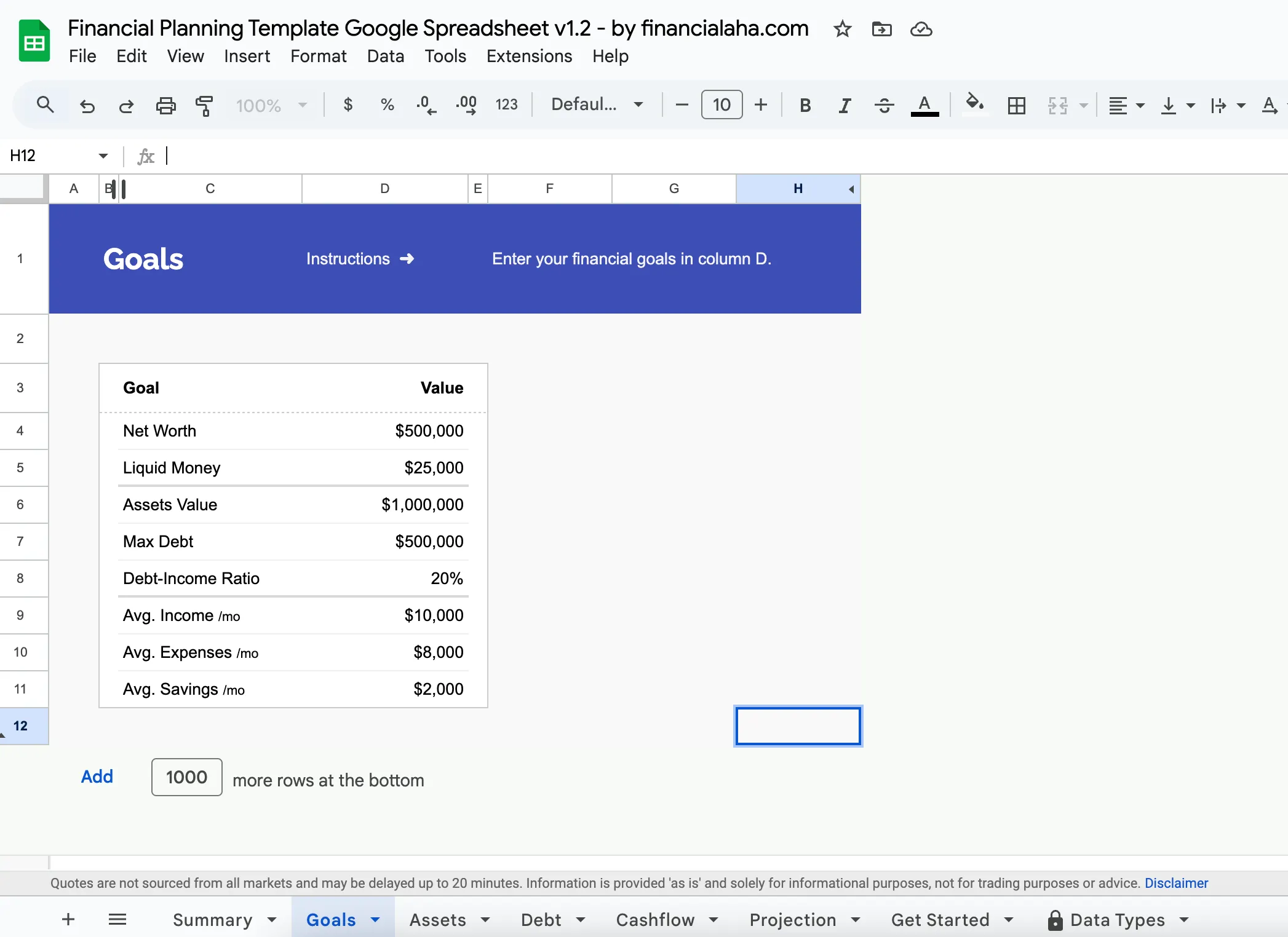
The Goals tab in the Financial Planning Template (Premium) holds a Liquid Money target, which is where a fully funded emergency fund lives once you set the number.
Useful to keep the emergency fund as a line item in the Net Worth Tracker so it’s visible alongside other assets.
Quick-Start Spreadsheet Setup
Three columns are enough to start:
- Essential expenses worksheet - List monthly costs, sum them, multiply by target months
- Progress tracker - Monthly balance with percentage of goal
- Contribution plan - How much per month, projected completion date
The calculation takes 15 minutes. The tracking takes 5 minutes per month. The clarity lasts as long as you maintain it.
Related
- Financial Planning Template - Comprehensive financial planning
- Net Worth Tracker - Track emergency fund
- Emergency Fund Calculator
- When to Recalculate Your Emergency Fund
- Multiple Savings Accounts Strategy
Frequently asked questions
Should my emergency fund be at a different bank than my checking?
It can help prevent casual dipping into emergency funds, but convenience matters. If separation makes accessing money difficult in true emergencies, that defeats the purpose.
What about money market accounts?
Money market accounts often offer similar rates with check-writing ability. Worth comparing rates and features.
Should I invest my emergency fund instead?
Emergency funds need to be liquid and stable. Investments can lose value exactly when you need the money.
Are online-only high-yield savings accounts safe?
FDIC insurance covers deposits up to $250,000 per depositor whether the bank has branches or operates entirely online. Worth confirming the bank's FDIC certificate before opening an account.
How quickly can I get the money out in a real emergency?
Most high-yield accounts settle an ACH transfer to a linked checking account in one to two business days, and some offer instant transfers or a debit card. Some people keep a small buffer in checking so immediate costs are covered while the transfer clears.
Sources
- National Rates and Rate Caps - FDIC
- Understanding Deposit Insurance - FDIC
- Share Insurance Coverage - National Credit Union Administration
- Open Market Operations - Federal Reserve
About this article
The national savings-account average was rechecked against the FDIC's National Rates and Rate Caps on 2026-09-10 (0.38% APY, data as of 2026-08-17); the online high-yield and money market ranges were rechecked against published bank rates the same day. Deposit-insurance limits reflect the standard $250,000 coverage published by the FDIC and the NCUA. Template claims checked on 2026-09-10 against the shipped Financial Planning Google Sheet (Goals tab) and Net Worth Tracker Google Sheet (Assets, Setup, Summary tabs). Last reviewed September 2026.