Hawaii
Tax Planner Template for Hawaii
Plan your federal and Hawaii state taxes in Google Sheets. Hawaii has some of the highest income tax rates in the country, making organized planning especially useful.
In Depth
What Makes Hawaii Taxes Different
Hawaii has more income tax brackets than almost any other state, with rates that climb steeply through each tier. The top marginal rate rivals California's, placing Hawaii firmly in the highest-tax category nationwide. Even residents with moderate incomes face rates that would be considered high in most other states, because the brackets start climbing quickly.
The General Excise Tax is a distinctive feature of Hawaii's tax system. Unlike a traditional sales tax that applies only to final retail purchases, the GET applies to nearly all business transactions at every level - wholesale, retail, services, and even some professional activities. Businesses typically pass this cost to consumers, so it functions like a sales tax in practice, but it can pyramid (tax on tax) in ways that a conventional sales tax does not.
Capital gains in Hawaii get mixed treatment, because short-term gains follow the ordinary graduated rates while net long-term gains can be figured under an alternative tax capped at 7.25%. For residents with investment income, stock sales, or real estate gains beyond the primary residence exclusion, that cap sits well below the 11% top rate that applies to wages. Combined with the high cost of living, the overall tax picture in Hawaii is notably different from mainland states.
Hawaii
Tax Planning in Hawaii
Hawaii has a graduated income tax with a top rate among the highest [2] in the nation. The state also has a General Excise Tax (GET) instead of a traditional sales tax, which affects overall cost of living.
High Marginal Rates
Hawaii has one of the highest top marginal income tax rates in the country. The state uses many brackets - more than most states - with rates that climb steeply for higher earners.
General Excise Tax
Hawaii charges a General Excise Tax (GET) on nearly all business transactions. While not technically a sales tax, it functions similarly and is often passed on to consumers. The rate varies slightly by county.
Capital Gains
Hawaii taxes short-term capital gains as ordinary income, while net long-term gains can be figured under an alternative tax capped at 7.25% for the 2026 tax year. Investment income is still a significant consideration for residents.
Retirement Income
Hawaii does not tax Social Security benefits. Qualifying distributions from employer-funded pension plans are excluded too, while income you funded yourself, such as 401(k) elective deferrals and IRA withdrawals, is taxed at regular rates.
Get the Annual Tax Planner
Getting Started
How to Use the Template for Hawaii Taxes
Enter income across all categories including capital gains
Add wages, self-employment, rental income, investments, and any other earnings. Hawaii taxes short-term gains at the graduated rates, while net long-term gains may qualify for an alternative tax capped at 7.25%. If you sold property or investments, separating those gains from other income helps you see how they affect your bracket position across Hawaii's many tiers.
Factor in the General Excise Tax for business income
If you run a business in Hawaii, the General Excise Tax (GET) applies to gross receipts - not just profit. The GET rate varies slightly by county (Oahu differs from neighbor islands). While the GET is not an income tax, it can reduce your net business income, which flows into your income tax calculation. Use the notes section to track GET obligations alongside income tax.
Review deductions with Hawaii's high rates in mind
Hawaii's top rate of 11% means each dollar of deductions is worth more in state tax savings than in most other states. Go through the deductions section thoroughly - mortgage interest, charitable contributions, and medical expenses all reduce Hawaii taxable income. The state conforms to many federal deduction rules but has its own standard deduction amounts.
Track estimated payments at both levels
With Hawaii's high rates, underpayment penalties can add up quickly. Use the quarterly tracker for both federal and state estimated payments. Hawaii's estimated payment schedule generally follows the federal dates, but the amounts differ since the state rate structure is steeper. Self-employed residents and those with investment income are especially likely to owe estimates.
Check your combined federal and state tax projection
Hawaii's high cost of living makes the combined tax picture especially relevant. The dashboard shows federal and state projections together. With a top state rate of 11% layered on top of federal rates, the combined marginal rate for higher earners can exceed 48%. Reviewing the projection periodically helps you see whether adjustments to withholding or estimated payments are needed.
See It In Action
What the tax planner looks like
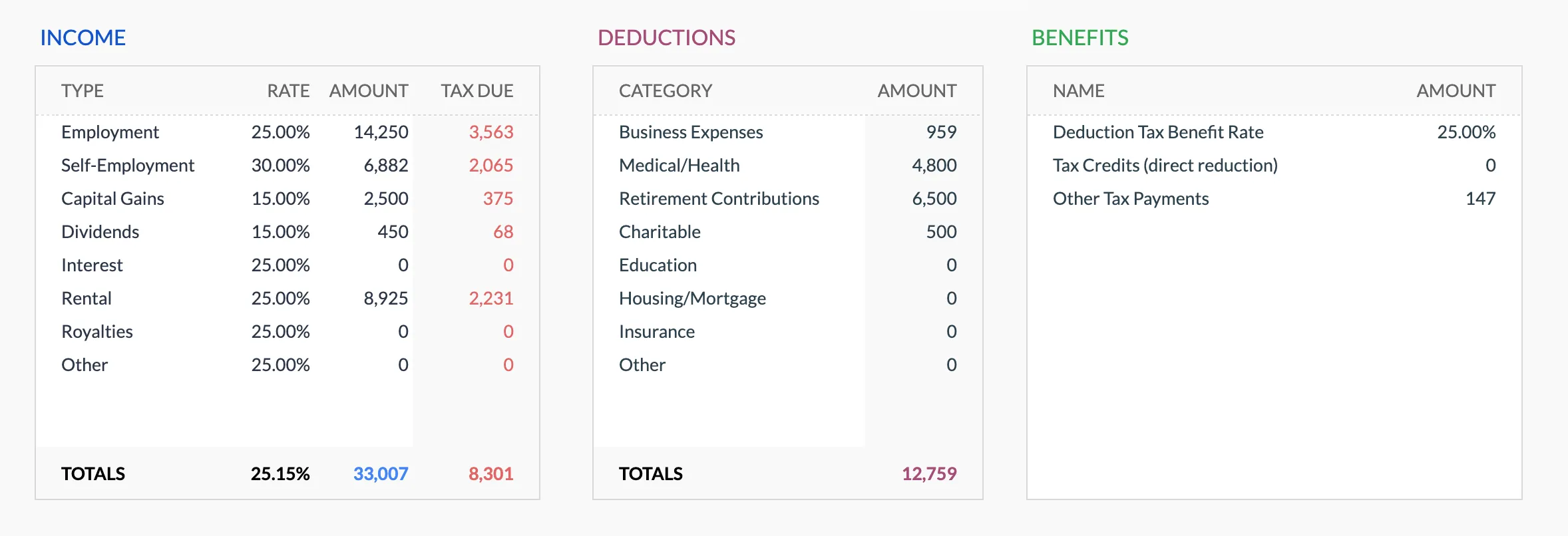
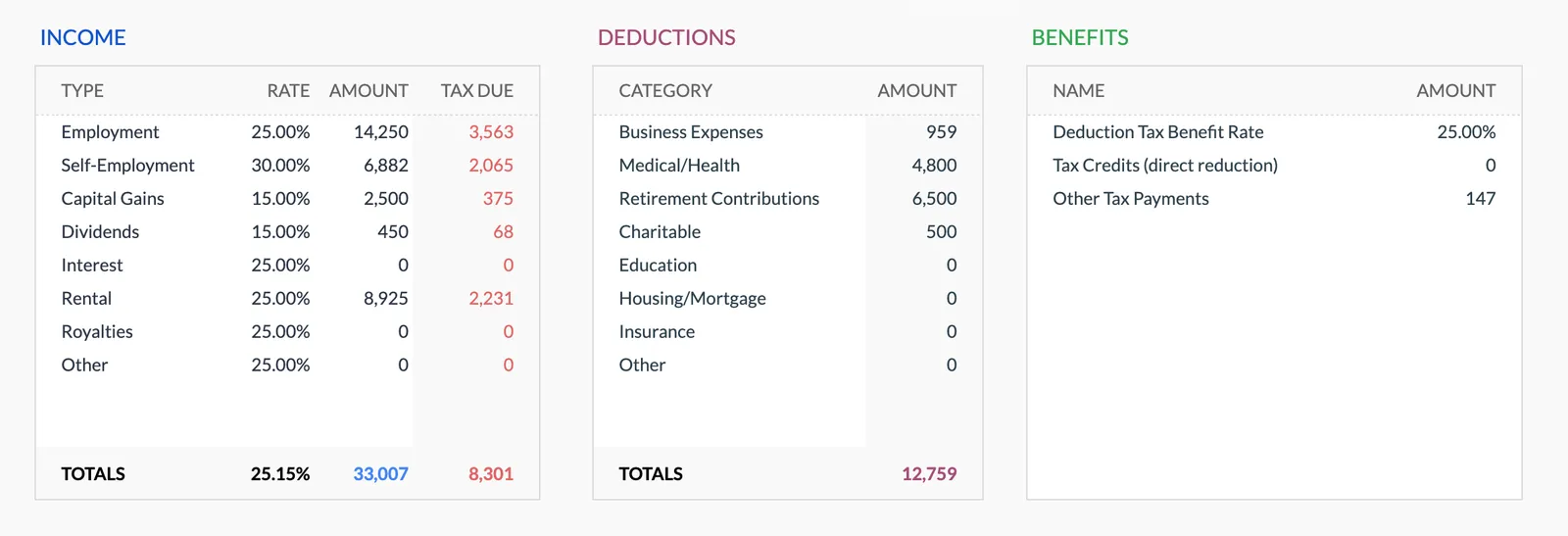
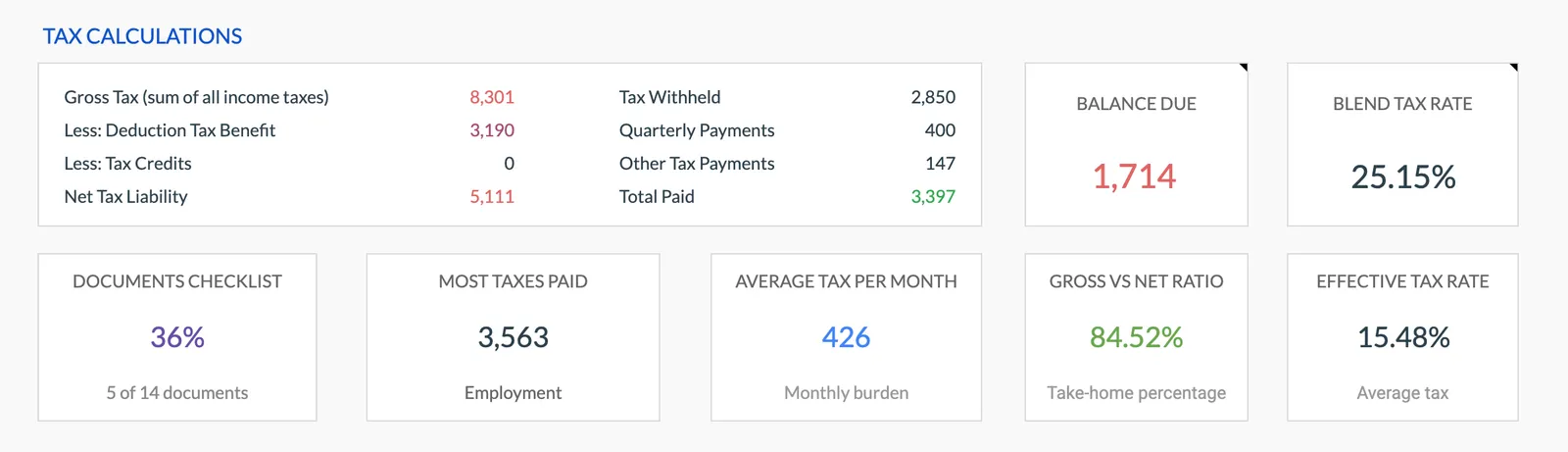
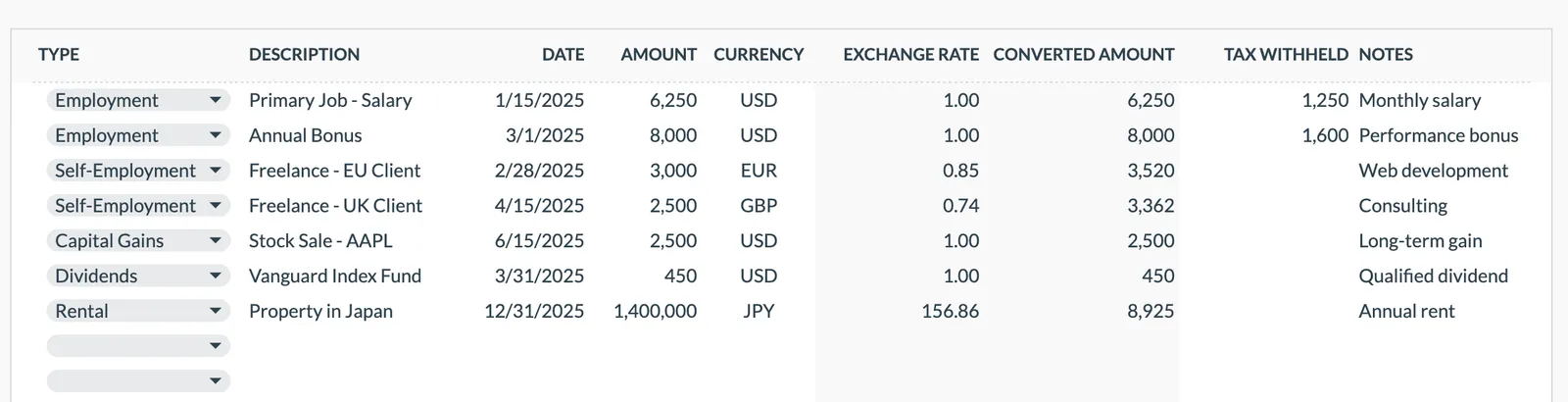
Browse through the template to see how it tracks income, deductions, credits, and estimated quarterly payments.
- Annual tax overview dashboard
- Income tracking by source
- Deductions and credits organizer
- Quarterly payment tracker
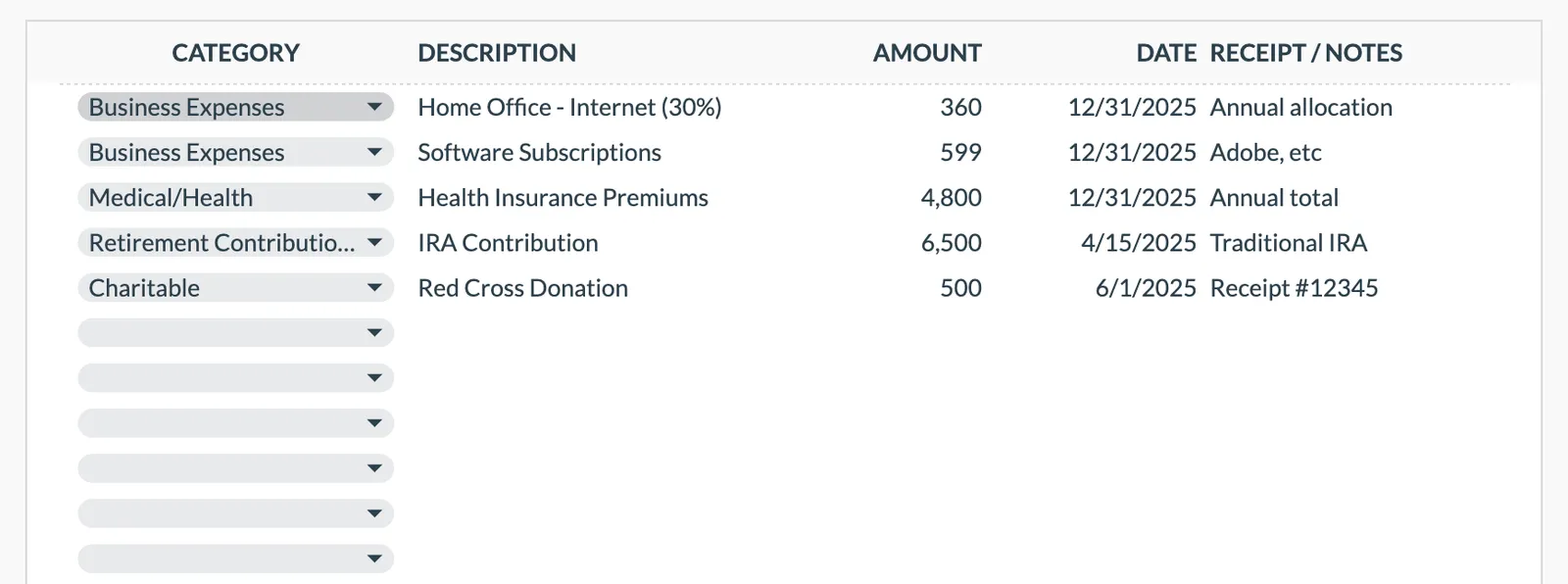
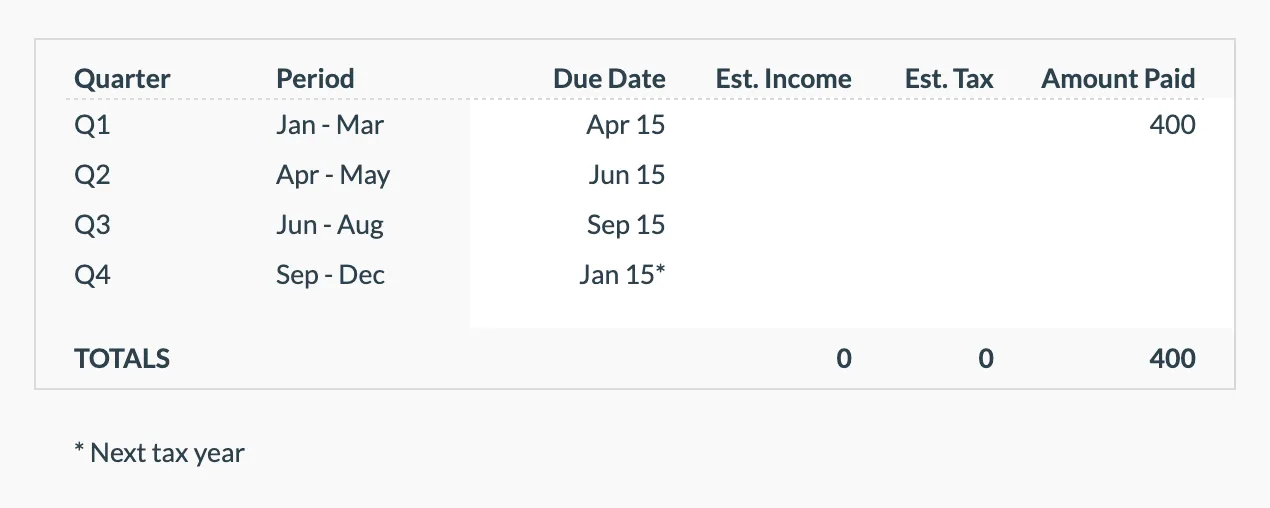
Annual tax overview with key figures
Detailed tax breakdown and projections
Track all income sources for tax purposes
Organize and track tax deductions
Plan and track quarterly estimated tax payments
Common Questions
Tax Planning in Hawaii - FAQ
Why are Hawaii's income tax rates so high?
Hawaii has no broad-based property tax alternative like some states, and the General Excise Tax (while significant) does not fully replace the role an income tax plays. The state relies heavily on income tax revenue to fund services. This, combined with a small population base and high cost of providing government services on islands, contributes to rates that reach 11% [1] at the top bracket - among the highest in the country.
How does Hawaii treat capital gains?
Hawaii taxes short-term capital gains as ordinary income at the graduated rates. Net long-term gains work differently, since the tax is figured both at the graduated rates and with a flat 7.25% alternative rate on the net long-term gain, and the lower of the two results applies for the 2026 tax year. For residents selling real estate (Hawaii's housing market can produce substantial gains), investments, or business assets, the gains are added to other income and taxed at whatever bracket that total income reaches.
What is the General Excise Tax and how does it differ from a sales tax?
The GET applies to nearly all business transactions at every level - wholesale, retail, services, and professional activities. Unlike a traditional sales tax that only hits the final retail sale, the GET can apply multiple times as goods and services move through the supply chain (this is called pyramiding). The rate varies slightly by county. Most businesses pass the GET through to consumers, so it functions like a sales tax in practice but can result in a higher effective tax rate on purchases.
Does Hawaii tax retirement income?
Hawaii does not tax Social Security benefits. Qualifying distributions from employer-funded pension plans are excluded as well, so what stays taxable is the portion you funded yourself, such as 401(k) elective deferrals and IRA withdrawals, at regular graduated rates. Given Hawaii's high rates, retirees drawing mainly on self-funded accounts may face a meaningful state tax bill. This is useful to consider when projecting retirement income needs, especially given Hawaii's high cost of living.
Are there any Hawaii-specific credits or deductions?
Hawaii offers several credits including a refundable food/excise tax credit that offsets GET on essentials, a low-income household renter's credit, a credit for child and dependent care expenses, and a refundable state earned income tax credit set as a percentage of the federal EITC. The state also allows a standard deduction or itemized deductions, with amounts that differ from federal levels.
Can't find the answer you're looking for? Contact our team
Official Tax Resources
For current rates, forms, and filing deadlines specific to Hawaii:
Sources
Organize your tax planning for Hawaii
One-time purchase. No subscription. Your financial data stays in your Google Drive.
Tax rules, rates, and contribution limits change, and official publications can themselves lag behind the law in force. We review these figures on a best-effort basis against sources we consider authoritative, but we cannot guarantee they are current, complete, or that better sources do not exist, and nothing here is tax, legal, or financial advice. For decisions, the relevant government authority is the reference. Last reviewed: August 2026.