Hawaii
Plantilla de planificación fiscal para Hawaii
Planifica tus impuestos federales y estatales de Hawaii en Google Sheets. Hawaii tiene algunas de las tasas de impuesto sobre la renta más altas del país, lo que hace que la planificación organizada sea especialmente útil.
In Depth
Qué Hace que los Impuestos de Hawaii sean Diferentes
Hawaii tiene más tramos de impuesto sobre la renta que casi cualquier otro estado, con tasas que suben pronunciadamente a través de cada nivel. La tasa marginal máxima rivaliza con la de California, ubicando a Hawaii firmemente en la categoría de impuestos más altos a nivel nacional. Incluso residentes con ingresos moderados enfrentan tasas que se considerarían altas en la mayoría de otros estados, porque los tramos comienzan a subir rápidamente.
El Impuesto General de Excisión es una característica distintiva del sistema fiscal de Hawaii. A diferencia de un impuesto de ventas tradicional que se aplica solo a compras minoristas finales, el GET se aplica a casi todas las transacciones comerciales en cada nivel - mayorista, minorista, servicios e incluso algunas actividades profesionales. Los negocios típicamente trasladan este costo a los consumidores, por lo que funciona como un impuesto de ventas en la práctica, pero puede hacer pirámide (impuesto sobre impuesto) de maneras que un impuesto de ventas convencional no.
Las ganancias de capital en Hawaii reciben un tratamiento mixto, porque las ganancias a corto plazo siguen las tasas progresivas ordinarias mientras que las ganancias netas a largo plazo pueden calcularse bajo un impuesto alternativo limitado al 7.25%. Para los residentes con ingresos de inversión, ventas de acciones o ganancias de bienes raíces más allá de la exclusión de la residencia principal, ese límite se sitúa muy por debajo de la tasa máxima del 11% que se aplica a los salarios. Combinado con el alto costo de vida, el panorama fiscal general en Hawaii es notablemente diferente al de los estados continentales.
Hawaii
Planificación Fiscal en Hawaii
Hawaii tiene un impuesto sobre la renta progresivo con una tasa máxima entre las más altas [2] de la nación. El estado también tiene un Impuesto General de Excisión (GET) en lugar de un impuesto de ventas tradicional, que afecta el costo general de vida.
Tasas Marginales Altas
Hawaii tiene una de las tasas marginales máximas más altas del país. El estado utiliza muchos tramos - más que la mayoría de los estados - con tasas que suben pronunciadamente para los que ganan más.
Impuesto General de Excisión
Hawaii cobra un Impuesto General de Excisión (GET) en casi todas las transacciones comerciales. Aunque no es técnicamente un impuesto de ventas, funciona de manera similar y a menudo se trasladará a los consumidores. La tasa varía ligeramente según el condado.
Ganancias de Capital
Hawaii grava las ganancias de capital a corto plazo como ingresos ordinarios, mientras que las ganancias netas a largo plazo pueden calcularse bajo un impuesto alternativo limitado al 7.25% para el año fiscal 2026. Los ingresos de inversión siguen siendo una consideración significativa para los residentes.
Ingresos de Jubilación
Hawaii no grava los beneficios del Seguro Social. Las distribuciones calificadas de planes de pensión financiados por el empleador también están excluidas, mientras que los ingresos que financiaste tú mismo, como los aplazamientos electivos de 401(k) y los retiros de IRA, se gravan a las tasas regulares.
Obtener el Planificador Fiscal Anual
Primeros Pasos
Cómo Usar la Plantilla para Impuestos de Hawaii
Ingresa ingresos en todas las categorías incluyendo ganancias de capital
Agrega salarios, trabajo por cuenta propia, ingresos por alquiler, inversiones y cualesquiera otras ganancias. Hawaii grava las ganancias a corto plazo a las tasas progresivas, mientras que las ganancias netas a largo plazo pueden calificar para un impuesto alternativo limitado al 7.25%. Si vendiste propiedad o inversiones, separar esas ganancias de otros ingresos te ayuda a ver cómo afectan tu posición de tramo entre los muchos niveles de Hawaii.
Considera el Impuesto General de Excisión para ingresos comerciales
Si tienes un negocio en Hawaii, el Impuesto General de Excisión (GET) se aplica a los ingresos brutos - no solo las ganancias. La tasa GET varía ligeramente según el condado (Oahu difiere de las islas vecinas). Aunque el GET no es un impuesto sobre la renta, puede reducir tu ingreso comercial neto, que se suma a tu cálculo del impuesto sobre la renta. Usa la sección de notas para registrar las obligaciones GET junto al impuesto sobre la renta.
Revisa deducciones teniendo en cuenta las altas tasas de Hawaii
La tasa máxima de Hawaii del 11% significa que cada dólar de deducciones vale más en ahorros de impuestos estatales que en la mayoría de otros estados. Revisa la sección de deducciones a fondo - intereses hipotecarios, contribuciones caritativas y gastos médicos reducen el ingreso gravable de Hawaii. El estado se ajusta a muchas reglas de deducción federal pero tiene sus propios montos de deducción estándar.
Registra pagos estimados en ambos niveles
Con las altas tasas de Hawaii, las penalizaciones por falta de pago pueden acumularse rápidamente. Usa el rastreador trimestral para pagos estimados federales y estatales. El cronograma de pago estimado de Hawaii generalmente sigue las fechas federales, pero los montos difieren ya que la estructura de tasas estatales es más pronunciada. Los residentes que trabajan por cuenta propia y los que tienen ingresos de inversión tienen más probabilidades de tener que hacer pagos estimados.
Verifica tu proyección de impuesto federal y estatal combinado
El alto costo de vida de Hawaii hace que la imagen tributaria combinada sea especialmente relevante. El panel muestra proyecciones federales y estatales en conjunto. Con una tasa estatal máxima del 11% superpuesta a tasas federales, la tasa marginal combinada para los que ganan más puede exceder el 48%. Revisar la proyección periódicamente te ayuda a ver si se necesitan ajustes a la retención o pagos estimados.
Véalo en Acción
Cómo se ve el planificador fiscal
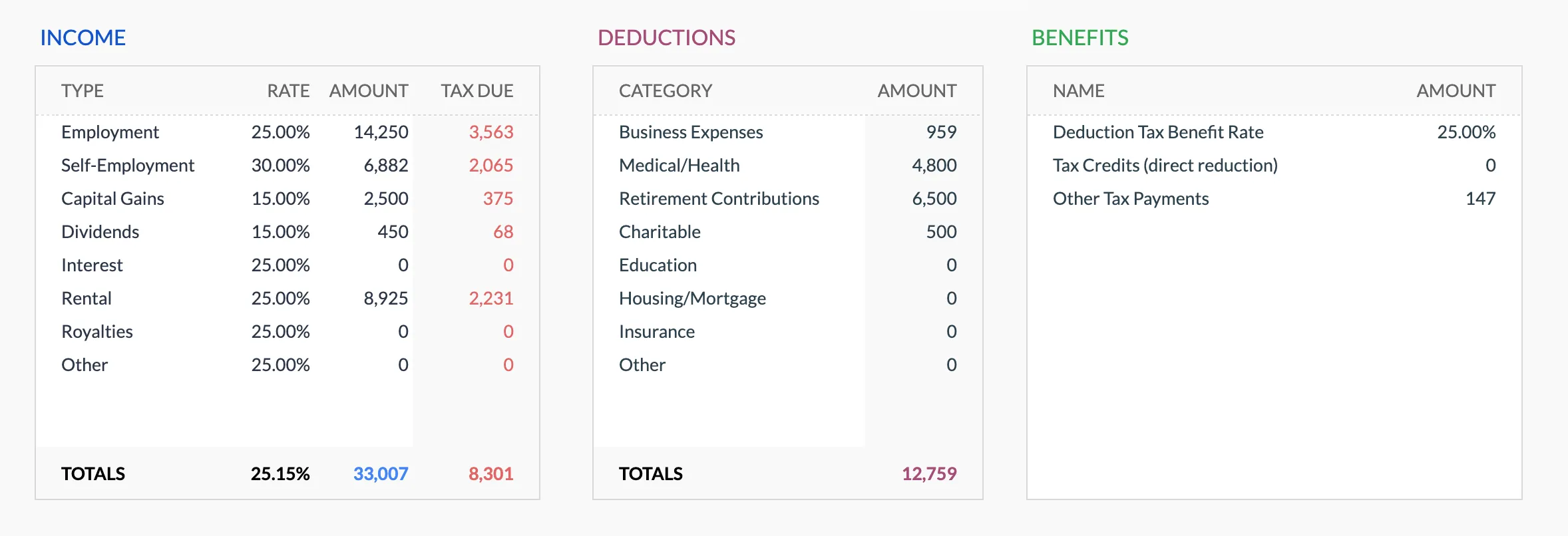
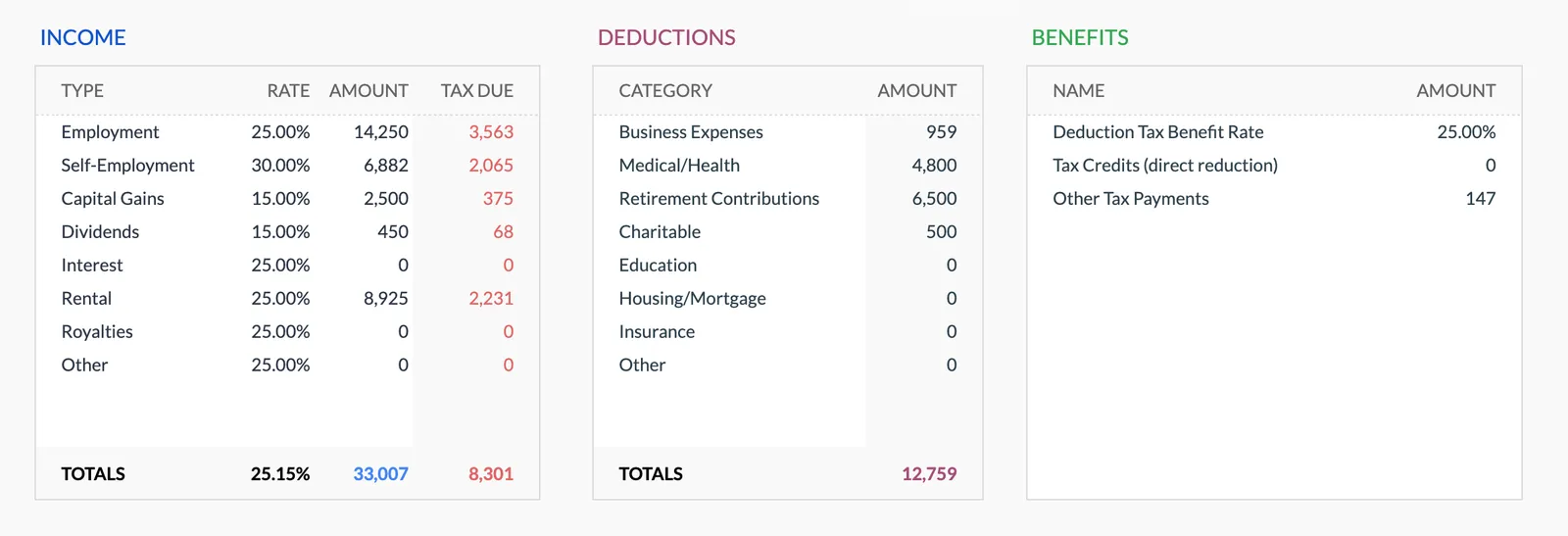
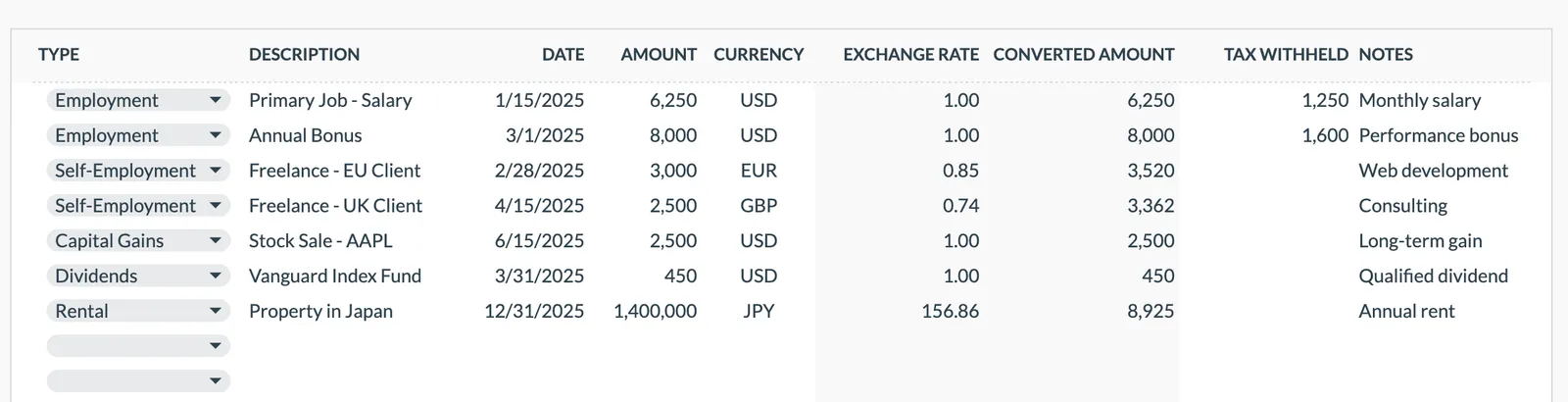
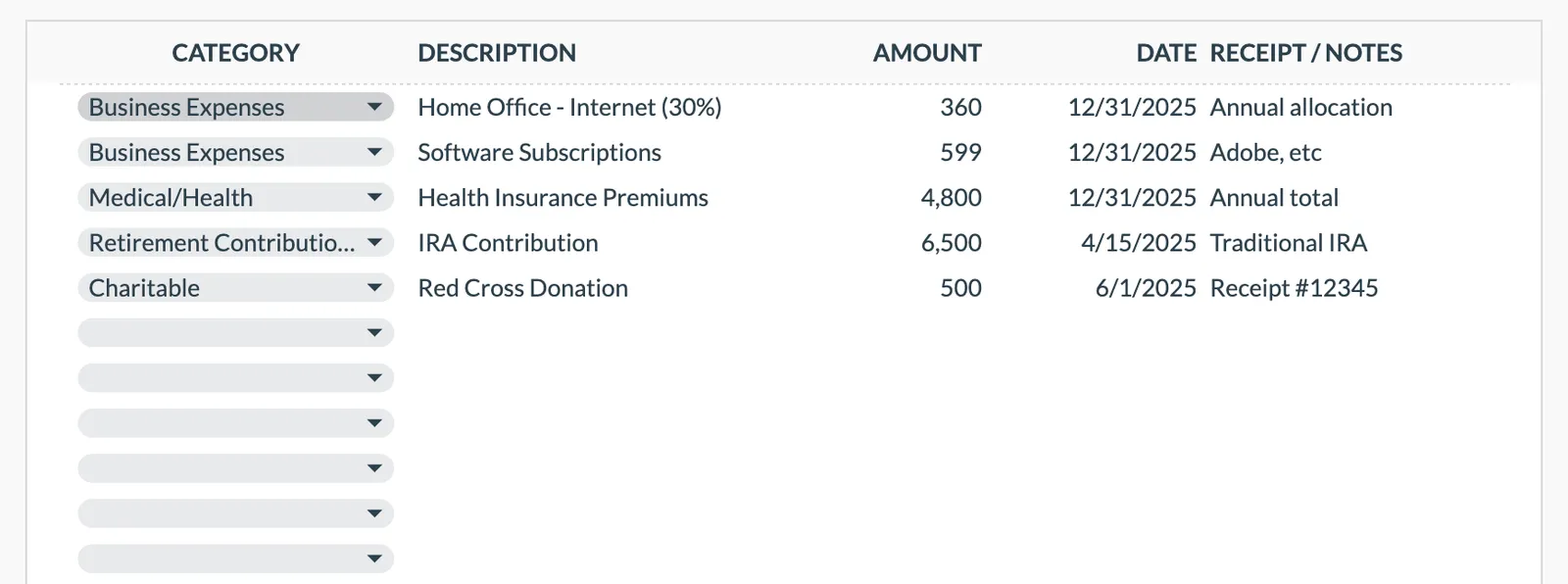
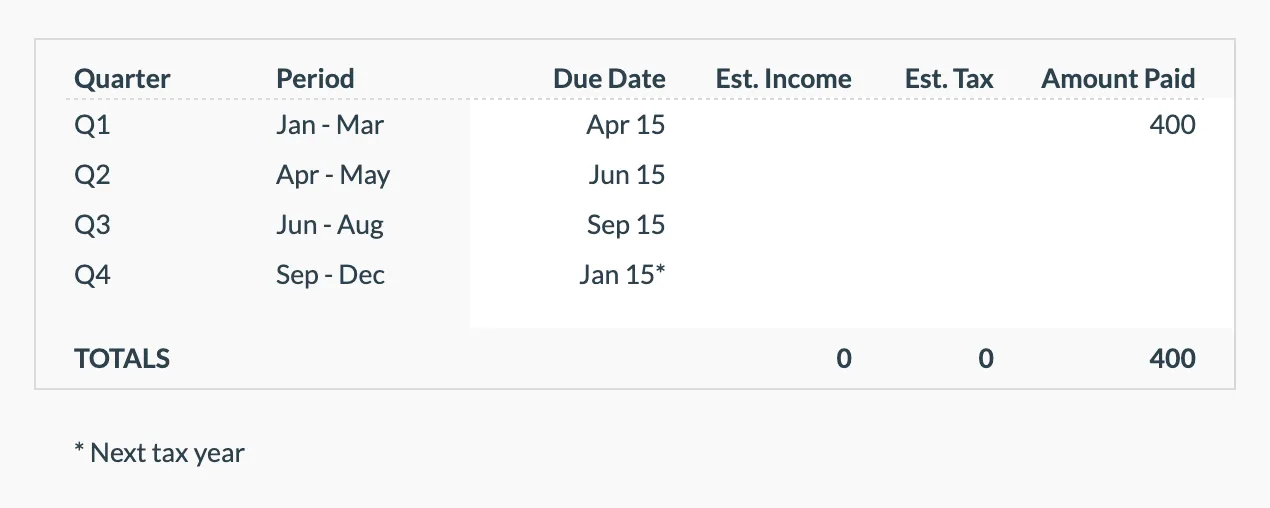
Explora la plantilla para ver cómo registra ingresos, deducciones, créditos y pagos trimestrales estimados.
- Panel de resumen fiscal anual
- Seguimiento de ingresos por fuente
- Organizador de deducciones y créditos
- Rastreador de pagos trimestrales
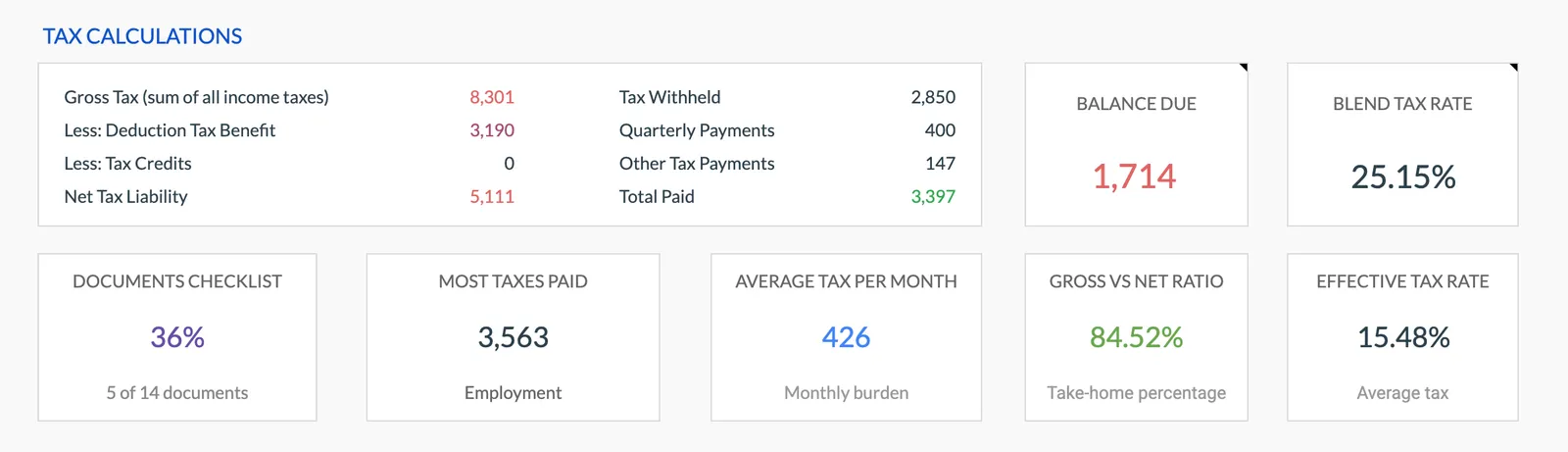
Annual tax overview with key figures
Detailed tax breakdown and projections
Track all income sources for tax purposes
Organize and track tax deductions
Plan and track quarterly estimated tax payments
Preguntas Frecuentes
Planificación fiscal en Hawaii - Preguntas Frecuentes
¿Por qué las tasas de impuesto sobre la renta de Hawaii son tan altas?
Hawaii no tiene una alternativa de impuesto sobre la propiedad de base amplia como algunos estados, y el Impuesto General de Excisión (aunque es significativo) no reemplaza completamente el papel que juega un impuesto sobre la renta. El estado depende en gran medida de los ingresos del impuesto sobre la renta para financiar servicios. Esto, combinado con una base de población pequeña y un costo alto de proporcionar servicios del gobierno en islas, contribuye a tasas que alcanzan el 11% [1] en el tramo superior - entre las más altas del país.
¿Cómo trata Hawaii las ganancias de capital?
Hawaii grava las ganancias de capital a corto plazo como ingresos ordinarios a las tasas progresivas. Las ganancias netas a largo plazo funcionan de manera diferente, ya que el impuesto se calcula tanto a las tasas progresivas como con una tasa alternativa plana del 7.25% sobre la ganancia neta a largo plazo, y se aplica el menor de los dos resultados para el año fiscal 2026. Para los residentes que venden bienes raíces (el mercado inmobiliario de Hawaii puede producir ganancias sustanciales), inversiones o activos comerciales, las ganancias se suman a los demás ingresos y se gravan al tramo que alcance ese ingreso total.
¿Qué es el Impuesto General de Excisión y cómo difiere de un impuesto de ventas?
El GET se aplica a casi todas las transacciones comerciales en cada nivel - mayorista, minorista, servicios y actividades profesionales. A diferencia de un impuesto de ventas tradicional que solo afecta la venta minorista final, el GET puede aplicarse múltiples veces a medida que bienes y servicios se mueven a través de la cadena de suministro (esto se llama pirámide). La tasa varía ligeramente según el condado. La mayoría de los negocios trasladan el GET a los consumidores, por lo que funciona como un impuesto de ventas en la práctica pero puede resultar en una tasa impositiva efectiva más alta en las compras.
¿Grava Hawaii el ingreso de jubilación?
Hawaii no grava los beneficios del Seguro Social. Las distribuciones calificadas de planes de pensión financiados por el empleador también están excluidas, por lo que lo que permanece gravable es la porción que financiaste tú mismo, como los aplazamientos electivos de 401(k) y los retiros de IRA, a las tasas progresivas regulares. Dadas las altas tasas de Hawaii, los jubilados que dependen principalmente de cuentas autofinanciadas pueden enfrentar una factura fiscal estatal considerable. Esto es útil de considerar al proyectar las necesidades de ingresos de jubilación, especialmente dado el alto costo de vida de Hawaii.
¿Hay créditos o deducciones específicos de Hawaii?
Hawaii ofrece varios créditos, incluyendo un crédito reembolsable de impuesto sobre alimentos/excisión que compensa el GET en artículos esenciales, un crédito para inquilinos de hogares de bajos ingresos, un crédito por gastos de cuidado de hijos y dependientes, y un crédito fiscal estatal reembolsable por ingresos del trabajo establecido como porcentaje del EITC federal. El estado también permite una deducción estándar o deducciones detalladas, con montos que difieren de los niveles federales.
¿No encuentras la respuesta que buscas? Contacta a nuestro equipo
Recursos fiscales oficiales
Para tasas actuales, formularios y fechas límite de presentación específicos de Hawaii:
Sources
Organiza tu planificación fiscal para Hawaii
Compra única. Sin suscripción. Tus datos financieros se guardan en tu Google Drive.
Tax rules, rates, and contribution limits change, and official publications can themselves lag behind the law in force. We review these figures on a best-effort basis against sources we consider authoritative, but we cannot guarantee they are current, complete, or that better sources do not exist, and nothing here is tax, legal, or financial advice. For decisions, the relevant government authority is the reference. Last reviewed: August 2026.