Hawaii
Modèle de planificateur fiscal pour Hawaii
Planifiez vos impôts fédéraux et hawaiiens dans Google Sheets. Hawaii a certains des taux d'impôt sur le revenu les plus élevés du pays, ce qui rend la planification organisée particulièrement utile.
In Depth
Ce Qui Rend les Impôts de Hawaii Différents
Hawaii a plus de tranches d'impôt sur le revenu que presque n'importe quel autre État, avec des taux qui augmentent fortement à travers chaque niveau. Le taux marginal maximal rivalise avec celui de la Californie, plaçant Hawaii fermement dans la catégorie des impôts les plus élevés au niveau national. Même les résidents ayant des revenus modérés font face à des taux qui seraient considérés comme élevés dans la plupart des autres États, car les tranches commencent à augmenter rapidement.
La General Excise Tax est une caractéristique distinctive du système fiscal de Hawaii. Contrairement à une taxe de vente traditionnelle qui ne s'applique qu'aux achats de détail finaux, la GET s'applique à presque toutes les transactions commerciales à tous les niveaux - gros, détail, services et même certaines activités professionnelles. Les entreprises répercutent généralement ce coût sur les consommateurs, elle fonctionne donc comme une taxe de vente dans la pratique, mais peut se pyramider (impôt sur impôt) d'une manière qu'une taxe de vente conventionnelle ne le ferait pas.
Les gains en capital à Hawaii reçoivent un traitement mixte, car les gains à court terme suivent les taux progressifs ordinaires tandis que les gains nets à long terme peuvent être calculés selon un impôt alternatif plafonné à 7.25%. Pour les résidents ayant des revenus de placement, des ventes d'actions ou des gains immobiliers au-delà de l'exclusion de la résidence principale, ce plafond se situe bien en dessous du taux maximal de 11% qui s'applique aux salaires. Combiné au coût de la vie élevé, le tableau fiscal global à Hawaii est notablement différent de celui des États continentaux.
Hawaii
Planification Fiscale à Hawaii
Hawaii dispose d'un impôt sur le revenu progressif avec un taux maximal parmi les plus élevés [2] du pays. L'État a également une General Excise Tax (GET) à la place d'une taxe de vente traditionnelle, ce qui affecte le coût général de la vie.
Taux Marginaux Élevés
Hawaii a l'un des taux marginaux maximaux les plus élevés du pays. L'État utilise de nombreuses tranches - plus que la plupart des États - avec des taux qui augmentent fortement pour les revenus plus élevés.
Taxe Générale de Consommation
Hawaii applique une General Excise Tax (GET) sur presque toutes les transactions commerciales. Bien que ce ne soit pas techniquement une taxe de vente, elle fonctionne de manière similaire et est souvent répercutée sur les consommateurs. Le taux varie légèrement selon le comté.
Gains en Capital
Hawaii impose les gains en capital à court terme comme des revenus ordinaires, tandis que les gains nets à long terme peuvent être calculés selon un impôt alternatif plafonné à 7.25% pour l'année fiscale 2026. Les revenus de placement restent une considération importante pour les résidents.
Revenu de Retraite
Hawaii n'impose pas les prestations de Sécurité sociale. Les distributions admissibles des régimes de retraite financés par l'employeur sont également exclues, tandis que les revenus que vous avez financés vous-même, comme les cotisations volontaires 401(k) et les retraits d'IRA, sont imposés aux taux réguliers.
Obtenir le planificateur fiscal annuel
Premiers pas
Comment Utiliser le Modèle pour les Impôts de Hawaii
Entrez les revenus dans toutes les catégories, y compris les gains en capital
Ajoutez les salaires, les revenus de travail indépendant, les revenus locatifs, les placements et tout autre gain. Hawaii impose les gains à court terme aux taux progressifs, tandis que les gains nets à long terme peuvent bénéficier d'un impôt alternatif plafonné à 7.25%. Si vous avez vendu des biens ou des placements, séparer ces gains des autres revenus vous aide à voir comment ils affectent votre position parmi les nombreuses tranches de Hawaii.
Tenez compte de la Taxe Générale de Consommation pour les revenus commerciaux
Si vous exploitez une entreprise à Hawaii, la General Excise Tax (GET) s'applique aux recettes brutes - pas seulement au profit. Le taux GET varie légèrement selon le comté (Oahu diffère des îles voisines). Bien que la GET ne soit pas un impôt sur le revenu, elle peut réduire votre revenu commercial net, qui s'ajoute à votre calcul d'impôt sur le revenu. Utilisez la section notes pour suivre les obligations GET aux côtés de l'impôt sur le revenu.
Examinez les déductions en tenant compte des taux élevés de Hawaii
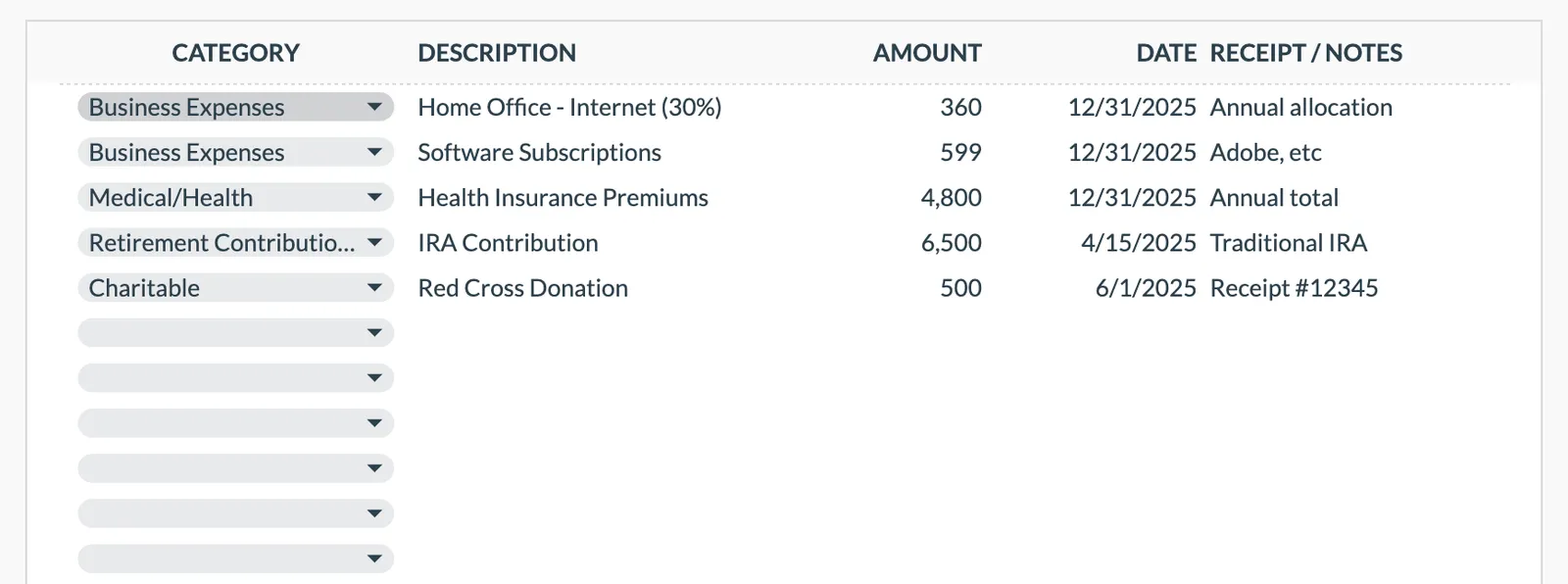
Le taux maximal de Hawaii de 11% signifie que chaque dollar de déductions vaut plus en économies d'impôt national que dans la plupart des autres États. Parcourez complètement la section déductions - les intérêts hypothécaires, les contributions caritatives et les frais médicaux réduisent le revenu imposable de Hawaii. L'État se conforme à de nombreuses règles de déduction fédérales mais a ses propres montants de déduction standard.
Suivez les paiements estimés aux deux niveaux
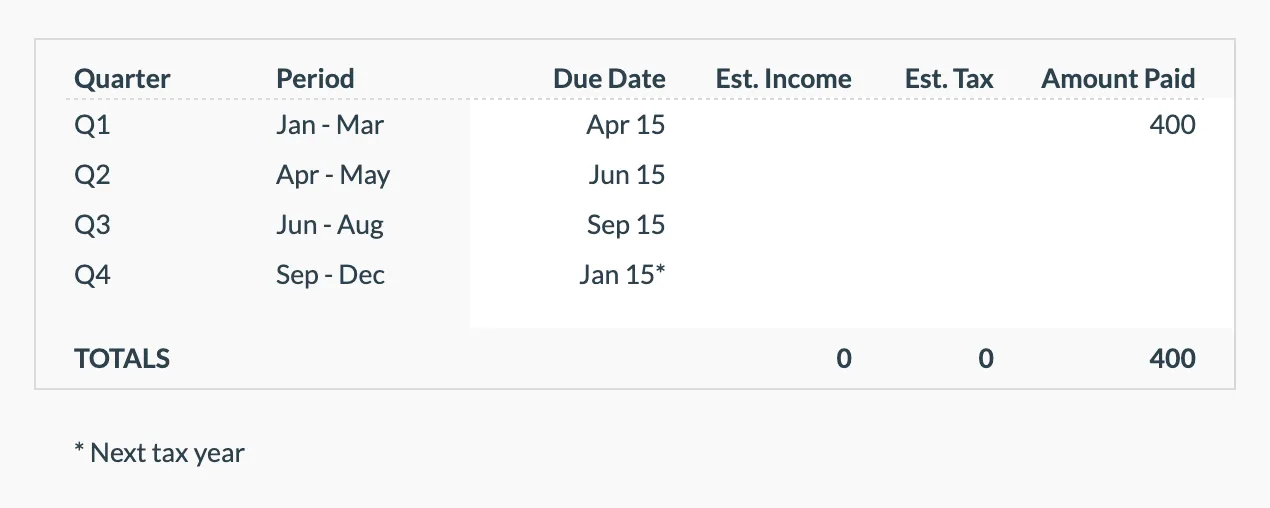
Avec les taux élevés de Hawaii, les pénalités pour sous-paiement peuvent s'accumuler rapidement. Utilisez le suivi trimestriel pour les paiements d'impôts estimés fédéraux et nationaux. Le calendrier des paiements estimés de Hawaii suit généralement les dates fédérales, mais les montants diffèrent car la structure des taux nationaux est plus forte. Les travailleurs indépendants et ceux ayant des revenus de placement sont particulièrement susceptibles de devoir faire des paiements estimés.
Vérifiez votre projection d'impôt fédéral et national combinée
Le coût de la vie élevé de Hawaii rend l'image fiscale combinée particulièrement pertinente. Le tableau de bord affiche les projections fédérales et nationales ensemble. Avec un taux national maximal de 11% superposé aux taux fédéraux, le taux marginal combiné pour les revenus plus élevés peut dépasser 48%. L'examen régulier de la projection vous aide à voir si des ajustements à la retenue ou aux paiements estimés sont nécessaires.
Voir en action
À quoi ressemble le planificateur fiscal
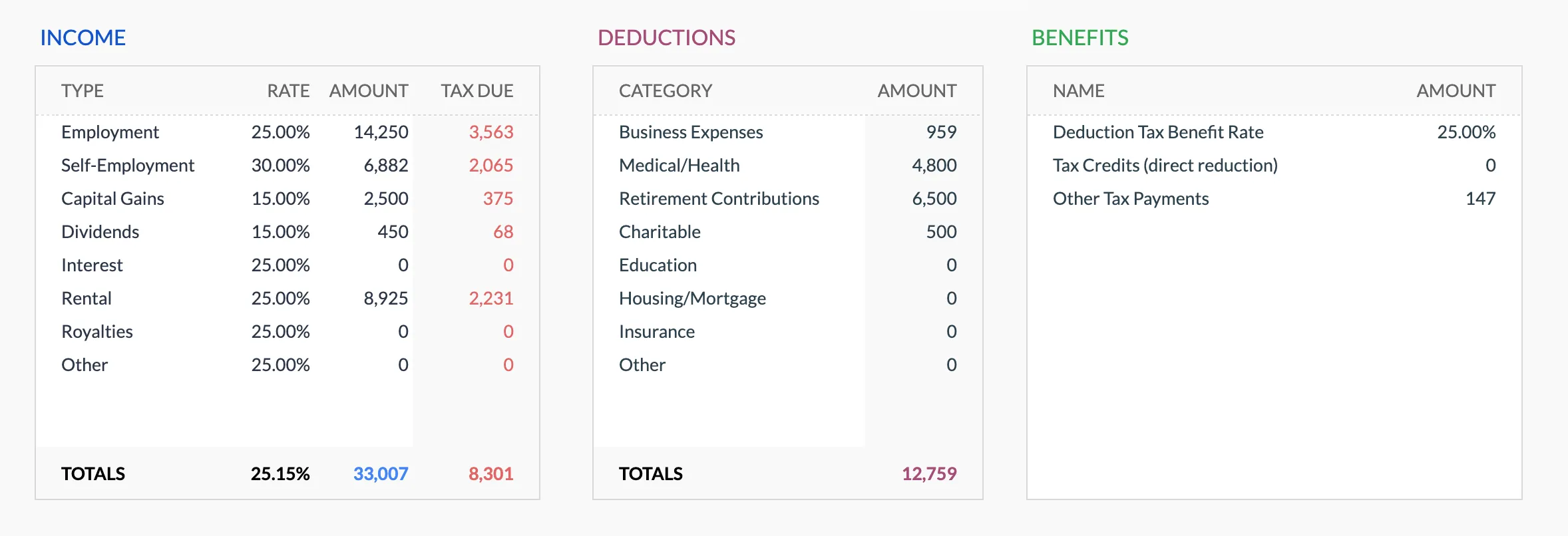
Parcourez le modèle pour voir comment il suit les revenus, les déductions, les crédits et les paiements trimestriels estimés.
- Tableau de bord fiscal annuel
- Suivi des revenus par source
- Organisateur de déductions et crédits
- Suivi des paiements trimestriels
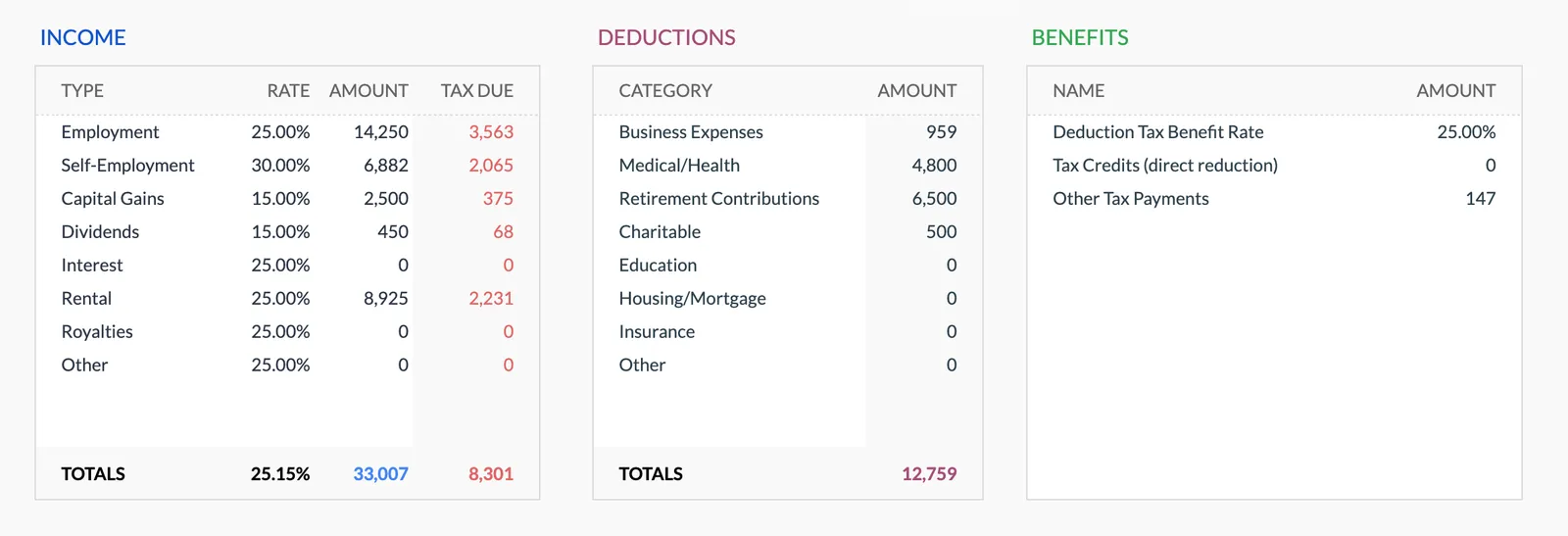
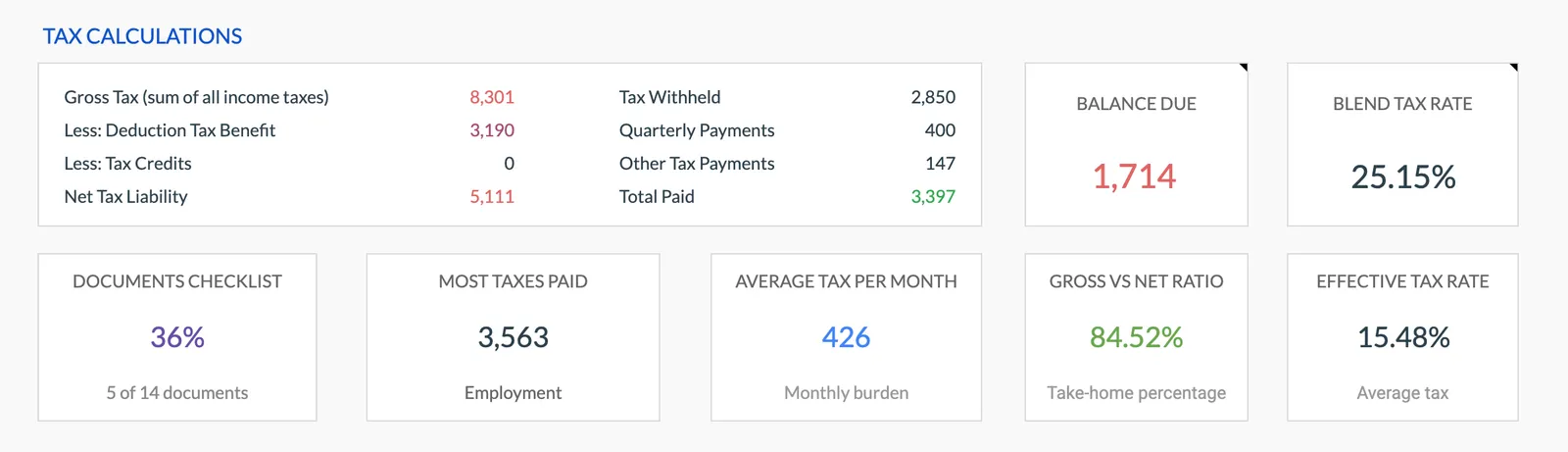
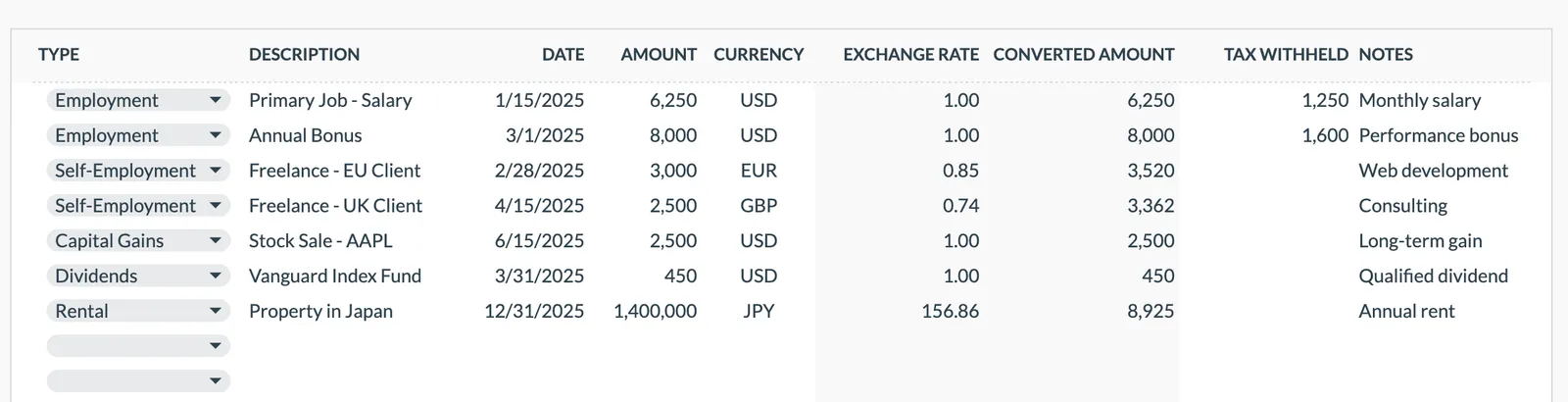
Annual tax overview with key figures
Detailed tax breakdown and projections
Track all income sources for tax purposes
Organize and track tax deductions
Plan and track quarterly estimated tax payments
Questions fréquentes
Planification fiscale en Hawaii - FAQ
Pourquoi les taux d'impôt sur le revenu de Hawaii sont-ils si élevés?
Hawaii n'a pas d'alternative d'impôt foncier large comme certains États, et la General Excise Tax (bien que importante) ne remplace pas complètement le rôle que joue un impôt sur le revenu. L'État dépend fortement des revenus de l'impôt sur le revenu pour financer les services. Cela, combiné à une petite base de population et aux coûts élevés de prestation de services gouvernementaux sur les îles, contribue à des taux qui atteignent 11% [1] à la tranche supérieure - parmi les plus élevés du pays.
Comment Hawaii traite-t-il les gains en capital?
Hawaii impose les gains en capital à court terme comme des revenus ordinaires aux taux progressifs. Les gains nets à long terme fonctionnent différemment, puisque l'impôt est calculé à la fois aux taux progressifs et avec un taux alternatif uniforme de 7.25% sur le gain net à long terme, et le moindre des deux résultats s'applique pour l'année fiscale 2026. Pour les résidents qui vendent des biens immobiliers (le marché du logement de Hawaii peut produire des gains substantiels), des placements ou des actifs commerciaux, les gains s'ajoutent aux autres revenus et sont imposés selon la tranche que ce revenu total atteint.
Qu'est-ce que la Taxe Générale de Consommation et en quoi diffère-t-elle d'une taxe de vente?
La GET s'applique à presque toutes les transactions commerciales à tous les niveaux - gros, détail, services et activités professionnelles. Contrairement à une taxe de vente traditionnelle qui s'applique uniquement à la vente de détail finale, la GET peut s'appliquer plusieurs fois à mesure que les biens et services se déplacent dans la chaîne d'approvisionnement (c'est ce qu'on appelle la pyramidation). Le taux varie légèrement selon le comté. La plupart des entreprises répercutent la GET sur les consommateurs, elle fonctionne donc comme une taxe de vente dans la pratique mais peut entraîner un taux d'imposition effectif plus élevé sur les achats.
Hawaii taxe-t-il les revenus de retraite?
Hawaii n'impose pas les prestations de Sécurité sociale. Les distributions admissibles des régimes de retraite financés par l'employeur sont également exclues, de sorte que ce qui reste imposable est la portion que vous avez financée vous-même, comme les cotisations volontaires 401(k) et les retraits d'IRA, aux taux progressifs réguliers. Compte tenu des taux élevés de Hawaii, les retraités qui puisent surtout dans des comptes autofinancés peuvent faire face à une facture fiscale d'État appréciable. C'est utile à considérer lors de la projection des besoins de revenu à la retraite, surtout compte tenu du coût de la vie élevé à Hawaii.
Y a-t-il des crédits ou des déductions spécifiques à Hawaii?
Hawaii offre plusieurs crédits, dont un crédit remboursable sur l'alimentation et l'accise qui compense la GET sur les produits de première nécessité, un crédit pour les locataires des ménages à faible revenu, un crédit pour les frais de garde d'enfants et de personnes à charge, et un crédit d'impôt sur le revenu gagné remboursable au niveau de l'État fixé en pourcentage de l'EITC fédéral. L'État autorise également une déduction standard ou des déductions détaillées, avec des montants qui diffèrent des niveaux fédéraux.
Vous ne trouvez pas la réponse que vous cherchez ? Contactez notre équipe
Ressources fiscales officielles
Pour les taux actuels, formulaires et délais de déclaration spécifiques à Hawaii:
Sources
Organisez votre planification fiscale pour Hawaii
Achat unique. Sans abonnement. Vos données financières restent dans votre Google Drive.
Tax rules, rates, and contribution limits change, and official publications can themselves lag behind the law in force. We review these figures on a best-effort basis against sources we consider authoritative, but we cannot guarantee they are current, complete, or that better sources do not exist, and nothing here is tax, legal, or financial advice. For decisions, the relevant government authority is the reference. Last reviewed: August 2026.