New Zealand
Retirement Planning Template for New Zealand
Map out your retirement in a Google Sheets template you own, covering KiwiSaver balance, NZ Super, additional investments, and projected expenses.
In Depth
NZ Super, KiwiSaver at 65, and the Kiwi Retirement Picture
Retirement planning in New Zealand centres on two pillars, NZ Super and KiwiSaver, which together form a simpler structure than most comparable countries offer. NZ Super is universal from age 65, paying $1,110.30 a fortnight after tax to a single person living alone from 1 April 2026, roughly $555 a week. Unlike Australia's means-tested Age Pension, NZ Super does not reduce based on other income or assets. That reliability makes it a stable base for projecting retirement income.
KiwiSaver funds become accessible at 65, and the accumulated balance supplements NZ Super. How far that balance goes depends on contribution rate, fund type, and how many years of contributions have built up. Someone who joined at the 2007 launch and contributed consistently at 8% will hold a very different balance from someone who joined later at the minimum rate, which rose from 3% to 3.5% on 1 April 2026 and is legislated to reach 4% on 1 April 2028. The Retirement Commission's research points to a gap for many New Zealanders between the retirement lifestyle they expect and what KiwiSaver plus NZ Super actually delivers.
For those planning to step back from work before 65, the challenge is bridging the gap. KiwiSaver cannot be accessed early for retirement purposes, only for a first home, significant financial hardship, serious illness, or permanent emigration. Any pre-65 retirement spending comes from savings and investments held outside KiwiSaver. PIE funds, term deposits, or direct share investments can provide that bridge, and modelling the two phases separately, first the pre-65 bridge and then the post-65 KiwiSaver-plus-Super period, gives a more realistic picture of what is needed.
New Zealand's public healthcare system covers hospital care, subsidised GP visits, and many prescriptions at reduced cost. That removes some of the retirement healthcare anxiety that exists in countries without universal coverage. Dental care, elective procedures, and the cost of rest home or aged residential care remain significant potential expenses worth factoring into long-term projections.
New Zealand
Retirement Planning in New Zealand: Key Factors
New Zealand retirement planning rests on two pillars, KiwiSaver and NZ Super, which makes it simpler than many countries. Working out whether they add up to enough still takes planning.
NZ Super provides universal coverage from 65
NZ Super is available to eligible residents at 65, regardless of work history or savings. From 1 April 2026 a single person living alone receives $1,110.30 a fortnight after tax at the M code, about $555 a week. A couple where both qualify receives $1,708.16 a fortnight combined, about $854 a week. It is a reliable foundation rather than a full retirement income for most households.
KiwiSaver is the main savings vehicle
KiwiSaver funds are locked until 65, with limited exceptions for a first home, significant financial hardship, serious illness, or permanent emigration. Fund type, whether conservative, balanced, growth, or aggressive, shapes the long-term balance: a growth fund has historically produced more over 20 years or more, with larger swings along the way. Matching fund type to the years remaining is one of the decisions a retirement plan makes visible.
Non-KiwiSaver investments provide flexibility
Since KiwiSaver is locked until 65, any plan to reduce work or stop before 65 relies on savings held outside it. Managed funds (PIE funds with capped tax rates), direct shares, term deposits, or other investments provide that flexibility. A retirement plan that covers both the pre-65 and post-65 phases is more complete.
The Retirement Commission provides useful benchmarks
Te Ara Ahunga Ora, the Retirement Commission, publishes tools and benchmarks through Sorted.org.nz, including the annual Retirement Expenditure Guidelines. Their research points to a gap for many New Zealanders between the retirement lifestyle they expect and what current saving supports. A personalised plan is where those benchmarks can be compared against your own numbers.
Get the Template
Getting Started
Setting Up for NZ Retirement With KiwiSaver
Enter your KiwiSaver balance and settings
Log into your KiwiSaver provider's portal for your current balance. Note your contribution rate (3.5%, 4%, 6%, 8%, or 10% since 1 April 2026), fund type, and provider fees. These details feed the projected retirement balance.
Add NZ Super as future income
Enter the current NZ Super rate as income starting at age 65. For a couple, enter the combined amount. Rates are adjusted every 1 April, so the current rate is a common planning baseline.
Include non-KiwiSaver investments
List any other investments: managed funds, shares, term deposits, rental property. These matter most if you plan to slow down or stop working before 65.
Estimate retirement expenses
Project what you'll spend in retirement. The Retirement Commission's annual Retirement Expenditure Guidelines set out what retired households actually spend in the main centres and the provinces, at both a no-frills and a choices level, and those figures run well above the NZ Super rate. Your own target depends on location, health, travel plans, and whether the mortgage is paid off.
Test different scenarios
Try different retirement ages, KiwiSaver contribution rates, and investment returns. A change as small as moving contributions from 3.5% to 6% shows up clearly over 20 to 30 years in the projection.
See It In Action
What the template looks like
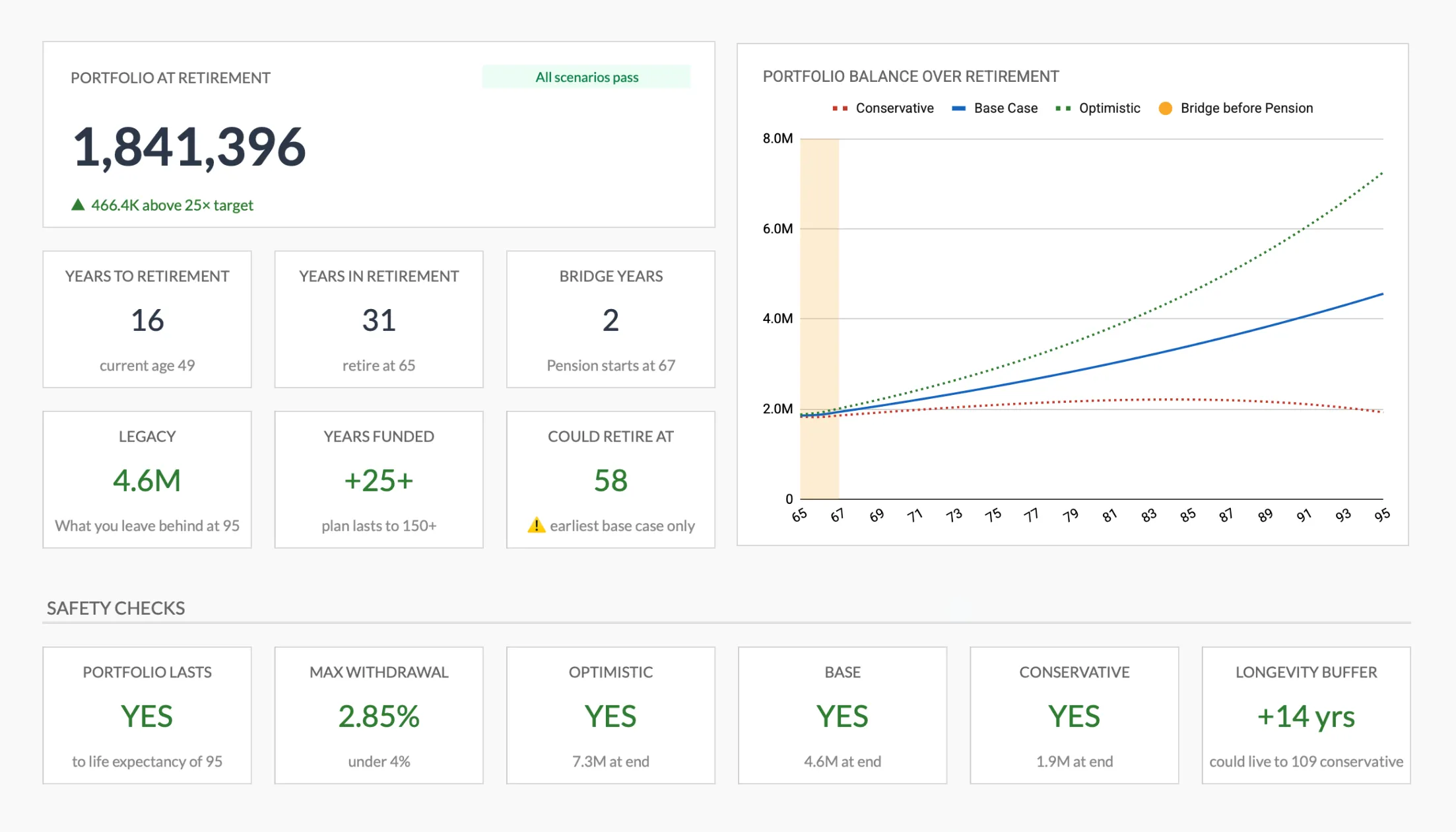
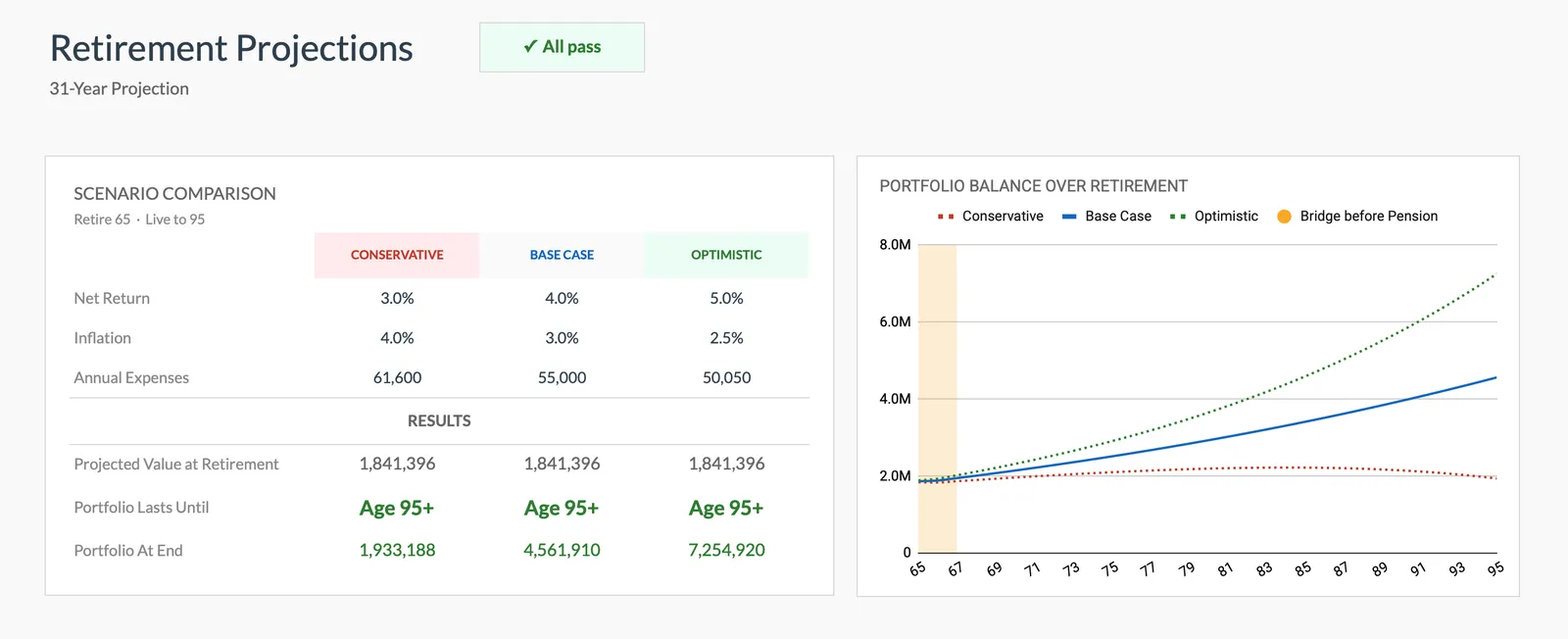
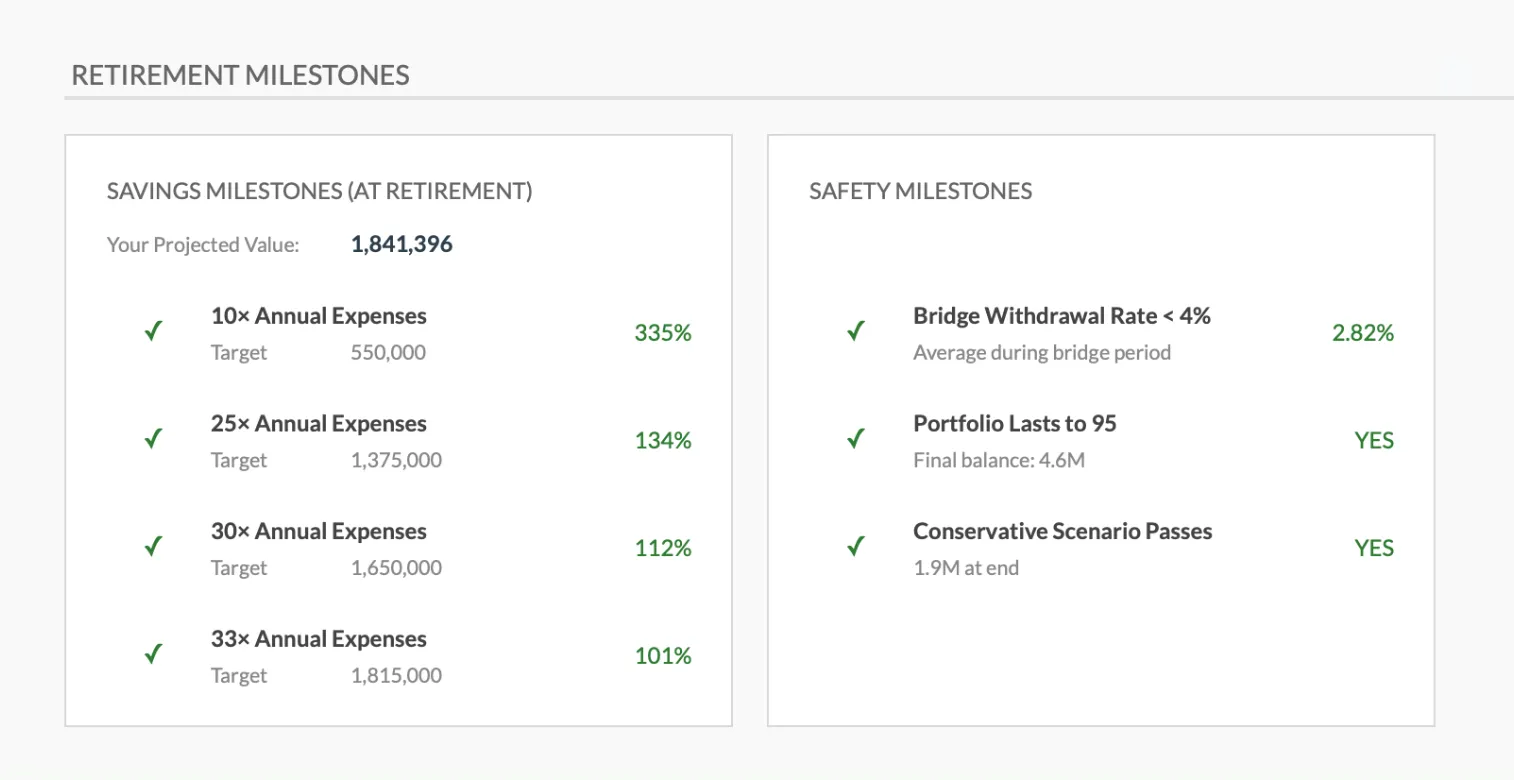
Browse through the template to see the dashboard, the entry sheets, and the summaries it produces, all adaptable to your local financial setup.
- Built-in currency selector
- Calculations update automatically
- Visual summaries of your numbers
- No setup required
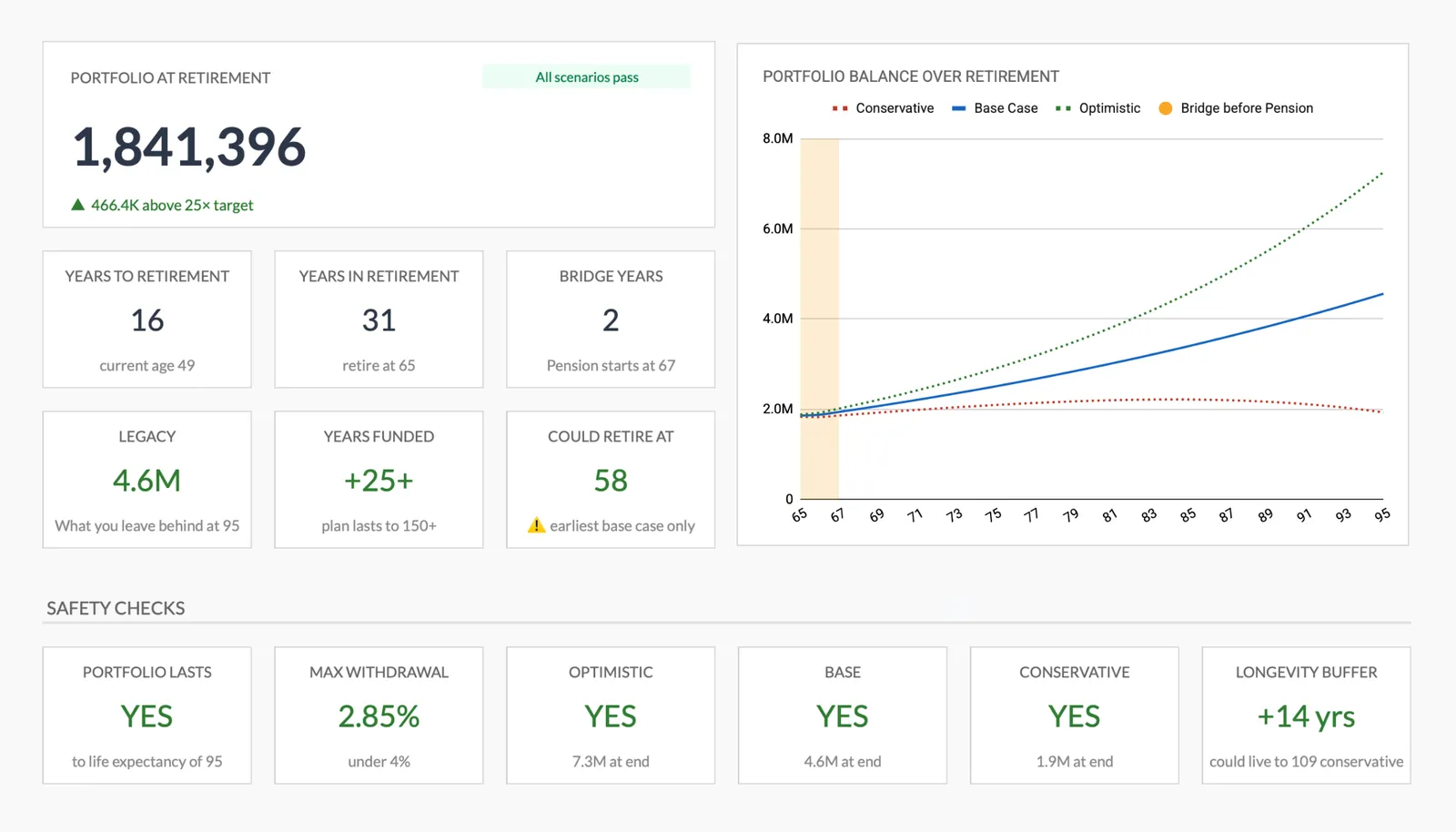
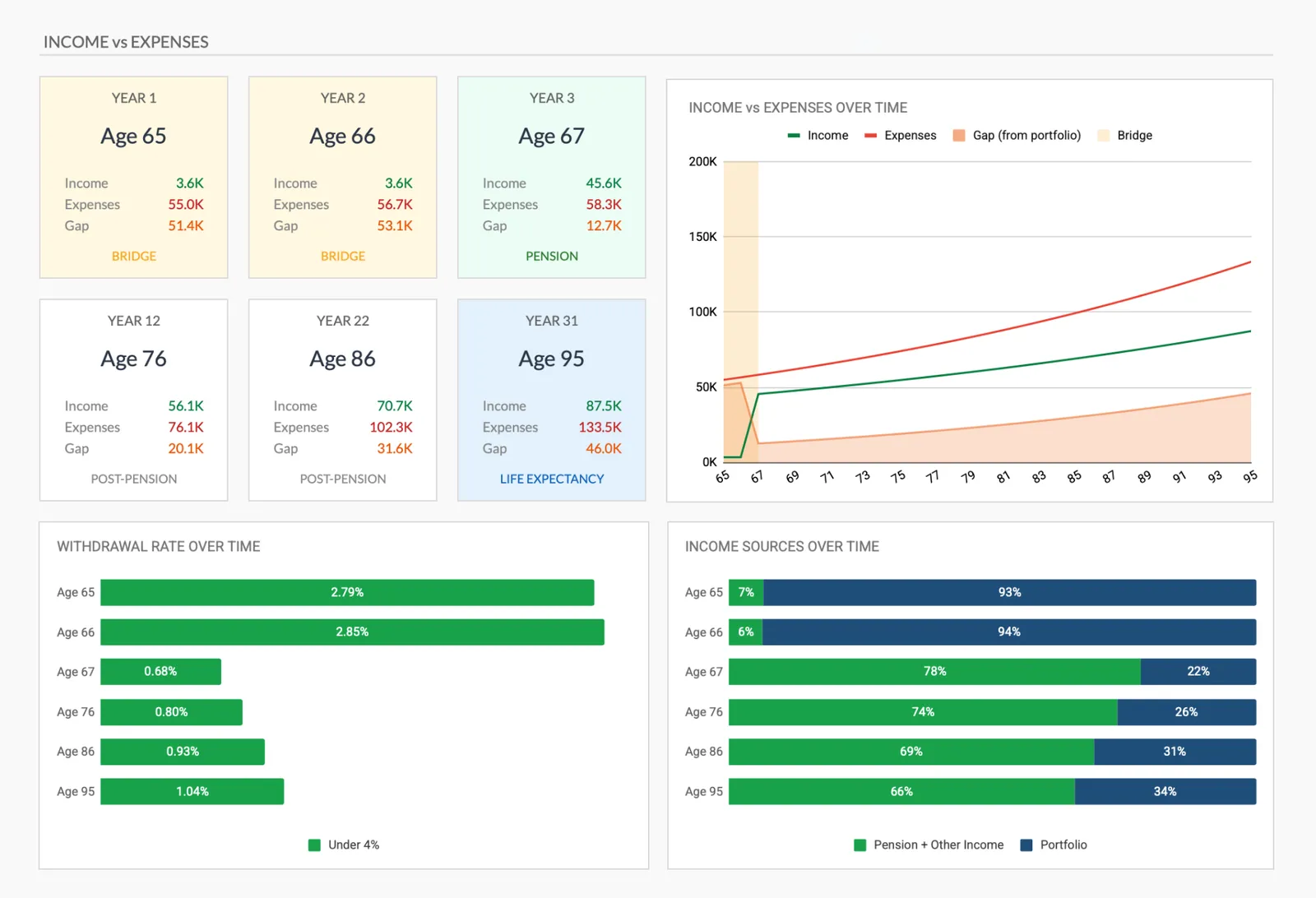
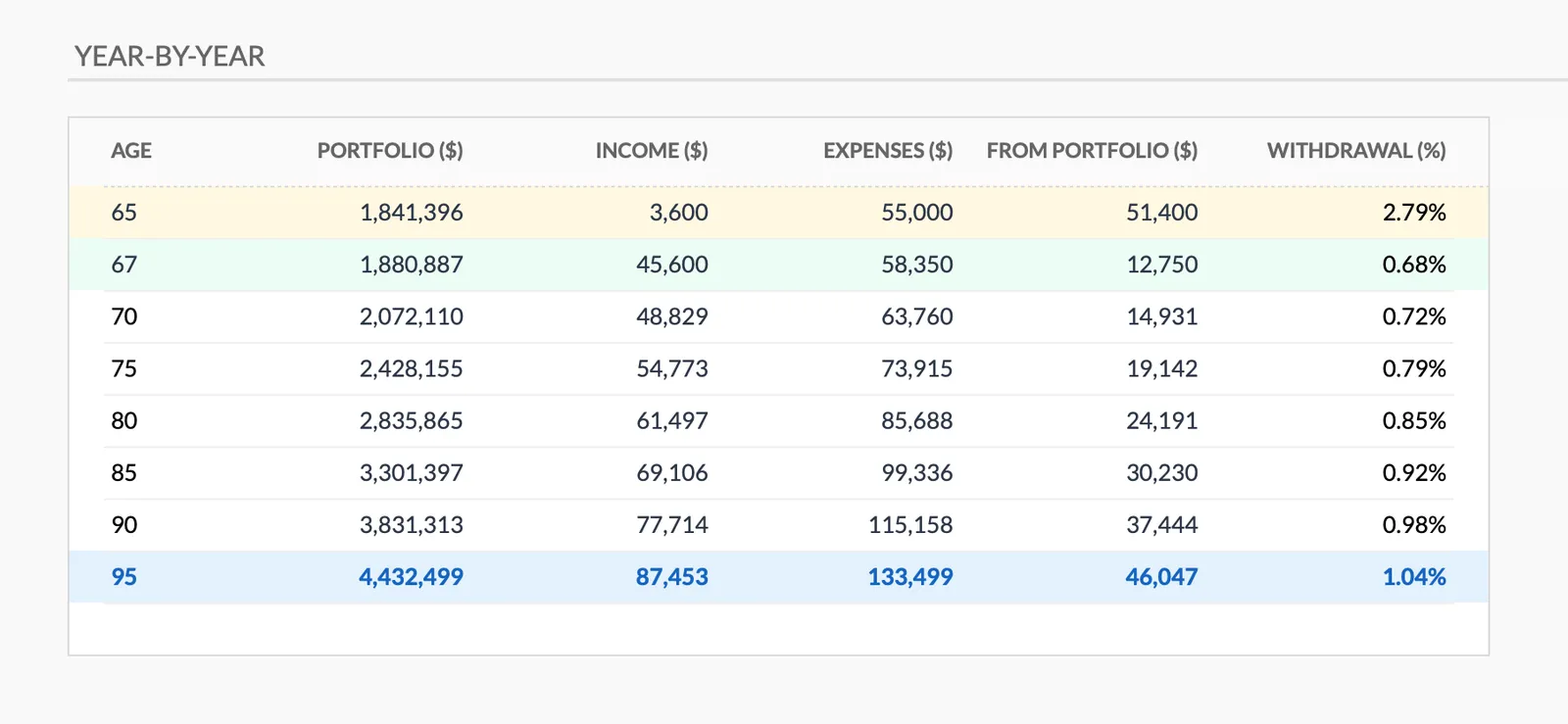
Complete retirement overview with projections
Project your retirement savings growth
Track progress toward retirement goals
Plan your retirement income against expenses
Detailed year-by-year retirement projection
Common Questions
Retirement Planning Template for New Zealand - FAQ
When can I access my KiwiSaver?
KiwiSaver funds become available at age 65. Earlier access is possible for a first home purchase (after three years of membership), significant financial hardship, serious illness, or permanent emigration. KiwiSaver cannot be accessed simply to retire before 65.
How much KiwiSaver do I need to retire?
It depends on your spending plans and on NZ Super. If NZ Super covers roughly $28,900 a year for a single person living alone and the target is $50,000 a year, KiwiSaver and other investments need to provide about $21,100 a year. At a 4% withdrawal rate that implies roughly $530,000 in savings. A different spending target moves the figure substantially.
How do growth and conservative KiwiSaver funds compare?
Over long periods, growth and aggressive funds have historically produced higher returns than conservative funds, with larger short-term swings. Closer to 65, a more conservative fund reduces exposure to a market fall shortly before the money is needed. Which trade-off fits depends on the years remaining and individual tolerance for volatility.
Will NZ Super still exist when I retire?
NZ Super is funded from general taxation and has had broad political support since it began. Future changes are possible, and raising the age or adding means testing have both been debated, but it has remained universal to date. Most projections include it as a baseline for that reason.
Can I retire before 65 in New Zealand?
It takes non-KiwiSaver savings to cover the gap. Since KiwiSaver is locked until 65 and NZ Super starts at 65, early retirees draw on investments outside both systems. The template helps calculate how much bridge funding those years require.
Can't find the answer you're looking for? Contact our team
Explore More
Free Tools for New Zealand
Ready to get started?
Download instantly and start managing your finances, or contact us to design a custom template package for your needs.
Tax rules, rates, and contribution limits change, and official publications can themselves lag behind the law in force. We review these figures on a best-effort basis against sources we consider authoritative, but we cannot guarantee they are current, complete, or that better sources do not exist, and nothing here is tax, legal, or financial advice. For decisions, the relevant government authority is the reference.