Malaysia
Retirement Planning Template for Malaysia
Combine your EPF accounts, PRS contributions, unit trusts, and projected retirement costs in one Google Sheets template you own.
In Depth
EPF Accounts, Retirement Age, and Healthcare in Later Life
EPF restructured its member accounts on 11 May 2024, replacing the old two-account split with three. Akaun Persaraan receives 75% of contributions and is the retirement pot proper, generally untouched until 55. Akaun Sejahtera receives 15%, unlocks at 50, and can be drawn earlier for housing, education, hajj, insurance and medical purposes. Akaun Fleksibel receives 10% and is available on demand. The old 70/30 Account 1 and Account 2 balances carried over into the new structure. Which pot a ringgit sits in now determines when it can be reached, and that in turn shapes how much saving outside EPF a plan needs.
Malaysia's statutory minimum retirement age is 60, while full EPF access begins at 55. That leaves a five-year window in which retirement funds can be reached by people who are still working, which can act as a cushion or as an early drain on the balance depending on what happens to the money. The distance between EPF withdrawal eligibility and an actual last day of work is one of the more consequential assumptions in any long-term projection.
Healthcare is among the larger variables in Malaysian retirement planning. Public hospitals offer affordable care with long waits, private care is faster and far more expensive, and medical insurance premiums have been repriced upward across the market since 2024. Premiums also rise with age, and some policies carry lifetime limits that extended care can exhaust. Modelling healthcare as a growing line rather than a fixed one produces a more realistic picture of later-life spending.
Malaysia
Retirement Planning in Malaysia: Key Factors
Malaysia's retirement system centres on EPF, supplemented by the Private Retirement Scheme and personal investments. Here is how the pieces fit together.
EPF is the foundation of Malaysian retirement savings
For members under 60, mandatory contributions come to 23% or 24% of wages, an 11% employee share plus 12% or 13% from the employer, which builds a substantial balance over a career. EPF declared a 6.30% dividend for 2024 and 6.15% for 2025, in a run of years mostly in the 5% to 6.5% range. Its own Basic Savings benchmark, the amount it treats as a floor for basic needs at age 55, is RM240,000, and EPF has announced a rise to RM390,000 from 2028. A large share of members reach 55 below that benchmark.
The three EPF accounts open up at different points
Since 11 May 2024 contributions have been split across three accounts rather than two. Akaun Persaraan takes 75% and is accessible at 55, Akaun Sejahtera takes 15% and opens at 50 with earlier access for housing, education, hajj, insurance and medical needs, and Akaun Fleksibel takes 10% and can be withdrawn at any time. EPF has reported that many members use up their savings within a few years of turning 55, so the pace of drawdown matters as much as the balance itself.
Private Retirement Scheme carries its own tax relief
PRS and deferred annuity contributions qualify for tax relief of up to RM3,000 a year, available through the 2030 year of assessment, separate from the RM4,000 relief for approved provident fund contributions. PRS funds are run by approved fund managers across a range of risk profiles. Withdrawal before age 55 outside the permitted reasons attracts an 8% tax penalty, which is part of why some people treat PRS as long-horizon money alongside EPF.
Healthcare costs in retirement require attention
Malaysia's public healthcare system is affordable, but wait times can be long. Private healthcare costs have been rising sharply, and medical insurance repricing has been a live issue since 2024. Many retirees lean more on private care as they age, which makes premiums and out-of-pocket medical spending a moving part of a retirement plan.
Get the Template
Getting Started
Personalizing the Retirement Planner for Malaysian EPF
Enter current retirement savings
List all retirement-related balances: your EPF Akaun Persaraan, Akaun Sejahtera and Akaun Fleksibel figures from i-Akaun, PRS balance, unit trusts, ASB (Amanah Saham Bumiputera) or ASN holdings, fixed deposits, and any other long-term savings.
Note EPF and PRS savings rates
Enter EPF contributions (employee + employer), PRS contributions, and any additional savings or investment amounts. This drives the growth projections in the template.
Estimate retirement expenses
Project monthly retirement spending across housing, healthcare and medical insurance, food, utilities, transport, and leisure. Some categories fall in retirement while healthcare typically climbs, and the template holds both patterns side by side.
Choose your return assumptions
The template takes whatever growth rates you enter. As reference points, EPF dividends have recently landed near 6%, balanced unit trusts are often modelled at 6% to 8% nominal, and fixed deposits sit lower. Subtracting Malaysian inflation, which has run around 2% to 3%, converts those into real returns.
Run different scenarios
Test different retirement ages and spending levels. EPF allows full access to Akaun Persaraan at 55 while the statutory minimum retirement age is 60, and each extra working year shows up in the projected balance. Seeing those side by side is where the scenario view earns its place.
See It In Action
What the template looks like
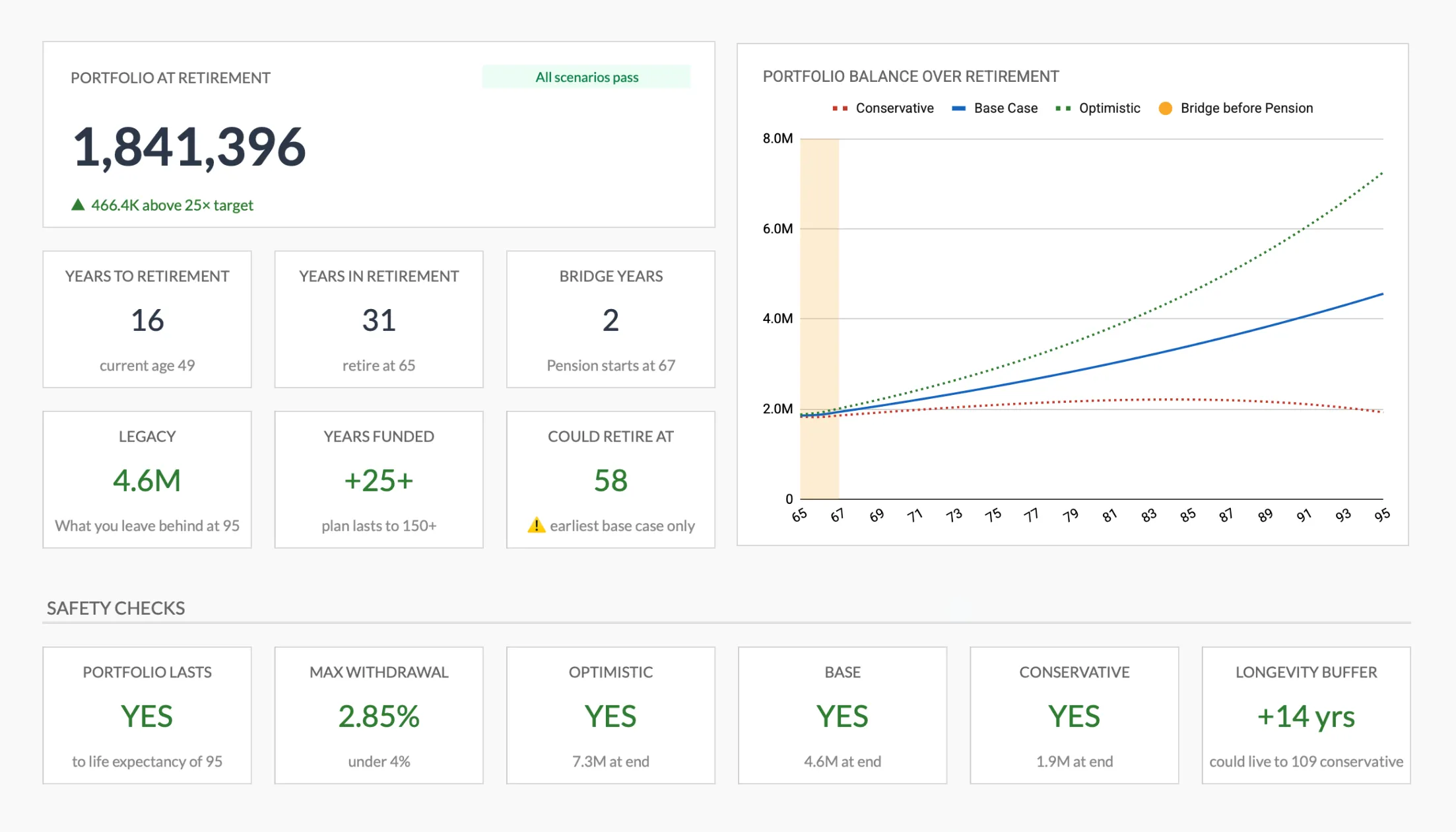
Browse through the template to see the dashboard, the entry sheets, and the summaries it produces, all adaptable to your local financial setup.
- Built-in currency selector
- Calculations update automatically
- Visual summaries of your numbers
- No setup required
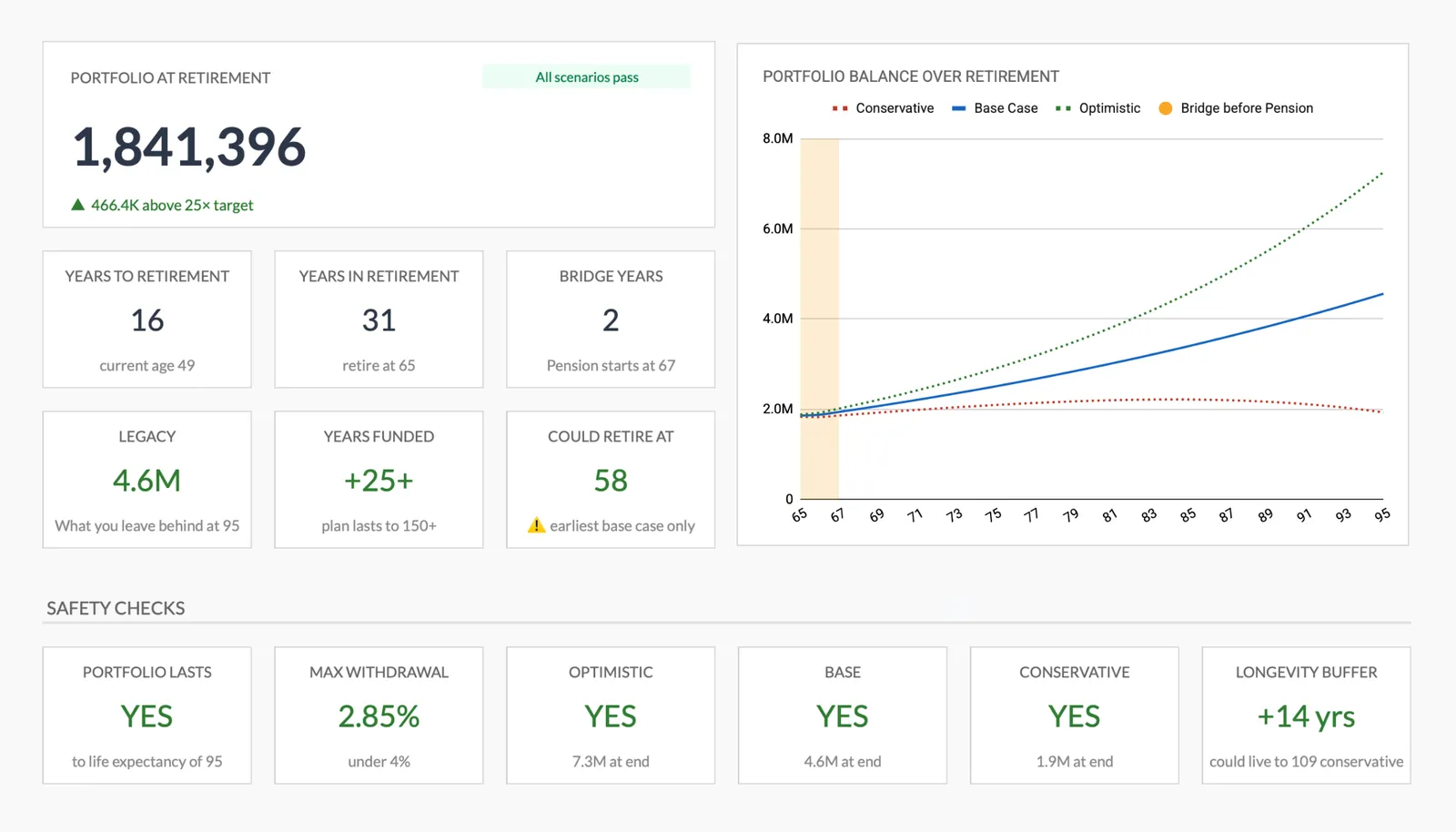
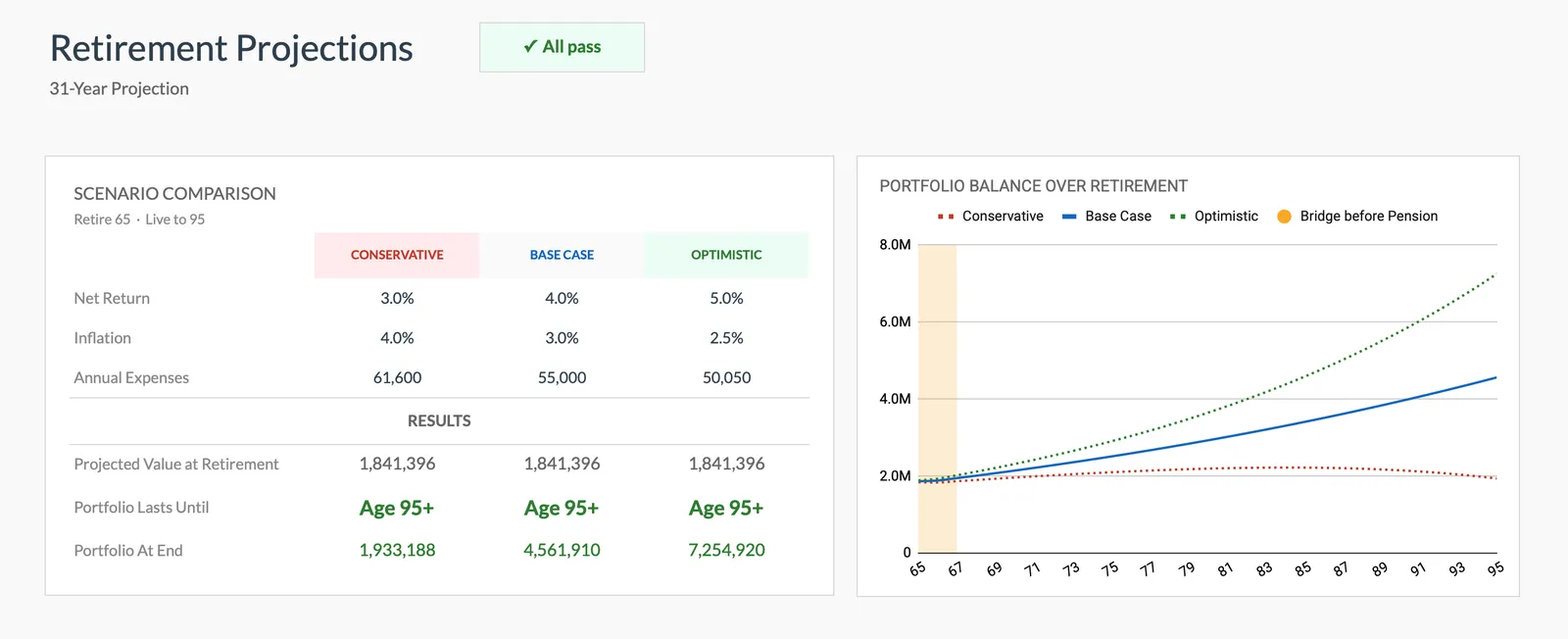
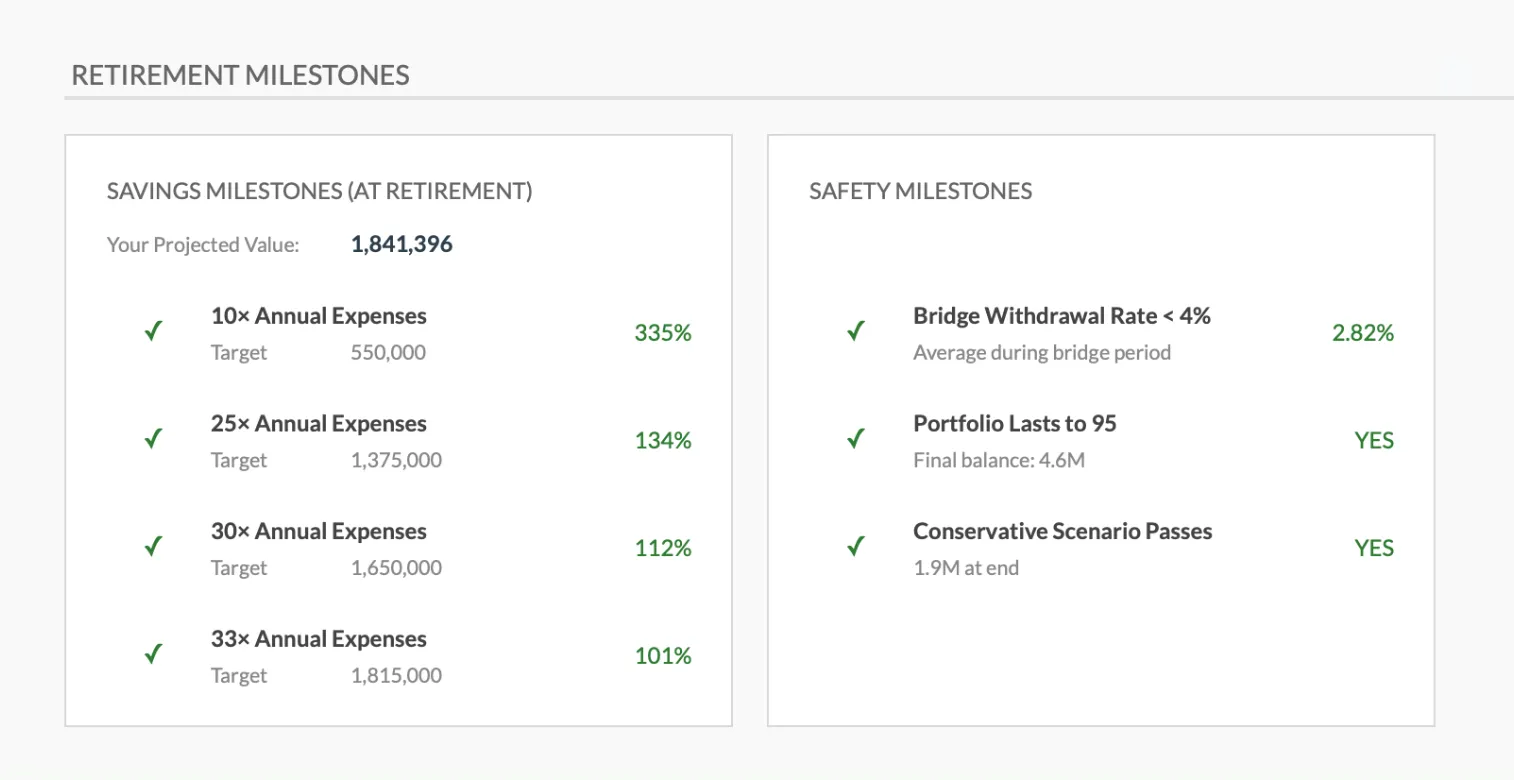
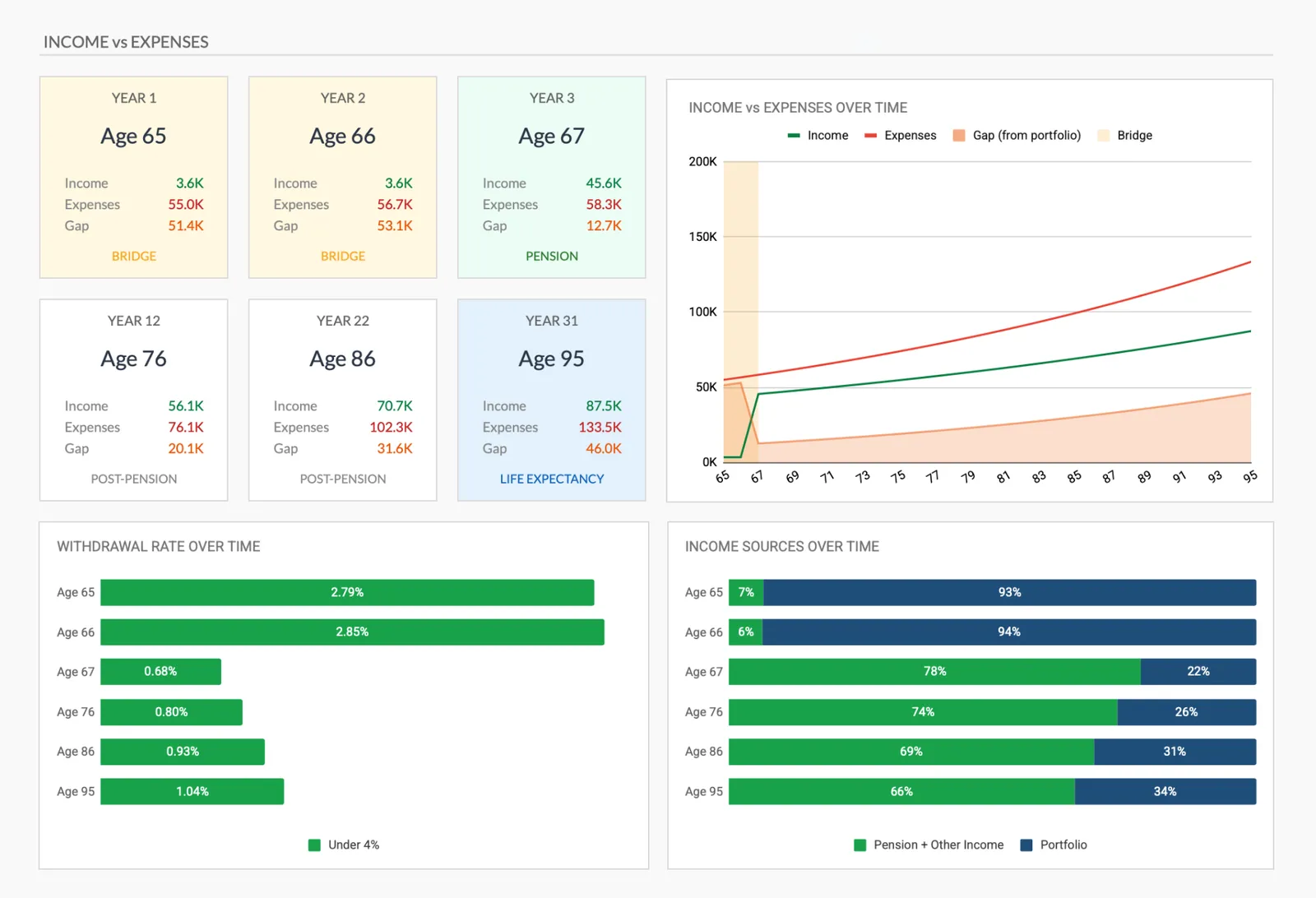
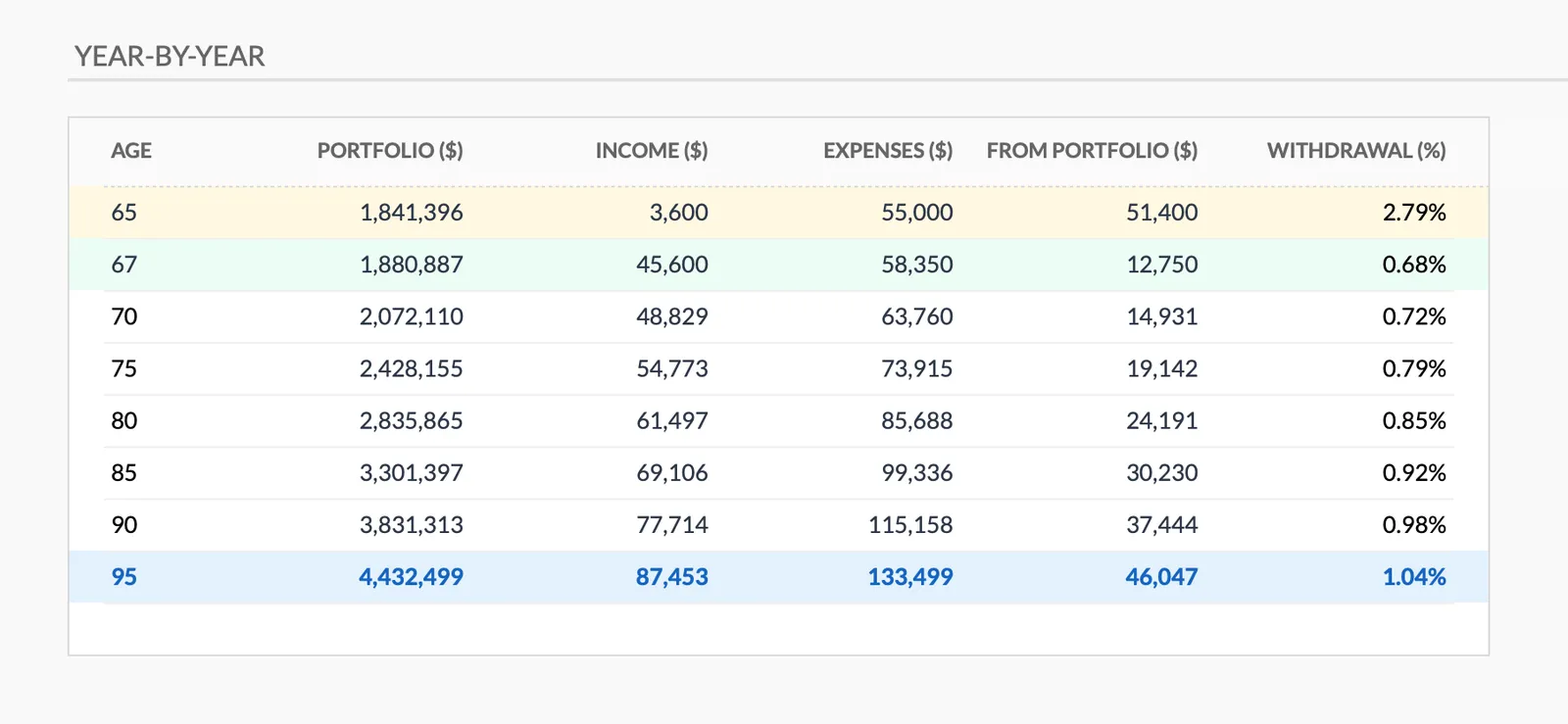
Complete retirement overview with projections
Project your retirement savings growth
Track progress toward retirement goals
Plan your retirement income against expenses
Detailed year-by-year retirement projection
Common Questions
Retirement Planning Template for Malaysia - FAQ
How much do I need to retire in Malaysia?
EPF's Basic Savings benchmark is RM240,000 at age 55 for basic needs, rising to RM390,000 from 2028. Figures quoted for a more comfortable retirement vary widely with lifestyle and location, often into the millions of ringgit. The template calculates a target from the expenses and lifestyle you enter rather than from a rule of thumb.
Can I withdraw EPF before retirement?
Yes, within limits. Akaun Fleksibel can be withdrawn at any time, Akaun Sejahtera opens at 50 and earlier for housing, education, hajj, insurance and medical purposes, and Akaun Persaraan is generally held until 55. Anything taken out early leaves a smaller balance to compound, which is worth modelling before it happens.
Is EPF enough for retirement?
For many Malaysians EPF alone falls short of a comfortable retirement, and EPF's own research shows a large share of members below its Basic Savings benchmark at 55. Some people close the gap with PRS, unit trusts, property or other investments, and the template shows what each addition does to the projection.
How do I account for inflation?
Malaysian inflation has averaged roughly 2% to 3% in recent years. Over 20 to 30 years even moderate inflation erodes purchasing power substantially, so entering real returns (nominal minus inflation) gives a projection in today's money.
What about the minimum retirement age increase?
Malaysia's statutory minimum retirement age is 60, and proposals to raise it surface periodically without having been enacted. Because working lives can end sooner than planned, some people run the projection twice, once to 60 and once to an earlier stop.
Can't find the answer you're looking for? Contact our team
Explore More
Free Tools for Malaysia
Ready to get started?
Download instantly and start managing your finances, or contact us to design a custom template package for your needs.
Tax rules, rates, and contribution limits change, and official publications can themselves lag behind the law in force. We review these figures on a best-effort basis against sources we consider authoritative, but we cannot guarantee they are current, complete, or that better sources do not exist, and nothing here is tax, legal, or financial advice. For decisions, the relevant government authority is the reference.