Germany
Monthly Budget Template for Germany
Track your income in EUR, manage German tax deductions, social insurance contributions, and everyday expenses, all in a Google Sheets template you own.
In Depth
Solidaritätszuschlag, Kirchensteuer, and Why German Netto Feels So Far From Brutto
Germany's payslip is among the most complex in Europe, and income tax (Einkommensteuer) at 14% to 45% is only the start. For the 2026 tax year the first EUR 12,384 is free of tax, the 42% band opens at EUR 69,878, and 45% applies above EUR 277,826. The Solidaritätszuschlag, a 5.5% surcharge on income tax introduced for German reunification, still applies to higher earners, although since 2021 the great majority of taxpayers fall under the exemption threshold. Anyone registered with a recognized church also pays Kirchensteuer at 8% of income tax in Bavaria and Baden-Württemberg or 9% elsewhere, which can add hundreds of euros a month at higher incomes.
Social insurance contributions are the other major slice. For 2026 health insurance (Krankenversicherung) runs at 14.6% plus a Zusatzbeitrag averaging 2.9%, pension insurance (Rentenversicherung) at 18.6%, unemployment insurance (Arbeitslosenversicherung) at 2.6%, and long-term care insurance (Pflegeversicherung) at 3.6%, or 4.2% for people without children. Each is split between employer and employee, apart from the 0.6% childless surcharge, which the employee carries alone. That puts the employee's combined social contribution share at roughly 21% of gross salary, and explains why the distance between Brutto and Netto often reaches 40%.
Riester-Rente subsidies offer some relief inside that heavy-deduction environment. Paying 4% of the previous year's gross income into a Riester contract, capped at EUR 2,100 a year including the subsidies themselves, triggers a Grundzulage of EUR 175 a year plus a Kinderzulage of EUR 300 for each child born from 2008 onward. From 1 January 2027 the Altersvorsorgedepot replaces Riester for new contracts. Property buyers face a separate arithmetic: Grunderwerbsteuer ranges from 3.5% in Bavaria to 6.5% in states such as Brandenburg and North Rhine-Westphalia, and once notary fees, land registration and any agent commission are added, total acquisition costs land 10% to 15% above the purchase price.
Germany
Budgeting in Germany: What's Different
Germany's financial system takes significant deductions from gross pay and has its own expense patterns. Knowing how they work makes it easier to set up a budget that matches reality.
Social contributions take a large share of gross pay
German social insurance covers health insurance (Krankenversicherung), pension insurance (Rentenversicherung), unemployment insurance (Arbeitslosenversicherung) and long-term care insurance (Pflegeversicherung). For 2026 the employee share of all four comes to roughly 21% of gross salary, a little more for people without children. Combined with income tax at 14% to 45%, the gap between gross and net salary is substantial, which is why most German budgets are built on the Nettolohn (net pay) rather than the headline salary.
Income tax includes the solidarity surcharge for higher earners
German income tax rates run from 14% to 45% [1]. For the 2026 tax year the basic allowance (Grundfreibetrag) is EUR 12,384, the 42% band starts at EUR 69,878, and the top rate of 45% applies above EUR 277,826. The Solidaritätszuschlag, a surcharge of 5.5% of income tax, still applies to higher earners [1]. Tax class (Steuerklasse) changes monthly withholding considerably, which matters most for married couples weighing the Class III/V combination against Class IV/IV.
Church tax adds another deduction for registered members
Members of recognized churches, including Catholic and Protestant congregations, pay Kirchensteuer at 8% of income tax in Bavaria and Baden-Württemberg and 9% in every other state [2]. It is deducted automatically from salary. The deduction stops only on a formal Kirchenaustritt, a personal decision that happens to carry a financial side.
German expense patterns differ from Anglophone countries
Rent, often quoted with Nebenkosten for utilities on top, is typically the largest expense. The Rundfunkbeitrag (broadcasting fee) is EUR 18.36 per month per household, a level the states have held through 2026. Private liability insurance (Privathaftpflicht) is inexpensive and very widely held. Health insurance copays are small compared with the US system.
Health insurance contributions are a major deduction
Statutory health insurance (GKV) has a general contribution rate of 14.6% of gross salary, split equally between employer and employee, plus a fund-specific Zusatzbeitrag that averages 2.9% for 2026 [1] and is also shared. Long-term care insurance (Pflegeversicherung) adds 3.6%, rising to 4.2% for people without children, with the extra 0.6% carried by the employee alone. Employees earning above the Versicherungspflichtgrenze, EUR 77,400 for 2026, can opt for private health insurance (PKV), where premiums track age and health rather than income.
Property purchase costs in Germany are unusually high
Buying property involves Grunderwerbsteuer (real estate transfer tax), which each federal state sets for itself. Bavaria is the only state still at the statutory 3.5%; Saxony charges 5.5%, Thuringia 5%, and Brandenburg, North Rhine-Westphalia and Schleswig-Holstein all charge 6.5%. Add notary fees of about 1.5% to 2%, land registration of about 0.5%, and agent commission of 3% to 6% plus VAT where an agent is involved, and total purchase costs can reach 10% to 15% of the price. These one-off costs are substantial and are not recovered if the property later sells at cost.
Get the Template
Getting Started
Getting Started With Your German Budget
Set the currency to EUR
Set EUR as the display currency using the option at the top of the dashboard. The calculations stay the same, only the display changes.
Enter your Nettolohn (net salary)
Use the amount actually credited to your bank account after Lohnsteuer, social insurance, Solidaritätszuschlag and Kirchensteuer where they apply. Your Gehaltsabrechnung (payslip) shows this as the Auszahlungsbetrag.
Customize expense categories for German life
Add categories for Miete (rent) including Nebenkosten, health insurance costs, Rundfunkbeitrag, Haftpflichtversicherung (liability insurance), internet and mobile, groceries, BahnCard or car expenses covering fuel, Versicherung and Steuern, and Kindergarten fees if applicable.
Track Riester or Rürup contributions if applicable
Riester-Rente and Rürup-Rente (Basisrente) contributions can sit in the budget as their own categories. The full Riester subsidy requires 4% of the previous year's gross income, counting the Zulagen and capped at EUR 2,100 a year. Worth knowing: Riester closes to new contracts on 1 January 2027, when the Altersvorsorgedepot replaces it, though existing contracts continue.
Plan for German annual expenses
Annual costs include Haftpflichtversicherung, Hausratversicherung, car tax and insurance renewals, the Rundfunkbeitrag (billed quarterly), and the year-end Nebenkostenabrechnung adjustment. Spreading these across 12 months in the budget keeps them from landing as surprises.
See It In Action
What the template looks like
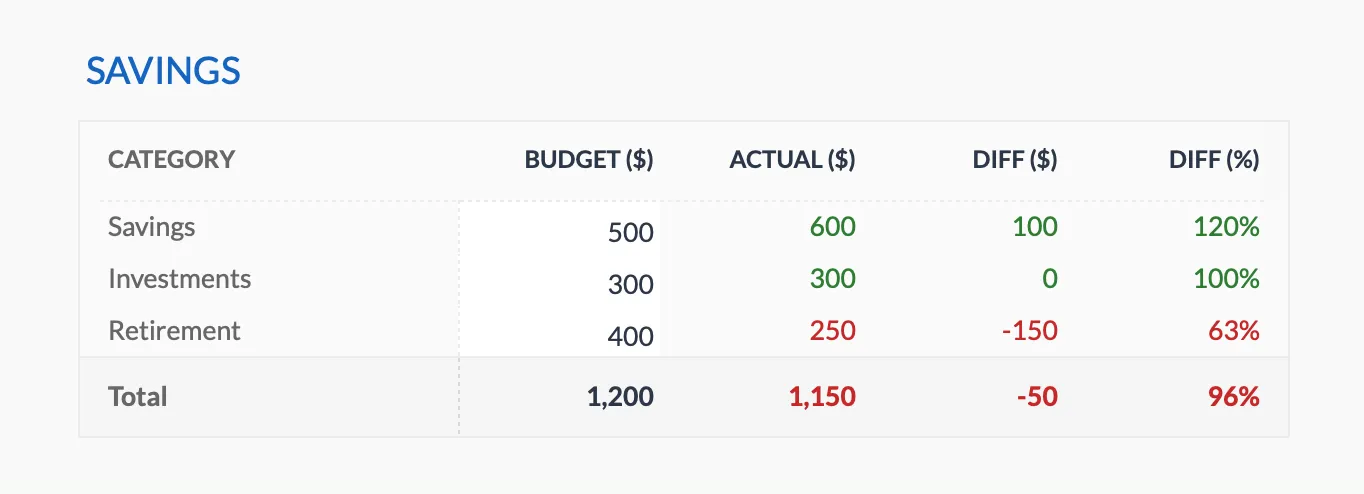
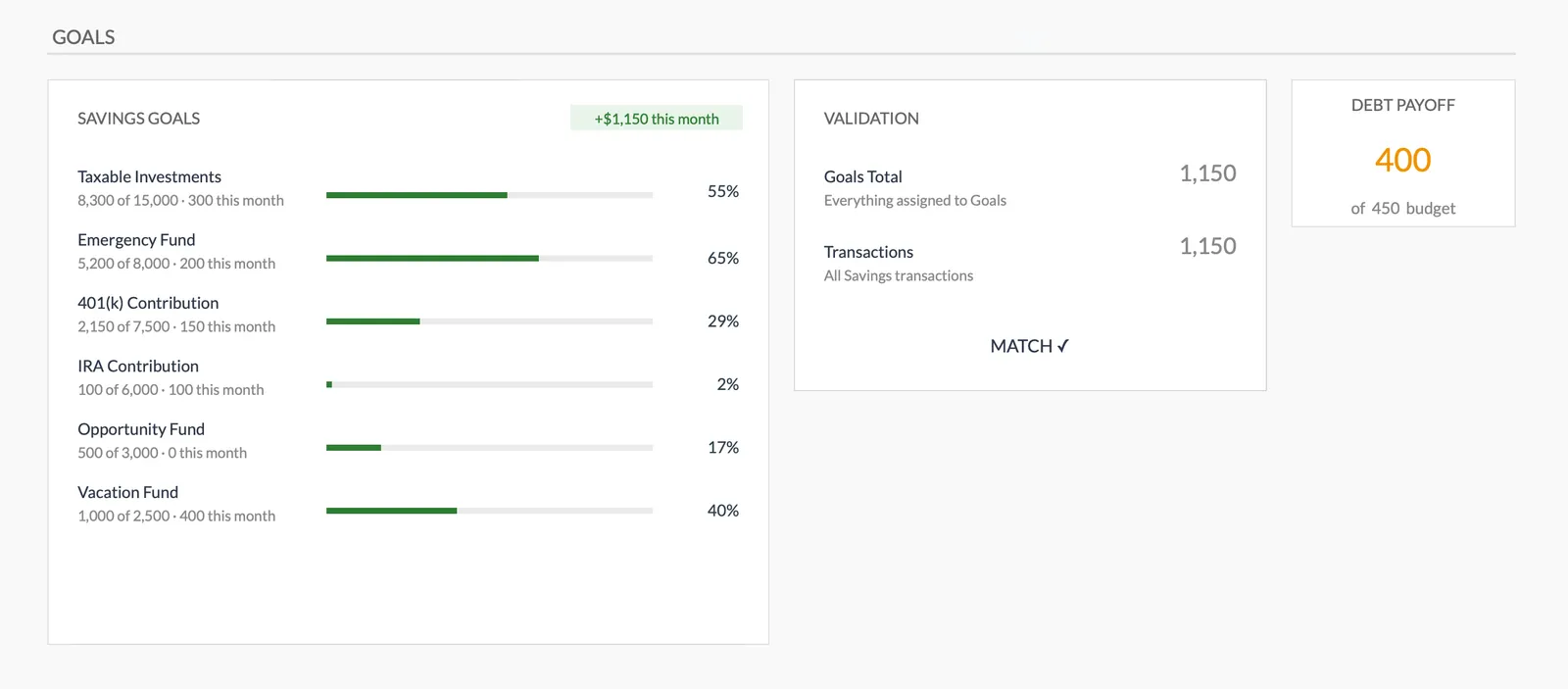
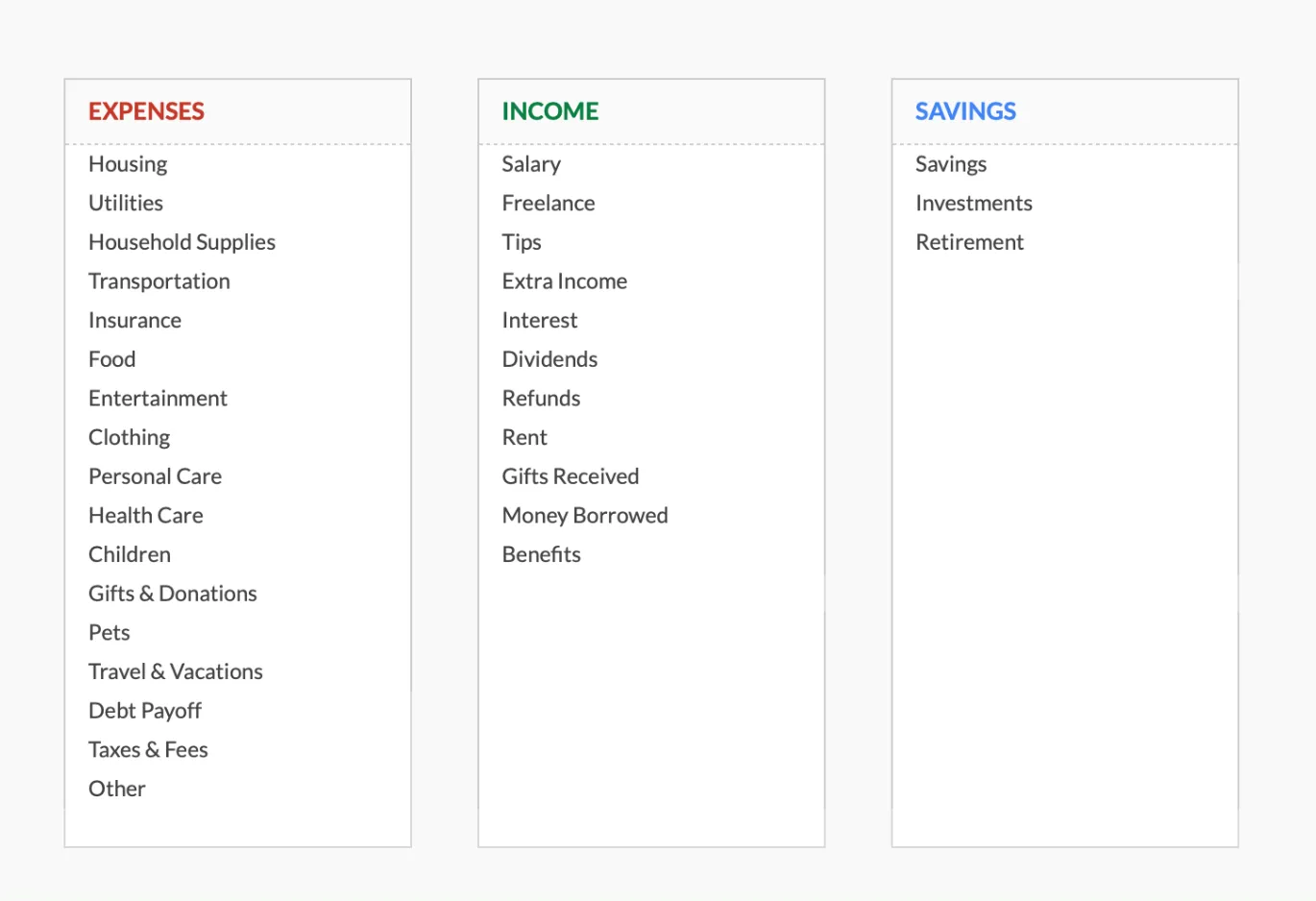
Browse through the template to see the dashboard, the entry sheets, and the summaries it produces, all adaptable to your local financial setup.
- Built-in currency selector
- Calculations update automatically
- Visual summaries of your numbers
- No setup required
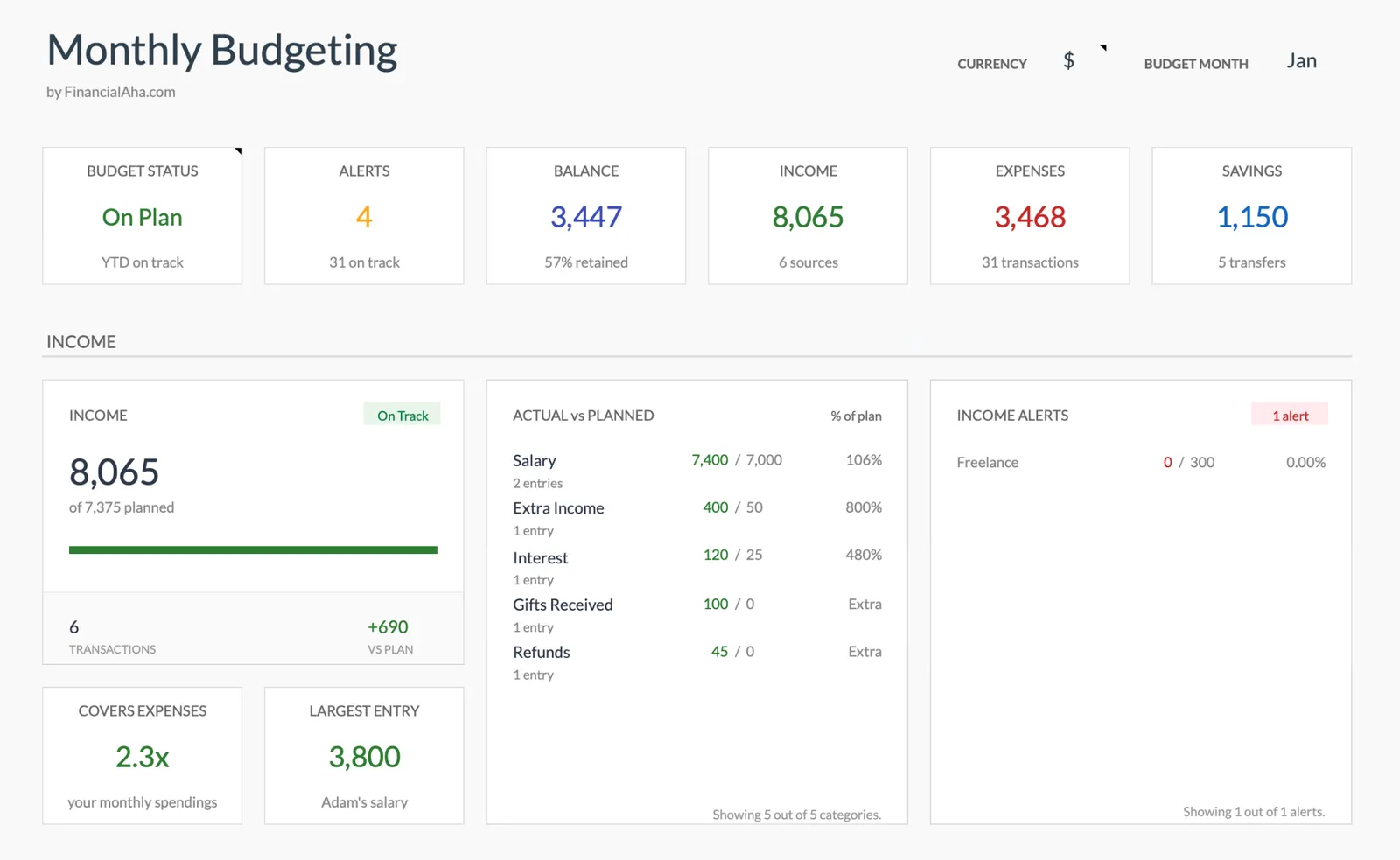
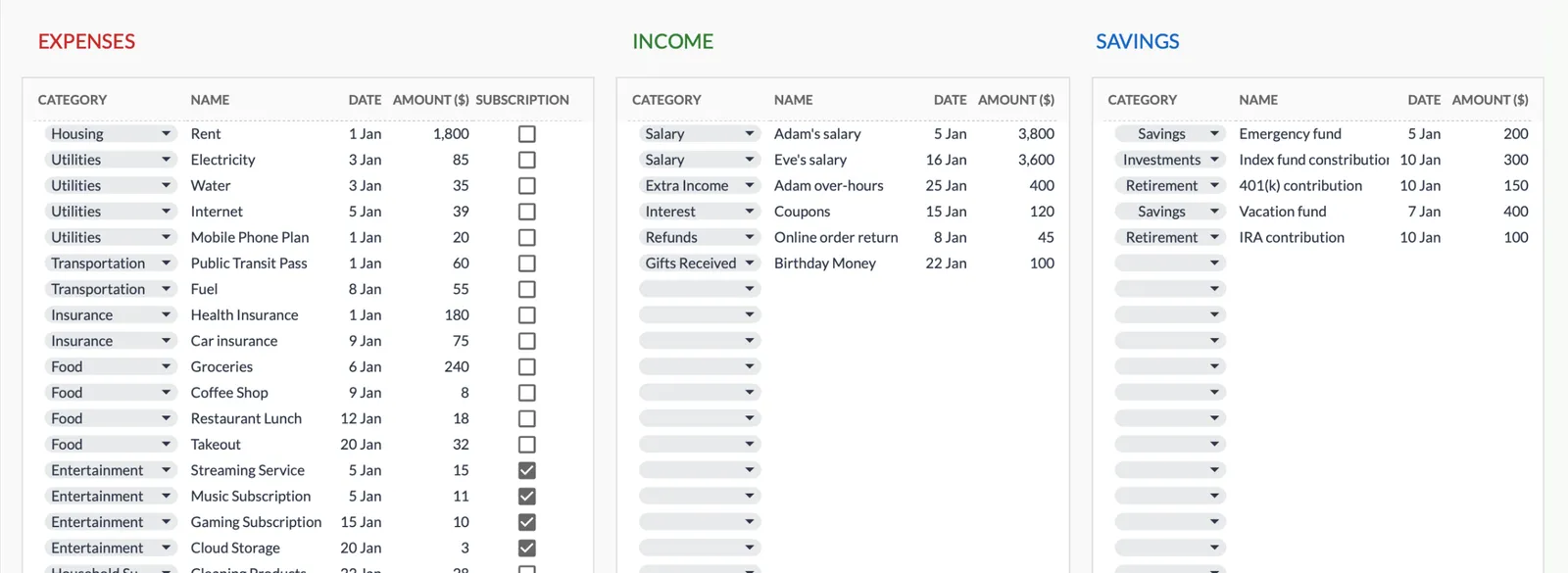
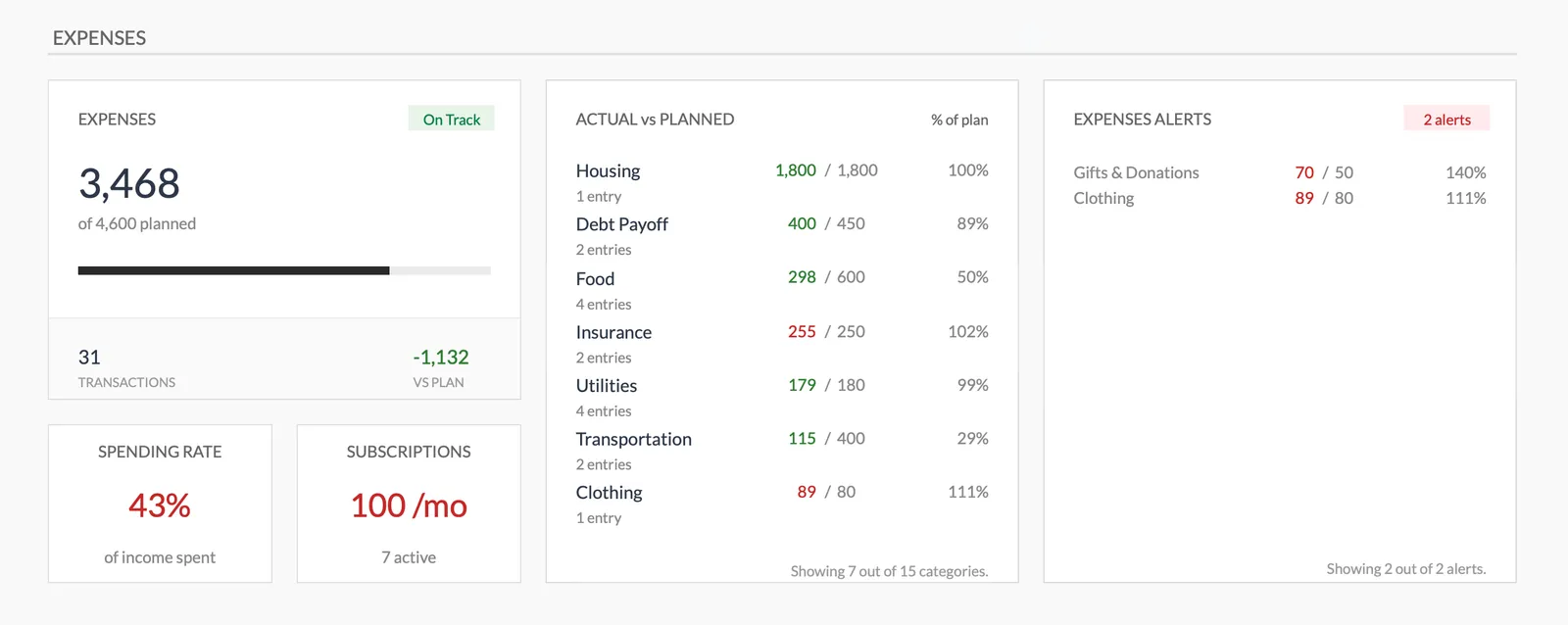
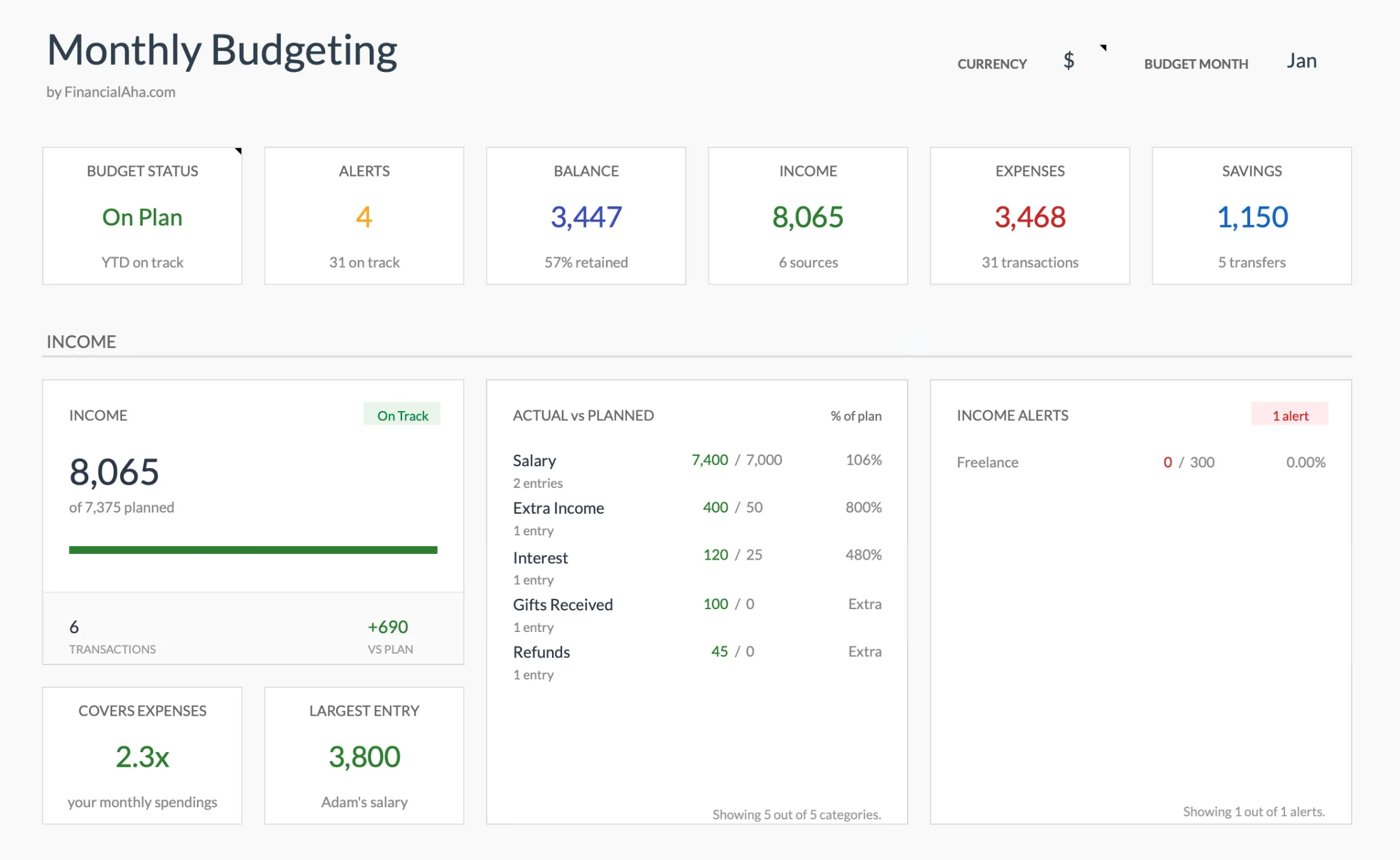
Dashboard with income, expenses, and savings at a glance
Log transactions with automatic categorization
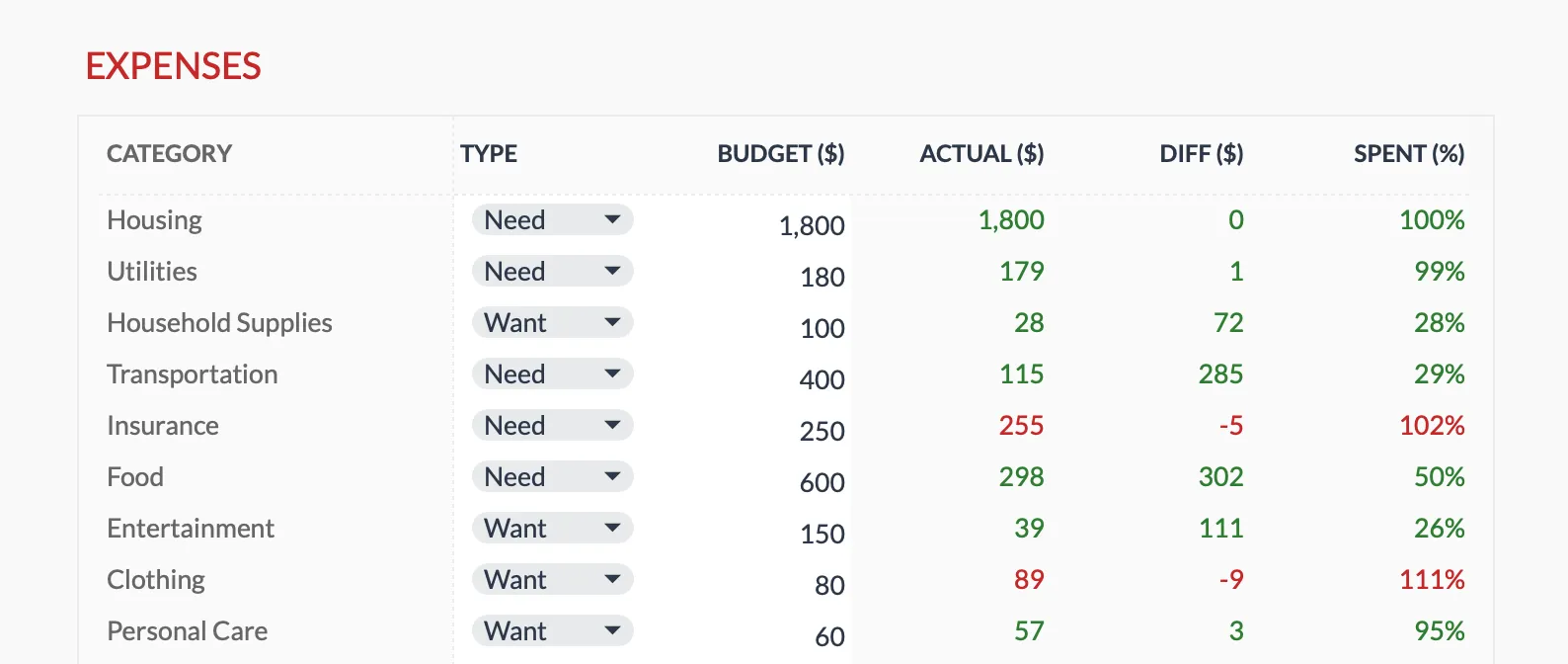
Set targets per category and track actual spending
Visual breakdown of where your money goes
Track savings goals alongside your budget
Monitor progress toward financial goals
Fully customizable expense, income, and savings categories
Sources
Common Questions
Monthly Budget Template for Germany - FAQ
Does this template use euros?
Yes. Choose EUR from the currency setting at the top of the dashboard. The formulas work the same in any denomination, so the math doesn't change.
How much is the gap between Brutto and Netto in Germany?
It depends on tax class, salary, state and church membership, but the gap is commonly 35% to 42% of gross salary for employees. On the 2026 figures a EUR 60,000 gross salary leaves roughly EUR 36,000 to 38,000 net for a single person in tax class I. Budgeting from the actual Nettolohn keeps planning realistic.
Can I track Riester contributions separately?
Yes. Riester and Rürup contributions paid from net pay can each have their own budget category. They attract government subsidies and are deductible as Sonderausgaben, and giving them a line of their own keeps this part of retirement saving visible alongside everything else.
How do I handle the Nebenkostenabrechnung?
The annual Nebenkosten settlement can produce either a refund or an extra payment. Some people add a "Nebenkosten buffer" category and put a small amount into it each month so either outcome is already covered.
Is there a Germany-specific version?
The template is the same worldwide and is designed to be customizable. This page explains how to adapt it for German finances. You can rename all categories in German if you prefer and set it up to match your specific situation.
Can't find the answer you're looking for? Contact our team
Ready to get started?
Download instantly and start managing your finances, or contact us to design a custom template package for your needs.
Tax rules, rates, and contribution limits change, and official publications can themselves lag behind the law in force. We review these figures on a best-effort basis against sources we consider authoritative, but we cannot guarantee they are current, complete, or that better sources do not exist, and nothing here is tax, legal, or financial advice. For decisions, the relevant government authority is the reference.