Australia
Net Worth Tracker for Australia
Bring your super balance, property equity, share portfolio, HECS-HELP debt, and savings into one spreadsheet - then watch how the total changes each quarter.
In Depth
Super Balances, Property Equity, and Australian Wealth
Australian net worth tends to be dominated by two assets, the family home and superannuation. In Sydney, where the median house price sits well above $1 million, property equity alone can dwarf every other financial asset combined. That concentration is worth understanding, because a household can look wealthy on paper while holding very little it can actually draw on. Tracking total net worth and accessible net worth as separate figures keeps the distinction in view.
Superannuation is the other major component, and it grows quietly in the background. With 12% of ordinary time earnings flowing in each year plus investment returns, a worker in their forties or fifties often finds super has become one of their largest assets. Including it in net worth tracking gives the complete view, alongside the reminder that the money is preserved until age 60 for most people.
HECS-HELP is a liability some people include in net worth and others exclude. It is indexed each year to the lower of CPI and the wage price index rather than carrying a commercial interest rate, and repayment happens automatically through the tax system, so it behaves differently from a mortgage or personal loan. Including it produces the technically complete figure, while excluding it reflects the fact that it does not create the same pressure as interest-bearing debt. Either approach works as long as it stays consistent over time.
Australia
Net Worth in Australia: What to Track
Australian wealth is typically concentrated in superannuation and property. A net worth tracker that captures both gives a more complete view than checking any single account.
Superannuation is often the largest financial asset
With the super guarantee at 12% of ordinary time earnings since 1 July 2025, super compounds into a substantial balance over a working life. Including it in net worth shows the full picture, with the caveat that the money is preserved until age 60 for anyone born after 30 June 1964. The ATO publishes average and median super balances by age band in its taxation statistics, which is a more current benchmark than any figure quoted second hand.
Property equity dominates Australian net worth
Australian home prices, particularly in Sydney and Melbourne, mean property equity can be the single largest net worth component. Track home value (based on recent comparable sales or online estimates) minus mortgage balance. Investment property adds another layer of equity to include.
HECS-HELP is a unique liability
HECS-HELP debt is indexed each year rather than charged commercial interest, and since the 2023-24 indexation the rate applied is the lower of CPI and the wage price index. Some people include it as a liability for completeness, others leave it out because it is repaid automatically through the tax system. Including it gives the more conservative and technically complete figure.
Australian shares and franking credits
Many Australians hold shares directly or through ETFs. The franking credit system means dividends from Australian companies often come with tax credits attached, which is a unique benefit of Australian share ownership. Track share portfolio values at current market prices for net worth purposes.
Get the Template
Getting Started
Tailoring the Net Worth Tracker to Australian Assets
List all assets
Enter bank accounts, super balance, property value(s), share portfolio, ETFs, term deposits, and any other assets. Use current values - check your super fund portal, bank app, and recent property comparables.
Capture all debts including HECS-HELP
Include mortgage balance(s), HECS-HELP (from your myGov/ATO portal), personal loans, car loans, credit card balances, and any other debts. Being thorough ensures an accurate net worth figure.
Set the currency to AUD
Switch to AUD using the currency list in the header. The formulas work the same in any currency.
Set a regular update rhythm
Monthly updates for bank and investment balances, quarterly for super and property values. Super balances fluctuate with investment markets - quarterly is a reasonable cadence to avoid reacting to short-term movements.
Track accessible vs. total net worth
Consider tracking two figures: total net worth (including super and property) and accessible net worth (excluding super and property equity). This shows both the big picture and what you could actually draw on if needed.
See It In Action
What the template looks like
Browse through the template to see the dashboard, the entry sheets, and the summaries it produces, all adaptable to your local financial setup.
- Built-in currency selector
- Calculations update automatically
- Visual summaries of your numbers
- No setup required
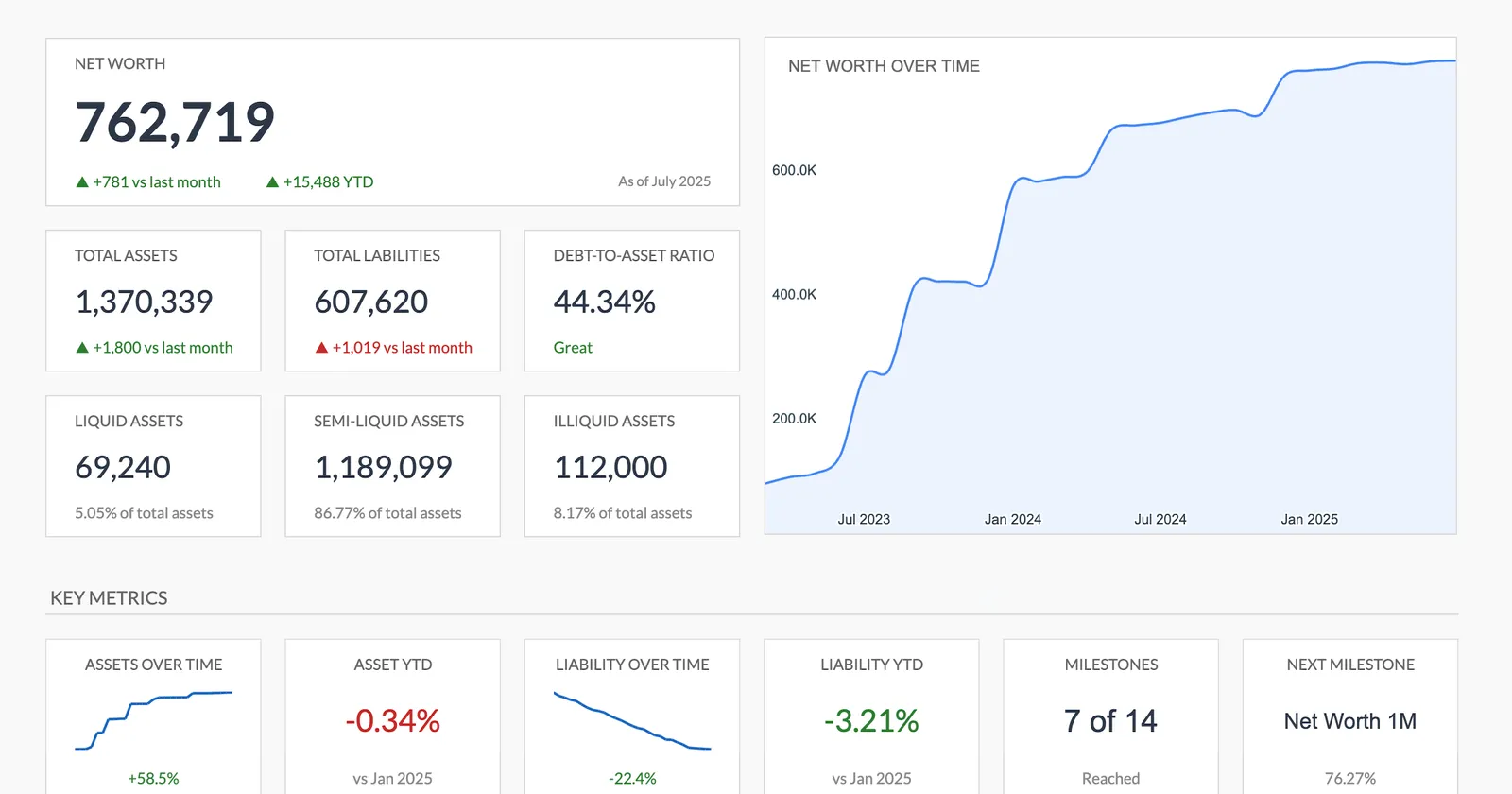
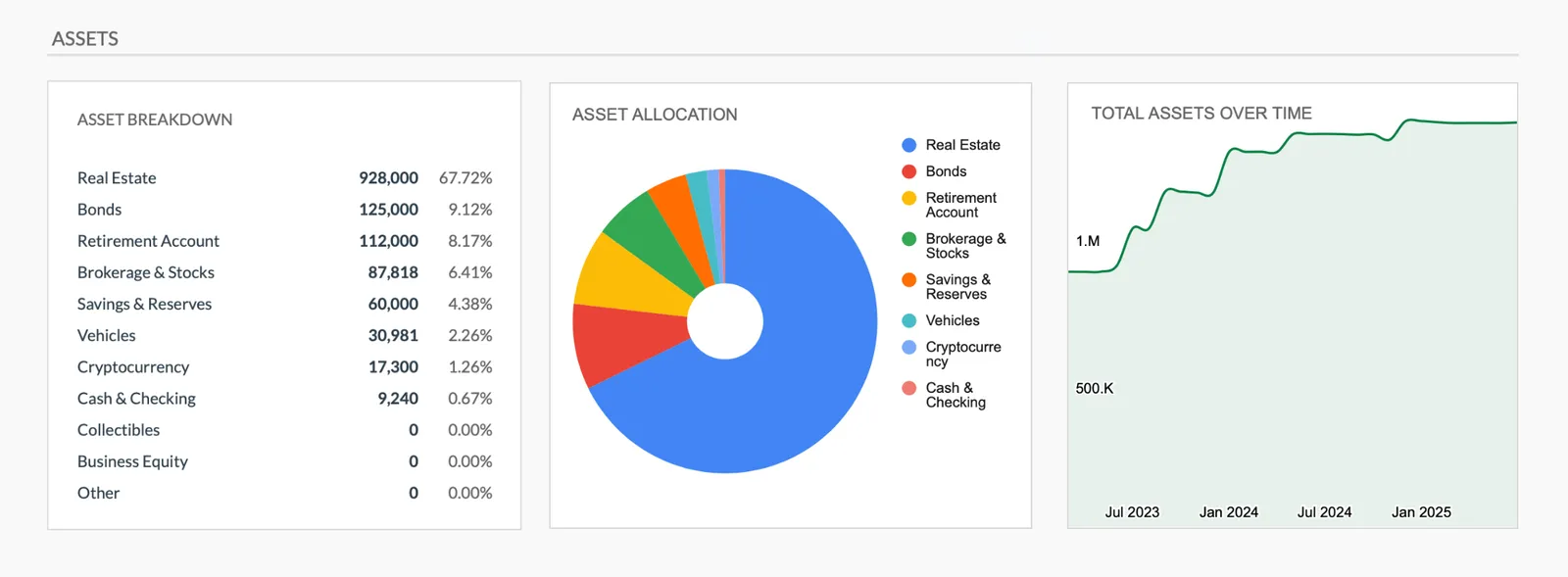
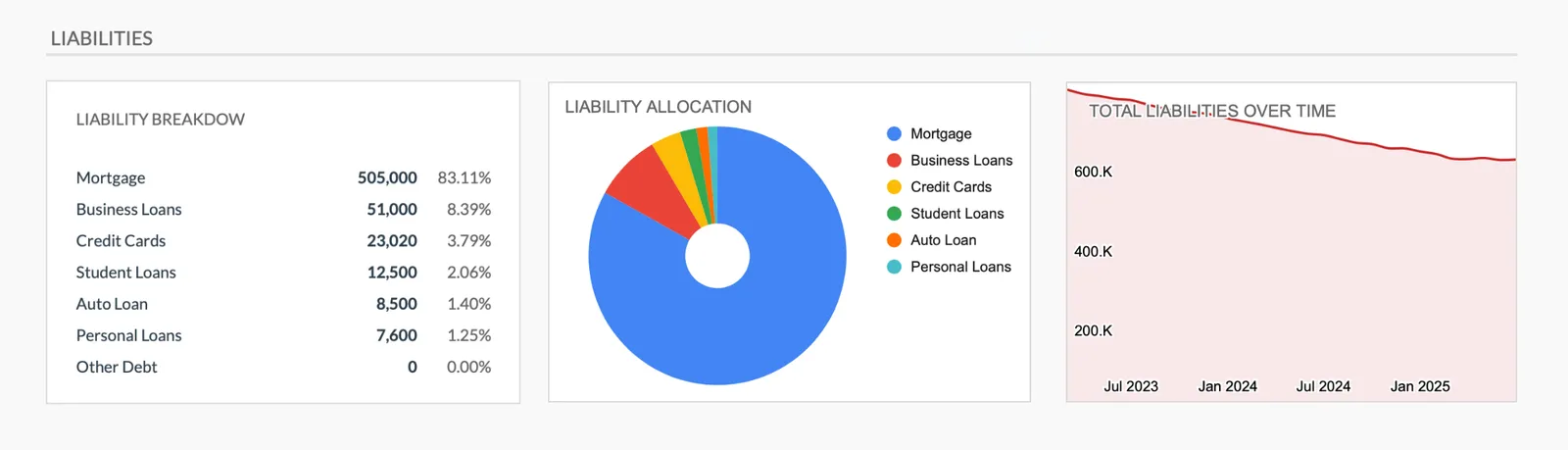

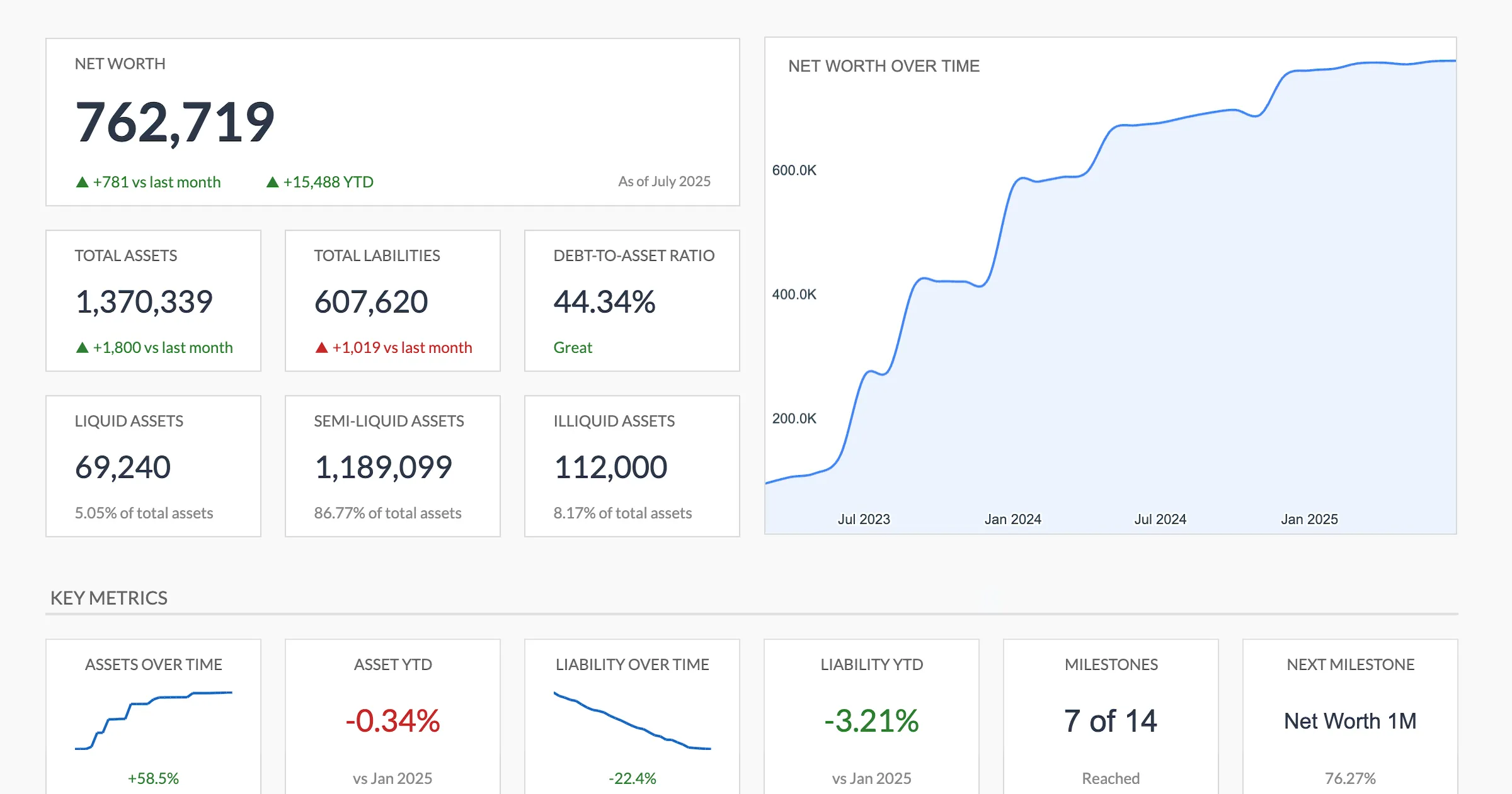
Track your net worth over time with charts
Breakdown of all your assets
Track all debts and liabilities
Key financial health indicators
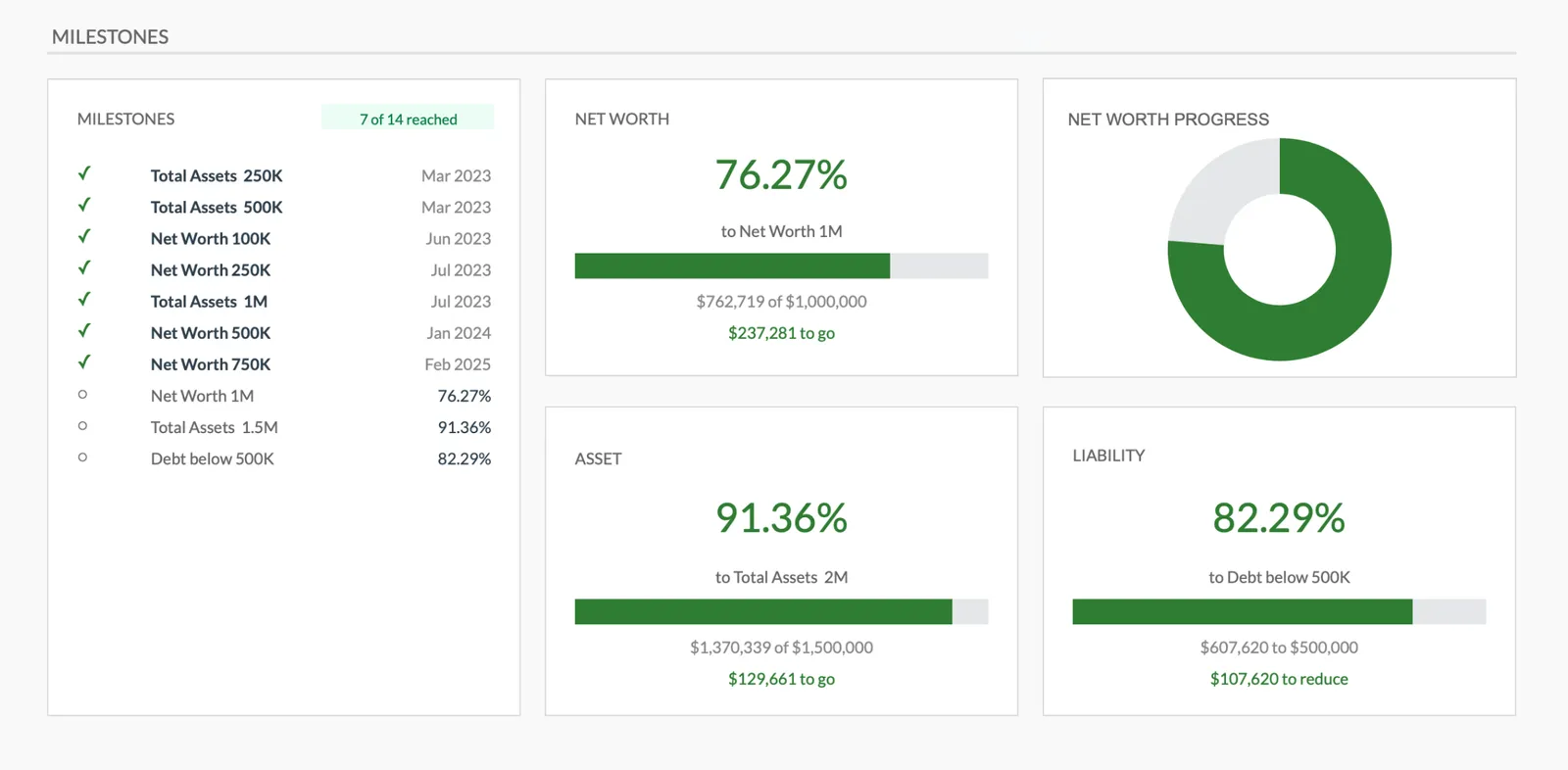
Set and celebrate net worth milestones
Common Questions
Net Worth Tracker for Australia - FAQ
Should I include super in net worth?
Yes - super is a real asset and one of the largest for many Australians. Including it gives a complete picture. Some people also track "accessible net worth" excluding super, since it can't be withdrawn until preservation age (60 for most).
How do property valuations work for net worth tracking in Australia?
Use a reasonable estimate based on recent sales in your area. Websites like Domain or realestate.com.au provide estimates, or you could use your most recent council rates notice valuation (though these can lag the market). Annual updates are usually sufficient.
Should I include HECS-HELP as a liability?
Including it gives the more conservative and technically complete net worth. Because HECS-HELP is indexed to the lower of CPI and the wage price index rather than carrying a commercial rate, and is repaid automatically through the tax system, some people prefer to leave it out. Either approach works as long as it stays consistent.
What about my car?
Including vehicles is optional. If you do, use a realistic resale value (check carsales.com.au or RedBook), not the purchase price. Cars depreciate, so this value drops each year.
How does Australian net worth compare to other countries?
Australia consistently ranks near the top on median household wealth, largely because of property values and compulsory superannuation. The ABS Household Income and Wealth survey publishes benchmarks by age and household type.
Can't find the answer you're looking for? Contact our team
Explore More
Free Tools for Australia
Ready to get started?
Download instantly and start managing your finances, or contact us to design a custom template package for your needs.
Tax rules, rates, and contribution limits change, and official publications can themselves lag behind the law in force. We review these figures on a best-effort basis against sources we consider authoritative, but we cannot guarantee they are current, complete, or that better sources do not exist, and nothing here is tax, legal, or financial advice. For decisions, the relevant government authority is the reference.