Net Worth Tracker
Net Worth Tracker for High Earners
Measure wealth across a complex portfolio of investments, real estate, company stock, and multiple account types in one net worth view.
In Depth
The Gap Between Earning Well and Building Wealth
High income creates an assumption, held by others and often by the earner too, that wealth is accumulating at a proportional rate. The reality frequently tells a different story. Lifestyle costs scale with income in ways that are easy to rationalize but difficult to see without measurement. A net worth tracker strips away the income narrative and shows what is actually being retained. For some high earners, this is the first honest look at whether their financial trajectory matches their earning power.
The complexity of a high-earner portfolio makes consolidated tracking both more difficult and more necessary. RSUs from a current employer, a forgotten 401(k) at a previous job, a backdoor Roth IRA, a taxable brokerage account, equity in a primary residence, maybe an investment property - the number of line items can be substantial. Each institution sends its own statements and shows its own balance. None of them shows the total. The net worth tracker is the only place where all of these converge into a single number.
Concentration risk is another pattern that tends to emerge when high earners consolidate their financial picture. Company stock from equity compensation, industry-specific investments, and career income all tied to the same sector can create an exposure that is invisible when viewed account by account. Seeing the composition laid out in one place, with every asset category showing its share of the total, makes that concentration easier to notice than it is account by account.
The Challenge
Why High Earners Need to Track Net Worth
High income does not automatically mean high net worth. Lifestyle inflation, scattered assets, and complex compensation make it easy to earn a lot while accumulating less than expected.
High income can mask low wealth accumulation
A six-figure salary with six-figure spending builds surprisingly little wealth. Net worth tracking reveals whether income is converting to lasting assets or just flowing through.
Assets are spread across many vehicles
Current employer 401(k), old employer plans, IRAs, taxable accounts, RSUs, stock options, real estate, and alternative investments. Without consolidation, the total is unknown.
Equity compensation complicates the picture
RSUs vest on a schedule, options have exercise considerations, and company stock concentration creates risk. Tracking these alongside other assets shows true diversification.
Lifestyle inflation erodes silently
Upgrading cars, homes, and experiences with each raise feels earned but slows wealth building. Net worth tracked over time shows whether lifestyle growth outpaces wealth growth.
Ready to take control of your high earner finances?
What You Get
Wealth Tracking Features for High Earners
Multi-account asset tracker
Eleven asset categories, from retirement and brokerage to real estate, crypto, and business equity, each holding as many named rows as you add.
Company stock as its own rows
Vested RSUs, exercised options, and company shares go in as named rows under Brokerage & Stocks. Their value counts toward total assets and net worth like any other holding.
Debt and liability tracker
Mortgage, investment property loans, education debt, or other obligations. Complete picture of what you owe.
Monthly net worth tracking
Record total net worth monthly. See the growth rate and whether it matches what your income level should produce.
Asset allocation view
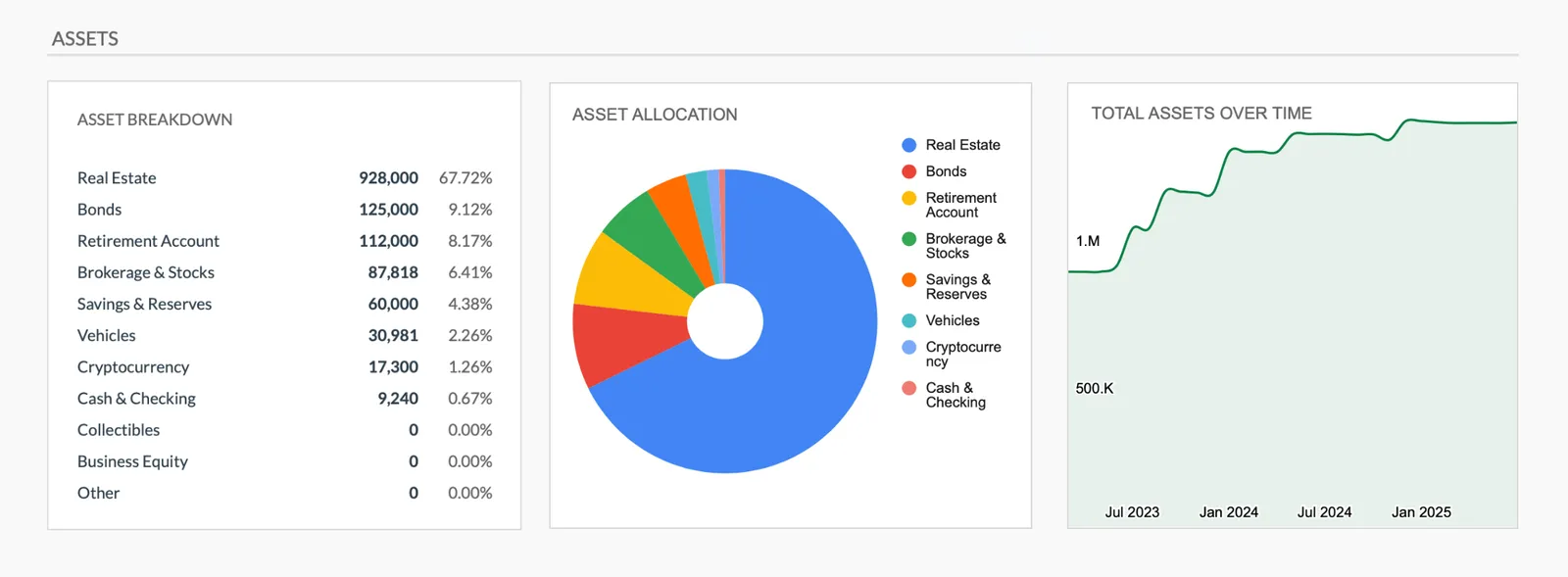
The summary lists every asset category with its amount and its share of the total, and a donut chart shows the same split. Concentration in one asset class reads off that list.
Net worth growth visualization
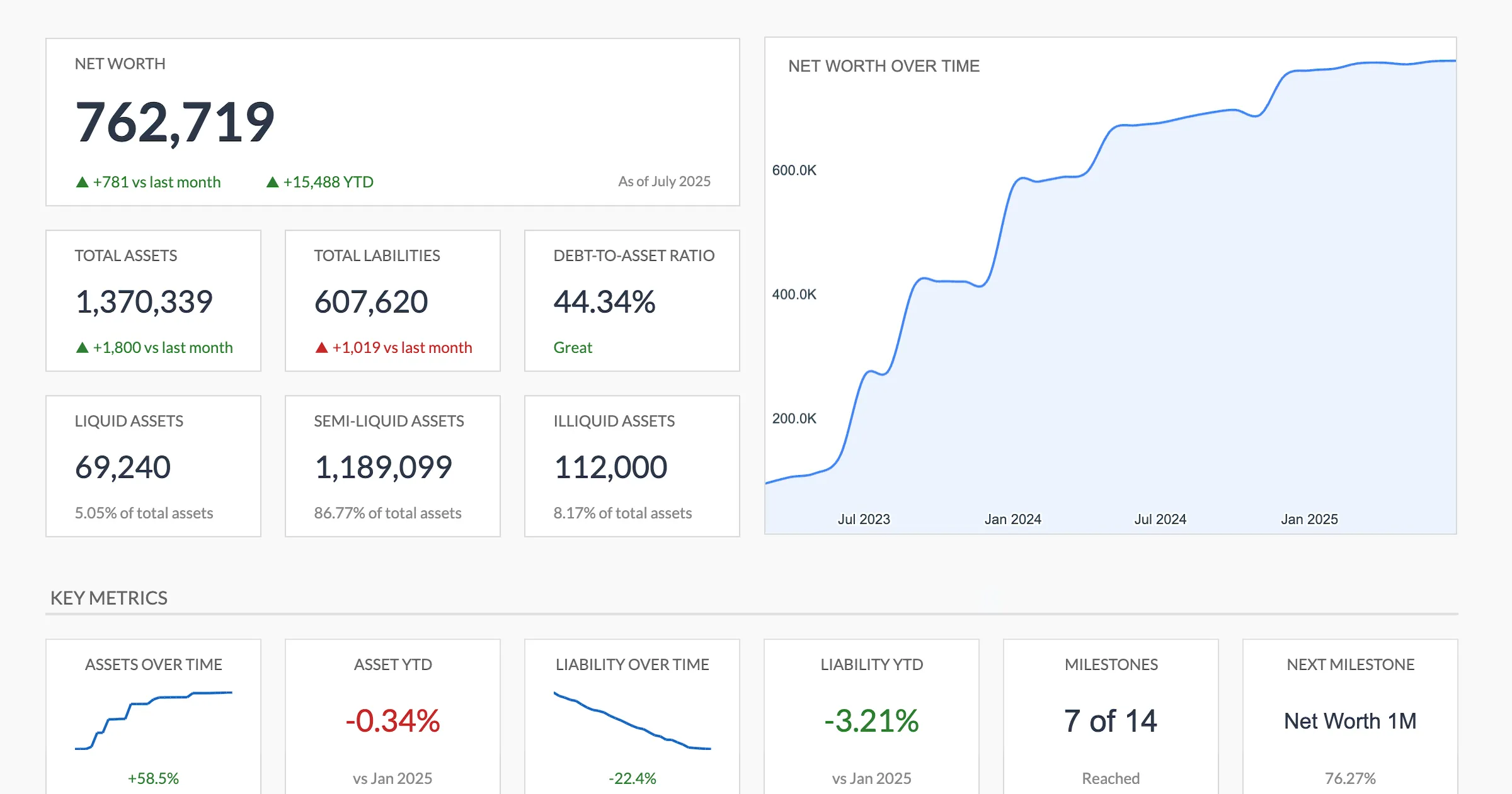
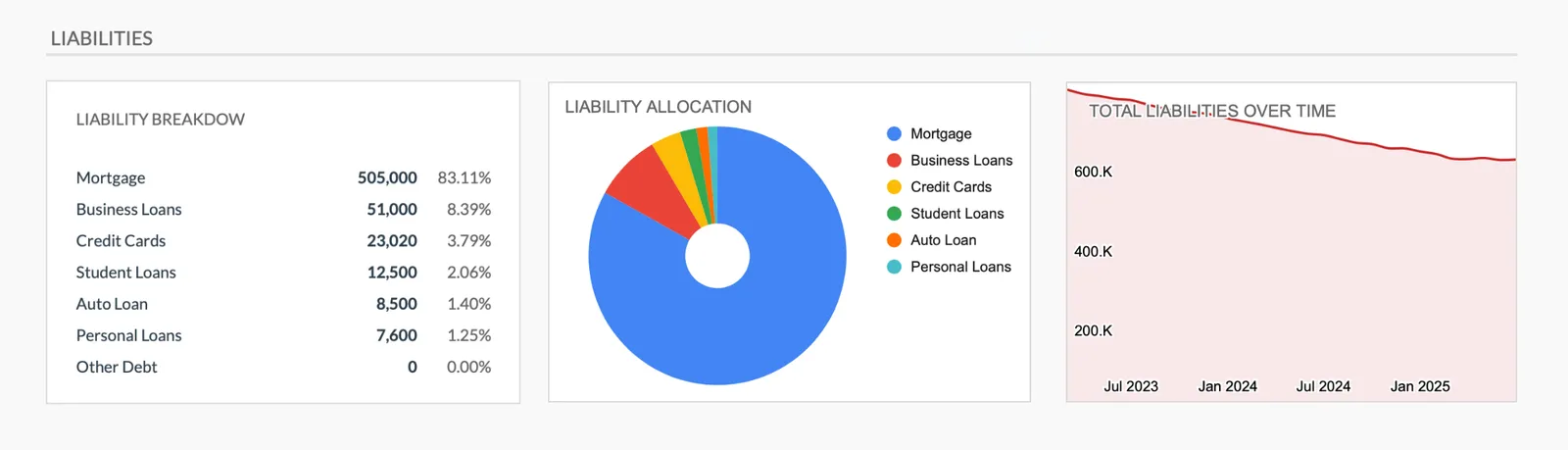
An area chart plots net worth across every month entered, with separate charts for total assets and total liabilities beside it.
See It In Action
What the template looks like
Browse through the template to see how it handles asset tracking, liability management, and net worth analysis over time.
- Net worth dashboard with trends
- Asset and liability breakdown
- Key financial health metrics
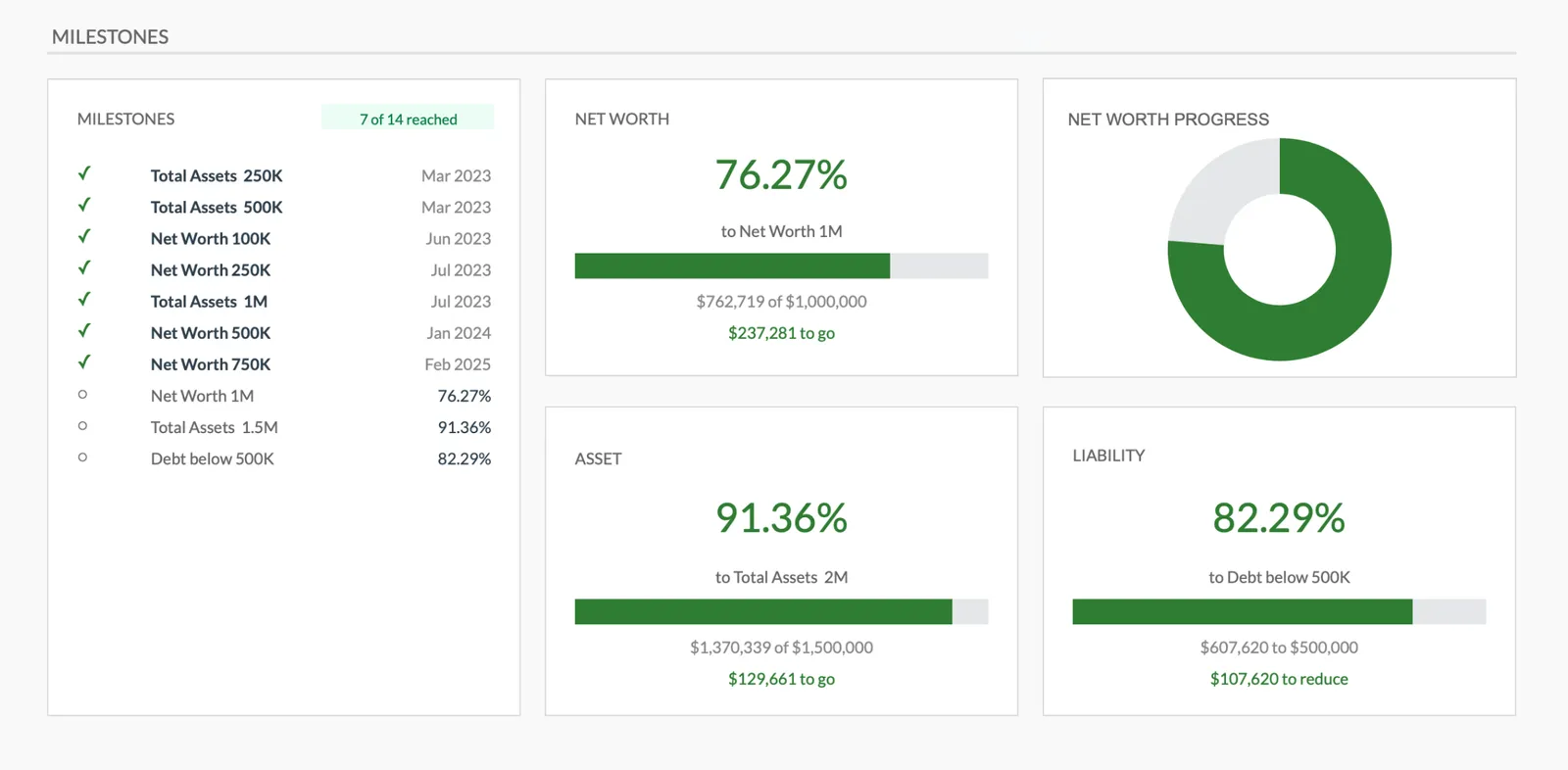
- Milestone tracking
- Historical net worth over time
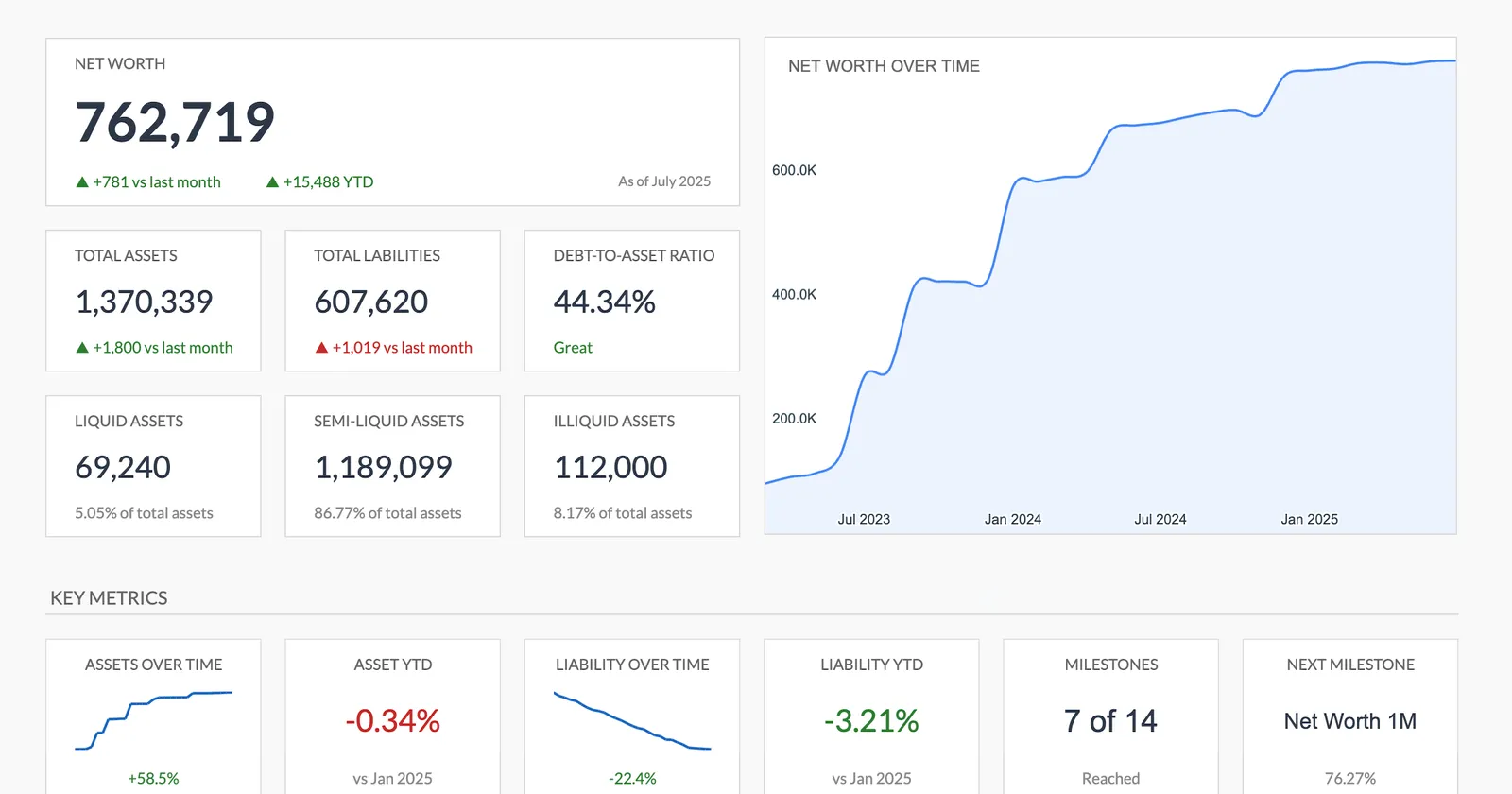

Track your net worth over time with charts
Breakdown of all your assets
Track all debts and liabilities
Key financial health indicators
Set and celebrate net worth milestones
Getting Started
Start Tracking High-Income Net Worth
Gather all account balances
Log into every financial account, from bank and brokerage to retirement and the equity compensation portal, then record the current balances.
Include real estate estimates
Put property values under the Real Estate category on the Assets sheet, and the loan balances under Mortgage on the Liabilities sheet. Net worth nets the two sides.
Record equity compensation
Enter the current value of vested RSUs, exercised options, or other employer shares as rows under Brokerage & Stocks.
List all debts
Mortgage balances, any remaining student loans, car loans, or other obligations.
Update monthly and review quarterly
Monthly data entry takes 15-20 minutes. Quarterly reviews reveal meaningful trends.
Common Questions
Net Worth Tracker for High Earners- FAQ
Should I include unvested RSUs?
Most people track only vested equity since unvested grants depend on continued employment. You can note unvested amounts separately as a reference.
How do I value real estate?
Use a conservative estimate - Zillow, recent comparable sales, or a recent appraisal. Consistency in your estimation method matters more than precision.
What about alternative investments?
Include private equity, venture investments, or other alternatives at their most recent valuation. Update when new valuations are available.
Is high income always reflected in high net worth?
Not necessarily. The tracker often reveals surprising gaps between income and accumulated wealth. That awareness itself is valuable.
How does this compare to my financial advisor reports?
Advisor reports typically show only the assets they manage. This tracker includes everything - employer plans, property, equity comp, and outside investments.
Can this track net worth for a specific goal?
The tracker focuses on measuring total net worth. For goal-specific planning with projections, the Financial Planning spreadsheet provides that additional layer.
Can't find the answer you're looking for? Contact our team
Start tracking net worth as a high earner
One-time purchase. No subscription. Your financial data stays in your Google Drive.