Financial Planning Template
Financial Planning Template for Newlyweds
Merge two financial lives into one plan - combine assets, align debts, set shared goals, and build a financial foundation for your marriage.
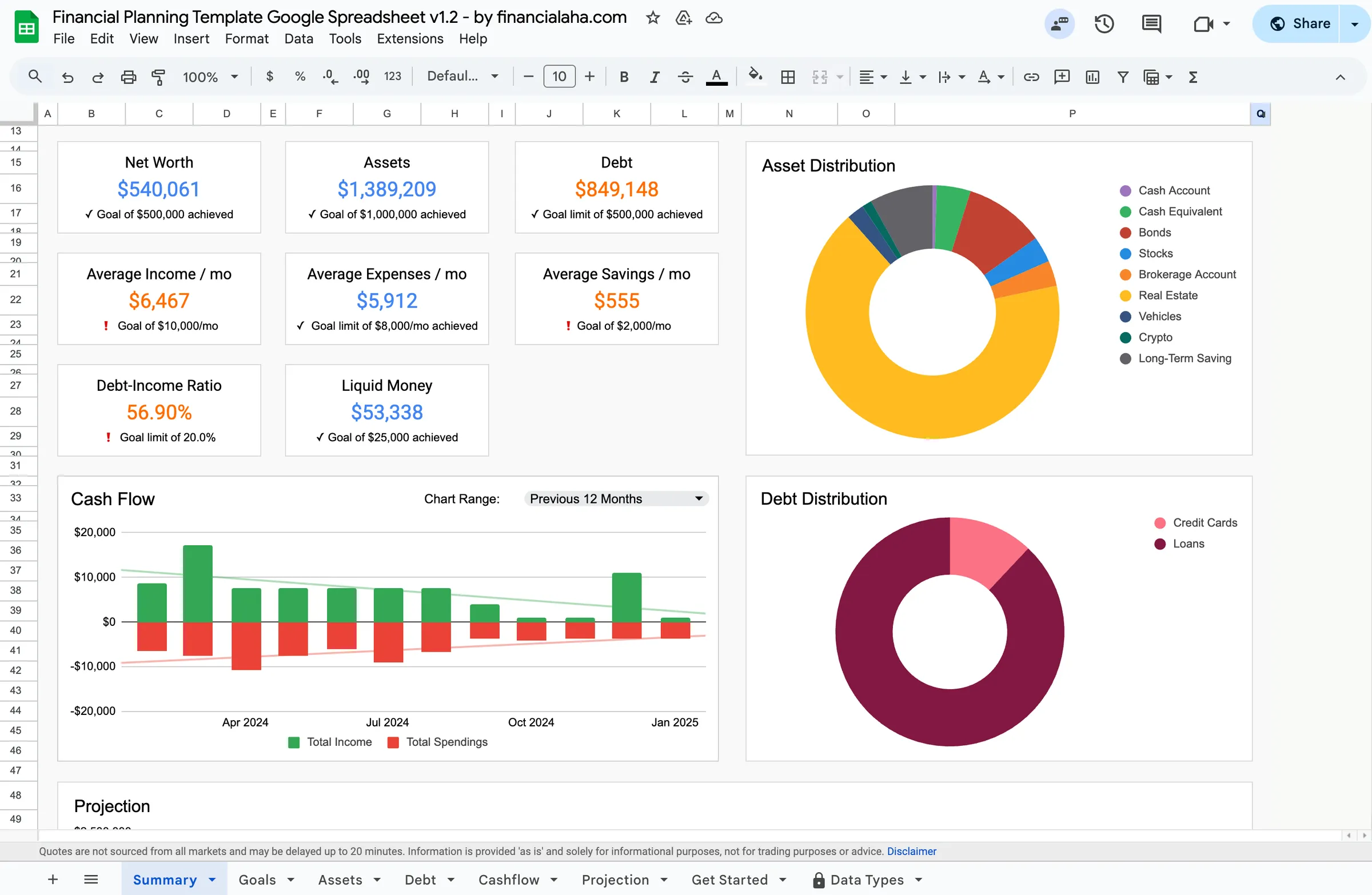
In Depth
Starting a Financial Life Together
The early months of marriage often bring a flood of financial logistics - combining or restructuring accounts, updating beneficiaries, adjusting tax withholding, and making decisions about shared versus individual financial structures. Underneath all of this administrative activity is a more fundamental question: what does our combined financial picture actually look like? A financial plan created during this period serves as both an inventory and a starting line.
Money conversations between newly married partners can be surprisingly difficult, even between people who communicate well about everything else. Financial histories, habits, and anxieties are deeply personal, and the merging process exposes them. Some couples find that working through a financial plan together - entering numbers, setting goals, looking at projections - provides a structured way to have these conversations. The spreadsheet creates a shared language around money that replaces vague assumptions with concrete data.
Establishing a financial baseline early in a marriage has a compounding benefit beyond the numbers themselves. Couples who build the habit of reviewing finances together monthly tend to maintain that practice as life grows more complex - children, career changes, property purchases. The plan created as newlyweds becomes the foundation for every financial conversation that follows, evolving alongside the marriage itself.
The Challenge
Why Newlyweds Need a Financial Plan Together
Marriage merges two financial histories, habits, and goals. Whether you combine everything or keep some things separate, you need a shared view of where you stand.
Two financial histories become one household
Each partner brings assets, debts, spending habits, and financial knowledge. A combined plan puts everything on the table so nothing is a surprise later.
New shared goals need funding
House down payment, wedding debt payoff, starting a family, travel - newlyweds often have several new goals that need to be prioritized and funded.
Combining versus separating finances is a spectrum
Fully joint, fully separate, or somewhere in between - whatever structure you choose, the plan needs to show the full household picture.
Early alignment prevents later conflict
Financial disagreements are a leading source of relationship stress. Establishing a shared financial plan early sets the pattern for transparent money conversations.
Ready to take control of your newlywed finances?
What You Get
Planning Tools for Starting a Life Together
Combined asset inventory
List assets from both partners - bank accounts, investments, retirement funds, property. See the starting point for your combined financial life.
Joint debt overview
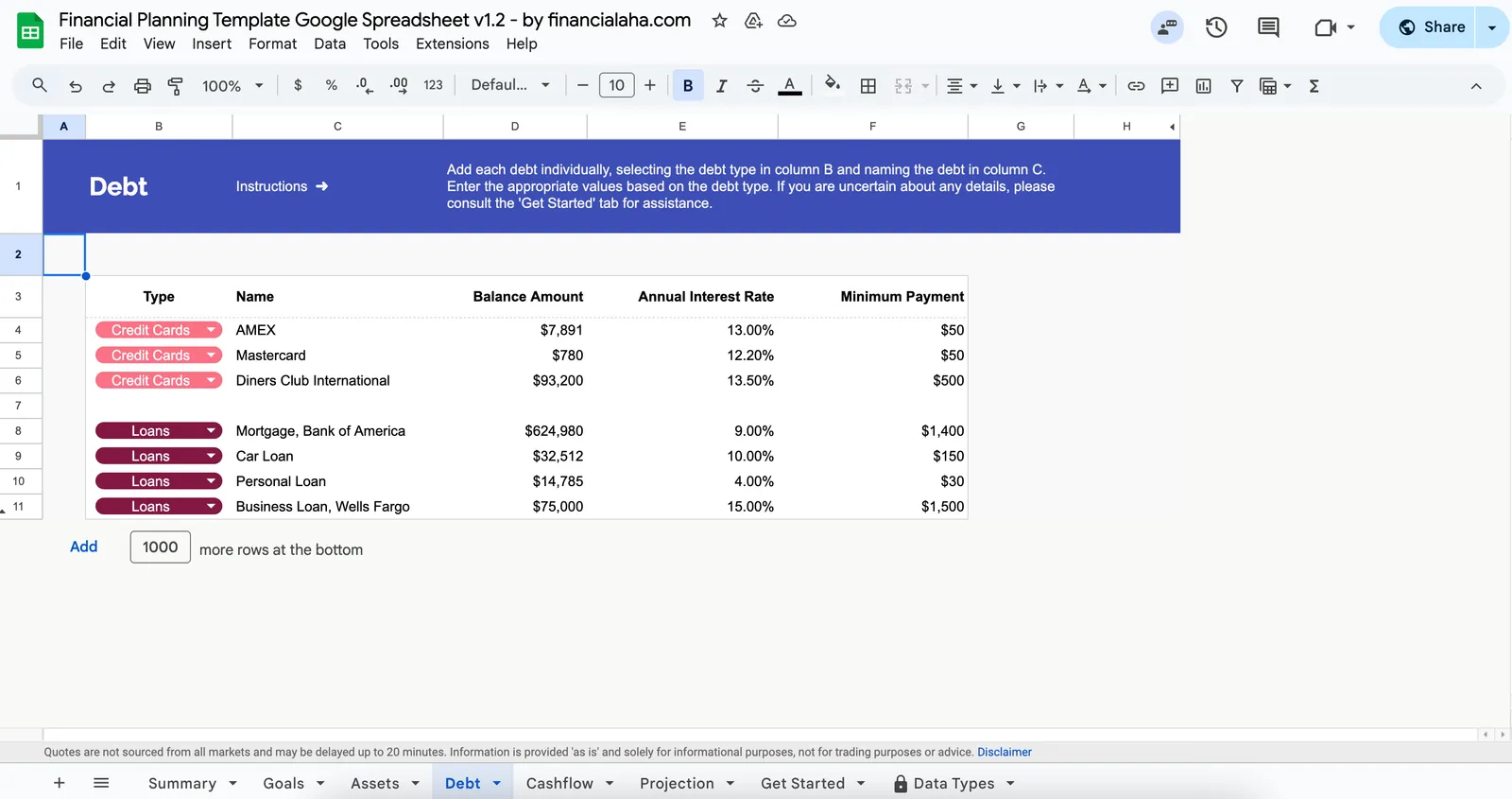
Student loans, car loans, credit cards, wedding expenses - see all debts from both partners with balances, rates, and payments.
Shared targets on the Goals tab
Enter the figures you agree on for net worth, liquid money, total assets, maximum debt, debt-to-income ratio, and average monthly income, expenses and savings. Each summary card shows where you stand against them.
Net worth baseline and tracking
Establish your starting net worth as a couple. The summary recalculates assets minus debts every time you refresh balances, so each monthly update sits next to the target you set.
Investment account overview
Retirement accounts, taxable investments and other holdings from both partners go in as named rows. The Asset Distribution chart splits the household total by asset type.
Future projections
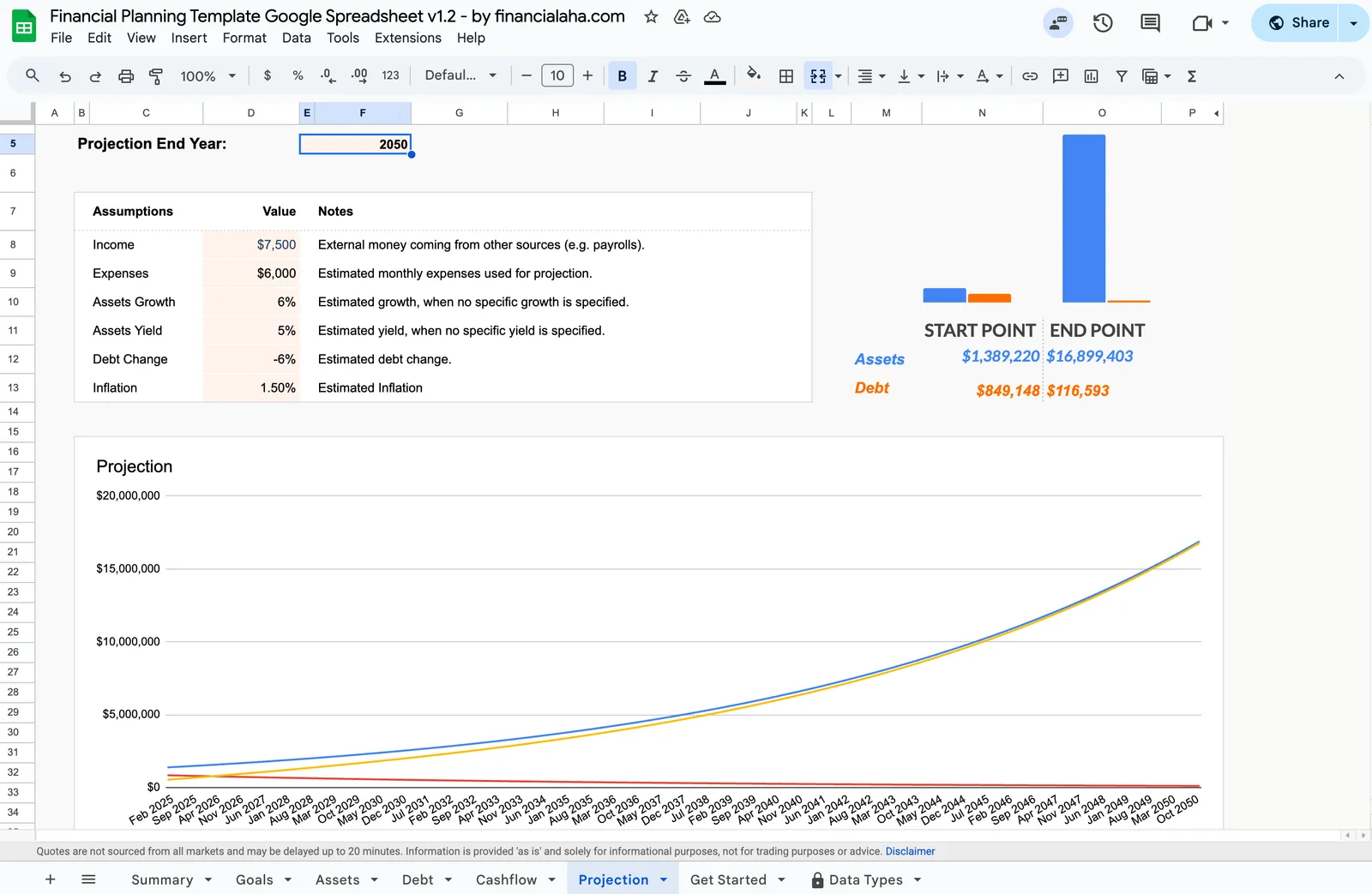
Set an end year and the assumptions for monthly income, monthly expenses, asset growth, asset yield, debt change and inflation. The chart runs your combined assets and debt forward month by month.
See It In Action
What the template looks like
Browse through the template to see how it handles financial planning, goal tracking, asset management, and projections.
- Complete financial overview dashboard
- Goal setting and progress tracking
- Asset and debt management
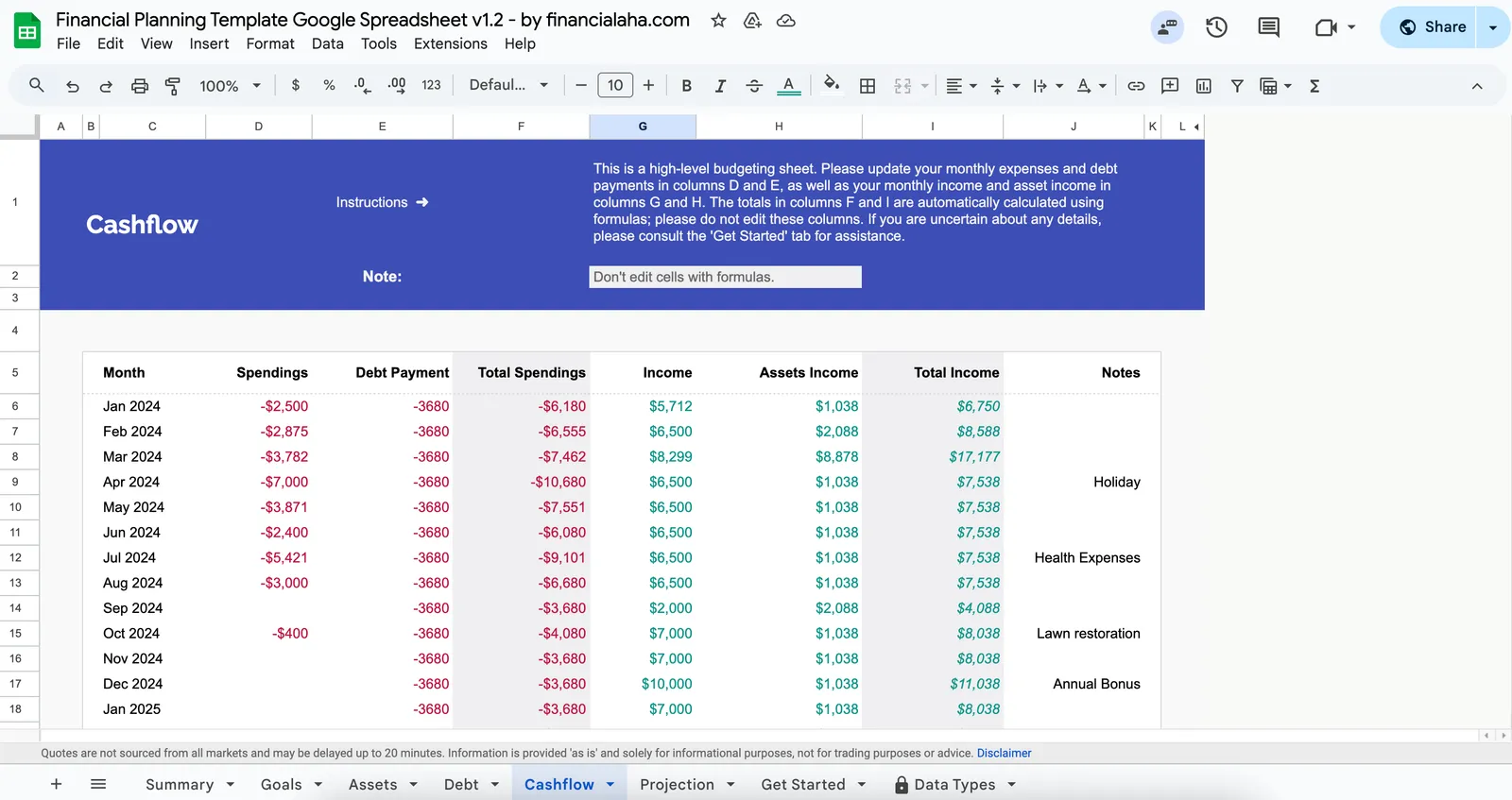
- Cash flow analysis
- Financial projections
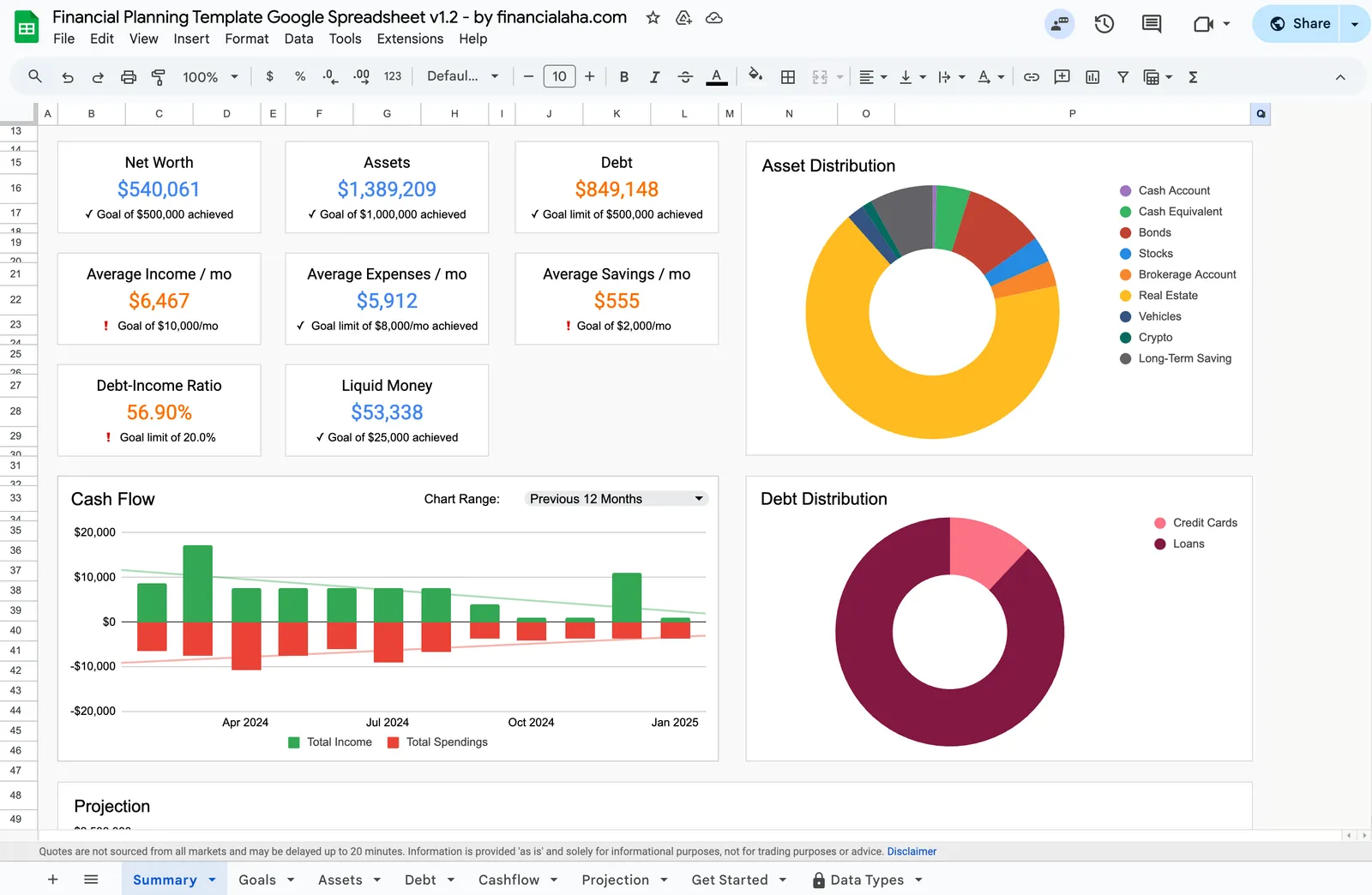
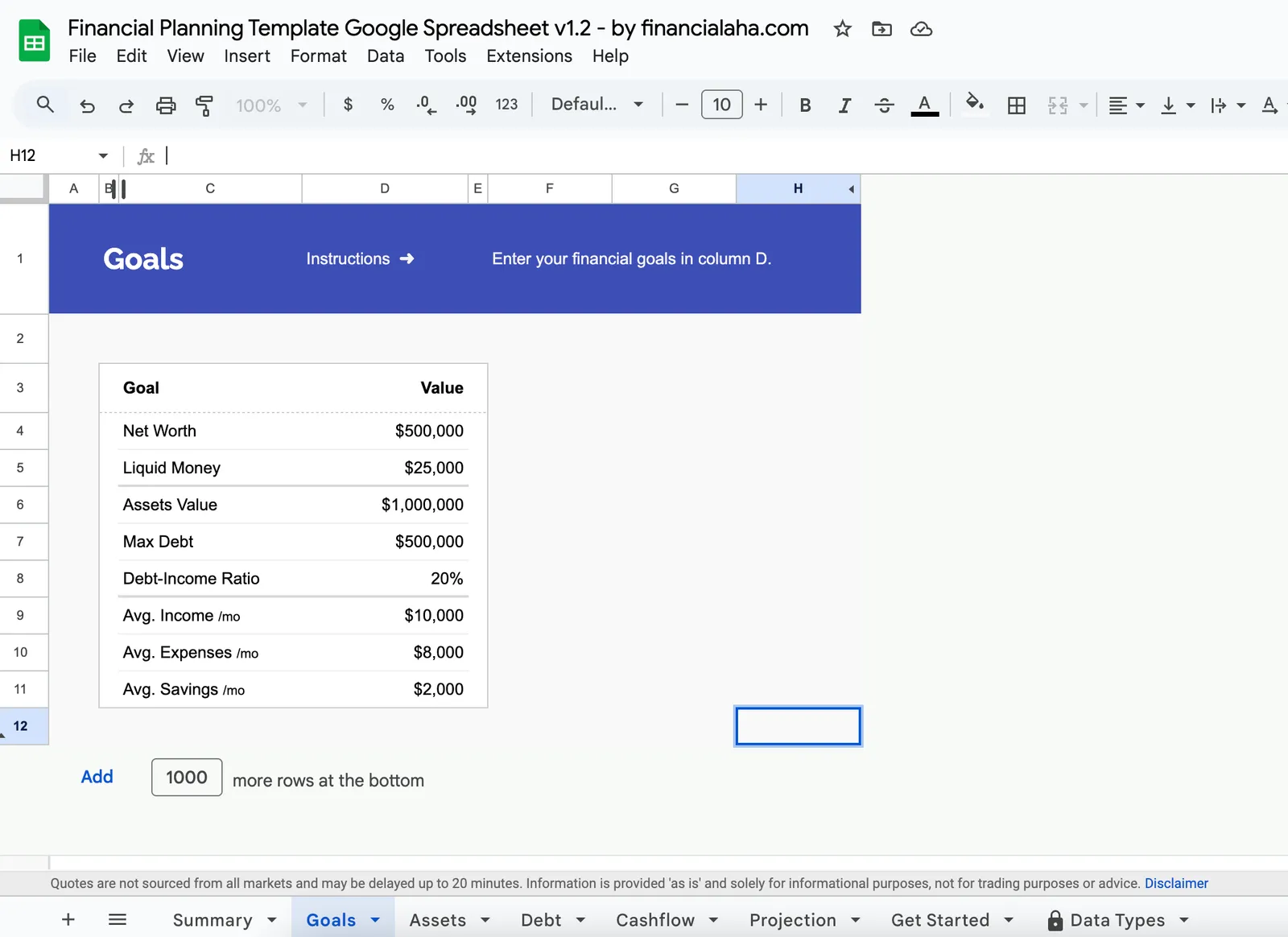
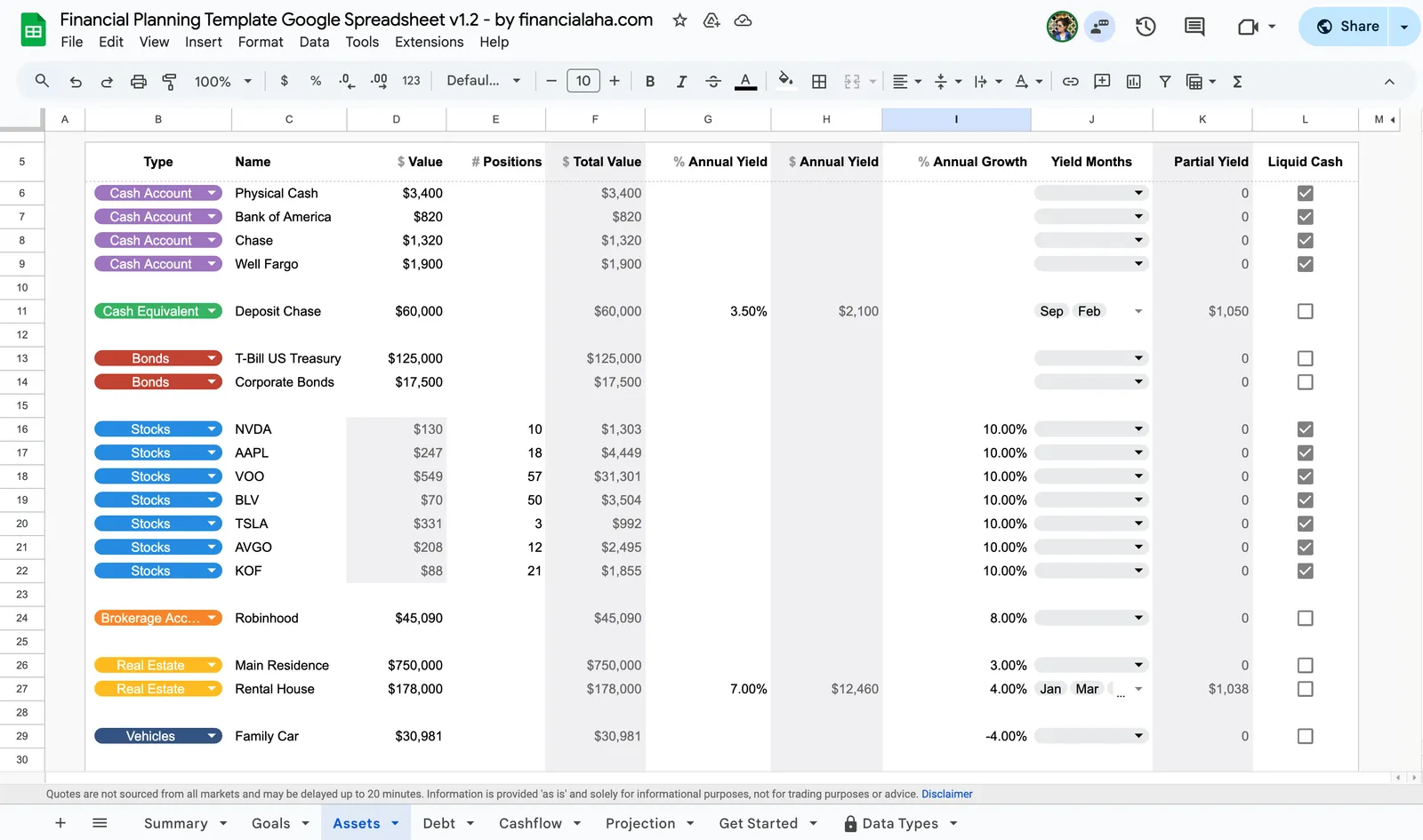
Complete financial overview with net worth and goals
Set and track progress toward financial milestones
Track all your assets in one place
Monitor and plan debt repayment
Visualize your income vs spending over time
Project your financial future
Getting Started
Start Planning Finances as Newlyweds
Have the full disclosure conversation
List every account, every debt, every financial obligation from both partners. Complete transparency is the foundation.
Decide on a structure
Fully combined, partially combined, or separate with shared goals. The template works with any arrangement.
Set your first shared goals
Fill in the targets that matter most now. A cash cushion fits the liquid money row, paying down borrowing fits the maximum debt row, and saving for a home shows up in the total assets target.
Update together monthly
Make it a monthly routine. Update balances, review progress, and discuss any changes needed.
Revisit the plan at milestones
Salary changes, job moves, new family members - revisit and update the plan when life circumstances shift.
Common Questions
Financial Planning for Newlyweds- FAQ
Does this work if we keep finances mostly separate?
Yes. Every account is its own named row, so individual and shared accounts sit in the same table while the summary totals the household.
What if one partner has significantly more debt?
The template shows all debts transparently. How you decide to handle them - jointly or individually - is your choice. The plan accommodates either approach.
How is this different from a budget?
A budget tracks monthly income and spending. This template tracks the big picture - what you own, what you owe, and where you are heading financially as a couple.
Should we start this before or after the wedding?
Either works. Starting before the wedding helps with wedding expense planning. Starting after establishes your married financial baseline.
Can this help with wedding debt?
Wedding borrowing goes on the Debt tab with its balance, rate and minimum payment. The maximum debt row on the Goals tab is where a payoff target goes, and the summary shows the total against it.
What if we disagree on financial priorities?
The plan makes trade-offs visible. When both partners see the same data, conversations about priorities become more productive because they are based on numbers, not feelings.
Can't find the answer you're looking for? Contact our team
Start financial planning as a newlywed
One-time purchase. No subscription. Your financial data stays in your Google Drive.