Financial Planning Template
Financial Planning Template for FIRE Seekers
One financial planning template you set up around the path to financial independence, with your whole portfolio, what it earns each month, and a projection that runs out to an end year you choose.
In Depth
The Long Game of Financial Independence
The FIRE path is unusual in personal finance because it demands both precision and patience over an extended timeline. Unlike saving for a vacation or paying off a single debt, pursuing financial independence means coordinating dozens of financial decisions over years or decades toward a single, measurable target. The FI number - the portfolio size that can sustain living expenses indefinitely - is clear and concrete, but the road there is long enough that losing sight of progress is a real risk.
Savings rate is often cited as the most important variable in the FIRE equation, and the math supports this. But calculating a true savings rate is more involved than it appears. It requires knowing total income after taxes, total spending, and where the difference actually goes - retirement accounts, taxable investments, debt paydown, or cash accumulation. A financial plan that tracks all of these inputs reveals the real savings rate, not the aspirational one.
The middle stretch of the FIRE journey, after the initial enthusiasm fades but before the finish line is in sight, is where many people find tracking most valuable. Watching net worth cross round numbers, seeing the end-year figure in the projection climb as balances grow, and noticing the acceleration as compounding takes hold provides tangible evidence that the math is working. The spreadsheet becomes less of a planning tool and more of a motivation system during these years.
The Challenge
Why FIRE Seekers Need a Comprehensive Financial Plan
The FIRE path demands precision. A vague sense of "saving a lot" is not enough when the goal is replacing employment income with investment returns on an accelerated timeline.
FI number requires ongoing calculation
Your FI number shifts with lifestyle changes, inflation assumptions, and withdrawal rate choices. A static calculation from years ago may no longer reflect reality.
Savings rate is the most important metric
Time to FI depends more on savings rate than investment returns. But calculating true savings rate requires knowing total income, total spending, and where every dollar goes.
Multiple account types need coordination
Tax-deferred, Roth, taxable, HSA, real estate - FIRE portfolios often span many account types. Access rules differ for each, making withdrawal sequencing a critical planning element.
Progress feels slow without measurement
The FIRE journey takes years or decades. Without regular tracking, the months where the portfolio barely moves are hard to tell apart from the months where nothing is happening at all.
Ready to see your fire seeker finances in one place?
What You Get
Financial Planning Features for FIRE Paths
Your FI number as a net worth target
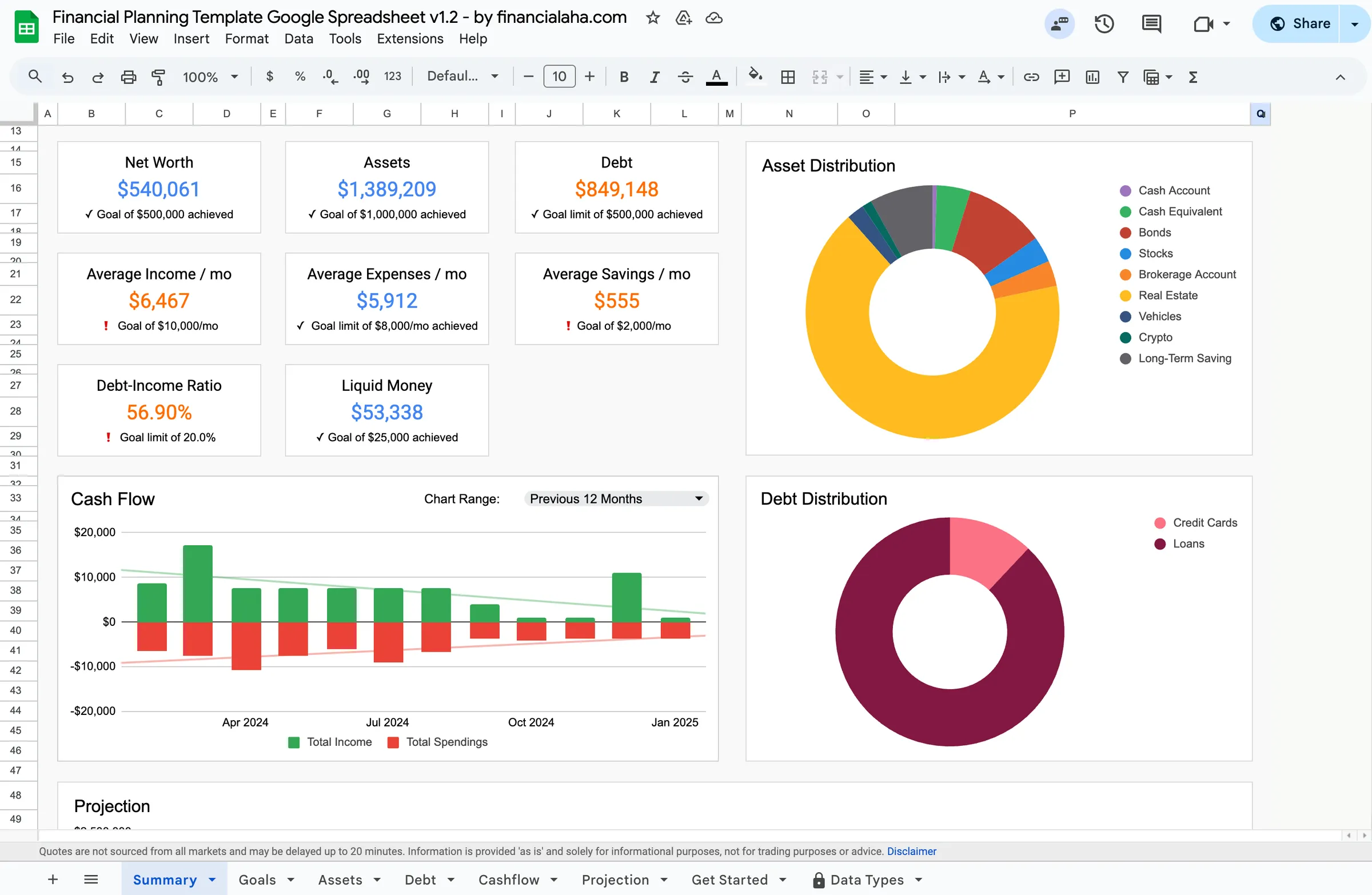
Work the number out however you prefer, then enter it as the net worth goal. The summary compares your current figure with it every time you refresh balances.
Monthly income against spending
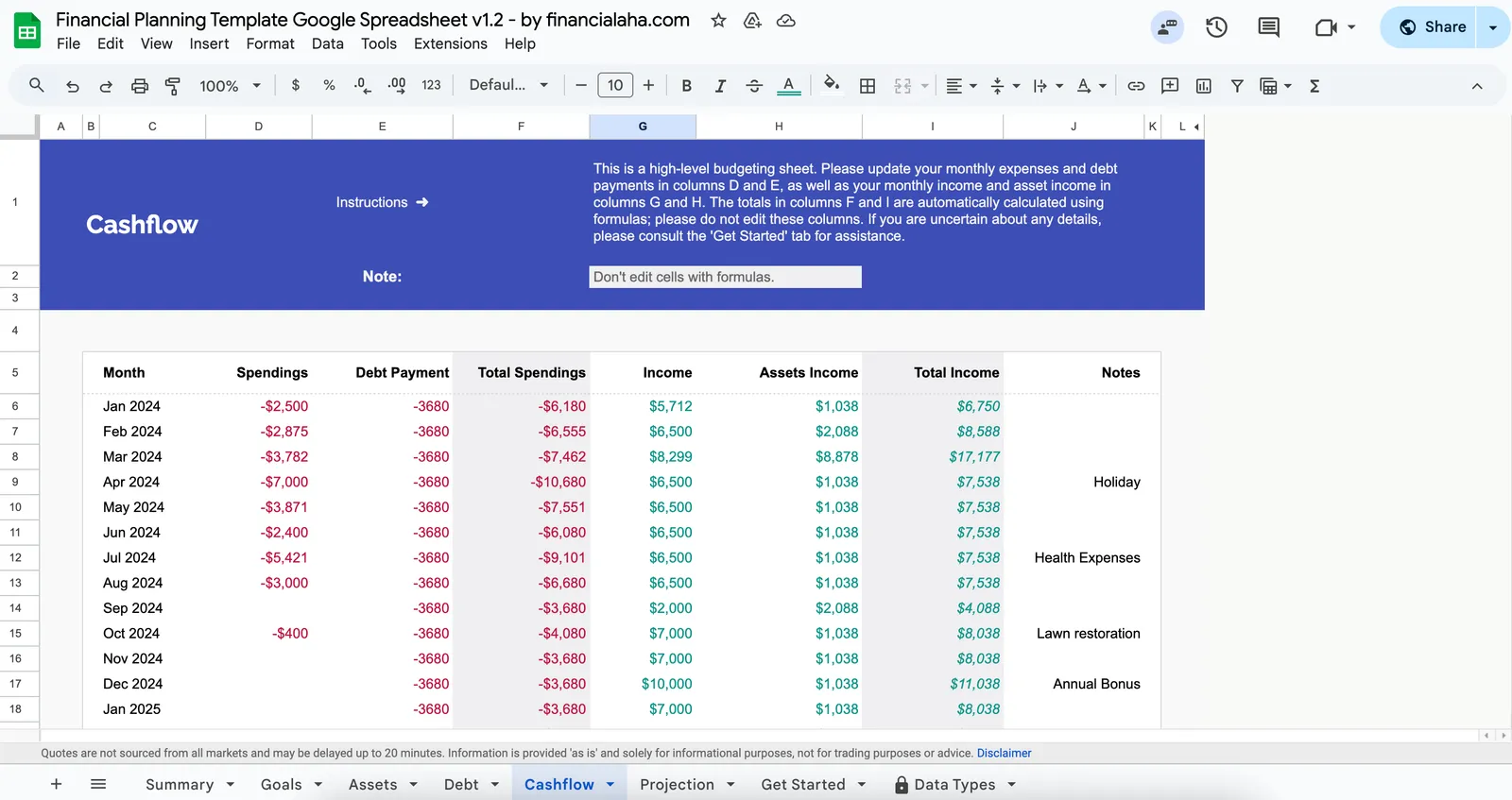
The Cashflow tab holds a row per month for income, asset income, spending and debt payments. The summary averages them and the cash flow chart puts the two sides together over the range you pick.
Multi-account portfolio view
Every investment account goes in as its own row with a type and a value, from a 401(k) or IRA to a taxable brokerage account. The Asset Distribution chart splits the total by type.
Projection to an end year you choose
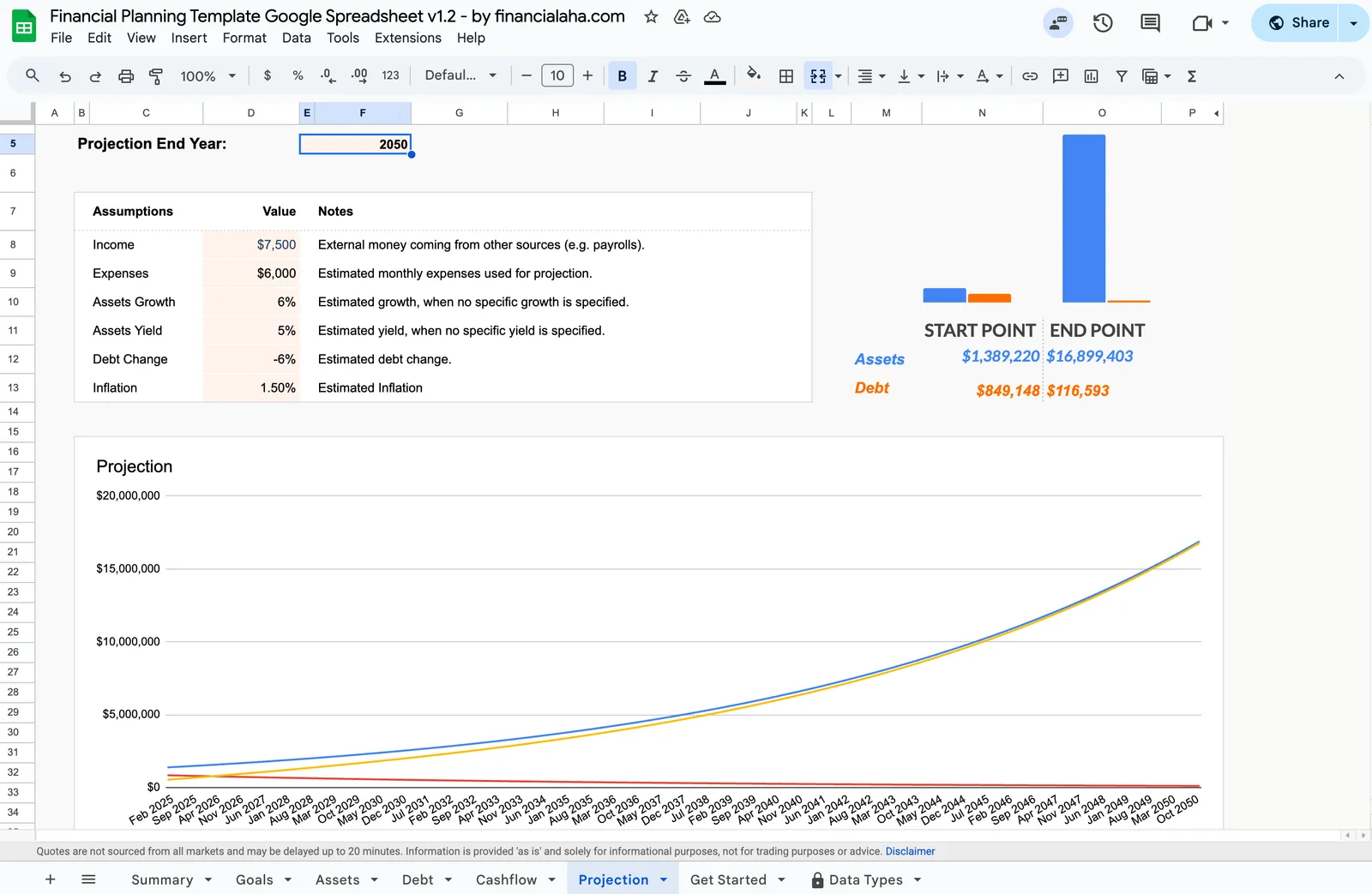
Set the end year and the assumptions for monthly income, monthly expenses, asset growth, asset yield, debt change and inflation. The chart runs assets and debt forward month by month, so you can read where the line sits against your number.
Net worth against your target
The summary card compares current net worth with the goal you entered and ticks it once cleared. Raising that target as you pass each round number keeps the next one in view.
Asset income beside spending
The Cashflow tab computes what your assets earned each month next to what you spent, which is the gap a portfolio has to cover. Drawdown order and conversion ladders are not modelled in this template.
See It In Action
What the template looks like
Browse through the template to see how it handles financial planning, goal tracking, asset management, and projections.
- Complete financial overview dashboard
- Goal setting and progress tracking
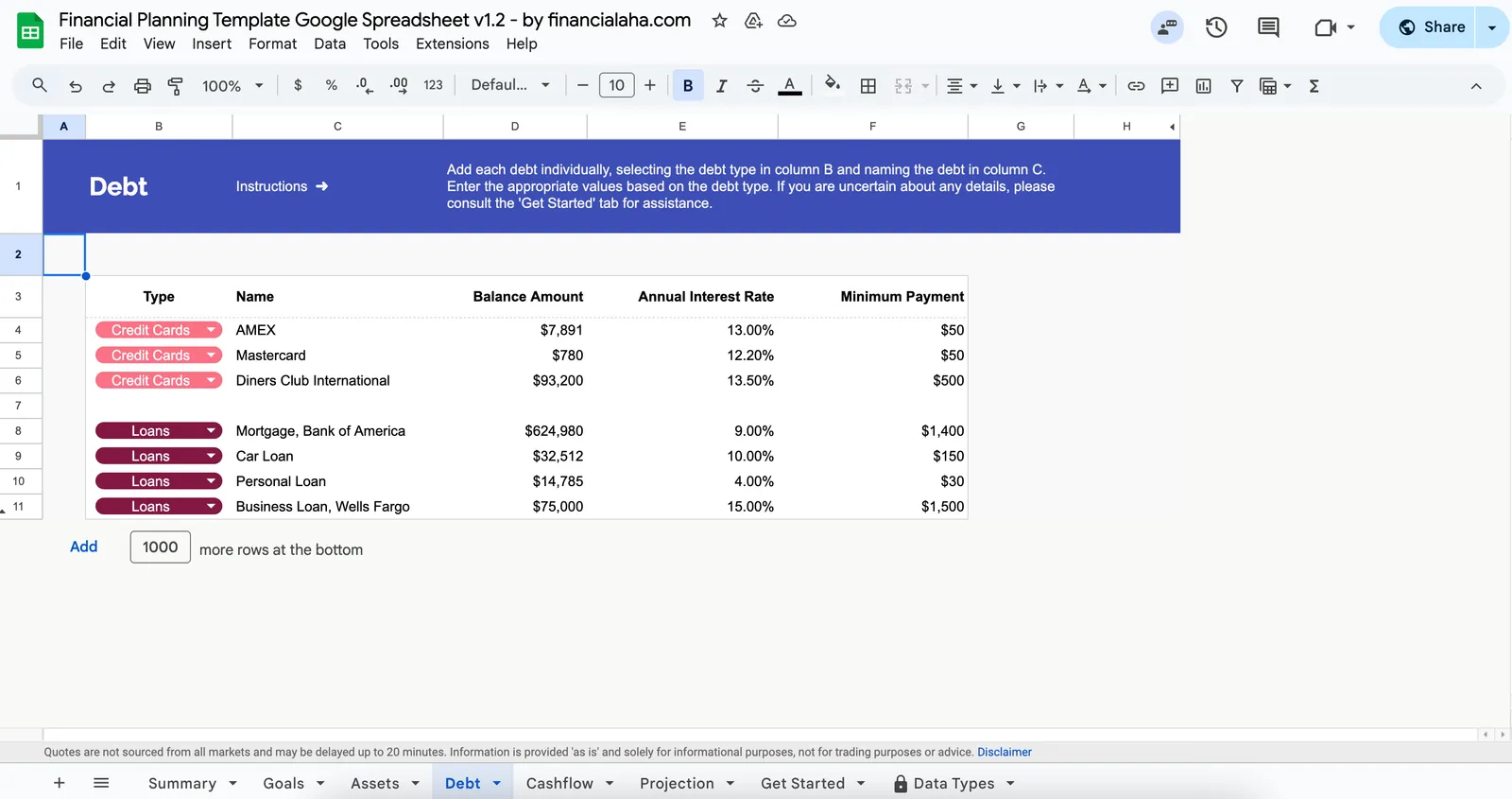
- Asset and debt management
- Cash flow analysis
- Financial projections
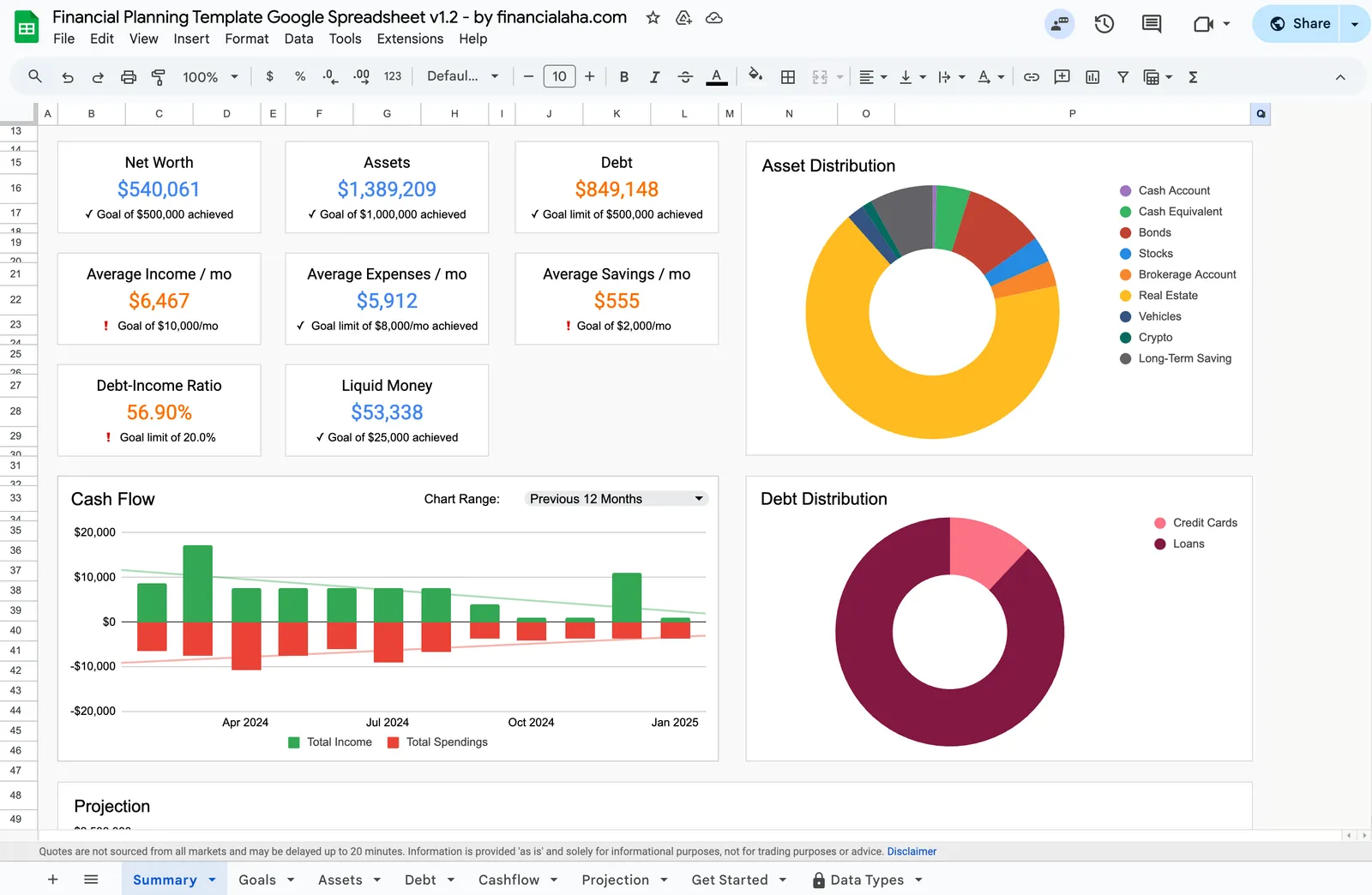
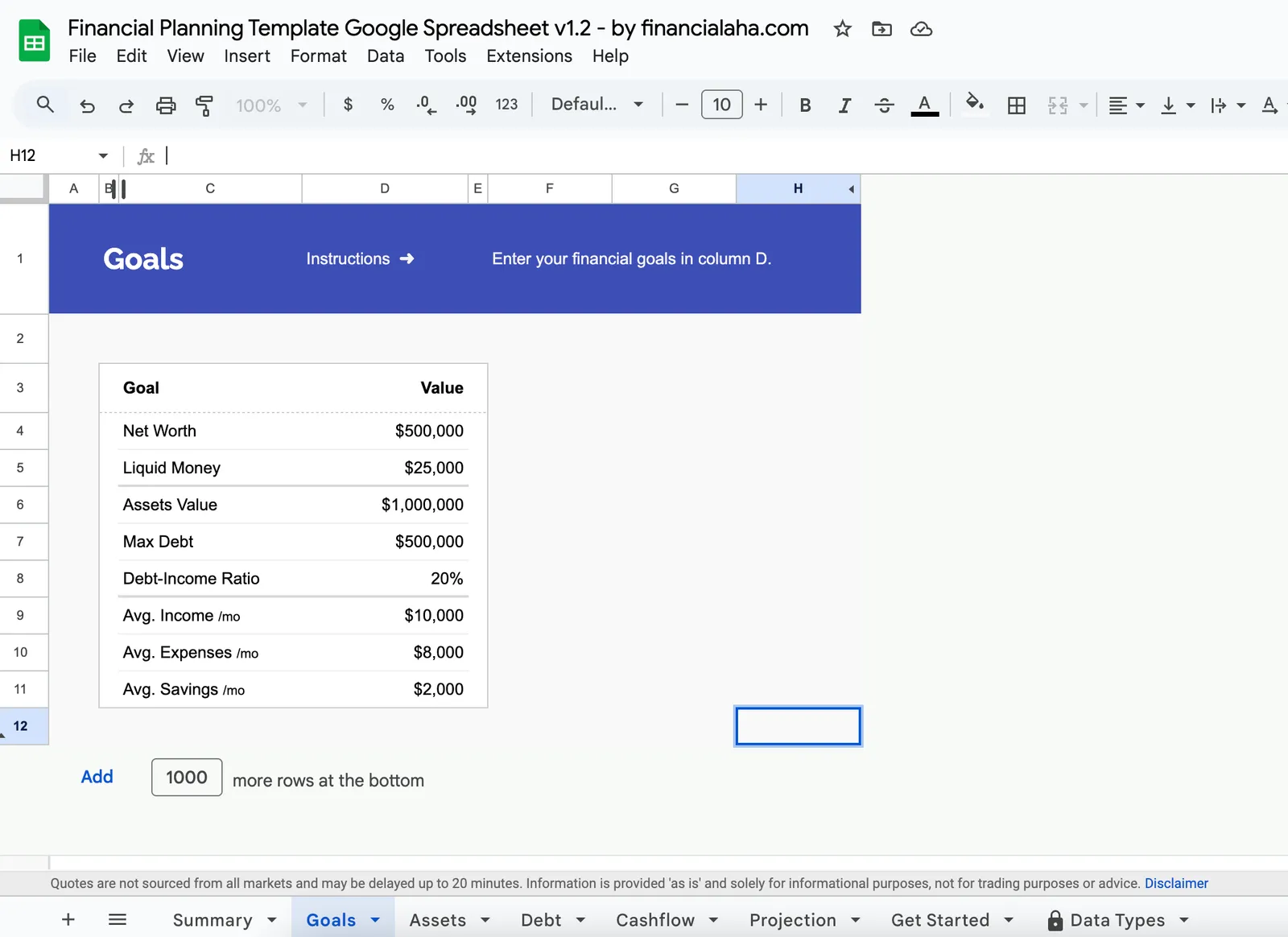
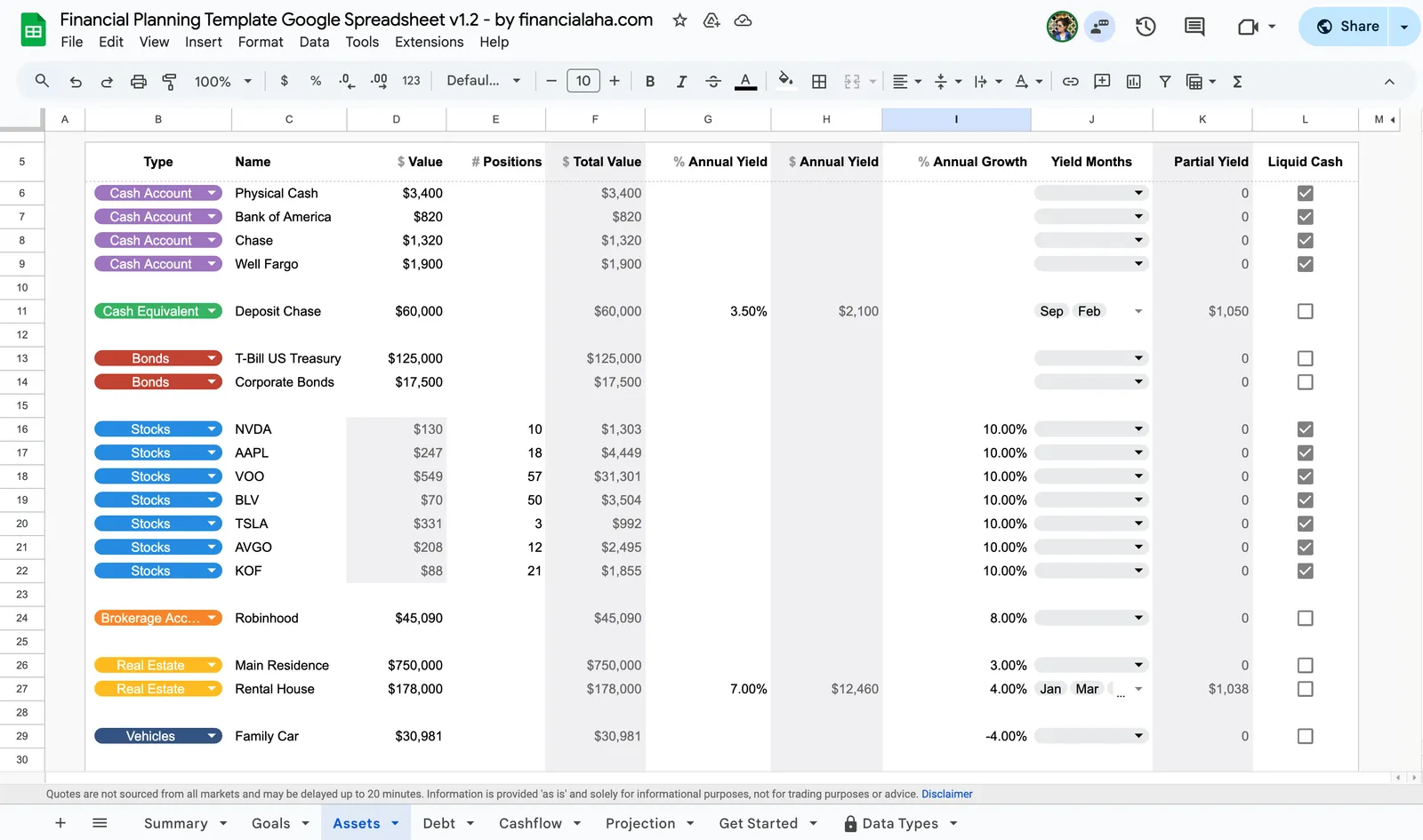
Complete financial overview with net worth and goals
Set and track progress toward financial milestones
Track all your assets in one place
Monitor and plan debt repayment
Visualize your income vs spending over time
Project your financial future
Getting Started
Begin Mapping Your FIRE Financial Plan
Set your FI number as the net worth goal
Work out the portfolio size you are aiming at, then enter it on the Goals tab as the net worth target.
Enter all investment accounts
List every account with its current balance and type. The template sums your total invested assets.
Fill in the Cashflow row each month
Enter what came in and what went out. The summary averages both and the cash flow chart shows them side by side over the range you pick.
Read the projection
With the end year and the assumptions set, follow the assets line month by month and see where it sits against your number.
Update monthly and celebrate milestones
Regular updates keep the summary and the projection working from current numbers rather than ones from last year.
Common Questions
Financial Planning for FIRE Seekers- FAQ
What withdrawal rate does this assume?
There is no withdrawal rate field. Whatever rate you use to work out your number, the result goes in as the net worth goal, and the summary compares your current figure with it.
Does this account for inflation?
Inflation is one of the projection assumptions, alongside asset growth, asset yield and debt change. The chart uses whatever rate you enter.
Can I model different FIRE scenarios?
Change the monthly expenses, monthly income or asset growth figures in the projection assumptions and the end-year totals move with them. Lean, regular and fat versions of the same plan differ mostly in that expense figure.
How does this handle pre-59.5 access to retirement funds?
There is no withdrawal planner in this template. The Liquid Cash checkbox on each asset row separates what you could reach now from what you could not, and the summary reports the liquid total.
Is this useful for coast FIRE?
The projection runs your current balances forward using the growth and yield assumptions you set, which is the view a coast calculation needs. The coast number itself is worked out away from the sheet and then entered as the net worth goal.
What if my expenses change significantly?
Change the monthly expenses figure in the projection assumptions and the chart and end-point totals redraw. If the number you are aiming at moves too, the net worth goal is where you update it.
Can't find the answer you're looking for? Contact our team
Start financial planning as a fire seeker
One-time purchase. No subscription. Your financial data stays in your Google Drive.