Financial Planning Template
Financial Planning Template for Couples
See the full financial picture for your household in one spreadsheet, with combined assets, shared debts, individual investments and the targets you set together.
In Depth
Building a Shared Financial Roadmap as a Couple
When two people merge their financial lives, the sheer number of accounts, obligations, and goals can make it difficult to see the full picture. One partner might have a strong retirement balance while carrying student debt, and the other might have liquid savings but no retirement account at all. A financial plan that lays everything out in one view turns scattered information into a shared reference point that both people can read the same way.
The planning process itself often matters as much as the plan. Sitting down to enter account balances together tends to surface questions that might not come up otherwise - how much is left on a car loan, what the vesting schedule looks like on stock options, or whether an old 401(k) from a previous job is still sitting untouched. These are the kinds of details that affect long-term trajectory but rarely come up in everyday conversation.
Some couples find that having a single document with projections changes how they approach big decisions. Instead of debating whether to prioritize saving for a house or paying off debt based on gut feeling, the numbers provide a neutral starting point. The spreadsheet does not make the decision, but it does make the trade-offs visible in a way that abstract conversation cannot.
The Challenge
Why Couples Need a Shared Financial Plan
Two-income households have more financial moving parts than single-person finances. Separate retirement accounts, joint debts, individual investments, and shared goals all need to be visible in one place.
Assets are scattered across accounts
Checking accounts, savings accounts, 401(k)s, IRAs, taxable brokerage accounts, real estate equity - couples often have a dozen or more accounts between them. Without a single view, the combined picture stays fuzzy.
Debts compete for attention
Mortgage, car loans, student loans, credit cards - each partner may carry different debts at different rates. A holistic view shows which debts cost the most and how they fit against overall assets.
Goals need coordination
Retirement timelines, college funds, house upgrades, travel plans - couples juggle multiple goals with different time horizons. Seeing them side by side makes trade-offs visible.
Financial conversations need a shared reference point
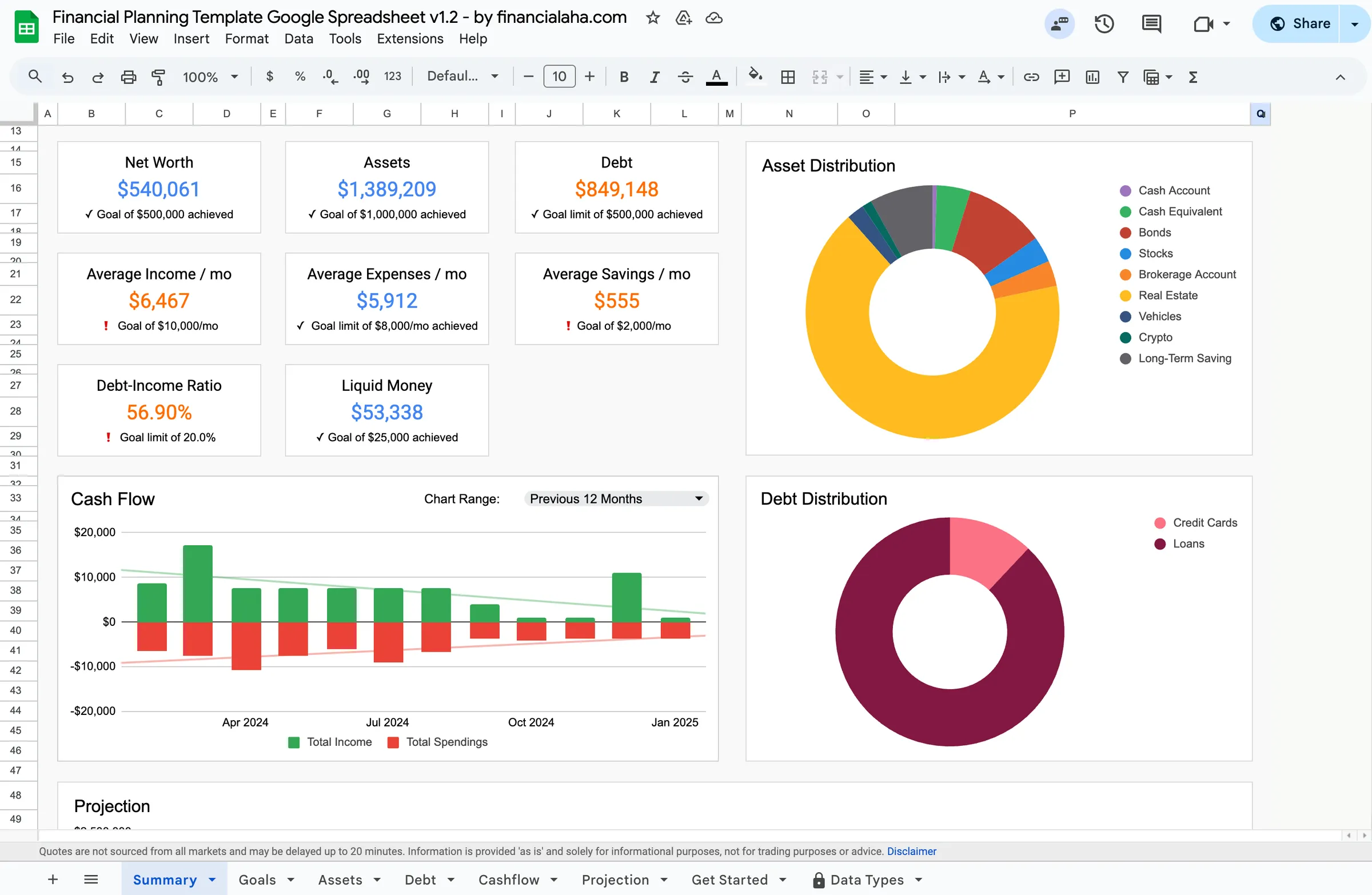
When both partners read the same numbers, total net worth, the goal check on each summary card and every account balance, financial discussions move from opinion to data.
Ready to see your couple finances in one place?
What You Get
Financial Planning Features for Couples
Combined asset tracker
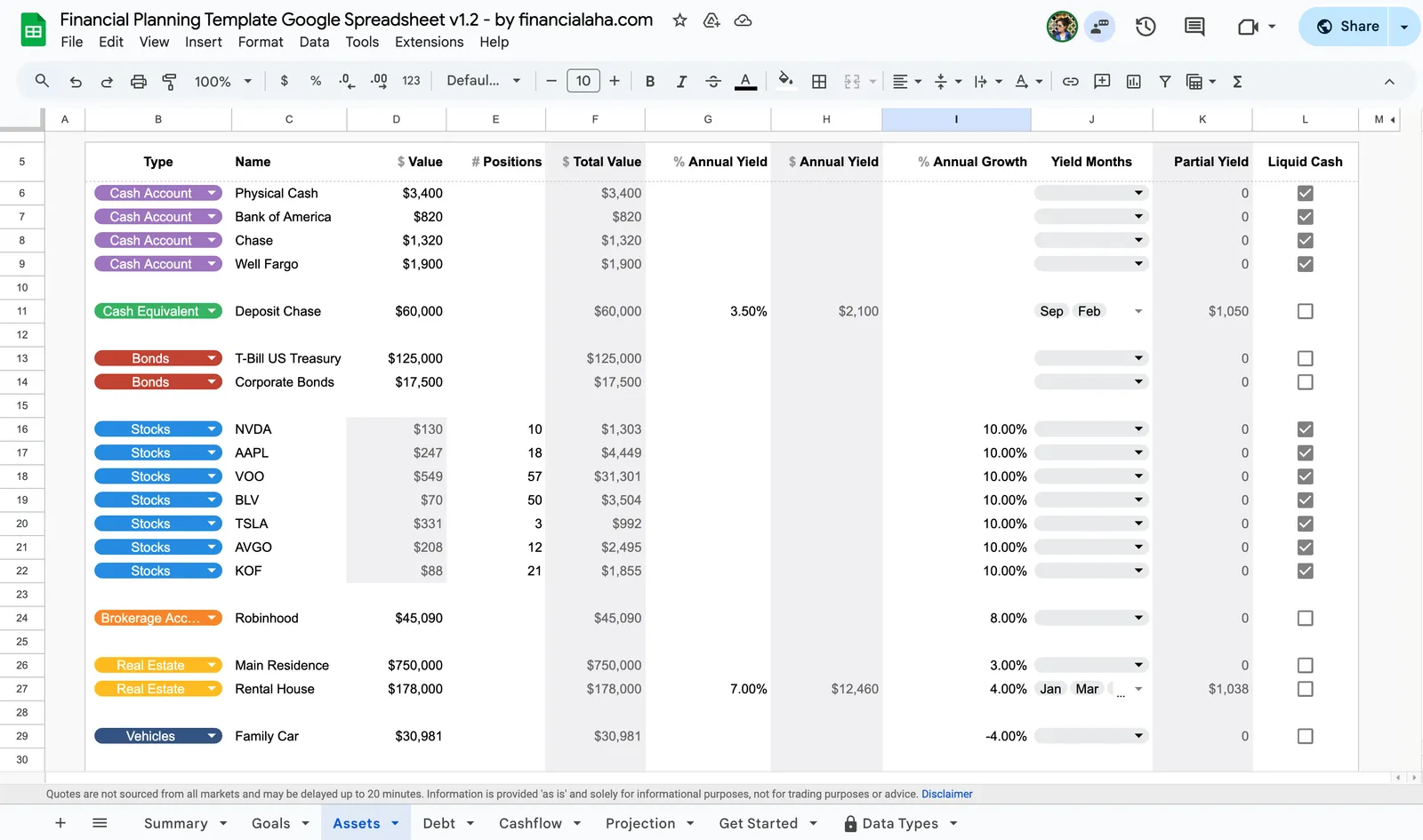
List every asset for both partners, from bank accounts and retirement accounts to investments and property. Each row carries a type and a value, the summary totals the household, and the Asset Distribution chart splits it by type.
Joint and individual debt overview
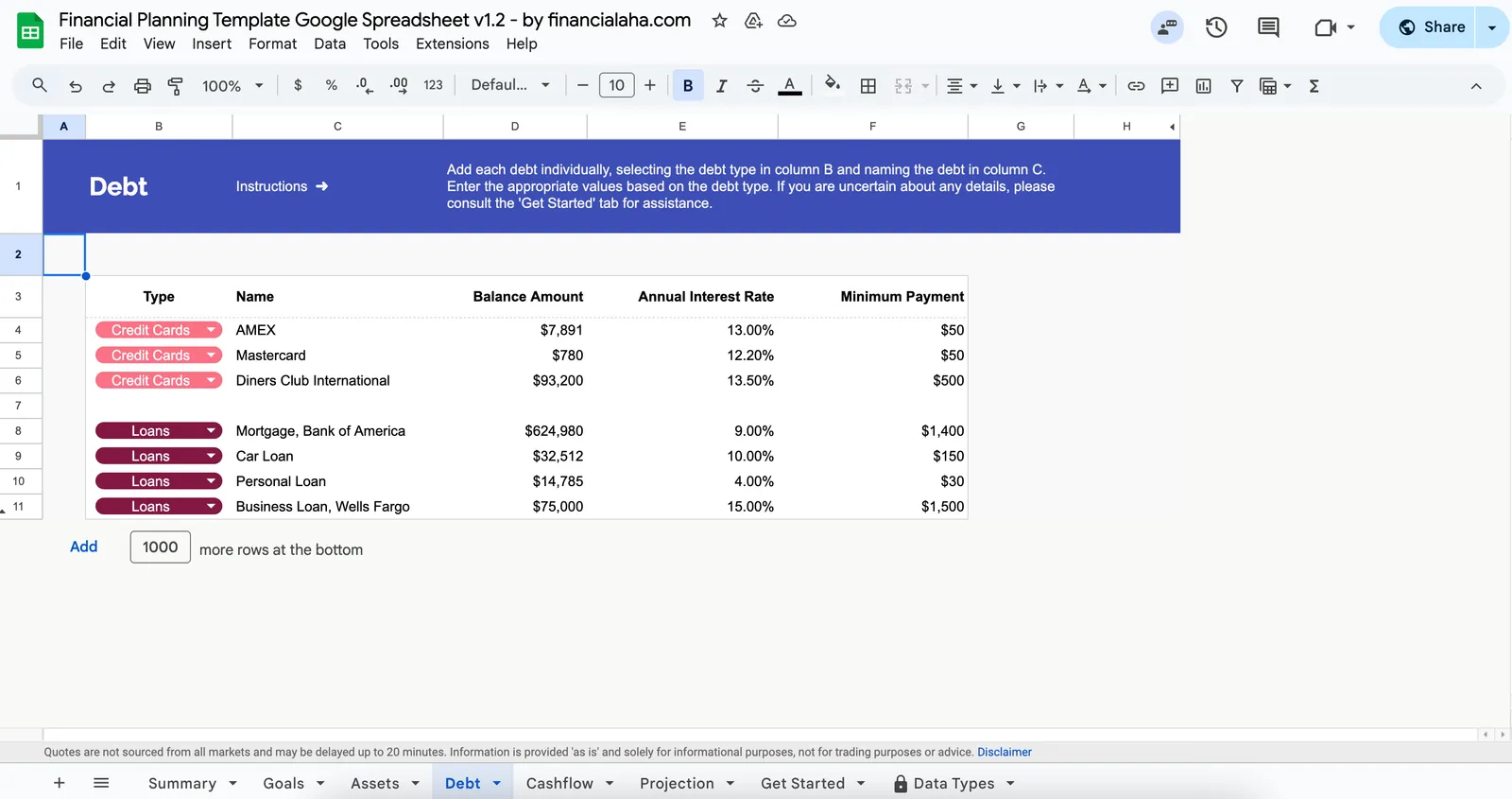
Track mortgages, car loans, student debt, and credit cards. See balances, interest rates, and monthly payments for the full household.
Shared targets on the Goals tab
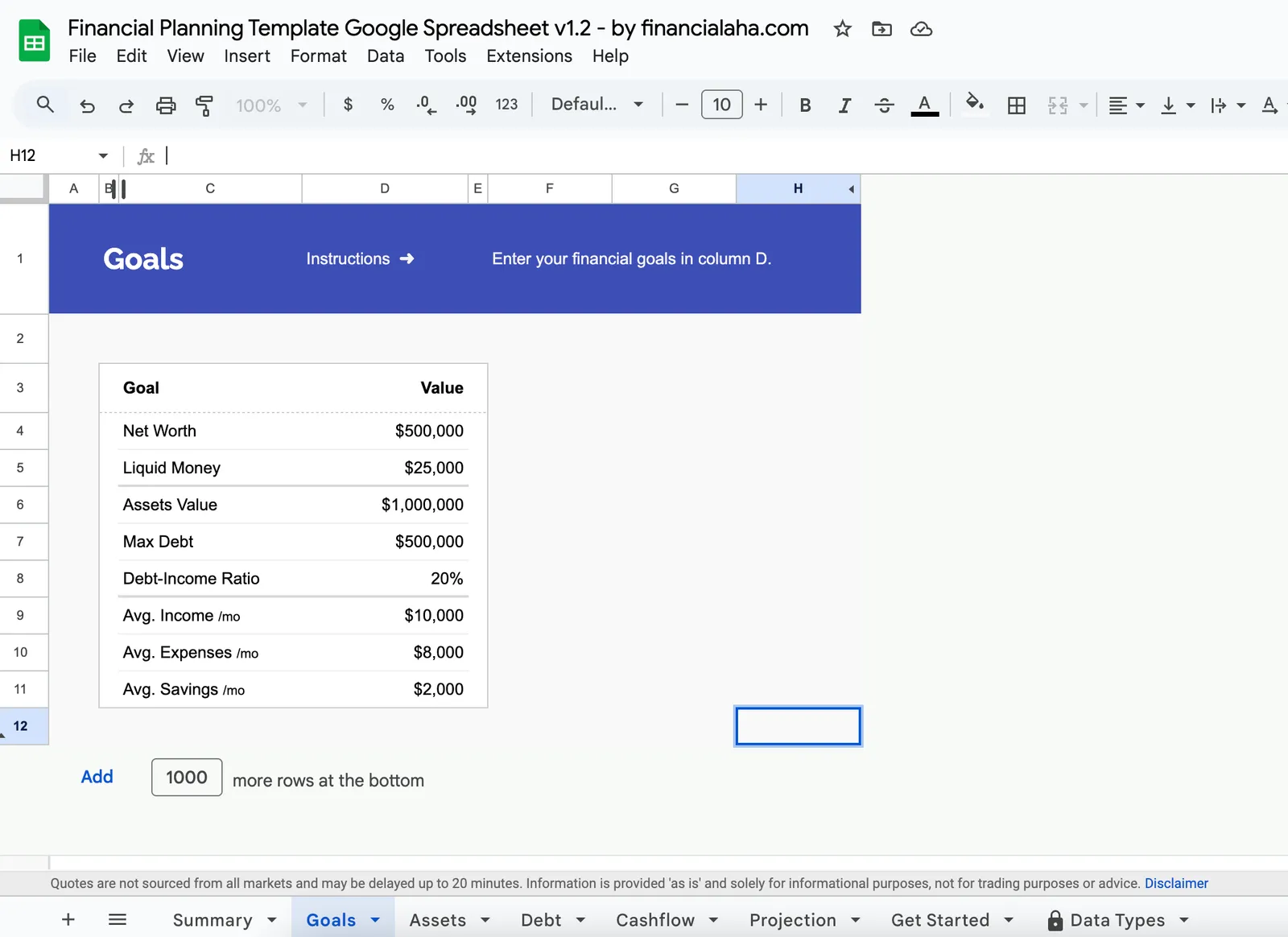
Enter target values for net worth, liquid money, total assets, maximum debt, debt-to-income ratio, and average monthly income, expenses and savings. Each summary card is marked met or not yet against the number you agreed on.
Investment account summary
Track 401(k)s, IRAs, brokerage accounts, and other investments. See asset allocation across the household.
Net worth calculation
Total assets minus total debts, recalculated whenever you refresh balances. The summary shows the figure against the net worth target you set.
Financial projections
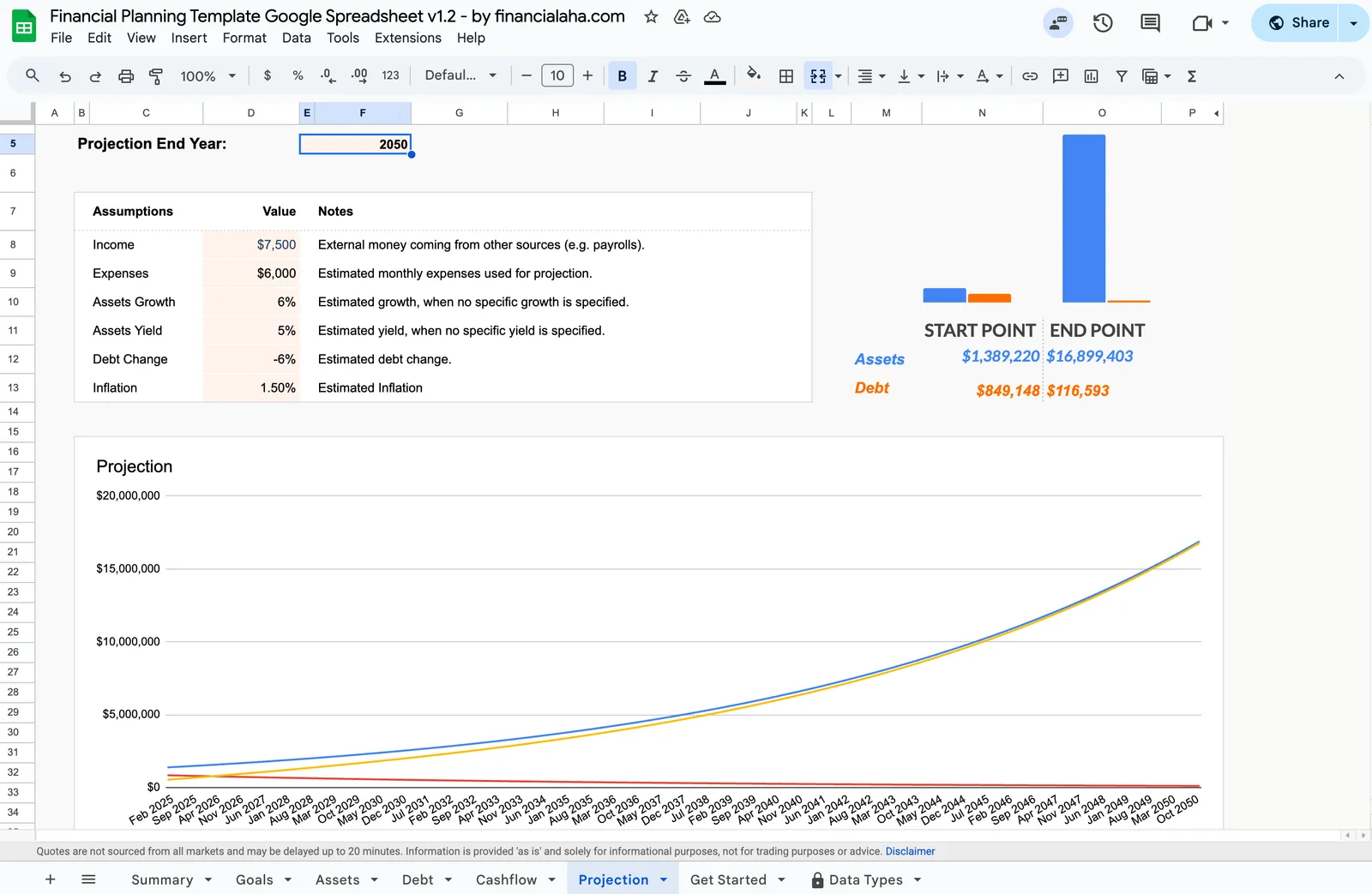
Pick an end year and set the assumptions for monthly income, monthly expenses, asset growth, asset yield, debt change and inflation. The chart runs assets and debt forward month by month to that year.
See It In Action
What the template looks like
Browse through the template to see how it handles financial planning, goal tracking, asset management, and projections.
- Complete financial overview dashboard
- Goal setting and progress tracking
- Asset and debt management
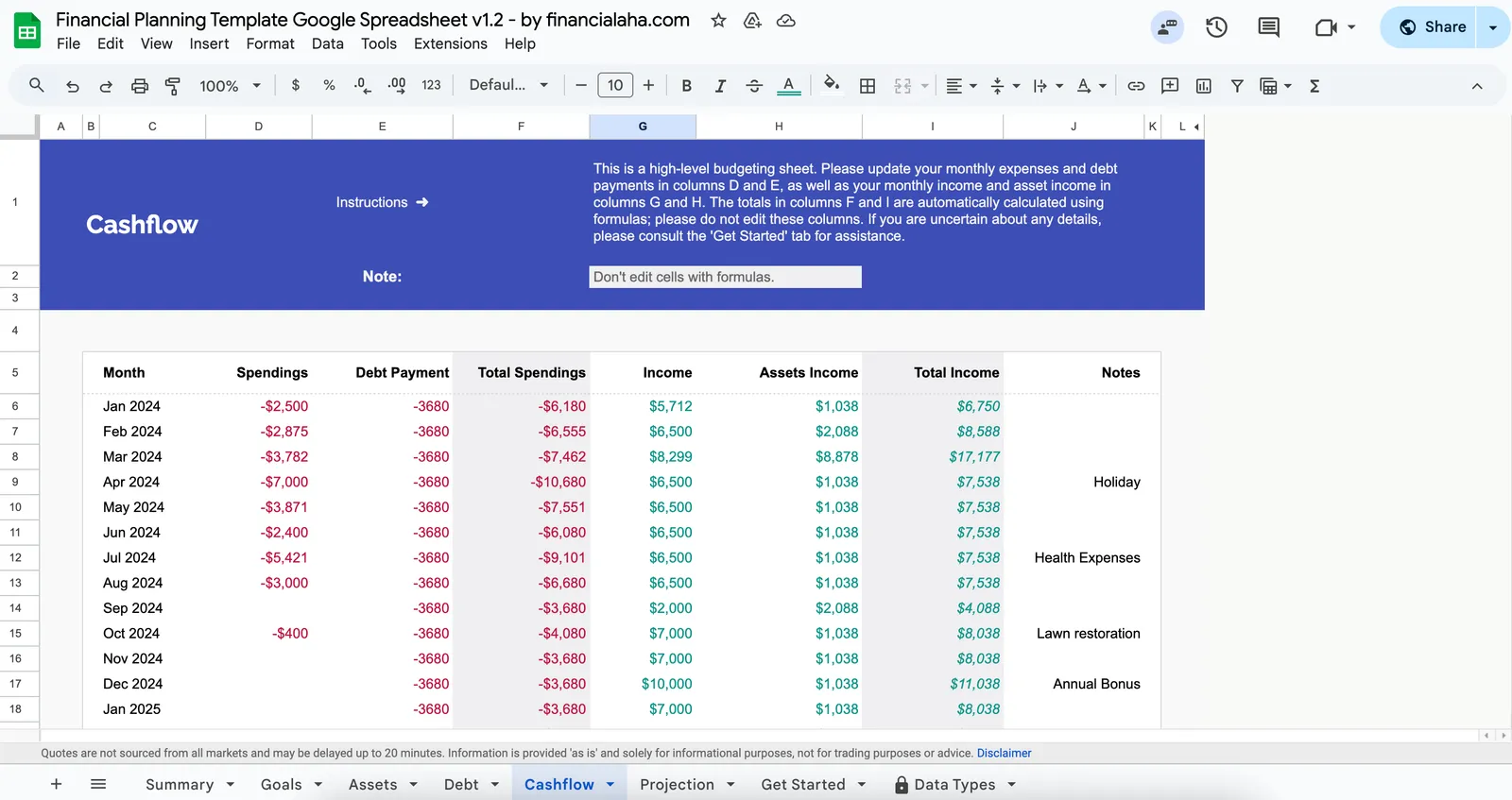
- Cash flow analysis
- Financial projections
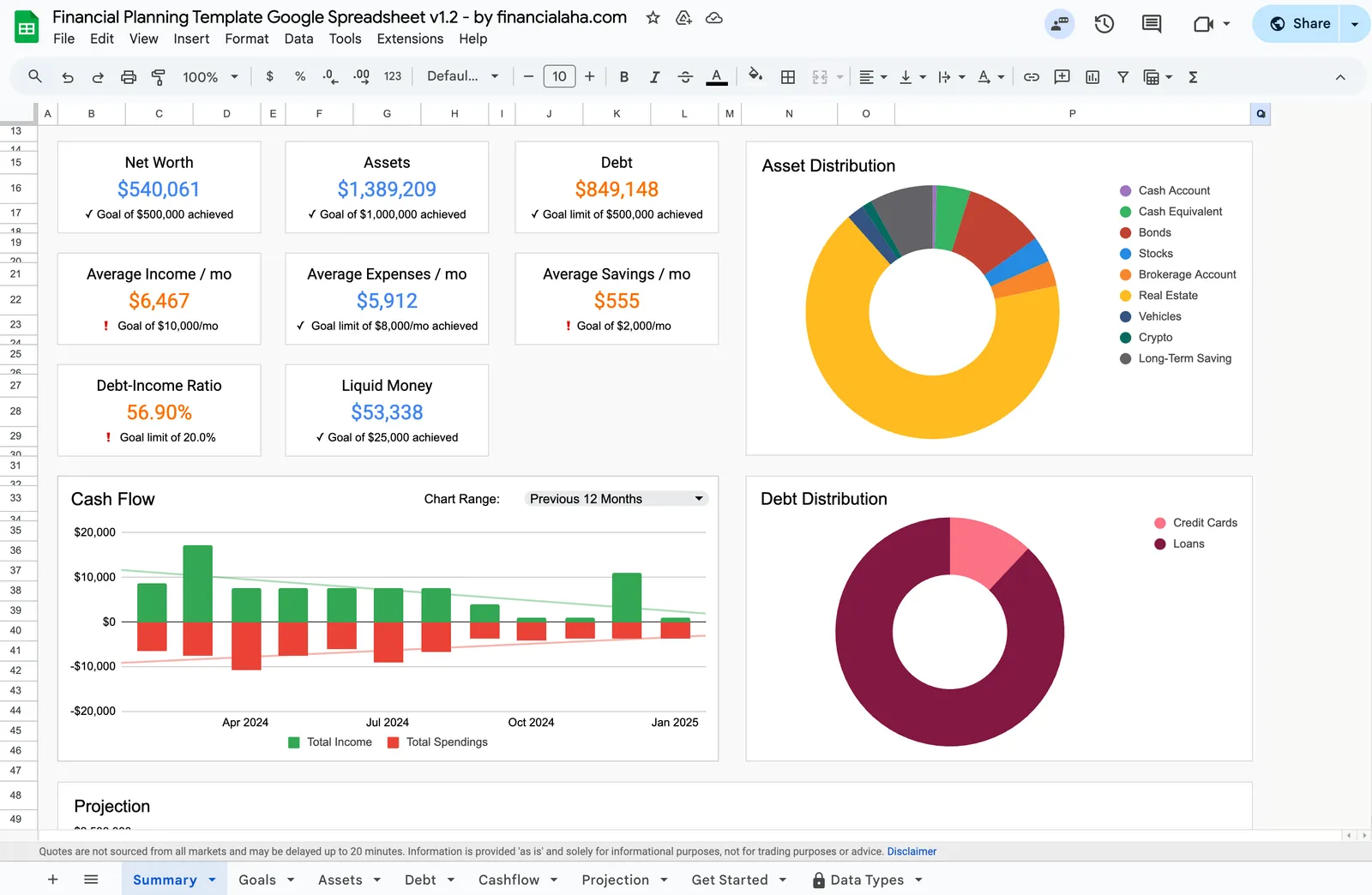
Complete financial overview with net worth and goals
Set and track progress toward financial milestones
Track all your assets in one place
Monitor and plan debt repayment
Visualize your income vs spending over time
Project your financial future
Getting Started
Start Building a Financial Plan Together
List all accounts for both partners
Gather balances for every bank account, retirement fund, investment account, and debt. Enter them into the template.
Enter your shared targets
The Goals tab takes eight figures: net worth, liquid money, total assets, maximum debt, debt-to-income ratio, and average monthly income, expenses and savings.
Update balances monthly
Refresh account balances once a month. The summary recalculates net worth and re-checks every card against your targets.
Review projections together
Open the Projection tab together and change the income, expense and growth assumptions to see how each one moves the end-year figures.
Adjust as circumstances change
New income, new debts, changing goals - update the plan as your household situation evolves.
Common Questions
Financial Planning for Couples- FAQ
Does this replace a monthly budget?
No. A monthly budget tracks income and expenses. This template tracks the bigger picture - assets, debts, goals, and projections. Many people use both together.
Can we keep some accounts private?
The template is flexible. Enter as much or as little detail as you are comfortable sharing. Some couples track only joint accounts here and manage personal accounts separately.
How often should we update it?
Monthly updates work well for most couples. Quarterly is fine if your financial situation is relatively stable.
Does it handle different currencies?
The template uses one base currency. If you hold assets in multiple currencies, convert to your primary currency when updating balances.
What if we have very different financial situations?
Every asset and debt is a named row, so each partner can see their own holdings while the summary totals the household. Different income levels, debt loads and asset bases all sit in the same table.
Can this help with retirement planning specifically?
It includes retirement account tracking and projections. For deeper retirement-specific modeling with scenarios and income projections, the Retirement Planning spreadsheet covers that scope.
Can't find the answer you're looking for? Contact our team
Start financial planning as a couple
One-time purchase. No subscription. Your financial data stays in your Google Drive.