Annual Budget Template
Annual Budget Template for FIRE Seekers
Track your annual savings rate, investment contributions, and spending trends across 12 months with the precision FIRE goals demand.
In Depth
The Twelve-Month View for Financial Independence
People pursuing financial independence tend to think in terms of years and decades, not weeks and months. The savings rate - the percentage of income that goes toward investments rather than spending - is the number that drives most FIRE calculations. Tracking that rate over a full year eliminates the noise of individual months where a car repair or medical bill skews the picture.
One challenge specific to FIRE seekers is that the journey involves years of delayed gratification, and motivation can waver. An annual planner that shows cumulative savings progress provides a concrete record of forward movement. It is harder to feel stuck when the numbers show twelve months of consistent contributions, even if each individual month felt small.
Annual planning also helps with the tax optimization strategies that many FIRE seekers use. Roth conversion ladders, tax-loss harvesting, and maximizing multiple retirement account types all require coordination across the calendar year. Seeing these moves alongside regular income and expenses keeps the strategy grounded in actual cash flow.
There is a practical tension in the FIRE community between aggressive saving and maintaining quality of life during the accumulation phase. An annual plan makes room for both by showing the full picture - what went toward the future and what went toward the present. That transparency tends to reduce guilt about spending and anxiety about saving.
The Challenge
Why FIRE Goals Need Annual Perspective
FIRE is a multi-year project measured in annual savings rates. Monthly budgets track the trees - an annual budget shows the forest and whether you are actually on pace.
Savings rate is an annual metric
A 55% savings rate one month means nothing if holiday spending drops it to 20% in December. The annual view shows your true savings rate across all 12 months - the number that actually determines your FIRE timeline.
Investment contributions need annual coordination
Maxing out a 401(k) at $23,500, an IRA at $7,000, and an HSA at $4,150 requires planning across the year. The annual budget ensures you hit each limit without over or under-contributing.
Spending trends reveal lifestyle creep
A gradual increase of $100 per month in dining out is invisible in monthly reviews but shows up as $1,200 annually. The year-long view catches these slow drifts before they compound.
Milestone tracking requires the long view
How much closer to your FIRE number did you get this year? How much did the year add to savings and investments? These questions can only be answered with annual data.
Ready to take control of your fire seeker finances?
What You Get
Annual Planning Tools for FIRE Goals
Annual savings rate, tracked two ways
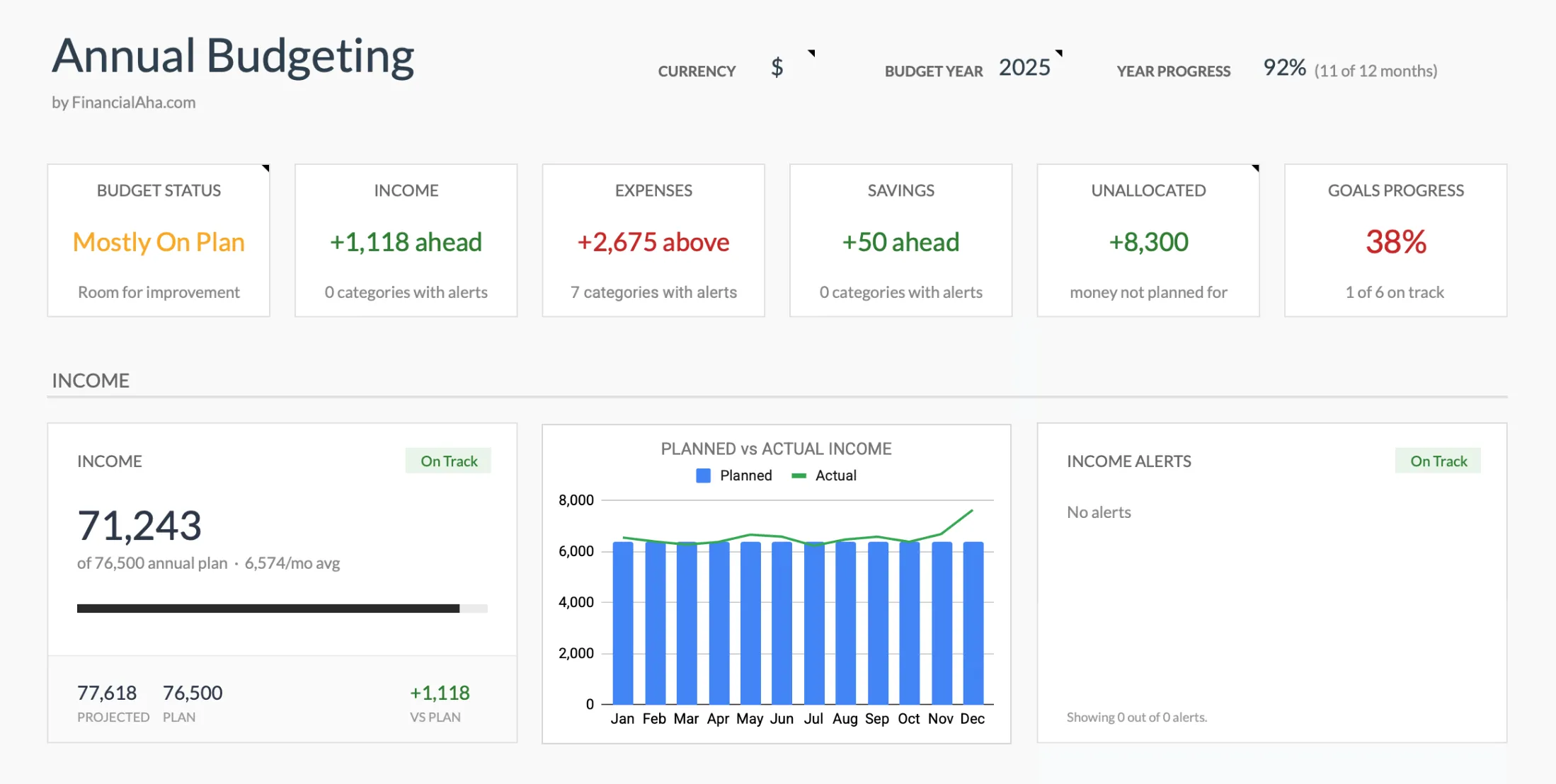
The summary reports savings rate and true savings rate for the year, each measured against plan. The monthly surplus and deficit chart shows how individual months contributed.
Investment account contribution tracking
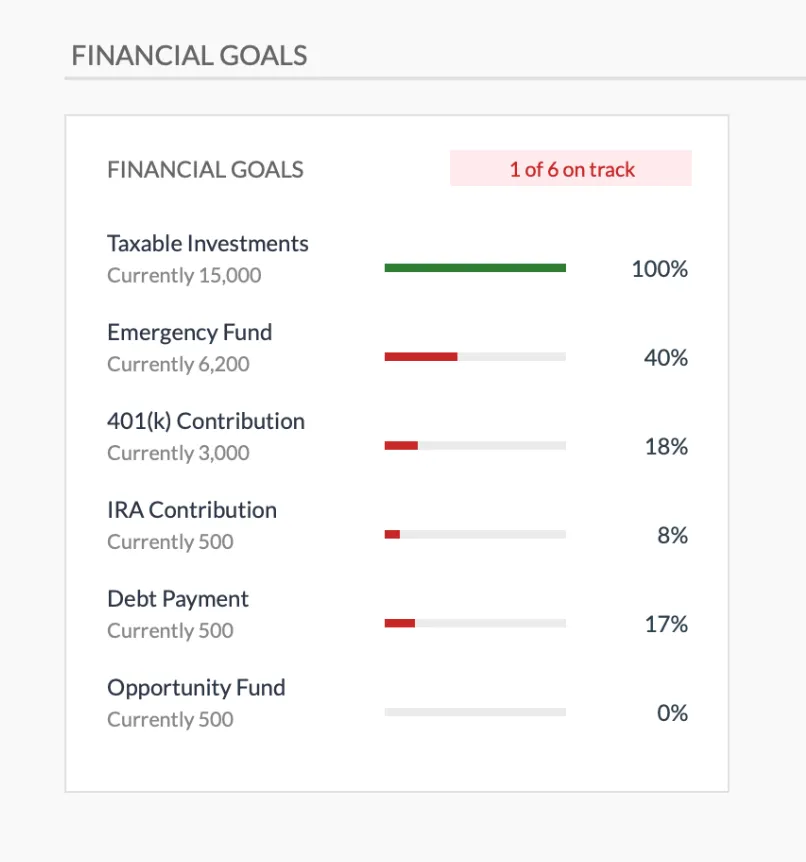
Name savings rows for 401(k), IRA, HSA and taxable accounts, then record planned versus actual each month. The goals sheet holds the annual figure you are aiming at and the percentage reached.
Annual spending by category
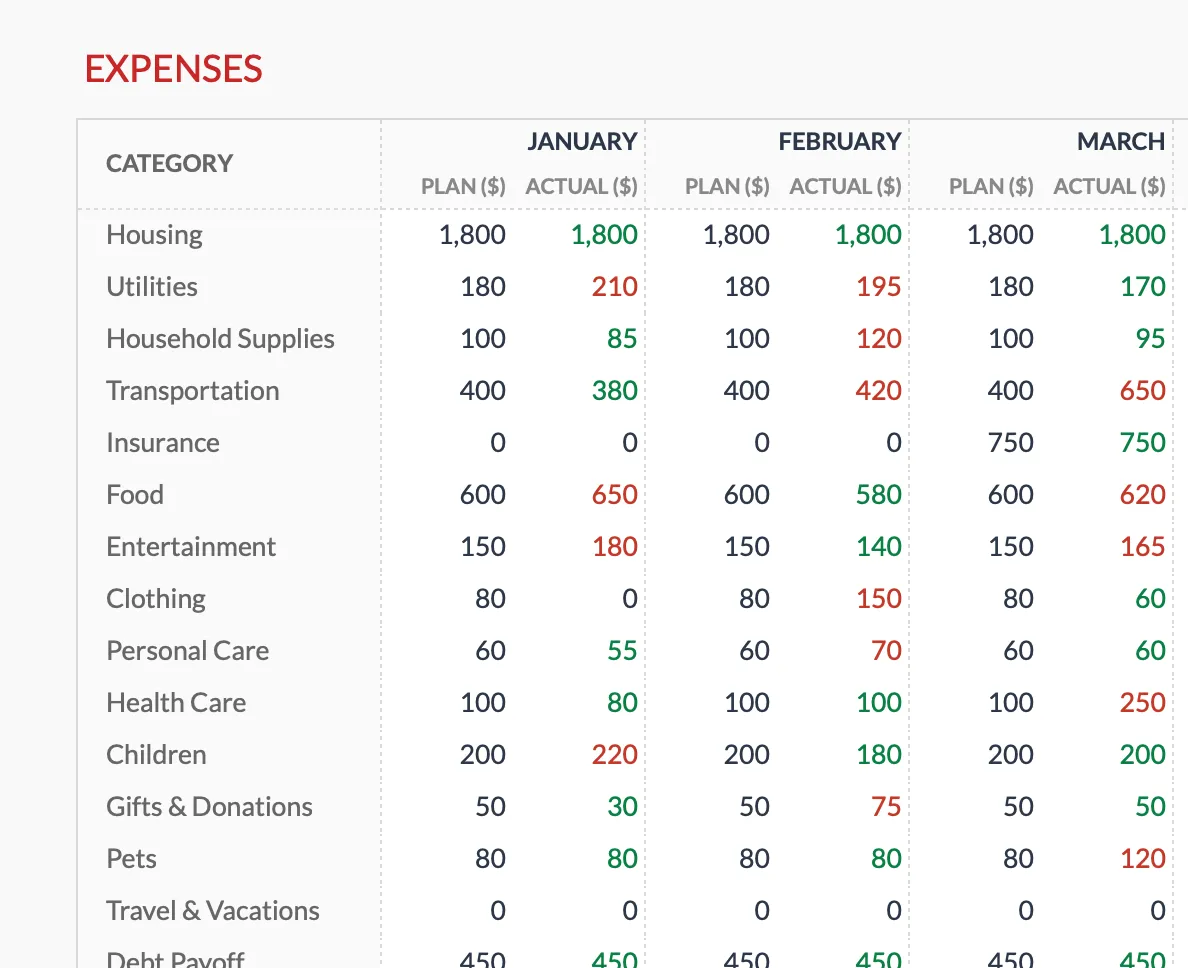
See what each expense category costs you per year. A $200 monthly subscription is $2,400 annually - the annual framing changes perspective.
FIRE number tracking
Goals are free text, so a FIRE number can be one of them. The summary shows the percentage reached and how many goals are on track.
Annual totals you can compare year to year
Each copy covers one budget year, set at the top of the summary. Keeping the finished year puts its annual totals and savings rate beside the new one.
FIRE savings targets tracked each month
Set aggressive monthly targets and track performance. The annual view shows whether monthly misses average out or compound.
See It In Action
What the template looks like
Browse through the template to see how it handles income tracking, expense budgets, savings goals, and spending analysis.
- Dashboard with key metrics at a glance
- Transaction logging with categories
- Budget vs actual comparison
- Visual charts and breakdowns
- Fully customizable categories
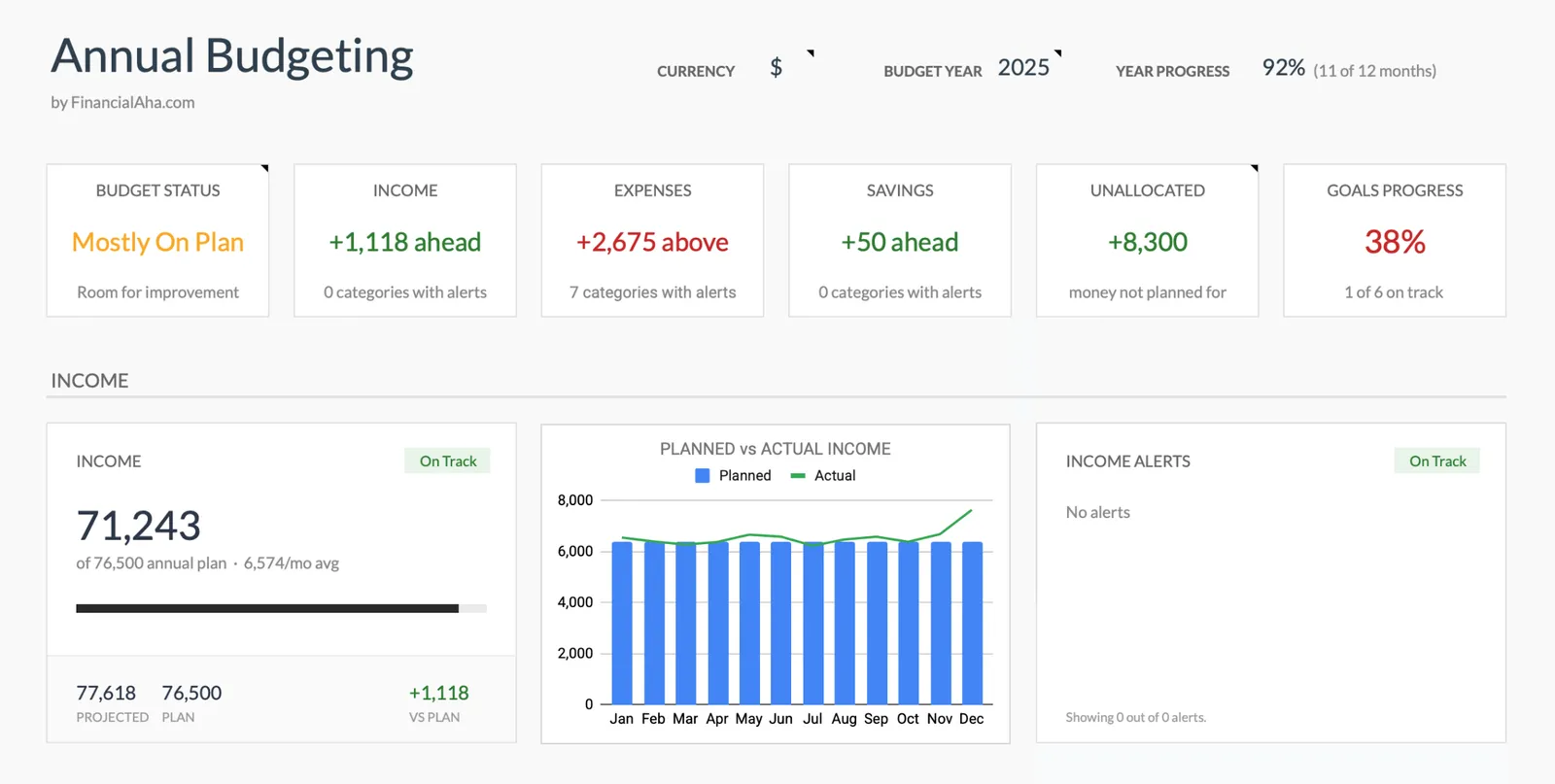
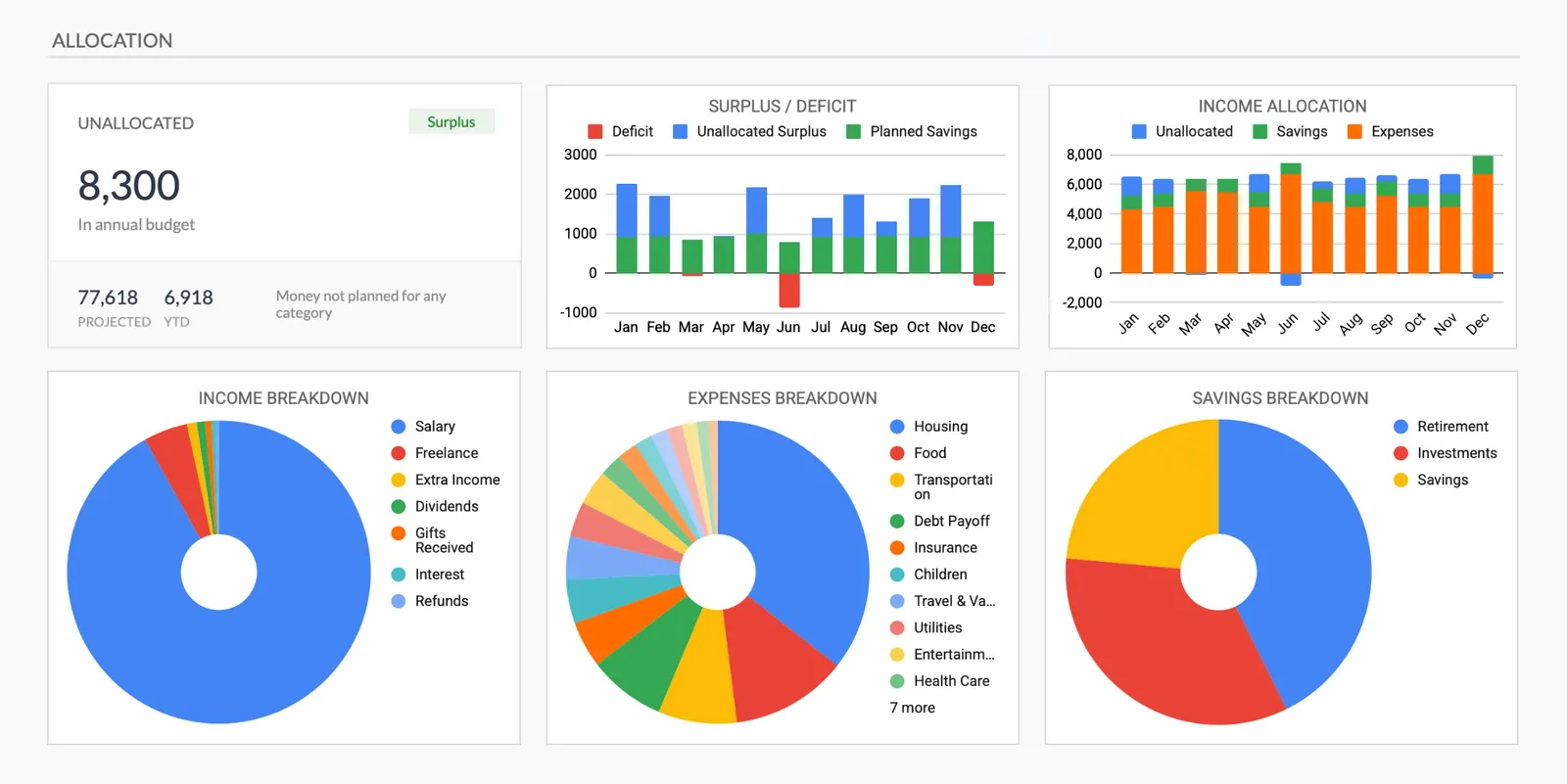

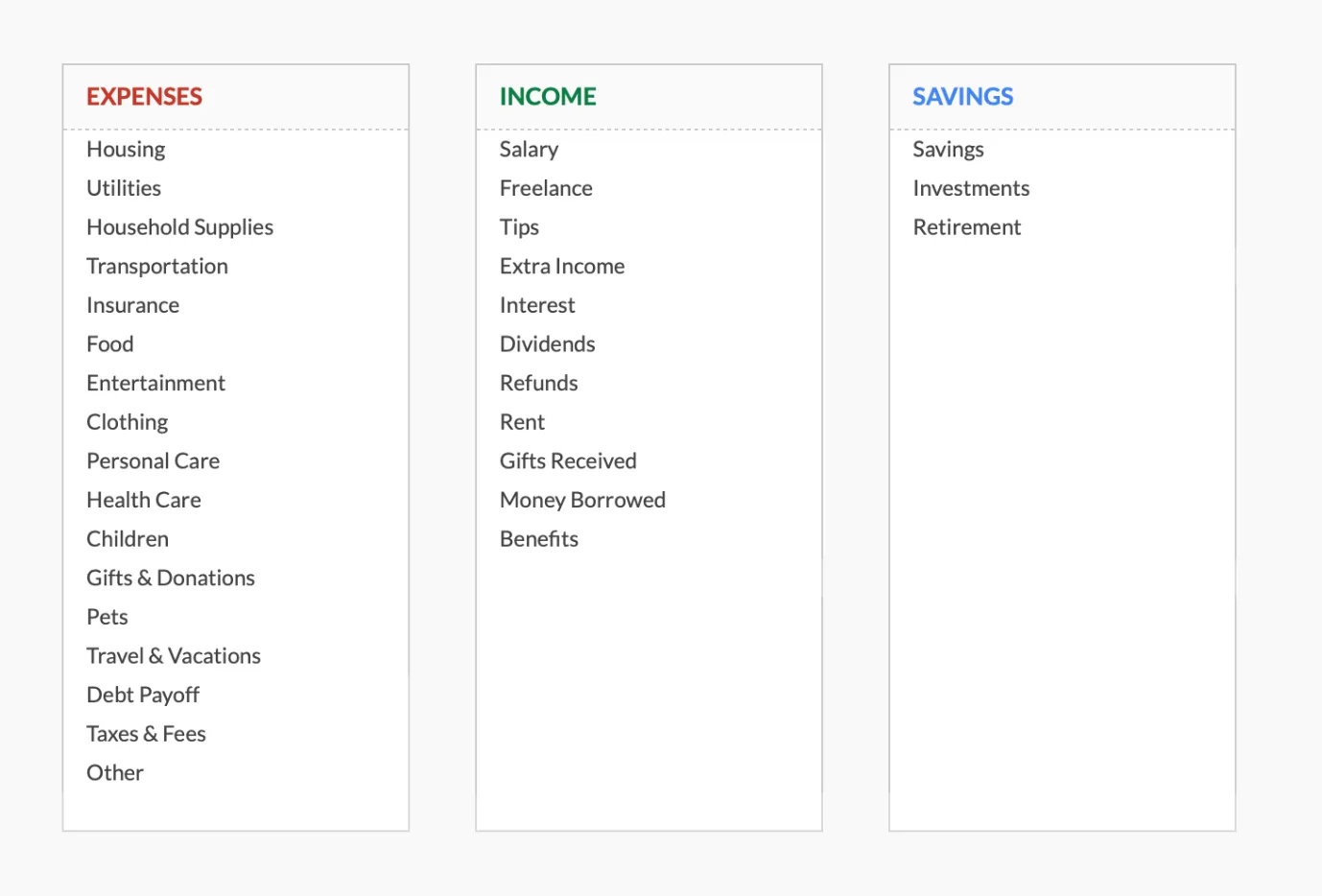
Full year budget overview with monthly breakdown
See how your budget is allocated across categories
Track key metrics across the year
Customizable categories for your annual plan
Set and track annual financial goals
Track expenses month by month across the year
Getting Started
Launching Your Annual FIRE Plan
Set your annual targets
Define your target savings rate, total investment amount, and maximum spending budget for the year.
Map income across 12 months
Enter expected income including base salary, bonuses, side income, and dividends. Account for timing of larger payments.
Plan investment contributions
Decide monthly contribution amounts for each account. Ensure annual totals hit the limits you are targeting.
Track spending and savings monthly
Enter actuals each month. The template calculates running savings rate and year-to-date investment totals.
Review quarterly against FIRE targets
Every three months, assess whether your annual pace matches your FIRE timeline. Adjust if the numbers are off track.
Common Questions
Annual Budget for FIRE Seekers - FAQ
How does this differ from the monthly FIRE budget template?
The monthly template handles detailed expense tracking week by week. This annual planner shows the 12-month trajectory, cumulative savings rate, and whether your FIRE timeline is on track.
Can I calculate my FIRE timeline from this?
The template tracks your annual savings rate, which is the key input for FIRE timeline calculations. Combined with your current portfolio value and target FIRE number, the math becomes straightforward.
What if I have a bad quarter?
The summary reports the savings rate for the year so far against plan, so a weak quarter shows up in the annual number rather than in isolation. Working out what the remaining months would need is a short calculation from the same figures.
How do I track employer match contributions?
Add employer match as a separate line in your investment tracking. It counts toward your savings rate and FIRE progress even though it is not money from your paycheck.
Should I include home equity in FIRE number tracking?
This is a personal decision that depends on whether you plan to sell your home in retirement. The template tracks whatever metrics you choose to include.
Can I compare multiple years?
Save a copy each year. Comparing annual totals year over year shows whether your savings rate and investment pace are improving over time.
Can't find the answer you're looking for? Contact our team
Start annual budgeting as a fire seeker
One-time purchase. No subscription. Your financial data stays in your Google Drive.