Singapore
Monthly Budget Template for Singapore
Track your income in SGD, manage CPF contributions, and everyday expenses - all in a Google Sheets template you own.
In Depth
CPF Rates, GST, and the True Shape of a Singapore Budget
Singapore's CPF system channels a combined 37% of wages (20% employee, 17% employer for those under 55) into retirement, housing, and healthcare savings. The employee's 20% share means take-home pay is roughly 80% of gross salary - a significant difference that shapes every budget decision. These rates step down at ages 55, 60, 65, and 70, so the gap between gross and net pay changes over a career. Budgeting from the credited amount rather than the headline salary figure prevents a mismatch between planned and actual spending capacity.
The absence of capital gains tax is one of Singapore's distinctive financial features - investment profits from stocks, bonds, and property sales (for individuals, not traders) are not taxed. Combined with no estate duty and relatively low income tax rates, this creates an environment where more of each dollar earned and invested stays in the household. Income tax itself is assessed annually rather than withheld monthly, so setting aside a monthly amount based on the expected IRAS bill avoids a lump-sum surprise in April or May.
GST at 9% applies to most goods and services, adding a layer to everyday spending that can accumulate. For property buyers, stamp duties create substantial upfront costs - Buyer's Stamp Duty alone ranges from 1% to 6% of the purchase price, and ABSD adds 20% for citizens buying a second property. These one-off expenses are large enough to deserve their own planning category. A budget that reflects Singapore's specific tax and levy structure, rather than generic assumptions, tends to produce a more useful picture.
Singapore
Budgeting in Singapore: What's Different
Singapore's financial system has distinct features that shape how budgeting works. Understanding these helps you set up a template that matches your actual financial life.
CPF contributions significantly reduce take-home pay
Central Provident Fund contributions take 20% of your salary (employee share, for those under 55), with your employer contributing another 17% [1]. This means your take-home pay is roughly 80% of your gross salary. Budgeting from the amount actually credited to your bank account - after CPF - gives a more realistic picture.
Income tax rates are low but still worth understanding
Singapore's personal income tax rates range from 0% to 24% (for income above SGD 1 million), with the first SGD 20,000 tax-free. For most residents, the effective tax rate is relatively low compared to other developed countries. Tax is assessed annually rather than withheld monthly, so setting aside money for the annual tax bill is worth planning for.
No capital gains tax simplifies investment tracking
Singapore does not impose capital gains tax for individuals [2]. This means investment gains from stocks, property, and other assets are not taxed. For budgeting purposes, investment returns don't create a separate tax liability - a simpler picture compared to many other countries.
GST at 9% applies to most goods and services
Singapore's Goods and Services Tax increased to 9% in January 2024, up from 7% previously [2]. This applies to most purchases and is typically included in displayed prices. For budgeting, the GST-inclusive amount is what you pay at the register. The GST Voucher scheme provides offsets for lower- and middle-income households, which can reduce the effective impact.
Property stamp duties add significant upfront costs
Buyer's Stamp Duty (BSD) in Singapore ranges from 1% to 6% depending on the property price, and Additional Buyer's Stamp Duty (ABSD) adds 20% for Singapore citizens purchasing a second property (higher for PRs and foreigners). These one-off costs are substantial and worth planning for separately from the ongoing mortgage. Seller's Stamp Duty also applies if you sell within certain holding periods.
Singapore's cost of living requires careful tracking
Housing (HDB or private), food (hawker centres to restaurants), transport (COE and car costs, or public transit), and education can vary dramatically based on lifestyle choices. Singapore ranks among the world's most expensive cities, but costs are highly dependent on personal choices around housing type and lifestyle.
Obter o Modelo
Primeiros Passos
Your First Steps With a Singapore Budget
Switch the currency to SGD
You can change the display currency to SGD using the dropdown at the top of the dashboard. The calculations stay the same - only the display currency changes.
Enter your after-CPF take-home pay
Use your actual credited salary - the amount that hits your bank account after CPF deductions. If you earn SGD 6,000 gross, your take-home after the 20% employee CPF contribution is roughly SGD 4,800. Use that figure.
Customize expense categories for Singapore
Add categories relevant to Singapore life: HDB mortgage or rental, utilities (SP Group), mobile and broadband, hawker/food court meals vs. restaurant dining, public transport (EZ-Link/SimplyGo), insurance premiums, and any car-related expenses (loan, insurance, road tax, petrol, parking).
Set aside money for annual income tax
Unlike countries that withhold tax monthly, Singapore assesses income tax annually (typically due in April/May). Setting aside a monthly amount based on your expected tax bill avoids a lump-sum surprise. IRAS provides an estimated tax calculator for reference.
Track voluntary CPF top-ups if applicable
Voluntary top-ups to CPF Special Account or MediSave qualify for tax relief up to SGD 8,000 each. If you're making these contributions, track them as a budget category to monitor against the annual cap.
Ver em Ação
Como o modelo se parece
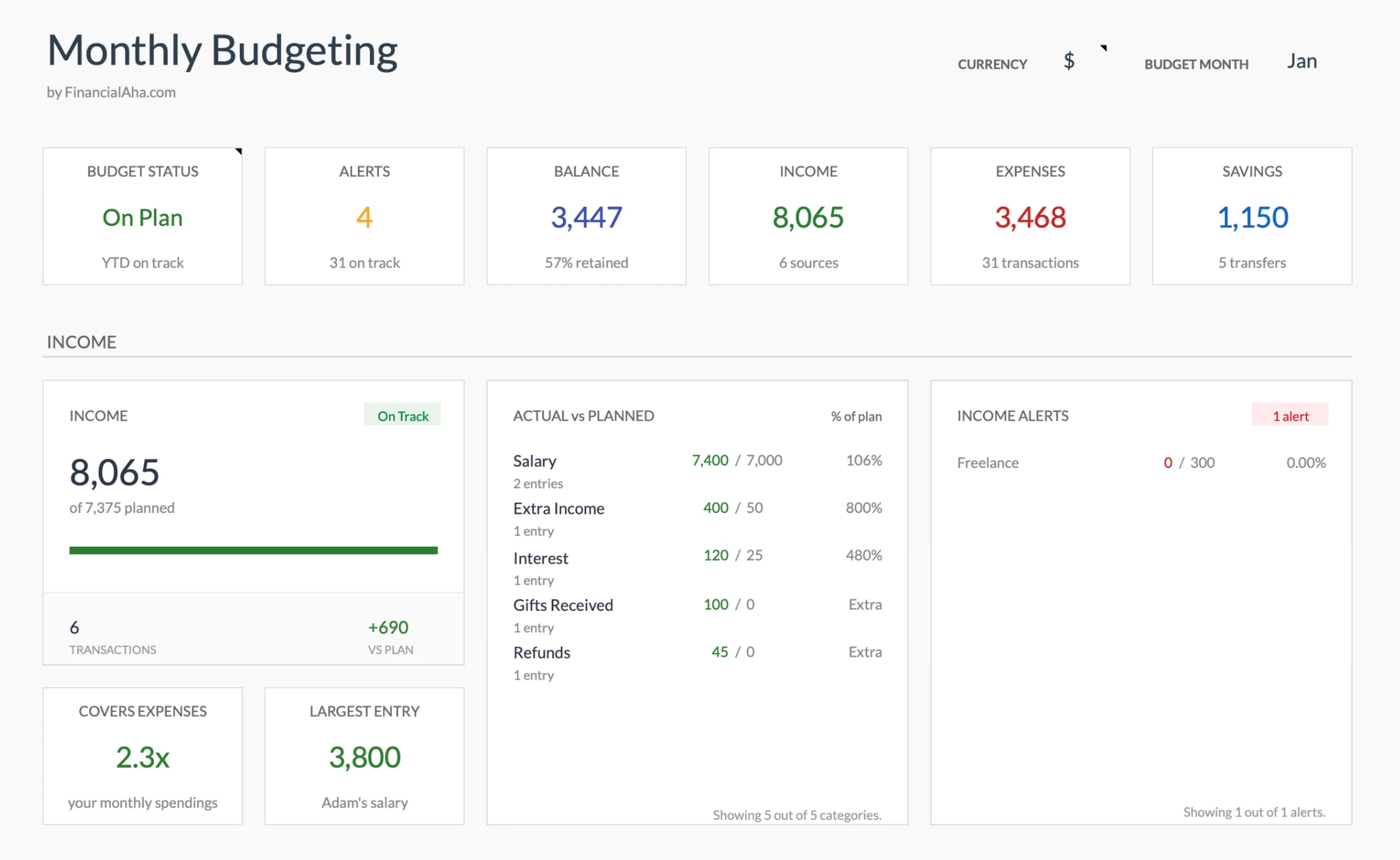
Explore o modelo para ver como ele gerencia orçamento, categorias e acompanhamento de despesas - tudo adaptável à sua realidade financeira local.
- Seletor de moeda integrado
- Categorias personalizáveis
- Acompanhamento de orçamento vs. realizado
- Gráficos e resumos visuais

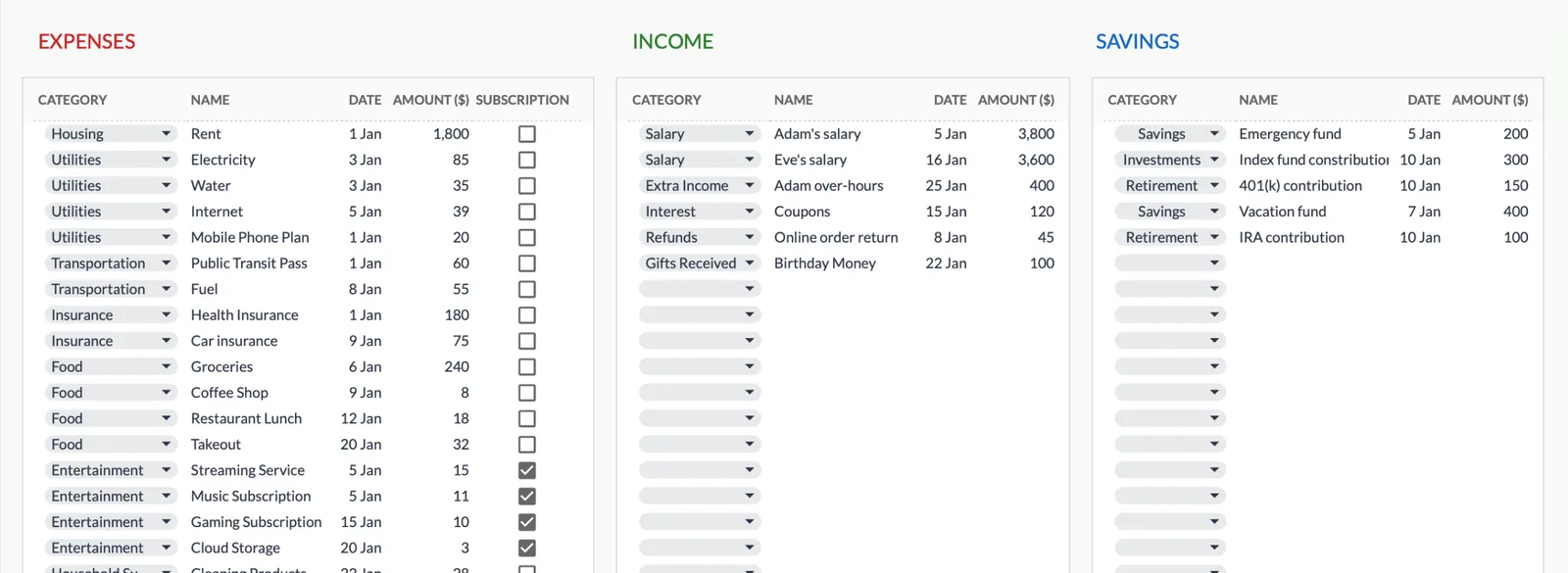
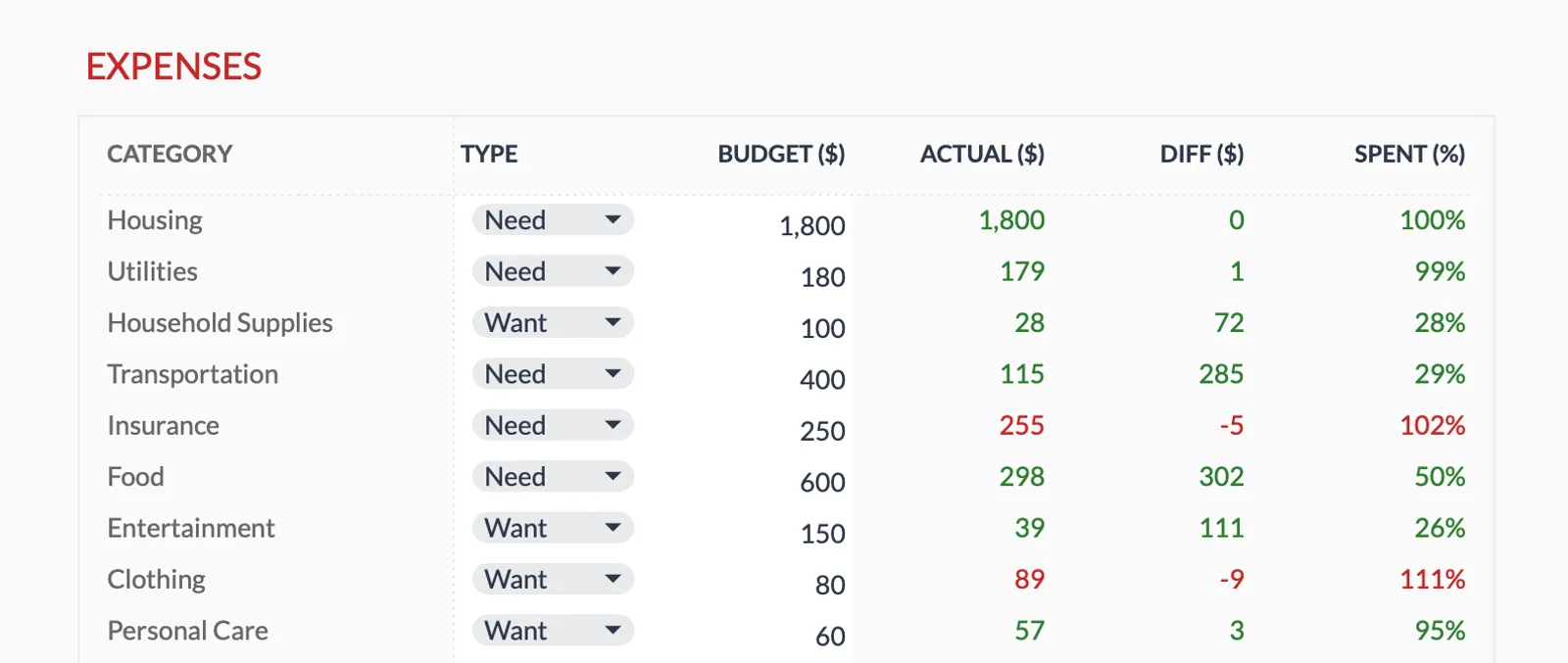
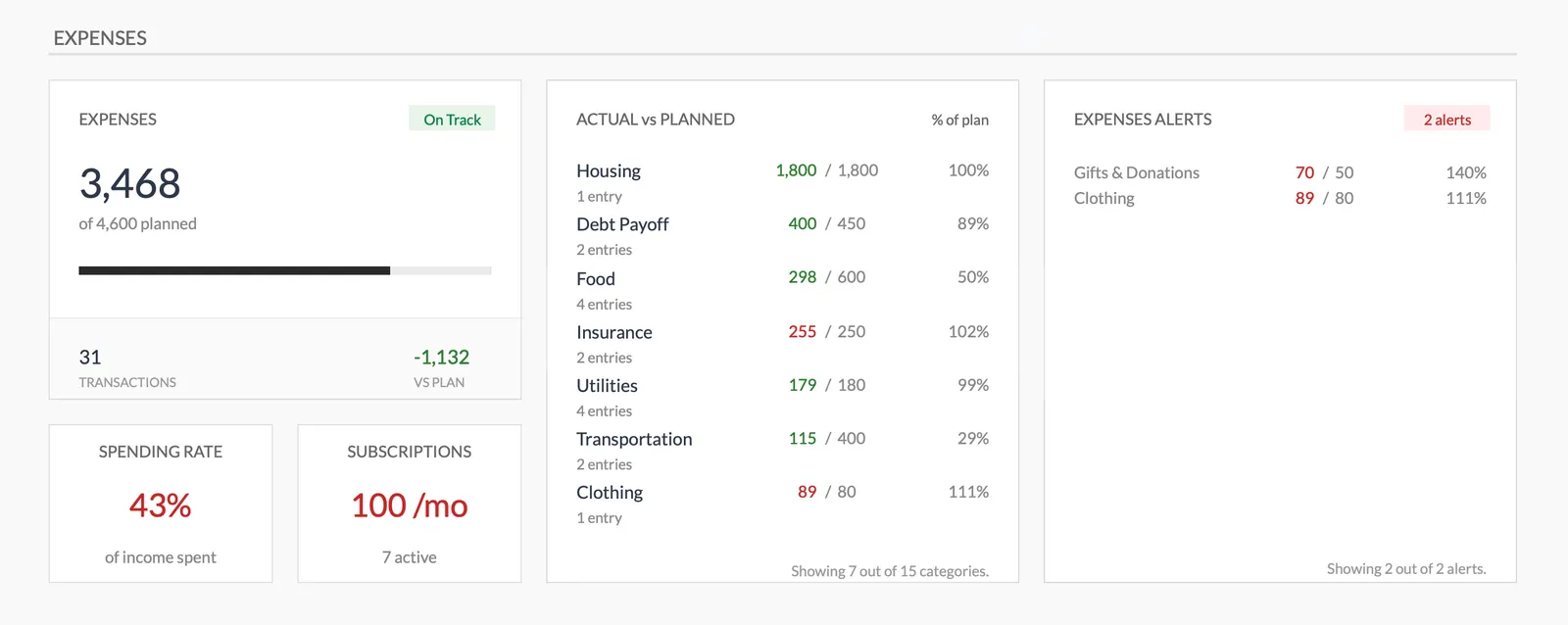
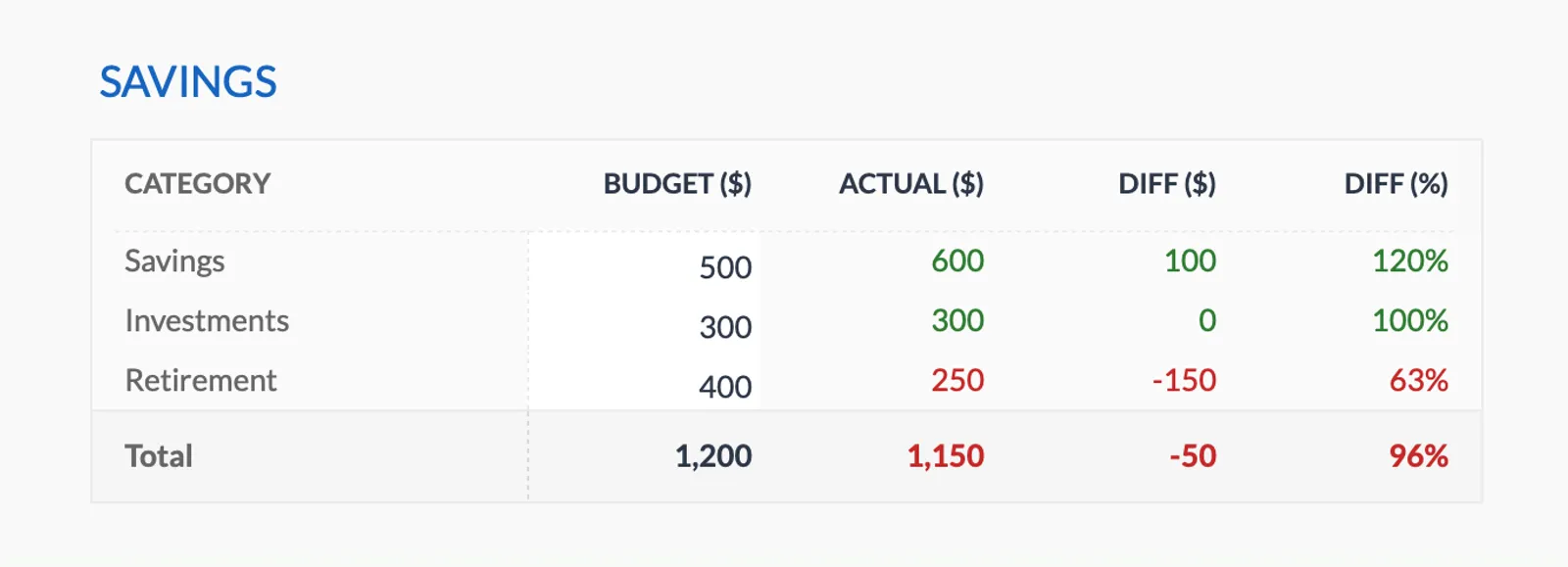
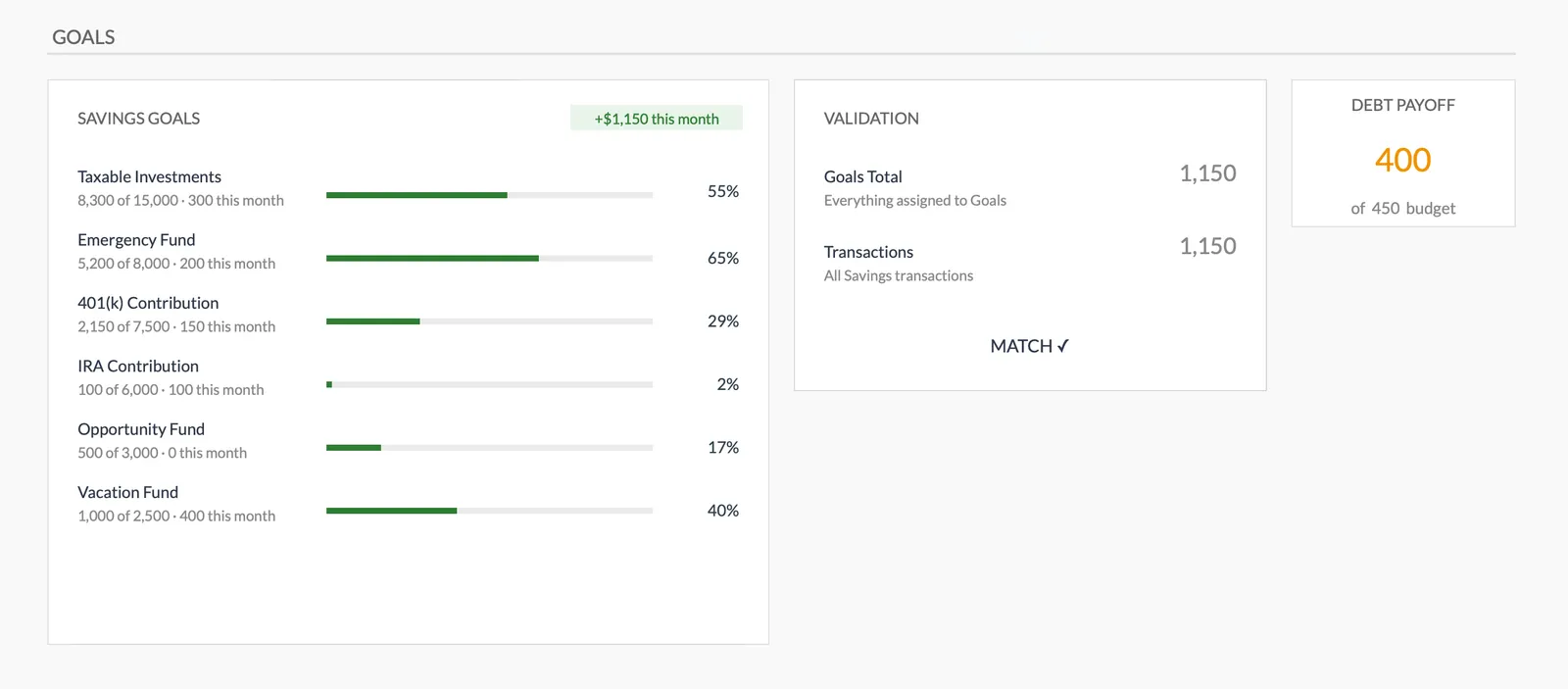
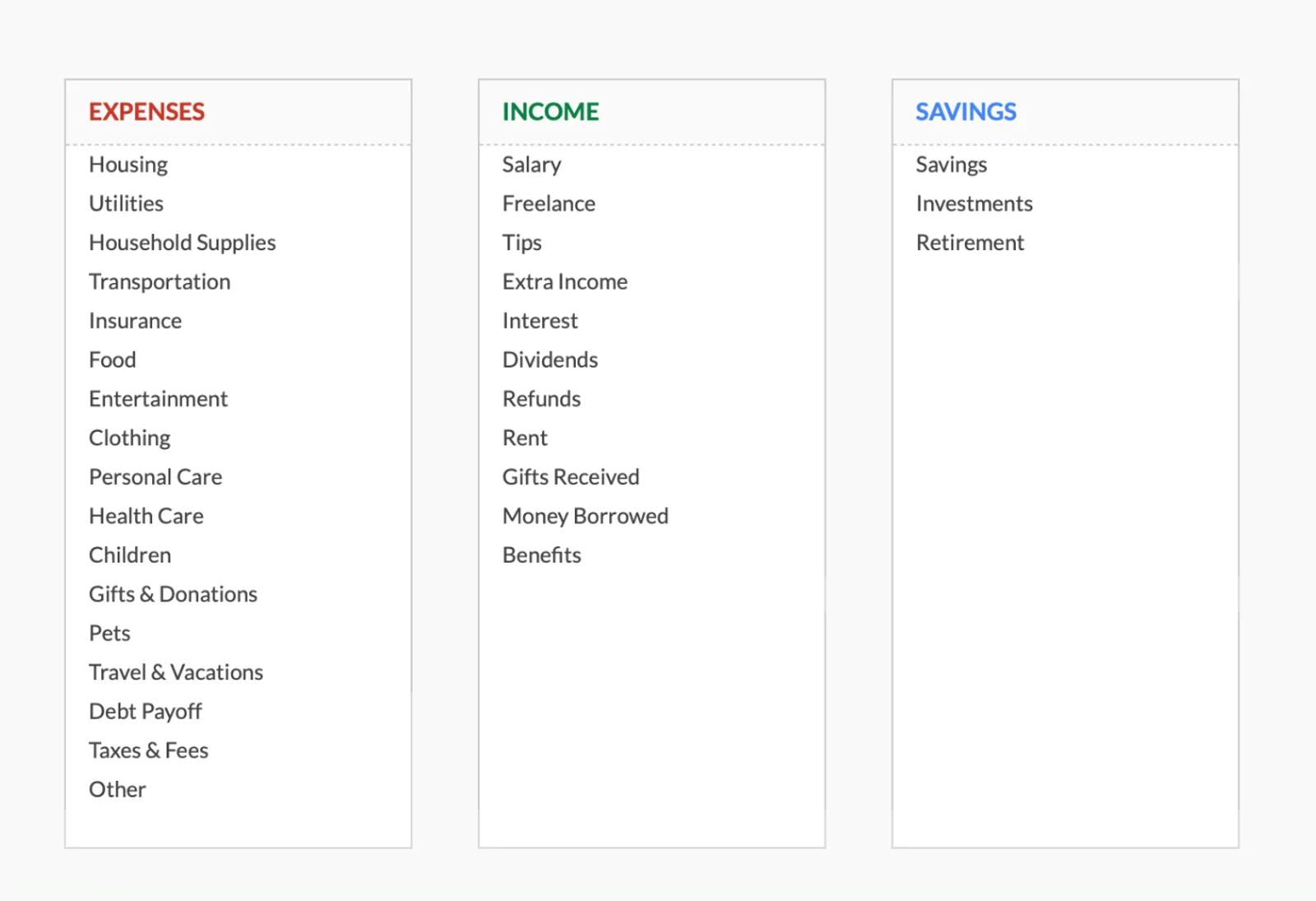
Dashboard with income, expenses, and savings at a glance
Log transactions with automatic categorization
Set targets per category and track actual spending
Visual breakdown of where your money goes
Track savings goals alongside your budget
Monitor progress toward financial goals
Fully customizable expense, income, and savings categories
Sources
Perguntas Frequentes
Monthly Budget Template for Singapore - FAQ
Does this template use Singapore dollars?
Yes - switch to SGD using the currency picker in the header. The formulas work the same in any denomination, so the math doesn't change.
Should I track CPF contributions in my budget?
CPF is deducted before your take-home pay, so it doesn't need a budget line. Just use your actual credited salary as income. If you make voluntary CPF top-ups, track those as a separate category since they come from your disposable income.
How do I budget for annual income tax?
Divide your expected annual tax bill by 12 and set that aside monthly. Singapore allows GIRO installments for tax payment, which effectively spreads the bill across the year. Check IRAS for your estimated tax based on income level.
Can I track SRS contributions?
Yes. Supplementary Retirement Scheme contributions (up to SGD 15,300 for citizens/PRs) qualify for tax relief. Add SRS as a budget category if you're making regular contributions.
Is there a Singapore-specific version?
The template is the same worldwide - designed to be customizable. This page explains how to adapt it for Singapore. The flexibility of Google Sheets means you can rename categories and set up the budget to match your financial situation.
How does this compare to Singapore budgeting apps like Seedly or DBS NAV Planner?
Apps like Seedly and DBS NAV Planner connect to your bank accounts for automated tracking. This template requires manual entry but offers more customization, costs a one-time fee, and keeps your data in your own Google Drive rather than shared with a financial institution.
Can't find the answer you're looking for? Contact our team
Pronto para comecar?
Baixe instantaneamente e comece a gerenciar suas financas, ou entre em contato conosco para criar um pacote de modelos personalizado para suas necessidades.