Maryland
Belastingplanner-sjabloon voor Maryland
Volg uw federale en Maryland-belastingplanning in Google Sheets. Maryland heeft staatse en districtsbelastingen op inkomsten om in te plannen.
In Depth
Staatsbelastings-Plus-Districtstructuur van Maryland
Maryland is een van de weinige staten waar elk district een eigen inkomstenbelasting bovenop het staatstarief heft. De districtstarieven lopen van ruwweg 2.25% tot 3.3%, en elk Maryland-district doet mee, zonder mogelijkheid om af te zien. In combinatie met de progressieve schijven van de staat, die tot tien niveaus tellen met een top van 6.5% voor belastingjaar 2026, kan het totale effectieve inkomstenbelastingtarief voor een Maryland-inwoner opmerkelijk hoog uitvallen, zeker in districts met tarieven aan de bovenkant zoals Howard of Montgomery County.
De D.C.-regio biedt interessante dynamiek voor Maryland-belastingplanning. Veel Maryland-inwoners pendelen naar Washington, D.C. of Virginia voor werk. Maryland belast inwoners op alle inkomsten ongeacht waar deze zijn verdiend, maar verleent krediet voor belastingen betaald aan andere staten. Voor degenen die in D.C. werken (dat niet-ingezetenenforenzen niet belast), is geen buitenlandse belastingkrediet van toepassing - de volledige Maryland staats- en districtsinkomstenbelasting is verschuldigd op dat inkomen.
De pensioenuitsluiting voor inwoners van 65 jaar en ouder kan het belastbare pensioeninkomen met een vastgesteld bedrag verlagen, al krimpt de uitsluiting dollar voor dollar met ontvangen uitkeringen uit de sociale zekerheid. Sociale zekerheid is volledig vrijgesteld van de staatsbelasting. De onroerendgoedbelastingen in Maryland verschillen per district, en in combinatie met de staats- en districtsinkomstenbelasting bereiken veel Maryland-huishoudens het federale SALT-plafond. Het volledige plaatje van inkomstenbelasting, districtsbelasting en onroerendgoedbelasting samen volgen is precies waar georganiseerde planning loont.
Maryland
Belastingplanning in Maryland
Maryland heeft een progressieve staatse inkomstenbelasting plus districtsinkomstenbelastingen die per locatie variëren. Planning voor beide niveaus is belangrijk voor nauwkeurige prognoses, vooral in de inkomenssterke districts nabij Washington, D.C.
Progressieve Inkomstenbelasting
Maryland heeft een progressieve inkomstenbelasting met meerdere schijven. Voor belastingjaar 2026 kent de staat tien schijven die lopen van 2% tot een toptarief van 6.5%.
Districtbelastingen
Alle Maryland-districts en de stad Baltimore heffen een lokale inkomstenbelasting tegen verschillende tarieven. Dit betekent dat het gecombineerde staats- en lokale tarief opmerkelijk hoog kan zijn voor inwoners in sommige districts.
Pensioeninkomsten
Maryland stelt uitkeringen uit de sociale zekerheid vrij van de staatsbelasting. De staat biedt ook een pensioenuitsluiting voor inwoners van 65 jaar en ouder, wat de belasting op pensioeninkomsten kan verminderen.
SALT-Overwegingen
Met gecombineerde staats- en districtsinkomstenbelastingtarieven plus onroerendgoedbelastingen is de federale SALT-aftrekplafond bijzonder impactvol voor veel Maryland-inwoners.
Haal de Jaarlijkse Belastingplanner
Aan de Slag
Het Sjabloon voor Maryland-Belastingen Gebruiken
Voer inkomsten in en identificeer het belastingtarief van uw district
Voeg alle inkomstenbronnen toe: lonen, zelfstandigeninkomen, beleggingen en pensioenuitkeringen. De staatsinkomstenbelasting van Maryland kent voor belastingjaar 2026 tien progressieve schijven van 2% tot 6.5%, en elk district heft daarnaast een eigen inkomstenbelasting met tarieven van 2.25% tot 3.3%. Uw district van inwoning bepaalt het lokale tarief, waardoor het gecombineerde effectieve tarief aan de bovenkant tot bijna 10% kan oplopen.
Volg de gecombineerde staat-plus-districtbelasting
Gebruik de notitiessectie om het inkomstenbelastingtarief van uw district naast de staattarieven vast te leggen. De districts Montgomery, Howard en Prince George's nabij Washington, D.C. hebben elk verschillende lokale tarieven. Het gecombineerde staats- en districtinkomstenbelastingtarief bepaalt uw werkelijke Maryland-inkomstenbelastingplicht.
Noteer uitsluitingen voor militaire pensioen- en pensioenuitkeringen
Maryland laat militaire gepensioneerden een deel van hun pensioen aftrekken, tot $12,500 onder de 55 jaar en tot $20,000 vanaf 55 jaar, voor belastingjaar 2026. De staat biedt daarnaast een pensioenuitsluiting voor inwoners van 65 jaar en ouder die het belastbare pensioeninkomen met een vastgesteld bedrag verlaagt, dat zelf wordt verminderd met ontvangen uitkeringen uit de sociale zekerheid. Voer pensioeninkomsten per bron in om bij te houden welke vrijstellingen van toepassing zijn.
Controleer de impact van het SALT-aftrekplafond
Met gecombineerde staats- en districtsinkomstenbelastingtarieven die tot bijna 10% kunnen oplopen, plus onroerendgoedbelastingen die sterk per district verschillen, bereiken veel Maryland-inwoners het federale SALT-aftrekplafond. Volg staatsinkomstenbelasting, districtsinkomstenbelasting en onroerendgoedbelasting samen om uw totale SALT-bedrag af te zetten tegen het plafond.
Plan geschatte betalingen voor staat en district samen
Maryland-geschatte betalingen dekken zowel staats- als districtsinkomstenbelasting in één betaling aan de Comptroller. Gebruik de driemaandelijkse tracker om betalingen op basis van uw gecombineerde tarief in te plannen. Voor inwoners met inkomsten uit werk in D.C. of Virginia: zorg ervoor dat Maryland inwoners belast op alle inkomsten, ongeacht waar deze zijn verdiend.
Zie het in Actie
Hoe de belastingplanner eruit ziet
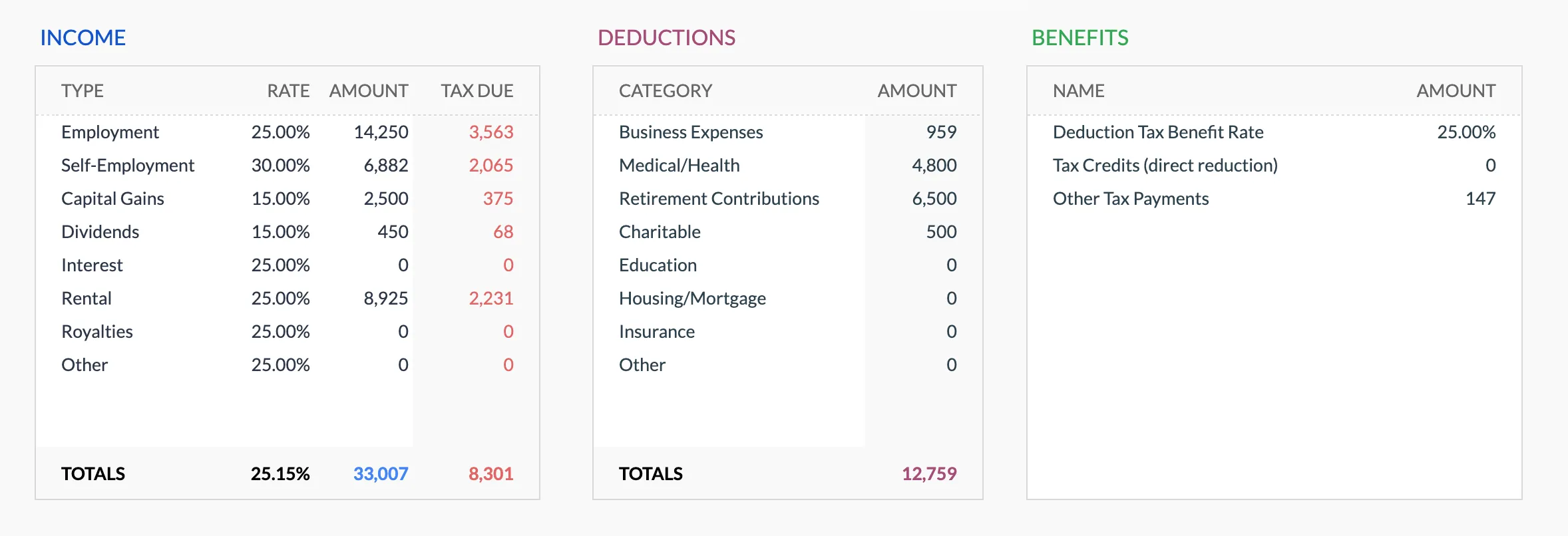
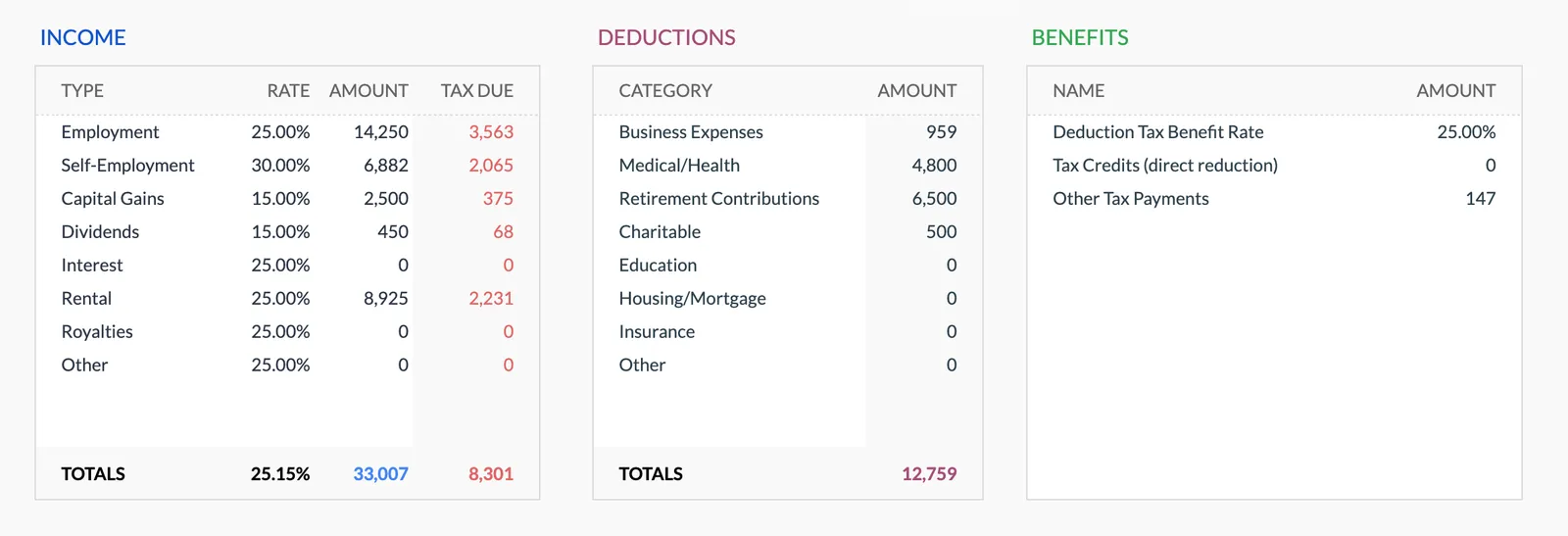
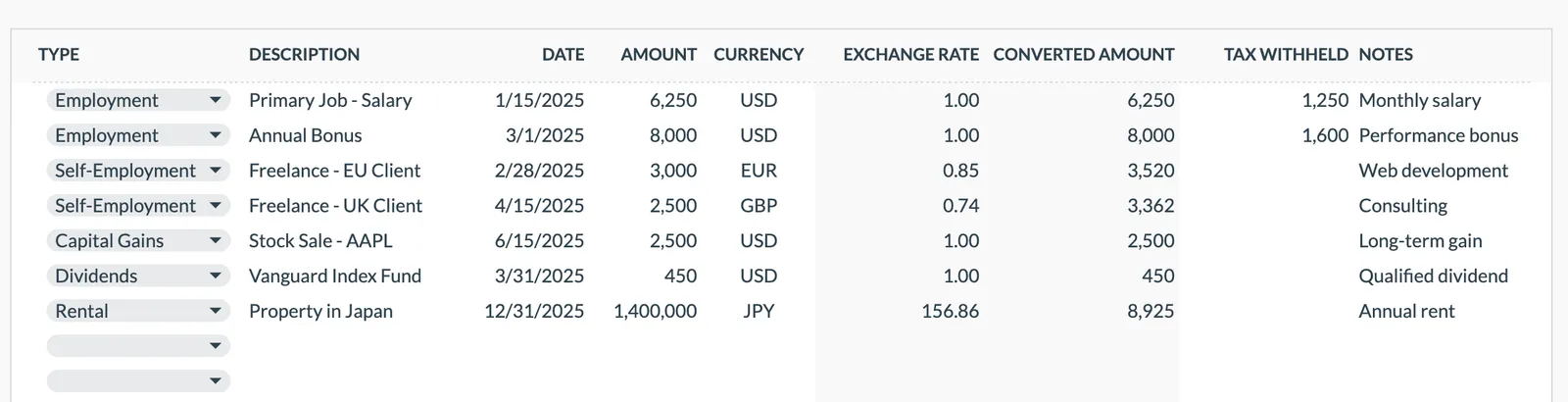
Bekijk het sjabloon om te zien hoe het inkomsten, aftrekposten, kortingen en geschatte kwartaalbetalingen bijhoudt.
- Dashboard met jaarlijks belastingoverzicht
- Inkomsten bijhouden per bron
- Organisatie van aftrekposten en kortingen
- Tracker voor kwartaalbetalingen
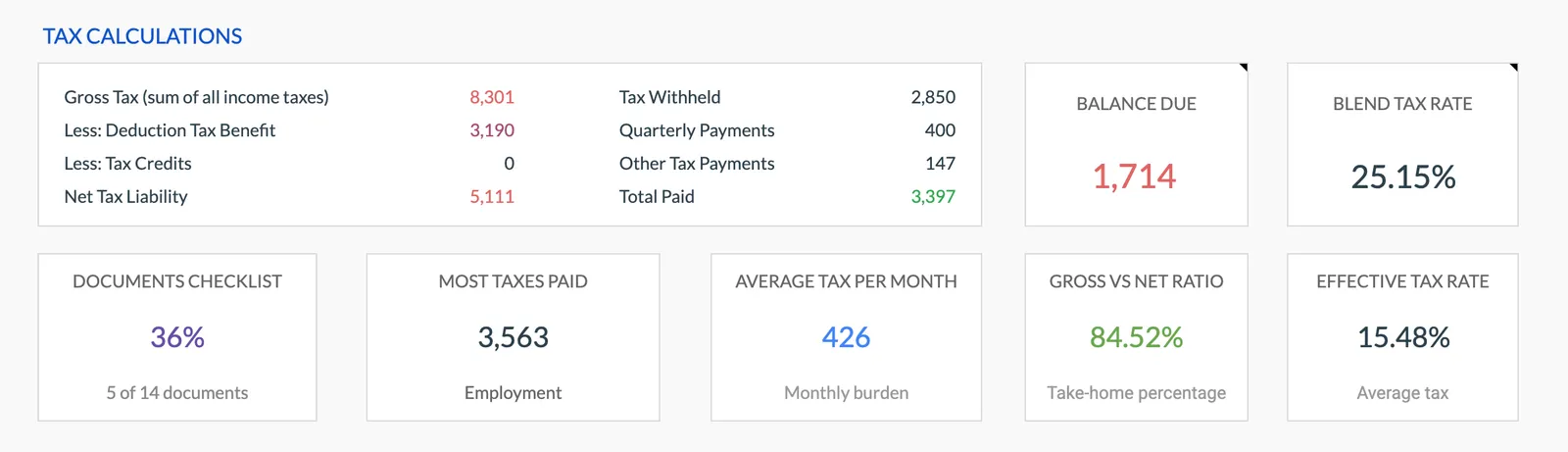
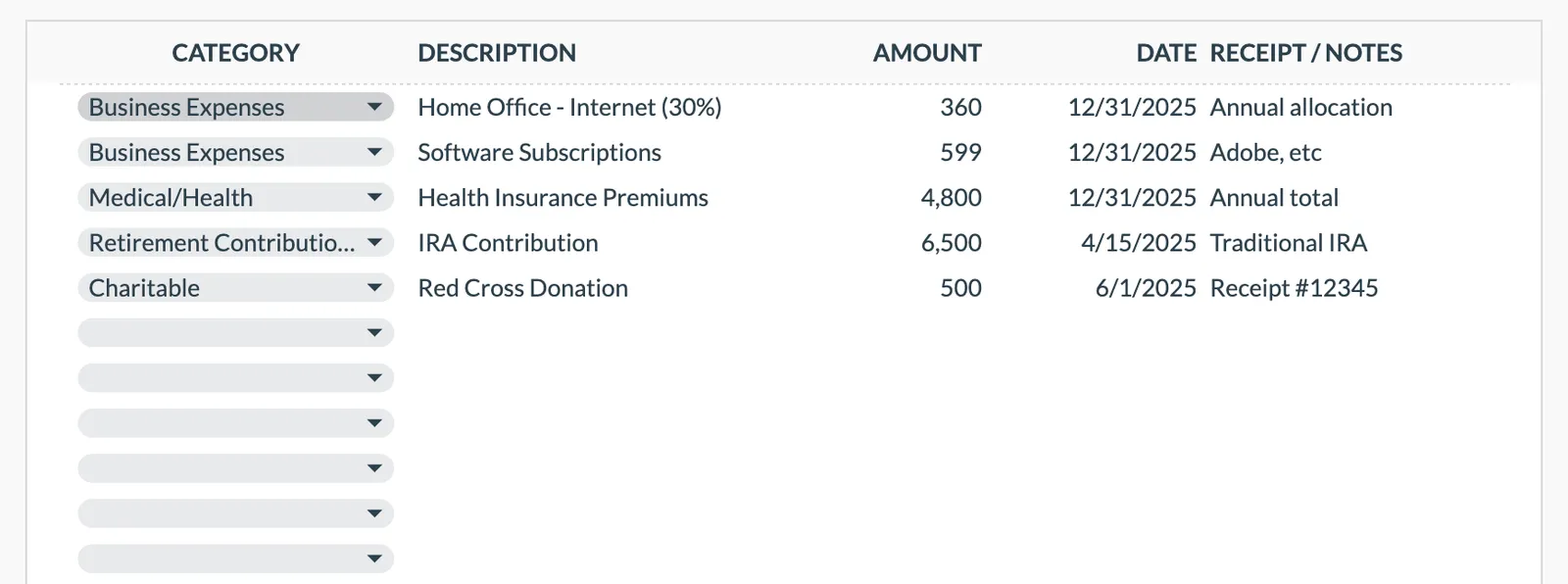
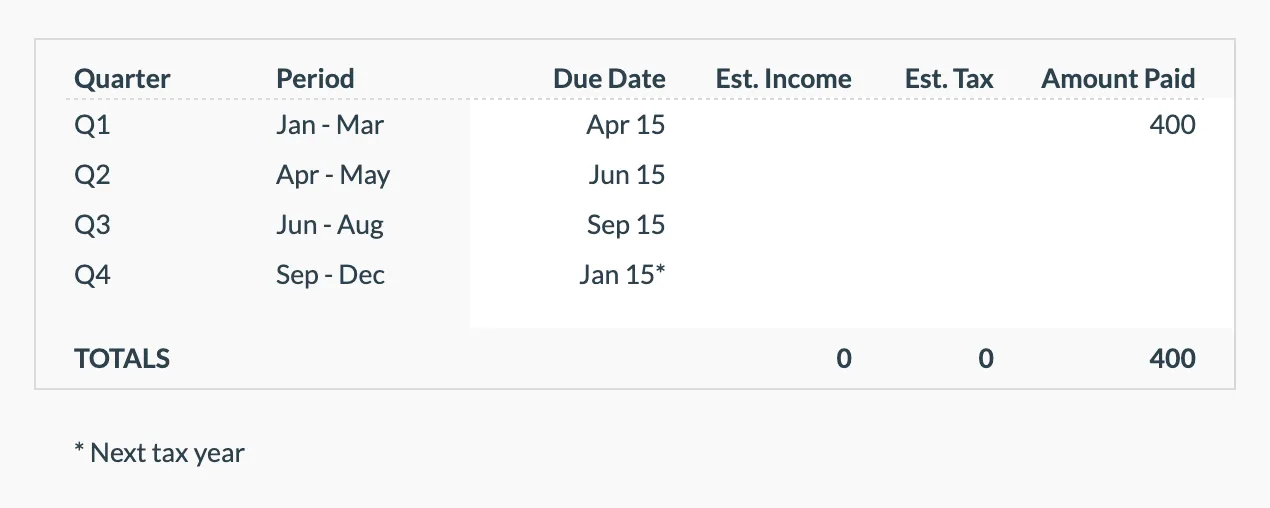
Annual tax overview with key figures
Detailed tax breakdown and projections
Track all income sources for tax purposes
Organize and track tax deductions
Plan and track quarterly estimated tax payments
Veelgestelde Vragen
Belastingplanning in Maryland - FAQ
Hoe werkt de districtsinkomstenbelasting in Maryland?
Elk district in Maryland en de stad Baltimore heft een lokale inkomstenbelasting bovenop de staatsinkomstenbelasting. De districtstarieven lopen voor belastingjaar 2026 van ongeveer 2.25% [1] tot 3.3%, afhankelijk van de jurisdictie. Anders dan in sommige staten waar lokale belastingen optioneel zijn of tot bepaalde steden beperkt blijven, betaalt elke Maryland-inwoner een districtsinkomstenbelasting. Het gecombineerde staats- en districtstarief kan tot bijna 10% oplopen voor inwoners van districts met hoge tarieven in de hoogste staatsschijf.
Wat zijn de staats inkomstenbelastingtarieven van Maryland?
Sinds belastingjaar 2025 kent Maryland tien progressieve schijven voor de staatsinkomstenbelasting met tarieven van 2% tot 6.5%. De districtsinkomstenbelasting, die van 2.25% tot 3.3% loopt, komt daar bovenop. Het effectieve gecombineerde tarief hangt af van zowel uw inkomensniveau als uw district van inwoning. Inwoners van Montgomery County, Howard County en andere jurisdicties in de regio Washington, D.C. hebben vaak te maken met de hoogste gecombineerde tarieven [2].
Wordt militaire pensioen in Maryland belast?
Deels. Maryland staat een aftrek toe voor militair pensioen in plaats van een volledige vrijstelling, ter waarde van maximaal $12,500 voor ontvangers onder de 55 jaar en maximaal $20,000 vanaf 55 jaar voor belastingjaar 2026. Bedragen boven de aftrek worden belast tegen de gewone staats- en districtstarieven, waarmee Maryland nog altijd gunstiger blijft dan staten die militaire pensioenen volledig belasten.
Hoe werkt de pensioenuitsluiting voor Maryland-inwoners van 65 jaar en ouder?
Maryland biedt een pensioenuitsluiting waarmee inwoners van 65 jaar en ouder een vastgesteld bedrag aan pensioen- en pensioeninkomsten buiten het belastbaar staatsinkomen kunnen houden. De uitsluiting, ongeveer $41,200 voor belastingjaar 2025, wordt dollar voor dollar verminderd met ontvangen uitkeringen uit de sociale zekerheid in plaats van via een inkomensafbouw. De uitkeringen uit de sociale zekerheid zelf zijn ongeacht het inkomensniveau volledig vrijgesteld van de staatsbelasting in Maryland. De combinatie van de pensioenuitsluiting en de vrijstelling voor sociale zekerheid kan het effectieve tarief op pensioeninkomsten merkbaar verlagen.
Wat gebeurt er als ik in Maryland woon maar in D.C. of Virginia werk?
Maryland belast inwoners op al hun inkomsten, ongeacht waar deze zijn verdiend. Werkt u in D.C., dat niet-ingezetenenforenzen niet belast, dan bent u de volledige staats- en districtsbelasting van Maryland over dat inkomen verschuldigd zonder krediet voor een andere staat. Werkt u in Virginia, dan zorgt de wederkerigheidsregeling voor lonen tussen beide staten ervoor dat Virginia die lonen niet belast, zodat zij alleen in Maryland worden opgegeven en belast. Veel Maryland-inwoners in de regio Washington, D.C. bevinden zich in deze situatie, en de districtslaag maakt het gecombineerde tarief bijzonder relevant om bij te houden.
Kunt u het antwoord niet vinden dat u zoekt? Neem contact op met ons team
Officiële belastingbronnen
Voor actuele tarieven, formulieren en aangiftedeadlines specifiek voor Maryland:
Sources
Organiseer je belastingplanning voor Maryland
Eenmalige aankoop. Geen abonnement. Uw financiële gegevens blijven in uw Google Drive.
Tax rules, rates, and contribution limits change, and official publications can themselves lag behind the law in force. We review these figures on a best-effort basis against sources we consider authoritative, but we cannot guarantee they are current, complete, or that better sources do not exist, and nothing here is tax, legal, or financial advice. For decisions, the relevant government authority is the reference. Last reviewed: August 2026.