Maryland
Tax Planner Template for Maryland
Track your federal and Maryland state tax planning in Google Sheets. Maryland has both state and county income taxes to plan for.
In Depth
Maryland's State-Plus-County Tax Structure
Maryland is one of the few states where every county levies its own income tax on top of the state rate. The county rates range from roughly 2.25% to 3.3%, and every Maryland county participates, with no opting out. Combined with the state's graduated brackets, which run to ten tiers topping out at 6.5% for the 2026 tax year, the total effective income tax rate for a Maryland resident can be notably high, particularly in counties with rates at the upper end like Howard or Montgomery County.
The D.C. metro area creates an interesting dynamic for Maryland tax planning. Many Maryland residents commute to Washington, D.C. or Virginia for work. Maryland taxes residents on all income regardless of where it is earned, but provides a credit for taxes paid to other states. For those working in D.C. (which does not tax non-resident commuters), no out-of-state credit applies - the full Maryland state and county tax is owed on that income.
The pension exclusion for residents 65 and older can reduce taxable retirement income by a set amount, though the exclusion shrinks dollar for dollar with any Social Security benefits received. Social Security is fully exempt from state tax. Property taxes in Maryland vary by county, and when combined with state and county income taxes, many Maryland households hit the federal SALT cap. Tracking the full picture of income tax, county tax, and property tax together is where organized planning pays off.
Maryland
Tax Planning in Maryland
Maryland has a graduated state income tax plus county income taxes that vary by location. Planning for both levels is important for accurate projections, especially in the high-income counties near Washington, D.C.
Graduated Income Tax
Maryland has a graduated income tax with multiple brackets. For the 2026 tax year the state has ten brackets running from 2% to a top rate of 6.5%.
County Income Taxes
All Maryland counties and Baltimore City levy a local income tax at varying rates. This means the combined state and local rate can be notably high for residents in some counties.
Retirement Income
Maryland exempts Social Security benefits from state tax. The state also offers a pension exclusion for residents 65 and older, which can reduce tax on retirement income.
SALT Considerations
With combined state and county income tax rates plus property taxes, the federal SALT deduction cap is particularly impactful for many Maryland residents.
Get the Annual Tax Planner
Getting Started
How to Use the Template for Maryland Taxes
Enter income and identify your county tax rate
Add all income sources - wages, self-employment, investments, and retirement distributions. Maryland's state income tax has ten graduated brackets from 2% to 6.5% for the 2026 tax year, and every county also levies its own income tax at rates ranging from 2.25% to 3.3%. Your county of residence determines the local rate, so the combined effective rate can approach 10% at the top end.
Track the combined state-plus-county burden
Use the notes section to record your county's income tax rate alongside the state brackets. Montgomery, Howard, and Prince George's counties near Washington, D.C. each have different local rates. The combined state and county rate is what determines your actual Maryland income tax obligation.
Note military pension and retirement exemptions
Maryland lets military retirees subtract part of their retirement pay, up to $12,500 under age 55 and up to $20,000 from age 55, for the 2026 tax year. The state also offers a pension exclusion for residents 65 and older that reduces taxable retirement income by a set amount, itself reduced by any Social Security benefits received. Enter retirement income by source to track which exemptions apply.
Review SALT deduction cap impact
With combined state and county income tax rates that can approach 10%, plus property taxes that vary significantly by county, many Maryland residents hit the federal SALT deduction cap. Track state income tax, county income tax, and property tax together to see your total SALT amount versus the cap.
Plan estimated payments for state and county together
Maryland estimated payments cover both state and county income tax in a single payment to the Comptroller. Use the quarterly tracker to plan payments based on your combined rate. For residents with income from D.C. or Virginia employment, note that Maryland taxes residents on all income regardless of where it is earned.
See It In Action
What the tax planner looks like
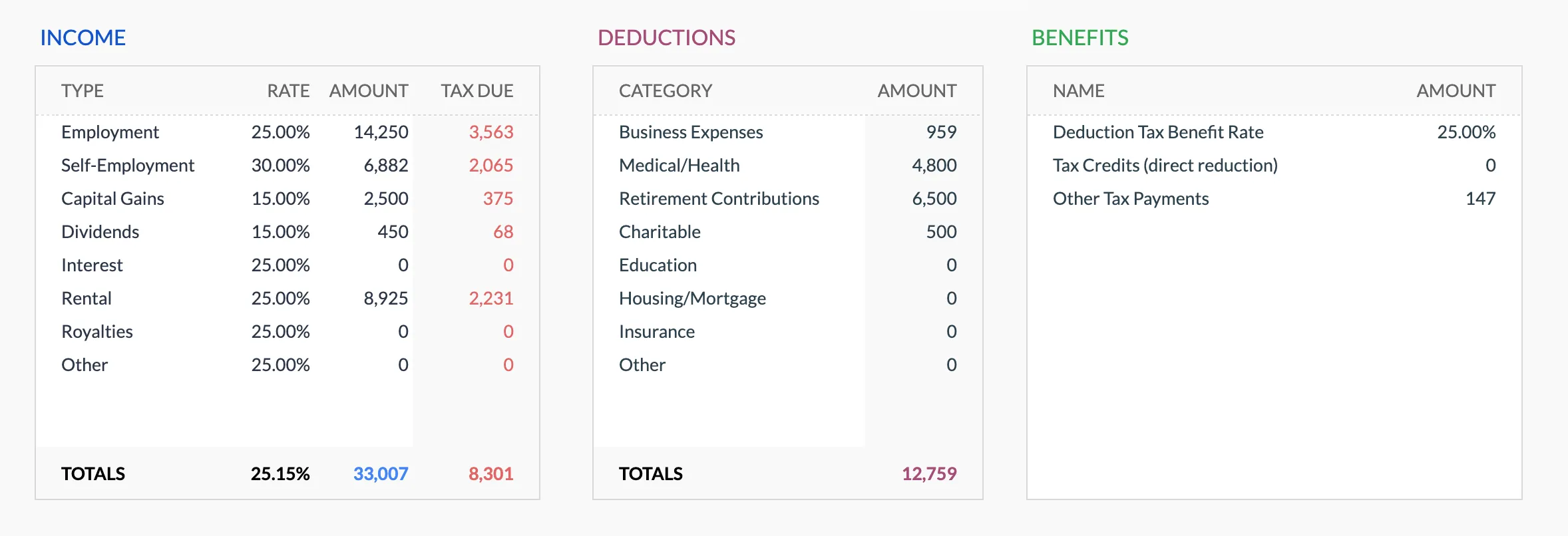
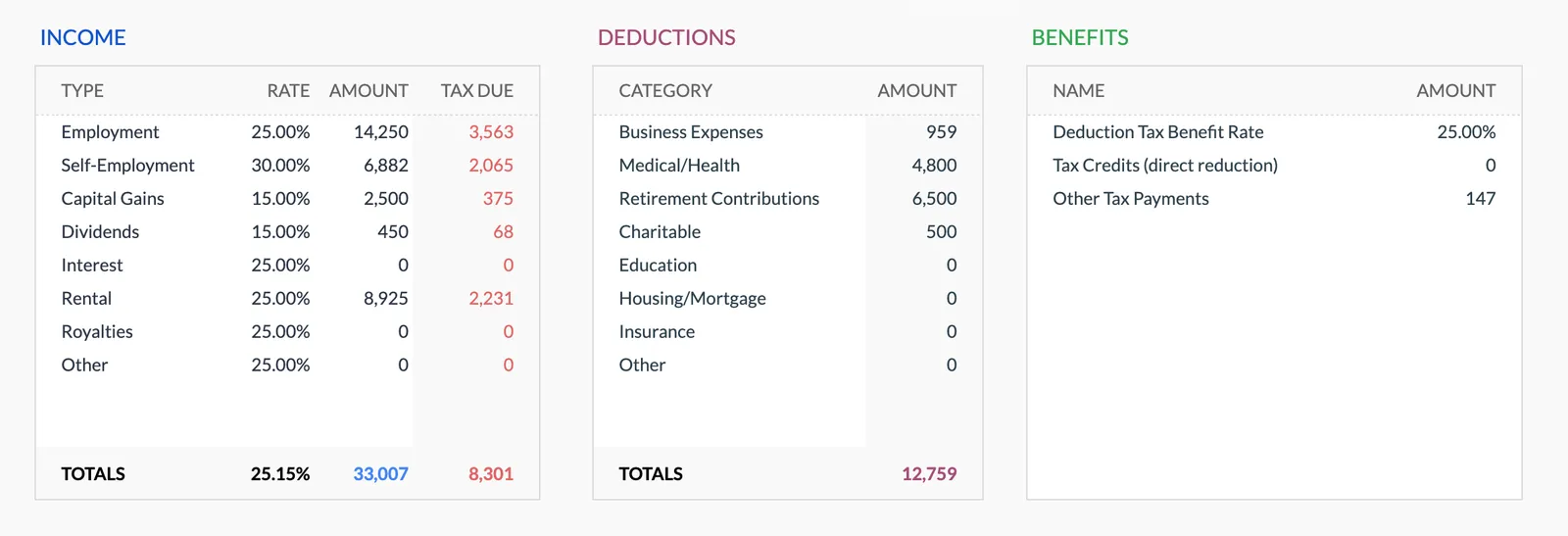
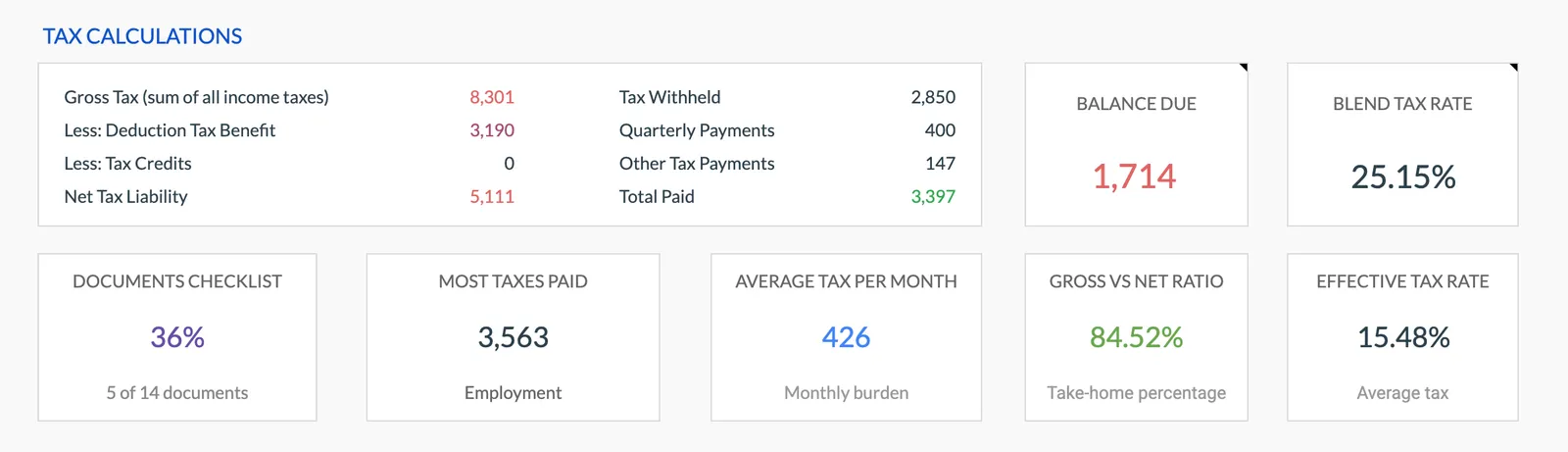
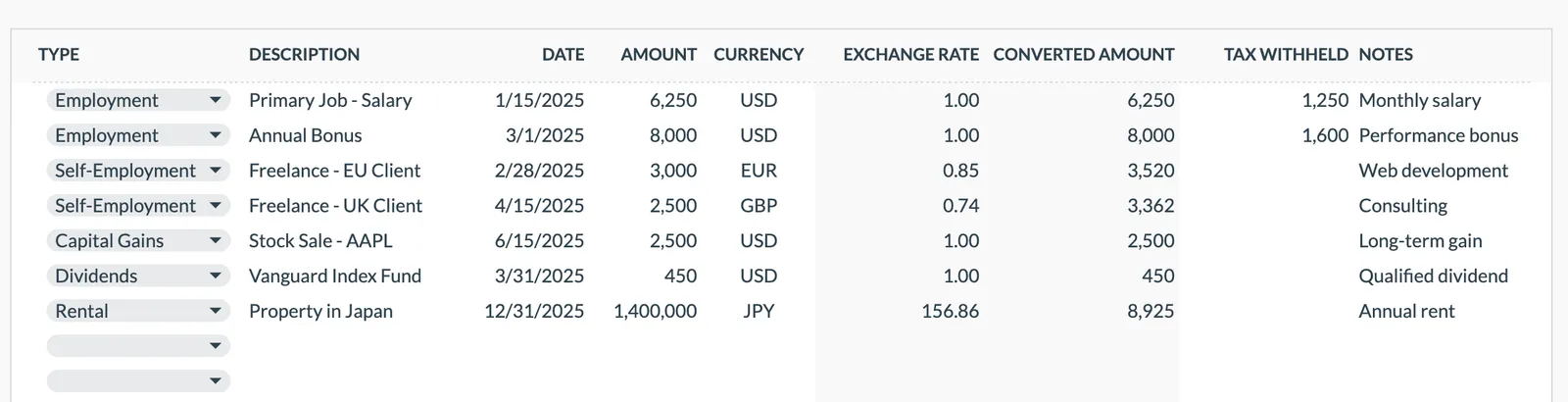
Browse through the template to see how it tracks income, deductions, credits, and estimated quarterly payments.
- Annual tax overview dashboard
- Income tracking by source
- Deductions and credits organizer
- Quarterly payment tracker
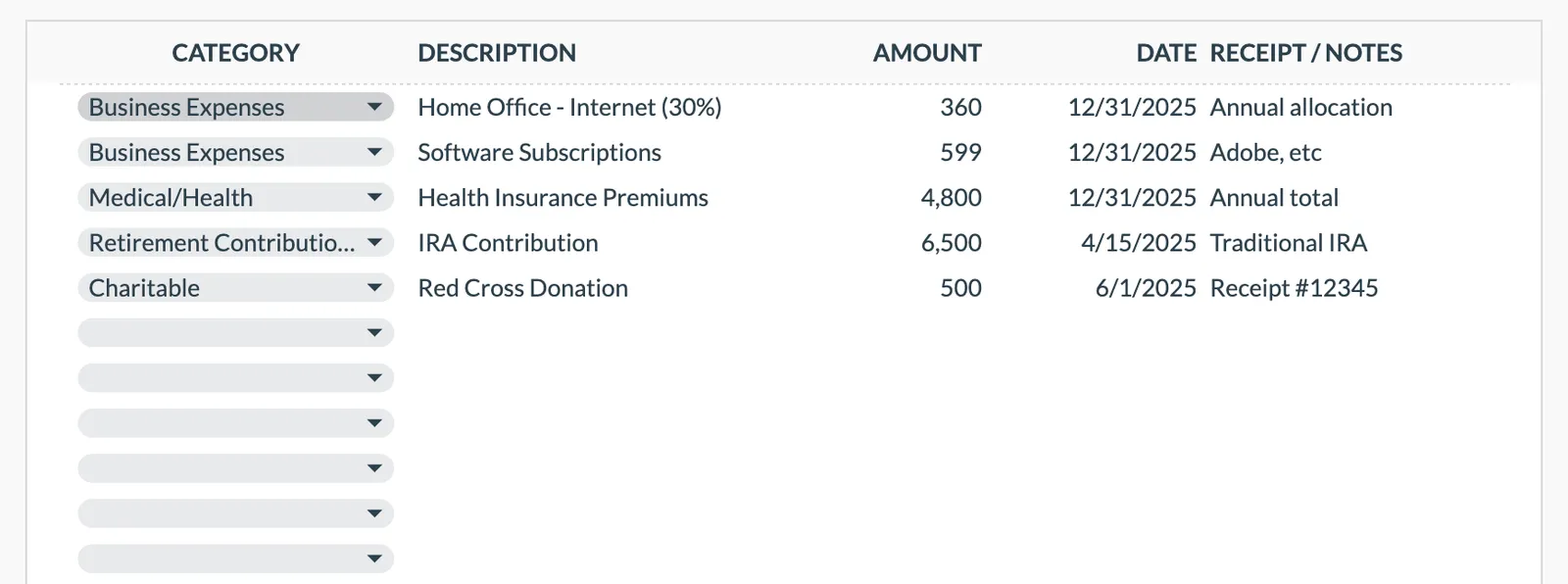
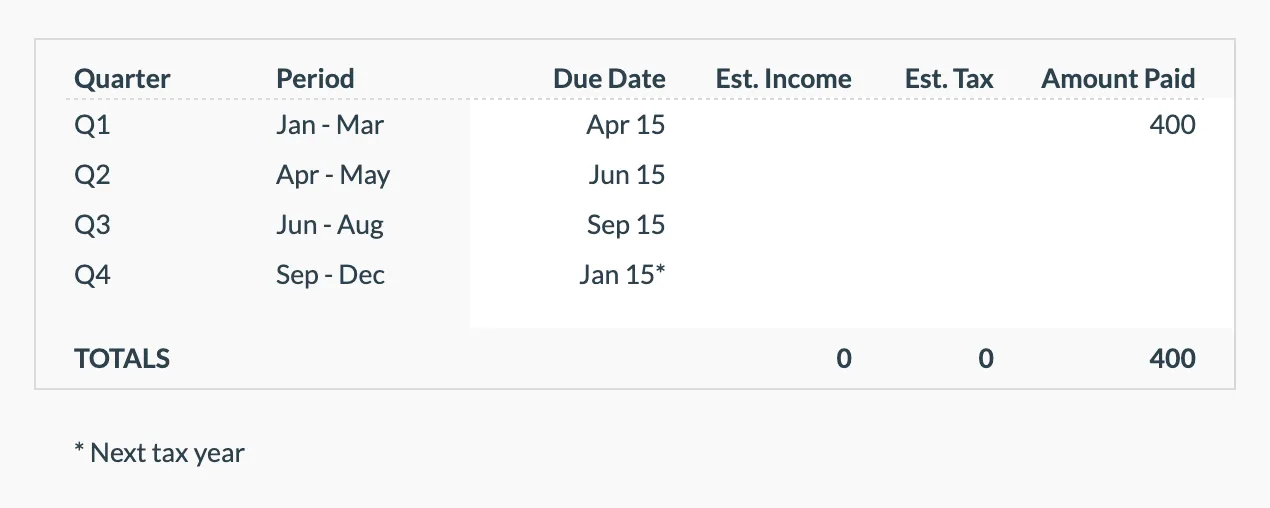
Annual tax overview with key figures
Detailed tax breakdown and projections
Track all income sources for tax purposes
Organize and track tax deductions
Plan and track quarterly estimated tax payments
Common Questions
Tax Planning in Maryland - FAQ
How does Maryland's county income tax work?
Every Maryland county and Baltimore City levies a local income tax on top of the state income tax. The county rates range from about 2.25% [1] to 3.3% for the 2026 tax year, depending on the jurisdiction. Unlike some states where local taxes are optional or limited to certain cities, every Maryland resident pays a county income tax. The combined state and county rate can approach 10% for residents in higher-rate counties at the top state bracket.
What are Maryland's state income tax rates?
Since tax year 2025 Maryland has ten graduated state income tax brackets with rates ranging from 2% to 6.5%. The county income tax, which runs from 2.25% to 3.3%, is added on top of these rates. The effective combined rate depends on both your income level and your county of residence. Residents of Montgomery County, Howard County, and other D.C.-area jurisdictions often face the highest combined rates [2].
Is military retirement pay taxed in Maryland?
Partly. Maryland allows a subtraction for military retirement income rather than a full exemption, worth up to $12,500 for recipients under 55 and up to $20,000 from age 55 for the 2026 tax year. Amounts above the subtraction are taxed at the regular state and county rates, which still leaves Maryland more favorable than states that tax military pensions in full.
How does the pension exclusion work for Maryland residents 65 and older?
Maryland offers a pension exclusion that allows residents 65 and older to exclude a set amount of pension and retirement income from state taxable income. The exclusion, roughly $41,200 for the 2025 tax year, is reduced dollar for dollar by any Social Security benefits received rather than by an income phase-out. Social Security benefits themselves are fully exempt from Maryland state tax regardless of income level. The combination of the pension exclusion and Social Security exemption can reduce the effective tax rate on retirement income noticeably.
What happens if I live in Maryland but work in D.C. or Virginia?
Maryland taxes residents on all income regardless of where it is earned. If you work in D.C., which does not tax non-resident commuters, you owe the full Maryland state and county tax on that income with no out-of-state credit. If you work in Virginia, wage reciprocity between the two states means Virginia does not tax those wages, so they are reported and taxed only in Maryland. Many Maryland residents in the D.C. metro area face this situation, and the county tax layer makes the combined rate particularly relevant to track.
Can't find the answer you're looking for? Contact our team
Official Tax Resources
For current rates, forms, and filing deadlines specific to Maryland:
Organize your tax planning for Maryland
One-time purchase. No subscription. Your financial data stays in your Google Drive.
Tax rules, rates, and contribution limits change, and official publications can themselves lag behind the law in force. We review these figures on a best-effort basis against sources we consider authoritative, but we cannot guarantee they are current, complete, or that better sources do not exist, and nothing here is tax, legal, or financial advice. For decisions, the relevant government authority is the reference. Last reviewed: August 2026.