Iowa
Belastingplanner-sjabloon voor Iowa
Volg uw federale en Iowa-staatsbelastingplanning in Google Sheets. Iowa belast individueel inkomen sinds 2025 tegen een enkel vast tarief van 3.8%.
In Depth
De Overgang van Iowa naar een Vast Tarief
De inkomstenbelasting van Iowa onderging een van de snelste transformaties van alle staten. Nog in 2022 had Iowa een gestaffeld systeem met veel schijven en een toptarief van bijna 8.5%, een van de hogere tarieven in het Middenwesten. Een dat jaar aangenomen hervorming voegde de schijven stap voor stap samen, en een vervolgwet versnelde de afronding: sinds belastingjaar 2025 wordt al het belastbare inkomen belast tegen een enkel vast tarief van 3.8%, een jaar eerder en iets lager dan het oorspronkelijke schema.
Dezelfde hervorming veranderde waarop de belasting van toepassing is. Iowa begint zijn berekening nu bij het federale belastbare inkomen, zodat de federale keuze tussen standaardaftrek en specificeren rechtstreeks doorwerkt in de staatsaangifte, en Iowa houdt geen eigen standaardaftrek meer aan. De historische aftrek voor betaalde federale inkomstenbelastingen, een kenmerk dat Iowa met slechts enkele staten deelde, werd als onderdeel van de overstap afgeschaft.
Iowa is opvallend royaal met pensioeninkomen. Inwoners van 55 jaar en ouder, arbeidsongeschikte belastingplichtigen en kwalificerende nabestaande echtgenoten kunnen kwalificerend pensioeninkomen uitsluiten van staatsbelasting, waaronder pensioenen, 401(k)-distributies, IRA-opnames en annuïteiten uit gekwalificeerde plannen. Socialezekerheidsuitkeringen zijn voor iedereen vrijgesteld. Deze combinatie is een belangrijke factor voor wie een pensioen in Iowa plant.
Iowa
Belastingplanning in Iowa
Iowa voltooide in 2025 een meerjarige hervorming en verving de gestaffelde schijven door een enkel vast tarief van 3.8%. De staat begint zijn berekening nu bij het federale belastbare inkomen, waardoor beide niveaus nauw met elkaar verbonden blijven.
Vaste Inkomstenbelasting
Iowa belast individueel inkomen tegen een vast tarief van 3.8%, van kracht sinds belastingjaar 2025 [1]. Daarmee werd een hervorming afgerond die in 2022 begon, een jaar eerder en tegen een iets lager tarief dan de 3.9% die oorspronkelijk voor 2026 gepland stond.
Federaal Belastbaar Inkomen als Uitgangspunt
Sinds 2023 begint de Iowa-aangifte bij het federale belastbare inkomen, na de federale standaardaftrek of gespecificeerde aftrek. Iowa heeft geen eigen standaardaftrek meer, en de oude aftrek voor betaalde federale belastingen werd als onderdeel van dezelfde hervorming afgeschaft.
Pensioeninkomen
Iowa stelt kwalificerend pensioeninkomen (pensioenen, 401(k)-distributies, IRA-opnames en annuïteiten uit gekwalificeerde plannen) vrij voor inwoners van 55 jaar en ouder, arbeidsongeschikte belastingplichtigen en kwalificerende nabestaande echtgenoten. Socialezekerheidsuitkeringen zijn voor iedereen vrijgesteld, ongeacht leeftijd of inkomen.
Onroerende-goederenbelasting
Iowa's onroerende-goederenbelastingtarieven zijn gematigd. Een homestead-krediet is beschikbaar voor primaire woningen.
Haal de Jaarlijkse Belastingplanner
Aan de Slag
Hoe u het sjabloon voor Iowa-belastingen gebruikt
Voer inkomen in onder het vaste tarief van 3.8%
Voeg alle inkomensbronnen toe - lonen, zelfstandige werkzaamheden, investeringen en pensioendistributies. Sinds belastingjaar 2025 belast Iowa individueel inkomen tegen een enkel vast tarief van 3.8%, dus staatsprognoses hangen niet langer af van de schijf waarin uw inkomen valt. Het sjabloon helpt u inkomen te organiseren voor zowel de federale gestaffelde schijven als de vaste staatsberekening.
Begin bij het federale belastbare inkomen
De Iowa-aangifte begint bij het federale belastbare inkomen, nadat de federale standaardaftrek of gespecificeerde aftrek is toegepast. Iowa heeft geen aparte standaardaftrek meer, en de historische aftrek voor betaalde federale belastingen werd in 2023 afgeschaft. In de praktijk betekent dit dat de keuzes die u aan de federale kant maakt rechtstreeks doorwerken in de staatsberekening, wat het samen volgen van beide bijzonder nuttig maakt.
Volg vrijstellingen van pensioeninkomen
Iowa stelt kwalificerend pensioeninkomen (pensioenen, 401(k)-distributies, IRA-opnames en annuïteiten uit gekwalificeerde plannen) vrij voor inwoners van 55 jaar en ouder, arbeidsongeschikte belastingplichtigen en kwalificerende nabestaande echtgenoten. Socialezekerheidsuitkeringen zijn voor alle inwoners vrijgesteld. Als u pensioeninkomen ontvangt, helpt het apart invoeren van elke bron om te verduidelijken hoeveel is vrijgesteld van Iowa-belasting en hoeveel belastbaar blijft.
Bekijk aftrekposten aan de federale kant
Omdat Iowa begint bij het federale belastbare inkomen, beïnvloeden aftrekposten zoals hypotheekrente, giften aan goede doelen en medische uitgaven uw Iowa-belasting via de federale aangifte in plaats van via een apart staatsformulier. Voer alle aftrekposten in het sjabloon in om te zien hoe de keuze tussen standaardaftrek en specificeren zowel de federale als de Iowa-verplichting tegelijk verandert.
Plan geschatte betalingen tegen het vastgelegde vaste tarief
Iowa vereist geschatte betalingen op inkomen dat niet aan inhouding onderhevig is. Nu het tarief is vastgelegd op een vaste 3.8%, is de verplichting van vorig jaar weer een redelijk referentiepunt, en Iowa staat veiligehavenmethoden toe die vergelijkbaar zijn met de IRS-aanpak. De driemaandelijkse tracker van het sjabloon helpt u elke betaling vast te leggen en het lopende totaal te vergelijken met uw geprojecteerde verplichting.
Zie het in Actie
Hoe de belastingplanner eruit ziet
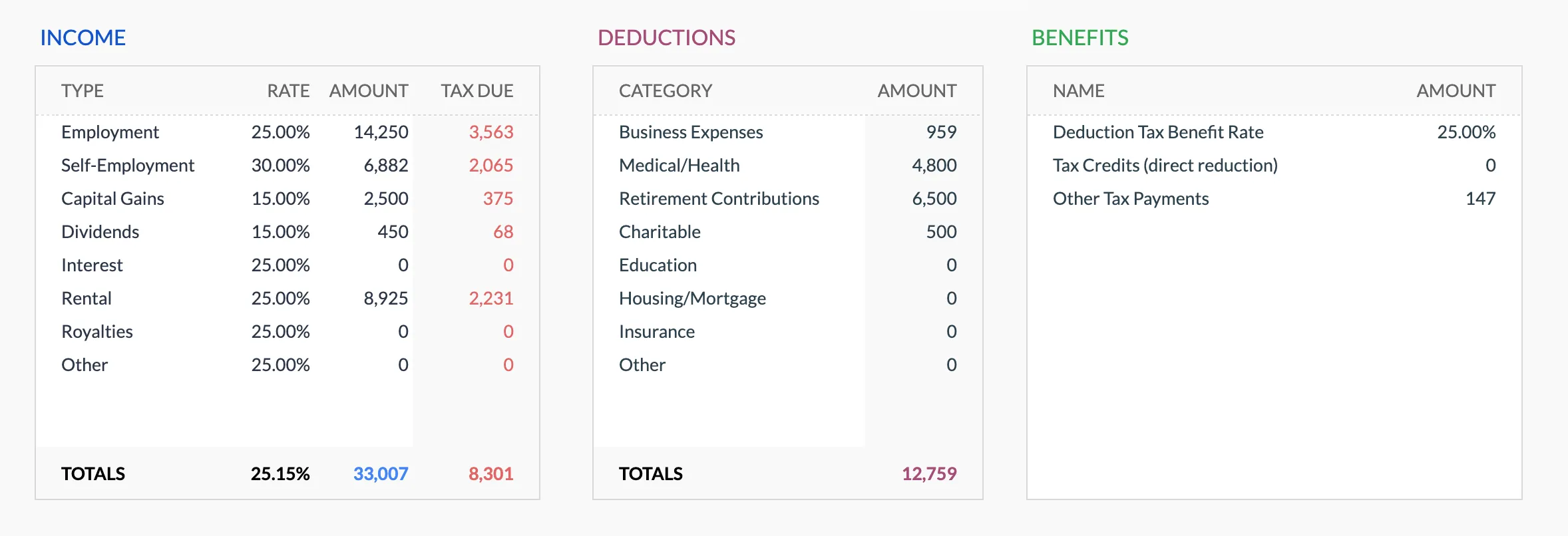
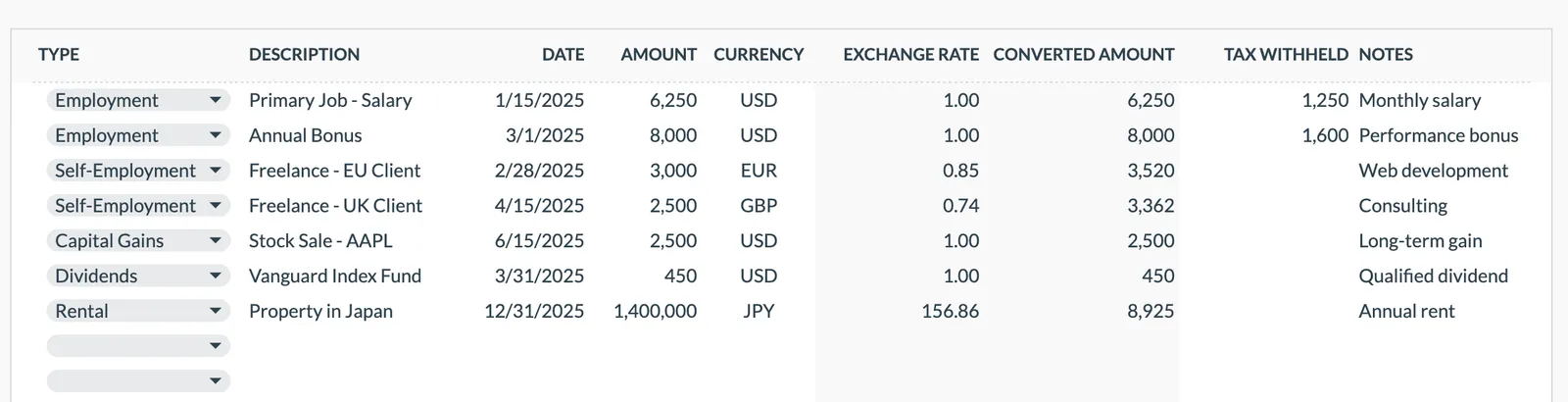
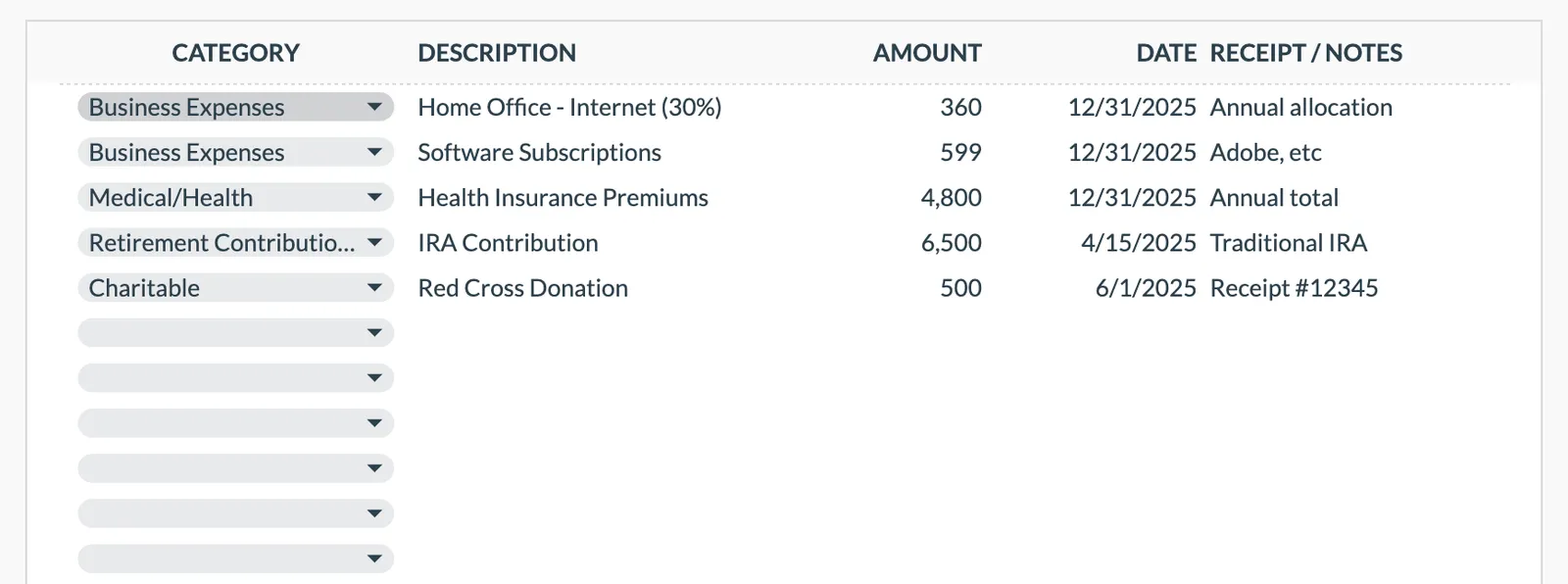
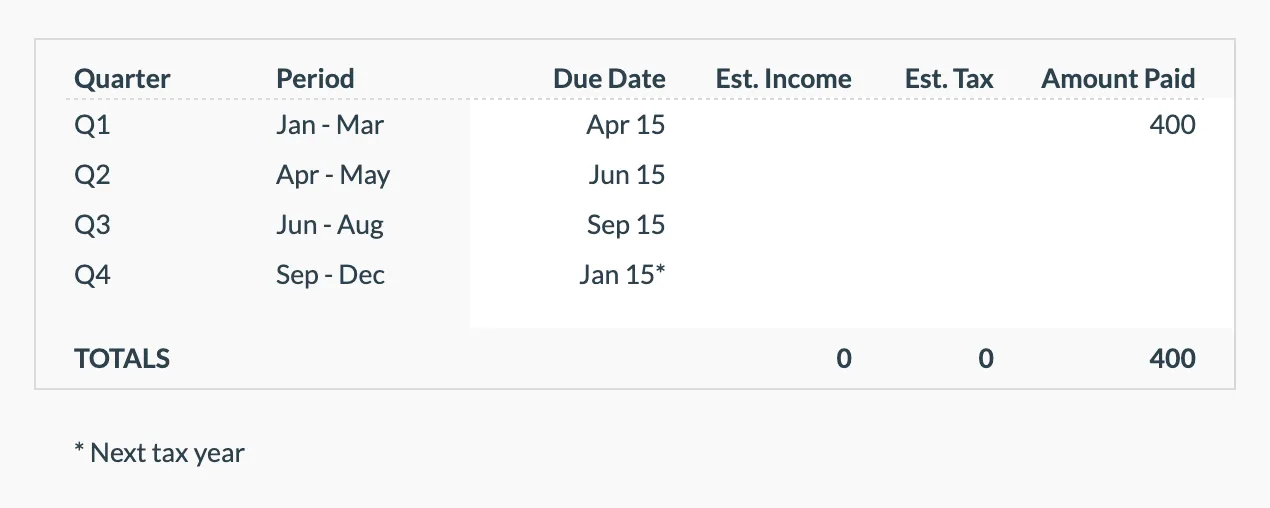
Bekijk het sjabloon om te zien hoe het inkomsten, aftrekposten, kortingen en geschatte kwartaalbetalingen bijhoudt.
- Dashboard met jaarlijks belastingoverzicht
- Inkomsten bijhouden per bron
- Organisatie van aftrekposten en kortingen
- Tracker voor kwartaalbetalingen
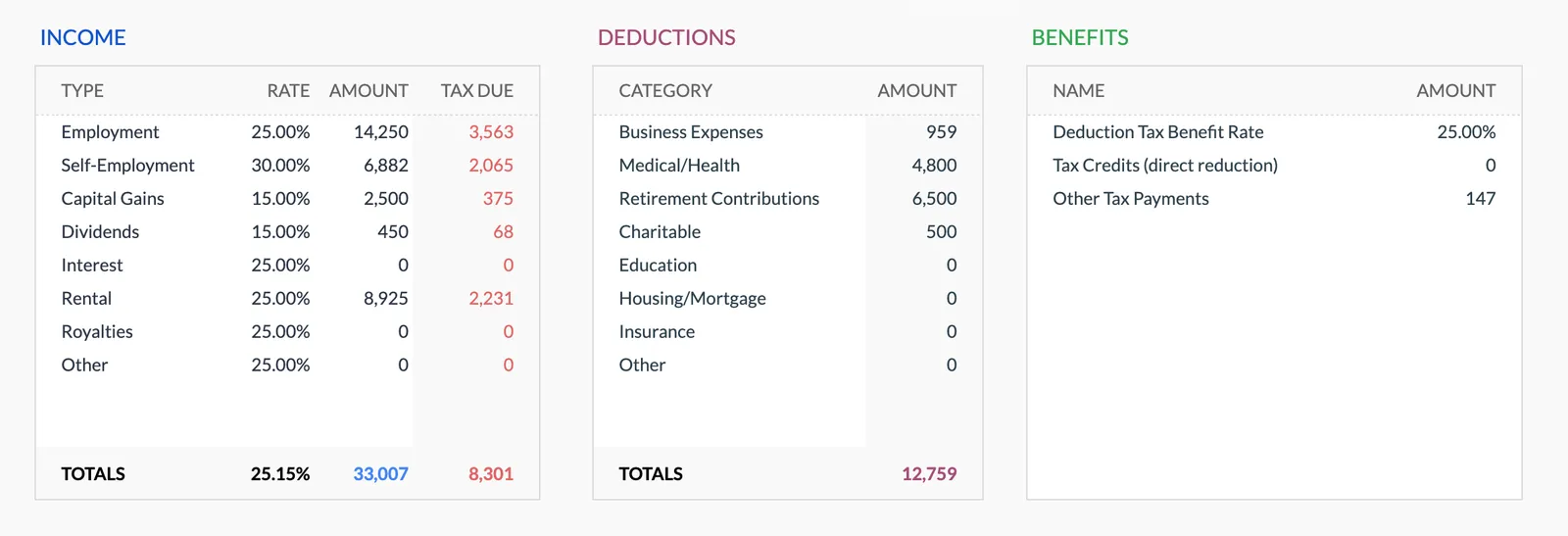
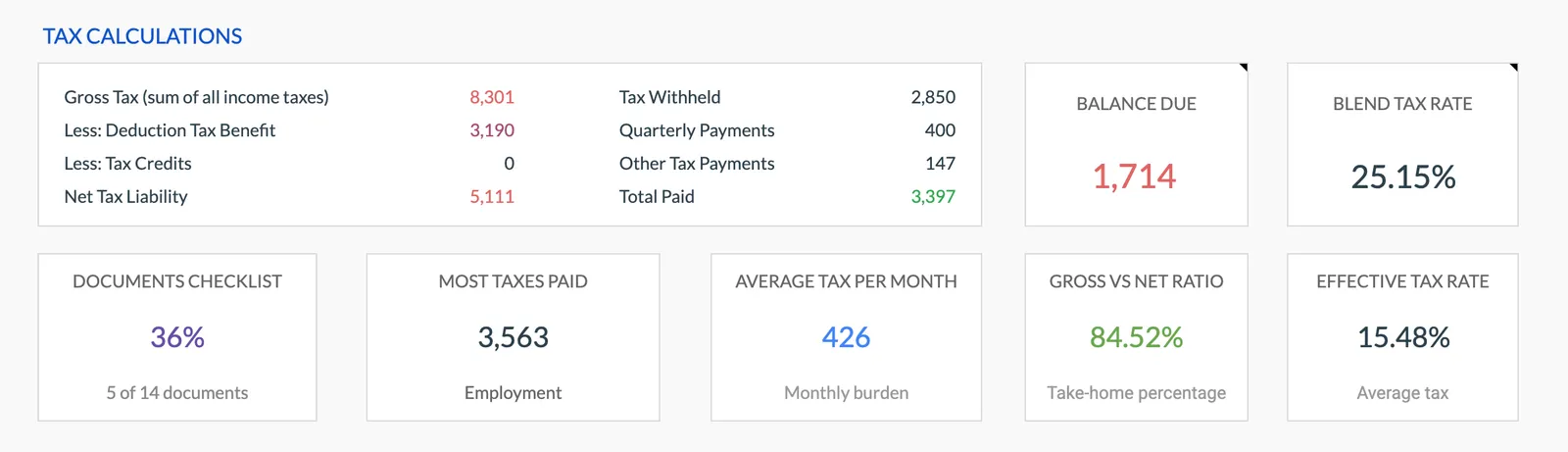
Annual tax overview with key figures
Detailed tax breakdown and projections
Track all income sources for tax purposes
Organize and track tax deductions
Plan and track quarterly estimated tax payments
Veelgestelde Vragen
Belastingplanning in Iowa - FAQ
Wat is het huidige inkomstenbelastingtarief van Iowa?
Iowa belast individueel inkomen sinds belastingjaar 2025 tegen een enkel vast tarief van 3.8% [1]. Daarmee werd een hervorming voltooid die in 2022 begon, toen Iowa nog een gestaffeld systeem met meerdere schijven had en een toptarief van bijna 8.5%. Het vaste tarief kwam een jaar eerder, en iets lager, dan de 3.9% die oorspronkelijk voor 2026 gepland stond. Er zijn momenteel geen verdere tariefsverlagingen voor particulieren gepland.
Wat gebeurde er met Iowa's federale belastingaftrek?
Iowa was een van de weinige staten die inwoners toestond betaalde federale inkomstenbelastingen af te trekken van hun belastbare staatsinkomen. Die aftrek werd afgeschaft met ingang van belastingjaar 2023, toen Iowa ook overstapte op het federale belastbare inkomen als uitgangspunt voor de staatsaangifte. De twee veranderingen werkten in tegengestelde richting: de verdwenen aftrek verhoogde het belastbare inkomen in Iowa, terwijl de dalende tarieven de belasting erover verlaagden. De hervorming is inmiddels uitgemond in de huidige vaste structuur van 3.8%.
Hoe behandelt Iowa pensioeninkomen?
Royaal. Inwoners van 55 jaar en ouder, arbeidsongeschikte belastingplichtigen en kwalificerende nabestaande echtgenoten kunnen kwalificerend pensioeninkomen uitsluiten van Iowa-belasting, waaronder pensioenen, 401(k)-distributies, IRA-opnames en annuïteiten uit gekwalificeerde plannen [2]. Socialezekerheidsuitkeringen zijn vrijgesteld voor alle inwoners, ongeacht leeftijd of inkomen. Niet-gekwalificeerde uitgestelde beloning en niet-gekwalificeerde annuïteiten komen niet in aanmerking voor de vrijstelling.
Hoe verhoudt het vaste tarief van Iowa zich tot dat van buurstaten?
Vanaf belastingjaar 2026 ligt het vaste tarief van 3.8% in Iowa ruim onder het gestaffelde systeem van Minnesota met een toptarief van 9.85% en het toptarief van 7.65% in Wisconsin, en onder het vaste tarief van 4.95% in Illinois. Het vaste tarief van Indiana is lager, op 2.95%, en het toptarief van Nebraska is gedaald naar 4.55%. Het toptarief van Missouri is 4.70%, en South Dakota heeft helemaal geen inkomstenbelasting. Voor een staat die enkele jaren geleden een van de hogere toptarieven in het Middenwesten had, is dit een aanzienlijke herpositionering.
Hoe beïnvloedt het vaste tarief geschatte betalingen?
Geschatte betalingen zijn eenvoudiger dan tijdens de overgangsjaren, toen een dalend tarief de verplichting van het voorgaande jaar tot een overschatting maakte. Nu het tarief is vastgelegd op 3.8%, sluiten de veiligehavenmethoden van Iowa, die vergelijkbaar werken met de IRS-aanpak op basis van een percentage van de verplichting van vorig jaar, beter aan bij de realiteit van het lopende jaar. De prognoses van het sjabloon helpen u een schatting voor het lopende jaar te vergelijken met de cijfers van vorig jaar.
Kunt u het antwoord niet vinden dat u zoekt? Neem contact op met ons team
Officiële belastingbronnen
Voor actuele tarieven, formulieren en aangiftedeadlines specifiek voor Iowa:
Sources
Organiseer je belastingplanning voor Iowa
Eenmalige aankoop. Geen abonnement. Uw financiële gegevens blijven in uw Google Drive.
Tax rules, rates, and contribution limits change, and official publications can themselves lag behind the law in force. We review these figures on a best-effort basis against sources we consider authoritative, but we cannot guarantee they are current, complete, or that better sources do not exist, and nothing here is tax, legal, or financial advice. For decisions, the relevant government authority is the reference. Last reviewed: August 2026.