New Zealand
Monthly Budget Template for New Zealand
Track your income in NZD, manage KiwiSaver contributions, ACC levies, and everyday expenses - all in a Google Sheets template you own.
In Depth
KiwiSaver at 3%, ACC Levies, and Interest-Free Student Loans
Budgeting in New Zealand starts with a pay slip that has already had several deductions applied. PAYE income tax (ranging from 10.5% to 39% across five brackets), the ACC earners' levy of roughly $1.21 per $100 of earnings, KiwiSaver contributions, and student loan repayments (if applicable) are all taken out before the money reaches your bank account. The net pay figure on your statement is the real starting point for a budget.
KiwiSaver is built on a three-way contribution model: employees choose a rate of 3%, 4%, 6%, 8%, or 10% of gross pay, employers contribute a minimum of 3%, and the government adds up to $521 per year for those who contribute at least $1,042. The employer's 3% minimum is a genuine benefit that is easy to overlook - it is effectively free money toward retirement. Choosing between contribution rates creates a meaningful difference in what lands in the bank each fortnight, and some people find that adjusting their rate during different life stages provides a practical balance.
New Zealand does not have a comprehensive capital gains tax, though the bright-line test applies to residential investment property sold within the holding period. Student loans are interest-free for residents, with compulsory repayments at 12% of income above $22,828. Since there is no interest charged, the financial calculus around early repayment is different from countries where student debt accrues interest - some people choose to invest extra money rather than pay down a zero-interest loan faster.
New Zealand
Budgeting in New Zealand: What's Different
New Zealand's financial system is relatively straightforward compared to some countries, but it has unique features worth understanding when setting up a budget.
PAYE makes income entry simple
New Zealand's PAYE (Pay As You Earn) system deducts income tax, ACC earners' levy, and KiwiSaver contributions from your pay before you receive it. Individual tax rates range from 10.5% (up to $14,000) to 39% (over $180,000). Using your actual take-home pay as your budget income accounts for all these deductions automatically.
KiwiSaver contributions are a key financial decision
KiwiSaver members choose a contribution rate of 3%, 4%, 6%, 8%, or 10% of gross pay, with employer contributions of at least 3% [1]. The government also contributes up to $521/year (for those contributing at least $1,042/year). Some people adjust their rate based on financial goals - higher for retirement savings, lower for other priorities like a first home.
No capital gains tax on most assets
New Zealand doesn't have a comprehensive capital gains tax. Profits from selling a family home, shares (if not a regular trader), and most investments are generally not taxed. This affects financial planning decisions - investment returns may go further in NZ than in countries with capital gains taxes.
ACC levy covers accident costs
The Accident Compensation Corporation (ACC) levy is deducted from pay and covers all New Zealand residents for personal injury from accidents - regardless of fault. This means less need to budget for accident-related medical costs. The earners' levy (roughly $1.21 per $100 of liable earnings for 2025) [2] is already deducted before your net pay.
Student loan repayments reduce take-home pay above a threshold
New Zealand student loans are interest-free for residents, but compulsory repayments are deducted at 12% of income above the repayment threshold ($22,828 for the 2025 tax year) [2]. For someone earning $60,000, this means roughly $370/month in repayments before the money reaches their bank account. Since there is no interest charged, some people choose to direct extra money toward investments rather than making voluntary repayments.
The bright-line test is the closest thing to a capital gains tax
While New Zealand has no general capital gains tax, the bright-line test taxes profits on residential property sold within a specified holding period. Properties purchased from July 2024 onward are subject to a two-year bright-line period, down from the previous ten years. The family home is exempt. For property investors, this holding period affects the timing of buy and sell decisions.
Haal het sjabloon
Aan de Slag
Getting Started With Your New Zealand Budget
Switch the currency to NZD
Choose NZD from the currency dropdown at the top of the dashboard. The calculations are currency-neutral - only the display symbol changes.
Enter your net pay
Use your actual take-home pay after PAYE, ACC, and KiwiSaver deductions. This is the amount that hits your bank account. If you have additional income (freelance, rental), add those as separate lines.
Set up NZ-specific expense categories
Add categories for: rent or mortgage, rates (council rates), utilities (power, water, internet), groceries, petrol or public transport, insurance (contents, car, health), and everyday spending. New Zealand-specific costs like power (which varies seasonally) and rates deserve their own lines.
Track savings goals
If you're saving for a first home (KiwiSaver HomeStart grant and first home withdrawal are available), add a dedicated savings category. For other goals like travel or emergency fund, add separate lines to track progress.
Plan for seasonal variations
New Zealand winter (June-August) brings higher power bills. Car WOF and registration are annual costs. Back-to-school expenses hit in late January/February. Insurance renewals, rates instalments, and holiday spending create predictable seasonal patterns.
Zie het in Actie
Hoe het sjabloon eruit ziet
Blader door het sjabloon om te zien hoe het omgaat met budgettering, categorieën en uitgavenbewaking - allemaal aanpasbaar aan uw lokale financiële situatie.
- Ingebouwde valutakiezer
- Aanpasbare categorieën
- Budget versus werkelijke bewaking
- Visuele grafieken en samenvattingen

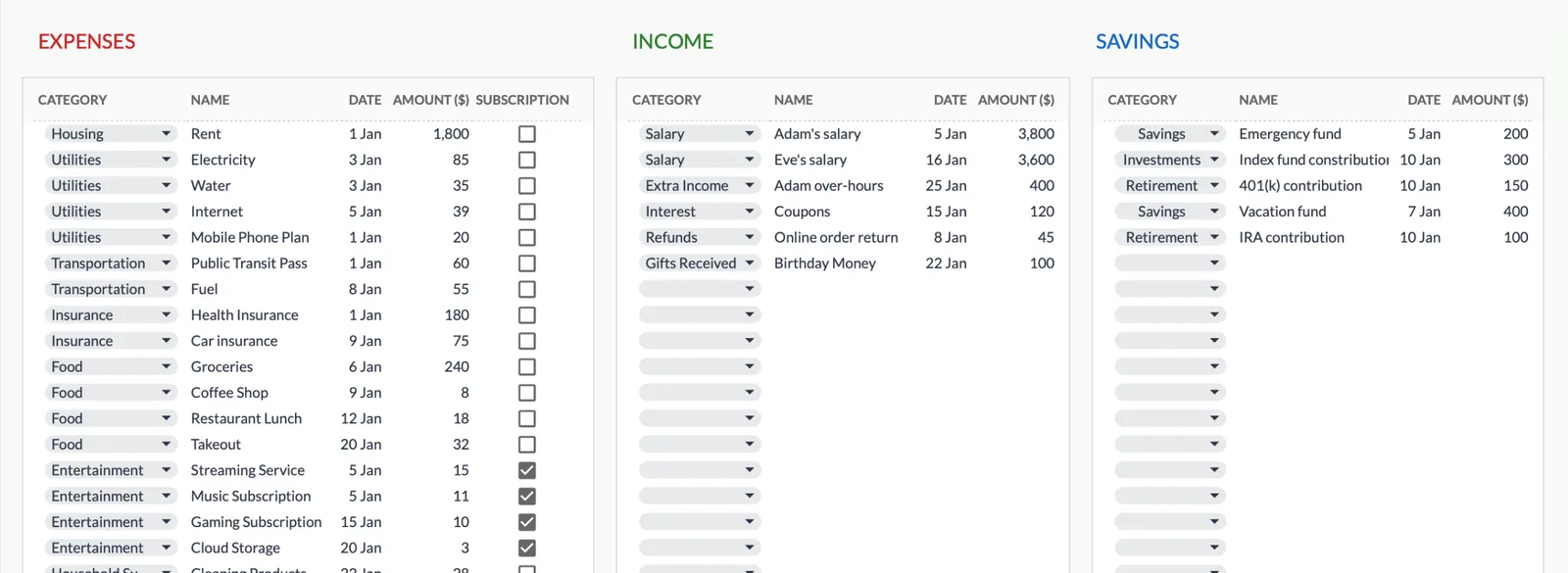
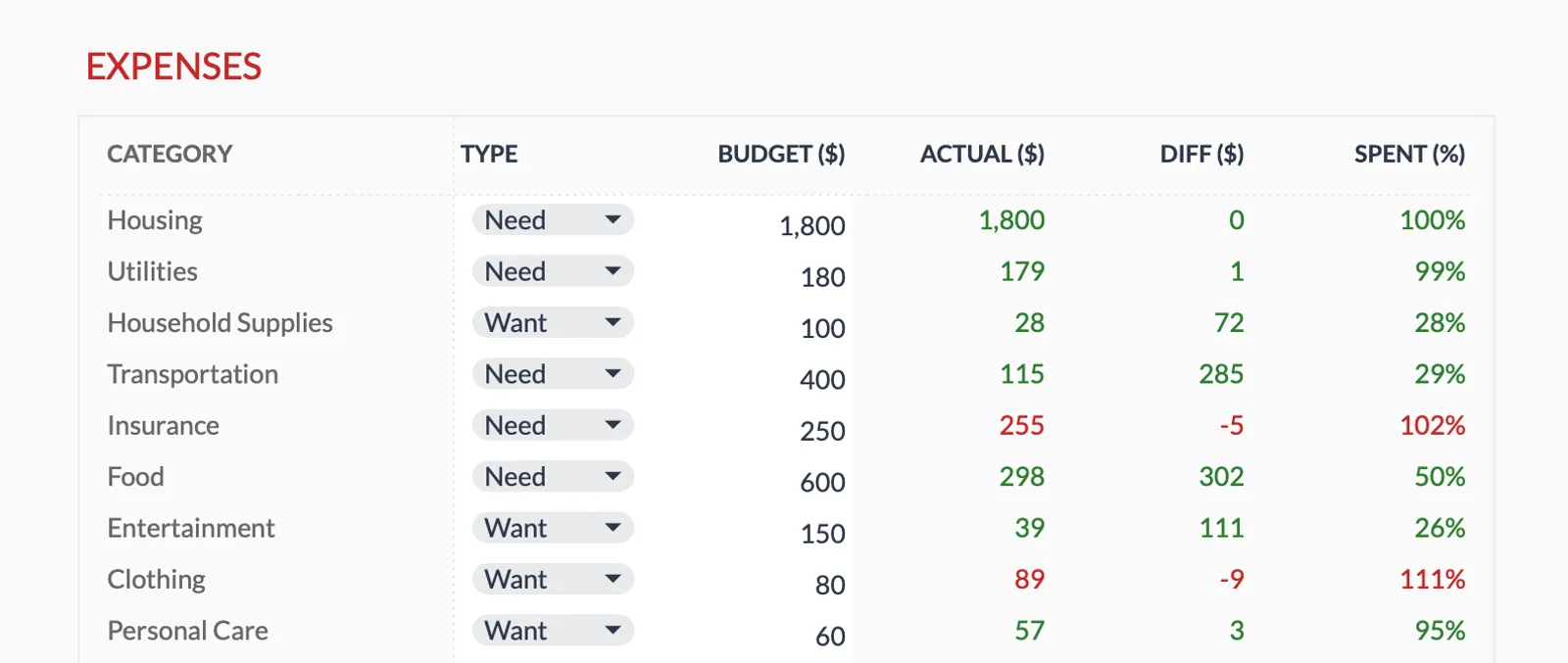
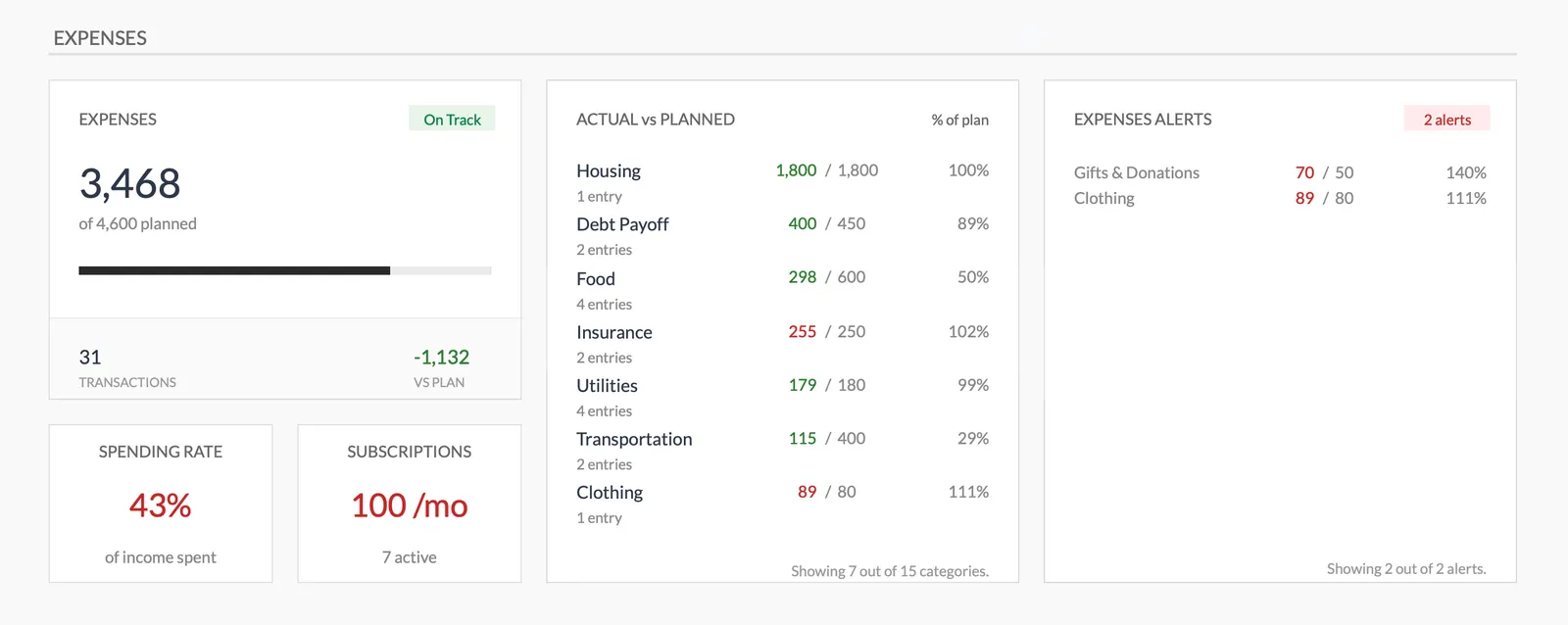
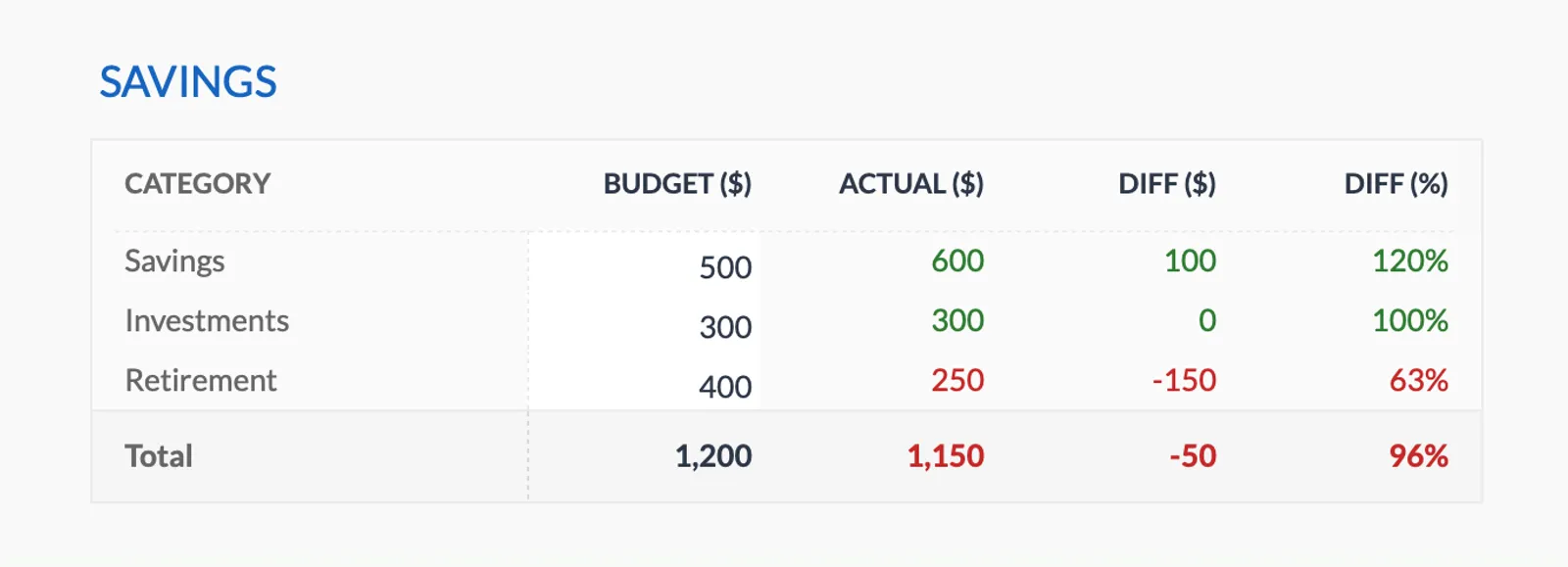
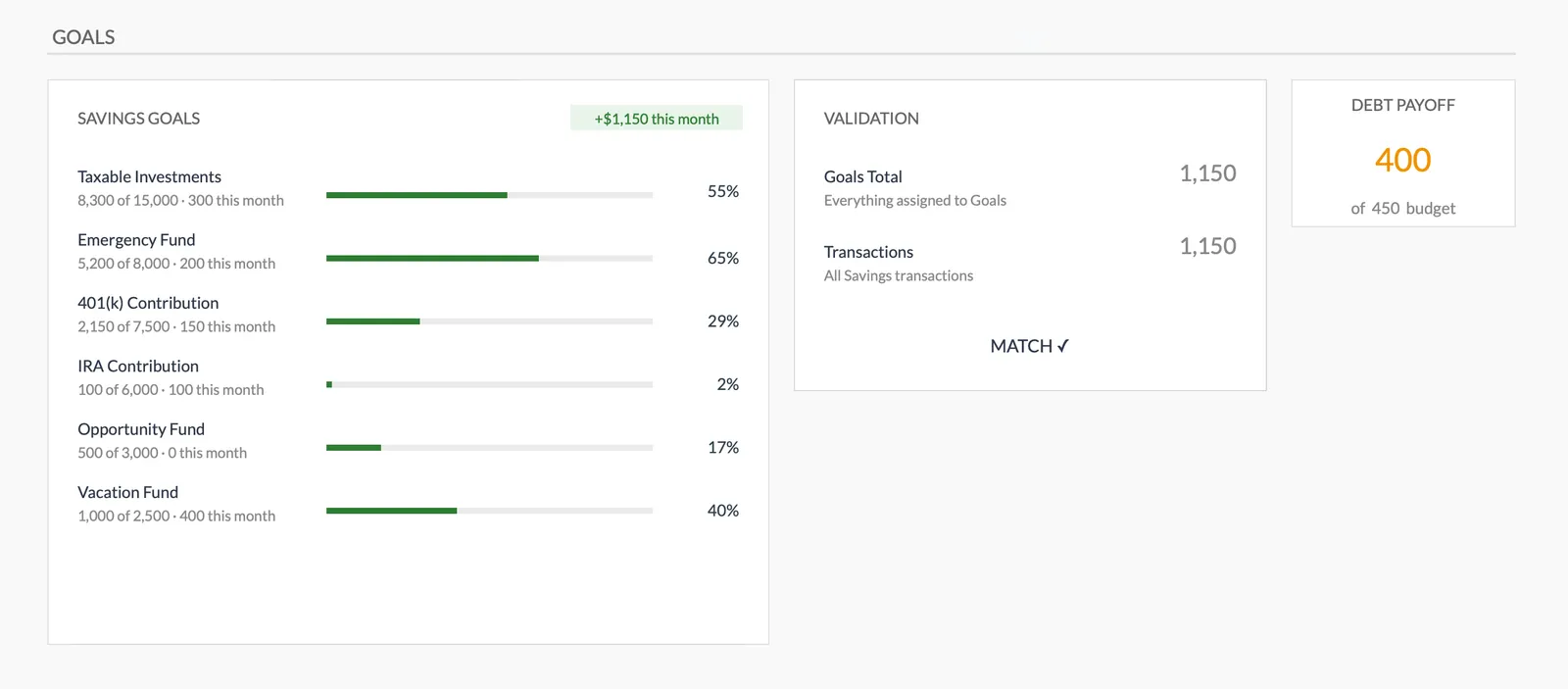
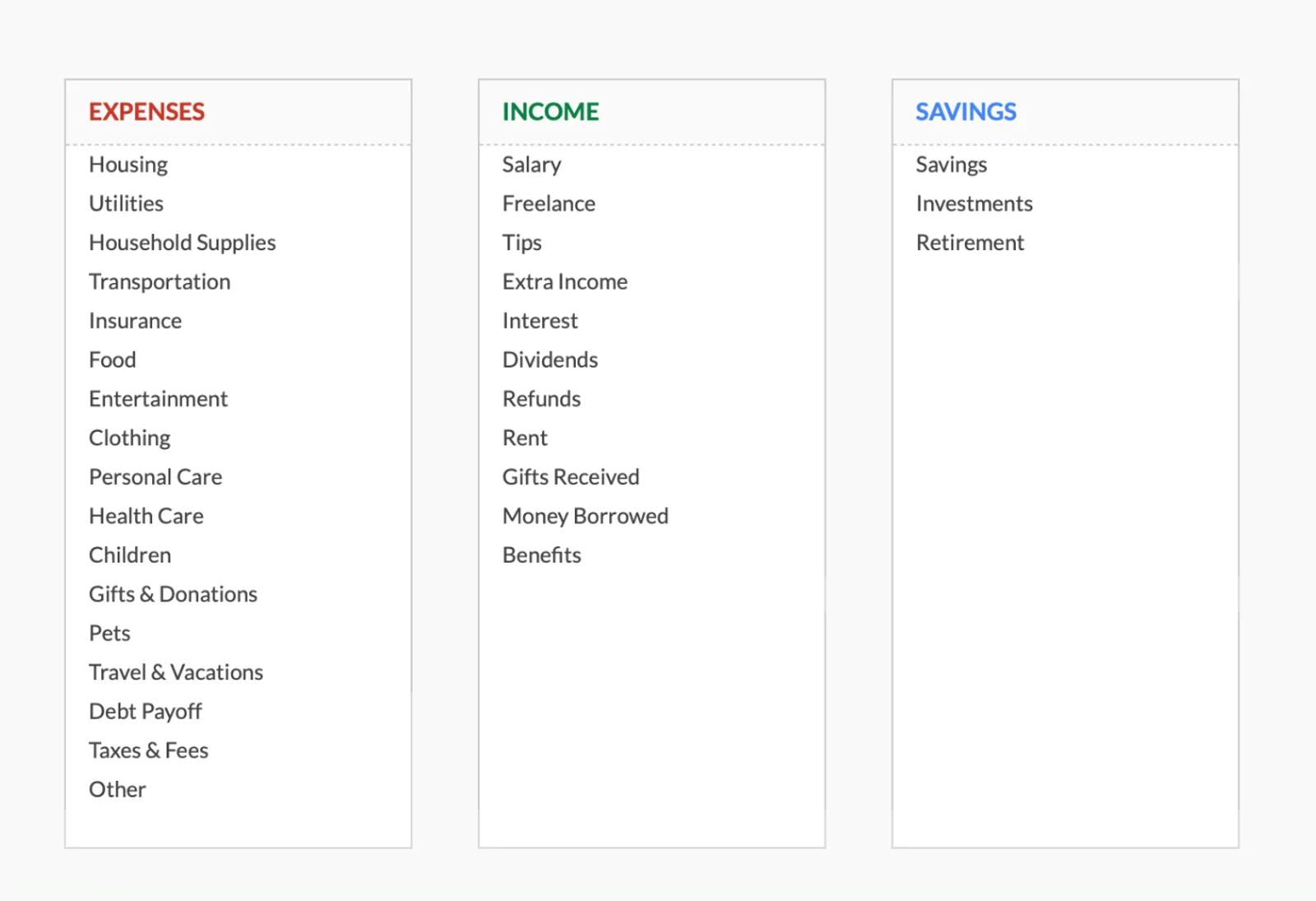
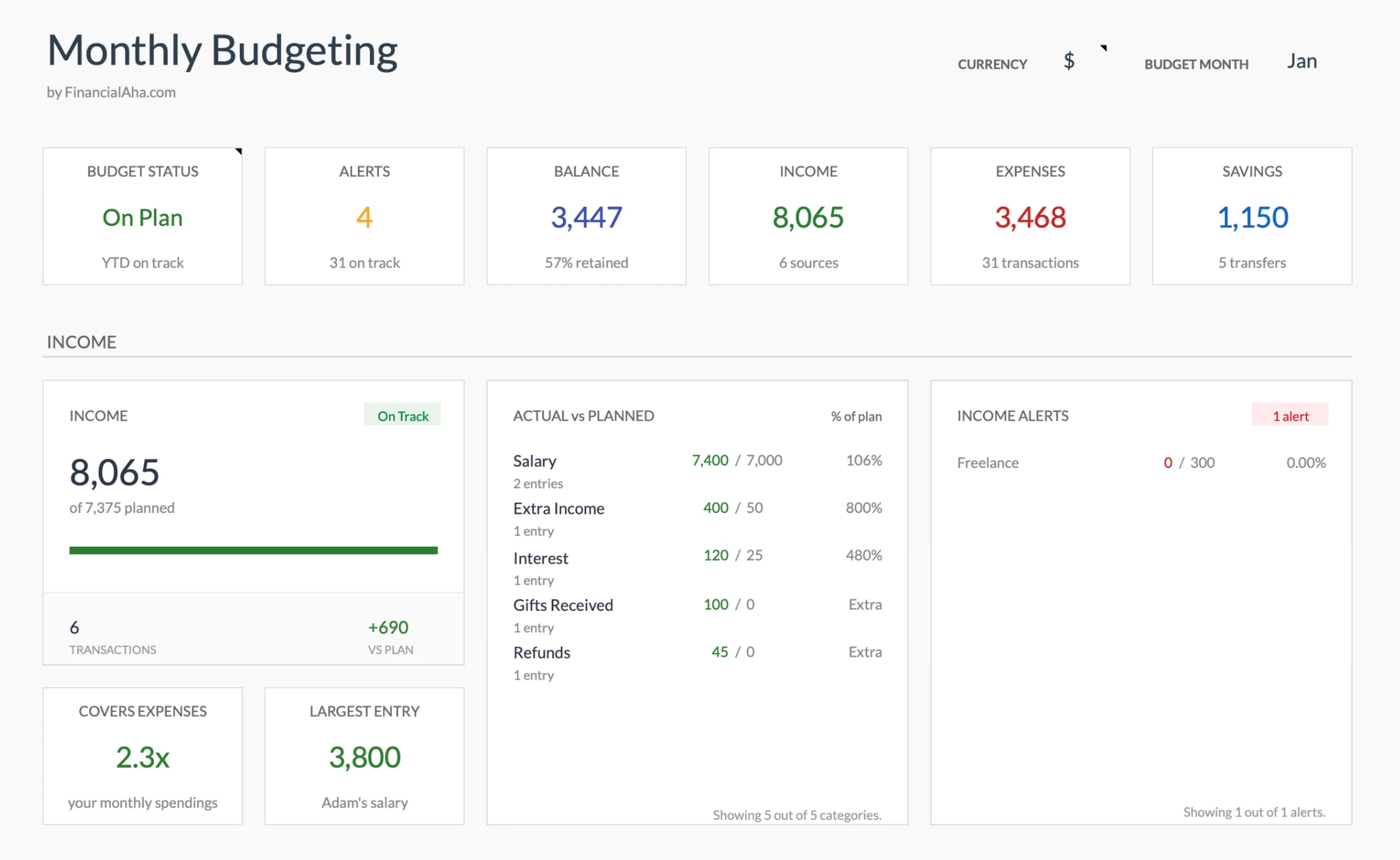
Dashboard with income, expenses, and savings at a glance
Log transactions with automatic categorization
Set targets per category and track actual spending
Visual breakdown of where your money goes
Track savings goals alongside your budget
Monitor progress toward financial goals
Fully customizable expense, income, and savings categories
Sources
Veelgestelde Vragen
Monthly Budget Template for New Zealand - FAQ
Does this template use New Zealand dollars?
Yes - pick NZD from the currency option in the header. All calculations work the same regardless of which currency symbol you choose.
Can I track KiwiSaver contributions?
KiwiSaver contributions are deducted from your pay before you receive it, so they're already accounted for in your net pay. If you make voluntary additional contributions beyond your payroll deductions, add those as a budget category.
How do I budget for the KiwiSaver first home withdrawal?
If you're saving for a first home, you can track your KiwiSaver balance growth separately as a savings target. The first home withdrawal lets you access most of your KiwiSaver balance (keeping $1,000 in the account). The HomeStart grant provides up to $10,000 for an existing home or $20,000 for a new build.
Is there a Kiwi-specific version of this template?
The template is the same globally - designed to be fully customizable. This page explains how to adapt it for New Zealand finances. Google Sheets' flexibility lets you rename categories and adjust the setup to match your specific situation.
How does this compare to NZ budgeting tools like Sorted?
Sorted.org.nz provides free budgeting tools and financial guidance specific to NZ. This template offers a downloadable, customizable Google Sheets alternative that you own and control. Some people use Sorted for guidance and this template for ongoing tracking.
Can't find the answer you're looking for? Contact our team
Klaar om te beginnen?
Download direct en begin met het beheren van uw financiën, of neem contact met ons op voor een aangepast sjabloonpakket voor uw behoeften.