Michigan
Tax Planner Template for Michigan
Plan your federal and Michigan state taxes in Google Sheets. Michigan uses a flat tax rate with some city-level income taxes.
In Depth
Michigan's Birth-Year Rules and City Taxes
Michigan uses a flat state income tax of 4.25%, and for years its most distinctive feature was a set of birth-year-based retirement income tiers. A phase-in that began in 2023 finished with the 2026 tax year, so retirees of any birth year now share one inflation-adjusted cap on the retirement and pension income they can subtract. Residents born before 1946 retain an unlimited subtraction for public pensions, which is the main place birth year still changes the outcome.
About two dozen Michigan cities impose their own income taxes, separate from the state tax. Detroit has the highest city income tax rate, and it applies to both residents and non-residents who work in the city (at a lower rate for non-residents). Grand Rapids, Lansing, Flint, and several other cities also levy local income taxes. For residents of these cities, the combined state-plus-city rate is noticeably higher than the state rate alone.
The Homestead Property Tax Credit is a notable feature of Michigan's tax system. It is claimed on the state income tax return and provides relief when property taxes exceed a percentage of household income. Renters can also qualify, since a portion of rent is considered to represent property taxes. This credit is refundable, meaning it can generate a refund even if no state income tax is owed.
Michigan
Tax Planning in Michigan
Michigan has a flat state income tax with additional city income taxes in some municipalities. Detroit and several other cities levy their own income tax on top of the state rate.
Flat Income Tax
Michigan has a flat income tax rate that applies to all taxable income, making state tax calculations straightforward.
City Income Taxes
Some Michigan cities levy their own income taxes, with Detroit having the highest local rate. About two dozen cities in Michigan impose local income taxes, with different rates for residents and non-residents who work there.
Retirement Income
Michigan phased out its birth-year retirement tiers between 2023 and 2026. For the 2026 tax year, retirees of any birth year can subtract retirement and pension income up to a single inflation-adjusted cap, while residents born before 1946 keep an unlimited subtraction for public pensions.
Homestead Property Tax Credit
Michigan offers a Homestead Property Tax Credit for eligible residents whose property taxes are high relative to their income. This is claimed on the state income tax return.
Get the Annual Tax Planner
Getting Started
Setting Up the Tax Planner for Michigan
Note your retirement deduction limit
If you receive retirement income, the 2026 tax year is the first in which every birth year shares one cap on the pension and retirement income that can be subtracted. Residents born before 1946 still have an unlimited subtraction for public pensions, and those born after 1952 can elect the age-67 senior standard deduction instead. Note which option applies in the template so your retirement income projections reflect the correct state treatment.
Check whether your city levies a local income tax
If you live or work in Detroit, Grand Rapids, Lansing, Flint, or another Michigan city with a local income tax, record the applicable rate. Residents pay one rate; non-residents working in the city pay a lower one. Most Michigan cities do not have a local income tax, so many residents only deal with the 4.25% [1] state rate.
Track property taxes for the Homestead Credit
Enter your property tax amount (or the portion of rent that qualifies) in the template. Michigan's Homestead Property Tax Credit depends on your household income relative to property taxes paid. Tracking both figures throughout the year helps estimate whether you will qualify and for how much - the credit is refundable, so it can exceed your state tax owed.
Separate earned income from retirement income
Michigan's flat rate applies to most income, but retirement income may be partially exempt based on birth year, and city taxes generally apply only to earned income. Separating these categories in the template gives you accurate projections for each tax layer - federal, state, and city (if applicable).
Review the combined multi-layer projection
Use the dashboard for federal tracking and the notes section for Michigan's state and city calculations. For Detroit residents, the combined state-plus-city rate on earned income is notably higher than the state rate alone, making the full picture important to monitor throughout the year.
See It In Action
What the tax planner looks like
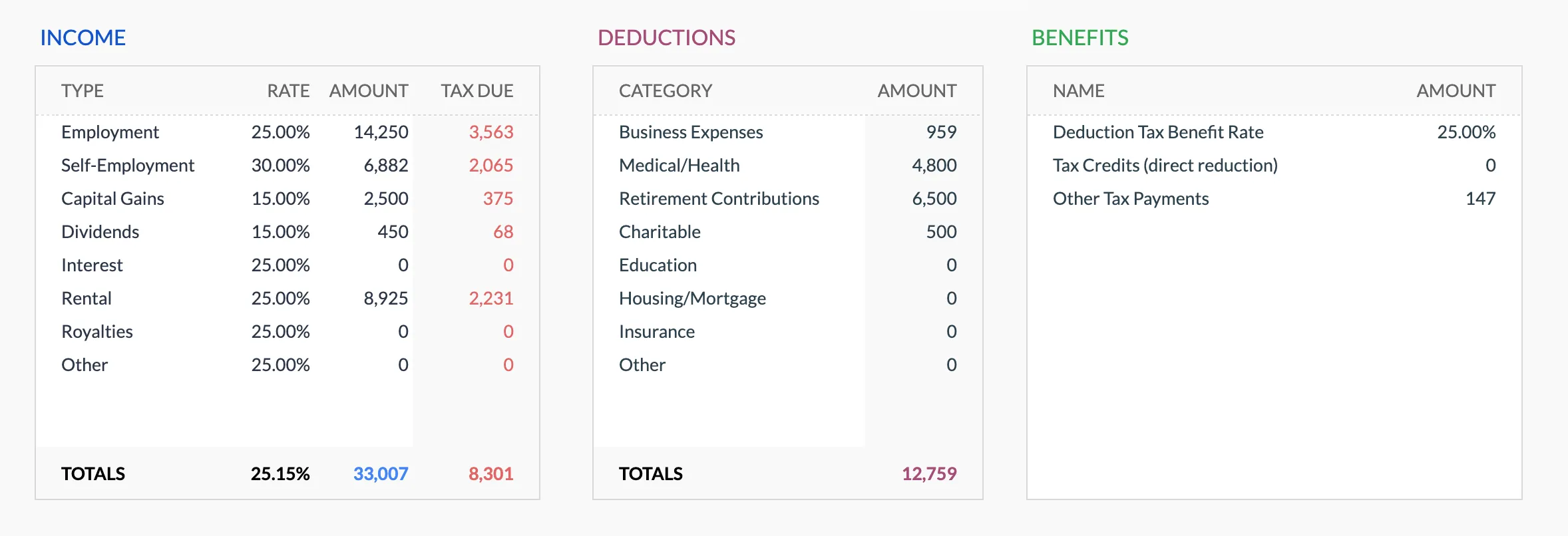
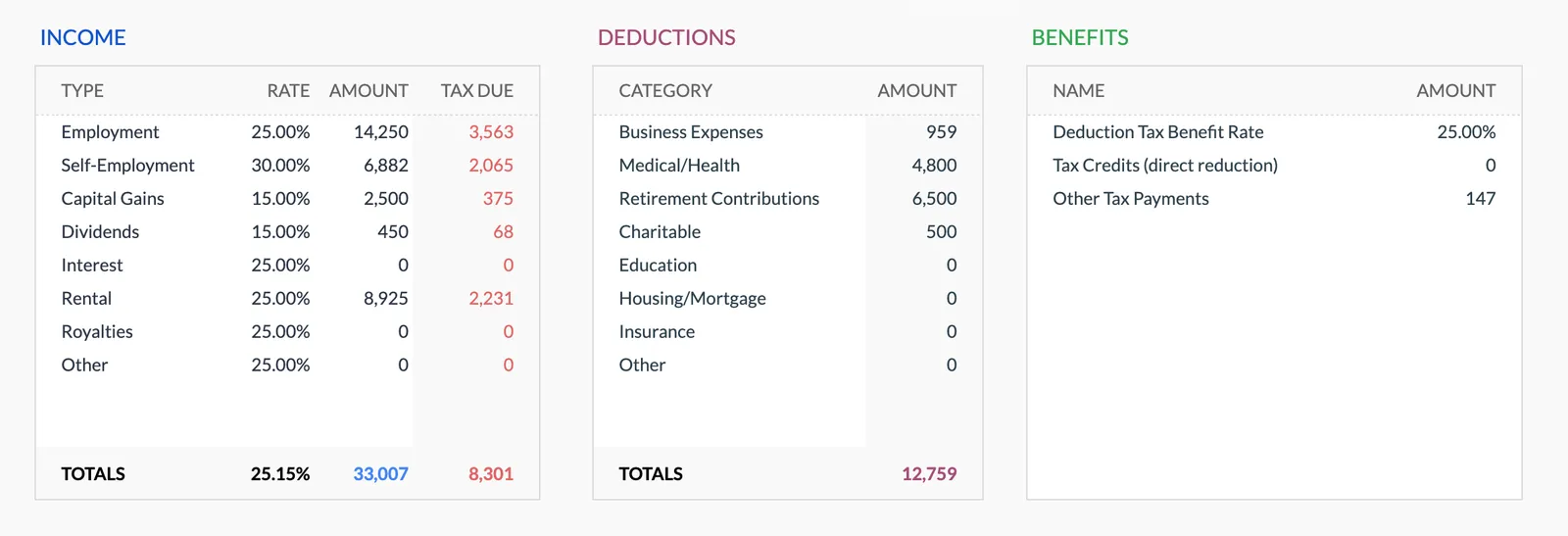
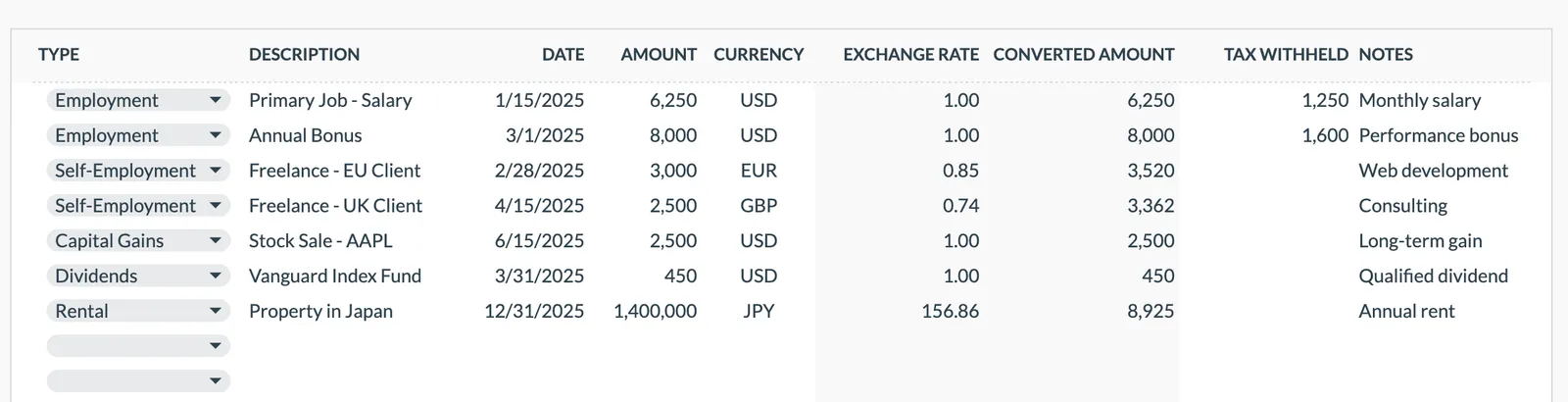
Browse through the template to see how it tracks income, deductions, credits, and estimated quarterly payments.
- Annual tax overview dashboard
- Income tracking by source
- Deductions and credits organizer
- Quarterly payment tracker
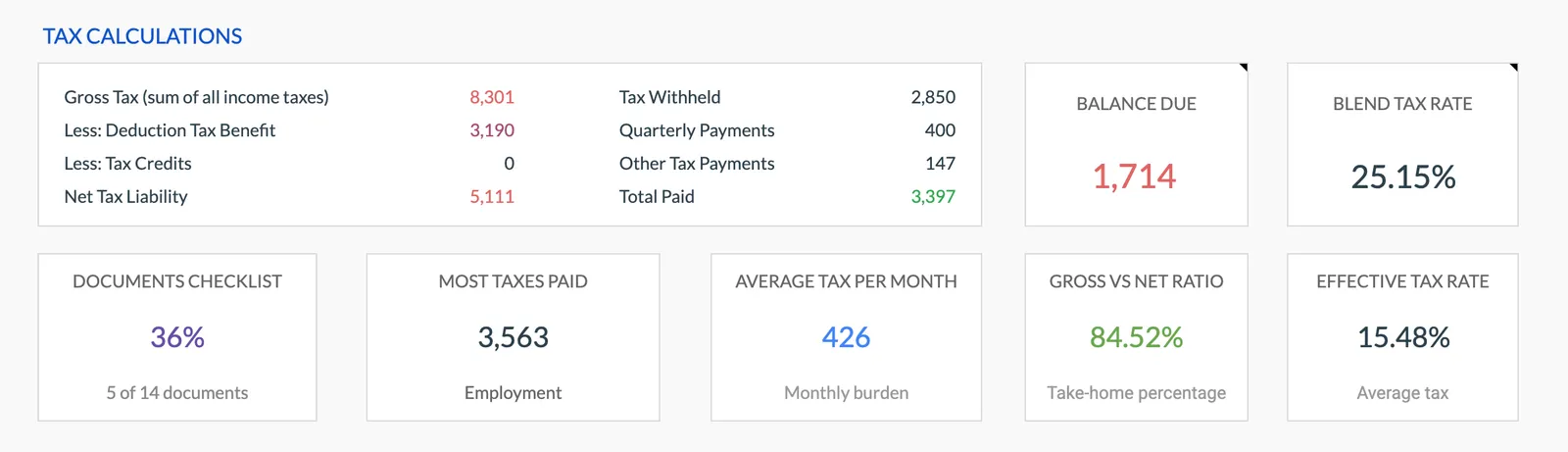
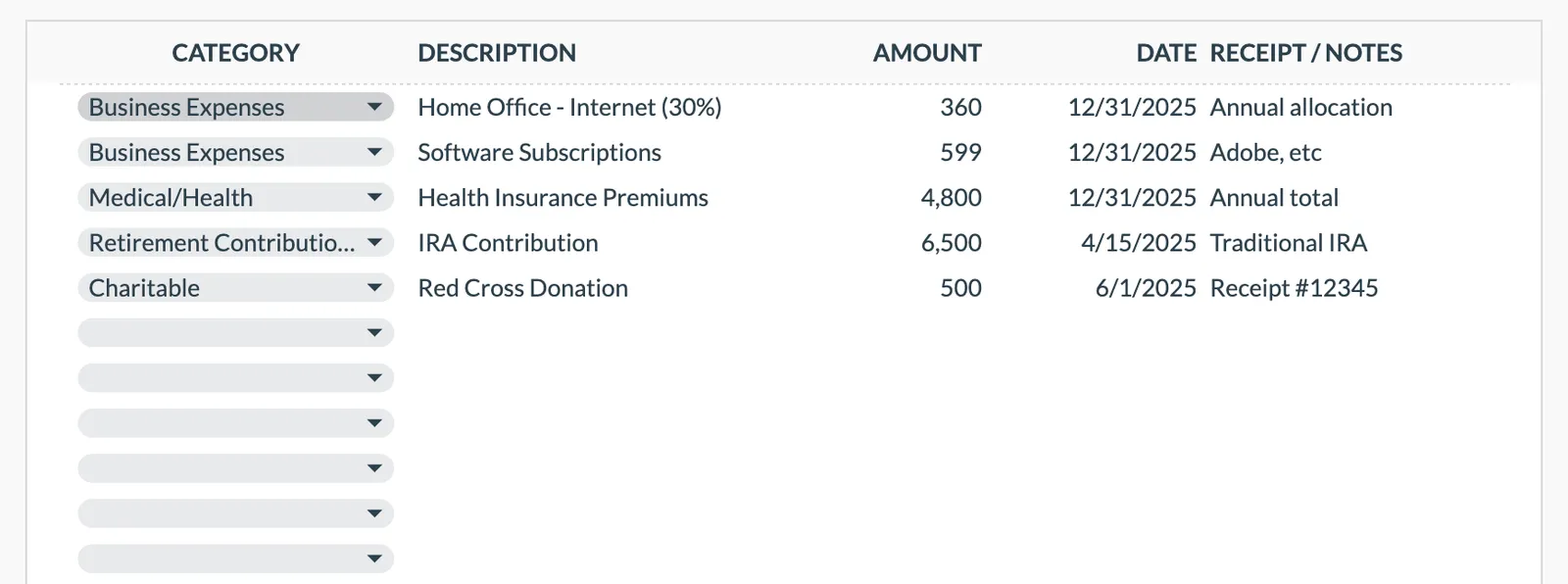
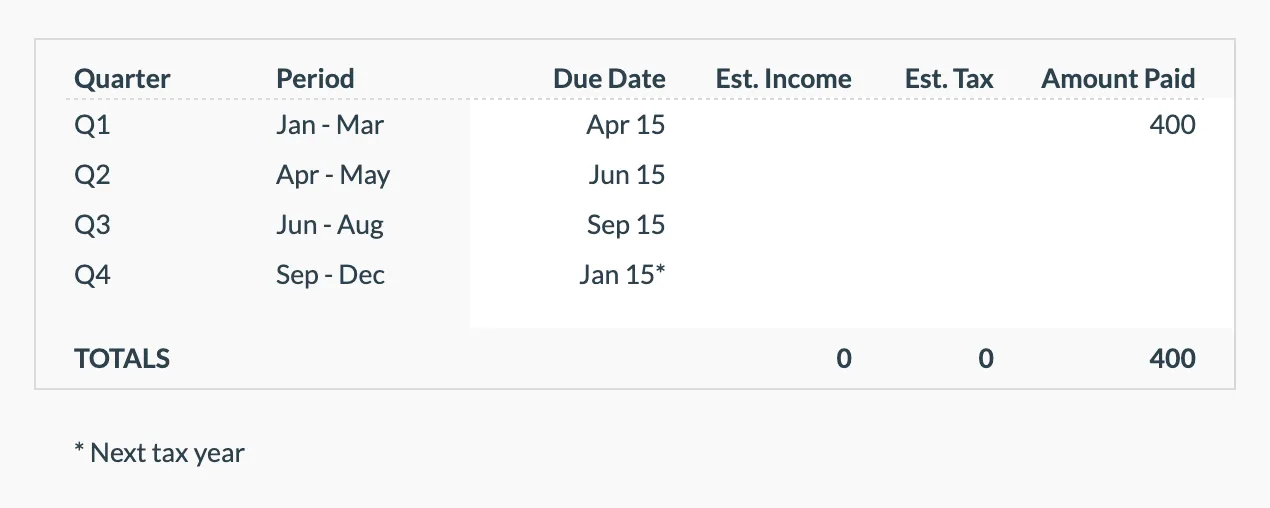
Annual tax overview with key figures
Detailed tax breakdown and projections
Track all income sources for tax purposes
Organize and track tax deductions
Plan and track quarterly estimated tax payments
Common Questions
Tax Planning in Michigan - FAQ
How do Michigan's birth-year rules affect retirement income taxes?
Michigan's birth-year tiers were phased out over four years, and the phase-in finished with the 2026 tax year. For 2026, retirees of any birth year can subtract retirement and pension income up to one inflation-adjusted cap, about $67,610 for single filers and $135,220 for joint filers [1]. Residents born before 1946 keep an unlimited subtraction for public pensions, and those born after 1952 can still elect the age-67 senior standard deduction instead. Birth year now mostly affects which option is elected rather than whether retirement income is exempt.
Which Michigan cities levy their own income tax?
About two dozen Michigan cities impose local income taxes. Detroit has the highest rate for residents, with a lower rate for non-residents who work there. Grand Rapids, Lansing, Flint, Saginaw, and several other cities also levy local income taxes. The rates differ by city, and non-resident workers pay a reduced rate compared to city residents. Most Michigan residents outside these specific cities pay only the 4.25% state rate [2].
What is the Homestead Property Tax Credit?
Michigan offers a Homestead Property Tax Credit for residents whose property taxes are high relative to their household income. The credit is claimed on the state income tax return and is refundable - it can generate a refund even if you owe no state income tax. Renters also qualify, since a portion of rent is treated as property tax for credit purposes. The credit has income limits and phases out at higher household income levels.
Does the 4.25% rate apply to all types of income?
The 4.25% flat rate applies to most types of taxable income, including wages, self-employment income, and investment income. However, retirement income may be partially or fully exempt depending on your birth year. City income taxes, where applicable, add to the rate but typically apply only to earned income. Capital gains are taxed at the same 4.25% state rate as ordinary income.
How does the template work for someone in Detroit or Grand Rapids?
The template covers federal tax planning comprehensively. For Michigan residents in a city with local income tax, use the notes section to track three rates: the federal bracket rate, the 4.25% state rate, and your city rate. Since city taxes typically apply only to earned income, separating earned from non-earned income in your tracking lets you estimate all three layers accurately.
Can't find the answer you're looking for? Contact our team
Official Tax Resources
For current rates, forms, and filing deadlines specific to Michigan:
Sources
Organize your tax planning for Michigan
One-time purchase. No subscription. Your financial data stays in your Google Drive.
Tax rules, rates, and contribution limits change, and official publications can themselves lag behind the law in force. We review these figures on a best-effort basis against sources we consider authoritative, but we cannot guarantee they are current, complete, or that better sources do not exist, and nothing here is tax, legal, or financial advice. For decisions, the relevant government authority is the reference. Last reviewed: August 2026.