Philippines
Monthly Budget Template for the Philippines
Track your income in PHP, mandatory contributions, and everyday expenses in a Google Sheets template you own.
In Depth
SSS, PhilHealth, Pag-IBIG, and the Role of Remittances
Filipino employees contribute to three separate systems, SSS, PhilHealth, and Pag-IBIG, each deducted from monthly pay. SSS provides social insurance including a future pension, PhilHealth covers healthcare, and Pag-IBIG funds housing loans and member savings. Since January 2025 the SSS rate has stood at 15% of the monthly salary credit with the employee paying 5%, while PhilHealth premiums are 5% of basic salary split evenly with the employer. Combined, these reduce take-home pay by a meaningful margin, which is why budgets built on net income rather than gross salary tend to match what actually lands in the account.
Remittances play a significant role in many Filipino household budgets, whether received from family working abroad or sent to relatives in the provinces. The Philippines is among the largest remittance-receiving countries in the world, with tens of billions of US dollars arriving each year through channels like GCash, bank transfers, and remittance centers. For households that depend on these inflows, timing and exchange rate movements introduce variability that a fixed monthly budget cannot always capture, so recording the amounts actually received over several months is what reveals the real pattern.
The peso's purchasing power shapes daily budgeting decisions, from grocery runs to transportation costs. Inflation ran above the Bangko Sentral ng Pilipinas target band of 2% to 4% through the first half of 2026, with food, transport, and utility prices weighing most heavily on lower and middle-income households. Separating essential spending from discretionary categories is one way to see where rising costs are actually landing.
Philippines
Budgeting in the Philippines: What's Different
The Philippine financial system has features that shape how a budget is put together. Knowing them makes it easier to set up a template that matches the numbers on your payslip.
Tax brackets determine take-home pay
Under the bracket schedule that took effect in January 2023 and still applies for the 2026 tax year, the first PHP 250,000 of annual taxable income is untaxed. Above that, rates step up through 15%, 20%, 25%, and 30%, with the 35% top rate applying to taxable income over PHP 8 million. For most employed Filipinos, withholding tax comes out automatically, so actual take-home pay makes a more realistic budgeting baseline than gross salary.
Mandatory contributions add up
SSS (or GSIS for government employees), PhilHealth, and Pag-IBIG (HDMF) contributions come out of salary before it reaches you. Since January 2025 the SSS rate has been 15% of the monthly salary credit, of which the employee pays 5%, on salary credits capped at PHP 35,000. The PhilHealth premium is 5% of monthly basic salary split evenly with the employer, on a salary ceiling of PHP 100,000. Pag-IBIG adds a smaller deduction, capped at PHP 200 a month for most employees since the fund raised its maximum monthly compensation to PHP 10,000 in 2024. Because all of this is taken before payday, budgeting from net pay accounts for it automatically.
Family financial obligations are common
Many Filipinos support extended family members, whether parents, siblings, or other relatives. These regular transfers are a significant budget item that generic templates do not account for. A dedicated category for family support puts the amount alongside every other expense instead of leaving it uncounted.
OFW remittances and dual-currency situations
For Overseas Filipino Workers, and for households receiving money from relatives abroad, income arrives in more than one currency. Tracking remittances sent or received as their own budget category is one way to see the full picture of money coming in and going out.
Get the Template
Getting Started
Getting Started With Your Philippine Budget
Switch the currency to PHP
Select PHP from the currency menu at the top of the dashboard. The calculations are currency-neutral, so only the display symbol changes.
Enter your after-tax, after-deduction take-home pay
Use the net amount that reaches your bank account or payroll card once withholding tax, SSS or GSIS, PhilHealth, and Pag-IBIG have come off. Thirteenth month pay and bonuses go in the months they arrive.
Customize expense categories for Philippine life
Add categories that match your spending: rent or amortization on a home loan, electricity from Meralco or a local provider, water, mobile load and data, internet, transportation covering jeepney, MRT, Grab, or car costs, groceries, eating out, and family support.
Add family support as a dedicated category
For money regularly sent to parents, siblings, or other relatives, a visible budget category keeps the amount in view. Some people find that treating it as a planned expense rather than an afterthought makes the rest of the month easier to read.
Account for Philippine seasonal expenses
Christmas and holiday spending is traditionally a major expense, and back-to-school costs around the start of the school year, annual insurance renewals, and quarterly bills all land outside the normal monthly pattern. The long Philippine holiday season, the ber months, shifts spending noticeably in the final quarter.
See It In Action
What the template looks like
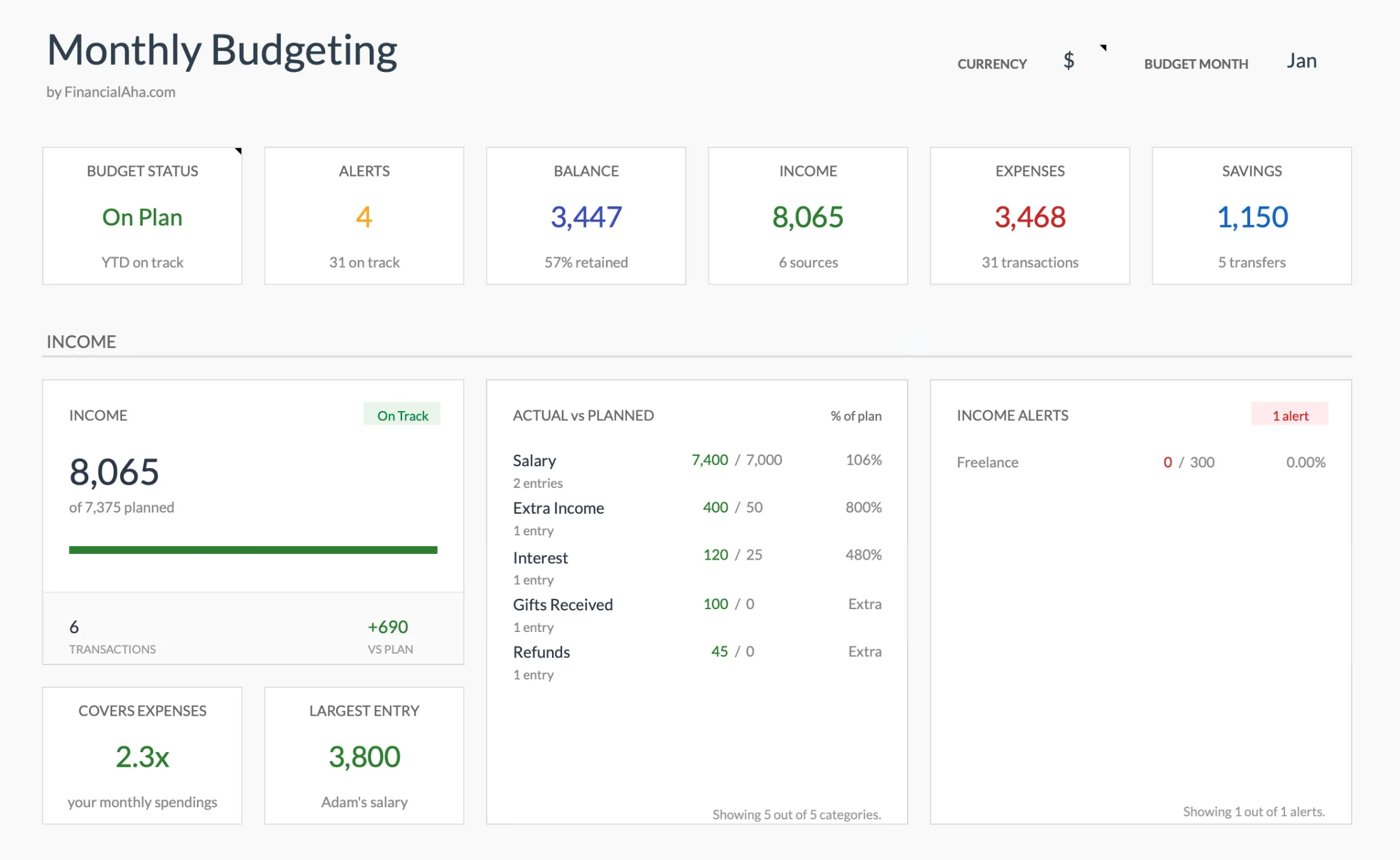
Browse through the template to see the dashboard, the entry sheets, and the summaries it produces, all adaptable to your local financial setup.
- Built-in currency selector
- Calculations update automatically
- Visual summaries of your numbers
- No setup required
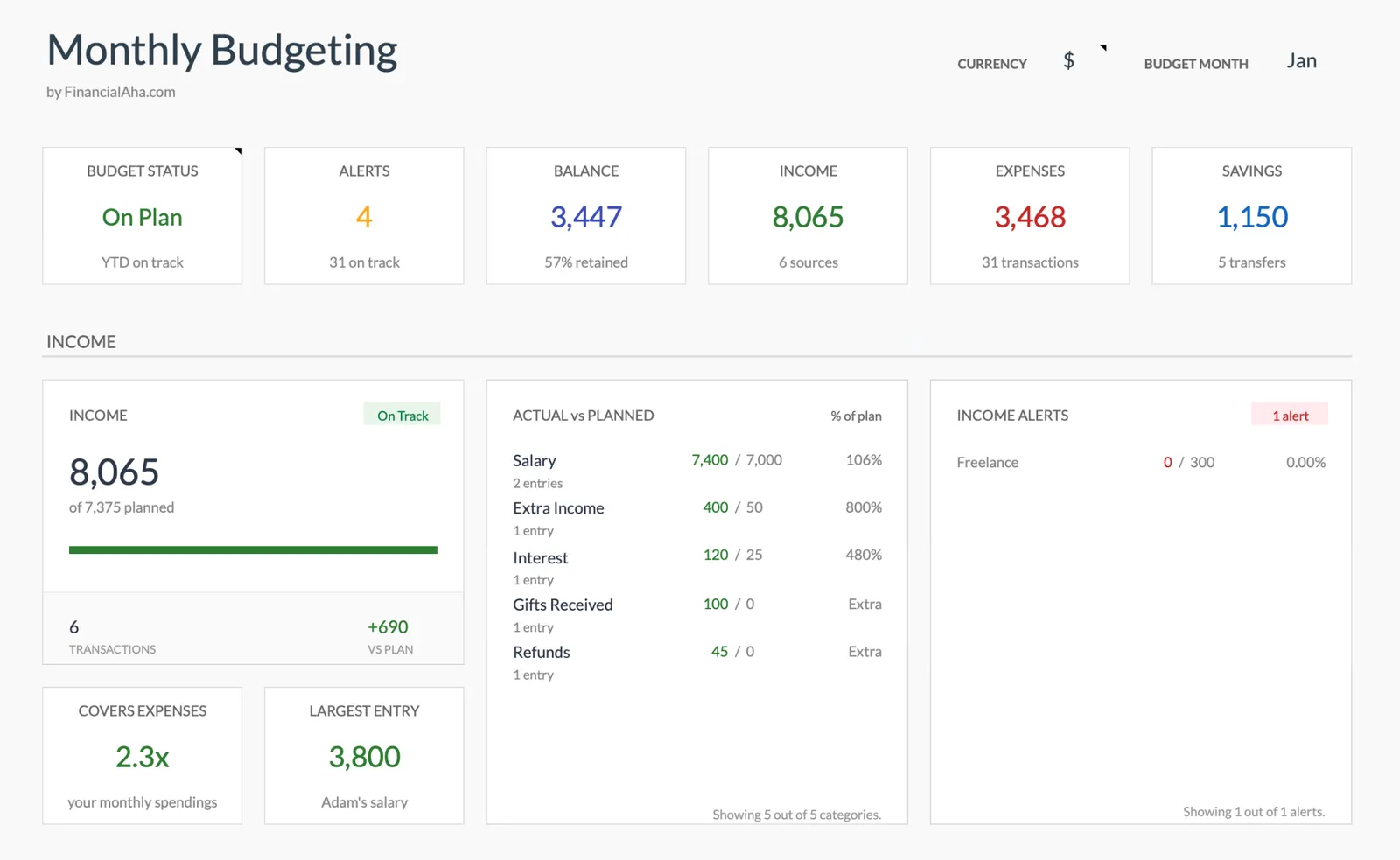
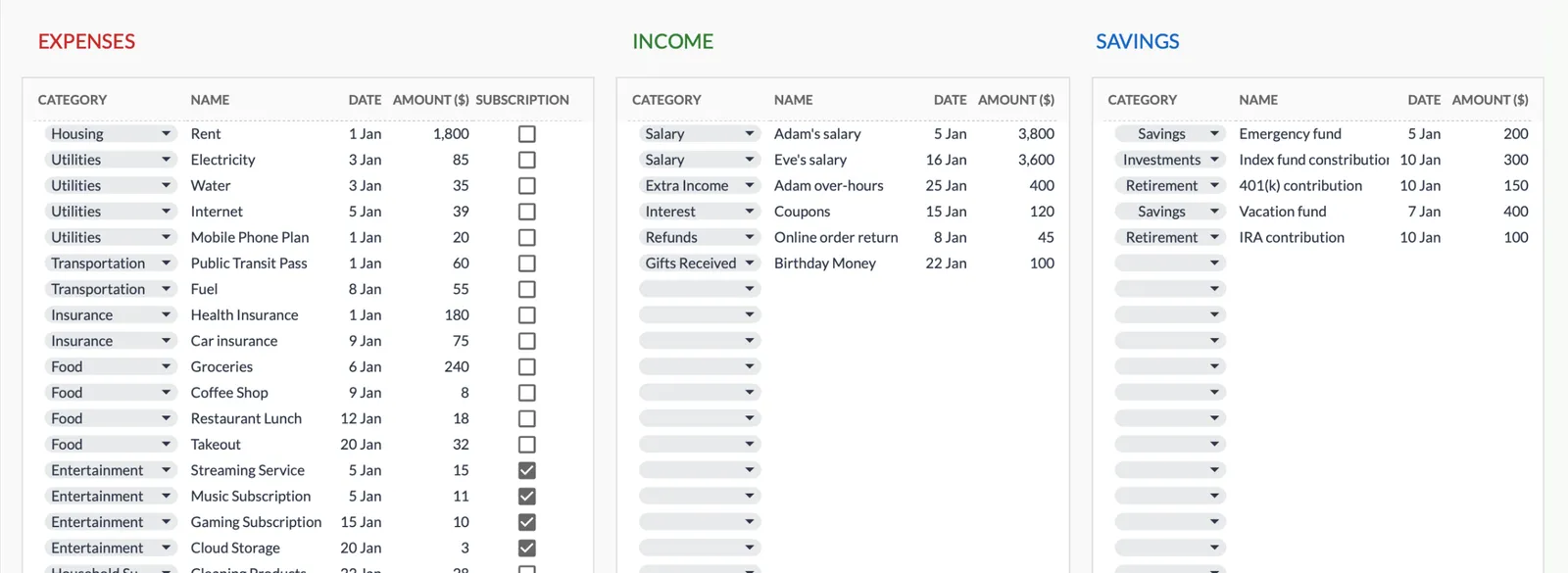
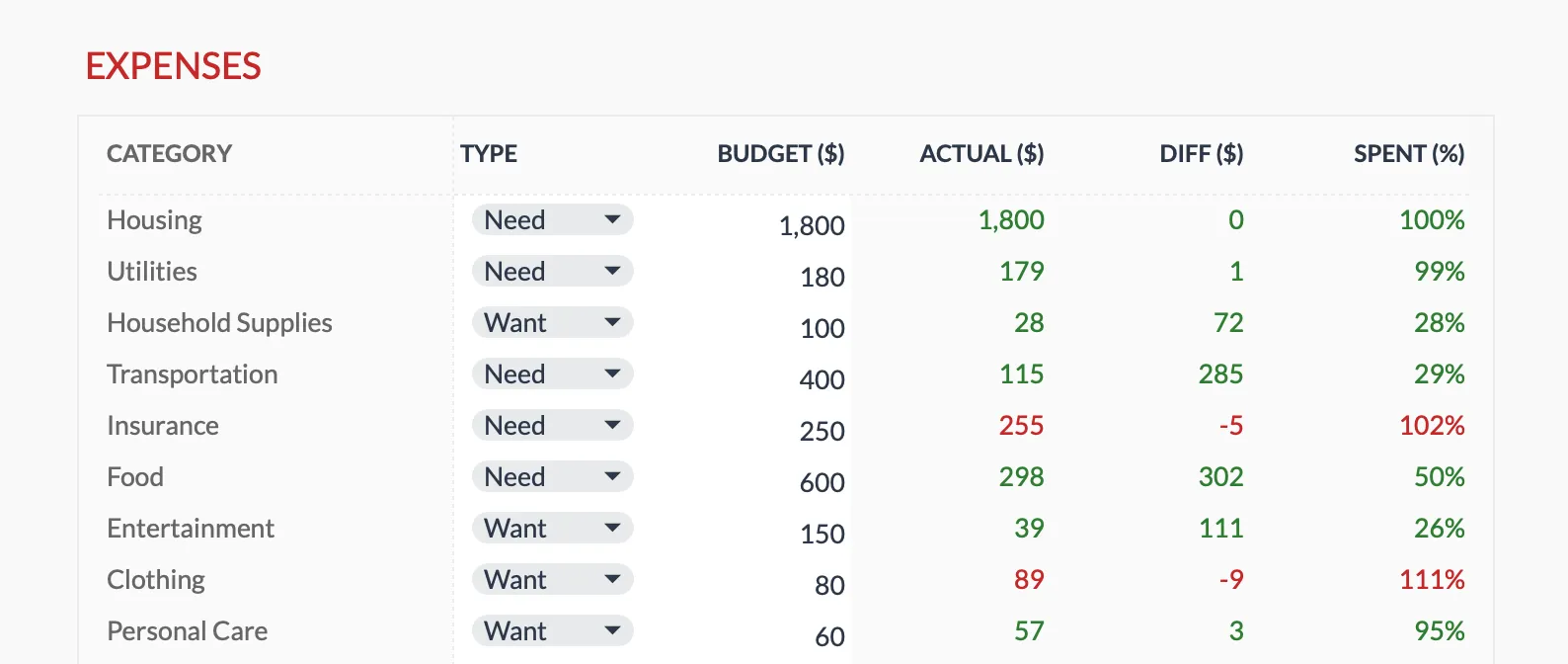
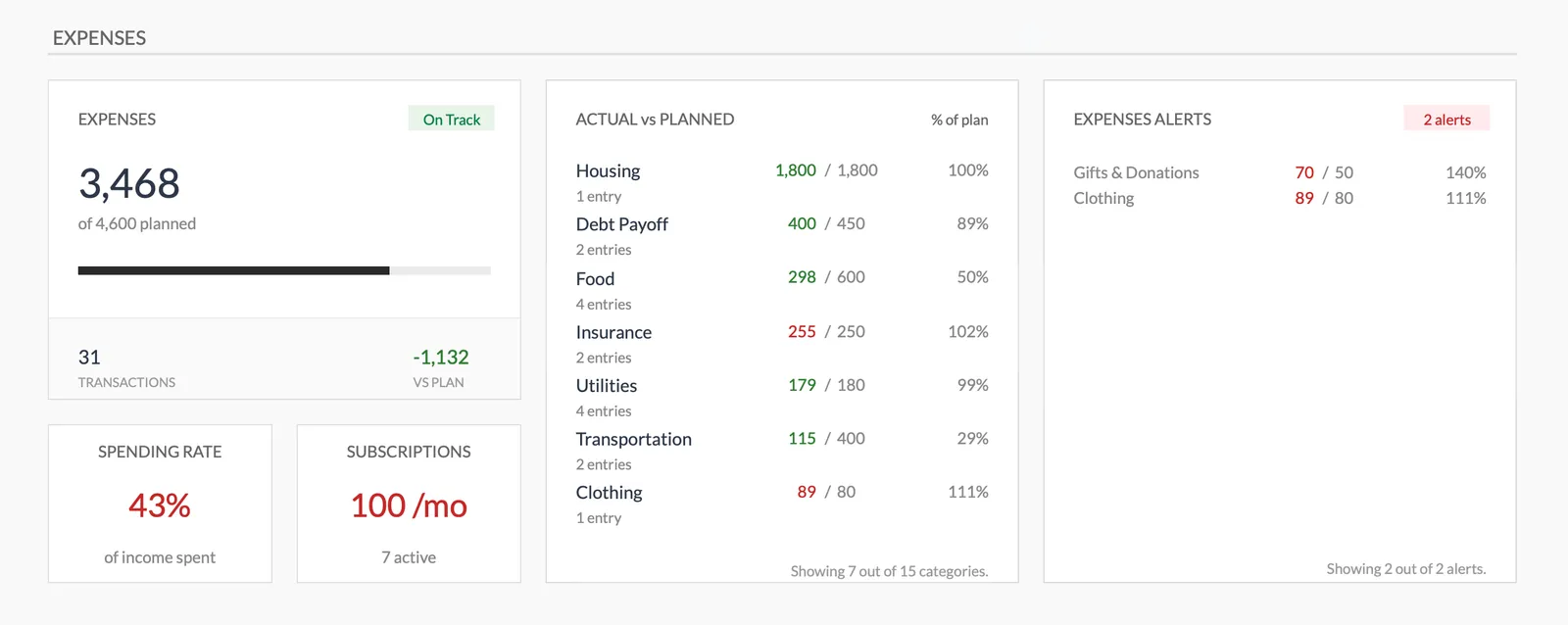
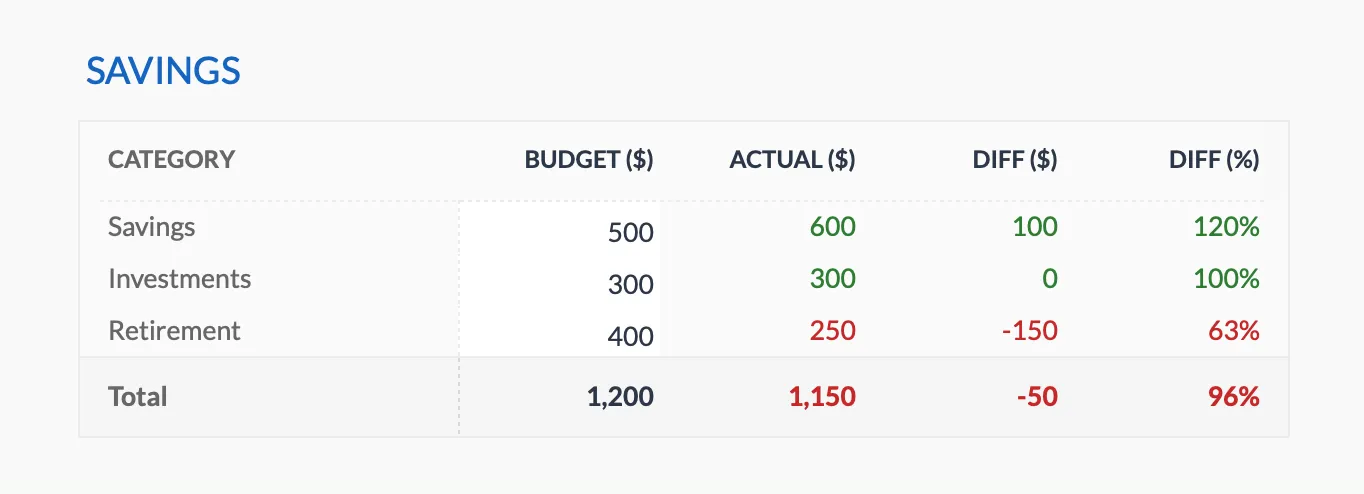
Dashboard with income, expenses, and savings at a glance
Log transactions with automatic categorization
Set targets per category and track actual spending
Visual breakdown of where your money goes
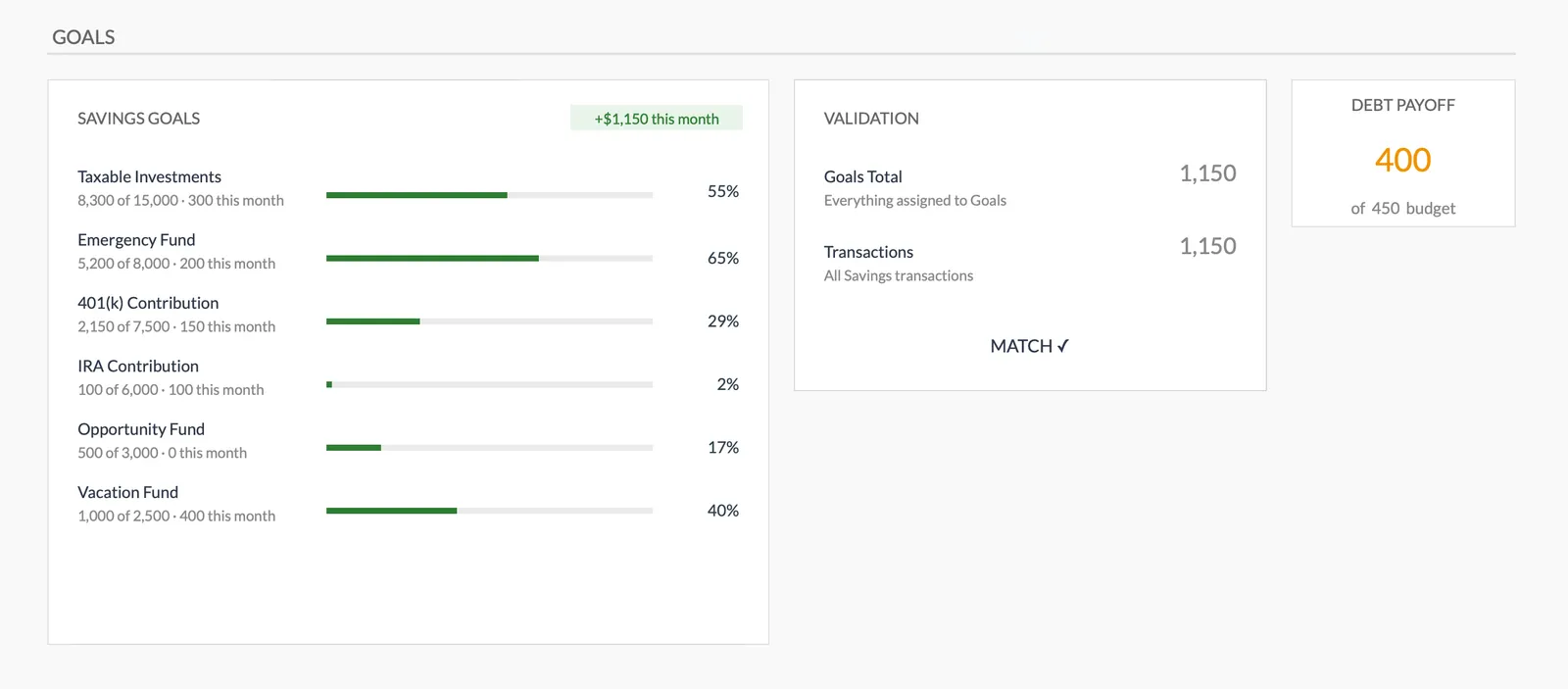
Track savings goals alongside your budget
Monitor progress toward financial goals
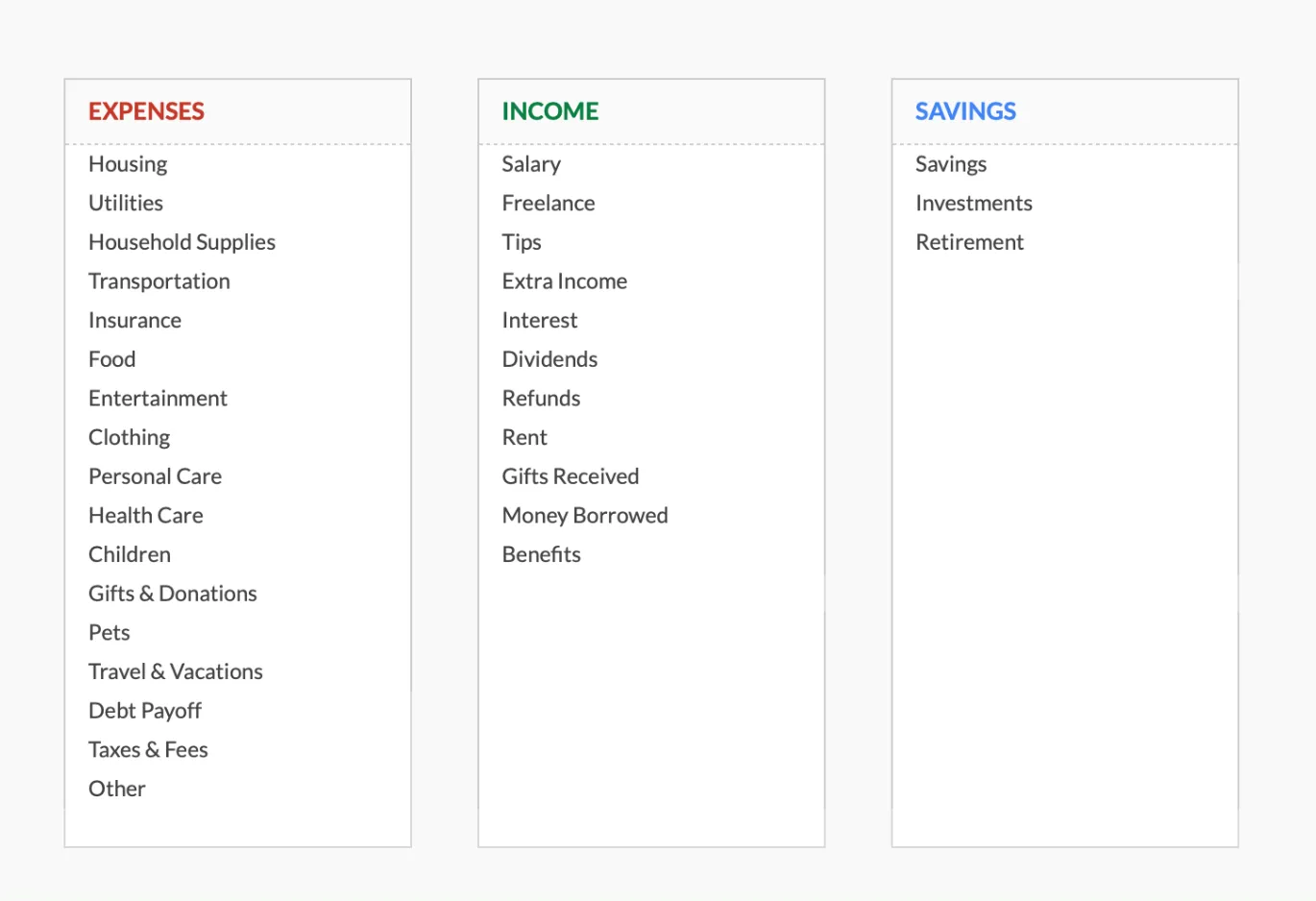
Fully customizable expense, income, and savings categories
Common Questions
Monthly Budget Template for the Philippines - FAQ
Does this template use Philippine pesos?
Yes. Pick PHP from the currency option in the header. The calculations are currency-neutral, so the math works the same regardless of what is displayed.
Should I track SSS and PhilHealth contributions?
They are deducted before take-home pay, so they do not need separate budget lines when net pay is used as income. Voluntary additional SSS or Pag-IBIG contributions, including MP2 savings, are paid out of net pay, so those do fit as their own category.
How do I handle 13th month pay and bonuses?
Add 13th month pay as income in the month it arrives, typically December. Under the TRAIN law the first PHP 90,000 of 13th month pay and other benefits is exempt from income tax, a ceiling unchanged for the 2026 tax year. Some people spread the amount across the year in their budget; others plan for it as a single December inflow.
Can I budget for OFW remittances?
Yes. For an OFW, money sent home fits as an expense category. For a household receiving remittances, the amounts go in as income. Tracking what actually arrives, rather than what was expected, shows the real cash flow over time.
Is there a Philippines-specific version?
The template is the same worldwide and built to be customized. This page covers how to adapt it for Philippine finances. Categories can be renamed, formatting adjusted, and the whole sheet set up to match your situation.
Can't find the answer you're looking for? Contact our team
Explore More
Free Tools for the Philippines
Ready to get started?
Download instantly and start managing your finances, or contact us to design a custom template package for your needs.
Tax rules, rates, and contribution limits change, and official publications can themselves lag behind the law in force. We review these figures on a best-effort basis against sources we consider authoritative, but we cannot guarantee they are current, complete, or that better sources do not exist, and nothing here is tax, legal, or financial advice. For decisions, the relevant government authority is the reference.