Nigeria
Retirement Planning Template for Nigeria
Lay out your RSA balance, voluntary contributions, personal investments, and projected retirement costs in a Google Sheets template you own.
In Depth
CPS, Retirement Savings Accounts, and the Role of Pension Fund Administrators
Nigeria's Contributory Pension Scheme (CPS), established by the Pension Reform Act of 2004 and revised in 2014, requires employers with 15 or more employees and their staff to contribute to a Retirement Savings Account (RSA). The statutory split is a minimum 8% from the employee and 10% from the employer, a combined 18% of monthly emoluments, and employers must also carry group life insurance worth three times annual emolument. Licensed Pension Fund Administrators (PFAs) manage the money and Pension Fund Custodians (PFCs) hold it. Workers choose their own PFA, so fees and historical returns differ from one account to the next.
The Nigeria Social Insurance Trust Fund (NSITF) provides a separate layer of social protection covering workplace injuries, occupational diseases, and related compensation. It applies to private sector employees and is funded by employer contributions of 1% of monthly payroll. NSITF is not a retirement scheme in itself, but it is part of the broader social safety net. For retirement-specific planning, the RSA balance and any Additional Voluntary Contributions are typically the main building blocks within the formal pension framework.
One challenge specific to Nigeria is that the CPS primarily covers formal sector employees. With a large portion of the working population in informal employment, many people have no access to the contributory scheme at all. The Micro Pension Plan, introduced by PenCom, extends pension coverage to the self-employed and informal workers through flexible contribution schedules. For those outside the formal system, personal savings, property, and family networks have traditionally served as the primary sources of retirement support.
Inflation and currency depreciation are persistent considerations when projecting retirement needs in naira. The purchasing power of a given RSA balance can erode meaningfully over a 20- or 30-year horizon if returns do not keep pace. PFAs operate a multi-fund structure with different risk profiles, running from the growth-oriented Fund I through the default Fund II, the pre-retirement Fund III and the retiree Fund IV, alongside Fund V for micro pension contributors and Fund VI for those who want non-interest, ethically screened assets. Age determines which funds a contributor is eligible for, and within that there is a choice.
Nigeria
Retirement Planning in Nigeria: Key Factors
Nigeria's contributory pension scheme provides a foundation, and personal savings and investments sit alongside it for many people given the country's economic dynamics.
The Contributory Pension Scheme forms the base
Under the Pension Reform Act, employers with 15 or more employees must enrol staff in the scheme. Employees contribute at least 8% of basic salary plus housing and transport allowances to a Retirement Savings Account (RSA), and employers contribute at least 10%, a combined minimum of 18%. Licensed Pension Fund Administrators (PFAs) manage the funds. The accumulated balance at retirement determines the pension income, taken either as a programmed withdrawal or as a lump sum plus an annuity.
Additional Voluntary Contributions offer flexibility
Beyond the mandatory contributions, employees can pay Additional Voluntary Contributions (AVC) into their RSA. Contributions to an approved scheme are deductible for tax, and under PenCom rules a contributor can withdraw part of the AVC balance periodically rather than waiting for retirement, with the investment income taxed where the withdrawal happens inside five years. That combination means AVCs can serve medium-term goals as well as retirement, on terms set by the scheme rules rather than freely.
Inflation erodes naira-denominated savings quickly
Nigeria has had double-digit inflation for years. It has cooled from its peak to around 15% year on year by mid-2026, with the CBN's monetary policy rate at 26.50%, but that is still a fast erosion rate over a retirement horizon. Savings held in naira lose purchasing power unless the return runs ahead of inflation, which is why nominal balances and real balances can tell very different stories in a Nigerian projection.
Many Nigerians plan for retirement income beyond pension
Rather than relying on pension savings alone, many Nigerians build additional income streams for later life: rental property, business interests, agricultural investments, and family support networks. A plan that lists all expected income sources rather than the RSA balance on its own gives a fuller picture.
Get the Template
Getting Started
Personalizing the Retirement Planner for Nigerian PFA Accounts
Enter current retirement savings
List your RSA balance (your PFA can confirm it), any Additional Voluntary Contributions, bank savings, investments such as stocks, bonds and mutual funds, property value, and any other long-term assets earmarked for retirement.
Enter RSA, AVC, and other savings amounts
Enter mandatory pension contributions (employee and employer share), AVC amounts, and any additional savings or investment contributions. This drives the growth projections.
Estimate retirement expenses
Project monthly costs in retirement across housing, healthcare, food, transport, utilities including generator running costs, domestic staff, and family obligations. Healthcare is the line that most often turns out larger than the first estimate, since medical spending typically rises with age.
Set growth and inflation assumptions
Nigerian inflation has been high and volatile, running above 30% at its 2024 peak before easing to roughly 15% by mid-2026. The gap between the nominal return you assume and the inflation rate you assume is what actually drives the projection, so it is worth running the template more than once across a range rather than settling on a single pair of numbers.
Plan for multiple income streams
The template has room for all potential retirement income: RSA pension, rental income from property, business income, dividends, and anything else. Entering each separately shows how much of the total leans on any single source.
See It In Action
What the template looks like
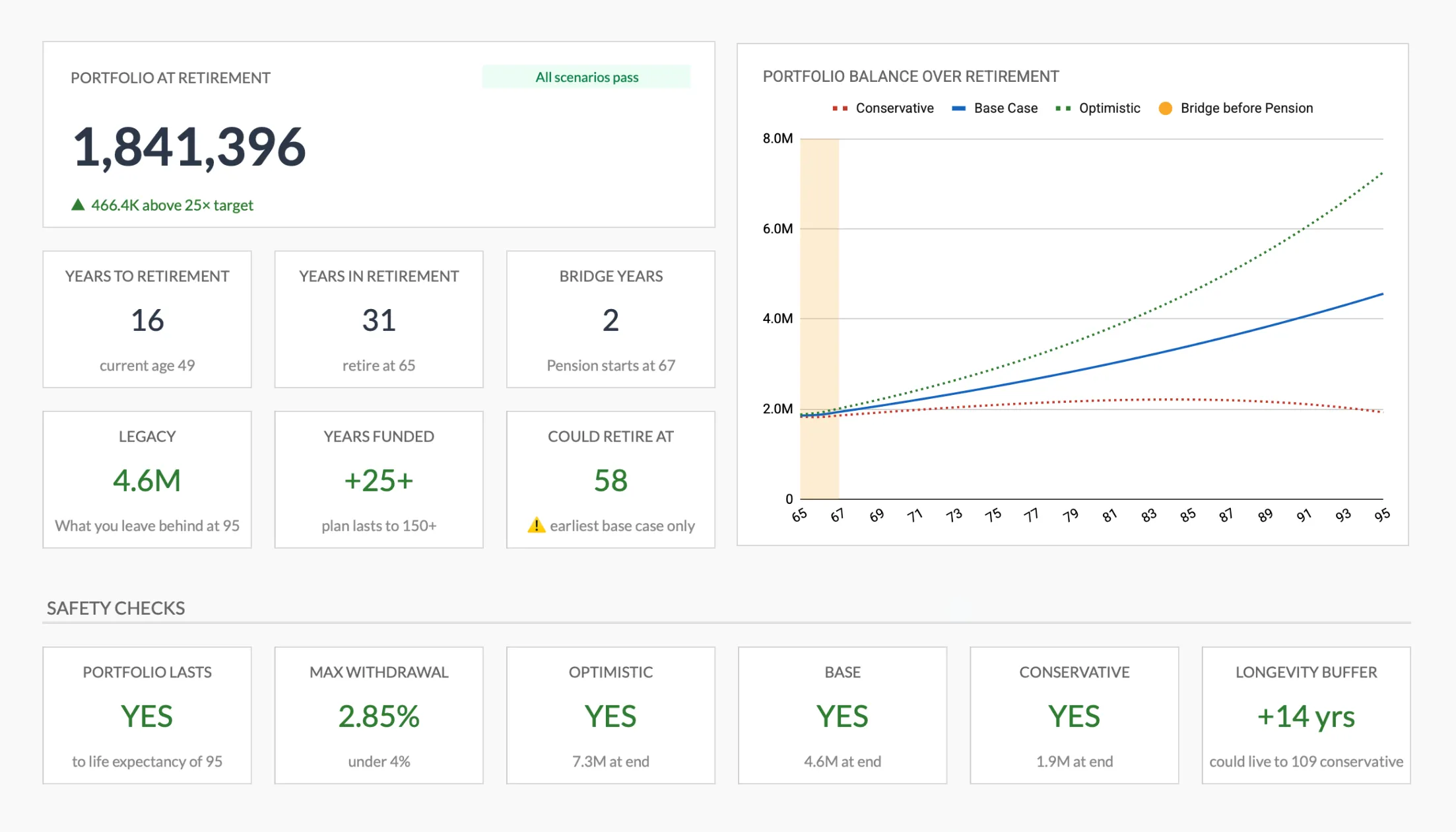
Browse through the template to see the dashboard, the entry sheets, and the summaries it produces, all adaptable to your local financial setup.
- Built-in currency selector
- Calculations update automatically
- Visual summaries of your numbers
- No setup required
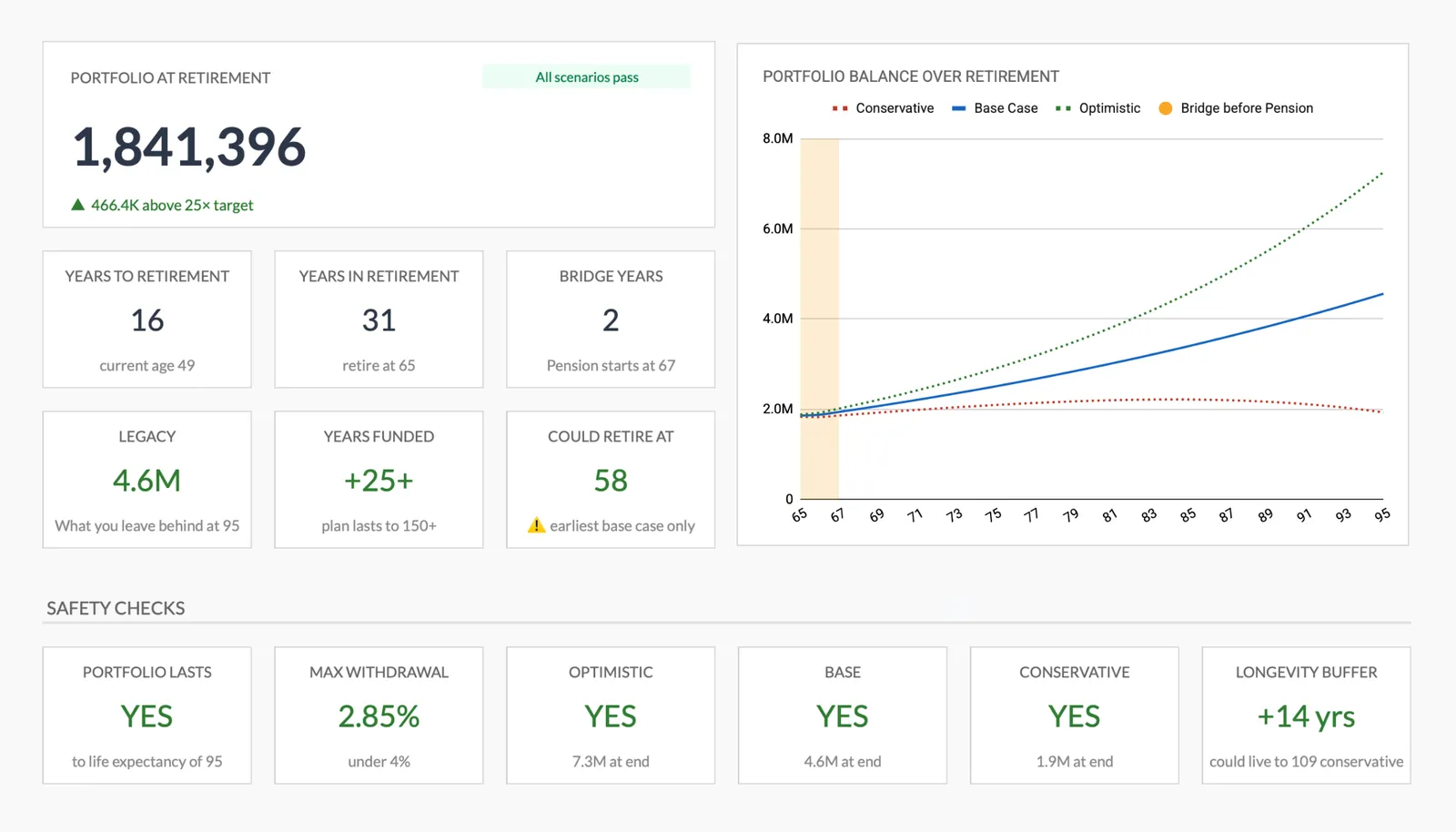
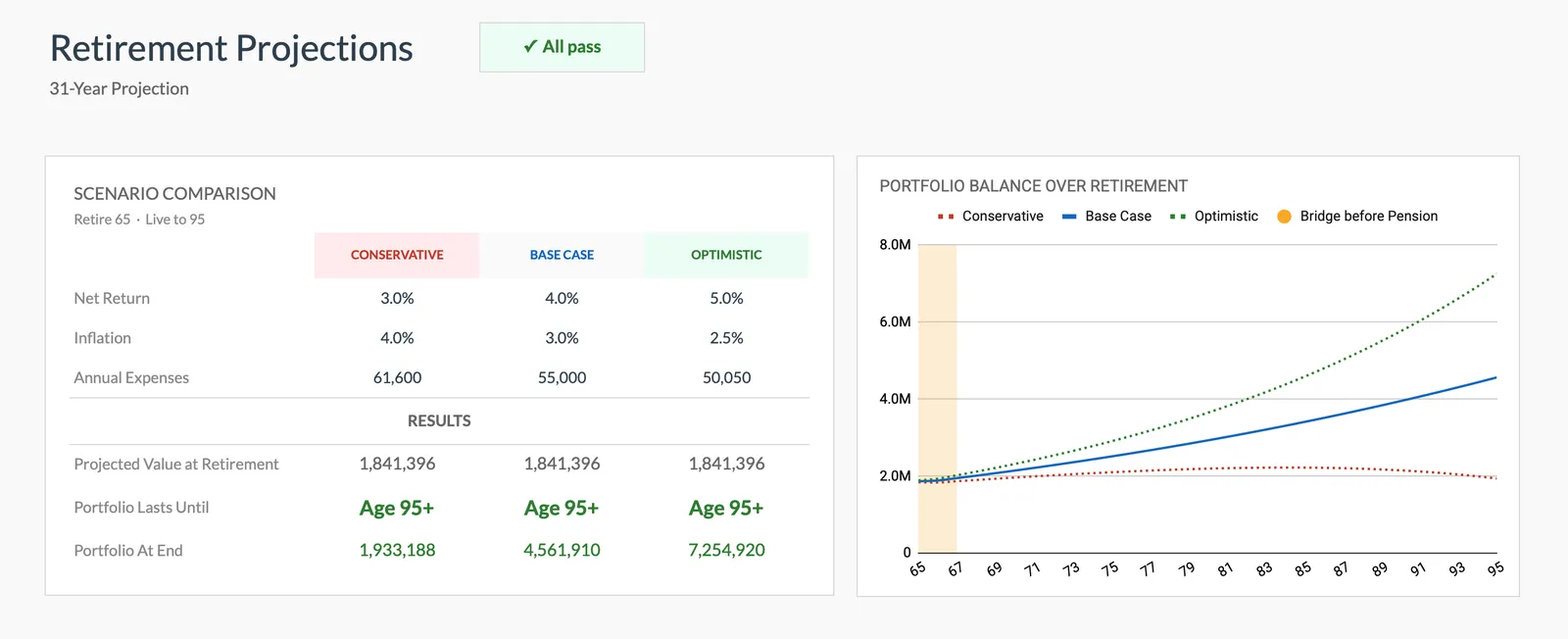
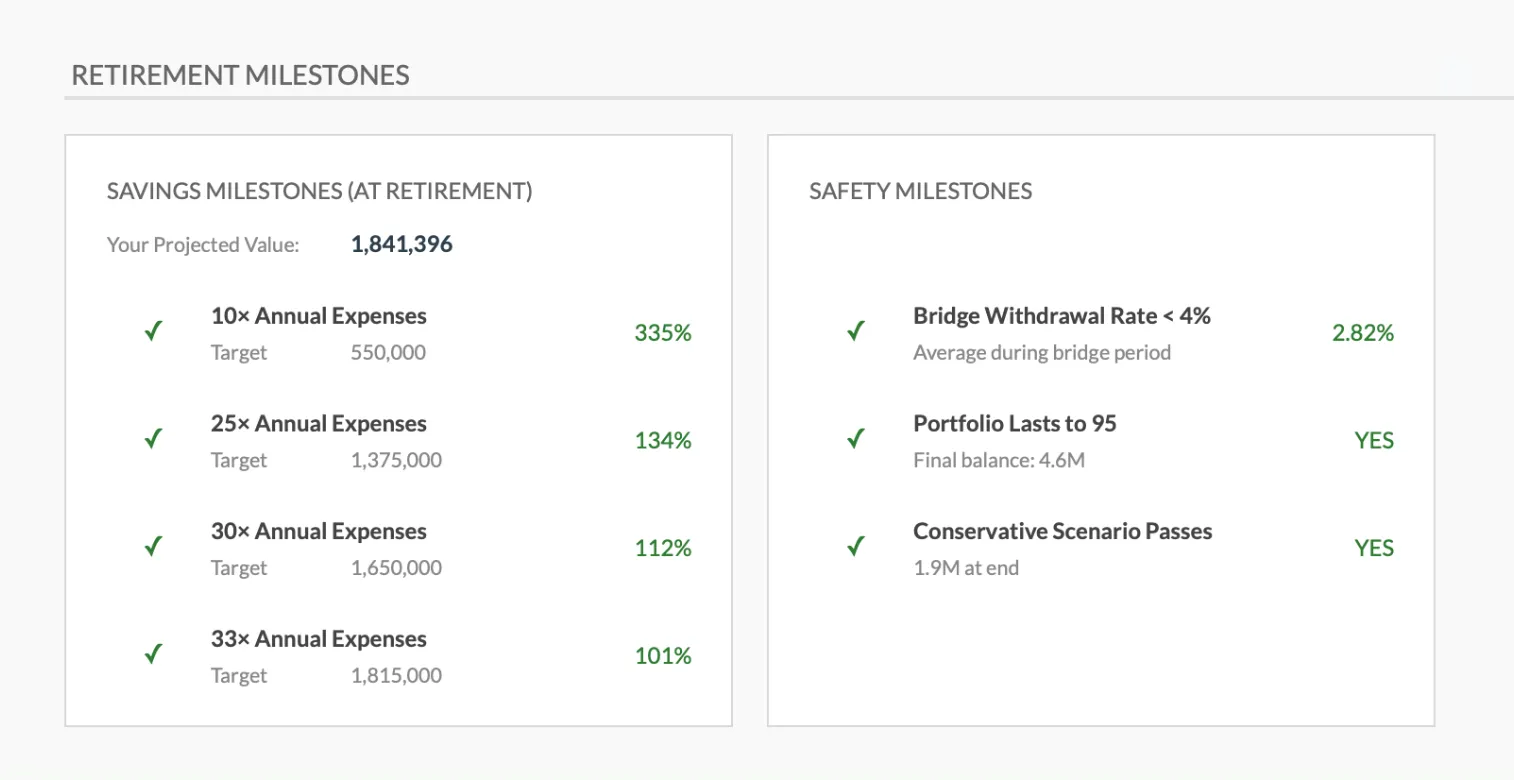
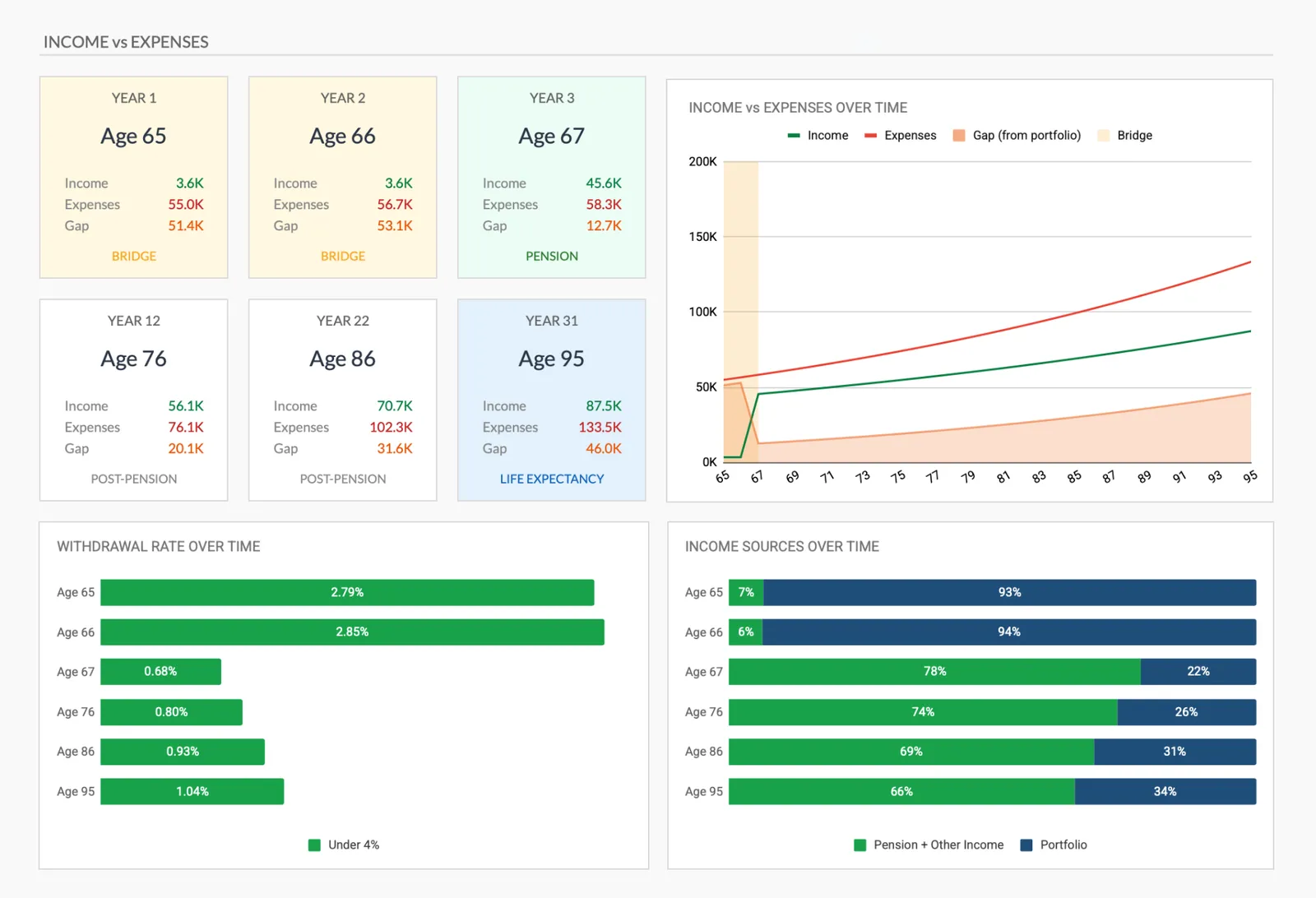
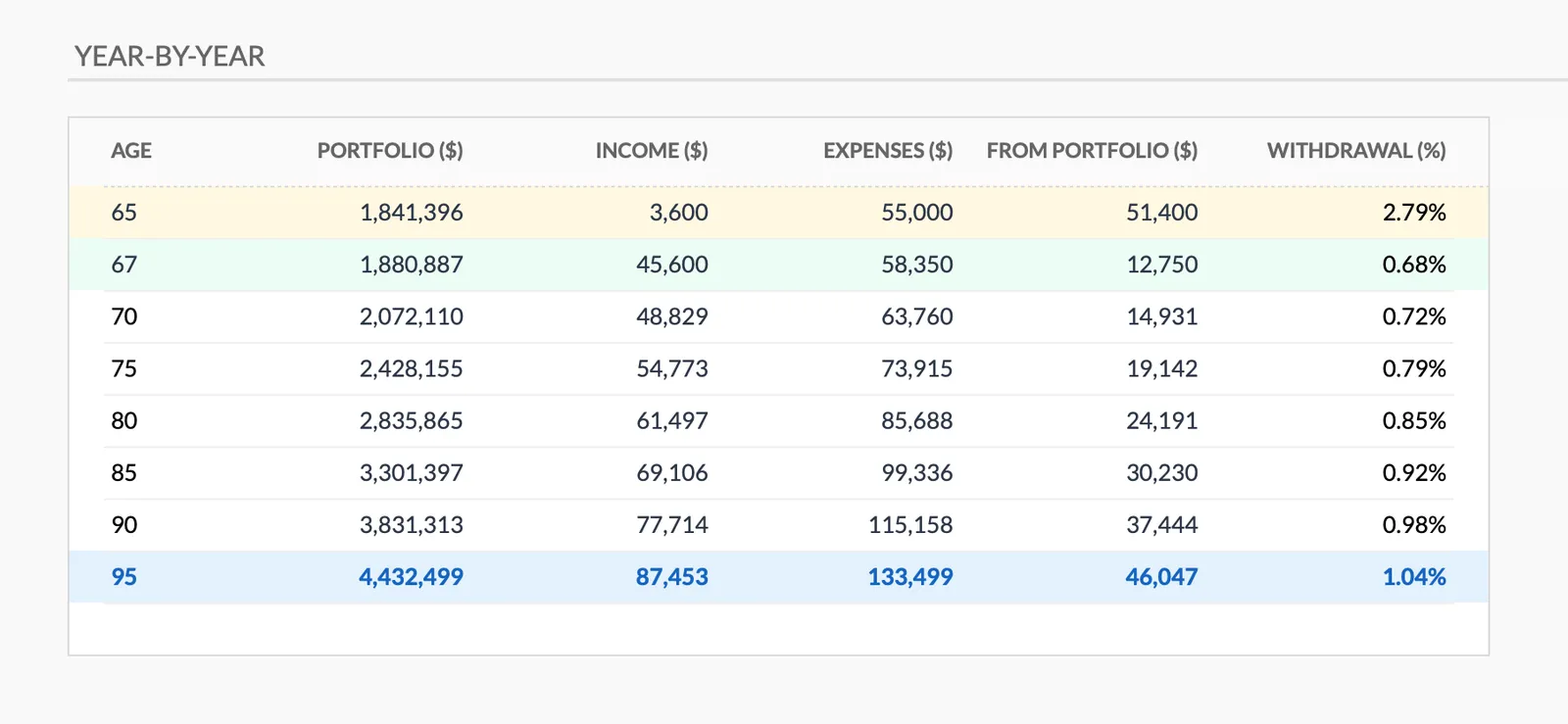
Complete retirement overview with projections
Project your retirement savings growth
Track progress toward retirement goals
Plan your retirement income against expenses
Detailed year-by-year retirement projection
Common Questions
Retirement Planning Template for Nigeria - FAQ
How much do I need to retire in Nigeria?
This depends heavily on lifestyle, location, and inflation assumptions. One starting point is to estimate monthly expenses and multiply by the number of months in retirement. Given Nigeria's inflation record, a buffer above that estimate is worth considering. The template helps you work through your specific numbers.
When can I access my RSA?
Access opens at age 50, or earlier on retirement in line with the terms of employment. Someone who loses their job and is still out of work after four months can draw up to 25% of the RSA balance. At retirement, the balance can be taken as a programmed withdrawal or used to buy an annuity, and a lump sum is possible provided the remaining balance can still fund periodic payments of at least 50% of the final salary.
Is the contributory pension enough for retirement?
For most formal sector workers the RSA balance provides a foundation, and whether it covers a comfortable retirement on its own depends on the contribution history and on inflation over the years in between. AVCs, personal investments and other income sources are the routes people commonly use to add to it.
How do I protect savings against naira depreciation?
Approaches people use include dollar-denominated investments such as Eurobonds and foreign currency accounts where available, property, and diversified investment funds. Each carries its own risks, and note that interest on foreign currency domiciliary accounts lost its tax exemption under the Nigeria Tax Act 2025 from the 2026 tax year. The right mix depends on individual circumstances and risk tolerance.
Can I change my PFA?
Yes. The RSA Transfer System lets a contributor move from one Pension Fund Administrator to another, and a transfer can be made once in a calendar year through quarterly transfer windows. PenCom (National Pension Commission) publishes fund performance data, which alongside fees and service quality is what most comparisons rest on.
Can't find the answer you're looking for? Contact our team
Explore More
Free Tools for Nigeria
Ready to get started?
Download instantly and start managing your finances, or contact us to design a custom template package for your needs.
Tax rules, rates, and contribution limits change, and official publications can themselves lag behind the law in force. We review these figures on a best-effort basis against sources we consider authoritative, but we cannot guarantee they are current, complete, or that better sources do not exist, and nothing here is tax, legal, or financial advice. For decisions, the relevant government authority is the reference.