Nigeria
Monthly Budget Template for Nigeria
Track your income in NGN, manage PAYE deductions, pension contributions, and everyday expenses, all in a Google Sheets template you own.
In Depth
Budgeting Around Naira Volatility, PAYE, and the Informal Economy
The naira's exchange rate has moved a long way since the Central Bank of Nigeria shifted toward a more market-driven rate in 2023. For anyone who earns in naira but carries costs tied to imported goods or dollar prices, whether that is school fees, rent in certain areas, or fuel, that volatility feeds straight into purchasing power. Inflation has eased from its peak to roughly 15% year on year by mid-2026, with the CBN's monetary policy rate held at 26.50%, but food prices have kept climbing faster than the headline number. A budget that felt comfortable one month can come under pressure the next, which is where tracking spending as it happens rather than working from assumptions weeks old tends to earn its keep.
For formal sector employees, Pay As You Earn remains the primary income tax mechanism, and the Nigeria Tax Act 2025 reset it from 1 January 2026. The Act consolidated the old Personal Income Tax Act rules into a single statute, opened a 0% band on the first NGN 800,000 of annual taxable income, raised the top marginal rate to 25% above NGN 50 million, and swapped the Consolidated Relief Allowance for a rent relief capped at NGN 500,000. Employers withhold PAYE before salary reaches your account, so the net figure is what a monthly budget has to work with. Worth noting: states administer personal income tax separately, and there is variation in how quickly assessments and refunds are processed.
A large share of Nigeria's economy operates informally, and many households draw income from both formal employment and informal sources such as trading, freelance work, agriculture, or side businesses. That mixed-income reality means budgeting often involves tracking cash flows that never appear on a payslip. Some people find it useful to separate formal and informal income streams in their budget to get a clearer picture of where money actually comes from and how reliable each source tends to be.
Nigeria
Budgeting in Nigeria: What's Different
Nigeria's financial landscape has characteristics that affect how budgeting works. Here is the context worth having before setting a template up.
PAYE bands changed in January 2026
The Nigeria Tax Act 2025 came into force on 1 January 2026 and replaced the old PAYE table. For the 2026 tax year the first NGN 800,000 of annual taxable income is taxed at 0%, then 15% on the next NGN 2.2 million, 18% on the next NGN 9 million, 21% on the next NGN 13 million, 23% on the next NGN 25 million, and 25% above NGN 50 million. Earnings at or below the NGN 70,000 monthly minimum wage fall outside PAYE.
Rent relief replaced the Consolidated Relief Allowance
The Consolidated Relief Allowance is gone from the 2026 tax year. The relief that took its place is the lower of NGN 500,000 or 20% of annual rent actually paid, and it only applies where the rent is declared with the required details. Pension, National Housing Fund and health insurance contributions stay deductible. For many salaried people the net effect is a lower tax bill at the bottom of the scale and a higher one at the top, so a payslip from 2025 is no longer a reliable guide to current take-home pay.
Contributory pension reduces gross pay
Under the Pension Reform Act, employers with 15 or more employees must enrol staff in the scheme. Employees contribute a minimum of 8% of basic salary, housing and transport allowances to their Retirement Savings Account (RSA), and employers add at least 10%. That 8% comes out before take-home pay, so a budget built on the amount actually credited already accounts for it.
Inflation and currency moves affect purchasing power
The naira depreciated sharply after the Central Bank of Nigeria moved to a more market-determined rate in 2023, and inflation ran well into double digits. Price growth has since cooled to around 15% year on year through mid-2026, with food inflation still running above the headline rate. Prices for imported goods can move quickly and fuel costs feed into transport and logistics, so figures carried over from an older budget can drift out of date faster here than elsewhere.
Get the Template
Getting Started
Your First Steps With a Nigerian Budget in Naira
Switch the currency to NGN
Pick NGN or the naira symbol from the currency dropdown at the top of the dashboard. The calculations stay the same and only the display changes.
Enter your after-tax, after-pension take-home pay
The amount actually credited to your bank account after PAYE and pension deductions is the figure the template works from. Your payslip or bank credit alert shows that net amount.
Customize expense categories for Nigerian life
Add categories for rent (often paid annually), electricity and DisCo bills, generator fuel or diesel, internet and data, transport (fuel, maintenance, or ride-hailing), groceries and market, school fees, domestic staff, security levy, and any other regular expenses.
Account for annual rent payments
Nigerian landlords typically require a year of rent upfront. One approach is to enter a twelfth of the annual figure as a monthly line so the budget carries the cost every month rather than absorbing it in one hit. Some people hold that amount in a separate savings account until the payment falls due.
Plan for irregular and seasonal expenses
School fees are usually paid per term, and festive periods (Christmas, Sallah), family events such as weddings and ceremonies, vehicle maintenance and annual insurance renewals all land unevenly across the year. Giving each of these a line makes it visible in the months before it arrives.
See It In Action
What the template looks like
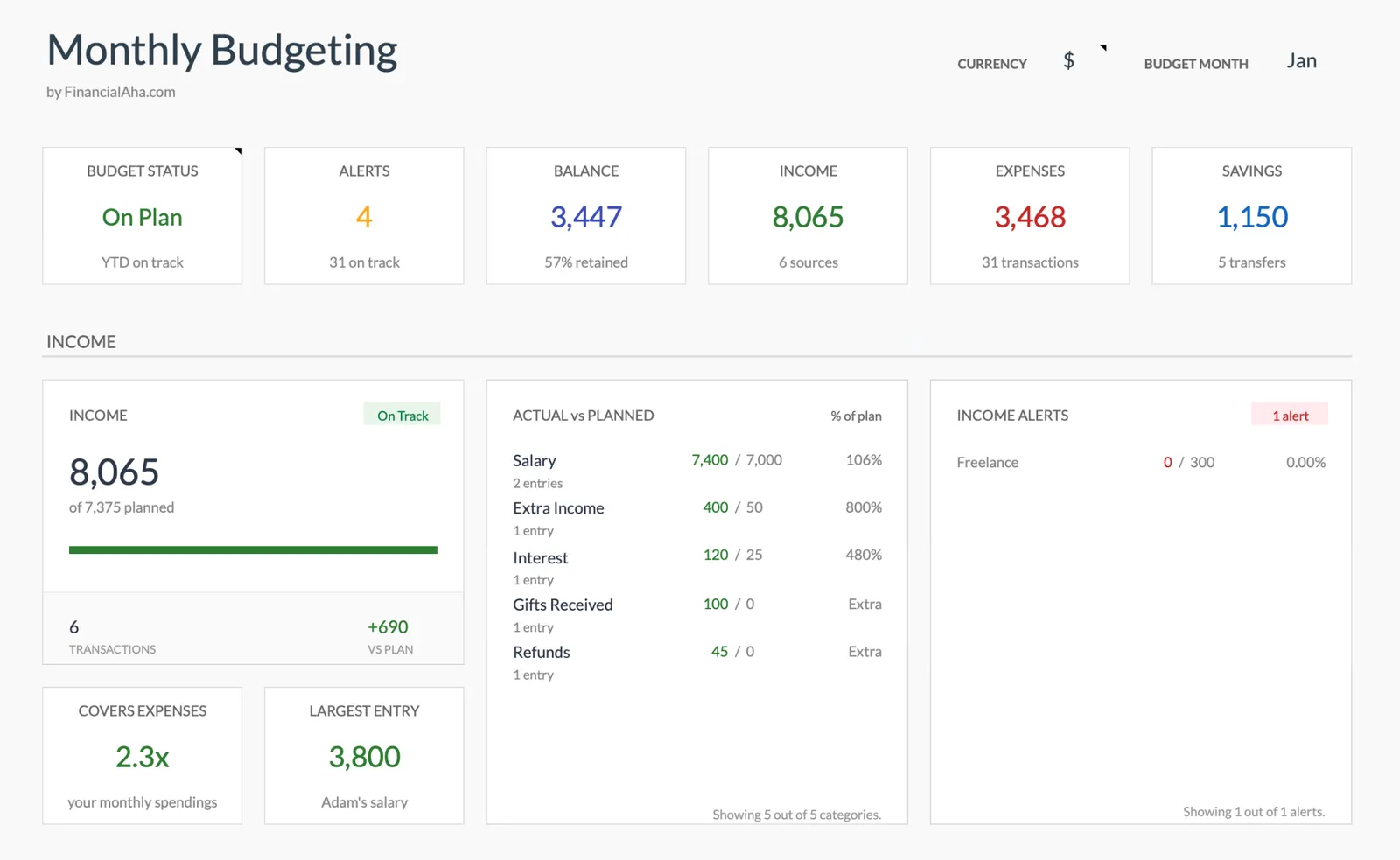
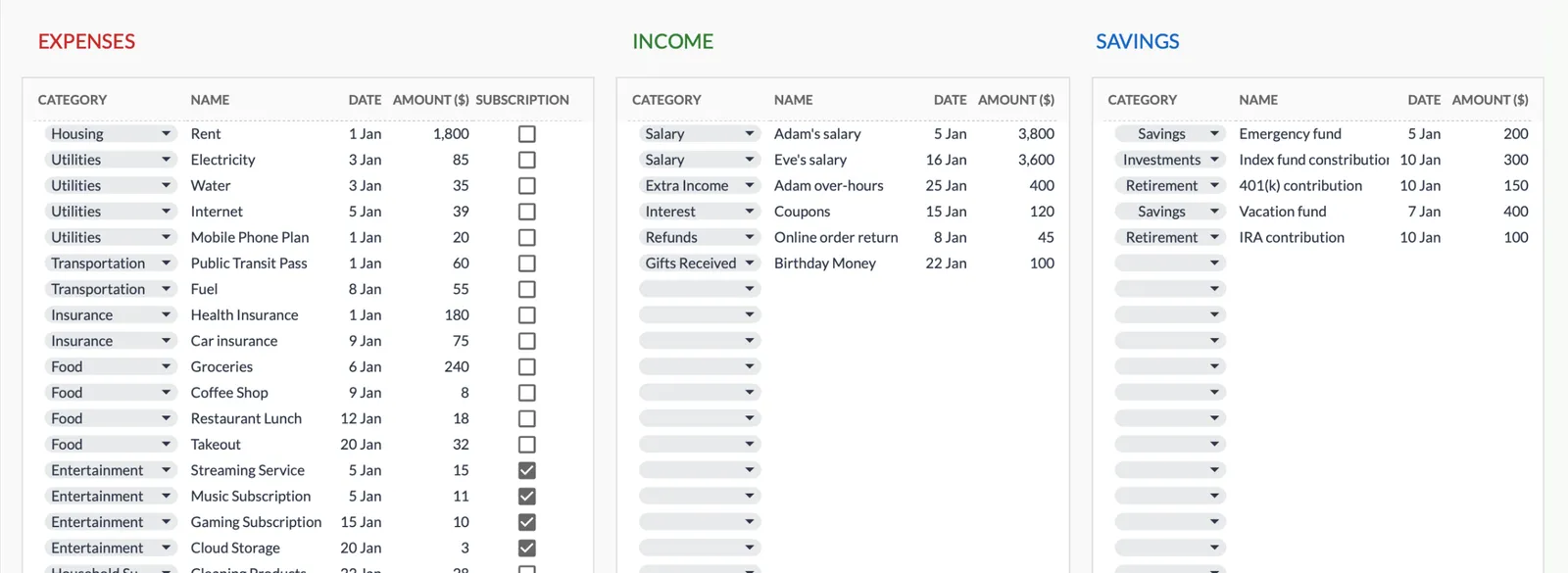
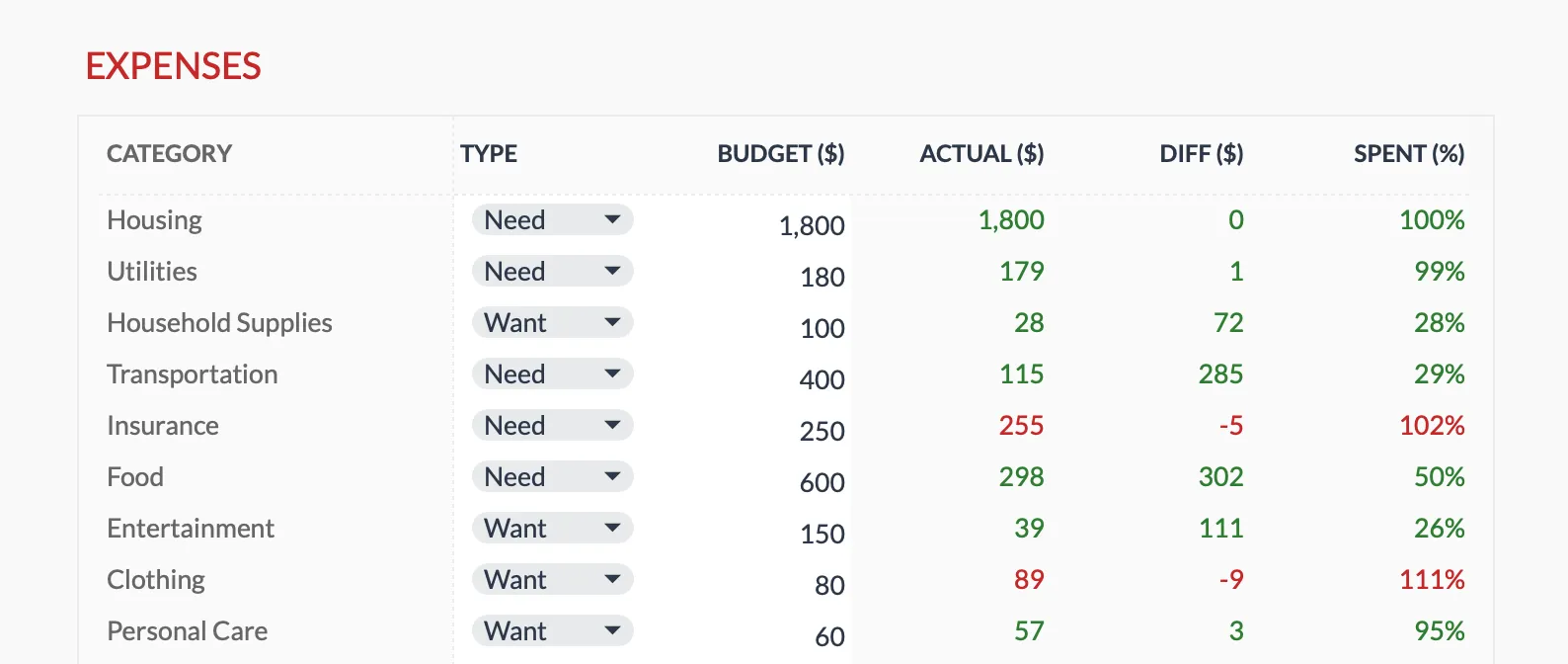
Browse through the template to see the dashboard, the entry sheets, and the summaries it produces, all adaptable to your local financial setup.
- Built-in currency selector
- Calculations update automatically
- Visual summaries of your numbers
- No setup required
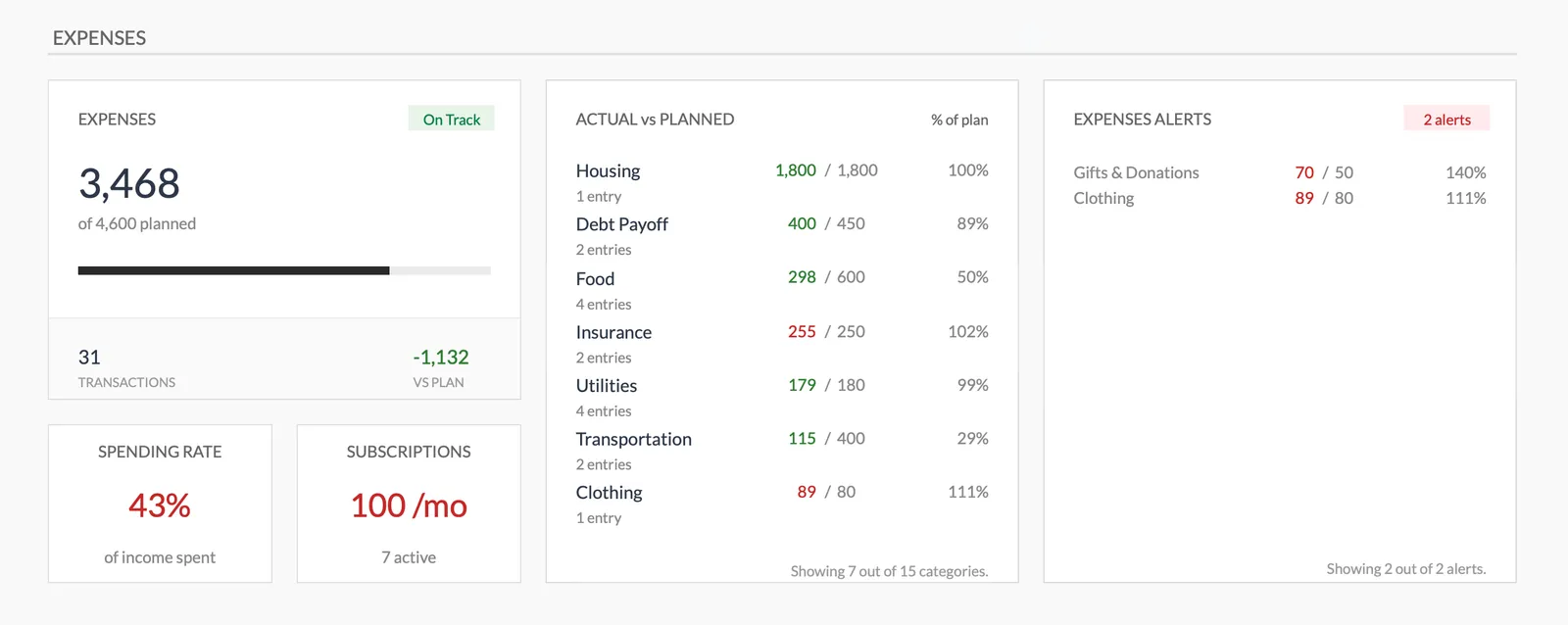
Dashboard with income, expenses, and savings at a glance
Log transactions with automatic categorization
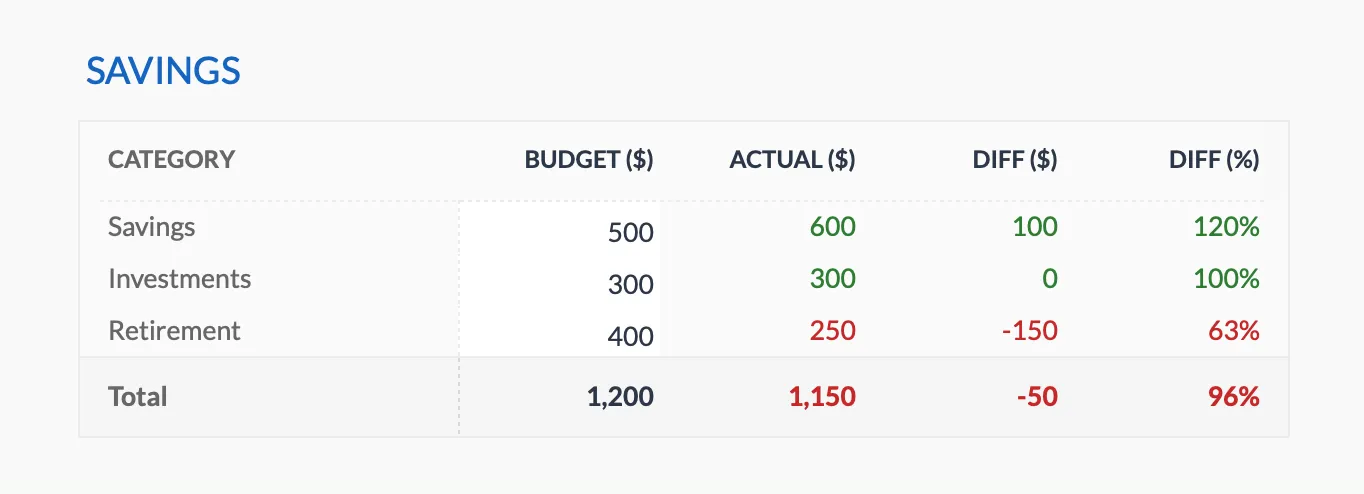
Set targets per category and track actual spending
Visual breakdown of where your money goes
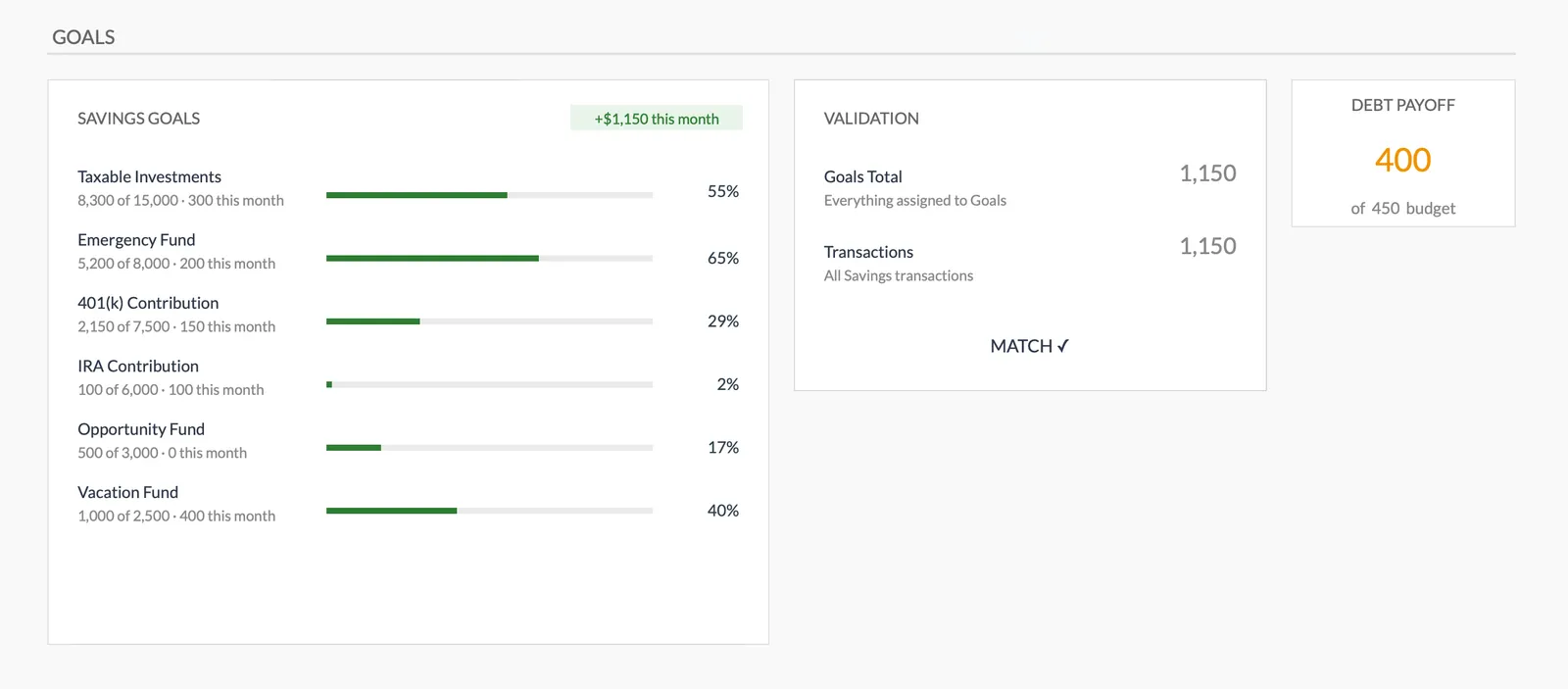
Track savings goals alongside your budget
Monitor progress toward financial goals
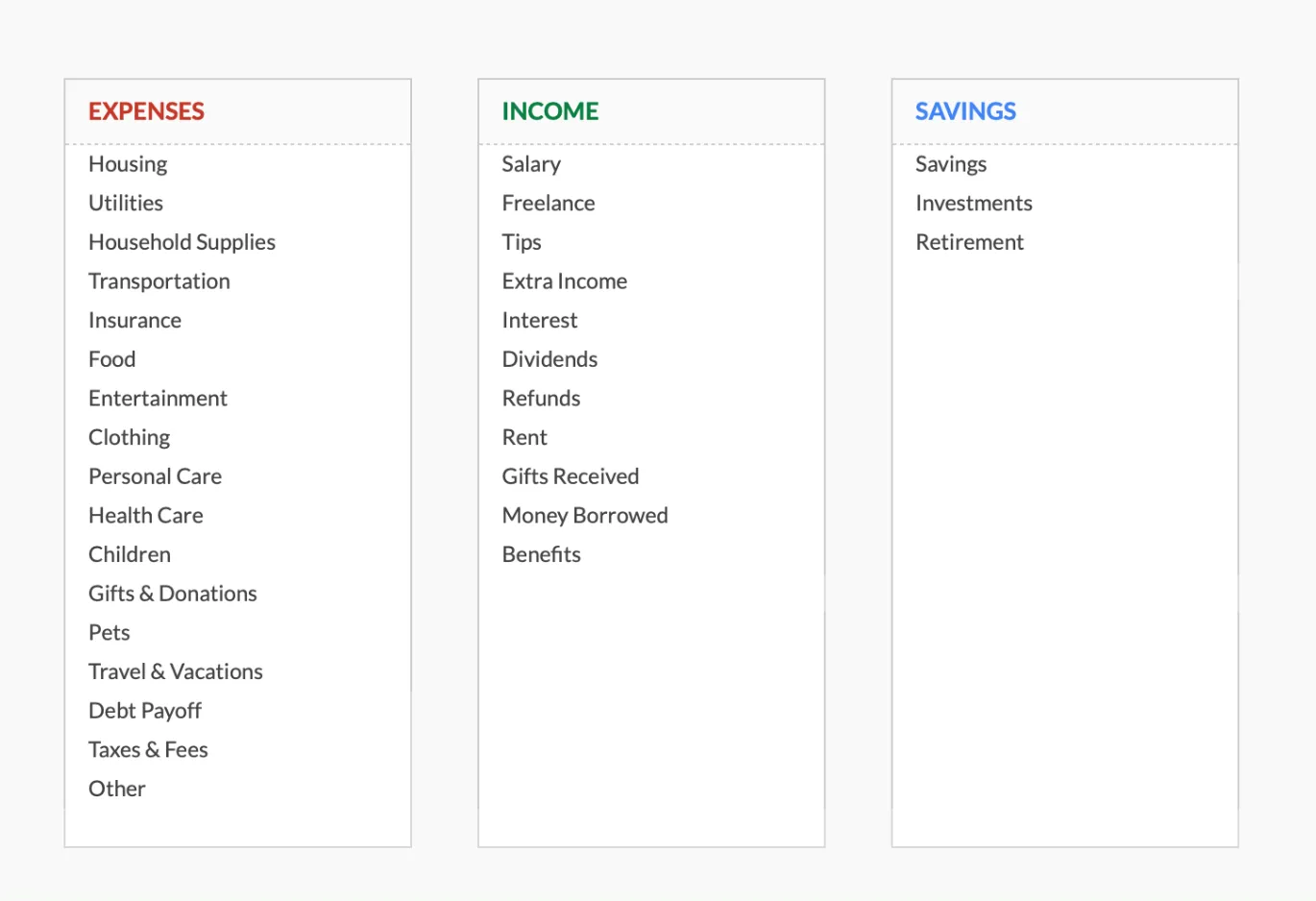
Fully customizable expense, income, and savings categories
Common Questions
Monthly Budget Template for Nigeria - FAQ
Does this template use naira?
Yes. Switch to NGN using the currency option in the header. The formulas work the same in any currency, so only the display symbol changes.
Should I track pension contributions?
Pension contributions are deducted before your take-home pay, so they do not need a separate line if you enter net credited salary as income. Additional Voluntary Contributions (AVC) to an RSA are paid out of that net amount, so they do fit as a budget category.
How do I budget for annual rent?
A twelfth of the annual rent entered as a monthly category treats rent as a recurring cost even though the payment is annual. Some people hold that amount in a separate savings account so the money is already there when the landlord asks for it. Worth knowing: rent paid also feeds the rent relief that replaced the Consolidated Relief Allowance from the 2026 tax year, so keeping the receipts has a second use.
Can I track multiple income sources?
Yes. Add each income source as a separate line covering salary, side business income, rental income, dividends and anything else. Tracking all income in one place gives a complete picture of your financial inflows.
Is there a Nigeria-specific version?
The template is the same worldwide and designed to be customizable. This page explains how to set it up for Nigerian finances. You can rename categories and adjust everything to match your specific situation.
Can't find the answer you're looking for? Contact our team
Ready to get started?
Download instantly and start managing your finances, or contact us to design a custom template package for your needs.
Tax rules, rates, and contribution limits change, and official publications can themselves lag behind the law in force. We review these figures on a best-effort basis against sources we consider authoritative, but we cannot guarantee they are current, complete, or that better sources do not exist, and nothing here is tax, legal, or financial advice. For decisions, the relevant government authority is the reference.