Australia
Retirement Planning Template for Australia
Map out your retirement, covering super balance, voluntary contributions, Age Pension eligibility and projected expenses, in a Google Sheets template you own.
In Depth
Super, Preservation Age, and the Australian Retirement Timeline
Retirement planning in Australia is shaped by superannuation, a system that accumulates steadily over decades and then holds the money until preservation age. For anyone born after 30 June 1964 that age is 60, which since 1 July 2024 means everyone still in the workforce. The compulsory 12% employer contribution is a forced savings mechanism many countries lack, and it puts as much weight on the drawdown strategy as on the accumulation years.
The Age Pension means test creates a planning consideration that reads as counterintuitive at first. As super balances grow they can reduce or remove Age Pension entitlement, because under the assets test the payment tapers by $3 per fortnight for every $1,000 of assessable assets above the free area. Each extra dollar of super above that point therefore comes with a partial offset in government support, which makes the total retirement income picture more complex than assuming more super always means more income.
The Transition to Retirement strategy becomes available at preservation age and lets someone draw an income stream from super while still working. Paired with salary sacrifice, employment income can be redirected into super at 15% tax while the TTR pension supplements the reduced salary. How well that works out depends on individual circumstances and on the marginal rate the sacrifice is displacing.
Healthcare costs in Australian retirement are cushioned by Medicare, which covers bulk-billed GP visits and public hospital care. Private health insurance, prescription medications through the PBS, dental and optical care remain out-of-pocket costs that tend to rise with age. The lifetime health cover loading on private insurance, which adds 2% to premiums for each year after age 30 without hospital cover, is another figure that shows up in retirement planning for anyone who took out cover late.
Australia
Retirement Planning in Australia: Key Factors
Australian retirement planning centres on superannuation as the primary savings vehicle, supplemented by the means-tested Age Pension and personal savings.
Superannuation is the foundation
With the super guarantee at 12% of ordinary time earnings since 1 July 2025, super is the primary retirement funding source for most Australians. The Association of Superannuation Funds of Australia publishes a retirement standard that has pointed to lump sums in the region of $595,000 for a single person and $690,000 for a couple who own their home outright, alongside quarterly budget figures that move with inflation. These are population benchmarks rather than personal targets.
Preservation age and access rules matter
Super is preserved until age 60 for anyone born after 30 June 1964, which since 1 July 2024 covers everyone still working. From preservation age the options are a lump sum, an income stream such as an account-based pension, or a combination. Withdrawals after 60 from a taxed fund are generally tax free. The access age is one of the fixed points a retirement timeline is built around.
The Age Pension provides a safety net
The Age Pension starts at age 67 and is means tested on both income and assets. Maximum rates and the test thresholds are indexed twice a year, in March and September, and Services Australia publishes the current figures. Under the assets test a single homeowner receives the full rate below the free area, and above it the payment reduces by $3 per fortnight for every $1,000 of assessable assets. Knowing roughly where a projected balance falls on that taper makes the total income picture easier to estimate.
Transition to retirement strategies
From preservation age, super can be accessed through a Transition to Retirement income stream while still working. Pairing that with salary sacrifice means contributions go in taxed at 15% while the TTR pension tops up a reduced salary. Because preservation age is now 60 for everyone, this is an early-sixties arrangement rather than a late-fifties one.
Get the Template
Getting Started
Your First Steps With Australian Retirement Planning
Enter your current super balance
Log into your super fund's online portal and enter your current balance. If you have multiple super funds (common if you've changed jobs), include all of them. The ATO's myGov portal shows all super accounts linked to your TFN.
Add contribution details
Enter annual employer contributions at 12% of ordinary time earnings, any salary sacrifice, and after-tax contributions. For 2026-27 the concessional cap is $32,500 and the non-concessional cap is $130,000. A running total against each cap keeps the remaining headroom visible.
Estimate Age Pension eligibility
Using your projected super balance and other assets at age 67, work out whether a full, part or nil Age Pension is likely. Services Australia's online estimators use the current thresholds, which are indexed twice a year. Any pension entitlement forms part of the retirement income alongside super.
Project retirement expenses
Estimate annual retirement costs. The ASFA retirement standard is one reference point: its quarterly figures have recently put a comfortable budget for a home-owning couple in the mid-$70,000s a year and a modest budget near $48,000, with single figures lower. What a given household needs depends on lifestyle, location and whether the home is paid off.
Consider the pre-60 and post-60 phases
Reducing work before 60 means the years before preserved super becomes accessible have to be funded from non-super savings. After 60, withdrawals from a taxed fund are generally tax free. Mapping the two phases separately shows whether each one is covered.
See It In Action
What the template looks like
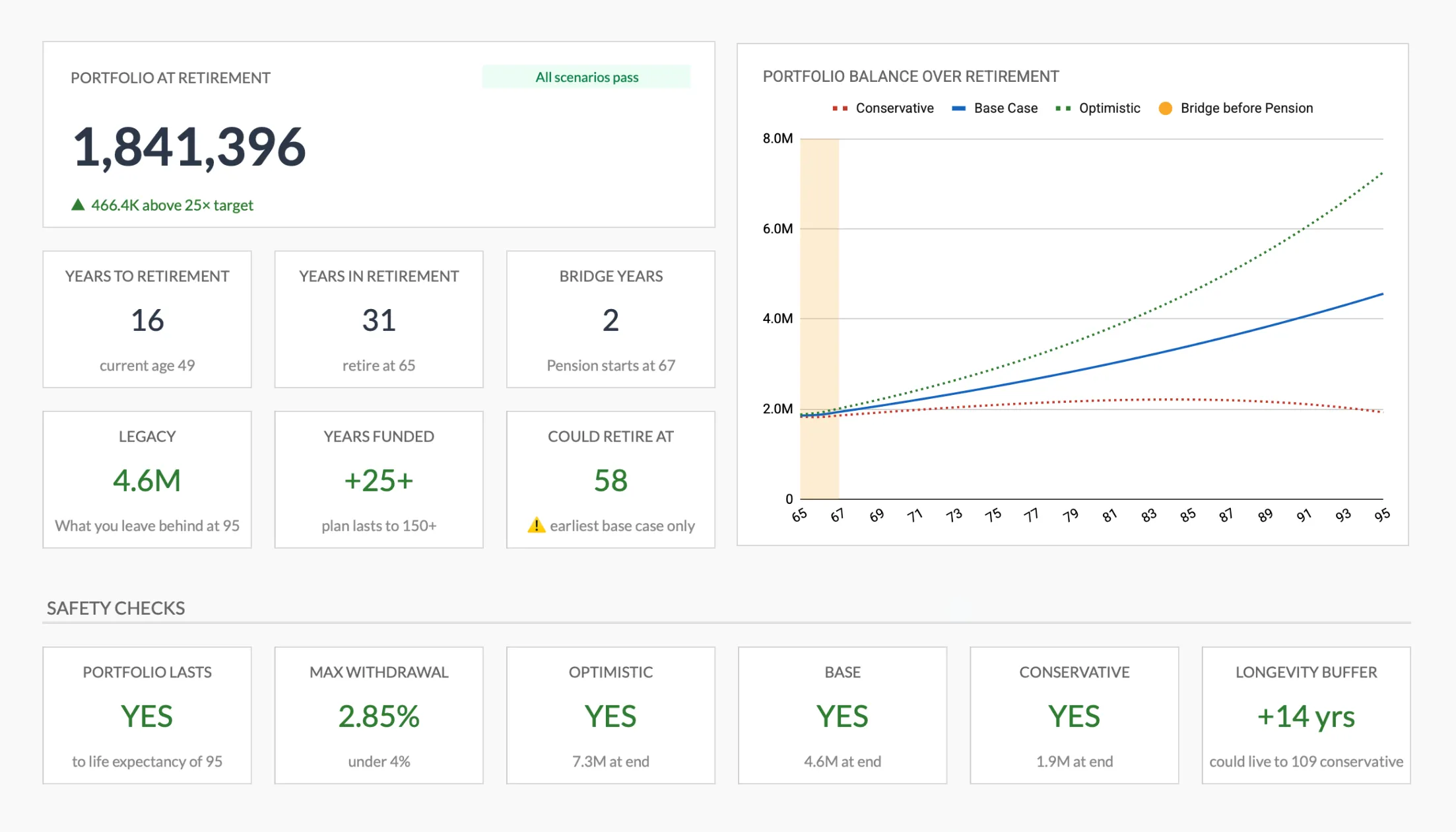
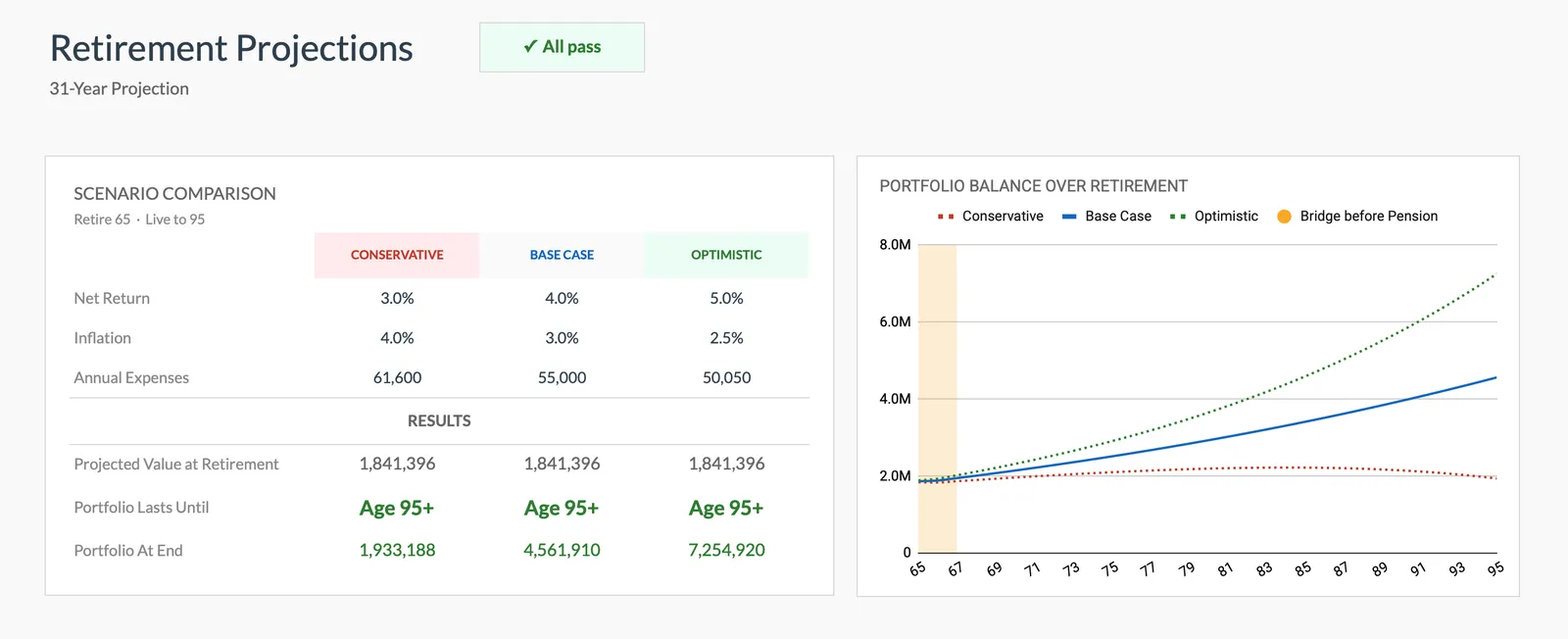
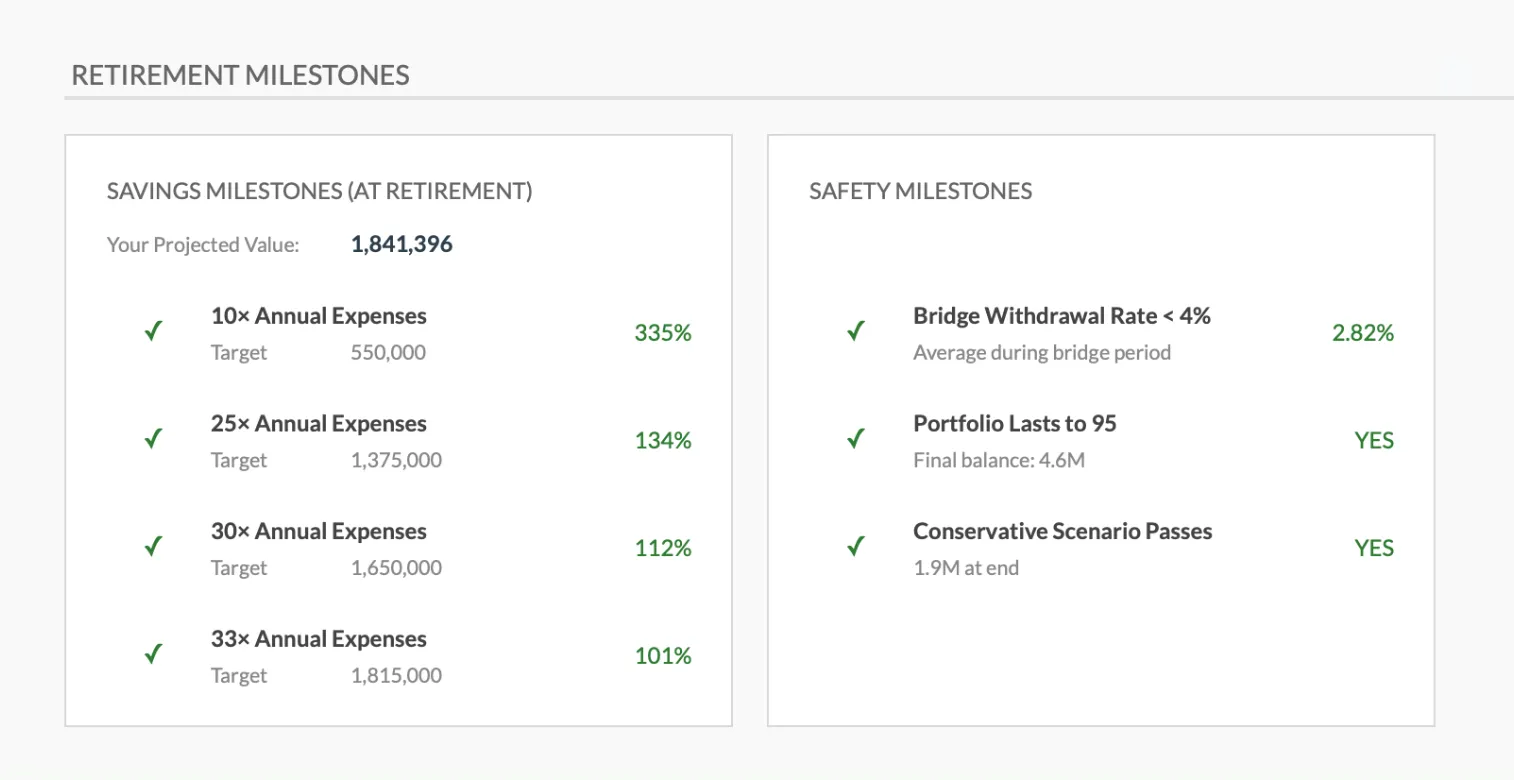
Browse through the template to see the dashboard, the entry sheets, and the summaries it produces, all adaptable to your local financial setup.
- Built-in currency selector
- Calculations update automatically
- Visual summaries of your numbers
- No setup required
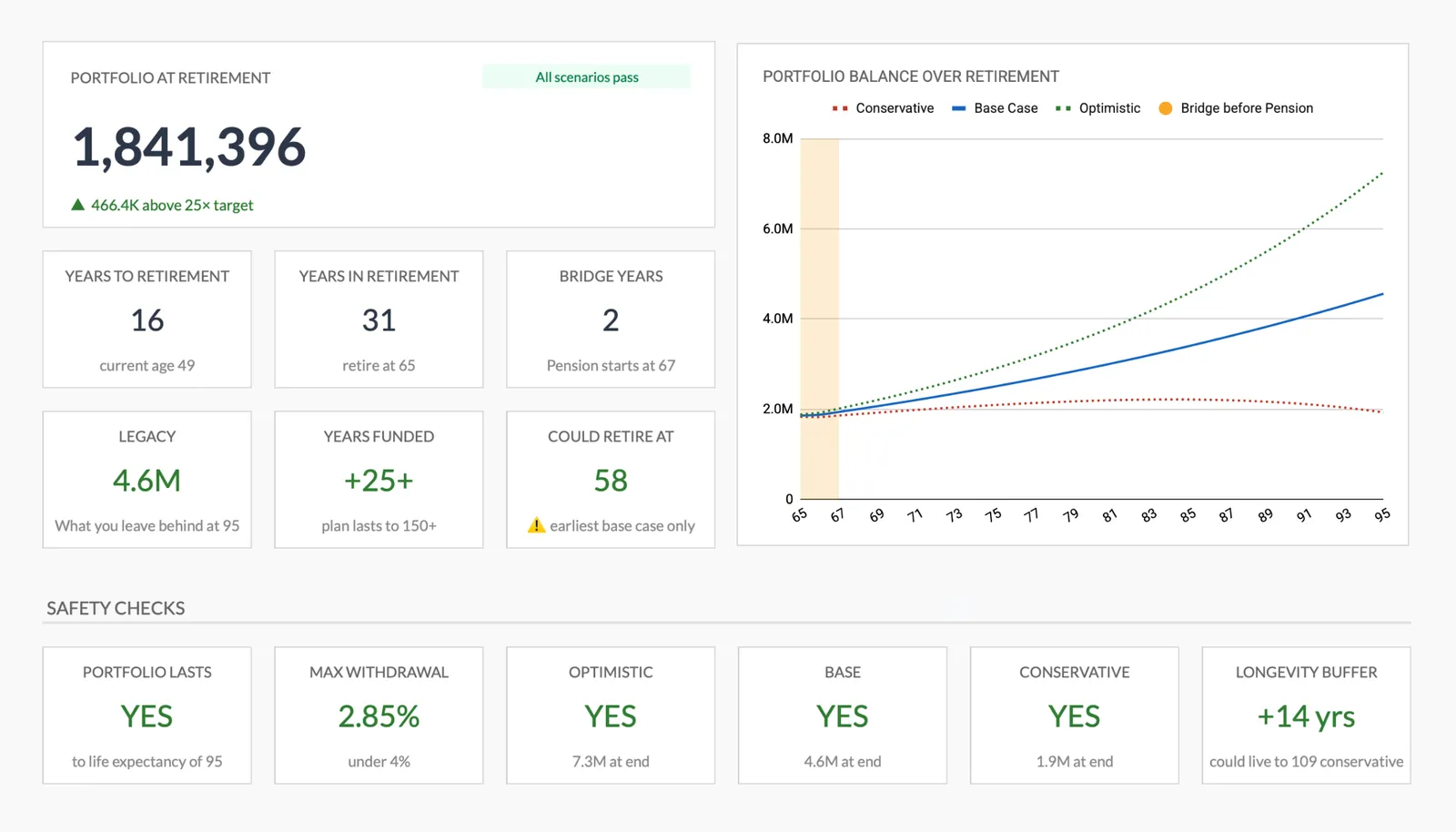
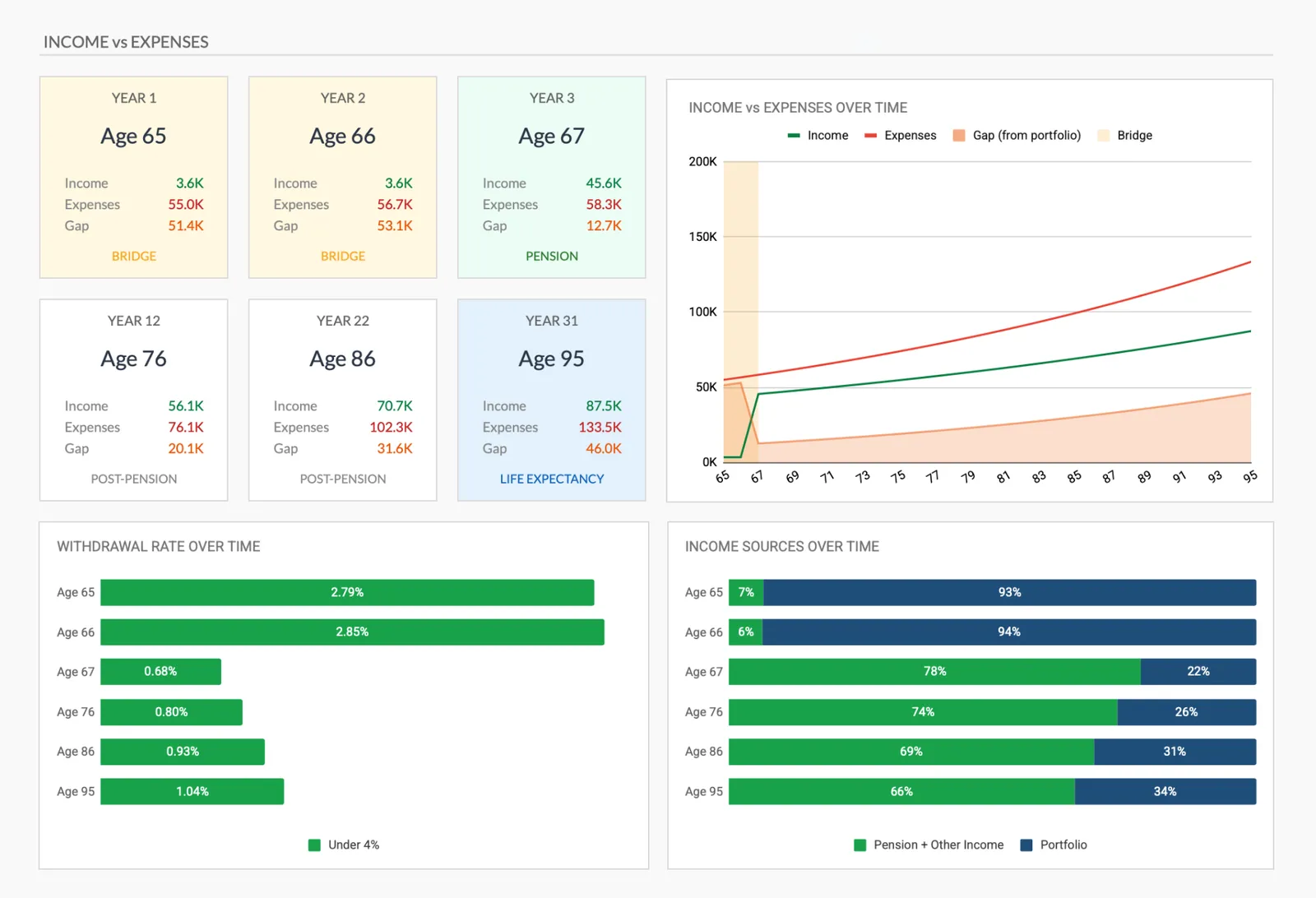
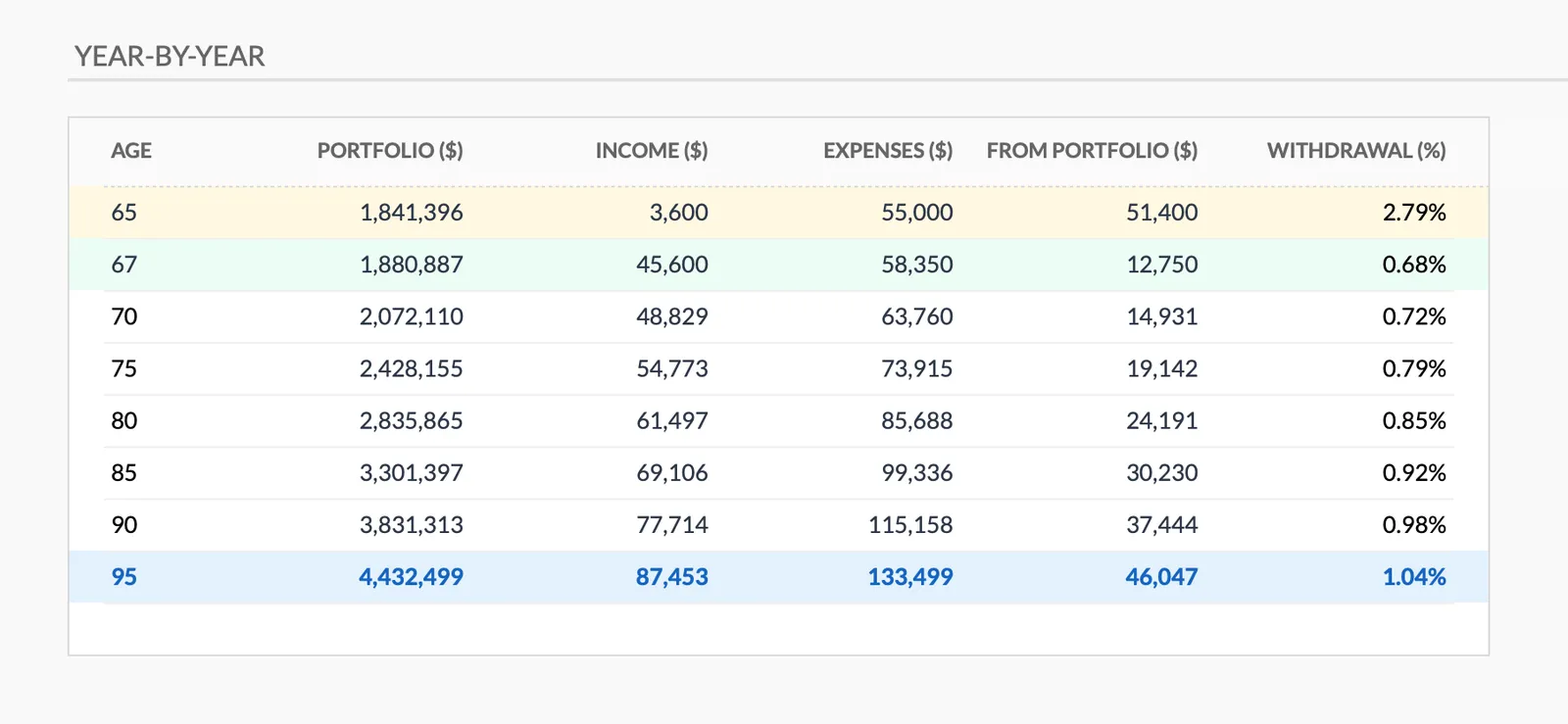
Complete retirement overview with projections
Project your retirement savings growth
Track progress toward retirement goals
Plan your retirement income against expenses
Detailed year-by-year retirement projection
Common Questions
Retirement Planning Template for Australia - FAQ
When can I access my super?
Preservation age is 60 for those born after July 1, 1964. After 60, you can access super as a lump sum, income stream, or both - generally tax-free from a taxed super fund. Before 60, access is limited to specific conditions (severe financial hardship, permanent disability, etc.).
How much super do I need to retire comfortably?
ASFA's comfortable retirement standard suggests around $595,000 for singles and $690,000 for couples (assuming you own your home and qualify for a part Age Pension). These are benchmarks - your number depends on lifestyle, location, health, and Age Pension eligibility.
Should I consolidate my super funds?
Multiple super accounts mean multiple sets of fees, and those fees come out of the balances. Consolidating through the ATO's myGov portal is how most people reduce that. One thing to check first is whether an old fund carries insurance cover, because closing the account generally ends the policy.
Will I get the Age Pension?
It depends on assets and income at age 67. Under the assets test, a single homeowner with assessable assets below the free area receives the full rate, and above it the payment tapers by $3 per fortnight for every $1,000 of assets. The free area is indexed twice a year, and Services Australia publishes the current figure. A super balance counts as an assessable asset.
Can I retire before 60?
Yes, with the caveat that the years before 60 have to be funded from outside super. Some people build investments specifically for that bridge period. The template can hold the non-super and super pools separately so the gap between them is visible.
Is salary sacrificing to super worth it?
Salary sacrifice contributions are taxed at 15% inside super, compared to your marginal tax rate outside super. For someone in the 30% or 37% bracket, the tax saving is meaningful. However, the money is locked until preservation age. Whether it's worth it depends on your current tax rate and when you need access to the funds.
Can't find the answer you're looking for? Contact our team
Explore More
Free Tools for Australia
Ready to get started?
Download instantly and start managing your finances, or contact us to design a custom template package for your needs.
Tax rules, rates, and contribution limits change, and official publications can themselves lag behind the law in force. We review these figures on a best-effort basis against sources we consider authoritative, but we cannot guarantee they are current, complete, or that better sources do not exist, and nothing here is tax, legal, or financial advice. For decisions, the relevant government authority is the reference.