Australia
Monthly Budget Template for Australia
Track your income in AUD, manage superannuation contributions, HECS-HELP repayments, and everyday expenses - all in a Google Sheets template you own.
In Depth
Budgeting Around Super, HECS, and the Cost of Living Down Under
Australia's compulsory superannuation system directs 12% of ordinary time earnings into a fund before the rest of the money reaches you. The contribution sits on top of salary rather than inside it, which is one reason the figure on an employment contract and the figure on a bank statement rarely match. Building a monthly budget around the actual deposit gives a clearer view of what is available to spend.
For anyone carrying a HECS-HELP debt, repayments start automatically once income crosses the threshold, which moved to $67,000 on 1 July 2025 and now applies on a marginal basis to the income above it. Add the Medicare levy, plus the surcharge for higher earners without private hospital cover, and these deductions take a noticeable slice before the money arrives. Noting them separately, even just as a reference line, explains why the gap between gross and net pay can look wider than expected.
Living costs in Australia vary significantly by city. Sydney and Melbourne regularly appear among the world's more expensive cities for rent, while regional areas can be considerably more affordable. Energy prices fluctuate by state and season, and groceries tend to cost more than in the US or UK because of distance and supply chain factors. A budget that reflects where you actually live, rather than national averages, is the one more likely to hold up in practice.
Australia
Budgeting in Australia: What's Different
Australia's financial system has several features that shape a budget. A generic template still works, and knowing these differences makes the setup fit local pay slips more closely.
Superannuation changes how you think about retirement savings
Australian employers pay the super guarantee on top of ordinary time earnings, at 12% since 1 July 2025 [1]. That money goes to a fund rather than to your bank account, so a budget built on the amount that actually lands each payday is closer to reality. Voluntary or salary-sacrificed contributions do come out of pay, and some people track those as a separate line item.
HECS-HELP repayments reduce your take-home pay
University debt is repaid automatically through the pay system once income passes the threshold [1]. The system changed on 1 July 2025: the minimum repayment threshold moved up to $67,000, and repayments are now worked out on a marginal basis, applying only to the income above the threshold rather than to the whole amount. The threshold is indexed each year. Because the deduction happens before the money arrives, take-home pay after HECS is the figure that matches the bank statement.
Medicare levy and private health insurance
The Medicare levy adds 2% of taxable income for most residents [1], and the Medicare levy surcharge adds a further 1% to 1.5% for higher earners without private hospital cover. For anyone weighing private health insurance against the surcharge, a budget that carries both costs side by side makes the comparison visible. Which one comes out lower depends on income and on the policy.
Australian expense categories differ from US templates
Generic budget templates often include categories like "health insurance premiums" and "property tax" that work differently in Australia. Here, council rates replace property tax, Medicare covers most healthcare, and expenses like stamp duty on property purchases are one-off rather than recurring. Customizing your categories to match Australian financial life makes the budget more accurate and useful.
Get the Template
Getting Started
Getting Started With Your Australian Budget
Switch the currency to AUD
There's a currency menu in the top-right corner of the dashboard. Switch it from $ to AUD (or whichever symbol you prefer). The numbers and calculations stay the same - only the display changes. You can also just leave it as-is and mentally read the numbers in your local currency.
Enter your after-tax, after-HECS income
Use the amount that reaches your bank account after tax, the Medicare levy and any HECS deduction. Employer super is paid on top of salary rather than taken out of it, so it does not reduce this figure. On $85,000 of salary with a HECS debt, take-home pay works out around $5,380 a month at 2026-27 rates. That is the number to enter, not the gross.
Customize expense categories for Australian life
Rename or add categories that reflect Australian expenses: council rates, strata fees (if apartment), private health insurance, car rego and CTP, electricity and gas (which can vary significantly by state). Remove US-specific categories like "property tax" or "401k contributions."
Add voluntary super contributions if applicable
For anyone making voluntary or salary-sacrificed super contributions, a dedicated budget category keeps the running total visible. The concessional contributions cap is $32,500 for the 2026-27 year, up from $30,000, and it counts employer contributions as well as your own.
Account for Australian seasonal expenses
Some expenses are uniquely seasonal in Australia: higher electricity bills in summer (or winter, depending on your state), car registration renewals, end-of-financial-year tax preparation costs in June/July, and back-to-school expenses in late January. Plan for these in the months they occur.
See It In Action
What the template looks like
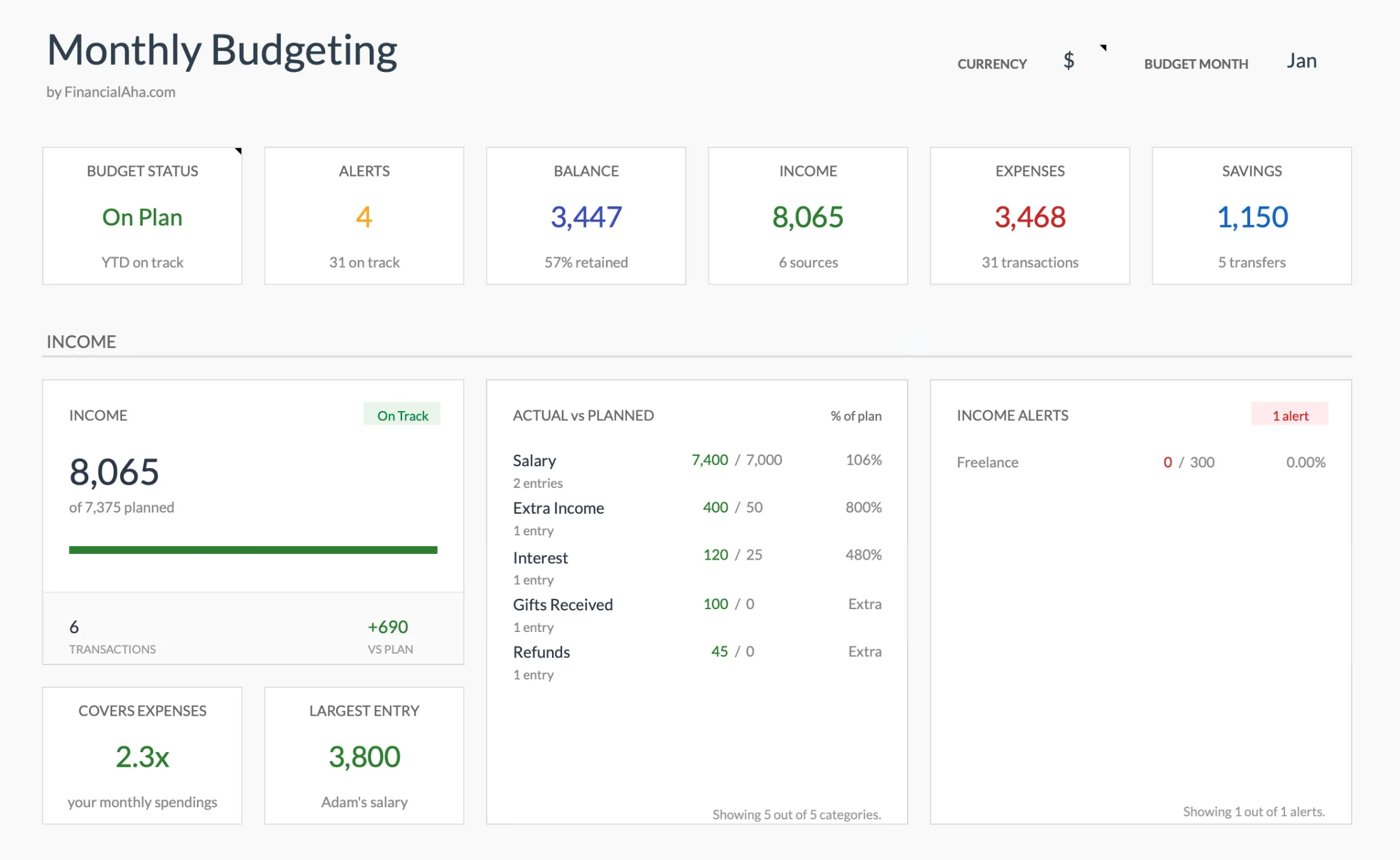
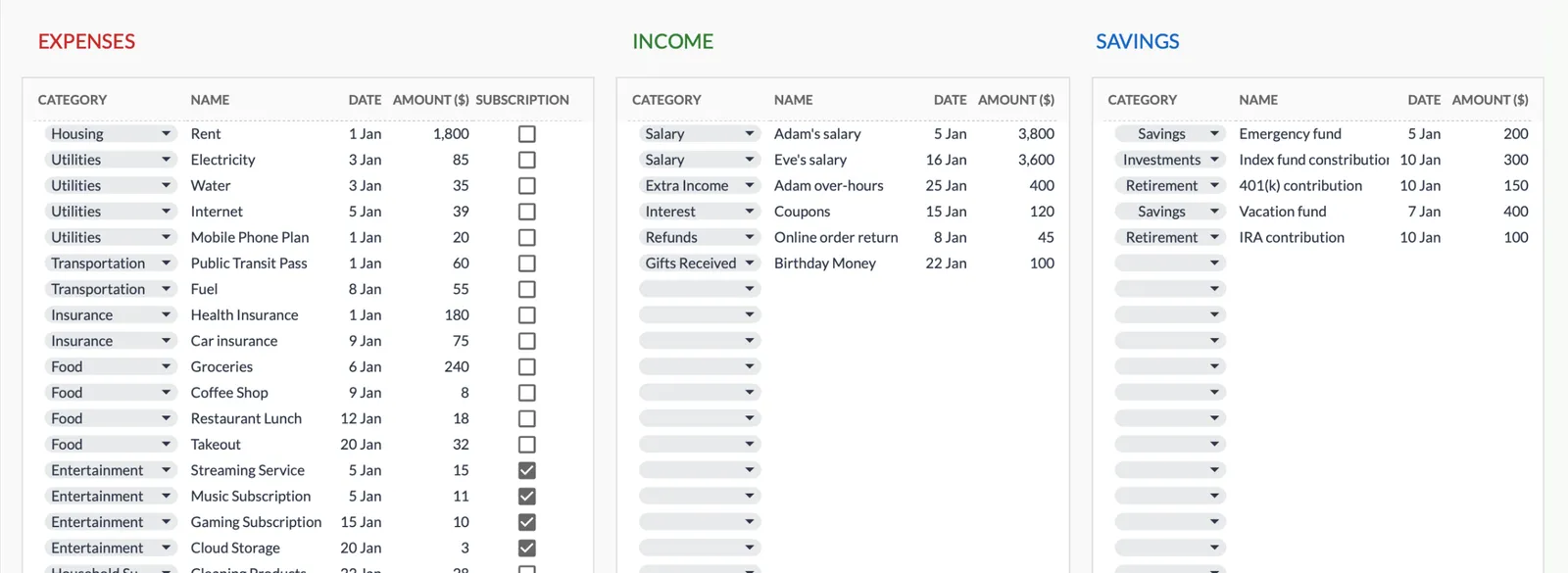
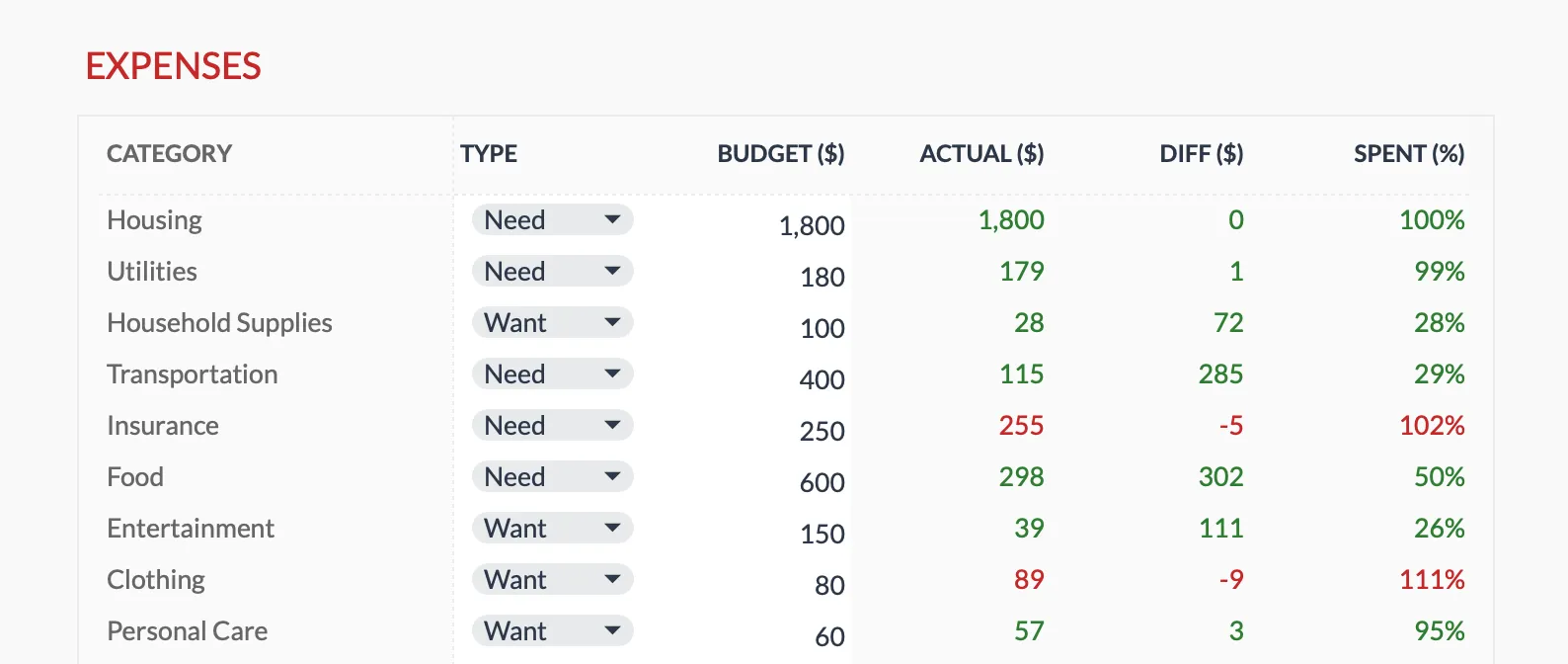
Browse through the template to see the dashboard, the entry sheets, and the summaries it produces, all adaptable to your local financial setup.
- Built-in currency selector
- Calculations update automatically
- Visual summaries of your numbers
- No setup required
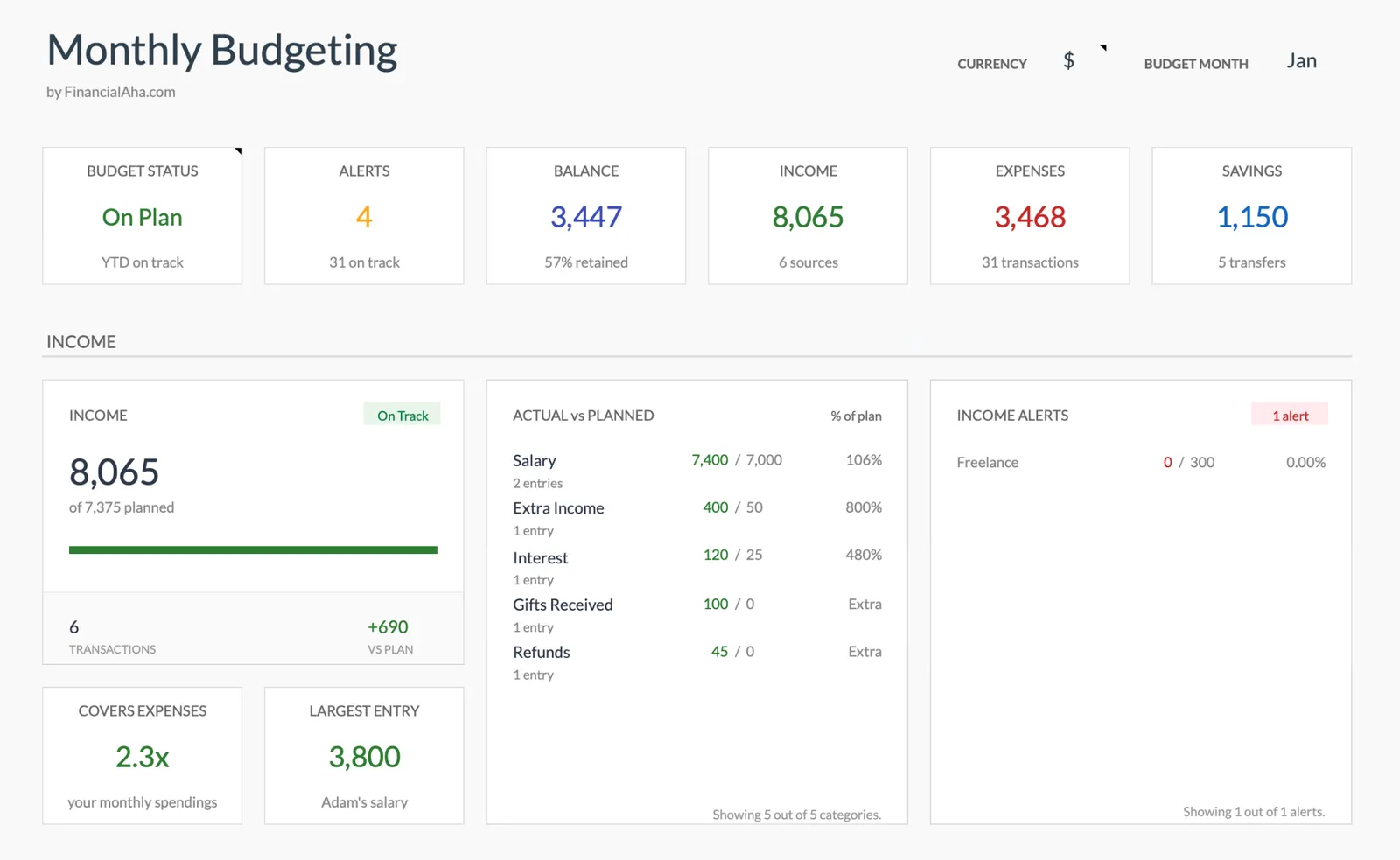
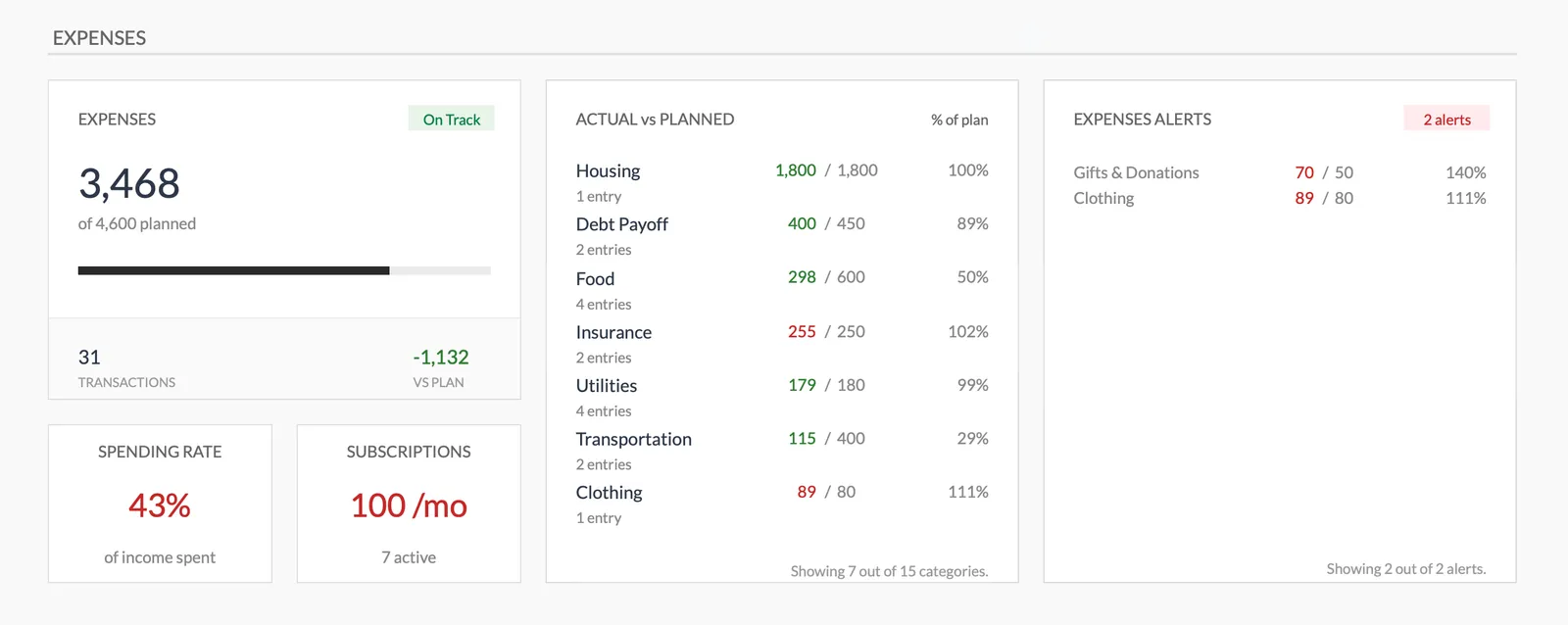
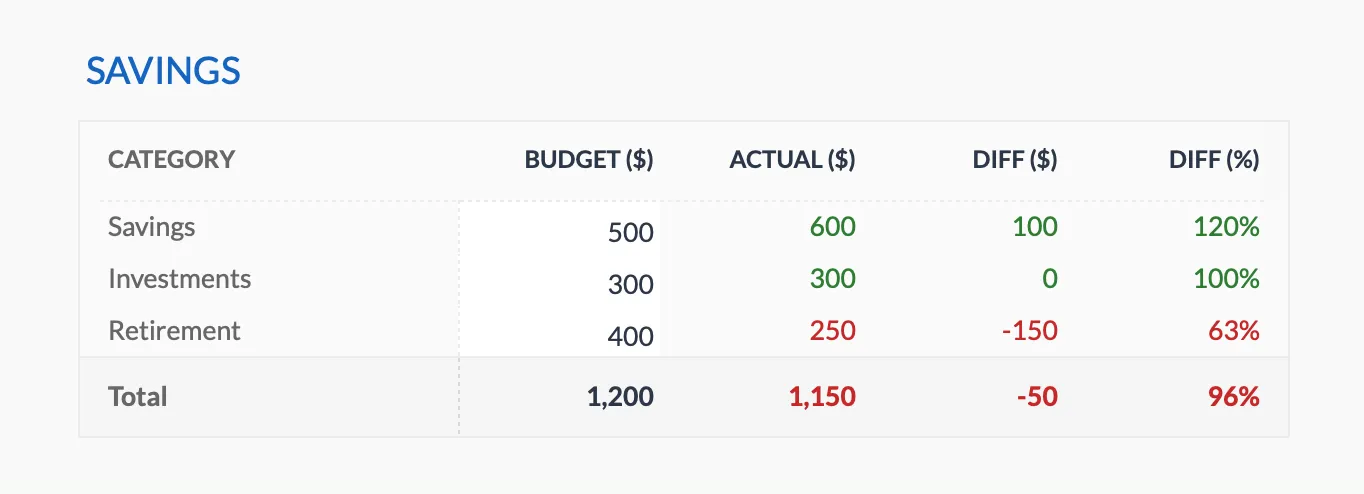
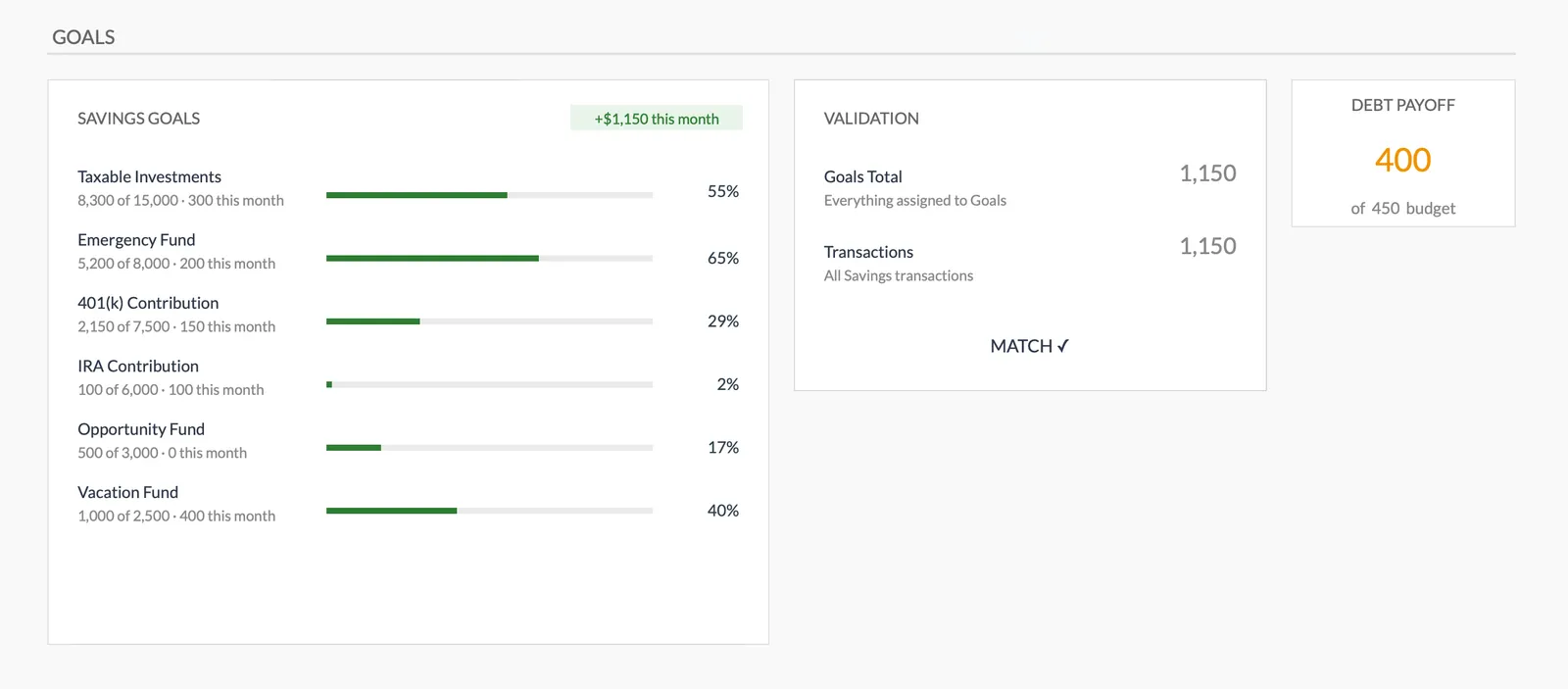
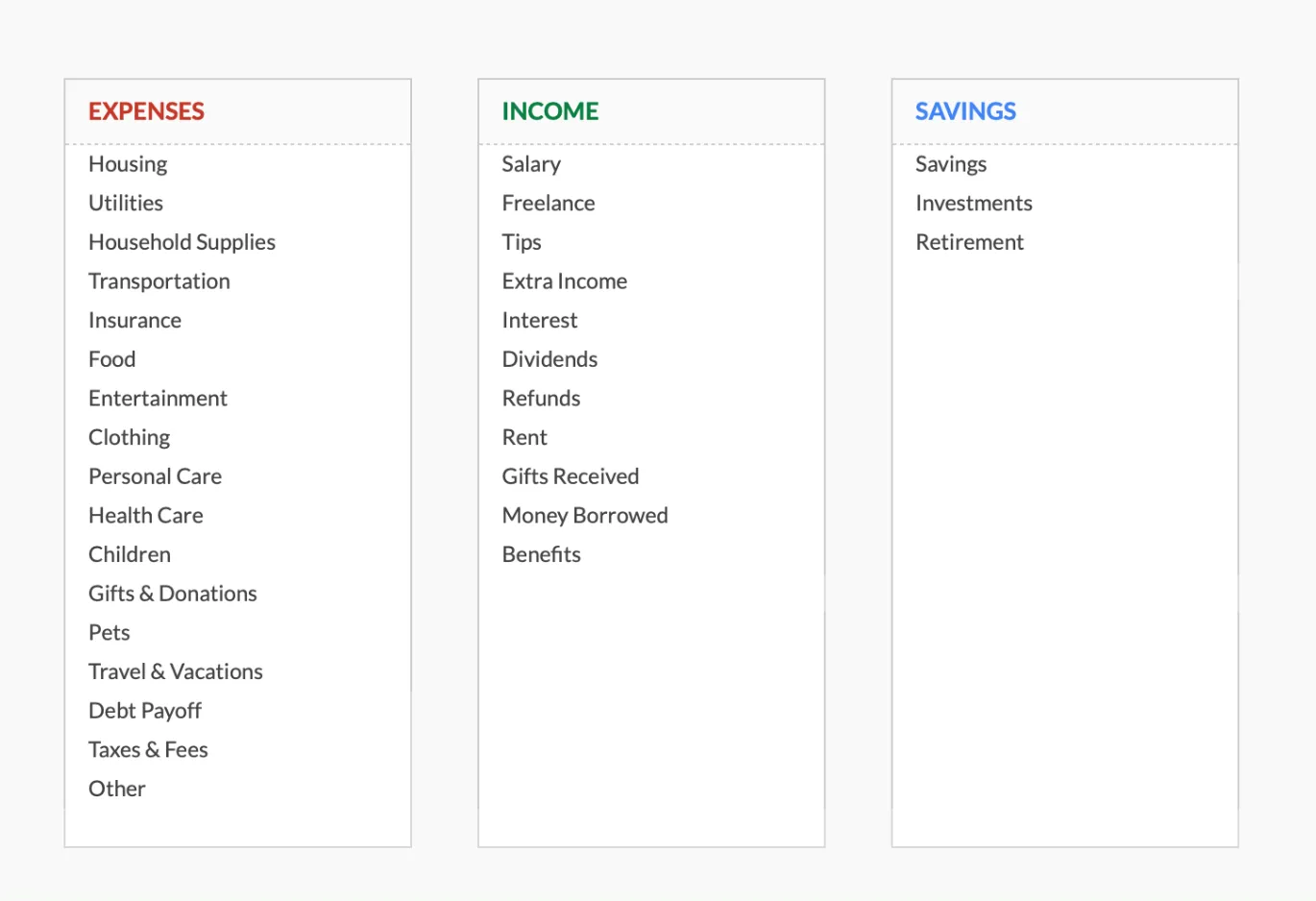
Dashboard with income, expenses, and savings at a glance
Log transactions with automatic categorization
Set targets per category and track actual spending
Visual breakdown of where your money goes
Track savings goals alongside your budget
Monitor progress toward financial goals
Fully customizable expense, income, and savings categories
Sources
Common Questions
Monthly Budget Template for Australia - FAQ
Does this template use Australian dollars?
There's a currency dropdown in the header where you can switch to AUD or any other currency. The formulas work the same in any denomination - only the display symbol changes.
Can I track superannuation contributions?
Yes. Add a budget category for voluntary super contributions. Your employer's compulsory super contributions happen before your take-home pay, so they don't need to appear in the budget. Only track voluntary or salary-sacrificed contributions that you're actively choosing to make.
Does this template handle GST?
This is a personal budget template, not a business accounting tool. You enter the amounts you actually pay at the register (GST-inclusive prices). If you run a business and need to track GST separately, the Cash Flow Forecast template is more appropriate.
Can I budget for HECS-HELP repayments?
HECS repayments are deducted from your pay before you receive it, so they don't need a separate budget line. Just use your actual take-home pay as your income figure. If you're making voluntary repayments above the compulsory amount, add those as a budget category.
Is there an Australian-specific version of this template?
The template is the same one used worldwide - it's designed to be customizable. This page explains how to adapt it for Australian finances. The flexibility of Google Sheets means you can rename categories, adjust formatting, and set up the budget to match your specific financial situation.
How does this compare to Australian budgeting apps like Frollo or Up?
Apps like Frollo and Up connect to your bank accounts and categorize transactions automatically. This template requires manual entry but offers more customization, costs a one-time fee instead of requiring ongoing data sharing, and keeps your financial data in your own Google Drive. The tradeoff is convenience vs. control and privacy.
Can't find the answer you're looking for? Contact our team
Ready to get started?
Download instantly and start managing your finances, or contact us to design a custom template package for your needs.
Tax rules, rates, and contribution limits change, and official publications can themselves lag behind the law in force. We review these figures on a best-effort basis against sources we consider authoritative, but we cannot guarantee they are current, complete, or that better sources do not exist, and nothing here is tax, legal, or financial advice. For decisions, the relevant government authority is the reference.