Budget Guide
How to Budget for a Vacation
The average American household spends about $2,000-$3,000 per vacation, covering flights, hotels, food, and activities. Setting a total budget before booking anything - and tracking each category in a spreadsheet - turns a vague "we can afford it" into an actual plan.
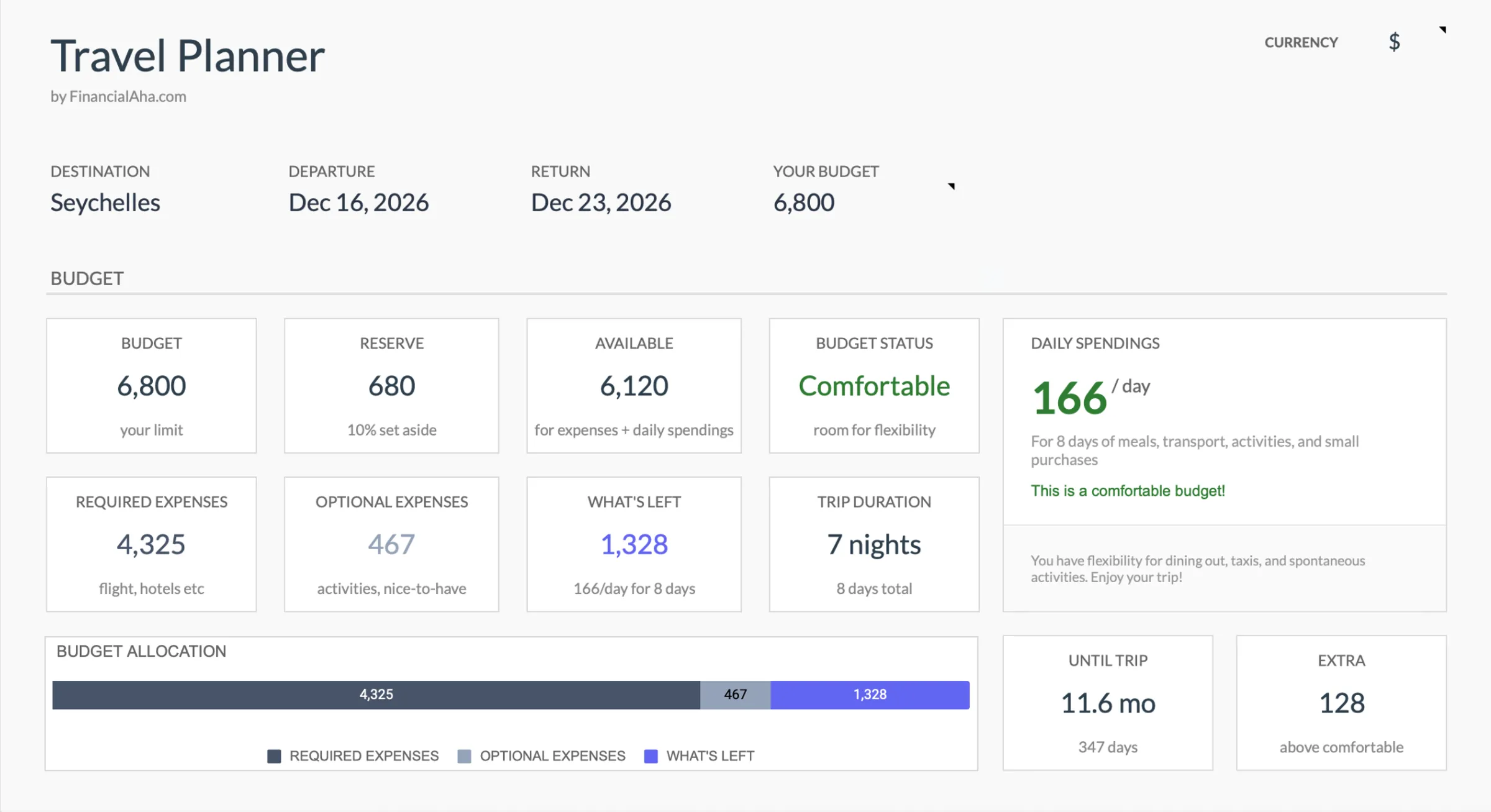
In Depth
Travel Spending Follows Different Rules
Vacation spending behaves differently from everyday spending in ways that standard budgets struggle to capture. Daily food costs that might be $15 at home become $50-$100 per day while traveling. Activities that would feel expensive at home - a $40 museum entry, a $90 boat tour - seem reasonable in the context of a trip. This psychological shift means that travel spending tends to exceed plans by 15-25% unless actively tracked against a pre-set budget.
The saving-for-travel model that works well for many people involves setting a monthly contribution into a dedicated travel fund throughout the year. This approach transforms travel from a large, unplanned expense into a planned allocation that does not disrupt the regular budget. When a trip is fully funded before booking begins, the vacation itself becomes a financial non-event - enjoyable without the anxiety of post-trip credit card statements.
Destination-specific research before finalizing a travel budget prevents the common problem of applying home-country cost assumptions to foreign destinations. Daily costs in Southeast Asia, Eastern Europe, or Central America can be a fraction of costs in Western Europe, Japan, or Australia. Even within a single country, costs vary significantly between tourist areas and less-visited regions. Building a budget around realistic destination costs - rather than general averages - produces a plan that is both accurate and actionable.
Tracking spending during a trip (even loosely) provides data that improves future travel budgets. Most people discover patterns in their travel spending over time - perhaps they consistently underestimate food costs but overestimate activity expenses. This historical data, accumulated across several trips, makes each subsequent travel budget more realistic than the last.
Cost Breakdown
Typical Vacation Cost Categories
Travel costs vary enormously based on destination, travel style, and duration. These categories help structure a vacation budget regardless of the trip type.
Transportation
20-40% of trip budgetFlights, rental cars, fuel, trains, ride shares - often the first thing booked
Accommodation
25-40% of trip budgetHotels, vacation rentals, hostels - the biggest ongoing daily expense
Food & Dining
15-25% of trip budgetRestaurant meals add up quickly - mixing dining out with self-catering helps
Activities & Entertainment
10-20% of trip budgetTours, attractions, experiences - often underbudgeted
Travel Insurance
3-8% of trip costWorth considering for expensive trips or international travel
Miscellaneous
5-10% of trip budgetSouvenirs, tips, laundry, phone charges, unexpected expenses
Budgeting Steps
Steps to Budget for a Vacation
Set a total trip budget first
Decide on a total amount before researching destinations. This prevents the common pattern of falling in love with an expensive trip and then trying to make the numbers work. A firm budget helps narrow destination choices quickly.
Research destination-specific costs
Daily costs vary dramatically by destination. A day in Southeast Asia might cost a fraction of a day in Northern Europe. Researching average daily costs for your destination type helps set realistic expectations.
Create a travel savings fund
Setting aside a fixed amount monthly into a travel fund means vacations are paid for before they happen. This separates travel saving from the regular budget and removes the post-vacation financial hangover.
Book strategically
Flights and accommodation are often cheaper when booked well in advance or at the last minute. Setting price alerts for flights and comparing accommodation options across multiple platforms can save 20-40% on the biggest cost categories.
Track spending during the trip
Daily spending tracking during vacation helps stay within budget without obsessing over every purchase. A simple daily total check reveals whether spending is running ahead of plan while there is still time to adjust.
See The Template
Tools for vacation budgeting
Browse the template features that help with vacation financial planning.
- Automatic calculations
- Visual charts and summaries
- Customizable categories
- Works in Google Sheets and Excel
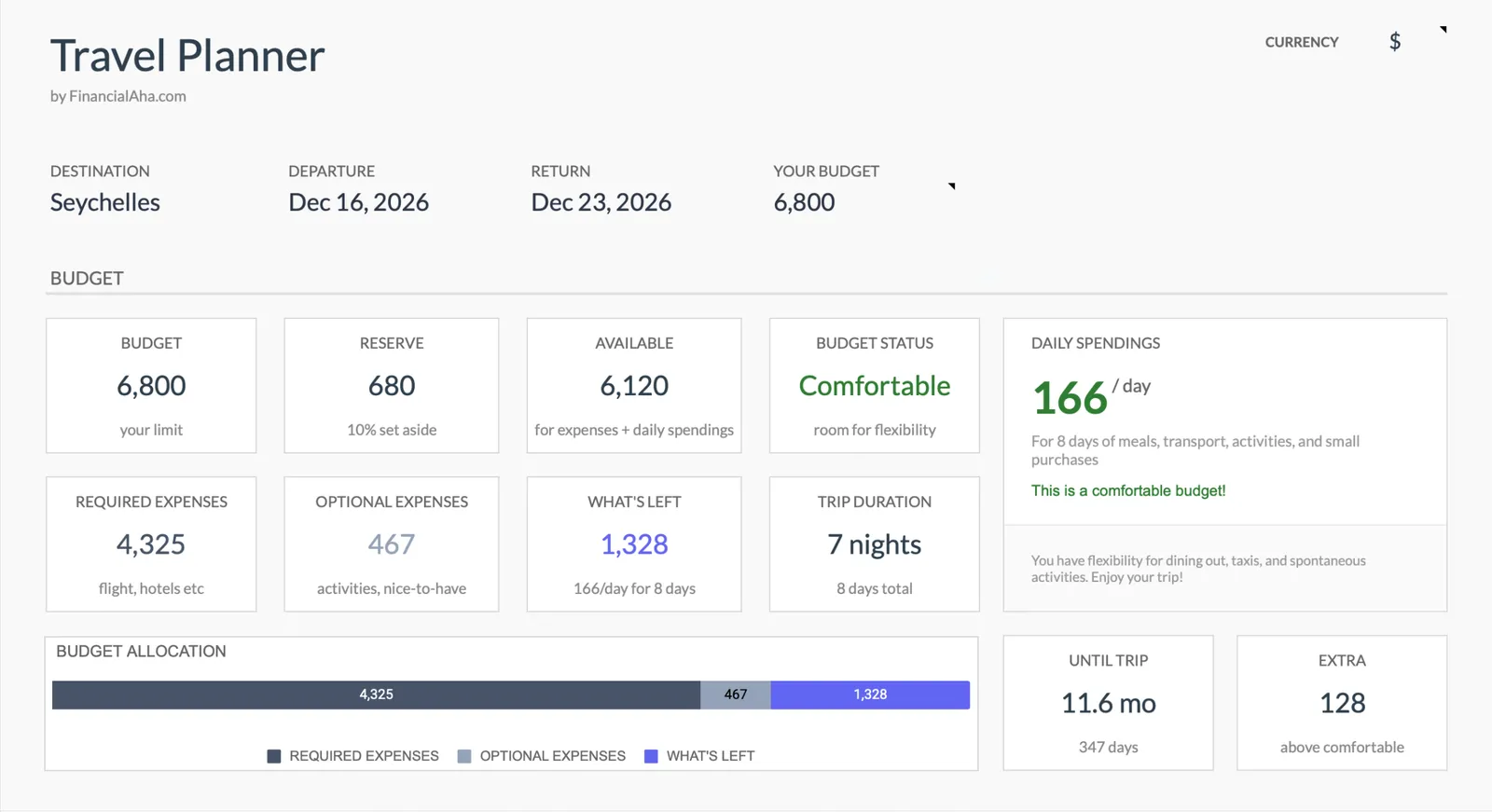
Overview of your trip budget with totals and categories
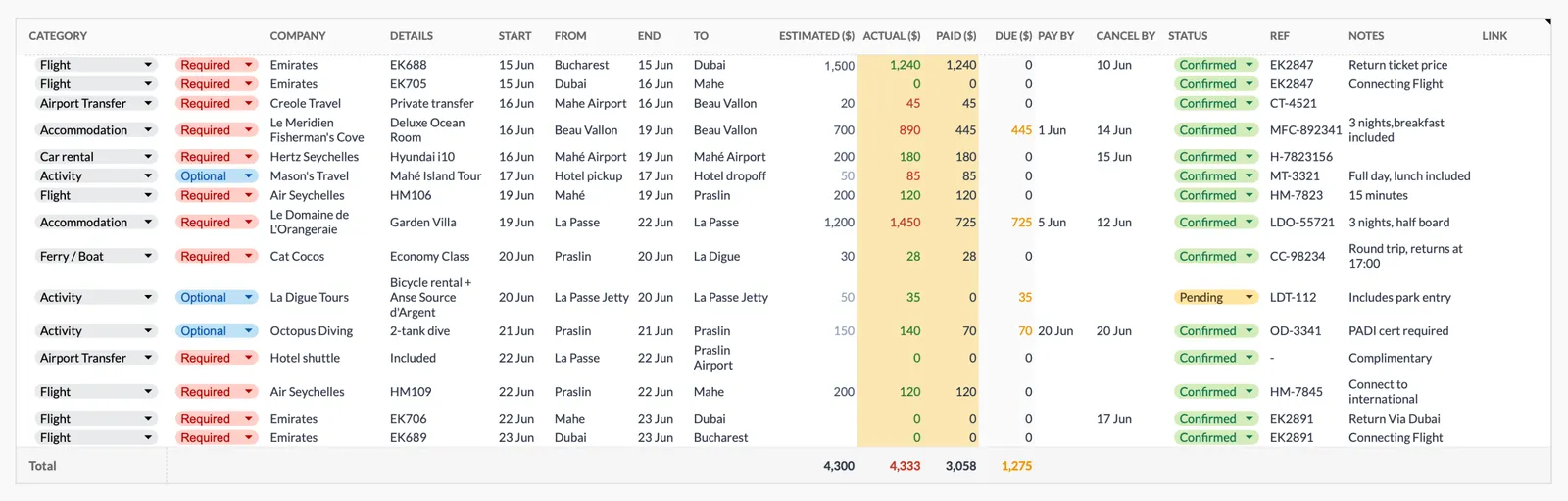
Track flights, hotels, and other bookings in one place
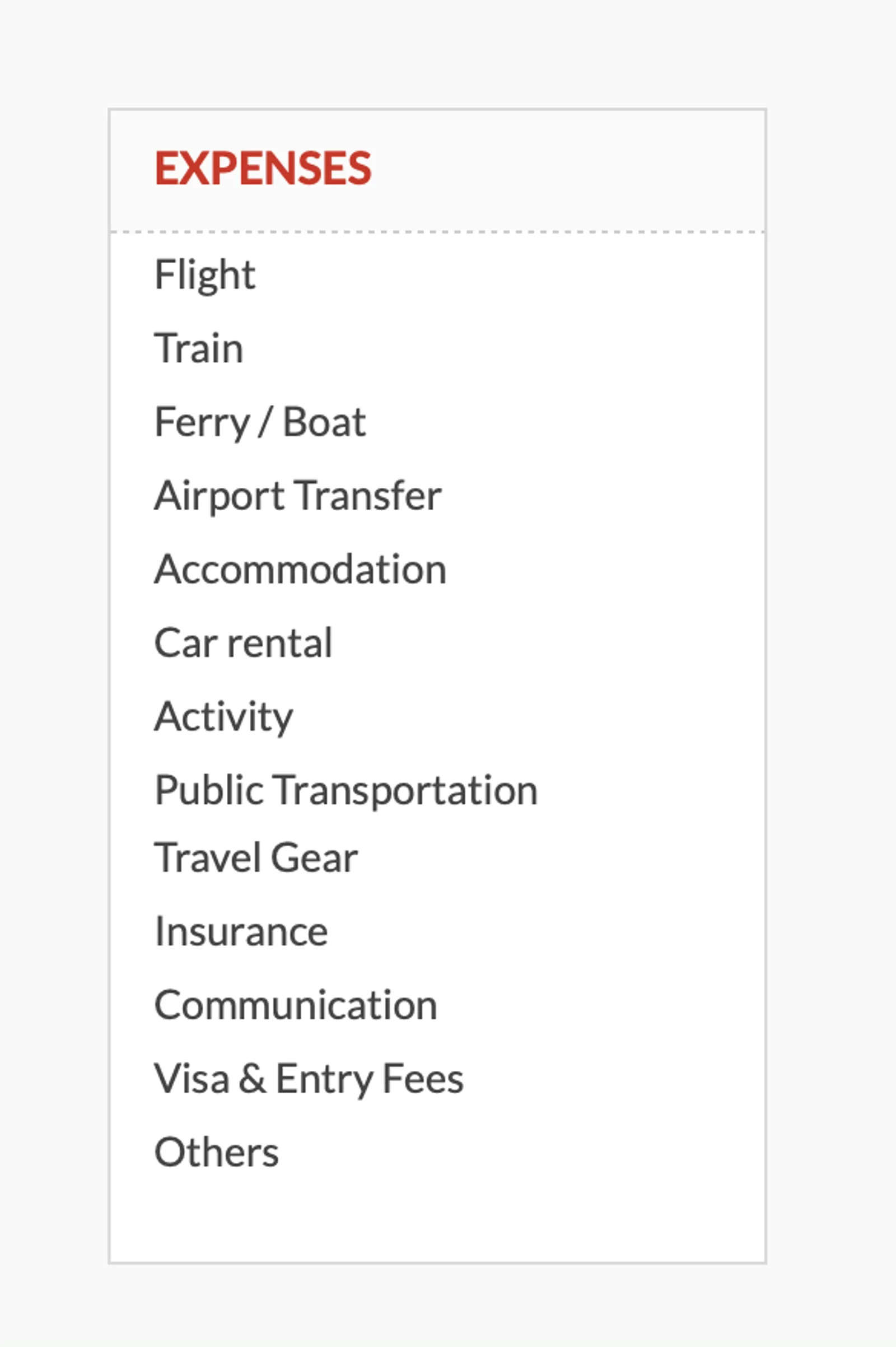
Organize travel expenses into customizable categories
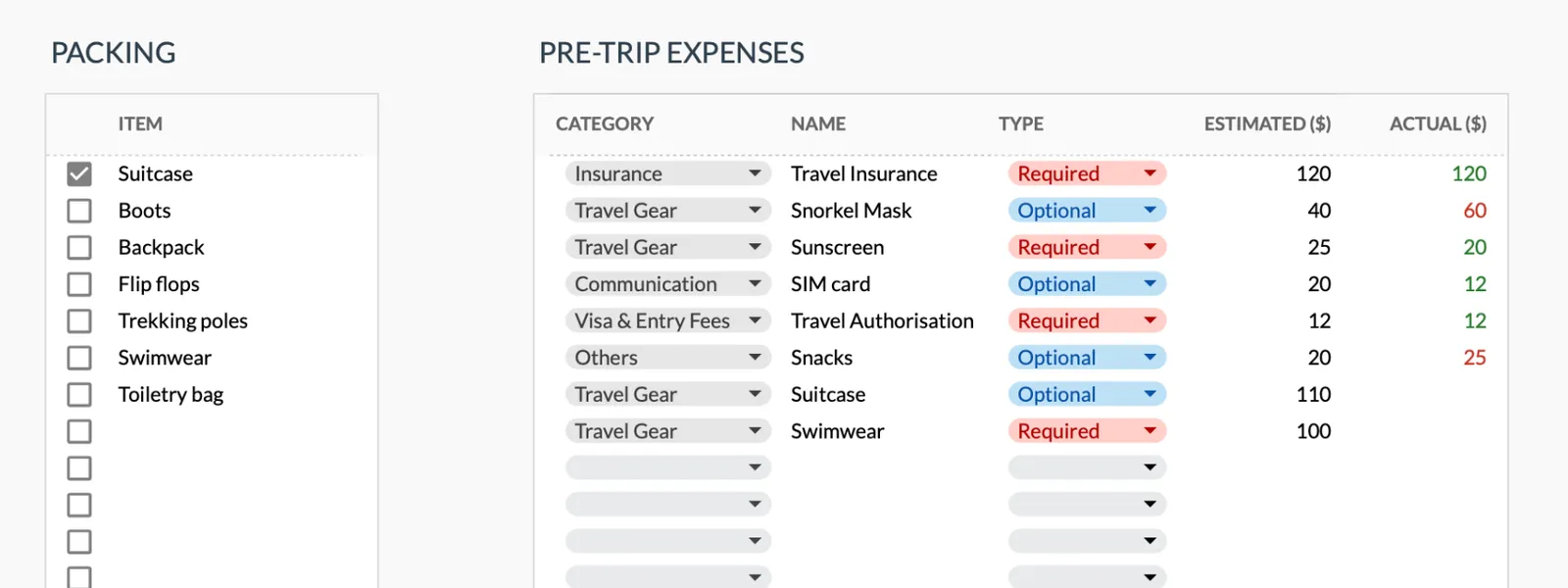
Track expenses before your trip starts
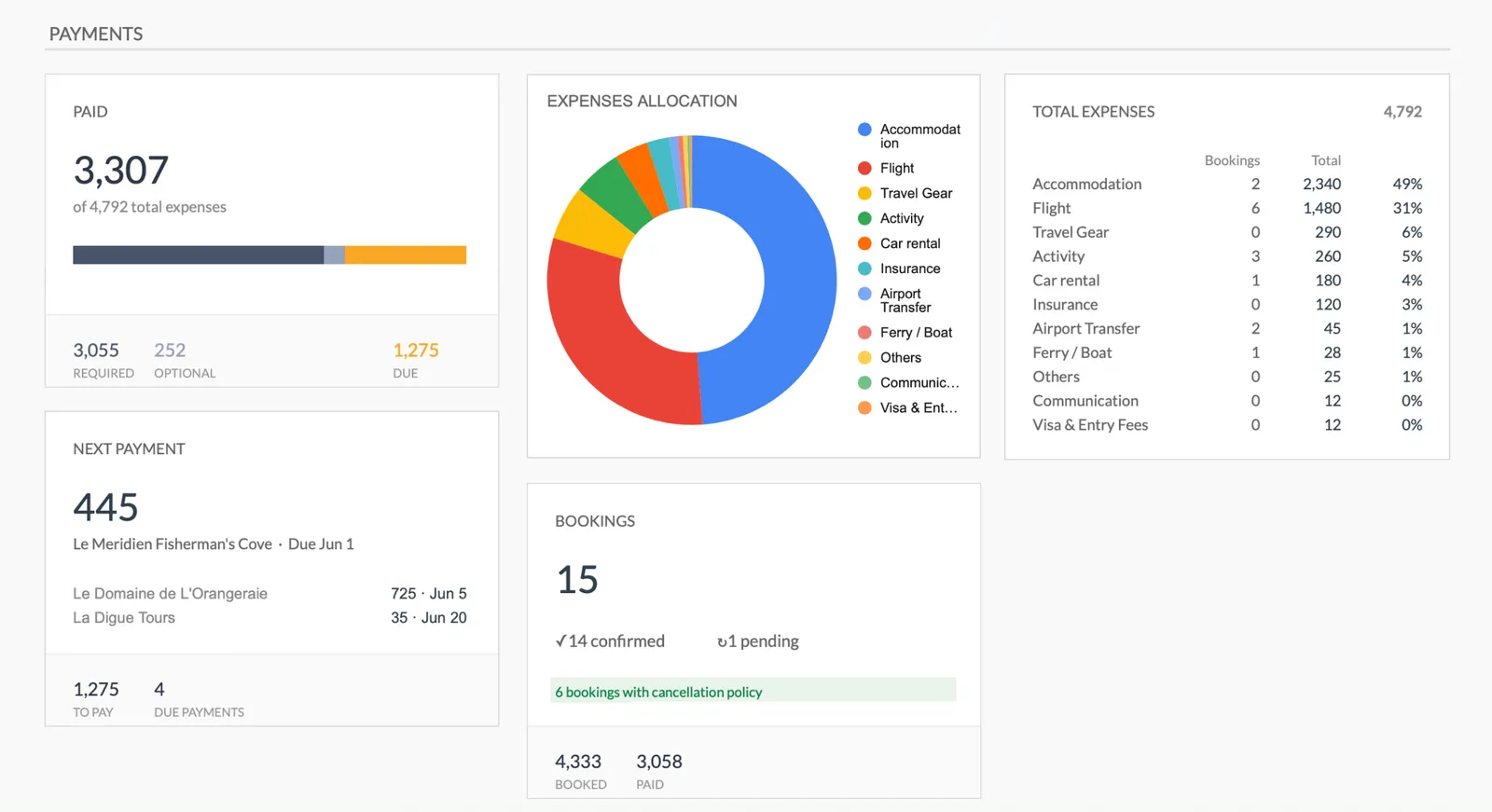
See all payments and remaining balances at a glance
Recommended Templates
Templates for Vacation Budgeting
Built specifically for travel budgeting - plan trip expenses by category, track spending during the trip, and compare planned vs. actual costs across multiple trips.
View templateSet up a travel savings category in your monthly budget. Track how much goes into the vacation fund each month and see progress toward your travel goals.
View template Save $24Get the travel planner plus monthly and annual budgeting tools. Save for trips systematically while keeping your everyday budget on track.
Includes 3 templates
View bundleFree Tools
Calculators to Help You Plan
Common Questions
Vacation Budgeting FAQ
How much should be saved for a vacation?
A common approach is saving the full trip cost before booking. For ongoing travel, some people allocate 5-10% of their income to a travel fund. The right amount depends on how frequently you travel and the type of trips you enjoy.
How can travel costs be reduced without sacrificing the experience?
Traveling during shoulder season, cooking some meals instead of eating out every time, using public transportation, and booking accommodations with kitchens all reduce costs while still allowing for a great trip. Many travelers find that the most memorable experiences are free or inexpensive.
Should vacation spending use a separate account?
Many travelers find a dedicated savings account helpful for clarity. It shows exactly how much is available for travel without mixing with other savings goals. High-yield savings accounts work well since travel funds are typically saved over months before being spent.
How is a vacation budget different from a regular budget?
Vacation budgets are project-based rather than recurring. They have a defined timeframe, specific categories (flights, hotels, activities), and a fixed total. The planning process is similar - estimate, track, adjust - but compressed into a shorter timeline.
What vacation expenses do people commonly underestimate?
Airport transfers, resort fees, tipping customs in different countries, foreign transaction fees, data roaming charges, meals between activities, and the "just one more souvenir" pattern. These can add 15-25% to the initially planned budget.
Can't find the answer you're looking for? Contact our team
Start planning your vacation budget
A spreadsheet template with automatic calculations, visual summaries, and everything needed to track vacation costs.
Ready to get started?
Download instantly and start managing your finances, or contact us to design a custom template package for your needs.