Free Debt-to-Income Calculator Spreadsheet Template
Calculate your debt-to-income ratio by listing monthly debts and income. Commonly used when evaluating mortgage or loan qualification thresholds.
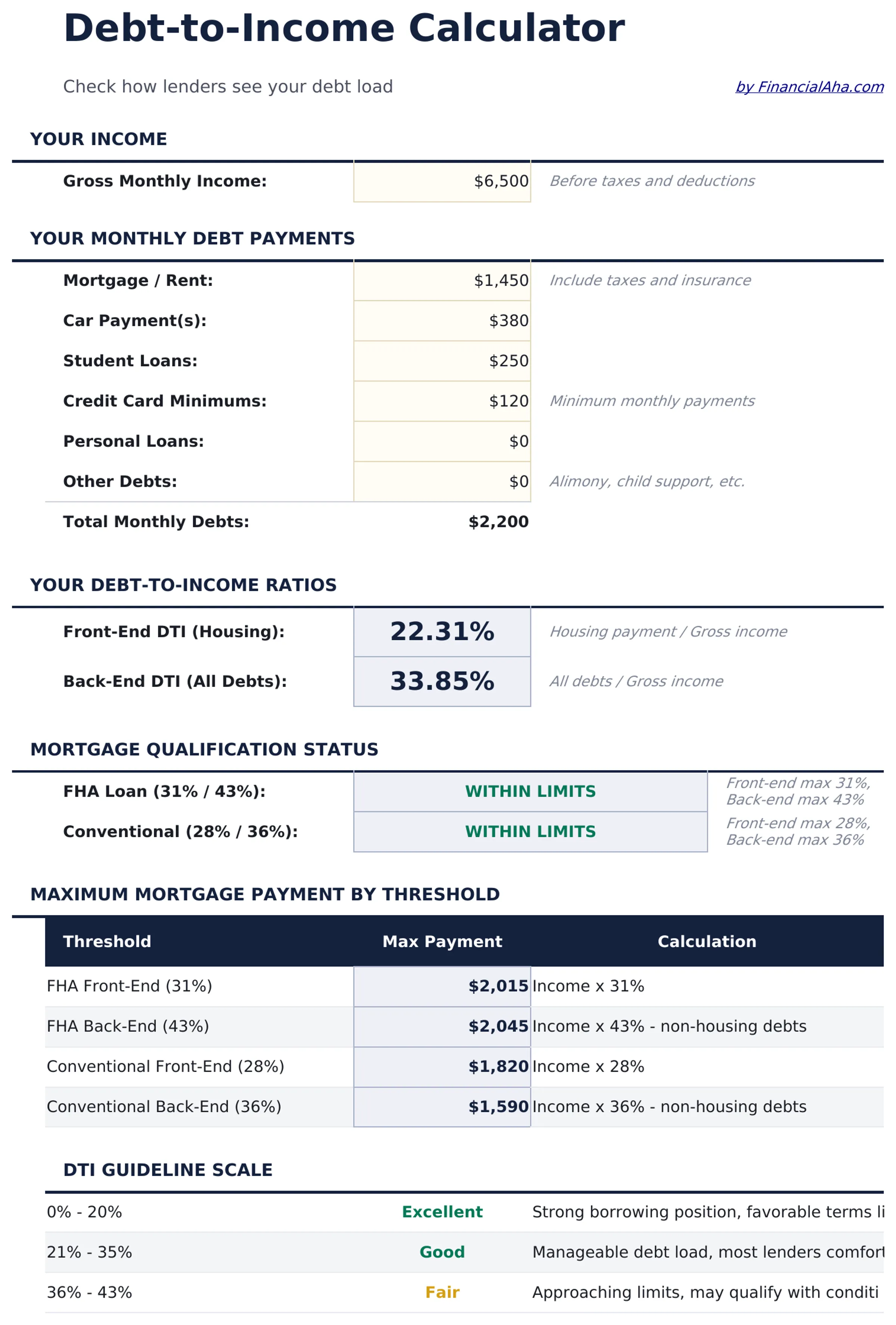
What's Included
- Calculator with DTI ratio output displaying front-end and back-end percentages based on your entries
- Monthly debt entry section for mortgage, car payments, student loans, credit cards, and other obligations
- Gross income input fields for salary, wages, rental income, and other sources of monthly earnings
- Front-end and back-end ratio display with common lender threshold reference values for comparison
- Color-coded result indicators that flag whether your DTI ratio falls within typical qualification ranges
- Works in Microsoft Excel, Google Sheets, and LibreOffice Calc with no setup required
Preview
See what's inside this template
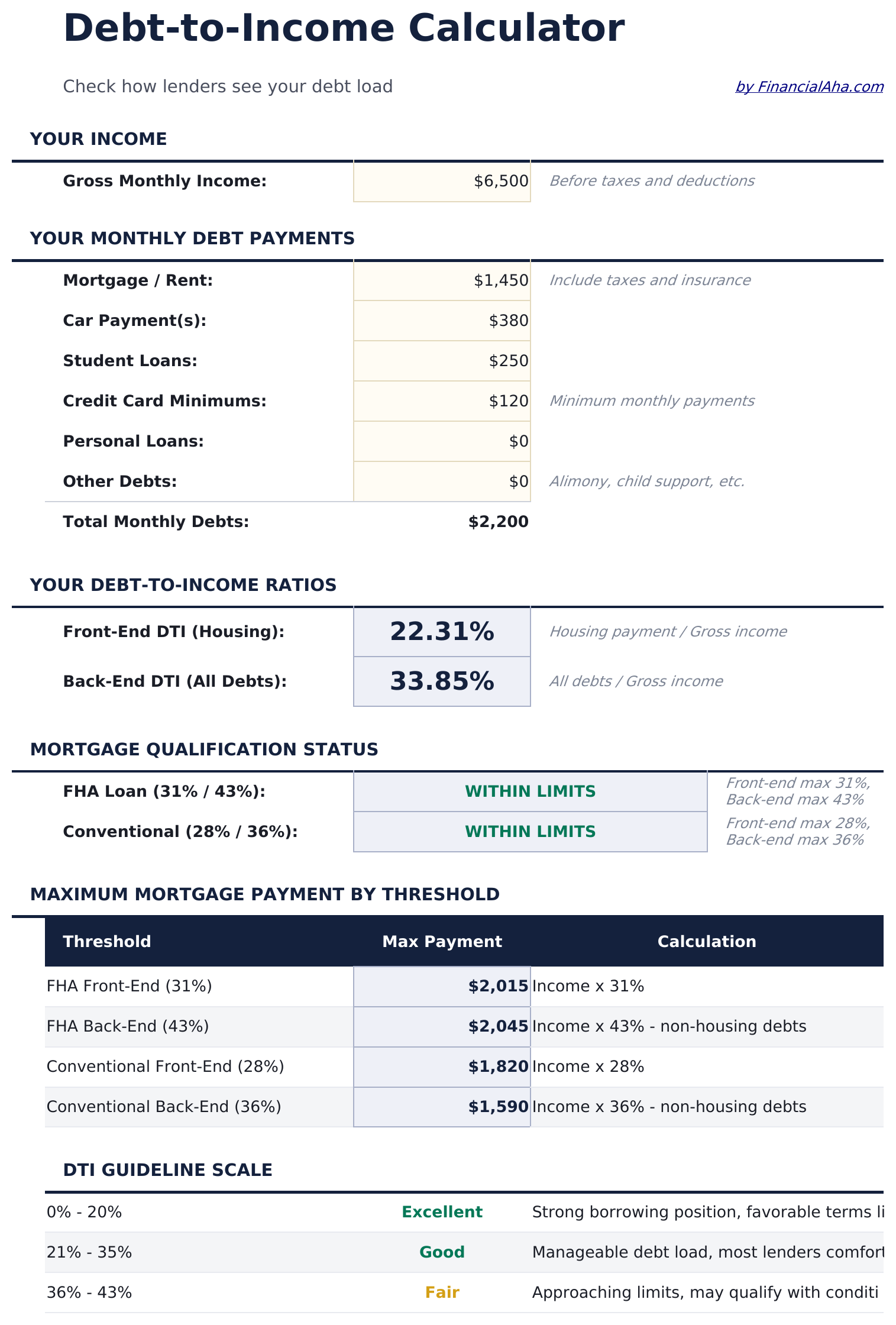
How to Use This Debt-to-Income Calculator Template
Enter monthly debts
List all monthly debt payments - mortgage, car loan, student loans, credit cards, and any other obligations.
Enter gross income
Add all sources of monthly gross income including salary, wages, rental income, and other earnings before taxes.
Read your DTI ratio
The calculator displays your front-end and back-end debt-to-income ratios as percentages. Lower is generally preferable.
Compare to thresholds
Reference values for common lender thresholds are shown alongside your ratio so you can see how your DTI compares.
Built by Claude AI. Perfected by us.
We use Claude AI to draft each free template, after a deep research. Then our team steps in. We refine the layout, stress-test every formula, fix edge cases, and polish the design until it feels like something we would actually use ourselves. The AI gets us 80% there. The last 20% is all human judgment.
Frequently Asked Questions
What is front-end vs back-end DTI?
Front-end includes only housing costs (mortgage, taxes, insurance). Back-end includes all monthly debt obligations. Lenders typically look at both ratios.
What DTI ratio do lenders prefer?
Common thresholds are 28% front-end and 36% back-end, though requirements vary by lender and loan type. The template shows these reference values for comparison.
Do I use gross or net income?
Debt-to-income ratios use gross (pre-tax) income. Enter your monthly earnings before any deductions or withholdings.
What debts should I include?
Include minimum monthly payments for mortgages, car loans, student loans, credit cards, personal loans, and any other recurring debt obligations.
How do I open this in Google Sheets?
Upload the .xlsx file to Google Drive, then open it with Google Sheets. All formulas and formatting will be preserved.
What license is this template under?
All free templates are released under CC BY 4.0 (Creative Commons Attribution). You can use, modify, and share them freely - including for commercial purposes - as long as you credit FinancialAha.com. They are provided as-is and do not constitute financial advice.
More Free Debt Management Templates
Looking for premium spreadsheet templates?
Our paid templates include advanced multi-sheet dashboards, native Excel charts, and ongoing updates.